Tag: Harsh Rohatgi

  • Juhi Ravindranath is the new chief business officer of Qube Cinema

    Juhi Ravindranath is the new chief business officer of Qube Cinema

    Mumbai: Qube Cinema has appointed Juhi Ravindranath as chief business officer. Juhi Ravindranath has more than two decades of experience in renowned companies like Star India, NDTV, and Tuner International.

    Ravindranath will explore new frontiers in building the category of in-cinema advertising and identifying and developing new avenues for growth in the larger content ecosystem.

    On appointment, Juhi Ravindranath said, “I am extremely excited to join the world of Qube. Being an avid film buff… I see great potential in this business,” Ravindranath said in a press release. “Qube Cinema Network has an impressive roster of theatres and a highly motivated and passionate team of people that I look forward to working with.”

    Qube Cinema Network offers in-cinema advertising inventory across a network of more than 2800 screens (more than 1380 multiplex screens and 1420 single screens) covering 1,100 cities.

    Qube’s CEO Harsh Rohatgi said, “The post-pandemic resurgence of the industry has been phenomenal with record footfalls and box office collections. This has opened up further opportunities for Qube to help our theatre partners to enhance the quality of the cinema experience, while also our production partners look to cater to more audiences with their films,”

    “With Juhi joining the team, we look forward to pushing the envelope across the businesses of cinema advertising and new avenues of content distribution,” he added.

    At Qube, Juhi will be based out of Mumbai and work with the QCN teams across the country.

  • Justickets ties up with Cinépolis to Expand Its Retail Presence

    Justickets ties up with Cinépolis to Expand Its Retail Presence

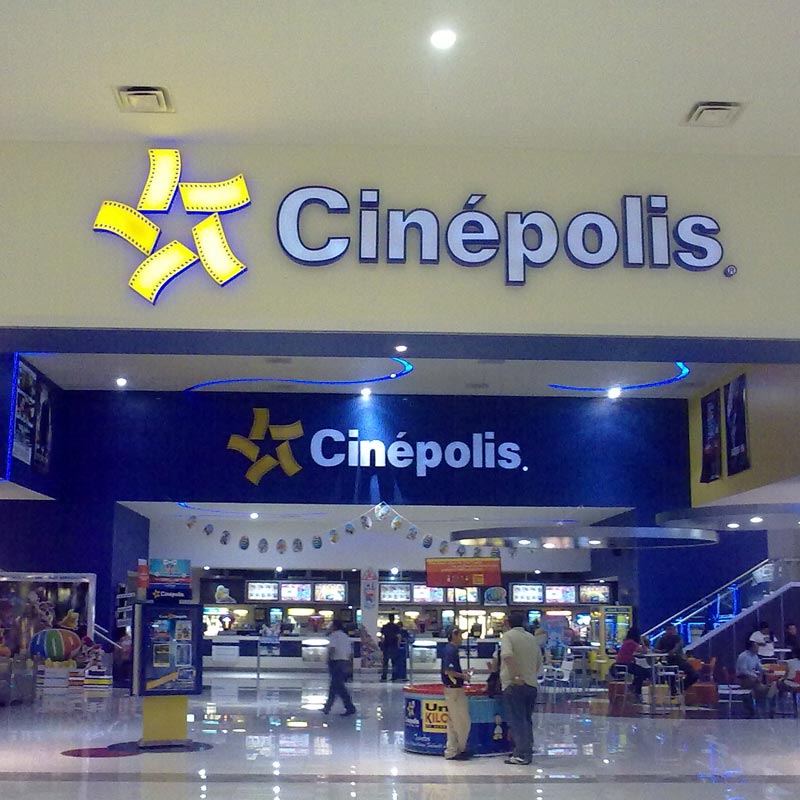
    NEW DELHI: Online ticketing platform Justickets ties up with Cinépolis to offer consumers amodern, fast and easy way to book tickets on the go for current movie releases or place orders for upcoming releases using the exclusive features provided by Justickets.

    The Indian box office industry is nearly worth US$ 2 billion and is growing at 10 per cent annually. The on-line movie ticketing market is currently only 15 per cent of the total box office revenues, but growing rapidly. With multiple alternatives to cinema lovers, the demand for a feasible ticketing device is high in the industry.

    Justickets is engineered to be the most scalable ticketing platform, capable of enduring high website traffic. The brand enables cinemas to understand the demand for an upcoming movie which can be used to gauge interest and schedule shows for a particular movie. It is web-based, easy-to-setup platform that aims to make cinema operations and management fast and easy for the cinema buffs to make their cinematic experience pleasant.

    Cinépolis Director- Strategic Initiatives Devang Sampat said, ‘Cinépolis India is excited about the tie-up with Justickets. A customer-focused approach is what we believe at Cinépolis and over the years we have established consumers who prefer Cinépolis as their destination to watch movies. Our association with Justickets is an endeavour to provide improved booking options online. Justickets have been growingly aggressively in this category.”

    Justickets Pvt Ltd CEO Harsh Rohatgi.said: “Justickets is happy and privileged to partner with Cinépolis. Both the brands are very strongly established in India. And now with this tie-up we plan to expand our presence pan India and establish our reach across India”

  • Justickets ties up with Cinépolis to Expand Its Retail Presence

    Justickets ties up with Cinépolis to Expand Its Retail Presence

    NEW DELHI: Online ticketing platform Justickets ties up with Cinépolis to offer consumers amodern, fast and easy way to book tickets on the go for current movie releases or place orders for upcoming releases using the exclusive features provided by Justickets.

    The Indian box office industry is nearly worth US$ 2 billion and is growing at 10 per cent annually. The on-line movie ticketing market is currently only 15 per cent of the total box office revenues, but growing rapidly. With multiple alternatives to cinema lovers, the demand for a feasible ticketing device is high in the industry.

    Justickets is engineered to be the most scalable ticketing platform, capable of enduring high website traffic. The brand enables cinemas to understand the demand for an upcoming movie which can be used to gauge interest and schedule shows for a particular movie. It is web-based, easy-to-setup platform that aims to make cinema operations and management fast and easy for the cinema buffs to make their cinematic experience pleasant.

    Cinépolis Director- Strategic Initiatives Devang Sampat said, ‘Cinépolis India is excited about the tie-up with Justickets. A customer-focused approach is what we believe at Cinépolis and over the years we have established consumers who prefer Cinépolis as their destination to watch movies. Our association with Justickets is an endeavour to provide improved booking options online. Justickets have been growingly aggressively in this category.”

    Justickets Pvt Ltd CEO Harsh Rohatgi.said: “Justickets is happy and privileged to partner with Cinépolis. Both the brands are very strongly established in India. And now with this tie-up we plan to expand our presence pan India and establish our reach across India”

  • Ratings: Star Movies tops English film genre despite absence in Mumbai

    Ratings: Star Movies tops English film genre despite absence in Mumbai

    MUMBAI: With Cas having come into the Metros, the niche channels will have a better fix on what the audience prefers. Tam data for the last six months paints an interesting picture of what the viewers are likely to go in for.

    Tam data c&s 15+ all India shows that in the English film genre Star Movies has a clear lead. In fact it has widened the gap between itself and arch rival HBO. This, one must note, is despite the fact that it is not present in Mumbai which each week contributes an average of 15 per cent to the viewing of this genre.

    ENGLISH
    MOVIES
    – TG: CS
    15 years
    15 JULY-15 AUG 15 AUG-15 SEP 15 SEP -15 OCT 15 OCT-15 NOV 15 NOV-15 DEC 15 DEC-30 DEC 01 JAN – 13 JAN 07
    Hallmark
    Channel
    0 0 0 0 0 0 1
    HBO 38 33 33 32 33 35 33
    PIX 9 10 8 9 8 9 9
    Star Movies 42 40 44 45 47 41 49
    Zee Studio 11 17 16 14 13 15 9

    For the period 15 July – 15 August 2006 Star Movies had a share of 42 per cent followed by HBO with a share of 38 per cent. Zee Studio has a share of 11 per cent and Pix which had recently launched had a share of nine per cent. For the period 1-13 January 2007 Star Movies boosted its share to 49 per cent compared to 41 per cent in the last two weeks of December.

    Star Movies’ gain in January is Zee Studio’s loss which shows that there is some overlap despite the fact that while the former focusses on blockbusters the latter focusses on niche films. In fact Zee Studio has recently been doing initiatives on world cinema. Zee Studio’s share fell from 15 per cent in the last fortnight of December to 9 per cent bringing it on level terms with Pix. HBO’s share fell by four to five percentage points in August but has since stayed steady at 33 per cent.

    Star India GM content Harsh Rohatgi gives the credit for Star Movies’ leadership position to the compelling movie library it has. “Even if you look at the Metro market to which Mumbai contributes 35 per cent viewership we are still ahead. We have done initiatives like a Bond festival, creature festival.

    “Mind you Star Movies in the past six months did not do anything special in terms of marketing besides on-air promotions. So the content sold itself. We are doing an Oscar festival at the moment. Our clients have supported us despite concern about Mumbai. We expect to be back on air within the next one week to 10 days.”

    As had been pointed out earlier, HBO’s main concern now is to ensure that it is in the priority list of channels in homes which are getting the set top box. So it ran a campaign last month educating people on what the channel is offering. Its message for this year is Bigger and Better.

    The challenge, Shruti Bajpai, country manager, HBO, notes, comes not only from more television competition but also from outside in the form of multiplexes, gaming etc. As Tam CEO L.V. Krishnan had pointed out in a recent interview, in the Elite group which comprise the bulk of the English film channels audience, the more technology options there are for entertainment like the DVD, the more their viewing of television drops.

    So there is all the more reason for this genre to be on its toes as its core audience will become even more choosy. Bajpai is counting on the strength of the HBO brand which has been built over the years to see it through this period of change. Going forward for this year it will try to build up the non primetime block through slots like It’s A Guy Thing for men. Last year HBO built on its thematic, festive blocks. So there was a full one month special for Diwali which had different themes depending on the daypart.

    This year HBO, Bajpai notes, has upped the marketing ante. A case in point is what was done with King Kong where there was radio, online and an outdoor presence. “It is not a question of having a huge budget. It is a question of optimising the different avenues which is what we have been able to do. The reason why we have not fallen in share despite not being present in Mumbai for a while is that the mini Metros are growing. They are hip and happening and you are getting viewership from a place where there was none earlier.”

    Media planners feel that each channel has its own USP. As Starcom’s Rahul Panchal points out, “Pix has its USP in that it targets an older set of viewers 25+. HBO on the other hand has a lot of teens tuning in which is why it has blocks for that set. Therefore there will be some difference in the brand profile.

    “Brand saliency is also what one looks at vis-a-vis just numbers. Pix and Zee Studio offer an environment that is less cluttered. They are also more flexible on the rates. Therefore though I put money on the two leaders (Star Movies and HBO) I would not ignore the other two players.”

    Panchal adds that Star Movies’ distribution in the small towns is probably better in terms of the frequency it is on. Clearly it’s gain there has more than offset the loss of Mumbai. One also has to consider the fact that with Cas coming in, putting in money will not be such a gray area.

    There will be better clarity also with Tam having launched its Elite Panel. Media planners also point out that in English films there is better stickiness compared to say, general entertainment. If someone likes a film he/she will stay with it. The question now is whether viewers will choose a channel like Pix when there are three competing channels.

    Pix business head Sunder Aaron says that Pix has carved a niche space which has been due to films being carefully chosen. “We have built up our programming by focussing on slots like 8 pm and 10 pm. Our stance has been that of telling a good story. Viewers who see value in this will, I am confident, choose us in their basket. To add variety we have also done original content like Framed, which saw director Aparna Sen being interviewed. We will be doing audience research this year to find out more in terms of preferences. We are doing a marketing campaign in Bangalore as we felt we needed to boost our visibility there.”

  • News Corp forms Fox Television Studios India; Deepak Segal is head

    News Corp forms Fox Television Studios India; Deepak Segal is head

    MUMBAI: Star India looks to be aiming to move a significant part of its production activities, particularly relating to format shows and advertiser funded programming (AFP), in house.

    For that purpose, News Corp’s Fox Entertainment Group has set up a wholly owned subsidiary Fox Television Studios India Pvt Ltd (FTSI) and put Star India executive vice-president content and communication Deepak Segal in charge of leading it. Segal, who is currently “on deputation” to FTSI from Star, will officially move to the new company once it is fully operational. Segal summed up the broad logic of the move by News Corp as “backward integration”.

    FTSI is setting up relevant infrastructure for creating channel, pre-production, production and post-production facilities for content and storage of content.

    The format shows produced by FTSI will have a mix of product developed in India as well as those licensed from abroad and adapted for telecast in India, Segal reveals.

    According to Segal, while FTSI’s focus is on formats and AFPs, his team is working on a narrative show as well. Queried as to when any of these shows were expected to go on air, Segal said it would only be in the next fiscal. A point of note is that Star’s financial year is from 1 July to 30 June.

    As regards the executive structure within Star following Segal’s departure, it will more or less follow the changes incorporated in July 2005 when new portfolios were created for Shailja Kejriwal as senior creative director – Star network and Harsh Rohatgi as GM – Star network.

    While Kejriwal oversees programming and on-air promotions, Rohatgi is responsible for broadcast operations, network planning and presentation.

    About the only change in terms of functionality would be that Channel [V] head honcho Amar Deb, who used to report to Segal, now reports directly in to Star Entertainment India CEO Sameer Nair.

  • News Corp forms Fox Television Studios India; Deepak Segal is head

    News Corp forms Fox Television Studios India; Deepak Segal is head

    MUMBAI: Star India looks to be aiming to move a significant part of its production activities, particularly relating to format shows and advertiser funded programming (AFP), in house.

    For that purpose, News Corp’s Fox Entertainment Group has set up a wholly owned subsidiary Fox Television Studios India Pvt Ltd (FTSI) and put Star India executive vice-president content and communication Deepak Segal in charge of leading it. Segal, who is currently “on deputation” to FTSI from Star, will officially move to the new company once it is fully operational. Segal summed up the broad logic of the move by News Corp as “backward integration”.

    FTSI is setting up relevant infrastructure for creating channel, pre-production, production and post-production facilities for content and storage of content.

    The format shows produced by FTSI will have a mix of product developed in India as well as those licensed from abroad and adapted for telecast in India, Segal reveals.

    According to Segal, while FTSI’s focus is on formats and AFPs, his team is working on a narrative show as well. Queried as to when any of these shows were expected to go on air, Segal said it would only be in the next fiscal. A point of note is that Star’s financial year is from 1 July to 30 June.

    As regards the executive structure within Star following Segal’s departure, it will more or less follow the changes incorporated in July 2005 when new portfolios were created for Shailja Kejriwal as senior creative director – Star network and Harsh Rohatgi as GM – Star network.

    While Kejriwal oversees programming and on-air promotions, Rohatgi is responsible for broadcast operations, network planning and presentation.

    About the only change in terms of functionality would be that Channel [V] head honcho Amar Deb, who used to report to Segal, now reports directly in to Star Entertainment India CEO Sameer Nair.