Tag: Haroon Lorgat

  • ICC unveils logo for next World Cup in 2015

    ICC unveils logo for next World Cup in 2015

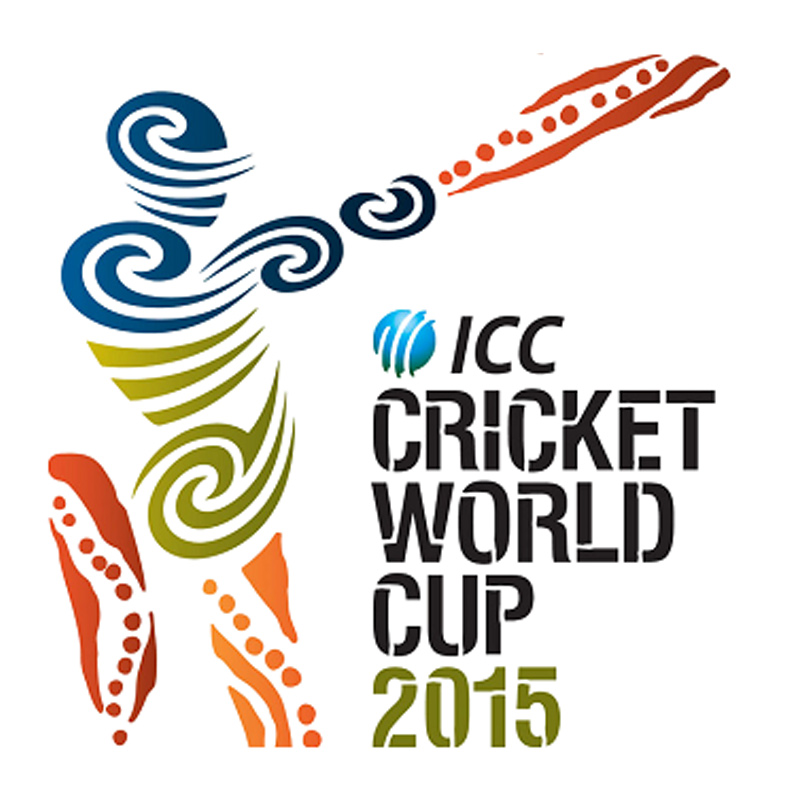
    MUMBAI: The logo for the International Cricket Council (ICC) Cricket World Cup 2015 to be held in Australia and New Zealand was unveiled as part of a symbolic handover from the 2011 hosts to their counterparts four years hence. 
     
    The  ICC received applications for the design from across the world before awarding it to the international agency, FutureBrand, whose Australian arm was invited to produce the logo for the ICC Cricket World Cup 2015. It in turn commissioned graphic consultancy, the Jumbana Group/Balarinji, to create both Australian and New Zealand cultural motifs so as to reflect the two indigenous countries‘ cultural identities.
     
    The result has been what ICC CEO Haroon Lorgat describes as “a dynamic logo which captures the cultural influences in the two host countries. The ICC, Cricket Australia and New Zealand Cricket have all worked together with the consultancies to produce this beautiful logo. On the back of a hugely successful ICC Cricket World Cup 2011, I am sure that it will gain recognition over the next four years as we use it in promotional, marketing and partner activations.”

    The consultancies were asked to convey the cultures of both countries in a positive and harmonious way and also to expresses a feeling of celebration and unity in the graphics.
     
    Each element of the logo contributes to building the story of the ICC‘s flagship event featuring the best players in the world competing for The Cup That Counts.

    The selected motifs are Maori Tohora symbolising toughness, pride and tribal culture; and aboriginal journey tracks symbolising spirit of the land.

    Balarinji based the motifs on interpretations of FutureBrand‘s creative brief signifying toughness, glory, resilience, connection and belonging.

    Cricket Australia CEO James Sutherland said, “This really brings it home to people in Australia and New Zealand that the countdown to the ICC Cricket World Cup 2015 has started. We have four years of hard work ahead of us but I am certain that we can match the very high standards set by the ICC Cricket World Cup 2011.”

  • ICC to take legal action against infringing news channels, will allow WC coverage of final

    ICC to take legal action against infringing news channels, will allow WC coverage of final

    MUMBAI: The International Cricket Council (ICC) has decided to allow the news channels to cover the final of the cricket World Cup on 2 April.

    However, the game’s governing body has also decided to take legal action against the channels who are not adhering to the guidelines.

    The ICC said Friday that it “will begin legal proceedings against offending Indian news channels who have repeatedly breached the News Access Guidelines for broadcasters for the ICC Cricket World Cup 2011”.

    ICC said that despite lengthy meeting at the Information and Broadcasting Ministry in New Delhi, the National Broadcasters Association (NBA) and the Broadcast Editors Association (BEA) “refused” to give assurances that they would desist from breaching the broadcast guidelines in their news programming.

    And thus, it (ICC) has decided to commence “legal action against the companies involved and will also seek to recover damages through the courts in India rather than bar the stations from the ICC Cricket World Cup final.”

    ICC CEO Haroon Lorgat said, “I am very disappointed that it has come to this. However, we need to do everything to protect our exclusive commercial rights and those of our partners. If that means we have to resort to legal action, that is regrettable but necessary.”

    Earlier, I&B Minister Ambika Soni had intervened and written to ICC president Sharad Pawar to take some action. Lorgat said that at the Ministry’s request, ICC officials travelled to New Delhi to meet with the NBA and BEA in an attempt to resolve the issue. “But they (NBA and BEA) were unfortunately not willing to conform to the guidelines agreed with the ICC prior to the event,” Lorgat said.

    He added that accreditations were issued to the NRH reporters and cameramen on condition that guidelines were observed. Subsequently those guidelines were breached on several occasions, particularly in respect of the blatant commercialisation of ICC World Cup footage and proprietary data by certain news broadcasters.

    “In the interests of the event, we have agreed to reinstate their accreditation for the final match of this hugely successful World Cup. However, following a number of written warnings to the channels concerned, it is now time for the ICC to act through the courts,” Lorgat added.

  • World Cup news blockade ends as ICC agrees to Govt plea for truce

    World Cup news blockade ends as ICC agrees to Govt plea for truce

     NEW DELHI: The International Cricket Council late this evening agreed to allow various Indian television channels to attend and report the India-Pakistan Cricket World Cup semi-final in Mohali tomorrow, following a request from Information and Broadcasting Minister Ambika Soni.

    Soni, who had written to ICC President Sharad Pawar, had also pointed out that the Prime Ministers of both India and Pakistan would be present at the match.

    Soni had proposed a 24-hour ‘truce‘ in a dispute created by Indian non-rights holders breaching the terms and conditions they had agreed to follow when they were awarded accreditation for the ICC Cricket World Cup 2011 in Bangladesh, India and Sri Lanka.

    In a statement, ICC Chief Executive Haroon Lorgat said: “Soni agreed to convene a meeting at the Ministry on 31 March to address the dispute which has been caused by repeated and serious breaches of the terms and conditions which these organizations had signed up to”.

    He added however that “to ensure that there is no misunderstanding, it is important for me to outline the facts. Firstly, the News Access Guidelines for Broadcasting the ICC Cricket World Cup were issued in January 2011 and all news broadcasters were reminded of these Guidelines in a letter from the ICC on 27 January. No objections to the guidelines were received and accreditations were issued to the non-rights holders’ reporters and cameramen on condition that these guidelines were followed. Sadly there have been many breaches and despite requests for such activity to cease the NRH stations continued to break the rules.
            
      “It was only as a last resort that the ICC withdrew the accreditation of these companies when they refused to sign an undertaking that they would desist from breaching the guidelines. It was not something done without very good reason.

    “It is also important to understand that the removal of the accreditation does not prevent these channels from reporting the ICC Cricket World Cup. It only prevents them from entering the stadium. Footage is provided to them from several agencies, including SNTV and Reuters, the ICC‘s official news providers.

    “I am grateful for the minister‘s intervention in calling a meeting but I must repeat that we are committed to protecting the rights and investments of our broadcast partners as well as the exclusivity of our commercial partners. We will not allow that to be compromised and if the relevant members of the News Broadcasters‘ Association are not willing to give the necessary undertakings we require, we will have no other option but to withdraw accreditation for the final in Mumbai.”

    Earlier today, the NBA in a meeting decided to desist from accessing ongoing cricket World Cup venues including Mohali and covering press conferences and practice sessions in the wake of ICC barring them from these events. In a statement, the NBA said they have taken the stand in the view of the “unreasonable” stand taken by the ICC at a crucial juncture of the World Cup matches.

  • ‘The ICC will continue to manage its economics on a global basis with India as a key market’ : ICC CEO Haroon Lorgat

    ‘The ICC will continue to manage its economics on a global basis with India as a key market’ : ICC CEO Haroon Lorgat

    Wearing the International Cricket Council (ICC) hat isn‘t an easy job these days. With the Indian Premier League (IPL) becoming the new economic powerhouse, scheduling international cricket can be a tough task.


    The challenge of the ICC is to ensure that a balance is maintained between the three formats – Test cricket, one-dayers and T20 – of the game as each has its own attraction and value proposition.


    The other task is to take the game to new markets including the US and China. The ICC has set aside $300 million for the development of the game.


    With the BCCI (Board of Control for Cricket in India) gaining superpower status in world cricket, the role of the ICC is to manage its economics on a global basis with India as a key market.


    In an interview with Indiantelevision.com‘s Ashwin Pinto, ICC CEO Haroon Lorgat talks about cricket continuing to be in a healthy state as it has three viable formats of the game running at the international level.


    Excerpts:
     
     
    How would you describe the health and state of cricket at this point of time?

    Cricket is in a very healthy state at present. We are fortunate to have three viable formats of the game at the international level – Tests, ODIs and T20Is. Having these three formats is a huge opportunity that offers our fans, sponsors and broadcasters different options. No other sport can boast three viable formats of the game at international level.


    What is the ICC‘s strategy going to be to ensure that all formats of the game co-exist?

    Depending on how all of us collectively manage the game, we believe that all three formats can survive because each has its own attraction and value proposition: Test cricket has its endurance, cut and thrust, and its tradition of more than 130 years and, importantly, it is regarded by the players as the ultimate format. It is the benchmark by which they will be measured.


    ODIs have a history of their own with nine ICC Cricket World Cups stretching back to 1975. This format offers a chance for sides to recover from difficult situations while still affording a result in a single day.


    It boasts the biggest attractions in the World Cup and largest team prize in the game.


    Twenty20 is a great new attraction and vehicle to develop the game at domestic level. This short and sharp format draws new interest and allows tournaments to take place over a short period of time.


    It is important that the ICC and our members get the balance right, particularly in terms of scheduling.


    What measures are being taken to protect Test cricket‘s status as the pinnacle of the game?

    There are three important factors – competitive matches, context and the spectator experience. Improvements can be made in all of these areas and we are working with our members to achieve this.


    Some current examples of this are the current investigation into developing greater context for Test cricket, the possibility of staging day/night Test cricket in territories that would benefit from that, and more effective and consistent marketing and promotion of Test match cricket.


    Could we see the day night concept being introduced post 2012 for Test cricket?

    We need to make sure that Test cricket is accessible to the supporters that want to watch it. The indications are that in some markets supporters may be more interested in watching Test cricket, at the venues and on television, if it is played in the evening.


    Day/night Test cricket is one of several options under consideration. It is dependent on successfully developing a cricket ball that can be used in night conditions and this would need to be trialled at the domestic level first.


    While you maintain that the ODI format is fine, the fact is that the Champions Trophy will now be held once in four years and not every two years. The Twenty20 World Cup will take place every two years. Doesn‘t this indicate that to some extent the balance of power in terms of viewership and revenue is shifting from the ODI towards Twenty20?

    Don‘t forget that the ICC cricket World Cup is also held every four years and between this and the Champions Trophy, there will be a 50-over tournament every two years until 2015. In other words, the World Twenty20 will alternate with a 50-over format every year.


    Not surprisingly the 50-over format at international level remains very popular with players, spectators, TV viewers and sponsors. The highly successful ICC Champions Trophy event in South Africa demonstrated that yet again as have other recent bilateral series.


    ‘Our major events are televised into more than 200 countries with hundreds of millions of viewers. Cricket receives the second highest amount of TV viewers of any team sport after soccer‘


    Are you satisfied at the progress that has been made in terms of the preparations for the 2011 World Cup?

    Yes, we have done extremely well with preparations during the course of this year.


    How much revenue will the ICC and the boards make from cricket‘s showpiece event?

    In terms of commercial and broadcast interests, the World Cup 2011 is bundled with all the other major ICC events over an eight-year period. The current deal will run from 2007 to 2015 but the details, as you would appreciate, are confidential.


    We will, though, be investing $300 million into the development of the game in our associate and affiliate members over the course of this cycle.
     

    Do you see the IPL posing a threat to international cricket? Already last year Sri Lanka withdrew from their tour of England so that their players could take part in the IPL which offers much more money?

    On balance, the IPL has been very positive for the sport overall. It must be remembered that it is a domestic tournament under the auspices of the BCCI and does not take precedence over international cricket. This is something that the IPL itself and the BCCI has made clear to the players and public.


    Is the ICC examining the possibility of creating a window for the IPL?
    Being a domestic event, there is no consideration for a window at present and there is also no request for one.


    Australia, New Zealand and South Africa are also planning a league. Would this pose a challenge to the ICC in terms of formulating the FTP post 2012?

    I am not aware of such a league being planned. In any case, it would not impact the FTP post 2012 as this has already been agreed subject to a few provisos.


    India dominates the game economically in that 80 per cent of the revenue generated comes from here. Does the ICC have a gameplan to reduce this imbalance which cannot be healthy for any sport?

    We are always pleased when our members are able to generate funds and optimise their revenues domestically. On the other hand, we have always been fortunate to attract local and global sponsors that are not purely driven by the Indian market.


    However, given the huge market in India, it is not a surprise that this is the revenue generating powerhouse for world cricket. We will, therefore, continue to manage our economics on a global basis with India as a key market.


    Does more need to be done in terms of how the game is covered on television or are you satisfied?

    I think that the coverage the game receives worldwide is excellent. Our major events are televised into more than 200 countries with hundreds of millions of viewers. Cricket receives the second highest amount of TV viewers of any team sport after soccer.


    New media is growing through mobile and the Internet. How is the ICC taking advantage of this to spread the reach of the game?

    We have an excellent partnership with Yahoo! in relation to our website and other internet platforms. We also work with our commercial partners to make the most of the mobile platforms.

     
    The BCCI recently formed a consortium to fight piracy. Is this a serious threat from your point of view?

    ICC supported the BCCI in this regard and is also working seriously to handle this issue. We are working with our stakeholders to form a coalition to actively address and counteract online piracy.
     

    Could you shed light on the strategy that the ICC follows when it comes to doing local sponsorships for its events?

    The strategy we adopt depends on the event and the market in which it is taking place.
    In truth, it was not really difficult to get in sponsorships for this year. We managed to secure some excellent local sponsors despite the global recession and we were very pleased with the overall outcome. That is a reflection of the good health of the game and the value we are able to offer our commercial partners.


    For instance, we got Standard Bank to sponsor the World Twenty20 cricket championship. Local partners are an important feature of all ICC events because they tend to have a vested interest in the markets in which our events are staged. The ticketing component of the local partner packages offers an excellent platform for targeted sales promotions by sponsors.


    Our marketing research suggests that the dollar value of the televised brand exposure that local partners receive far exceeds their level of investment, primarily because our events are uncluttered in terms of the number of branding messages.


    What are the steps taken by the ICC to avoid ambush marketing?

    We implement sensible and practical measures during our events to ensure that orchestrated ambush marketing does not occur. I don‘t want to go into too much detail. But it is suffice to say that we are vigilant in our efforts to preserve our commercial partners‘ rights and make sure they receive value for their investment. 

     
    Is it easy to spread the reach of cricket to emerging and new markets?

    We invest more in developing the game than any other sport, apart from soccer. The Pepsi ICC Development Programme is spending around $300 million over the next cycle to develop and promote cricket below Full Member level.

    The Development Programme has made huge strides over recent years and we have seen teams like Ireland, Kenya, Scotland and the Netherlands come through that programme and put in competitive performances against the top sides. Ireland made it through to the Super Eight stage of Cricket World Cup 2007 and the World Twenty20 2009 beating a number of Full Members along the way. We recently saw the Netherlands beating England at Lord‘s in the World Twenty20. Participation has doubled over the last five years with the biggest growth areas being junior and female players.


    Finally, do China and the US play an important role in the ICC‘s growth plan?

    We have identified the US and China as two obvious areas for potential growth and, through our regional structures, we are involved in developing the game there. They are two very distinct and different markets for cricket and so cannot really be compared.

    However, there is no doubt that both offer a wonderful opportunity for cricket to continue to spread the sport and we intend to do just that.