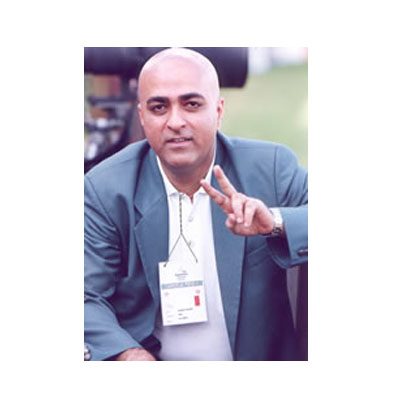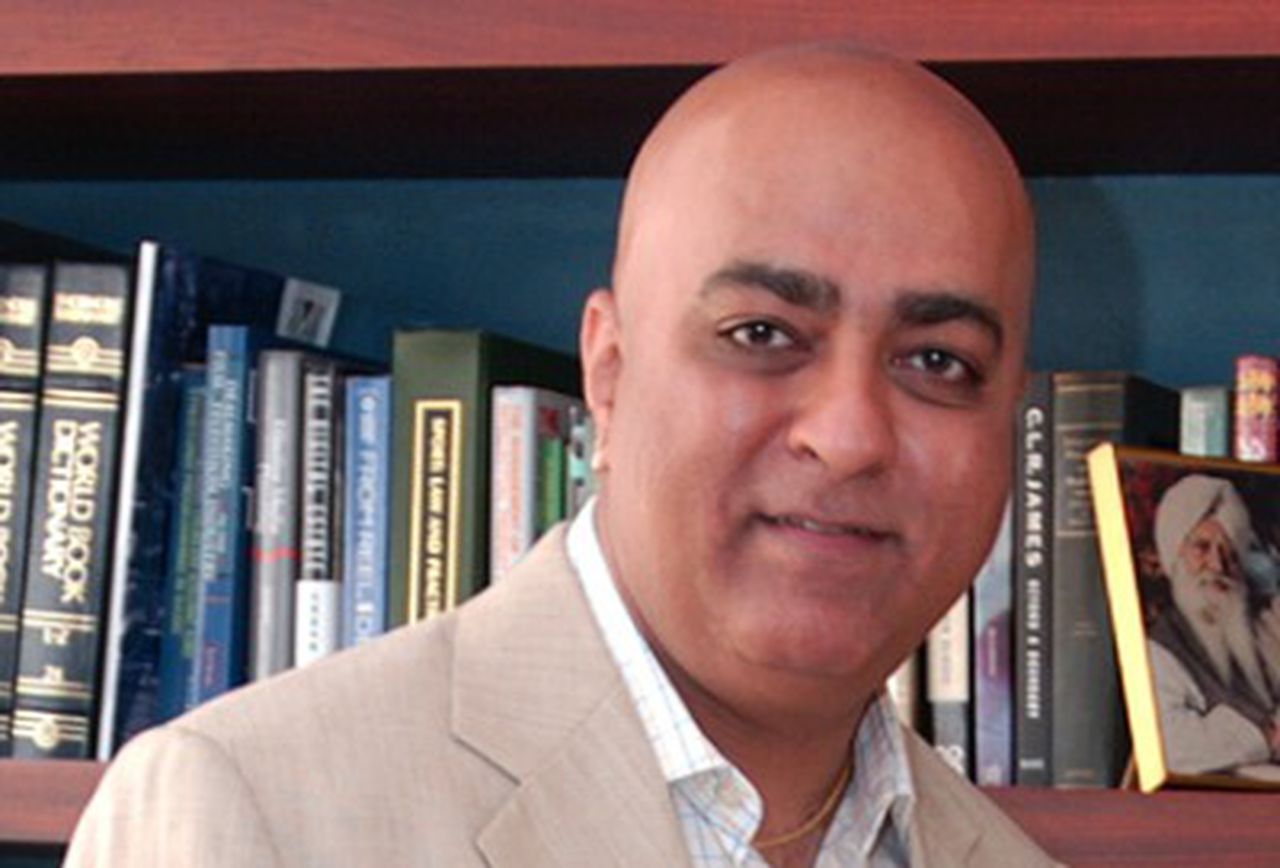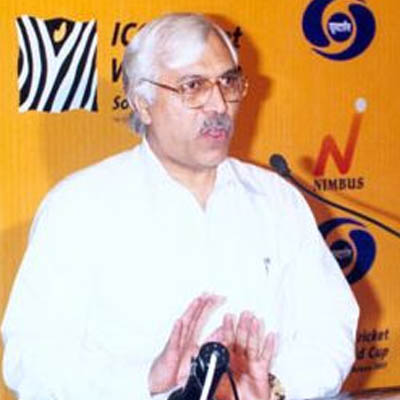
Tag: Harish Thawani

  • Brands, India’s monumental chess Olympiad24 win, TV channels & OTTs

    Brands, India’s monumental chess Olympiad24 win, TV channels & OTTs

    MUMBAI: Did Indian TV sports channels, streamers and brands miss out on a great branding and monetisation opportunity last week during India’s monumental victory at the 45th Chess Olympiad 2024?  

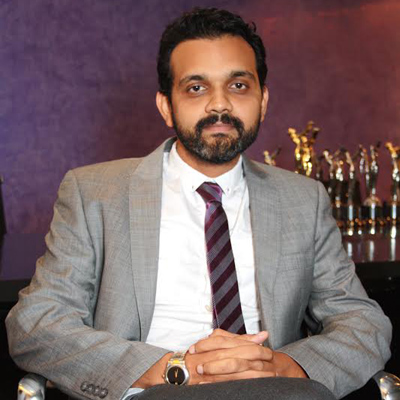
    Some such as former sports broadcaster and an ardent chess player Harish Thawani think so. Said he on linkedin: “Nothing in the history of Indian sports/games achievement will come close to this. Indian women and men BOTH win gold at the 45th FIDE Chess Olympiad 2024. Corporate India slept on associating with this opportunity, whether out of indifference to chess or because of advisors that are only cricket focused, I can’t say.” 

    Agreed Essar chief digital officer Vinod Sivaram Krishnan: “Cliff hangers of boards, accompanied by the right production values and expert commentary would have ensured that the edge-of-the-seat action could be converted into a significant marketing opportunity.”

    According to Thawani, 10 per cent  of the global population play chess – that is about 700 million.  “India has an estimated 85 million people that play chess. That’s more people than any other sport in India except cricket. So, there is an audience, it just is not being addressed,” he pointed out on linkedin.  

    He could well be right as according to online analytics, chess.com’s second largest traffic comes from India, accounting for some 15.4 million users. Then chessbaseIndia, chess.com and gothamchess have  1.92 million,  2.05 million subs, 5.43 million active subs respectively on youtube.

    Krishnan revealed that, like millions of others, he was glued to the matches online and on Youtube. But he added that “the poor quality of coverage of the event in the mainstream media was underwhelming. I realized that the opportunity was very significant.”

     Thawani explained that the feat by both the men and the women chess players as a team was “staggering, unbelievable, a mind-bending accomplishment. To win both golds with almost 200nations participating. It’s akin to a country winning the 100/200 meters and marathon in both men’s and women’s at Olympics. Anyone who has played competitive chess even at local level will tell you that this was impossible. Until today.” 

    Echoing  many a sports broadcasting acquisition executive, who complain of low viewership for any sports apart from cricket LabIndia Instruments regional sales manager Seshu Ramakrishnan Suri said: “Chess is not an audience sport and unless one knows the game they cannot enjoy. If it is not a mass sport why will a corporate get involved as they look at reward coming out of it.” 

    To this Thawani had a sharp reply: “..audience size is not the only reason to sponsor a sport/game – quality of audience, level of involvement, national pride, brand values synergy (remember IBM and Intel’s involvement with chess?) and more.” 

    Krishnan highlighted that chess has legs as seen in the current generation of chess players who displayed “fearless play from all 10 of them in the face of the best that the world has to offer meant that the result was just the icing on the cake. Knowing that there are several other strong players waiting in the wings for each one playing today gives the same feeling of bench strength that one gets in cricket. It was so heartening to see our young stalwarts take on veterans without a shred of nervousness!”

    But all is not lost as former sports broadcast executive Deep Drona said on linkedin: “It’s time to broaden the chatter beyond the popular or most obvious in the space of sports.”

    Are the sports streamers, broadcasters and brands listening?

    Will they rise and put their might behind chess as they have done with kabaddi and football?

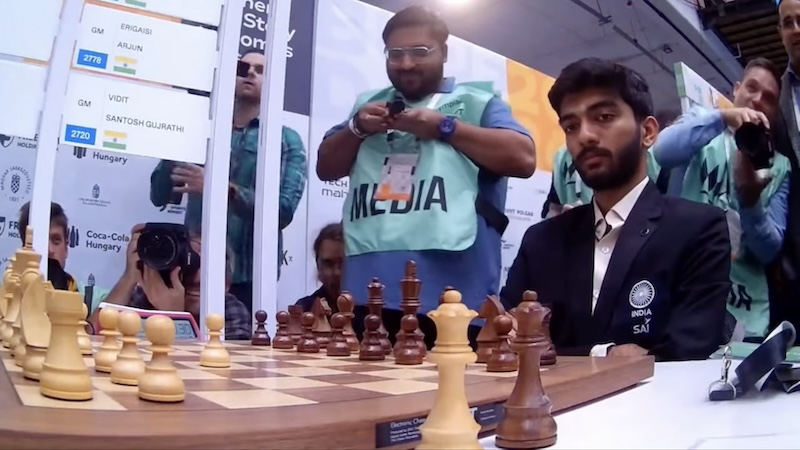
    (For the uninitiated, India’s men and women’s chess teams consisting of  Gukesh Dommaraju – more commonly known as Gukesh D , Rameshbabu Praggnanandhaa and Arjun Erigaisi and Harika Dronavalli, Vaishali Rameshbabu, Divya Deshmukh, Vantika Agrawal, and Tania Sachdev won the gold each in the men’s and women’s event respectively. Gukesh, Erigaisi, Deshmukh and Agrawal bagged individual gold medals on their respective boards.)

  • AI-based chess board maker Square Off introduces two new products

    AI-based chess board maker Square Off introduces two new products

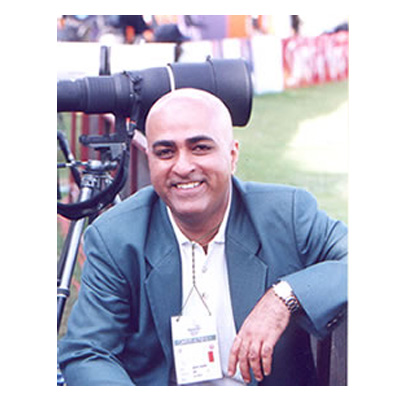
    MUMBAI: Harish Thawani, the founder of Nimbus and Neo Sports is one mean competitor who loves the mental battle the game of chess provides. Are there any other players amongst media executives who want to rise up to the challenge? This one is for Thawani and for them.

    Three-year-old Mumbai-based smart chess board maker SquareOff has been wowing game players worldwide with its gee-whiz products that use robotics, artificial intelligence, and leverage the internet of things. Two of its best-sellers are the Kingdom Set which is priced at $399 and the other is Grand Kingdom chess set at $449. Both consist of a chessboard, chess pieces, a charger, an adapter, a mobile stand, a manual and an app that allows players to stay connected and play online.

    Recently, it added two new products Square off Neo and Swap, raising raise $1 million during the pandemic lockdown on crowdfunding platforms Kickstarter and Indiegogo to roll out cheaper versions for those wanting more affordable options.

    Square Off Neo, at a starting price of $169, is a lighter, faster and affordable chess board meant for every household. Its adaptive AI, personalized chess coaching and 1.5x faster movements make it a-hard-to-resist for any chess lover out there

    Square Off Swap, currently priced at $229, offers users the convenience of playing multiple board games on the same surface. To begin with, it supports four games – chess, draughts, halma and Connect 4, making it a desirable board game for all age groups. Paired with the Square Off App, both these products are globally connected; so, whether the opponent is in a different room or a different continent, the game still goes on!

    “The lockdowns have motivated people to rediscover their passion and connected gaming has seen tremendous growth,” says SquareOff CEO, Bhavya Gohil. “Our vision is to enable connected automated gaming over a single platform. With Neo and Swap, we’ve attempted to revolutionise board gaming and thereby the experience altogether. Our next step is to get the boards in production and deliver at the earliest. Though the pandemic has affected our delivery timelines, we are committed to delivering quality products to our backers at the earliest.”

  • Neo Sports’ Mautik Tolia opens up on the Impact of DAS

    Neo Sports’ Mautik Tolia opens up on the Impact of DAS

    DAS (digital addressable system) is here to stay. Despite the shortcomings, the hiccups in the implementation of the first two phases, the government has announced that it will not extend the deadlines of December 31, 2015 for phase III areas and December 31, 2016 for phase IV, when the entire country is expected to be digitised. After complete switchover, cable TV services will be available only through set top boxes in India.

     
    We, at the Indiantelevision.com are starting a new section – ‘The Impact of DAS’ through which thought leaders, experts from the television ecosystem will share their thoughts, ideas, and say their piece on the subject. We are beginning with the impact of DAS on the sports broadcasting ecosystem. 

     
    Our expert for the section is Neo Sports EVP programming Mautik Tolia.


    Excerpts:


    How big an impact has phase I and II digitization made when it comes to subscription revenue?


    Digitization has been a big step forward not just in terms of revenue but in providing secular access to viewers to more sports events, apart from just cricket. As India moves more and more to a multi-sport fan universe, digitization will continue to play in important role in increasing the popularity of all sports. Combined with the increasing market share of DTH platforms, which in turn enhances the reach of sports networks without whimsical interruptions (which were a constant feature in the analog domain) we at neo sports see other sports climbing to a 40 per cent share of revenue universe in 3 years time.


    From sports broadcaster’s point of view are you happy with the two phases of digitization?


    Doubtless there have been roll out issues and delays in implementation but on balance digitization has been a positive. It will be some time before more sophistication is achieved in packages and tiers, which will steadily take us to a CPS billing norm. Transparency in billing remains a challenge but we believe that too will be resolved in the next 2-3 years.


    Is the sports broadcasting industry in a subscription positive scenario? Or we are still ad dependent?


    From a 90:10 ad: subscription ratio 10 years back, the sports broadcast industry has probably moved to a 70:30 maybe even 65:35 ratio. This may even be 60:40 or 55:45 in the case of some networks. Due to significant ad spend on cricket, especially IPL this ratio will inch its way to maybe 50:50 in 3 years for the industry as a whole.


    Are sports like Football, Badminton which are hugely popular but have very little room for advertisement profitable assets for broadcasters?


    Aside of Cricket, the dominant sports are football, tennis, golf, hockey, badminton and motor sport. Except for Football and Badmnton, others have adequate ad break potential. At Neo Sports we believe that it is more a question of focus, ability and experience when it comes to monetizing sports other than cricket.


    With phase III and IV scheduled do you see a substantial inclination in subscription revenue?


    We see further momentum in subscription revenues, reach and secular access for all sports in phase 3 and 4.


    How can a non cricket sport or a sport with least ad room turn profitable for broadcasters in India?


    The profitability conundrum is more a function of irrational acquisition prices and lack of focus on monetizing all sports. We have seen at least one sports broadcaster recently pay over the top for rights that were being jettisoned by another and for which there may well have been no other takers. Ill informed and panic buying has resulted in lack of profitability for some. At Neo Sports we believe that intense discipline is required both with acquisitions as well as in monetizing assets. Wise spending may not make a sports broadcaster no 1 but there are plenty of sports rights constantly available, the universe of sports fans is rapidly expanding, advertisers are increasingly willing to spend on sports other than cricket and affiliate platforms understand that tens of millions of viewers are tuning into other sports – hence there is room for multiple sports networks and increasing opportunity for revenue and viewership expansion.

  • Neo Sports Broadcast set for mega revamp; sees Rs 400 crore equity infusion

    Neo Sports Broadcast set for mega revamp; sees Rs 400 crore equity infusion

    MUMBAI: “They say in golf if you are shooting 100 then your golf needs attention but if you are scoring 80 then your business may need attention. The sweet spot is somewhere in between, the ideal work life balance.” That’s how Harish Thawani, a man synonymous with the Indian sports industry and currently NEO Sports Broadcast chairman, begins the conversation after weeks of chasing to understand the company’s play in the current ecosystem.


    And be rest assured that this avid golfer has surely found that sweet spot in between, for his company Neo Sports Broadcast will soon see a complete makeover and fresh investments to the tune of Rs 400 crore in content, branding, marketing and technology in 2015-16.


    Neo Sports Broadcast, which operates two channels – Neo Prime and Neo Sports, will also see a slew of new initiatives being launched soon.


    “Our existing shareholders have decided to make an equity infusion of approximately Rs 400 crore into the company this year, subject to the necessary regulatory approvals,” Thawani tells Indiantelevision.com.


    Equity Infusion and Consumer Insights:


    The existing shareholders of Neo includes Oman Investment Fund, Nimbus and Thawani himself. Nimbus in turn is majority owned by Cisco, 3i and OIF; with Thawani and associates holding a significant stake. In 2012, after having lost the BCCI cricketing rights, Neo decided to re-engineer itself on its future growth story. Through consumer insights, TAM numbers and research undertaken by the company, it picked up two trends in the market.


    “One, sports other than cricket like football, tennis, badminton, golf and basketball were gaining significant traction and it helped us to find ourselves a relevant space in the ecosystem. Secondly, digitisation was providing an opportunity to broadcasters to cater to over 150 million viewers that now watch sports other than cricket,” Thawani explains.


    Based on these insights the company has decided to acquire quite a few properties for this year for its two channels.


    New Rights Acquisitions:


    As Neo Prime and Neo Sports look to boost their fan base based on its recent research on viewers’ preferences, the company has begun a fresh set of rights acquisitions. As many as five new rights deals have been recently concluded and at least five more are in the pipeline, providing over 40 new live events and over 800 hours of live programming a year. All rights acquisitions have been done on a multi-year basis.


    Neo has also boosted its football portfolio with a top five European league the Dutch Eredivisie and will shortly add another major European football property to its portfolio. Its Eredivisie acquisition followed the research insights that top tier clubs like Ajax, PSV Eindhoven and Feyenoord have a significant fan base in India.


    Another consumer insight showed that table tennis is an under-served sport in India, despite being a huge participation sport, commonly understood by viewers. This prompted Neo to acquire not just the World Cups and World Championships but also the ITTF World Tour. “The rise of Indians on the table tennis circuit augurs well for the growth of its viewership in India,” states Thawani.


    The telecast rights to the 2015 European Games (similar to the Asian Games) have been acquired by Neo and will be aired this summer. This second largest multi-nation, multi-sport event is expected to be a spectacular display of sport at the highest level.


    To boost its motor sport coverage and enthused by the fact that technology now enables live coverage, Neo has acquired the World Rally Championships (all 12 events a year).


    It has also boosted its coverage of live horse racing to engage the super affluent horse racing fans in India, with its deal to air English horse racing (including the major Derbies and Classics).


    Also in the pipeline is a programming band devoted to fight sport, which is expected to launch in the second half of 2015 apart from a major European football asset, a series of top tier badminton events and a tennis rights package.


    This complements Neo’s offering in tennis, consisting of the French Open, Davis Cup and Fed Cup; its top tier golf coverage with the PGA Tour of about 40 events a year, Bundesliga football, World Basketball Championships and others.


    When queried about plans for cricket, Thawani says, “It has been widely reported that Neo was recently a bidder for the ICC rights, which should convey that our interest in cricket will continue. There are several cricket rights that will come to market in the coming 18 months, and we will evaluate each opportunity.”


    Channel Upgrade to HD: 


    “We will convert both our channels; Neo Prime and Neo Sports from SD to HD. We aim to make this transition in October-December 2015 quarter,” says the man, who besides being an avid golfer, played as many as four other sports competitively at university and club level.


    Consumer Engagement:


    The company will also launch a multimedia campaign, including digital media to communicate its enhanced programming to fans in order to boost brand recall and increased engagement. The mega multimedia campaign will begin from as early as May 2015.


    It has been learnt that the company had seen an interest from companies such as Euro Sport, BeIn Sports and Super Sports among others to either buy a majority stake or outright purchase of Neo Sports Broadcast. However, Thawani refused to comment on any specific discussions citing confidentiality provisions, but states, “Neo is, to my knowledge, the only profitable sports broadcaster in India, having made profits in 2013-14 and we expect to sustain that trend. This has enthused our shareholders to back the company in its quest for further growth. Consequently, we have taken a decision to not evaluate any stake sale. When required, we may induct one more financial investor.”


    It is clear that Neo shareholders believe that smart management and digitisation would help it go a long way and therefore it would be a wrong time to disinvest. It may be recalled that just eight years back, Neo had one of the most successful pay TV launches in the world of sport, quickly becoming the number one sports channel in 2009 and number one sports network by 2010.


    In the world of today’s broadcast television, where content, technology and innovation rapidly changes the share of audience, Neo looks poised to take competition head-on with fresh capital infusion and many a new properties firmly tucked under its belt.

  • ESPN Star wins ICC global telecast rights

    ESPN Star wins ICC global telecast rights

    MUMBAI: In what was virtually a come-from-behind victory, ESPN Star Sports has walked away with the audio-visual rights for International Cricket Council (ICC) conducted events for the next eight years from late 2007 to 2015.

    A statement issued by the ICC announcing the winner said, “The decision was a unanimous one, taken by the ICC Board in Dubai on Saturday, and the ICC will now seek to reach final agreement with ESPN STAR Sports.”

    The ICC statement was silent on what the “final figure on the agreement” was, other than to say that it was “significantly in excess of the ICC’s previous commercial deal The previous agreement with the Global Cricket Corporation (GCC), included sponsorship rights as well as the audio-visual component and was worth $550 million for the years 2000 to 2007.

    ESS, which had only made a territory bid covering the Indian Subcontinent and the Middle East in the first round, upped the ante in the second and final round of tenders on Thursday, putting in a global bid and beating out Harish Thawani’s Nimbus, as well as separate tenders made by Zee and its recent acquisition Ten Sports. Ten Sports’ bid was made in partnership with sports marketing agency Infront.

    As far as how the bids stacked up in the end, ESS’ winning punt was $ 1.1 billion, well ahead of Nimbus bid of $ 900 million, sources in Dubai close to the developments have told Indiantelevision.com. As for Zee and Ten Sports, their bids were in the region of $ 850 million and $ 825 million respectively.

    A point of note is that other than Nimbus, all the bidders had upped their tender values in the second round. ESS, as already mentioned, hadn’t even put in a global bid in the earlier round. Zee’s earlier bid was reportedly $ 620 million, while in the case of Ten Sports-Infront, it was said to be $ 750 million.

    Included in the eight-year period of the ICC rights ESS has acquired are 18 ICC tournaments with two World Cups, in Asia (2011) and Australasia (2015), and a minimum of three Champions Trophy tournaments.

    Also included are the first two Twenty20 World Championships, in South Africa (2007) and England (2009), the latter taking place in the ICC’s centenary year.

    Then there are Cricket World Cup qualifiers, four ICC U/19 Cricket World Cups, and, for the first time, the Women’s Cricket World Cup, with two tournaments scheduled for 2009 (Australia) and 2013 (India) in the eight-year timeframe.

    ESS managing director Jamie Davis said,“This acquisition affirms our commitment to the Indian subcontinent and the world and we are absolutely delighted to bring the exciting lineup of ICC Events to millions of cricket fans globally.”

    IS Bindra, the former Board of Control for Cricket in India (BCCI) president and India’s representative at the meeting, said: “This deal is good for the game and it shows cricket is growing.”
    One aspect that comes out of all this is that Sony Entertainment Television India, the incumbent ICC rights holder for the Indian subcontinent, has closed the chapter on its sports telecast ambitions, at least for the foreseeable future.

    As for ESPN Star, it has now reasserted its dominance of the sports broadcast arena, particularly in India in what has become a three sports network market – ESS, Zee Sports-Ten Sports and Nimbus’ Neo Sports.

  • ICC to decide on bids only next month

    ICC to decide on bids only next month

    MUMBAI: The International Cricket Council (ICC) will be discussing the matter of the sale of its broadcast rights at a meeting of the ICC’s Board only on 9 December.

    Initial meetings with potential partners have been taking place, the ICC has said, further clarifying that reports stating that the matter will be decided today are misleading.

    It is worth noting here that Zee Telefilms CMD Subhash Chandra, in an interview to business news channel CNBC TV18 given on Monday, when he announced the acquisition of Ten Sports, had said in this regard, “I am told that next Friday is when they (the ICC) will open the financial bids. Hopefully Friday next we will know about it.”

    Considering that Zee is one of the companies that has put in a bid for these rights, it would seem that the ICC has done a poor job of communicating its timelines to the concerned parties.

    As had been reported earlier by Indiantelevision.com, there have only been three global bids tabled and a significant absentee from the list is ESPN Star Sports.

    As it turns out, two of the global rights bidders — Zee Telefilms and Ten Sports-Infront — are acting in consort while the third contender is the now familiar name in all matters cricketing — Harish Thawani’s Nimbus.

    As for ESPN Star Sports, sources familiar with the developments say it has tabled a territory bid that covers the Indian Subcontinent and the Middle East.

  • Sony withdraws from ICC rights bid process

    Sony withdraws from ICC rights bid process

    MUMBAI: Sony Entertainment Television India, the “incumbent” holder of telecast rights for ICC cricket in the subcontinent, has withdrawn from the bidding process for the next round of bids, for which the deadline for bids submission is 10 November.

    Up for grabs are the audio-visual rights for 18 ICC tournaments starting from the second half of 2007 till the World Cup in 2015. The last agreement began in 2000 and ends with the ICC Cricket World Cup 2007 in the West Indies next March.

    The Sony Pictures Television International (SPTI) board was unwilling to bankroll the bid, which was seen as being too fraught with financial risk.

    Confirming the developments to Indiantelevision.com, Set India CEO Kunal Dasgupta had this to say: “We believe that the terms (of the tender) are quite onerous. We do not want to put our company at risk so we are constrained to hold back our bid. But that does not take away our right to enter into post-bid arrangements with the winning bidders.”

    Dasgupta made it clear that Sony did not want to get sucked into a bidding frenzy similar to what was witnessed in February when Harish Thawani’s Nimbus Communications walked away with the telecast rights to India cricket after putting in a bank-breaking $612.18 million composite bid. Nimbus’ bid was nearly $ 200 million higher than the base price of $425 million that had been set by the Indian cricket board.

    A point also worth noting is that Sony’s composite bid for the BCCI rights, made through Set Satellite Singapore Pte, was $478 million for the global rights and $397 million for the India territory.

    AGAIN A FACE-OFF BETWEEN MURDOCH AND CHANDRA?
    With Sony out of the reckoning, it could well be the same two who finally face off for the current block of cricket property, with Subhash Chandra squaring off against one time ally and now bitter foe Rupert Murdoch. It was Murdoch who won that particular skirmish so there will be some interesting history at play when the bids are opened at the ICC’s headquarters in Dubai tomorrow.

    To rewind to 1999, the News Corp controlled Global Cricket Corporation (GCC) had paid out $550 million to secure the rights after a fierce bidding war with Chandra’s Zee Telefilms. At the time of bidding, the GCC was a 50:50 JV between News Corp and World Sport Nimbus (itself a 50:50 JV between Nimbus and the UK-headquartered World Sport Group). News Corp subsequently bought out WSN’s stake in the JV.

    The GCC had sold the satellite rights for the Indian subcontinent territory to Sony Entertainment Television India for $ 208 million.

    One player that will definitely not be in this particular game is Nimbus. It has been taken out of the equation by the News Corp distribution deal. And neither, for that matter, will News Corp be bidding as a separate entity from ESPN Star Sports.

    Market speculation on how high the bidding will go this time round ranges from at least a billion dollars to even crossing $ 1.7 billion.

  • Nimbus looks to push genre frontiers with Neo Sports Plus

    Nimbus looks to push genre frontiers with Neo Sports Plus

    MUMBAI: Your Gateway to the best sporting action! This is the tagline that Nimbus is using to push its second channel Neo Sports Plus. The channel, which Nimbus says is a sports entertainment offering, has launched today. Sister cricket channel Neo Sports had launched a month back.

    Neo Sports Plus will offer content from a variety of sports like soccer, badminton, motorsports. As Nimbus chairman Harish Thawani says, “Some of the recent Indian sporting achievements have come from sports disciplines like golf, tennis and motor racing, to name a few. On the back of these developments we believe that there is potential in building sustained consumer interest in sports beyond cricket amongst Indians in the medium to long term through strategic content and marketing initiatives.”

    On the soccer front Neo Sports Plus has acquired content from Italy, Germany, Brazil and Argentina through leagues like Bundesliga, Serie A, Copa Suda Americana and Copa Libertadores. In motorsports it has got V8 Supercars and Superbike World Championships. Additionally, the channel is also focussing on badminton through properties like the Sudirman Cup, The Thomas Cup, The Uber Cup and The World Badminton Championship. Thawani says that the sport, despite strong grassroots support in India, has not got the backing of a channel to realise its potential.

    Neo Sports Broadcast CEO Shashi Kalathil says that the aim is to build up passion for different sports in the long run. It has sports entertainment concepts on the drawing board. Some shows have gone into production. The channel is looking at chat shows, reality shows, sports serials, game shows, quizzes etc.

    Further Neo Sports Plus will also air India cricket in dubbed languages like Hindi. This initiative kicks off this month with the Duleep trophy. Kalathil says that search has been done into what kind of sports entertainment concepts the Indian viewer will like and dislike.

    It has already come up with some entertainment shows. One of them is Unbreakable. This focusses on a memorable performance of a batsman or a bowler or a partnership that refused to buckle under pressure. Then there is Test of Strength. This is a daily show that focusses on India’s great cricketing moments. When India Beat looks at victories by the Indian cricket team. Neo Sports Rewind provides a crisp look at classic ODIs. Mission Impossible is a one hour show that looks at some of the finest cricket matches. The anchor takes viewers through the match and sees how an individual made the impossible possible.

  • Nimbus pegs 2-channel package price at Rs 58

    Nimbus pegs 2-channel package price at Rs 58

    MUMBAI: With the Conditional Access System (CAS) controversy continuing unabated at the broadcasters’ level, Nimbus Sports Broadcast has quoted a premium price for two of its channels at Rs 58 to the sector regulator.

    The newly launched Neo Sports, which debuted on 1 October in some parts of the country, is likely to turn pay ahead of the January 2007 cricket series. This company has priced this channel at Rs 40.

    Even, the yet-to be launched Neo Sports Plus holds a price tag of Rs 40. The company has specified a bundled price of Rs 58 for the two channels.

    The proposed prices are yet to be accepted by the Telecom Regulatory Authority of India (Trai), which in the normal course takes about one month to issue procedural clearance. Interestingly, rival sports channels ESPN and Star Sports are priced at Rs 38 per subscriber for the two-channel bundle.

    The rates at which the two Neo Sports have been pegged are in line with what Nimbus Communications chairman Harish Thawani had told indiantelevision.com in a recent interview: “We are looking to charge a premium price. Broadcasters so far have not had the guts to charge the price that they feel reflects the true value of their product. What I can confirm is that our pricing will be considerably higher than ESPN Star Sports.”

    TDSAT had earlier directed that the rates of the channels available on the direct to home platform (DTH) will cost half the price of what is charged to cable platforms (exclusive of taxes).

    This benchmark judgment was issued with respect to Dish TV vs Star India, wherein the two were haggling over price. The reason for the verdict was attributed to DTH being an addressable system where loss of revenue down the value chain is negligible if not zero.

    The distribution rights for all Nimbus’ sports channels are held by Rupert Murdoch’s Star India and run till 2010. The Star-Nimbus distribution deal will apply to the two sports channels that will be launching by the end of the year as well as any future sports channels from the Neo Sports stable (a sports news channel is also in the pipeline scheduled for debut in the second half of 2007).

    Although Nimbus has proposed the prices of its channels to Trai, it has already created doubts in the minds of the various stakeholders, whether this would be easily accepted by the regulator and if yes, whether it will go down well with the industry.

    Under the CAS notified areas, the two Nimbus channels will be charged as per the ceiling price fixed by Trai.

  • ‘I forecast that in three years time there will only be two sports broadcasters who will have any kind of market share’ : Harish Thawani – Nimbus Communications chairman

    ‘I forecast that in three years time there will only be two sports broadcasters who will have any kind of market share’ : Harish Thawani – Nimbus Communications chairman

    Early this year in February, Nimbus shook up the sports broadcasting sector by bidding $ 612.8 million for the rights to India cricket. Driven by the vision of its chairman Harish Thawani, the company has just launched its cricket centric channel Neo Sports. A second channel Neo Sports Plus, which will look to converge somewhere between sports and entertainment, is soon to follow in the next few months.

    It then signed a distribution deal with Star, which besides cable is also looking at Neo Sports to push DTH. Nimbus has also put a team in place to run Neo Sports. Indiantelevision.com’s Ashwin Pinto caught up with Harish Thawani over lunch for a lowdown on the company’s plans, the importance of improving stickiness, the advertising game plan, and a possible shakeout in the sports broadcasting sector.

    Excerpts:

    These are exciting times for Nimbus. First, the acquisition of India cricket, which allows you to enter the big league. Now you will be launching two sports channels. What is the vision you have for Nimbus Sports Broadcast?
    These are exciting times for the Indian broadcasting sector as a whole. We are seeing growth rates that are unprecedented and not slowing down. The growth forecast is robust for the next three to five years. The broadcasting sector is growing faster than the economy. We are seeing 7.5 – 8.5 per cent growth rates in the economy while for broadcasting, it is growing at 17-19 per cent.

    The interesting thing is that the sports sector seems to be growing the fastest. The spends on sports, whether it is on air or sponsorship or even on leisure activities, is big. You will notice that the sales of sports products like Nike, Adidas are all up.

    It is interesting that we are entering the sports broadcasting industry at a time when new alignments, new partnerships are taking place. The industry is maturing in such a way that you can compete with one party in one segment and collaborate with them in another segment of business.

    Our distribution alliance with Star is an indication of the growing maturity of the marketplace.

    So yes, I would say that we very much look forward to the impact that Neo Sports will make, not just on the broadcasting sector but also on consumers.

    More than Neo Sports, which is obviously cricket centric, we are even more excited about seeing the impact that Neo Sports Plus will make. It will be relatively slower as cricket being a bigger driver allows Neo Sports to be the bigger channel of the two. In the medium term, which is one to two years, we will be able to see what Neo Sports Plus has been able to achieve. Preliminary research shows that there is a huge appetite for a channel that converges its programming somewhere between sports and entertainment.

    When they launch, what will the programming of Neo Sports and Neo Sports Plus look like?
    We are launching only Neo Sports first. The launch date of the other channel is yet to be firmed up. We had earlier scheduled to launch it in the second quarter of 2007 which is April – June. But I can confirm that we are likely to bring that forward. We have been able to get ready faster. It is running ahead of schedule. For Neo Sports, the momentum will start building up towards the end of December just ahead of the first major international series.

    The industry is maturing in such a way that you can compete with one party in one segment and collaborate with them in another segment of business

    ESPN Star Sports had tried a soap concept Dream Team. That did not work out. Will you be doing this kind of programming on Neo Sports Plus?
    I am not off hand familiar with what ESPN Star Sports tried. I do recall them running some internationally syndicated football show.

    If that is what they chose to do then our vision is different. We have hit upon insights that may be unique. More importantly, as a company that has produced both sports and entertainment at disparate ends with more than reasonable success, the skill sets that we bring to the table are perhaps somewhat unique. It is not just based on understanding the consumer but also being able to deliver what the consumer wants.

    To pick up the case study of ESPN Star Sports, I think that running an English language soap opera on a minority interest sport like football is perhaps not the formula for succeeding and establishing an audience that is loyal to the concept of sports entertainment. English language soap per se does not do well.

    Football, while being a global sport, still lags significantly behind cricket in India. A Hindi language football soap opera might have done better. A Hindi language cricket soap opera will do even better.

    We are not planning to do that. We will move away from the obvious and move towards the slightly more complex solutions. I hasten to add that the perception of sports entertainment is presenting sports in an entertaining manner. That is now what we are attempting to do. We are looking to converge the two.

    Could you talk about the team that is being put in place to run the channels as well as the organisational restructuring?
    Shashi Kalathil has joined as chief executive of Neo Sports. We wooed and persuaded him because of the outstanding track record he has as a senior management professional. He is said to be a great motivator and is a young CEO. His many years at Pepsi have given him unique insights into how large advertisers buy cricket. He has been on the customer end to what was then the largest buyer of sport in cricket in India.

    It was also possibly one of the top five buyers of sport worldwide.

    Traditionally the tendency of a broadcaster is to look for a domain specialist out of broadcasting. We found that we needed domain specialists from the consumer products side of things. The second advantage he brought to the table is that he has worked in a startup Aircel. A startup has its own unique set of issues to confront.

    Scott Ferguson is the Asia-wide COO. He came out of the Sky Sports system. He worked with Orbit in the Middle East. We then tried to ensure that everybody under Shashi was from the broadcasting sector. Ranjith Rajasekharan is our marketing head. He come to us from MTV. Sanjay Goyal is our VP research and planning. He came back to us from CNBC. Sunil Manocha is the ad sales head and returns to us from Mindshare.

    Sonali Rege is our head of production. She comes to us from Channel [V]. Hitesh Sabbarwal is our VP affiliate sales. He comes to us from Zoom, and before that Sony. Each one of them is a domain, sector specialist.

    Shashi is spared the headache of having a role of having to tweak the broadcasting side of things. Customer acquisition, brand focus, revenue growth are the areas that Shashi will be able to focus on without having to worry about the back office so to speak.

    Where does Digvijay Singh fit in all this?
    He runs Nimbus Sport, which is the international sports rights management agency and production company. He does not fit into Neo Sports. Interestingly enough, Nimbus Sport and Neo Sport will compete in certain segments like rights acquisition.

    They are two different, separate arms. There will be conflict between the two and why not? Star Sports is a partner with ESPN and Star India is our distribution platform.

    This is an example where a business of one company may compete with another business of the company. The theory for us is that if 10 per cent of Nimbus Sports’ profits are eaten into by Neo Sports then it is fine.

    Cumulatively, they will profit much more than one entity might have done on its own. There is also a physical separation between the two entities. One is headquartered in Singapore. One is headquartered from India. Except for rights there is nothing in common with the two. One is a service provider for the industry. The other is a product delivered to the consumer.

    Nimbus Sport may provide services to Neo Sports. Nimbus Sport is a global player in rights management while Neo Sport will only focus on acquiring India rights.