Tag: Harish Bijoor

  • What next after the WFH honeymoon?

    What next after the WFH honeymoon?

    NEW DELHI: The ‘new normal’ might already have started setting in with major conglomerates of the world taking calls like allowing their employees to work from home ‘forever’. Recently, Twitter CEO Jack Dorsey announced in a company-wide email that while opening the offices will be the company’s call, to come back will be totally an employee’s choice.

    Several other tech companies, including the other two giants Facebook and Google, have told their employees to work from home till the end of this year. Closer home, e-learning platform Unacademy announced that 60 per cent of its workforce will be working from home permanently, even after the lockdown.

    This gives a clear picture of what the future of workplaces is going to be like, at least for the tech firms where most of the work can be managed over servers and clouds. Reacting to the same, brand-thinker and independent consultant Harish Bijoor noted: “WFH makes sense for every factor: economic, social, family, commute, cost, time, and common sense. Corporate society does not need to artificially divide home and work anymore. It makes great sense!”

    Brand-nomics managing director Viren Razdan said: “While Google has announced WFH beyond the lockdown, the truth is tech companies have thrived on the idea of WFH or rather WFA or Work From Anywhere. Amazon and Apple were born in home-garages, giving birth to the cult of ‘ideas behind napkins’, start-up buzz at cafes, the informality bred a new culture of play.”

    Sharing his thoughts on how the culture can be embedded in other industries, he added, “This IS perhaps the WFH honeymoon; we are all learning and encouraging, holding each other’s hand firmly through this phase. The real truths would unveil once we bring the practice into regular play.  The biggest challenge perhaps would be to disrupt our culture to allow this fluidity and freedom. Our models at work based on firm control, checks and balances in place. The buzzing office is symbolic of efficiency and business as usual. Companies would be pushed to make accountability a key factor, and shed the weight of authority. A lot of companies are moving to fast-forward to agile models of work, which are perhaps more conducive to adapt to these new systems.”

    Recently, in  a webinar hosted by the Advertising Club of Bangalore, BBH India CEO and managing partner Subhash Kamath and Wunderman Thompson South Asia group CEO and chairman Tarun Rai supported the idea of allowing flexibility to agency workforce to work from home, citing reasons like the fact that it will bring more gender-equality within the teams and liberate the talent from geography.

    However, they had also noted that to make this culture a reality, people will have to bring some behavioural changes in themselves and leave control that they like to have on subordinates, and also the firms will have to rework their appraisal policies.

    Agreeing to this, Samsika Marketing Consultants MD Jagdeep Kapoor said: “I had learnt this from grandmother and it stands relevant today that when everything closes there should be one thing that remains open, and that is your mind. I think any transition will be possible if people keep an open mind and accept changes.”

    He also vouched for the many benefits that working from home will come with. “I think working from home increases productivity, saves time, and allows teams across cities to work together for better deliverables. Personally, I have been working from a home office for more than a decade now and it has been great. I have this policy that I don’t visit client offices and meet them at my place. With remote working, now clients have eased out even more and we have those meetings over video calls now.”

  • Facebook launches first high-decibel marketing campaign in India

    Facebook launches first high-decibel marketing campaign in India

    DELHI: India alone accounts for 11 per cent of Facebook’s global user-base, making it the biggest for the social media platform. The country, with its growing internet penetration and smartphone market provides ample opportunities for the platform to grow and therefore, it is not leaving any stone unturned to tap the space.

    After updating the branding of the Facebook company in November 2019 and annoucing the appointment of Avinash Pant as the marketing director for India operations, Facebook has released its first high-decibel campaign ‘More Together’ in India, making the country the first Asia-Pacific region to witness its roll-out.

    “Consumer marketing is a new strategic area of focus for Facebook and is part of the company’s priority of transparently communicating the role its services play in the world. ‘More Together’ is the marketing campaign for the Facebook App, to share stories that celebrate and highlight the power of connections.  It is built on the core belief that people can do more together, than alone," shared Facebook in a press release.

    Facebook India VP and MD Ajit Mohan noted that India is at the heart of Facebook. He insisted that the brand wants to tell stories of its services that are deeply embedded in the fabric of India. “While at the company level we remain focussed on building trust, we want to showcase the many ways that Facebook is intertwined in the lives of Indians – from connecting with loved ones, to growing businesses and supporting local communities, to finding ways to come together to learn and share and celebrate.”

    The first film of the campaign, themed around the upcoming festival of Holi, has been catching the fancy of the media veterans.

    Praising the campaign, Harish Bijoor Consults Inc founder Harish Bijoor said, “Brands need to keep reminding their users that they are culturally in sync and in connect. Facebook is doing just that with this piece of communication. It is a format of pure goodwill communication at play. It seeks nothing but goodwill.”

    Samsika Marketing Consultants founder chairman and managing director Jagdeep Kapoor told Indiantelevision.com, “It is a vibrant campaign, taking the brand, Facebook, at a higher emotional level, far and wide and deepening friendship beyond boundaries, which keeping the Indianness intact, in this case through Holi.”

    Kapoor feels that the campaign will take the brand reach wider and deeper. He stated that the timing is perfect to launch such campaign which is topical and relatable.

    The multi-channel campaign has been conceptualised by Taproot Dentsu and will have multiple campaigns going on-air over the next few weeks, in eight languages.

    Dentsu Aegis Network creative chairperson and Taproot Dentsu co-founder Agnello Dias taking delight in developing the campaign said, “The world of Facebook represents a canvas of connections that’s huge, vibrant and full of serendipitous outcomes and surprises. To celebrate all users and to inspire more of them to benefit from the power of connections, our creative team led by Pallavi Chakravarti, wrote stories with all these unexpected, wonderful outcomes, which are inspired by real people and their real journeys.”

  • Toilet, floor cleaner brands piggyback on the Swacch Bharat Mission

    Toilet, floor cleaner brands piggyback on the Swacch Bharat Mission

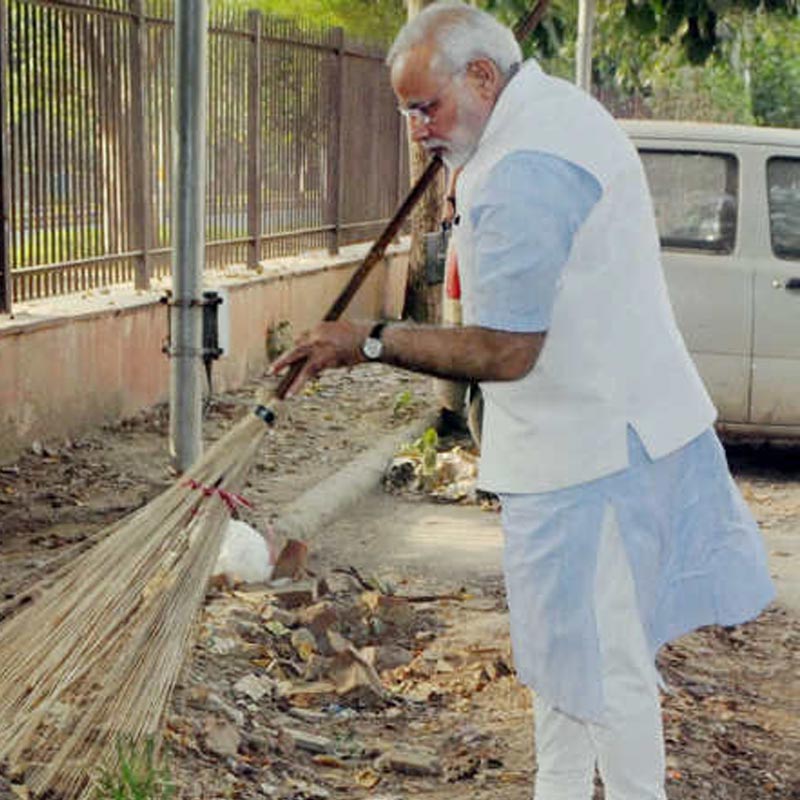
    MUMBAI: Ever since the government launched its ‘Swacch Bharat Mission’, brands have left no stone unturned to make hay while the sun shines.

    As per a recent TAM Adex report, the toilet and floor cleaners’ brands have made an incredible spike of 244 per cent in their ad volumes on TV from 2014 to 2018.


    Commenting on the trend, TRA Research CEO N Chandramouli says, “This increase in TAM Adex is a direct reflection of the toilet and floor cleaning brands' smart piggybacking on Swachh Bharat campaign. Incidentally, it has also been used significantly by disinfectant liquid soap brands.”

    However, he cautions such brands to tread carefully with their campaigns, “Brands wait eagerly for such initiatives which will give them a wave to ride on. However, if a brand uses such waves too blatantly, it can also backfire on them as it can seem pushy thereby reducing the buying propensity, the important mix of brand trust and brand desire, of the brand.”

    Bijoor Consults Inc founder and brand guru Harish Bijoor notes, “Swacch Bharat has actually upped the sensitivity to toilets, hygiene, toilet cleaning and more. If you look at the government sector buying more products in this segment as well, you will see a blip!”

    Brand-nomics managing director Viren Razdan believes that the huge multi-level activation campaign of Swacch Bharat Mission has got the new-age Indian and his civic sense and national pride a never-before significance. He says, “It has also sparked off the renewed idea of hygiene which has been used fairly well by these categories. So, while in the past these brands did make their presence felt – it’s just that the new environment has created a fairly receptive mindset and brands are muscling their way  for this new-found attention.”

    He continues, “While earlier brands created their own space to a narrow focussed TG – suddenly the idea has been magnified in scale and width reaching a social issue, the category would obviously respond to the heat.”

    Not just that, toilet soaps, toothpaste, shampoos, and washing powder/liquids also saw a huge spike in their ad volumes on TV, all of them increasing by more than 100 per cent. In fact, the report also showed that in the top 10 sectors to advertise on TV, personal healthcare improved its position by two spots; it was ranked sixth in 2014 and fourth in 2018.

  • Gender stereotyping remains the template for weight-loss ads

    Gender stereotyping remains the template for weight-loss ads

    MUMBAI: We are constantly haunted by the media, be it television, print, out of home or digital. Our thoughts and actions get subliminally influenced, not to mention the direct effects on young impressionable minds. But as David Ogilvy rightly said, “Advertising reflects the mores of society, but it does not influence them,” advertising is a mirror of society and not its torchbearer.

    Picture in your mind a male celebrity lecturing you on how to use the product he is endorsing in order to look attractive and stay slim. Does it look a little off? If it did, then you are a part of the system that has been subject to gender distinction in advertising.

    Since the beginning of the advertising culture, men and women have been projected differently in advertisements. Men have always been portrayed as the gender that is daredevil, outgoing, brave, strong and the dominant one in a relationship. Women, however, have always been characterised as the weaker gender that is supposed to look good, do household chores and keep the men happy.

    public://f1_8.jpg

    Although a lot has changed in the ad world over the years and women are now being projected as decision makers and as equals to men, the hard truth is that women are bombarded with products that are supposed to make them the ‘perfect woman’ according to society’s standards. Female consumers have faced years of being sold the idea that they must have the perfect skinny body and look beautiful.

    public://f2_7.jpg

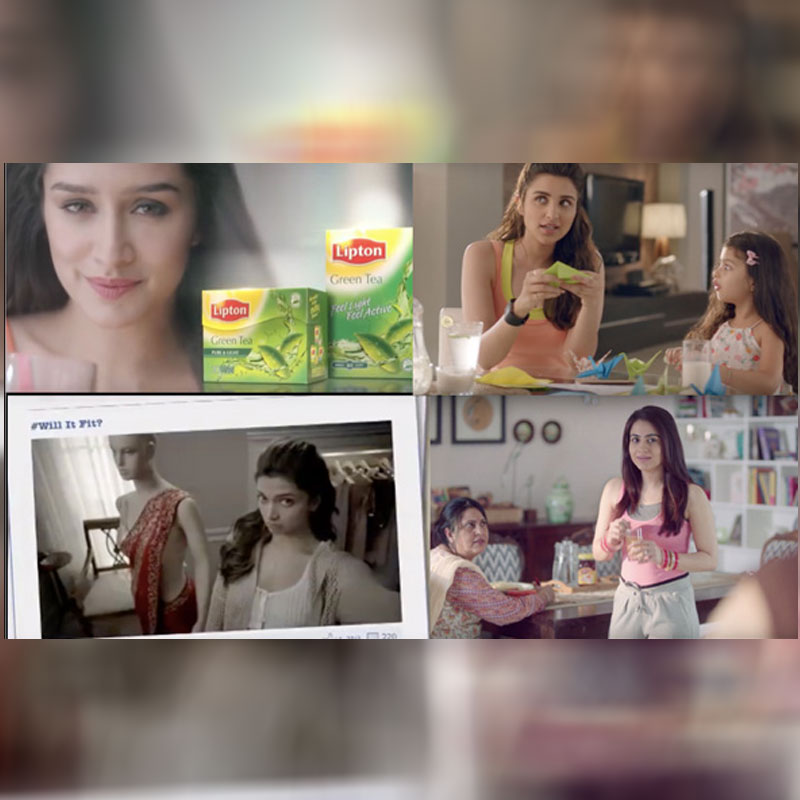
    Brands have always stereotyped women to look their best and that does not seem to be changing anytime soon. Even today, advertisers prefer using women to endorse fitness, weight loss and a healthy lifestyle. Although a lot of men also seem to be getting fitness-conscious and concerned about their weight and looks, brands continue to use women in order to promote their product. Even in the 21st century, we see Deepika Padukone endorsing Kellogs Special K, Shraddha Kapoor promoting weight loss with Lipton Green Tea, Parineeti Chopra endorsing a healthy eating option of Sugarfree and so on. On the other hand, we don’t see any such product being promoted by male brand ambassadors. This gender stereotype does not seem to be changing anytime soon. But why does this stereotyping of women still happen in Indian advertising?

    Harish Bijoor Consults founder and brand strategy specialist Harish Bijoor notes that sadly stereotyping brings in the moolah and women in India by and large do not complain about being stereotyped as there is a tendency to believe in the dictum “This is how we are”.

    According to investment banking platform SMERGERS, the fitness industry in India was worth Rs 4,500 crore in 2017 growing at 17-19 per cent per annum. The total branded tea market in India stands at Rs 9,500 crore, growing at about 5 per cent but the branded green tea market, in contrast, is only around Rs 150 crore. The green tea market, however, is growing faster at 21 per cent yoy. Dabur Honey rakes in some Rs 500 crore in annual sales for the ayurveda brand.

    Brands look at this category with awe, as their volumes gallop with every progressive move that is governed first by vanity and then by good health. While Bijoor notes that the fitness and weight loss market is huge in India, it is dominated by the aspiration of the people in the metros and mini metros who want to ape the western lifestyle of looking good and feeling good.

    Brand-Building founder and brand guru Ambi Parameswaran notes that Indians want good health but without going through the pain of exercising and that does not seem to have changed much. “We discovered this phenomenon when we launched Sweetex in the late 80s and once again when we launched Tropicana in the late 90s. While you see a lot more people on the roads walking in the morning and doing yoga, Indians want it easy.”

    Brands need to adapt now because there is a growing male audience for the same products. Men today don’t shy away from sipping green tea in order to shed those extra kilos or have a bowl full of Kellogg’s Special K or eat oats. With increasing awareness about fitness and an aim to lead a healthy lifestyle, more men have started to adapt to the healthy route. So, it only makes sense for advertisers to shift their focus to men and bring more male endorsers to promote their ideology.

    Ambi Parameswaran mentions that today young men are more conscious about their looks, hair and skin than women of their age. “I am waiting for brands to jump on to the ‘keeping men fit’ bandwagon,” he prophesises.

  • Nestled in controversy, brand Maggi in a soup

    Nestled in controversy, brand Maggi in a soup

    MUMBAI: Nestled in controversy over the presence of lead beyond permissible limits in its popular noodle brand Maggi, Nestle India has found itself in a soup. As Barkha Dutt tweeted, it could well be “The Two Minute death of a brand #Maggi.”


    What’s more, a domino effect followed immediately with the recent detection of creepy-crawlies in Nestle’s other food product Nan Pro-3.


    A brand being embroiled in controversy is not something new with the likes of Cadburys and cola companies having faced similar problems in the not so distant past. About a decade ago, there was uproar over worms being found in Cadbury chocolates. On that note, the company said that most stores in India at that time didn’t have refrigerators and that had affected the product. Similarly cola brands were hit with the pesticide crisis in early 2000, which wiped off their growth for over two years.


    In testing times like these for brand Maggi, the big question on everyone’s lips is… could this hullabaloo well sound the death knell for the brand, which has been around in India for decades?


    Speaking to Indiantelevision.com about the controversy, Kwan Entertainment & Marketing Solutions COO Indranil Das Blah strongly believed that if Maggi is being held accountable, so should the government, for the simple reason that it has been approved by the Food Safety and Standards Authority of India (FSSAI), which is a government body.


    “I don’t think it’s the death of the brand in India. They’ve been around for about two decades now. A lot of brands have faced similar controversies, be it the cola brands or various food companies. Having said that, it has been approved by the FSSAI, which is why it is available in the market in the first place. Maybe a certain batch had certain excess content of lead and that is something that the judiciary should decide,” Blah said.


    Harish Bijoor Consultants CEO Harish Bijoor opined, “It’s a big shock for Maggi. The trauma is for the consumers as well because they love the brand so much.”


    According to Blah, while the controversy will definitely cause immediate damage to the brand, in the long run the brand is strong enough to survive if the allegations are proven false. “Unless there is firm evidence and a court order is passed, which is not in favour of Maggi, I don’t think it’s the death of the brand,” he added.


    Pertinent to note here is that all FMCG products especially food items go through stringent manufacturing processes as well as government approvals. Blah is of the opinion that it never hurts to be extra careful and hence the Maggi fiasco should serve as a wakeup call for other FMCG giants.


    While there have been discussions about the nutrition value of Maggi for years now, it hasn’t really hurt the brand and Nestle India has gone about producing it without a hitch riding on its taste quotient.


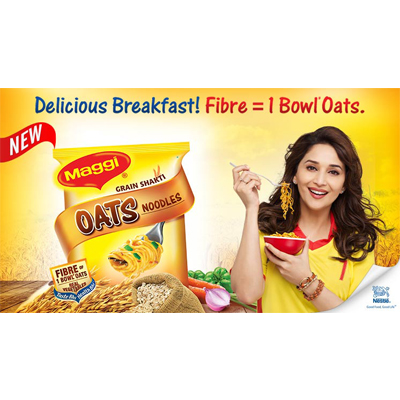
    What’s more, with the involvement of big celebrities like Amitabh Bachchan and Madhuri Dixit as brand endorsers, the matter has been highlighted even more. It is a well-known fact that celebrities are soft targets whenever there is a controversy brewing.


    When queried about whether it was fair to drag celebrities into the controversy, renowned photographer and founder of celebrity management firm Bling! Entertainment Solutions, Atul Kasbekar said, “I believe it’s an irrational act to go after the endorsers. While stars and their managers question the brand fits and ask relevant questions at the beginning of any relationship, it’s unreasonable to hold an endorser responsible for episodes like this. Already contracts have strong two way indemnity clauses in place; I guess they’d be stronger now and spend more billable legal hours in the process. I cannot imagine that there’s a single celeb out there who would’ve declined a Nestle brand to be honest. I don’t imagine that’s going to change very much.”


    Concurring with Kasbekar, Blah said, “When a celebrity is endorsing a product, he is lending his name and his image to it. He is not involved in any other activity of the product. All he is doing is attracting eyeballs for the brand. If he were involved in the making of the product, then it would have been justified. But after they endorse a finished product, one can’t hold them responsible. If one batch goes wrong then it is not the celebrity’s responsibility, it is the company’s and the government’s responsibility as they have approved the product. It’s not fair to drag celebrities in this,” he said.


    Bijoor is of the opinion that the first thing that Nestle India will do is sort out the issue with the regulators and various states. “After that they will start addressing the consumer and that is when a lot of credibility building advertising will come from Maggi. Maggi is a highly evolved brand in India. They need to communicate with a different degree of tenacity with the consumers and they will do that,” he voiced.


    While celebs have been a part of the controversy, Bijoor thinks that the first thing celebs will do and have done in the past is to indemnify themselves from any collateral damage that the brand faces. “Without doubt they will be more careful and diligent henceforth,” he added.


    Will this one controversy also open doors to other and put other brands under the scanner? To this, Bijoor said, “This is just one category. If you look at the other categories like tea, frozen food, fresh vegetables, fish, poultry and meat that we eat; you will be shocked to find that the content of chemicals and metals is much higher than permissible limits across the world. So this is a major reaction on Maggi. This paints the entire industry with the same brush.”


    Sharing her thoughts on the controversy, PromaxBDA Africa and Asia Pacific country head Rajika Mitra said, “For the brand Maggi, it has created a huge setback and for Nestle, the brand integrity has been hugely impacted. The brand image of Maggi has witnessed a major dent in its popularity.”


    Mitra further added that Nestle would have an uphill task to build customer confidence and re-launch the brand in a completely new avatar, which might take years.


    “Celebs have been drawn into this controversy in a big way. Big brands and celebrity associations have always been a popular feature and they do feel responsible for the brands that they accept and endorse. Henceforth, they will be more cautious when accepting such brands in future,” she said.


    It may be recalled that as part of its damage control exercise after the worm controversy, Cadburys India came up with new packaging, which would keep the product fresh and intact without refrigeration. However, it is a known fact that chocolates need to be refrigerated, the question is: Why did Cadbury wait for the worm controversy to change its packaging?


    While Kasbekar believes that this controversy will be a blip in the progress of this superbrand, the fact remains that the communication path that Nestle India will have to take for brand Maggi following this unprecedented controversial blaze will no doubt have to be powerful enough to dowse the flames.

  • Everybody loves the Amul girl!

    Everybody loves the Amul girl!

    MUMBAI: April was an eventful month or so for Amul, the iconic brand marketed by Gujarat Cooperative Milk Marketing Federation (GCMMF).

    On the one hand, GCMMF crossed Rs 18,000 crore in 2013-14; a jump of 32 per cent from the previous year, apart from posting the fastest growth ever for a four decade-old dairy cooperative. On the other hand however, Amul has been served legal notice by the Sahara Group for its hoarding ‘Besahara Parivar’ where Sahara employees are shown begging to collect Rs 5,000 crore for group chief Subrata Roy’s bail.

    Indeed, Amul has built a reputation for its witty but unflinching stance on a wide range of issues of national importance. At the same time, it has also come under fire for force-fitting itself. Indiantelevision spoke to some industry experts for their views on the Amul brand of marketing.

    “Amul advertising is today iconic in its genre. A powerful set of topical creatives gives this brand high scale visibility across a relatively small set of hoardings and selective print vehicles across the country. It can be noted that sometimes, due to the pressure of wanting new creatives, the brand has been force-fitting itself. I do believe it needs to set a standard that it will not fall below,” said Harish Bijoor Consults CEO and brand expert Harish Bijoor. According to him, the creative around the Sahara Group is a terrific one, as usual. “The brand is used to receiving legal notices I am sure. This is all part of the game”, he said.


    Tata Housing head of marketing services Rajeeb Dash, pointed out that Amul has always rolled out ads that are a break-through of sorts. “Sometimes, taking a strong stance helps brands create break-through via communication strategies. Amul seems to have taken that route since a while.”

    Curry-Nation founder Priti Nair, expressed the view, “Amul usually puns on something and connects it to the butter. Sometimes good, sometimes not so good. I don’t think this deserves a legal notice.” For Nair, the hoardings are iconic. “Amul as a brand has used a spin on current happenings as its communication strategy. Be it other brands or cricket or politics or Bollywood. Whatever is in the news and has eyeballs, Amul always does a spin on that and nobody minds cause it is always in good spirit.”

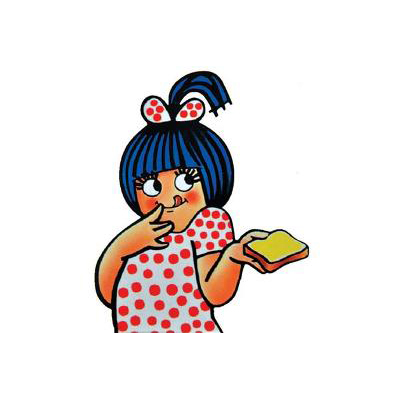
    One thing that came across was that the fraternity loves the li’l Amul girl and everything about her. No matter the challenges, she looks set to win hearts…

  • Can corporate executives be good brand ambassadors?

    Can corporate executives be good brand ambassadors?

    MUMBAI: An old man with a moustache and a turban advertises a popular spice brand. A chain of resorts has a familiar character giving it a thumbs-up. A recent advertisement features executives from other companies talk about their experience flying with a national airline.


    Save for these examples, a majority of ads use celebrities to endorse products and services. Making one wonder why most brands prefer not to let their functional executives do the talking.


    Apparently, using executives might lend a lot more credibility. However, it may not really appeal to the masses as there is no known face involved.


    Brand consultant Harish Bijoor believes Indian brands don’t resort to using their executives as much as the West because Indian CEOs are rather shy and prefer to work behind the scenes rather than in front.


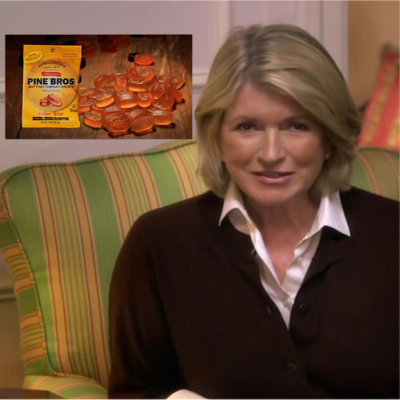
    Martha Stewart recently appeared in a cough syrup ad. How many of our CEOs sell a product?


    He points out that there are exceptions. “Vijay Mallya’s each and every move promoted his brand – Kingfisher. In the past, Mahindra used Pawan Goenka as well. So, it’s not always celebrities ruling the roost.”


    Overall, Bijoor is of the view that people may debate the overuse of celebrities but there is no immediate need to get executives to screens. “There are already a few doing the needful and I don’t think we need more executives to promote the brands. There is a healthy mix, so why clutter it?” he argues.


    Business head of Raising ibrows Ganapathy Visawanathan feels that in a country like ours where Bollywood and cricket is like religion, it is safer to use celebrities. “The brands normally use their executive to fight some crisis situation to build credibility, otherwise there will be a big disconnect between the brand and the masses,” he elaborates.


    Taproot India co-founder & chief creative officer Santosh Padhi believes product category plays an important role in choosing a brand ambassador. “For an FMCG product, it would be senseless to use an unknown face. Celebs – be it actors or sportsmen – are more relatable to for a common man and hence, it is better to use them. However, for a category like airlines, it is fine to use executives,” he says. The choice between a celebrity, model and executive is also determined by the brand’s strategy, according to him.


    Bang in the Middle MD and chief creative officer Prathap Suthan feels it’s a bad idea to use executives. “They shouldn’t get into advertising for their own brands. Essentially, brands need to have their own individual and original character. From the language, persona, tone, colors, design, advertising etc. All of this works together to create and craft a timeless personality for a brand – independent of everything else,” he says. “More importantly, a brand, if it is built on the shoulders of a CEO, what happens when the CEO quits and moves to another company, or cannot speak properly, or is not too presentable, or falls down and hurts himself, or gets into a controversy, or dies? All terrible situations if you build brands around publicly unknown CEOs,” he adds.


     Business director GroupM ESP Ameya Sule has a different take on the matter. “For me, the idea is a little conditional. There is no black or white to it. For instance, if a CMO or a senior executive of an apparel brand goes on to promote the brand, then it is more easy to connect it. There has to be a connect and authenticity attached to it, no matter who promotes the brand. It will be good to use an executive as it shows more credibility,” he signs off.

  • Can politicians have a brand value?

    Can politicians have a brand value?

    MUMBAI: The Bhartiya Janta Party seems to be riding high on its prime ministerial candidate, Narendra Modi, especially in the digital world it seems. After offerings like two smartphones – SmartNaMo Saffron One and SmartNaMo Saffron Two, mobile games like Modi Run and Narendra Modi: Game, now there’s a NaMo online store launched by Take India Beyond Merchandising that would sell everything from t-shirts to stationery.

    According to a media report, all the items sold on the site are inspired by Modi’s lifestyle and values. The products are differentiated in categories as NaMo Mantra, NaMo Lekh and NaMo Tech.

    While the idea seems really interesting on the face of it, if we look back we can hardly think of a politician making a brand. Even after thinking hard the only Indian politicians/political leaders who come to mind to have inspired the masses in terms of products are people like Mahatma Gandhi whose Gandhi topi is still worn by the masses at the time of protests; Indira Gandhi’s style of wearing saris has not only been adapted by bahu Sonia Gandhi but many women who stand to fight for a right; Jawahar Lal Nehru takes the credit for making more than one thing popular including the red rose, the Nehru jacket and topi. Internationally, US president John Fitzgerald Kennedy was a big brand followed by people across the globe.

    And since the number of such politicians could be counted on finger tips, we really wonder if politicians can become brand endorsers? “They surely can,” remarks veteran ad man Prahlad Kakar, who thinks that Modi is a big brand in today’s time.

    Kakar says that if a politician maintains a stature and charisma big enough to draw the masses, he can become a brand and have a shelf life too. “The chai wallah remark by Modi has pulled the masses and if the online store keeps the focus of the promotion around that, they will benefit hugely,” he quips. According to Kakar, a campaign like “Chai Wallah Upaay Wallah Hai”can really work wonders for brand NaMo.

    And it is not just Kakar, even brand consultant Harish Bijoor thinks that in today’s time politicians have become more like a symbol. “The way the actors sell as a symbol, now politicians will sell as well. Right now Narender Modi is very popular among the masses and that is the reason behind so many people making profits out of brand NaMo. However, it may be short-lived. The brand value will survive only till the time the politicians are popular and in sight,” he remarks.

    Interestingly, they won’t be surprised to see other politicians becoming a brand. The possibility of products made around the styles and values of Arvind Kejriwal, Rahul Gandhi (if he survives in the upcoming political battle), Vasundhara Raje among few others, getting popular is high.

  • Will Brand Sachin take a beating?

    Will Brand Sachin take a beating?

    Sachin Tendulkar has had his way with the BCCI after all. His legions of fans and his family will be able to watch the Master Blaster bat one last time on his home ground as he plays his 200th and final match at Mumbai’s Wankhede Stadium next month.


    While this is a small compensation for millions of cricket-crazy Indians who look up to him as almost God, one might argue that they can continue to watch him on television, post retirement, as the face of the many brands he endorses. And, others might question if advertisers will continue to cough up astronomical sums to have Sachin advertise their brands even after he retires from all form of international cricket.

    Watch the video: Boost pays tribute to Sachin’s 23 years of stamina!

    GroupM national director of sports and live events Vinit Karnik feels Sachin’s retirement will make no difference to his brand value. “Sachin appeals emotionally to at least four generations if not more. These are the people who have grown up watching him play and do not mind more of him. Post retirement, if he is seen endorsing a brand, these people would love ‘catching up’ on him, even if it is in the ‘brand’ space,” he says.

    Harish Bijoor feels post retirement Sachin’s brand value will diminish

    On the same thoughts, CAA Kwan’s COO Indranil Das Blah, thinks that though there will be a decrease in number of brands he endorses, his brand value won’t get affected. “Brands will continue to associate with him, especially the ones with older target audience. Post retirement, they will be known for stability, loyalty etc.”

    Having said that he adds that there can be a marginal decrease, around 10-15 per cent, on the brand value. However, this will and shouldn’t impact the price he charges for endorsing a brand.

    Brand consultant Harish Bijoor says: “Sachin’s retirement means a setback to Sachin’s brand endorsement money value for sure. Sport stars are always evaluated on the basis of the last three matches they have played. Add to that the heritage value of the bat that has been wielded.

     Despite it all and despite Sachin being the God of Cricket, endorsement money is bound to go just one way… south.”

    Indranil Das Blah feels that though there will be a decrease in number of brands he endorses but his brand value won’t get affected

    Whichever direction Sachin’s brand endorsements may be headed, most of the industry agrees that it doesn’t get any better than the cricketing legend’s current brand value. “Statistically speaking, with earnings in the range of $18 million, solely from endorsements across categories, even at the age of 40, he is ranked 51 on the Forbes World’s Highest Paid Athletes List for 2013. This places him ahead of the likes of Wayne Rooney, Didier Drogba, Serena Williams, Neymar, Sebastian Vettel, Zlatan Ibrahimovic and Steven Gerrard – all of whom are younger than him,” emphasises Karnik.

    Independent communication consultant Ganapathy Viswanathan, says: “Boost, the beverage drink, is one of the early brands that he endorsed which was followed by several other brands as he grew popular. One of his longest associations has been with MRF Tyres. Sachin almost had a 10-year long relationship with MRF, which proves the trust the brand reposed in him. Besides, there are several other brands he has endorsed that just went well with his personality and fit the brand well.”

    Ganapathy Viswanathan points out that after Boost he endorsed several other brands as he grew popular

    Collectabillia.com that sells Sachin Tendulkar’s memorabilia, informs that post his retirement announcement, the sale of Sachin merchandise and personally autographed products has increased significantly. “Sachin autographed products are selling like hotcakes. A personally signed cap by Sachin which costs Rs 7,500 provides a great investment opportunity for avid collectors and lovers of the game. Besides, Sachin branded T-shirts which starts from Rs 699 onwards are selling very fast,” adds a spokesperson from the portal.

    The overall view is a brand ambassador must fit the bill as he/she is the best way to put a human face to a product or service. Hence, brands must be careful about choosing their ambassadors rather than just going for famous faces to advertise their products. For instance, Virat Kohli is the hottest name right now and most brands want to cash in on him, feel many.
    In Sachin’s case, brands have just about a month to cash in on the phenomenon. Only time will tell which brands choose to stay in action and which try to get away from the clutter…

    Brands endornsed

    Boost (1990–present)
    Fiat Palio (2001–03)
    G-Hanz (2005–07)
    Pepsi (1992–2009)
    TVS (2002–05)
    Sanyo BPL (2007–present)
    Action Shoes (1995–2000)
    ESPN Star Sports (2002–present)
    Toshiba (2010–present)
    MRF (1999–2009), Adidas (2000–10)
    Sunfeast (2007–13), Canon (2006–09)
    Colgate-Palmolive, Philips, VISA, Castrol India (2011–12)
    Britannia (2001–07)
    Airtel (2004–06), Reynolds (2007–present)
    Ujala Techno Bright and Coca-Cola (2011–13)
    He has also been a spokesperson for National Egg Coordination Committee (2003–05),  AIDS Awareness Campaign (2005) and Luminous India (2010–present)