MUMBAI: The race has begun. Latest, Zee News issued a release claiming that it has elbowed the numero uno Hindi news channel Aaj Tak from its prime position and it is indeed on the top now.
Starting with a quirky ‘Haqeeqat’ beats ‘Sabse Tez’ line, Zee News claims that it has managed to do so because of its ‘differentiating’ coverage and special reports. Quoting the Tam research data for the week ending 18 September, C&S 4+ households, Zee News claims that it has regained the leadership position in news genre.
According to the release, Zee News claims that it tops in the stickiness quotient as the viewers spent maximum time on the channel. Referring to the data, the channel claims that the time-spend on Zee News is 30 minutes (which is 15 per cent more than Aaj Tak’s time-spend), as against 26 minutes on Aaj Tak and 24 minutes on NDTV India.
While, as far as the channel shares go, Zee News claims that it leads with 30 per cent channel share ahead of Aaj Tak’s 28 per cent, NDTV India’s 24 per cent and Star News only four per cent in Delhi. In four Metros, share of Zee News is 22.9 per cent, which is equal to Aaj Tak 22.9 per cent and more than NDTV India’s share 20.4 per cent.
Zee News’ weekly feature Crime File, claims the release, is favourite with viewers as the top programme in news genre and in addition to that four out of the top 10 programmes in news genre are from Zee News.
“The resurgence in Zee News ratings and viewership is a result of dogged pursuit of Haqeeqat and continuous focus on differentiating content,” says Zee Telefilms Ltd Director News Group Laxmi Goyal.
Recent coverage, including one on Venus Transit – Shukra Hai Suraj Hai, exclusive reporting from accident site during the Mastygandha train accident, helped Zee News gain huge leads on its rivals, claims the release.
The breaking news and continuous coverage of Kumbhkonam tragedy, the nation wide debate initiated on capital punishment on hanging of Dhanjay, the exclusive Inside story on call girl rackets and the recent coverage and happy solution of Guriya’s dilemma, claims the release, has helped consolidated Zee News’s position as thought leader.
Tag: Haqeeqat
-

Zee News claims to have usurped Aaj Tak’s ‘Numero Uno’ slot
-
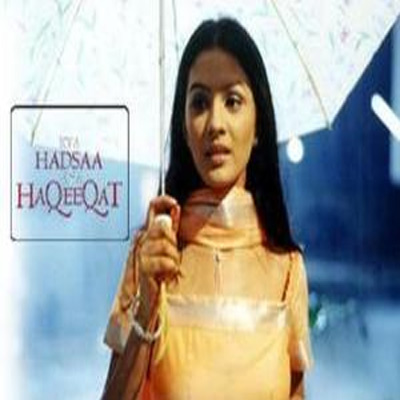
Sahara’s ‘Haqeeqat’ set to complete 100 episodes
MUMBAI: Haqeeqat, the award-winning serial based on true-life incidents of human rights violations, which airs on Sahara Manoranjan Fridays at 8 pm, completes its 100th episode on 6 June.
The series, which premiered on Sahara Manoranajan on 12 June 2001, in its first year itself bagged RAPA, ITA and ASIAN Television Awards for best direction and best screenplay and several other nominations, a company release says.
Haqeeqat is produced by Sahara India Media Communication Ltd. (SIMCL) with BAG Films as the assigned producer. Conceived and devised by Anurradha Prasad, directed by Saurabh Usha Narang and presented by Mahesh Bhatt.Haqeeqat is a programme that attempts to address issues of human rights violations in India. The serial has so far highlighted various important issues ranging from police brutality, fake encounters, sexual abuse, dowry deaths, domestic violence, child labour, Sati, slavery, widow’s plight and other such crimes against humanity. “Haqeeqat” aims at involving the audience both intellectually and emotionally. The serial holds up a mirror to the unfortunate yet true incidents that occur in Indian society, the release says.
-
‘Haqeeqat’ bags 2003 RAPA for Best non-fiction programme
MUMBAI: Looks like reality bags awards.
BAG films production’s serial Haqeeqat, based on human rights cases, has bagged two Rapa awards for the year 2003, says a BAG films release.
The weekly, which is telecast on Sahara TV every Tuesday at 8:30pm, has bagged the award for the best programme in the nonfiction category. Besides that the series has also bagged the Best Director award, for the second time in a row.
The 28 annual Radio and TV Advertisers Practitioners’ Association of India Ltd (Rapa) awards will be held on 7 June at Mumbai’s Hotel Taj Lands End.
Haqeeqat has also won the Best Director and Best Screenplay Writer at the Indian Telly Awards 2002 and had also been nominated for excellence in programming awards at the Asian Television Academy Awards, Singapore, says the release. -

“It is very difficult to identify creativity that sells” : CMD, Anurradha Prasad
Anurradha Prasad started her career as a journalist. After her marriage to fellow journalist and now Rajya Sabha MP Rajeev Shukla, the duo decided to focus on news programming.
In 1993, they floated their own production house with a news show called Aaj Ki Baat on DD. Now nearly a decade old, B.A.G Films not only continues with news programming, it has also diversified into all genres of news as well as entertainment programming. Haqeeqat and Chalti Ka Naam Antakshri are some of the more popular shows that B.A.G has on air currently, while Kumkum, a new daily soap on Star’s afternoon band is the latest addition to its fast expanding portfolio.
Anurradha Prasad, CMD, B.A.G Films took time off from her hectic schedule during a visit to Mumbai for a chat with indiantelevision.com correspondent Amar. Excerpts –
How has your journey from journalist to producer been like?
After my graduation, I started working as a journalist with PTI TV and later with the BBC. I also headed the Observer News Channel for a while. My first show on TV was a business show called Money Matters. As Rajeev also has a journalistic background, we always wanted to get into news programming ourselves. So in 1993, we floated B.A.G. Films with a programme called Aaj Ki Baat and later produced a cookery show called Zaike Ka Safar.One has always been curious to know – what does B.A.G. stand for?
B.A.G stands for Bhagwaan, Allah and God. It’s our way of paying obeisance to the powers-that-be for always having been benevolent.What is the ratio between B.A.G’s fiction programmes and its non-fiction shows?
A couple of years ago, it used to be 1:4. Now, it’s almost 1:1. In future, it is more or less going to stabilise at this ratio, because non-fiction and news programmes have always been our strength and will definitely hold importance in our future scheme of things.What is the production set-up of B.A.G Films?
We have a team of about 100 people in Delhi, Mumbai and Chennai. We have a CEO, Avinash Mehrotra, a COO, Rajesh Chaddha, based in Mumbai, the all-India head of news programming Ajit Anjum, based in Delhi and a GM who has recently been appointed to look after our Chennai operations. Anjum has a team of 50 people under him covering news across the country, while Chaddha is aided by a creative director, Sharad Raj and six executive producers. We have our own editing and post production facilities both at Delhi and Mumbai.
A still from Kumkum, that airs on Star Plus“I feel the incentives offered by channels for attaining certain TRPs certainly act as morale boosters for producers”
__________How important a strategic partner is Doordarshan for B.A.G films?
When we started off, we were mainly only into news and current affairs programming, which meant we had to operate out of Delhi. As DD was also Delhi based, it was much easier to negotiate and put our programmes on it. Later of course, this partnership got consolidated and when DD News came up, we came up with a daily half hour programme called Rozana. Even though I must admit that marketing programmes on DD is not easy, we don’t really mind it. One, our programmes have helped build B.A.G as a brand and two, DD lets us retain the rights over the product. The latter has been helpful in the case of some fiction shows we have had on DD.Which areas of B.A.G. Films are you personally involved with?
I am involved in every possible way. I may not personally look into everything but I am regularly updated by our designated group heads and whenever I am required, I am there for them.How is Rajeev (Shukla) involved in B.A.G.’s day to day functioning?
Rajeev plays a very important role in strategy formulation, planning and formalising our expansion plans. He is not involved on a daily basis though, because of his political and journalistic commitments.What are B.A.G.’s sources of funding?
We have a tie-up with some financial institutions that provide us finance on a regular basis. Besides, as we expand, we are planning to come up with a public issue in the next four to six months.“Non-fiction and news programmes have always been our strength and will definitely hold importance in our future scheme of things” 
A still from Haqeeqat, that airs on Sahara TVHave you ever felt channel executive producers’ attitudes overbearing or intrusive?
No, I haven’t found them to be overbearing. They might have differed in their attitude but their approach, by and large, has been positive. See, we must understand that in the present situation of channel wars, even the EPs are under enormous pressure, because one faulty programme can mar a channel’s reputation. Besides, being a creative person with experience in this field, I can tell you that it is very difficult to identify creativity that sells.Who are your favourite directors on TV?
Sanjay Upadhyay and Sourabh Narang. I have worked with them and found both of them to be very intelligent and sensitive.How is ‘Kumkum’ different from other daily soaps?
Well, the whole attempt was to not make it very different from the current trend of soaps. So, while it’s a normal family drama, the difference lies in that we have tried to reduce melodrama and make all characters very real. Besides, to give it a fresh look we have hired the services of professionals hitherto unexposed to TV. Binod Pradhan, who did the lighting forMission Kashmir has done the lighting for Kumkum. We also got Omung Kumar to design our sets.What is the future programming line-up of B.A.G. Films?
At present, we are looking forward to the revival of Rozana in a new format on DD from 15 August. Besides, we are working on a musical game show that will come on Star from October. We are also working on another daily soap.Do you feel strongly about producers not retaining the rights over their serial as far as satellite channels go?
Well, at least for Kumkum we have worked out an arrangement with Star, wherein we get the rights over the serial back, one year after its telecast ends on Star TV. I wish this clause is contained in more deals in future. Besides, I feel the incentives offered by channels for attaining certain TRPs certainly act as morale boosters for producers.Where do you see B.A.G. films five years down the line?
(laughs) Over here, it’s difficult to predict what is going to happen in the next 10 seconds. Five years is a long time. But yes, we will aim at consolidation of our existing programming content. The next important thing on our mind is diversification. We would like to venture into film production as I see it as a logical extension of our existing business. Apart from production, our other important projects include setting up a convergence studio at Noida and a training institute offering specialized courses in film-making. -
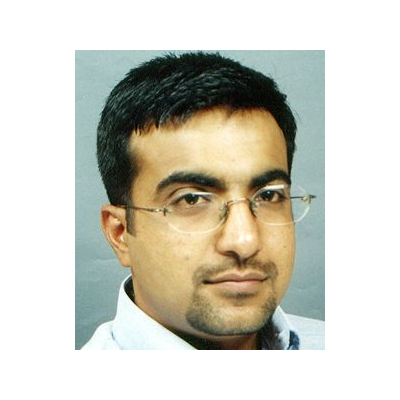
“There are no bad actors, only bad directors” : Sourabh Narang
At 29, Sourabh Narang is one of the youngest and most sought after directors on TV today. The critically acclaimed Haqeeqat, Shhh… Koi Hai and Kagaar are some of the serials he has directed. Saurabh is also proud of the fact that he is already reputed for the serials he has refused- Sarhadein and Aap Jo Bolein Haan to Haan…, whose pilot he shot – a telling statement of how discerning he has been. Sourabh is extremely enthusiastic and passionate about his work. He is also coolly candid when he says that all he wanted from life was a nice wife and some movies to direct. Here are his views on life, reel and real, as they unspooled in a conversation with indiantelevision.com correspondent, Amar.
How did the idea of being a director come into your mind?
I graduated from St Stephens College in Delhi where I would participate in debates extensively. Debating gave me an opportunity to speak my mind and express myself freely. Barkha Dutt (NDTV correspondent), who was my senior in college, suggested that I take up Mass Communications at the Jamia Millia Islamia University. By the time I completed the course, I was obsessed with the thought of making a movie. That’s how I came to Mumbai. Once here, I assisted K Shashilal Nair on Grahan and after that moved to TV serials.What is that special something that makes for an effective director?
Observation, vision and discipline.It is unfortunate that all a TV director does today is look at the monitor and then look at his watch.__________

Which subjects appeal most to you?
Anything that can be developed into something very dramatic. It could be the story of a 16-year-old girl raped by the police during riots or the story of a boy trying to work up the courage to propose to a girl he meets every day at the bus stop.It is often said that TV is a writer’s medium? Your comments?
I don’t agree with it. Such a statement is made mainly because most of the TV software today is dialogue-driven. But people saying this tend to underestimate the levels to which the director and the cinematographer can raise a written work. I would rather subscribe to another dictum – that there are no bad actors, only bad directors; even though I know how bad an actor can be (laughs).How much of a writer does a director have to be? Are you involved with the scripting of what you direct?
I have scripted a few episodes of Rishtey and Saturday Suspense which I have directed. Even today, when I direct Haqeeqat or an episode of Shhh Koi Hai, I spend a lot of time lining up the pre-production work and going through the entire script in minute detail. Wherever I feel certain changes in the script would help, I have made positive contributions to it.What kind of research goes into Haqeeqat from the point of view of direction?
Actually, BAG Films (the production house) has an excellent news infrastructure spread across the country, so getting factual details for episodes of Haqeeqat is no problem. Besides, we have a research team that works exclusively on the serial. But getting factual details is one thing, creating the actual feel of the places where these incidents occurred is quite another. For that too, we have our ways of doing things. For an episode that featured some 25 inmates in a Chennai asylum getting burnt to death, we actually created a huge set in Mumbai that resembled the asylum. For an episode which dealt with the story of two lovers being hanged to death by their families in rural Haryana, my casting director took pains to search for actors who could actually speak the language of the region. The only actor who could not speak the dialect was the female protagonist but she was made to rehearse her part with the other actors for five days before the actual shoot.What are the factors you never compromise on as director?
Commitment – because, in a way, the word is all-pervasive. I will not compromise on the total commitment I expect from each and every member of my unit – whether its an actor who needs to have done some ground work on his role or my own assistants.Who are the directors you regard highly on Indian television?
Two directors on TV who I have great regard for are Umesh Padalkar and Anuraag Basu. The funny part over here is that people don’t plan to fail, they simply fail to plan.
__________Are there any stylistic elements you’ve imbibed from them?
In the case of Umesh, I’ve liked his rather Hollywoodish technique of shooting, wherein the same scene is cut from various angles. This really minimizes the scope for a re-take. As far as Anuraag Basu is concerned, the best part about his work is that it’s very crisp, very taut with no extra flab in it.Do you find channel executive producers overbearing?
See, that is a matter of personal opinion and experience. Personally, its been a pleasure to work with Sahara TV because no channel would allow the kind of creative freedom that Sahara does.What are the factors you consider before taking someone under your wing?
More than technical knowledge, I would go for the person’s educational and family background because I don’t compromise on commitment and sincerity; and only a person with good character and the right set of values is expected to do justice on these fronts.Do you enact scenes out as a method of instructing actors?
I don’t enact scenes unless it is necessary, that is if I want the scene to be emoted in a certain manner and the actor is not able to comprehend it. As far as possible, I avoid enacting scenes because that tends to affect a natural performance.How many projects do you like to work on simultaneously?
Ideally I would like to work on a weekly soap and do one-off stories at a time.I avoid enacting scenes because that tends to affect a natural performance.__________

Given the industry vagaries, do you undertake some long term planning of the projects to do in the future to ward off phases when you don’t have work?
The funny part over here is that people don’t plan to fail, they simply fail to plan. What is lacking is the sheer enthusiasm to give a project your very best. You will be surprised when I tell you that Mahesh Bhatt had called me recently just to tell me that Ramesh Taurani of Tips Industries was so moved by a story shown in Haqeeqat which portrayed the parents of a person killed in Punjab by terrorists waiting for compensation, that he decided to personally compensate them. Now isn’t my work being watched by people who really matter and do I need to worry so much about the future? In fact, more than the projects I do, I am already known for the projects I’ve refused – I was supposed to do Sarhadein which I didn’t, I had directed the pilot episode of Aap Jo Bolein Haan To Haan…, but didn’t direct any of its episodes after that.How much time do you normally take to shoot one episode?
I take two days or three shifts to shoot one episode because that is the time I require to deliver top quality work. I have refused some very promising serials because the producers wanted me to shoot one episode a day and I don’t operate that way. It is unfortunate that all a TV director does today is look at the monitor and then look at his watch.So, are you absolutely closed to doing a daily soap?
Yeah, I’m offered at least one daily soap a week, which I have been refusing.On hindsight, do you feel a specialized course in direction is required or is training under somebody more important?
A specialized course is important because formal education sets up the right foundation and enables you to get your basics right. One can always train under somebody after that.What marks Sourabh Narang in style?
It’s a little difficult to answer. You will have to see my work to see the passion and involvement that goes behind it. In a nutshell, let me just say, I don’t do different things, I just do things differently.Where do you see yourself ten years down the line?
(laughs) Given the amount I smoke, I should be dead. Jokes apart, I have always wanted two things in life – I wanted a beautiful wife and I wanted to direct a movie. Now that I’ve got the former, I just want to direct movies. -
After ‘Haqeeqat’, Sahara looks at the other side with ‘Jayate’
The Hindi entertainment television sweepstakes is hotting up and Sahara TV aims to be very much there on the viewerscope. After November’s launch of four new shows, the new year is going to see more offerings from the Sahara stable. Next month will see the launch of Jayate (winner), a show which is a reversal of its celebrated Haqeeqat (reality) in that it focuses on good cops and the sacrifices they make in the line of duty. Haqeeqat, which was introduced in June, has had quite an impact. Hosted by film director Mahesh Bhatt the programme was a breath of fresh air in an environment dominated by likeminded soap opera’s. It dealt with true incidents of human rights violation by lawmakers. It was produced by Anuradha Prasads BAG Films, for Sahara India Media Communications Ltd (SIMCL) and directed by Sourabh Narang. Jayate will be followed by Fateh (victory) which trains its guns on war heroes.
Next up on the channel’s new offerings list is Har Mode Pe (at every turn), a daily soap. Sahara TV vice-president (publicity, promotions & PR) Priya Raj says there is even more coming from the Sahara cupboard but the shows are still being conceptualised. They run the gamut of genres and should provide telly buffs with plenty of food for thought, Raj promises.
Meanwhile, the channel claims that two serials it launched in November Apnapan and Zindagi Teri Meri Kahani have drawn an excellent response. Both centre on the family and the channel claims that the immense popularity of these two programmes has helped it increase its viewership base. Apnapan shows from Monday to Friday at 1:30 pm and 11 PM Produced by SIMCL, Apnapan is directed by Chander Behl & V Menon. Veteran film actors like Kiran Kumar, Pramod Mautho, Shagufta Ali star.
Zindagi Teri Meri Kahani airs every Friday at 10:30 PM It shows how today’s society is more individualistic in nature. So the need for self identity is important. The story deals with marital discord. Produced by AV Telefilms, Zindagi Teri Meri Kahani stars veteran actor Arun Govil who played Ram in Ramanand Sagar’s Ramayana. Other stars include Rohini Hattangadi, Priya Tendulkar, Savita Prahune, Parmeet Sethi and Raju Samtani.