Tag: Happy Finish

  • Innovative application of AI; Happy Finish markets Shoegazer

    Innovative application of AI; Happy Finish markets Shoegazer

    MUMBAI: Happy Finish, the VR content specialists and global production studio, has launched its Artificial Intelligence (AI) technology.

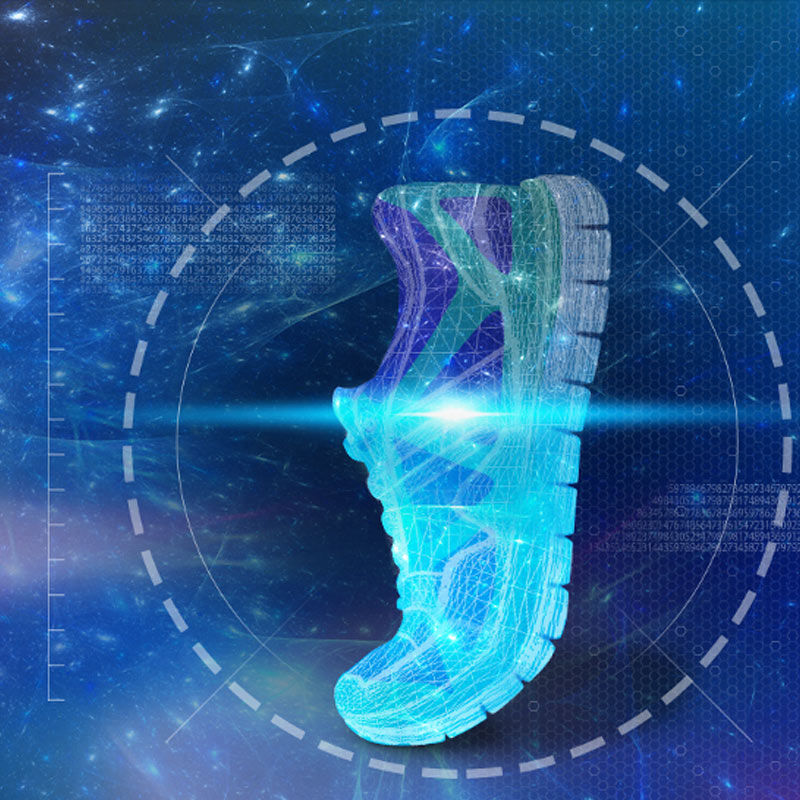
    Shoegazer, currently a proof of concept (PoC) for the fashion-retail industry, uses image recognition and transfer learning technologies to identify brands and models of trainers in real-time – with 95 per cent accuracy. To support the full launch of Shoegazer, Happy Finish is also embarking on a round of capital fundraising for £395,000.

    Happy Finish’s Shoegazer is a unique PoC for the fashion and retail industry.

    There is also opportunity to apply the transfer learning technology from Shoegazer to other areas within fashion and retail, including clothes, accessories and bags. The nature of the application also means that it is not solely limited to individual brands – there is also an opportunity for retailers to use the application to cross-sell other products within their portfolio. The prototype is already being presented to partner brands with a view to market launch in late 2016.

    Happy Finish global CEO Stuart Waplington shared, “Retail is always one of the first markets to adopt new and emerging technologies. We have seen the retail industry successfully adopt VR and AR and we have even been heavily involved in the process – which means diversifying into AI is a natural next step for us.”

    Happy Finish will use its first-hand market experience to support its diversification into AI. According to Markets & Markets, the global market for AI is set to be worth $5.05 Billion by 2020. Rapid adoption of AI is set to transform a range of markets, including advertising and media, finance and retail, offering benefits such as improved productivity and increased customer satisfaction.

  • Innovative application of AI; Happy Finish markets Shoegazer

    Innovative application of AI; Happy Finish markets Shoegazer

    MUMBAI: Happy Finish, the VR content specialists and global production studio, has launched its Artificial Intelligence (AI) technology.

    Shoegazer, currently a proof of concept (PoC) for the fashion-retail industry, uses image recognition and transfer learning technologies to identify brands and models of trainers in real-time – with 95 per cent accuracy. To support the full launch of Shoegazer, Happy Finish is also embarking on a round of capital fundraising for £395,000.

    Happy Finish’s Shoegazer is a unique PoC for the fashion and retail industry.

    There is also opportunity to apply the transfer learning technology from Shoegazer to other areas within fashion and retail, including clothes, accessories and bags. The nature of the application also means that it is not solely limited to individual brands – there is also an opportunity for retailers to use the application to cross-sell other products within their portfolio. The prototype is already being presented to partner brands with a view to market launch in late 2016.

    Happy Finish global CEO Stuart Waplington shared, “Retail is always one of the first markets to adopt new and emerging technologies. We have seen the retail industry successfully adopt VR and AR and we have even been heavily involved in the process – which means diversifying into AI is a natural next step for us.”

    Happy Finish will use its first-hand market experience to support its diversification into AI. According to Markets & Markets, the global market for AI is set to be worth $5.05 Billion by 2020. Rapid adoption of AI is set to transform a range of markets, including advertising and media, finance and retail, offering benefits such as improved productivity and increased customer satisfaction.

  • Kyoorius announces In-Book Winners and Blue Elephant Nominees for the Kyoorius Creative Awards 2016

    Kyoorius announces In-Book Winners and Blue Elephant Nominees for the Kyoorius Creative Awards 2016

    MUMBAI:  Post the jury session from the 4th -7th May 2016, Kyoorius, in association with D&AD has announced the in-book winners for the Kyoorius Creative Awards 2016. Out of 1863 entries submitted, 164 entries have been announced as in-book nominations that qualify for the Baby Elephant and the Blue and Black Elephants are selected from these nominations. The winners of the Blue and Black Elephants will be announced on the Awards night – Friday 3rd June 2016.

    Kyoorius Awards is a Celebration of Creativity and winning a Kyoorius award is a highest creative achievement for the winner. Kyoorius rewards all great work in the Indian visual communications sphere and hence does not have a Gold, Silver & Bronze tier system – every great work will win a Blue Elephant and the Black Elephant goes to that outstanding work that has broken all grounds. The jury can decide to award multiple Blue Elephants in any category, and none in another based if entrees are not up to the mark.

    The complete list of Advertising Awards In-Book Winners can be found at:

    The complete list of Digital Awards In-Book Winners can be found at:

    The complete list of Media Awards In-Book Winners can be found at:

    The Kyoorius Creative Awards show will be held on Friday June 3, 2016 at Dome@NSCI in Mumbai and as always will be a spectacular show of creativity. The awards show are always attended by well over 1500 professionals including CEO’s, Marketing Directors, Brand Managers, Creative and Media gurus, etc.

    The Kyoorius Creative Awards are presented by Colors, powered by Hindustan Times and includes ABP News, Rishtey, Happy Finish & Kinetic as main partners.


  • Kyoorius announces In-Book Winners and Blue Elephant Nominees for the Kyoorius Creative Awards 2016

    Kyoorius announces In-Book Winners and Blue Elephant Nominees for the Kyoorius Creative Awards 2016

    MUMBAI:  Post the jury session from the 4th -7th May 2016, Kyoorius, in association with D&AD has announced the in-book winners for the Kyoorius Creative Awards 2016. Out of 1863 entries submitted, 164 entries have been announced as in-book nominations that qualify for the Baby Elephant and the Blue and Black Elephants are selected from these nominations. The winners of the Blue and Black Elephants will be announced on the Awards night – Friday 3rd June 2016.

    Kyoorius Awards is a Celebration of Creativity and winning a Kyoorius award is a highest creative achievement for the winner. Kyoorius rewards all great work in the Indian visual communications sphere and hence does not have a Gold, Silver & Bronze tier system – every great work will win a Blue Elephant and the Black Elephant goes to that outstanding work that has broken all grounds. The jury can decide to award multiple Blue Elephants in any category, and none in another based if entrees are not up to the mark.

    The complete list of Advertising Awards In-Book Winners can be found at:

    The complete list of Digital Awards In-Book Winners can be found at:

    The complete list of Media Awards In-Book Winners can be found at:

    The Kyoorius Creative Awards show will be held on Friday June 3, 2016 at Dome@NSCI in Mumbai and as always will be a spectacular show of creativity. The awards show are always attended by well over 1500 professionals including CEO’s, Marketing Directors, Brand Managers, Creative and Media gurus, etc.

    The Kyoorius Creative Awards are presented by Colors, powered by Hindustan Times and includes ABP News, Rishtey, Happy Finish & Kinetic as main partners.


  • Kyoorius introduces  Media Awards at Kyoorius Creative Awards 2016

    Kyoorius introduces Media Awards at Kyoorius Creative Awards 2016

    MUMBAI The Kyoorius Advertising and Digital Awards has been renamed Kyoorius Creative Awards with the addition of Media Awards this year. The awards will have three juries, Advertising, Media and Digital, in 2016.

    Kyoorius Creative Awards in association with D and AD will open for entries from Tuesday 15 March 2016 and close on 12 April 2016. Submission of physical entries for the awards will then remain open for a week. Kyoorius is calling for entries across a total of 15 categories and 135 sub-categories. The awards can be entered by any company or individual and is not restricted to agencies. Kyoorius will promote the awards across corporate, production houses and agencies – advertising, media, event, digital, etc

    Kyoorius, for the first time ever, introduced the concept of Open Jury – the jury sessions are open to the industry people to watch, learn, check and benefit from the discussions and display of entries. The Jury session will be held from 4 May to 7 May in Mumbai. In coordination with D&AD, the jury will be a mix of International (West and East) and local jurors. Like every year, the awards will uphold the zero-tolerance policy for scam ads.

    Kyoorius CEO and founder Rajesh Kejriwal said, ‘Awards are primarily to inspire and motivate the industry achievers and I am delighted to announce the inclusion of Media Awards and the renaming of the awards to Kyoorius Creative Awards. I am also happy with the response that we have always got for having a transparent open jury process and we shall continue to do so. I personally feel that many agencies have done brilliant work in the last year and hence I am expecting a lot more entries this year including participation of more agencies.’

    The Kyoorius Creative Awards show will be held on Friday June 3 2016 at The Dome, NSCI in Mumbai and as always will be a spectacular show of creativity. The awards show will be attended by well over 1,500 professionals including CEO’s, marketing directors, brand managers, creative and media gurus, etc.

    The Kyoorius Creative Awards are presented by Colors, powered by Hindustan Times and Rishtey and the other main partners include Happy Finish, Kinetic.

  • Kyoorius introduces  Media Awards at Kyoorius Creative Awards 2016

    Kyoorius introduces Media Awards at Kyoorius Creative Awards 2016

    MUMBAI The Kyoorius Advertising and Digital Awards has been renamed Kyoorius Creative Awards with the addition of Media Awards this year. The awards will have three juries, Advertising, Media and Digital, in 2016.

    Kyoorius Creative Awards in association with D and AD will open for entries from Tuesday 15 March 2016 and close on 12 April 2016. Submission of physical entries for the awards will then remain open for a week. Kyoorius is calling for entries across a total of 15 categories and 135 sub-categories. The awards can be entered by any company or individual and is not restricted to agencies. Kyoorius will promote the awards across corporate, production houses and agencies – advertising, media, event, digital, etc

    Kyoorius, for the first time ever, introduced the concept of Open Jury – the jury sessions are open to the industry people to watch, learn, check and benefit from the discussions and display of entries. The Jury session will be held from 4 May to 7 May in Mumbai. In coordination with D&AD, the jury will be a mix of International (West and East) and local jurors. Like every year, the awards will uphold the zero-tolerance policy for scam ads.

    Kyoorius CEO and founder Rajesh Kejriwal said, ‘Awards are primarily to inspire and motivate the industry achievers and I am delighted to announce the inclusion of Media Awards and the renaming of the awards to Kyoorius Creative Awards. I am also happy with the response that we have always got for having a transparent open jury process and we shall continue to do so. I personally feel that many agencies have done brilliant work in the last year and hence I am expecting a lot more entries this year including participation of more agencies.’

    The Kyoorius Creative Awards show will be held on Friday June 3 2016 at The Dome, NSCI in Mumbai and as always will be a spectacular show of creativity. The awards show will be attended by well over 1,500 professionals including CEO’s, marketing directors, brand managers, creative and media gurus, etc.

    The Kyoorius Creative Awards are presented by Colors, powered by Hindustan Times and Rishtey and the other main partners include Happy Finish, Kinetic.

  • Virtual Reality: What’s in it for marketers?

    Virtual Reality: What’s in it for marketers?

    MUMBAI: In the marketing industry, digital era is not something being anticipated but a reality that has arrived and the way one interact with digital content is also changing rapidly especially through the advent of virtual reality (VR) and augmented reality(AR). 

    The terms are often thrown in the air by marketers when citing examples of latest technology in marketing, but what few realize the ground zero report on the actual work and its effectiveness done using VR and Augmented reality as a marketing tool.

    And who better to vouch for it than Ashish Limaye the chief operating officer of Happy Finish, a creative post production studio media agency that dabbles heavily in VR, CG and AR.

    With a global presence of over 12 years, Happy Finish headquartered in the United Kingdom has managed to bag substantially big name clients since it entered the Indian market five years ago. The studio works closely with other creative agencies and caters to specific skillsets that a campaign requires while also having several clients of their own to boot.

    “We work with almost all the leading brands including brands like Unilever, Nestle and Marico to Coke and Pepsi in the beverage section,” points out Limaye, adding, “In the automobile section we work with Maruti Suzuki, Tata Motors, Toyota, and Renault.”

    Adapt or perish

    The single largest shift in the paradigm that Limaye has noticed in the last one year is the completely insulated channels that brands have established with consumers irrespective of any external stakeholders. “When I say stakeholders, I mean magazine, television, billboards etc. And this insulated channel is possible through smartphones that have penetrated the Indian market,” points out Limaye. “The shift which is happening is from all the above-the-line conventional paid media to a ‘owned by the brand’ media, which also generates organic reach through social media without spending a penny.” Coupled with the data points that smartphones facilitate, brands can now directly target their consumers and know them like never before -.not as part of some mass, but by name age and behaviour and preference. As smartphones and other smart devices can easily be used to access VR environment, its use in marketing will grow manifold in the coming years.

    Scope for VR in marketing

    When asked about the scope for VR and augmented reality he sees in marketing in India, Limaye points out the major challenges that today’s marketers are facing with conventional mediums of communication.  “There are two constants in this day and age: one if that media is getting fragmented, and second, consumer attention is getting more fragmented. Today, the consumer is bombarded with so many different media and it has become extremely tough establishing a dialogue with them. And that is where VR becomes extremely advantageous to marketers as it allows you to engage the consumer on a one-on-one basis.”

    To sum it up he adds, “Firstly, VR helps brands with a significant amount of credibility through immersive experience, which otherwise is not possible as effectively. Secondly it also allows to communicate the entire value chain with the customer, through multiple channels — be it retail, or post sale etc; from the factory to the showroom and then road.”

    Limaye explains with an example. “Suppose a telecom is launching their 4G services. With the past record of 3G services not being so favourable with people complaining of call drop, there is a lot of doubt in the market on how well the 4G will do. To counter that a marketer can create an immersive experience of a user in the 4G service and share it with prospective consumers to add credibility to 4G services.”

    VR Vs AR: 

    While VR has been cited several times for its use in experiential marketing, it is easy to confuse it with augmented reality. Limaye defines the two in a simple sentence: “Augmented reality is when I import an external element into my world, while virtual reality allows me to travel to that world.” 

    The biggest differentiating factor is that augmented reality can be consumed by more than one person at a time. “You can project a car on a table while sitting in coffee shop and show to a client or a buyer the inside of the car, its interiors, how it functions and drives. That’s augmented reality.”

    Another good example of clever use of augmented reality in a marketing campaign is what can be done for the online furniture brands like Pepperfry. “It allowed consumers to scan their living room and feed the information to their app, and then place furniture items wherever you like with the use of augmented reality to see what looks like where.”

    Adoption amongst brands:

    In India, the adoption of the technology is picking up fast. Limaye says he gets at least two to three requests daily from several big and small brands when it comes to VR, although he does acknowledge the presence of a learning curve that the industry is going through for this fairly new technology. “While there are brands interested in trying these out, when you ask them what exactly they want to do with it. They have no answer.”

    The area in which the marketers are falling behind is the lack of creative approach when working with VR and augmented reality. “You can’t be using VR for the sake of it just to sound cool or be counted amongst those who are progressive in the industry. There has to a communicative objective that the use of VR must fulfill,” Limaye said.

    The brands which have come forward in using VR and AR come from FMCG sector, beverages like Pepsi and Coke, tourism and travel, and of course automobiles. Currently 30 per cent of Happy Finish’s client base for VR is from the automobile sector.

    Accessibility and cost:

    While VR and AR paves way for endless possibility in use of the technology for marketing purpose, one can’t help but question if India is ready for it in terms of the accessibility of the experience. Can brands only target niche consumers or go brand to brand with it?  

    Knowing that similar questions have been bothering the industry for quite sometime, Limaye says: “It is a myth that you need a high-end headgear to access Virtual reality. You can access it in many ways. Firstly you have Google Cardboard, which is priced as low as Rs 100. Secondly you can access it using YouTube and Facebook that have started their 360 degree videos. Your mobile or your smart device – be it laptop or iPad – then becomes your window to the virtual reality. All one needs to do is shoot 360 media and put it up. Thirdly, if one has a budget to spare, one can go for head gears for a more complete experience. I can see big spending brands keep a gear at their showroom for showcases etc, or for B2B communication. So the distribution challenge is being dealt with in every level.”

    The ROI Factor: 

    So how much should a marketer going for VR budget for their new campaign? Typically, the feeling is that use of a new technology is more expensive as one has to set in place the infrastructure for it. But Limaye disagrees.

    Though the average budget is subjective to the brands need but for a decent campaign which includes an app development and a live action shoot, a budget of Rs 1 to s 1.5 crore is good enough for a good immersive experience using VR. That also reflects in the ROI.

    “I have metrics in place for how many people have downloaded an app, what feature they are interested in and I can even have a call to action post their immersive experience and directly lead the campaign to sales. The call to action is also well monitored and measure. When it comes to ROI, the investment too is very less when you compare it to mediums like television. To reach the Hindi Speaking Market with TVC, a marketer needs to have at least Rs 2 to 3 crore budget to reach a decent TRP number. But this is not needed when I am talking about a VR campaign while still reaching out to the relevant audience.” 

    “The quality of engagement is much higher as compared to other mediums, and the cost of acquisition of the customer’s attention is much lower, and the absolute spend is also lower. In all these metrics, the ROI is much higher,” Limaye adds in parting.

  • Virtual Reality: What’s in it for marketers?

    Virtual Reality: What’s in it for marketers?

    MUMBAI: In the marketing industry, digital era is not something being anticipated but a reality that has arrived and the way one interact with digital content is also changing rapidly especially through the advent of virtual reality (VR) and augmented reality(AR). 

    The terms are often thrown in the air by marketers when citing examples of latest technology in marketing, but what few realize the ground zero report on the actual work and its effectiveness done using VR and Augmented reality as a marketing tool.

    And who better to vouch for it than Ashish Limaye the chief operating officer of Happy Finish, a creative post production studio media agency that dabbles heavily in VR, CG and AR.

    With a global presence of over 12 years, Happy Finish headquartered in the United Kingdom has managed to bag substantially big name clients since it entered the Indian market five years ago. The studio works closely with other creative agencies and caters to specific skillsets that a campaign requires while also having several clients of their own to boot.

    “We work with almost all the leading brands including brands like Unilever, Nestle and Marico to Coke and Pepsi in the beverage section,” points out Limaye, adding, “In the automobile section we work with Maruti Suzuki, Tata Motors, Toyota, and Renault.”

    Adapt or perish

    The single largest shift in the paradigm that Limaye has noticed in the last one year is the completely insulated channels that brands have established with consumers irrespective of any external stakeholders. “When I say stakeholders, I mean magazine, television, billboards etc. And this insulated channel is possible through smartphones that have penetrated the Indian market,” points out Limaye. “The shift which is happening is from all the above-the-line conventional paid media to a ‘owned by the brand’ media, which also generates organic reach through social media without spending a penny.” Coupled with the data points that smartphones facilitate, brands can now directly target their consumers and know them like never before -.not as part of some mass, but by name age and behaviour and preference. As smartphones and other smart devices can easily be used to access VR environment, its use in marketing will grow manifold in the coming years.

    Scope for VR in marketing

    When asked about the scope for VR and augmented reality he sees in marketing in India, Limaye points out the major challenges that today’s marketers are facing with conventional mediums of communication.  “There are two constants in this day and age: one if that media is getting fragmented, and second, consumer attention is getting more fragmented. Today, the consumer is bombarded with so many different media and it has become extremely tough establishing a dialogue with them. And that is where VR becomes extremely advantageous to marketers as it allows you to engage the consumer on a one-on-one basis.”

    To sum it up he adds, “Firstly, VR helps brands with a significant amount of credibility through immersive experience, which otherwise is not possible as effectively. Secondly it also allows to communicate the entire value chain with the customer, through multiple channels — be it retail, or post sale etc; from the factory to the showroom and then road.”

    Limaye explains with an example. “Suppose a telecom is launching their 4G services. With the past record of 3G services not being so favourable with people complaining of call drop, there is a lot of doubt in the market on how well the 4G will do. To counter that a marketer can create an immersive experience of a user in the 4G service and share it with prospective consumers to add credibility to 4G services.”

    VR Vs AR: 

    While VR has been cited several times for its use in experiential marketing, it is easy to confuse it with augmented reality. Limaye defines the two in a simple sentence: “Augmented reality is when I import an external element into my world, while virtual reality allows me to travel to that world.” 

    The biggest differentiating factor is that augmented reality can be consumed by more than one person at a time. “You can project a car on a table while sitting in coffee shop and show to a client or a buyer the inside of the car, its interiors, how it functions and drives. That’s augmented reality.”

    Another good example of clever use of augmented reality in a marketing campaign is what can be done for the online furniture brands like Pepperfry. “It allowed consumers to scan their living room and feed the information to their app, and then place furniture items wherever you like with the use of augmented reality to see what looks like where.”

    Adoption amongst brands:

    In India, the adoption of the technology is picking up fast. Limaye says he gets at least two to three requests daily from several big and small brands when it comes to VR, although he does acknowledge the presence of a learning curve that the industry is going through for this fairly new technology. “While there are brands interested in trying these out, when you ask them what exactly they want to do with it. They have no answer.”

    The area in which the marketers are falling behind is the lack of creative approach when working with VR and augmented reality. “You can’t be using VR for the sake of it just to sound cool or be counted amongst those who are progressive in the industry. There has to a communicative objective that the use of VR must fulfill,” Limaye said.

    The brands which have come forward in using VR and AR come from FMCG sector, beverages like Pepsi and Coke, tourism and travel, and of course automobiles. Currently 30 per cent of Happy Finish’s client base for VR is from the automobile sector.

    Accessibility and cost:

    While VR and AR paves way for endless possibility in use of the technology for marketing purpose, one can’t help but question if India is ready for it in terms of the accessibility of the experience. Can brands only target niche consumers or go brand to brand with it?  

    Knowing that similar questions have been bothering the industry for quite sometime, Limaye says: “It is a myth that you need a high-end headgear to access Virtual reality. You can access it in many ways. Firstly you have Google Cardboard, which is priced as low as Rs 100. Secondly you can access it using YouTube and Facebook that have started their 360 degree videos. Your mobile or your smart device – be it laptop or iPad – then becomes your window to the virtual reality. All one needs to do is shoot 360 media and put it up. Thirdly, if one has a budget to spare, one can go for head gears for a more complete experience. I can see big spending brands keep a gear at their showroom for showcases etc, or for B2B communication. So the distribution challenge is being dealt with in every level.”

    The ROI Factor: 

    So how much should a marketer going for VR budget for their new campaign? Typically, the feeling is that use of a new technology is more expensive as one has to set in place the infrastructure for it. But Limaye disagrees.

    Though the average budget is subjective to the brands need but for a decent campaign which includes an app development and a live action shoot, a budget of Rs 1 to s 1.5 crore is good enough for a good immersive experience using VR. That also reflects in the ROI.

    “I have metrics in place for how many people have downloaded an app, what feature they are interested in and I can even have a call to action post their immersive experience and directly lead the campaign to sales. The call to action is also well monitored and measure. When it comes to ROI, the investment too is very less when you compare it to mediums like television. To reach the Hindi Speaking Market with TVC, a marketer needs to have at least Rs 2 to 3 crore budget to reach a decent TRP number. But this is not needed when I am talking about a VR campaign while still reaching out to the relevant audience.” 

    “The quality of engagement is much higher as compared to other mediums, and the cost of acquisition of the customer’s attention is much lower, and the absolute spend is also lower. In all these metrics, the ROI is much higher,” Limaye adds in parting.

  • Happy Finish gives brands an augmented reality experience

    Happy Finish gives brands an augmented reality experience

    MUMBAI: In the advertising world, every agency is pushing the bar in order to give the best to clients by using highly efficient creative tools. However, it seems that these tools were not giving clients the necessary results. In the midst of all this, Happy Finish has now realized the potential of augmented reality in India.

    Augmented reality is something where a mobile device is used with a Samsung gear or Oculus to overlay real world objects with digital content and virtual reality. It enables viewing digital content through a wearable device that completely blocks the real world and immerses one in an alternate universe.

    The Beginning

    Founded in 2004 by Stuart Waplington, Rainer Usselmann and Chris Roome, Happy Finish was set up to represent the best digital artists in the world, allowing art directors, photographers and brands the freedom to develop creative ideas and unique visual styles, often pushing the boundaries of what is possible to set new standards in the industry.

    Global presence

    Having set a long journey, today Happy Finish has global presence with six offices. The company’s second office was launched in Mumbai in 2011 and since then it has expanded into cities like Shanghai, Portland, New York and another office in London.

    Why India?

    Speaking to Indiantelevision.com about the company’s India operations and the way forward, Happy Finish India CEO Ashish Limaye says, “We entered the Indian market to cater to domestic demand and advertisers and marketers had realized then that they need Augmented Reality/ Computer Generated (CG) images for their television and outdoor work.”

    While Happy Finish possibly provides the best of imagery across touch points, the brand saw the potential in India and aimed to target about 18-20 per cent of the print market where a lot of CG animation and imagery is used. They identified that communication is going to become more sophisticated and hence it was the right time for them to invest in Indian market.

    Clients in India and abroad

    The brand has worked with brands like Burberry, Nike, Mercedes and Skoda among others in global markets. Meanwhile, Happy Finish has been doing some phenomenal work for the Indian market by working with Mahindra, Renault, Suzuki Ciaz, Johnson & Johnson, HUL, Marico and Baskin Robbins among others.

    Limaye adds, “We either directly work with the brand or it gets channelized through the agency. There is a lot of brain storming that goes in all the nuances and are glad that clients are happy with our work.”

    What do they do?

    Happy Finish provides services ranging from retouch, 3D, animation, interactive and motion effects apart from giving the augmented reality experience and providing CG images. They have worked with clients across the fashion, automotive industry and production houses.

    Happy Finish Global CEO Simon Gosling says, “Our imagery work with global magazines like Vogue, GQ or any other magazine has been appreciated. Fashion is something that we always look forward to enhance. Internationally, Burberry is one of the major fashion brands and we have done some phenomenal work for Burberry.”

    The company has also worked with a few of the world’s best magazines and photographers.

    That apart, it has also worked with the international series 24 where Jack Bauer returned to screens for the latest season of the show for Sky. The work features 24 stills taken over a 24-hour period across the streets of London.

    Limaye asserts, “Our work with Renault Duster was so impressive that Renault is using our image in all global markets where it will launch Duster and we are very proud of it.”

    Stating an example in the Indian market, Gosling says, “We have worked with Maruti Suzuki India. The company is the latest high profile automotive brand to trust the expertise of our talented Mumbai artists. This collection of images showcases the retouch and CG skills all the way from our Mumbai studio.”

    Happily Finishing

    The biggest marketing activity that Happy Finish undertook was associating with Kyoorius for Melt 2015, which concluded last weekend.

    Though there has been no structured research on the AR/VR industry but it comes under the digital industry. Talking about the industry potential, Limaye says, “My own assessment is that in the advertising industry, primarily where television has about 46 per cent market share of the total ad pie, I think that we have a potential of having a share of at least four per cent of the market size in the next four years. This means four per cent of the television pie, which is a huge chunk in itself.”

    Click to experience some of Happy Finish’s work.

  • Kyoorius launches ‘Melt’; says not competing with Goafest

    Kyoorius launches ‘Melt’; says not competing with Goafest

    MUMBAI: “Today there is a lot of talk about digital media, technology and data, but ultimately ours is an “ideas” business. And it’s great ideas that build great brands,” announced GroupM South Asia CEO CVL Srinivas. 

    Clinging on the same lines has witnessed the birth of a festival of creativity – Melt 2015, at the convergence of advertising, digital, media, marketing and emerging technology.

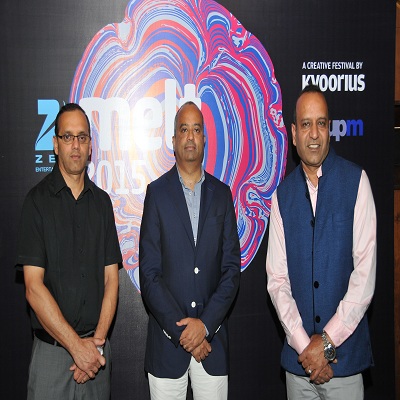
    Launched by Kyoorius in partnership with the three lords in the media and entertainment sector – D&AD, GroupM and Zee Entertainment Enterprises, the two day festival is an attempt to fill the gap, which addresses the blurred lines of advertising, marketing and digital space.


    “We felt there is nothing happening in India that stimulates the entire marketing and communications industry at large. So while there is something happening for the marketing, advertising and digital independently, it does not happen at the convergence of all these three put together,” said Kyoorius CEO Rajesh Kejriwal. 

    Elaborating on choosing the name Melt for the event, Kejriwal said that the lines are blurring today. “The media company is also doing creative and digital work and then there are digital agencies that are doing creative work. Advertising agencies have opened their own digital houses. It has all become a melting pot and so the name.”


    The festival doesn’t have sponsors, but has partners. These include: Hindustan Times, Happy Finish, Afaqs, Pepperfry, Future Laboratory, Hyper Island, The Partners, BrandMusiq, One Eyeland, Maxus, YouTube, Google, BARC and many more in the pipeline.

    To be held on 21 and 22 May at Nehru Center and NSCI at Worli, Mumbai, the festival will be filled with seminars, exhibitions and workshops, which will culminate with the Kyoorius Advertising and Digital Awards Night on 22 May to be held at NSCI Stadium. 

    Kyoorius expects close to 5000 delegates and 60 speakers attending the event across the two days. The event could also see close to 25 partners. “Next year will be larger wherein people from South East Asia will also be participating,” informed Kejriwal. 

    A lot of research has gone into creating the festival. “We met a number of marketing people and understood their problems and the terms that they didn’t understand, which could range from content marketing to brand activation. Through the research we found that there was a common problem between the media and the marketing people and so we wanted to put content that addresses their core issues,” added Kejriwal. 

    The sessions will address all issues across platforms. Starting with a creativity conference, which is aimed at the advertising community, day one will also see learning for the media people, for Facebook and Twitter marketing, session on measurement with the coming in of new ratings body amongst others.

    “Different partners have come onboard to curate content. There will be workshops like the Sonic branding workshop, YouTube workshop on launching a YouTube channel, on being a YouTube star etc,” informed Kejriwal. 


    According to GroupM’s Srinivas, the benefit of an event like this is that it can attract talent. “The biggest challenge as an industry is to be able to attract talent and then sustain them, because over a period of time advertising doesn’t remain an attractive career option. It is through events like these that we will bring the advertising sector back on the radar of young talented people and show them how attractive the sector is.”

    Talking about the reason for GroupM’s association with Zee Melt 2015, Srinivas said, “We wanted to play a role in showcasing what the industry does overall, especially the creative side of the industry, to get the young talent excited about the industry and hopefully to improve the talent quotient of the industry.”

    On Zee’s association with Melt 2015 Zee corporate brand head Roland Landers said, “When Kyoorius pitched the idea, we felt that it blended with what Zee does as a corporate brand.”

    Zee currently boasts of two brand intellectual properties: Zee Leadership series, targeted at CFOs and Zee Mindspace targeted at the CMOs. “When we looked at the Kyoorius event, it looked like a longer version of the Zee Mindspace event,” reasoned Landers.

    The network on day one will look at crowd sourcing of content. “We are a content company and we believe that anybody who has a good content idea can come to us with the idea. We will evaluate that through our screening process and the short-listed ones will be further evaluated by our senior team at the venue. If we like the idea, we can back it as well,” informed Landers.

    Zee has in the past partnered with a number of events from Goafest to AAAI, but this one is too close to its heart. Landers explained, “In events like Goafest, we are merely a presenting sponsor or title sponsor but beyond that we don’t get an opportunity to use our creative talent anywhere. With Melt, we believe it is the partnership that will evolve because we are integrating our own IP into this.”

    Many in the sector feel that the two day festival is in direct competition to the upcoming Goafest. When quizzed about the same, Kejriwal said, “There is a need for not just one or two but four such events.”

    He added, “Goafest is a great event, but then we do need more such events. The industry has 25,000 people, Goafest gets some 2000 to 3000 people, Melt 2015 should get close to 5000 people, but there are so many more people and learning doesn’t stop.”

    Kejriwal also feels that considering such events are targetted more at the younger lot, it is important to have an event of this scale in different parts of the country. “Not everyone can go to Goa and so we decided to keep it in Mumbai,” said Kejriwal while adding that since Delhi is a growing market, Kyoorius will be doing an event sometime next year in Delhi as well. 

    Echoing the same, Srinivas said that the industry can do with a lot more events like Goafest and Melt. “As an industry, we are still very young and there is a long way to go. We don’t see anyone competing with the other,” said Srinivas.
     

    The list of final speakers and the public announcement with regards to the event will be done between 15-20 April.