Tag: Guwahati

  • Doordarshan launches Mobile TV in India, needs no internet

    Doordarshan launches Mobile TV in India, needs no internet

    NEW DELHI: Doordarshan has commenced digital terrestrial television (DTT) services in 16 cities, thereby providing mobile TV to the users.

    The sixteen cities being covered from 25 February are- Delhi, Mumbai, Kolkata, Chennai, Guwahati, Patna, Ranchi, Cuttack, Lucknow, Jallandhar, Raipur, Indore, Aurangabad, Bhopal, Bangalore and Ahmadabad.  

    Mobile TV can be received in and around these cities using DVB-T2 Dongles in OTG enabled smart phones and tablets, Wi-Fi dongles for moving vehicles, besides the TV sets having built in DVB-T2 Tuner which are called as integrated digital TV (iDTV).

    While Sony, LG, Panasonic, Samsung etc., are providing iDTV, the dongles are also available in online shopping sites like Flipkart, Ebay, Snapdeal etc. It requires the user to download the software and plug these dongles in the smartphones and tablets to receive DD Signals.

    There will be no charges for watching the DD Channels. No internet connection is required after installation of the software. The public and private transportation vehicles and public places are potential environments for Mobile Television.

    Currently, DD National, DD News, DD Bharati, DD Sports, DD Regional/DD Kisan are being relayed. Only one time investment of a dongle will be required by viewers and no extra expenditure unlike streaming with internet. The TV pictures are free from “ghosting” and “snowing”.

    DTT secures greater plurality in platform ownership, ensuring that no single platform owner is so powerful that it can exert undue influence on public opinion or political agendas. The digital transition offers an opportunity to increase the production of local content.

    This in turn creates job opportunity and increases creativity and entrepreneurship. A strong DTT platform is critical for healthy competition in the TV market and to the realisation of a wide range of social benefits and most essentially an all weather reliable platform. There is no risk of catastrophic failure of total network. It provides alternative distribution platform.

    DD channels can be received on smart phones, tablets and in moving vehicles. The new audience on move are the key beneficiary of this technology. Currently, mobile TV can be received using a dongle for mobile and tablets. But the day is not far when it will be embedded inside the devices. Watching TV from a phone is interested in many situations. Public and private transportation vehicle in public places are potential environment for mobile TV services. In the DTT Transmission everybody watches the same content at the same time and it guarantees everybody the same high level of service, since they are all bathed in the same signal. So tablets and smartphones and moving vehicles find new way of watching DD Channels in India in 16 cities, which are going to increase in near future.

     

  • Doordarshan launches Mobile TV in India, needs no internet

    Doordarshan launches Mobile TV in India, needs no internet

    NEW DELHI: Doordarshan has commenced digital terrestrial television (DTT) services in 16 cities, thereby providing mobile TV to the users.

    The sixteen cities being covered from 25 February are- Delhi, Mumbai, Kolkata, Chennai, Guwahati, Patna, Ranchi, Cuttack, Lucknow, Jallandhar, Raipur, Indore, Aurangabad, Bhopal, Bangalore and Ahmadabad.  

    Mobile TV can be received in and around these cities using DVB-T2 Dongles in OTG enabled smart phones and tablets, Wi-Fi dongles for moving vehicles, besides the TV sets having built in DVB-T2 Tuner which are called as integrated digital TV (iDTV).

    While Sony, LG, Panasonic, Samsung etc., are providing iDTV, the dongles are also available in online shopping sites like Flipkart, Ebay, Snapdeal etc. It requires the user to download the software and plug these dongles in the smartphones and tablets to receive DD Signals.

    There will be no charges for watching the DD Channels. No internet connection is required after installation of the software. The public and private transportation vehicles and public places are potential environments for Mobile Television.

    Currently, DD National, DD News, DD Bharati, DD Sports, DD Regional/DD Kisan are being relayed. Only one time investment of a dongle will be required by viewers and no extra expenditure unlike streaming with internet. The TV pictures are free from “ghosting” and “snowing”.

    DTT secures greater plurality in platform ownership, ensuring that no single platform owner is so powerful that it can exert undue influence on public opinion or political agendas. The digital transition offers an opportunity to increase the production of local content.

    This in turn creates job opportunity and increases creativity and entrepreneurship. A strong DTT platform is critical for healthy competition in the TV market and to the realisation of a wide range of social benefits and most essentially an all weather reliable platform. There is no risk of catastrophic failure of total network. It provides alternative distribution platform.

    DD channels can be received on smart phones, tablets and in moving vehicles. The new audience on move are the key beneficiary of this technology. Currently, mobile TV can be received using a dongle for mobile and tablets. But the day is not far when it will be embedded inside the devices. Watching TV from a phone is interested in many situations. Public and private transportation vehicle in public places are potential environment for mobile TV services. In the DTT Transmission everybody watches the same content at the same time and it guarantees everybody the same high level of service, since they are all bathed in the same signal. So tablets and smartphones and moving vehicles find new way of watching DD Channels in India in 16 cities, which are going to increase in near future.

     

  • NOFN being revamped to improve broadband connectivity, Rs 110,000 crore earned from spectrum auctions: Mukherjee

    NOFN being revamped to improve broadband connectivity, Rs 110,000 crore earned from spectrum auctions: Mukherjee

    NEW DELHI: President Pranab Mukherjee today said the architecture and design of the National Optical Fiber Network (NOFN) is being revamped to rapidly take broadband connectivity to Indian villages under Bharat Net.

    In his address to the joint sitting of both houses of Parliament on the first day of the Budget Session, the President said, “Transparent and efficient auction of spectrum has fetched highest ever price of about Rupees one lakh ten thousand crore.”

    He said policies like Spectrum trading and sharing have been finalised for optimum utilisation of resources.

    Mukherjee added that the recent interventions and subsequent rationalisation of duty structure in mobile handset manufacturing industry has led to near doubling of mobile handset production in the current year.

    According to Mukherjee, setting up world-class infrastructure for Electronics manufacturing across the country remains a priority for the Government. As many as 29 Electronic Manufacturing Clusters are under development.

    The country recorded the highest ever software exports during 2015. “By spreading the network of Common Service Centers and setting up BPOs in small towns and linking land record modernization with the use of space technology, my Government is taking the benefits of Digital India to common citizens. The Digital India Programme will give a big boost to citizen empowerment and knowledge economy,” the President added.

    Building upon the success over the past year, the Government’s endeavour is to scale new heights in Space. “Focus will be on completing the constellation of the Indian navigational satellites in 2016 to cater to indigenous navigation and location-based services,” Mukherjee said.

    Noting that “radio has once again emerged as the people’s medium,“ Mukherjee said the good response to the successful and transparent bidding for the first batch of private FM Radio for phase III “augurs well for the medium.”

    He noted that establishment of new radio stations has received a fresh impetus. The bidding of the first batch of private FM Radio for phase III comprised 135 channels in 69 cities.

    The Government had taken several measures to improve the quality of governance. People’s participation in policy making through initiatives like MyGov had taken firm roots, he said, adding that the Government had taken up an initiative for providing 500 e-governance services through Public Private-Partnership in 12 states of the country.

    Noting that youth are the future of the country, Mukherjee said ensuring Yuvaon ko Rojgaar through massive employment generation is a top goal for the Government. “We are driving job creation through an integrated set of initiatives including Make in India, Start up India, Mudra, Skill India, etc.”

    A series of reforms have been initiated to help convert job seekers into job creators. The Government has launched the Start-Up India campaign, which would deepen, expand and support the innovation eco system in the country.

    The Government’s innovative initiatives have helped India jump up 12 places in the latest rankings by the World Bank on Ease of Doing Business. “Notably, the Make in India initiative has achieved a 39 per cent increase in FDI inflow despite an adverse global investment climate.”

    Noting that sports is the best way to Swasth India, he said the Government “successfully hosted the 12th South Asian Games from 5 to 16 February, 2016 at Guwahati and Shillong in which more than 3500 sportspersons from all the SAARC countries participated. The games were the biggest ever sporting event in North East India.”

  • NOFN being revamped to improve broadband connectivity, Rs 110,000 crore earned from spectrum auctions: Mukherjee

    NOFN being revamped to improve broadband connectivity, Rs 110,000 crore earned from spectrum auctions: Mukherjee

    NEW DELHI: President Pranab Mukherjee today said the architecture and design of the National Optical Fiber Network (NOFN) is being revamped to rapidly take broadband connectivity to Indian villages under Bharat Net.

    In his address to the joint sitting of both houses of Parliament on the first day of the Budget Session, the President said, “Transparent and efficient auction of spectrum has fetched highest ever price of about Rupees one lakh ten thousand crore.”

    He said policies like Spectrum trading and sharing have been finalised for optimum utilisation of resources.

    Mukherjee added that the recent interventions and subsequent rationalisation of duty structure in mobile handset manufacturing industry has led to near doubling of mobile handset production in the current year.

    According to Mukherjee, setting up world-class infrastructure for Electronics manufacturing across the country remains a priority for the Government. As many as 29 Electronic Manufacturing Clusters are under development.

    The country recorded the highest ever software exports during 2015. “By spreading the network of Common Service Centers and setting up BPOs in small towns and linking land record modernization with the use of space technology, my Government is taking the benefits of Digital India to common citizens. The Digital India Programme will give a big boost to citizen empowerment and knowledge economy,” the President added.

    Building upon the success over the past year, the Government’s endeavour is to scale new heights in Space. “Focus will be on completing the constellation of the Indian navigational satellites in 2016 to cater to indigenous navigation and location-based services,” Mukherjee said.

    Noting that “radio has once again emerged as the people’s medium,“ Mukherjee said the good response to the successful and transparent bidding for the first batch of private FM Radio for phase III “augurs well for the medium.”

    He noted that establishment of new radio stations has received a fresh impetus. The bidding of the first batch of private FM Radio for phase III comprised 135 channels in 69 cities.

    The Government had taken several measures to improve the quality of governance. People’s participation in policy making through initiatives like MyGov had taken firm roots, he said, adding that the Government had taken up an initiative for providing 500 e-governance services through Public Private-Partnership in 12 states of the country.

    Noting that youth are the future of the country, Mukherjee said ensuring Yuvaon ko Rojgaar through massive employment generation is a top goal for the Government. “We are driving job creation through an integrated set of initiatives including Make in India, Start up India, Mudra, Skill India, etc.”

    A series of reforms have been initiated to help convert job seekers into job creators. The Government has launched the Start-Up India campaign, which would deepen, expand and support the innovation eco system in the country.

    The Government’s innovative initiatives have helped India jump up 12 places in the latest rankings by the World Bank on Ease of Doing Business. “Notably, the Make in India initiative has achieved a 39 per cent increase in FDI inflow despite an adverse global investment climate.”

    Noting that sports is the best way to Swasth India, he said the Government “successfully hosted the 12th South Asian Games from 5 to 16 February, 2016 at Guwahati and Shillong in which more than 3500 sportspersons from all the SAARC countries participated. The games were the biggest ever sporting event in North East India.”

  • Guwahati gets 60 days extension in DAS Phase III

    Guwahati gets 60 days extension in DAS Phase III

    MUMBAI: The tussle between the judiciary and the Ministry of Information and Broadcasting (MIB) for the Digital Addressable System (DAS) Phase III deadline continues even as the official deadline of 31 December, 2015 has passed by.

    After Telangana, Andhra Pradesh, Sikkim, Maharashtra and Odhisa, now Kamrup District under which comes Guwahati has received an extension of 60 days to implement DAS.

    The office of District Magistrate, Kamrup Metropolitan District: Guwahati after perusing the letter submitted by Greater Guwahati Cable TV Operators Association general secretary Shwarupananda Bharali, in the interest of general public and the cable TV viewers, has extended the transmission of the analogue signals for a period of 60 days.   

    A cable operator on condition of anonymity informs Indiantelevision.com that Kamrup has over three lakh Phase III subscribers and the seeding process is very slow. He further adds, “The set top box (STB) manufacturers are not taking orders now. They are asking us to wait for at least three to four days more. After they receive the order, they will take at least 20 more days to deliver. Hence we welcome the honourable DC’s decision and hope that brings some respite.”   

    The analogue signals are restored now in the vicinity but were totally blacked out on 1 – 2 January, 2016. “There were many cases of public outrage, physical harassment but thankfully no report of loss of life or property were received,” added another cable operator.

  • Q2-2016: ENIL reports 11.6% YoY revenue & 15.8% PAT growth

    Q2-2016: ENIL reports 11.6% YoY revenue & 15.8% PAT growth

    BENGALURU: Indian private FM player Entertainment Network (India) Limited (ENIL) reported 11.6 per cent increase in Total Income from Operations (TIO) in the quarter ended 30 September, 2015 (Q2-2016, current quarter) at Rs 116.27 crore as compared to the Rs 104.14 crore in Q2-2015. TIO in the current quarter was 14.5 per cent more than the Rs 101.56 crore in immediate trailing quarter.


    The company’s profit after tax (PAT) in Q2-2016 increased 15.8 per cent to Rs 26.97 crore (23.2 per cent margin) as compared to the Rs 23.30 crore (22.4 per cent margin) in the corresponding year ago quarter and was 4.2 per cent more than the Rs 25.88 crore (25.5 per cent of TIO) in Q1-2016. The company had entered the Rs 100 crore PAT club in FY-2015 with a PAT of Rs 105.98 crore (24.2 per cent margin) on a TIO of Rs 483.48 crore. 


    Notes:  (1) 100,00,000 = 100 Lakhs = 10 million = 1 crore

    (2) The numbers in this report are consolidated unless stated otherwise.


    Let us look at some of the other numbers reported by ENIL


    The company’s EBIDTA in Q2-2016 at Rs 35.71 crore (30.7 per cent margin) was 13.7 per cent more than the Rs 31.40 crore (30.2 per cent margin) in the corresponding year ago quarter and almost flat (up by 90 basis points) as compared to the Rs 35.38 crore (34.8 per cent margin) in the previous quarter.


    ENIL total expense (TE) in Q2-2016 at Rs 90.86 crore (78.1 per cent of TIO) was 12.3 per cent more than the Rs 80.89 crore (77.7 per cent of TIO) in Q2-2015 and was 22.2 per cent more QoQ than the Rs 74.38 crore (73.2 per cent of TIO) in Q1-2016.


    ENIL paid 48.8 per cent higher license fee in Q2-2016 at Rs 7.83 crore (6.7 per cent of TIO) as compared to the Rs 5.27 crore (5.1 per cent of TIO) in Q2-2015 and 53.3 per cent more than the Rs 5.11 crore (5 per cent of TIO) in Q1-2016.


    The company’s marketing expense in Q2-2016 at Rs 15.47 crore was (13.3 per cent of TIO) was seven per cent lower than the Rs 16.63 crore (16 per cent of TIO) in Q2-2015, but 37 per cent more than th Rs 11.29 crore (11.1 per cent of TIO) in Q1-2016.


    Employee Benefit Expense (EBE) in Q2-2016 at Rs 21.67 crore (18.6 per cent of TIO) was 7.5 per cent more than the Rs 20.17 crore (19.4 per cent of TIO), but was 1.9 per cent lower than the Rs 22.10 crore (21.8 per cent of TIO) in Q1-2016.


    ENIL managing director and CEO Prashant Panday said, “We are extremely happy with our results. Despite a sluggish economy, we have grown our revenues and profits substantially. With Phase-3 auctions over, we are gearing up to launch brand Mirchi into exciting new towns like Kochi and Chandigarh, as well as launch our second brand of radio in most of the major markets of the country. Radio is going to boom in the next five years, and Mirchi will surely be at the forefront.”


    ENIL’s participation in the first batch of Phase-3 auctions has resulted in an expansion of its footprint into seven new towns – Chandigarh, Kochi, Kozhikode, Jammu, Srinagar, Guwahati and Shillong.


    Further, ENIL recently received the permission from the Ministry of Information & Broadcasting (MIB) to acquire four stations from TV Today Network Limited, viz., Amritsar, Patiala, Shimla and Jodhpur – which the company says will be re-branded and re-launched shortly as Mirchi, adding to its North India network strength. With these 11 stations, the core Mirchi brand will now be available in 43 cities.

  • Day 23: Ten cities in FM Phase III inching towards Rs 10 crore mark

    Day 23: Ten cities in FM Phase III inching towards Rs 10 crore mark

    NEW DELHI: Around ten cities that have so far got bids of Rs 6 crore or more are expected to raise the cumulative winnings, going by indications on the twenty-third day in the e-auction for the first batch of FM Phase III cities. The cumulative provisional winning price showed a marginal rise to Rs 1139.3 crore at the end of the 92nd round.


    The number of provisional winning channels and cities remained the same as yesterday: 94 channels in 56 cities, but the total bids surpassed the cumulative reserve price by Rs 680.5 crore or 148.3 per cent against the aggregate reserve price of about Rs 459 crore.


    The cumulative provisional winning price has thus risen over the total reserve price of the first batch of 135 FM channels in 69 existing cities – Rs 550.18 crore – by Rs 589.2 crore or 107.1 per cent. 


    As per Information and Broadcasting Ministry sources, the e-auction will continue as long as bids are received for any of the 135 channels, including the 13 cities for which no bids have come.


    The Auction Activity Requirement rose to 100 per cent after the 59th round on 14 August, after being 90 per cent after the 37th round on 7 August.


    The winning price has gone up by more than 100 per cent above their respective reserve prices: Ahmedabad, Amritsar, Aurangabad, Bengaluru, Bhubaneshwar, Chennai, Delhi, Guwahati, Jaipur, Jodhpur, Kolhapur, Mumbai, Nasik, Patna, Pune, Rourkela and Varanasi, which got provisional winning bidders at prices more than double the respective reserve prices. 


    A single channel in Bhubaneshwar created a new record by getting the most competitive bidding increment-wise by going up nine times the reserve price.


    However, there were still no bids for thirteen cities namely Asansol, Gulbarga, Mangalore, Mysore, Puducherry, Rajahmundry, Siliguri, Tiruchy, Tirunveli, Tirupati, Tuticorin, Vijaywada and Warangal.


    The demand in most cities fell by up to three per cent and by four per cent below the excess demand at the price in the 92nd round in Hyderabad.


    The Percentage Price Increment applicable for the Next Clock Round rose to five each in Guwahati, Jodhpur and Varanasi but was just one in Shillong.


    Provisional winning price in the top three cities reflected no change: Delhi at Rs 169.16 crore (for just one channel); Mumbai at Rs 122.81 crore (for two channels); and Bengaluru at Rs 109.25 crore.


    Kohlapur, which appeared to be the next to enter the Rs 10-crore club remained static for the third day with Rs 9.44 crore though cities like Kanpur, Rajkot, Amritsar and Aurangabad do not seem to be far behind.


    Chennai at Rs 53.38 crore, Ahmedabad at Rs 42.68 crore, Pune at Rs 42.03 crore, Jaipur at Rs 28.34 crore, Chandigarh at Rs 19.04 crore, Hyderabad at Rs 18 crore, Patna at Rs 17.89 crore, Cochin at Rs 15.04 crore, Nasik at Rs 14.66 crore and Lucknow at Rs 14 crore remained static.

  • Creative Portico New York presents Fashion @ Home Retail Conference 2014

    Creative Portico New York presents Fashion @ Home Retail Conference 2014

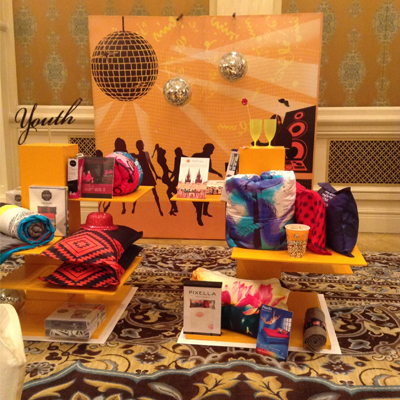
    MUMBAI: In its mission to make Indian homes fashionable, leading home fashion brand, Portico New York launched their first edition of Fashion@Home Retail Conference 2014 at Neel, the swanky South Mumbai lounge at Tote on the Turf. The event was a runaway success with over 150 trade partners who attended the launch. This included some of the biggest multi-brand outlets such, large format home furnishing stores, Mumbai shopping channels, popular e-commerce sites and lots more. Fashion@Home Retail Conference 2014 is now billed as one of the biggest home fashion trade event.

    Commenting on the success of the conference, Arun Bhawsingka, CEO, Creative Portico Pvt. Ltd. said, “The support and appreciation we received for Fashion@Home Retail Conference 2014 was overwhelming. This was an important event for us as we welcomed all our trade and distribution partners to be the first to witness the launch of our new 2014 collections. The turnout was fantastic and they could gain a holistic experience of the entire conference. Right from the display concept to the product packaging, we received a fantastic feedback from all. With such a heartening response from Mumbai & Delhi, we now look forward to the next leg of our conference to be held in Hyderabad, Chennai, Ooty and Guwahati in April and May this year.”

    Portico New York showcased all their new collections to be launched in 2014. Products included various exclusive collections, including those designed by Manish Arora, Neeta Lulla and Nishka Lulla. The Kids Collection was particularly well received among the traders for its playful elements and characters. The Enchante Collection with its line of premium bed covers and luxurious silk white duvet made of pure silk were also a hit. Portico’s unique gifting options including its packaging for various occasions like weddings, housewarming, etc, is what makes Portico New York a trend-setter in home fashion.

    Portico New York’s range include an impressive mix of bed sheets, comforters, duvets, duvet covers, soya bean quilts, blankets, memory foam pillows, towels, shower curtains, a wide range of kids licensed merchandise and the Therapeia range of health bedding products. Portico New York has also tied up with renowned fashion designers and important environmental causes. Indian designers Manish Arora, Neeta Lulla and Nishka Lulla have brought their design aesthetic and launched exclusive collections.

  • Resolution in sight for Guwahati electricity pole charge dispute

    Resolution in sight for Guwahati electricity pole charge dispute

    MUMBAI: The Assam Power Distribution Company Limited (APDCL) and Greater Guwahati Cable TV Operators’ Association (GGCTOA) are finally coming to a resolution over payment of a fee for use of electricity poles in Guwahati.


    The issue first cropped up in September 2013, after the APDCL decided to charge cable TV operators in Guwahati for using electric poles to lay cable wires.


    The first step towards resolution of the issue was taken on 6 March, when representatives from APDCL and GGCTOA met and agreed to together conduct a survey to ascertain the number of electricity poles in the Guwahati region.


    It can be recalled that when GGCTOA moved the Guwahati High Court on the issue of APDCL’s decision to levy a charge for use of electricity poles, the court had asked the GGCTOA to pay Rs 10 per electricity pole per month for the period 22 January to 28 February.

    The last date for the payment of the fee as directed by the high court was 26 February.


    APDCL had thereafter said cable operators are using a total of 33,000 electricity poles in Guwahati. The GGCTOA challenged APDCL’s claim and demanded that a joint survey be conducted on the number of electricity poles being used by cable operators.


    Even after the court directive, the settlement of the dispute was not a smooth affair. The GGCTOA paid Rs 1 lakh of the Rs 3 lakh that they had to pay the APDCL in compliance with the HC order. The association, however, threatened to disconnect cable TV signals on 25 February to press for a survey of electricity poles in Guwahati. Assam’s power minister Pradyut Bordoloi intervened and also granted more time for the association to pay the balance charges to APDCL as directed by the court.


    “We now have time until 15 March to clear the electric pole fee,” informs GGCTOA general secretary Md Iquebal Ahmed.


    APDCL and GGCTOA will start a joint survey from Monday, 10 March to ascertain the number of electricity poles being used by cable operators.


    “In the meeting that was held on Thursday, we have suggested two rates to the APDCL: Rs 10 per electric pole, where we will have exclusive collection rights to collect electric pole fee from the cable operator and also the other players including the telecom and ISPs or Rs 6 per electric pole, in which we will not have any such exclusive right and will pay to the APDCL for using the electric pole for laying cable TV wires,” said Ahmed.


    The GGCTOA has also requested the APDCL to come out with payment modalities for the association. “APDCL expects us to collect the fee from the cable operators. For all this, we will need to deploy a work force. We have asked the electricity board to work out a formula which will help us pay wages to these members involved in survey and collection of electric pole fee,” he said.


    The association has agreed to pay electricity pole charge for 10,000 poles on adhoc basis for the month of March until the joint survey is completed.


    Not only this, the APDCL also needs to specify the safety measures the cable operators’ association needs to take. “While they have asked us to bear the expenses of the safety equipments needed for the safety and security of the electrical wires, we have asked them to provide us the specifications of the design and the estimated expense. We will decide on whether we will alone bear the expense or will share the expenses with APDCL, after they give us the estimates,” said Ahmed.

  • Why Assam cable operators are going on strike?

    Why Assam cable operators are going on strike?

    MUMBAI: It was in September that the Assam Power Distribution Company Limited (APDCL) sent out its first circular, making it mandatory for cable operators in the state to pay Rs 25 per electric pole per month, with the deadline being 7 October. However, the cable operators had requested APDCL to lower the rate as they would earn revenue from many other service providers who are using the electric poles as well.


    But all their efforts seem to have gone in vain as the APDCL seems unconvinced on the issue. After reviewing the request made by the operators in October, while APDCL has reserved its views on the other parts of Assam and lower Guwahati, it has asked the operators in Guwahati Metro to pay Rs 25 per electric pole every month starting 15 January.


    The decision which was taken in a meeting held on 17 December is set to affect more than 250 cable operators providing cable TV service in Guwahati Metro area. The operators represented by Greater Guwahati Cable TV Operators’ Association (GGCTOA) general secretary Md Iquebal Ahmed were asked to file a confirmation letter accepting the fee module.


    However, while they didn’t follow what they were asked to, around 100 cable operators met on 19 December to discuss the issue and have decided to switch off cable TV signals today from 4 pm – 9 pm.


    Apparently, GGCTOA held a press conference on Sunday and made an announcement about the same.


    The operators in Guwahati Metro area have refused to pay Rs 25 per pole per month. “Though we have been told that the electric poles will be given exclusively to us and that we can even give it to advertisers to put up hoardings, or collect revenue from the broadband or telecom operators who are also using the pole, but this is all verbal. Nothing has been given to us in writing,” informs Ahmed.


    There are approximately 2.8 lakh electric poles in Guwahati Metro area, of which around 1.8 lakh poles are being used by the cable operators. The matter is currently being handled by APDCL Lower Assam division CGM commercial P. Buzarbauah. “We need a written agreement of all that has been proposed in the meeting. When we asked for it, we were asked to sign the letter first. But, how can we be sure that whatever has been said will be followed later,” he says.


    Also the APDCL has given no clarity on who will be collecting the money from the operators and also the advertiser who uses the electric pole to put the hoarding. GGCTOA has also requested the APDCL to directly deal with operators to collect the fee. “We had asked them to sign an agreement with each cable operator, so that they can directly be made responsible for payment or non-payment of the fee. But, the APDCL is passing the buck on to us,” informs Ahmed.


    “According to what the body has proposed, it is GGCTOA which will need to collect the pole fee from operators and submit it to APDCL. But how am I responsible if say of the three operators who are using the pole for laying cable wires, two pay the electric pole usage fee, while one doesn’t? So we are demanding that the APDCL signs an agreement with operators directly and not hold us responsible,” he adds.


    After waiting for almost two months, while decision is still pending for other regions of Assam, Guwahati Metro region cable operators are surely unhappy. “We even plan to meet Assam Industries & Commerce, Power (Electricity) and Public Enterprises minister Pradyut Bordoloi and also chief minister Tarun Gogoi in order to resolve the issue,” concludes Ahmed.