Tag: Guru Dutt

  • Guru Dutt’s ‘Pyaasa’ only India restored film to compete at 72nd Venice Film Fest

    Guru Dutt’s ‘Pyaasa’ only India restored film to compete at 72nd Venice Film Fest

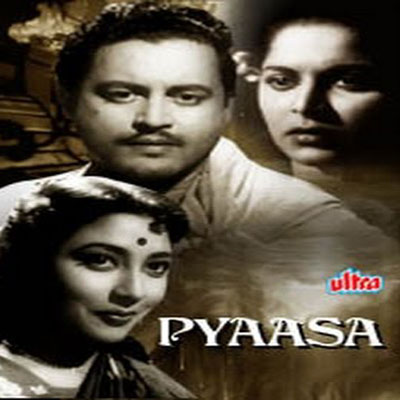
    MUMBAI: Pyaasa – a timeless masterpiece by Guru Dutt has become the only Indian film restored by an Indian company for a world premiere in the competition section at the 72nd Venice Film Festival.


    Ultra Media & Entertainment, which holds the negative rights of Pyaasa, had 45 experts working round the clock for over four months to restore and bring back the film to its original quality and showcase it globally.


    Pyaasa will compete with 20 other restored films from all over the world for the coveted “Venice Classics Award” for the best restored film.


    The 72nd Venice Film Festival will be held from 2 – 12 September 2015 in Venice.


    The 1957 Pyaasa stars Guru Dutt, Waheeda Rehman and Mala Sinha.


    The film has been restored completely for the Venice Film Festival with an objective of preserving and presenting it in its original quality to the global audience. Pyaasa will be screened on 11 and 12 September, 2015 in Sala Volpi auditorium at the Venice Film Festival. 


    Ultra Media & Entertainment CEO Sushil Kumar Agrawal said, “It gives us immense pleasure to present a cult classic like Pyaasa to the global audience. There is a huge fan following of Guru Dutt all over the world who have not been able to see this ageless magic in its original form and glory. It took us nearly four months to restore this film frame by frame and we are happy that the final outcome of the restored version can now be seen in its original form.”


    “Out of the many classics that we have restored, Pyaasa has a special place in our hearts. It is one of the rarest gems of Indian cinema and we take great pride in preserving it and showcasing it globally. In fact the film has already created substantial buzz and we have several distribution enquiries from various parts of the world. We are also planning a major theatrical release of Pyaasa post its screening at the Venice Film Festival,” he added. 


    Ultra is planning to promote and market the film at the festival and is expecting demand from international distributors, sales agents, ancillary content aggregators and exhibitors for the restored version of Pyaasa at the festival.


    The most challenging part after acquiring the rights was sourcing the authentic materials to complete the preservation. After much effort, Ultra found the original camera negatives of the film at an archive in India, However a lot of the parts of the negatives were either damaged or lost/ 


    Ultra decided to use as much parts as possible from the original camera negative and a few parts were used from 35mm prints. A new digital transfer was created in 2K resolution on the ARRISCAN film scanner.This in-house technology of Ultra Studio & Digital Lab helped in applying a multidisciplinary, data-centric approach to the entire film’s restoration process. 


    Once the complete film was digitally transferred, came the most challenging part of restoration. Thousands of instances of dirt, lines, scratches, splices, warps, jitters and green patches were manually removed frame by frame under careful supervision by experienced artists The in-house talented professionals used a specialized film content mending and defect removal mechanism in their repair process. They carefully selected the best way to restore this priceless classic to its original quality. 


    The original monaural soundtrack was remastered at 24-bit from the 35mm optical soundtrack. Clicks, thumps, hiss and hum were manually removed frame by frame at the Ultra sound studio. The film will be presented in its original aspect ratio of 1.33:1 “Venice Classics” has been a crucial section of the Venice Film Festival, which has been premiering world class restored classics in the festival. The prime objective of this section is to bring back to spotlight old, underestimated and neglected films of the past, which have been restored an year back by film archives, cultural institutions or production companies around the world. 


    Over the years, Ultra has also restored various Indian classics like Chori ChoriHalf Ticket, Paighaam, Insaniyat and Dil Tera Deewana amongst others.
  • Good biopics can be made with good actors: Rakeysh Mehra

    Good biopics can be made with good actors: Rakeysh Mehra

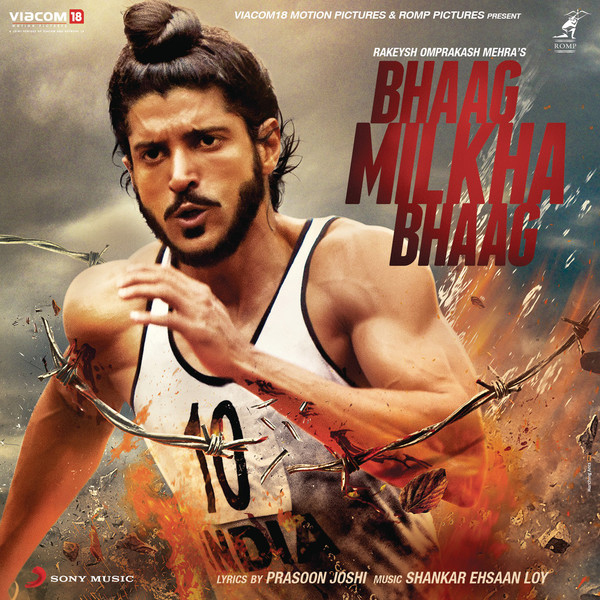
    MUMBAI: He may be getting entirely positive response for the “biopic” he made on sprinter Milkha Singh’s life but filmmaker Rakeysh Omprkash Mehra believes that a film can’t be a biopic. He says that a film can always be an “inspired by a true life piece” which he believes even Bhaag Milkha Bhaag is as it isn’t telling the story of Singh from starting to end. “It’s rather telling the stories of his life that led him to become Milkha Singh,” said Mehra while talking during the session – “From Real Life Heroes to Reel Life Heroes: Biopics Inspiring Generations” on the first day of FICCI Frames 2014.


    Also present at the session was Farhan Akhtar who has received rave reviews for his performance as Milkha Singh, while it was being anchored by CNN-IBN Entertainment Editor Rajeev Masand.


    Mehra, when quizzed if filmmakers take certain liberties and tweak the life story while filming a biopic, he remarked: “When you tell a story, you have your own interpretation. Like in BMB, we didn’t follow Singh’s life in chronological order rather we started the story from an incident that would transform his life.” Mehra believes that storytellers have to be “morally” correct while telling stories.


    While talking about the most important aspect of making a film on a person’s life, Farhan said that it is very important to come down to that one lesson of the person’s life from which the audiences can draw an inspiration. “The writing is another important aspect,” says Farhan.


    In the same vein, Mehra says that it’s the actors, especially the one playing the title role who can put across the story in the best possible way. “It is important for the actors to get the feelings correct and the essence of the movie out,” he said.


    Mehra, now wants to make a movie on the life of Guru Dutt and for the research he thinks that more than studying the life of the person, it is important to understand the situation in which that person lived and grew to become who he was. “It’s very important to understand the time in which the person lived,” said Mehra, adding that he is even studying the life of Sahir Ludhianvi.

  • Centenary Film Festival to feature retro of Ray

    Centenary Film Festival to feature retro of Ray

    MUMBAI: A screening of the silent film ‘Throw of Dice‘ to the accompaniment of live music orchestra by maestro Nishat Khan will mark the opening of a special festival being held next week to mark the centenary of Indian cinema.


    A key highlight of the festival includes a special “Satyajit Ray Retrospective” and display the artwork of the cine craftsman of Indian cinema.


    Information and Broadcasting Minister Manish Tewari will inaugurate the Festival and also an exhibition on “Indian Cinema 100 (Celebrating a Century: An Audio Visual Voyage)”.
     
    The six-day festival will commence on 25 April and conclude on 30 April with a play on the life and times of Dadasaheb Phalke by Aamir Raza Hussain.


    The festival will travel to the Siri Fort auditorium, Jamia Milia Islamia University, Jawaharlal Nehru University, and India Habitat Center in an effort to bring it to the doorstep of film lovers in the capital.


    The extravaganza will also include screenings of some classics as well as contemporary Indian films by master directors such as Bimal Roy, Guru Dutt, Shyam Benegal, Adoor Gopalakrishnan and others.


    The festival will also pay tribute to some of the finest actors of popular Indian cinema, who are no longer alive, through the screening of their films. They include Balraj Sahni, Dev Anand, Shammi Kapoor, and Rajesh Khanna among others. The films being screened represent a sprinkling of various flavours of Indian cinema from major film producing regions of the country.


    Eminent filmmakers and actors have been invited to interact with the audiences over the course of the six day festival.


    Films Division will showcase documentaries which have captured on celluloid post-Independent India in all its myriad perspectives through gems out of its rich archives, such as news reels, documentaries, shorts, features and animation films on diverse subjects.


    Another key highlight of the festival is “Cut-Uncut,” a three-day workshop conceived and being executed by members of the Central Board of Film Certification. This event will showcase the growth and evolution of censorship in Indian cinema, through workshops and insightful panel discussions.


    The Centenary celebrations would culminate in the National Film Awards ceremony at Vigyan Bhavan on 3 May, including the presentation of the prestigious Dada Saheb Phalke Award to thespian Pran by President Pranab Mukherjee.