Tag: Gurjeev Singh Kapoor

  • Gurjeev Singh to head Star India international business

    Gurjeev Singh to head Star India international business

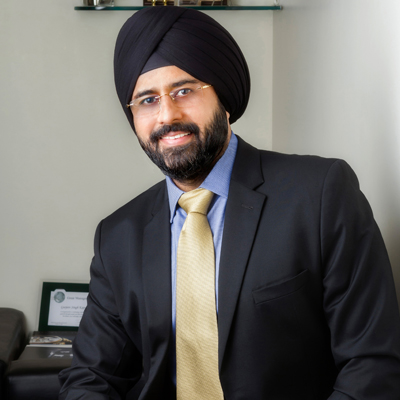
    MUMBAI: After the big split last month of Star and Zee’s distribution JV MediaPro, Star India has announced that MediaPro former COO Gurjeev Singh Kapoor will head the company’s international business initiatives.


    Once the MediaPro transition is complete, Singh will shift to his new base in London and report to Star India COO Sanjay Gupta. In his new role, Singh will handle distribution, syndication, ad sales and new content development in the US, South Afriaca, West Asia, the UK, Europe, south Asia and Southeast Asia.


    “The international business has huge growth potential which has not yet been fully tapped and we believe Gurjeev will add tremendous value to the organization and will build on the foundations that have been put in place and take the International business to new heights,” said Gupta.


    “Gurjeev shares our values and our focus on the business and he has proved to be an extraordinary leader throughout his stint with Star and its ventures,” he added.


    Singh will take up his new posting only after a few months. Speaking on his new role Singh said, “I am looking forward to be back into Star’s fold and delighted with the opportunity to expand our global footprint. Star is uniquely placed to drive aggressive growth in the international markets based on its great content advantage.”


    Star India’s channels are available in more than 120 countries globally. And Singh has his task cut out for him: Zee Entertainment Enterprises channels are available in more than 160 countries globally and a very aggressive IndiaCast has been working aggressively to further the distribution of the Viacom18, Network18 channels worldwide.


    Concurrent with Singh’s new responsibility, Star India’s national distribution has been split into two: TS Panesar has been given the task of handling national distribution on DTH and in the digitised markets, while Summit Grover has been brought in to look after  distribution in the emerging markets of DAS phase III and IV. Both are expected to report into Singh.


  • Media Pro: The unwinding of a joint venture

    Media Pro: The unwinding of a joint venture

    MUMBAI: When the Telecom Regulatory Authority of India (TRAI) came out with its regulation on the role of aggregators, everyone in the industry was sure that this would herald the death of content aggregators, at least in their current form. Industry insiders revealed that the leading and strongest content aggregator Media Pro would be among the first to break up, but it would take time, probably by mid-2014 or probably a little later.


    So when the announcement came last week that the Zee Turner and Star Den joint venture had decided to go their separate ways, it sent shock waves through the industry.  Some said it was premature and that the joint venture could have run a little longer. But sources indicate that the decision was taken at the very top between Subhash Chandra, Punit Goenka and Star India head Uday Shankar directly with only a handful of executives being informed. Industry insiders say that the joint venture had hired a consulting firm to give guidance on what should be done and when.


    The breakup will see the two partners setting up independent cable TV affiliate distribution teams. Exactly as it was like almost three years ago when both decided to get together to extract more revenues out of India’s reluctant cable TV operators and multi system operators (MSOs).


    Questions are being raised as to where will Media Pro India CEO Arun Kapoor – an old Essel group hand – be placed?  Will he head the Zee Entertainment distribution initiative or will he go the Star way? He was earlier group CEO distribution businesses at Essel Group (he also headed the joint venture which had been set up to distribute the Zee TV and Turner channels in India).


    Sources indicate that the Turner channels will continue to be distributed by Zee Entertainment at least for now without any cross network bundling. So does that mean that the Zee and Turner joint venture arrangement will in effect not be revived?


    Most observers expect COO Gurjeev Singh Kapoor to move onto the Star distribution team. Gurjeev began his media career with Zee and then went to Discovery before moving on to The OneAlliance as its business head. He was finally lured to lead Star Den Media services when it was set up as a joint venture between Sameer Manchanda’s DEN and Star India.


    The bets are out whether the Star Sports bouquet will be distributed by the Star India team or whether an independent team will be given that responsibility.  Most expect the former proposition to be realised.


    Industry observers state the Media Pro office in north Mumbai is a hub of activity with senior management working on splitting up the teams and also drawing up plans for recruitment wherever needed.


    “There is a lot of movement which is taking place currently, with some of the executives already going the Star India way,” says a source from the industry.


    MSOs and cable TV operators expect the two new teams to start approaching them soon with new packages and offerings. Others however indicate that this could be a month or two away, until Star and Zee draw up their individual teams. Gurjeev had told indiantelevision.com around a month ago that most of the MediaPro contracts with both cable TV and DTH operators are slated to come up for renewal by sometime in April.


    If that is true then Zee Entertainment and Star India don’t have much time on their hands. And the teams have their task cut out for them.   

  • Broadcasters to hike rates in both DAS and analogue areas

    Broadcasters to hike rates in both DAS and analogue areas

    MUMBAI: Things will be different the next time multi-system operators (MSOs) and direct-to-home (DTH) players sit across the table with broadcasters for renewal of channel contracts. Thanks to the price defreeze proposed by the Telecom Regulatory Authority of India (TRAI) after nearly seven years. The regulator on Monday released a notification, offering a 27.5 per cent inflation-linked hike to stakeholders in the tariff ceiling. The hike can be implemented in two phases: 15 per cent from April and the remaining 12.5 per cent from January 2015.


    Broadcasters in particular have welcomed the move. With the 15 per cent hike April onward applicable to the analogue business, broadcasters are happy that they can at least increase their ARPUs.


    “CPS deals in DAS areas will not be impacted with this tariff ceiling hike. But if the MSO or DTH player has a RIO deal, be it in the DAS or non-DAS region, the rates will go up,” informs Media Pro COO Gurjeev Singh Kapoor.


    For those wondering how rates can head north in DAS areas when the tariff ceiling notification is for non-addressable areas, here’s the logic. With RIO rates on digital platforms being 42 per cent of those on analogue platforms, a 15 per cent increase in analogue rates is bound to raise RIO rates for digital. Hence, while the hike in tariff ceiling is for non-DAS areas, the same is applicable to DAS areas as well. “This is the best thing that has happened to the industry, as we now have a platform to increase the ARPU and ask for more from consumers,” says Kapoor.


    While an aggregator, on condition of anonymity, puts it as: “DAS rates are related to non-DAS rates. The hike of 15 per cent is on the RIO rate. So even though many feel that the fixed deals will not get affected, they will. Because the matrix for negotiation will change now and this is not only for analogue areas, but also for DAS areas. The negotiation for fixed deals is done on the RIO rate, and if that goes up, of course, the fixed deal will also rise.”


    Most of the contracts are up for renewal in April; for TheOneAlliance, 60 per cent of the contracts will be renewed now whereas for Media Pro, close to 90 per cent of the contracts with both DTH operators and MSOs are up for renewal.


    “We have a very good scope and so, have decided to increase the rates for every MSO and DTH player in both DAS and non-DAS areas.  After a long time, broadcasters have got a hike in tariff ceiling and so, we would take the opportunity to hike the rates,” says TheOneAlliance EVP sales and strategy Makarand Palekar. “We will sit with the concerned MSOs and DTH players and try and incorporate this even in existing channel deals. And I am sure that DTH operators and MSOs will be happy with this as they can collect the same from the ground now.”


    Will consumers see a hike in bills this month onward? “We will move things gradually. We will sit for negotiations now,” informs Palekar.


    Are broadcasters happy with the percentage of hike? Palekar feels it could have been better. “But with digitisation, MSOs are currently in investment mode. So, in the current scenario, this could have been the best,” he says.


    Kapoor agrees with Palekar saying, “Yes, it is not enough. The increase should come in every year, but then it is a welcome move. They have finally woken up from their slumber.”


    According to the aggregator, “This figure of 15 per cent has been derived by the authority using past metrics and calibrations. While the hike is under the inflation rate, this is the best TRAI could have come up with.”


    Apart from broadcasters, are MSOs happy with the move? “MSOs will get bothered with this hike. We may end up paying for this from our own pocket if we cannot collect it from the ground,” rues ABS 7 Star CMD Atul Saraf.


    According to him, MSOs don’t put pressure on LCOs by hiking rates in the analogue regime. “There are chances that the local cable operator can go to the other MSO, if the other player doesn’t hike the price. So either both the MSOs operating in a particular area increase the price, or else, there will be competition,” he adds.


    About hiking prices in DAS areas, Saraf says, “Broadcasters have already hiked the price in DAS areas. Also, the deals are on per box basis and there is 100 per cent declaration. So why would they want to increase the price in the DAS regime? So in the DAS regime, if broadcasters plan to hike prices, a few of us may go to the court.”


    The increase in RIO by 15 per cent leaves a grey area for broadcasters to hike rates in both DAS and non-DAS areas, according to Saraf. “But there are hardly any RIO deals currently, as we prefer entering into a fixed deal, and especially in the non-DAS areas. But now it may be that MSOs may do a RIO deal, especially for sports channels,” he informs.


    GTPL Hathway COO Shaji Mathews too feels MSOs will not benefit from the tariff hike. “Given that DTH rates are also low today, this hike will lead to more competition between the MSO and DTH,” he says.


    Kapoor however begs to differ. “The ARPU for DAS phase III and IV is Rs 160 while for DTH, it is close to Rs 300. Even with the hike, the ARPU for cable will go up to Rs 190. There is a big gap between the two and I don’t see consumers moving from cable TV to DTH due to this hike,” he opines.


    Whether the MSOs and LCOs will benefit from the move or no, still needs to be seen. The question now is, whether the consumer will pay for the hiked price in the cable TV bills? “The problem is not with the consumers, they are ready to pay,” says Palekar.


    “We are showcasing around 400 channels, so the hike was much needed. It is also a good way to move people to digitisation,” concludes Kapoor.

  • Industry leaders’ thoughts on Independence Day

    Independence. We in India have had it for so many years that the India that is emerging does not know what it is like to not be free. For millions, the struggle to get freedom from the British, Portuguese and sundry other rulers are just chapters in their history books. But occasions like Independence Day and Republic Day remind us that we were once subservient and that we overcame bondage and won our freedom.

    15 August is the 67th year of our independence. For sure, the Indian flag will be hoisted in neighbourhoods all over India. Smaller flags will be mounted on cars, cycles and bikes. And even smaller ones pinned on our shirt pockets. Patriotic songs will be played out on radio and on TV.

    And hopefully for a day we will forget all our complaints against rising prices, economic upheaval, a political and administrative class that is showing little backbone for fair governance and well-being of its citizenry, corruption and the lack of respect that many in India have for women. Hopefully, we will remember the price that was paid for the valuable freedom that we enjoy today. And feel proud to be Indian. We, at indiantelevision.com surely are and even proudly carry it in our name.

    Indiantelevision.com‘s young team of journalists spoke to senior professionals from the advertising, broadcasting, cable TV and marketing sectors to get a fix on their feelings on India‘s 67th Independence Day. And also to gather from them on what their favourite patriotic song or movie is. Read on to feel patriotic:

    O&M India executive chairman & NCD Piyush Pandey

    I am very proud to be an Indian. I think India is a very significant country with many diverse cultures and we have come a long way. In the future, I wish the country to be in a much better shape than what it is currently.

    Mile Sur Mera Tumhara is my favourite patriotic song and truly depicts the light of Indian culture and unity amongst Indians.

    NDTV executive vice chairperson Narayan Rao

    I feel good that we live in an independent country but it shouldn‘t be taken for granted.

    I‘d like broadcasting to be world class and for journalism to have high standards, credibility and ethics.
    My favourite song is Saare Jahan Se Achchha.

    Publicis director, CCO south Asia Bobby Pawar

    Yes I am proud and happy as well that I am living in an independent country as an independent man.

    I really don‘t have any ideas about where the industry is headed. If I did know, then I probably would make millions on it. However, I am very optimistic about the growth in the industry.

    My favourite movie is my friend‘s Prasoon Joshi‘s film Rang De Basanti and the title song from the same movie is my favourite song.

    Discovery Networks Asia Pacific, sr VP & GM, head of revenue, pan-regional ad sales & south asia, Rahul Johri

    I am proud of being an Indian and happy about it. I think in the coming years the broadcasting industry will evolve as the market evolves. I see many more options on offer for viewers and I see the broadcasting industry only growing further.

    My favourite patriotic song is the video Ye Mera India by Saleem and Suleiman which is on Animal Planet.

    Zee, chief content and creative officer Bharat Kumar Ranga

    I renamed myself from Mukesh to Bharat, when I was in the fourth standard. I fell in love with Manoj Kumar‘s character as Bharat inUpkaar. So when I was filling my form for fifth standard, I renamed myself as Bharat. This is how deeply I feel about India. Though firangi competition is welcome, but in India only Indians will rule. I am among those, who believes in the country.

    It is in India, that media enjoys the stature of being the fourth pillar. It started with print and went on to books and films. There was a certain independence given to broadcasters, but that was not utilised to the maximum. Though India has done well in a lot of sectors, but growth in media has not been great. We need to break away from daily and weekly competitions to unleash the power of media.

    My favourite patriotic song is Mere Desh Ki Dharti from the movie Upkaar, I still get all charged up hearing the song. Purab and Paschim was one movie which aptly brought out the power of India, and that is my favourite patriotic movie.

    Draftfcb+Ulka advertising ED & CEO Ambi M G Parameswaran

    I am proud to be an Indian. And I value my freedom. 
    As a nation, the change I would like to see is that the slowdown, which we are witnessing, goes away. I know it will be another 12-18 months before that happens, but then we will see double digit growth after that. The GDP growth needs to regain momentum, business confidence need to rise, rural development really needs to happen, and food prices need to come down.

    My favourite patriotic movie is the Tamil film Kappalottiya Thamizhan.

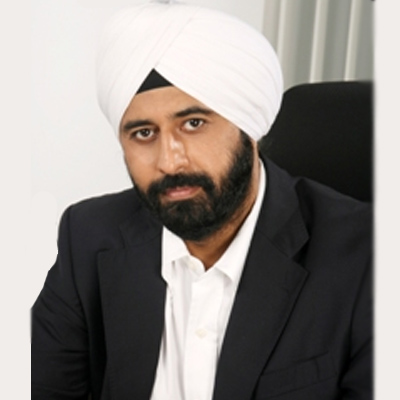
    Star Den Media Services, CEO Gurjeev Singh Kapoor

    We feel proud to be independent and we celebrated Independence Day at our workplace too on 14 August. Everyone was wearing small paper flags across their hearts proudly. We decked up the office with balloons and placed a small flag on every workstation.

    In broadcasting, freedom of expression is critical and this has rarely happened in the past, but it is witnessing a change. Things have gone through a revolutionary change and kudos to the industry for bringing in this welcome change.

    I love patriotic movies, but Saat Hindustani (1969) andShaheed (1965) figure among my favourites.

    Zee News CEO Alok Agrawal

    I feel good as an Indian. We are living in a democratic country. There are lots of things we need to do to improve. We all have some amount of influence that we can use.

    We are launching an entire new initiative Bharat Bhagyavita. Our responsibility as media is to inform and empower people with knowledge and make them aware of their rights and encourage them to do something about what‘s going on.

    Nothing comes to mind. I don‘t go by defining a favourite. Any patriotic song is fine. I like almost all songs.

    Media Consultant, Sanjeev Hiremath

    For me patriotism is a feeling and cannot be defined in a song, though I really love the Hollywood movie ‘Independence Day‘.

    In the 67th year of Independence, the biggest achievement for India is that it is no longer considered as a developing nation. A lot of Indian companies are now investing in overseas business. Our GDP is robust and we are above world average. I am proud to be an Indian and the reason is its diverse culture. My only concern is that though individually we are progressing, the country collectively isn‘t. Even today 70 per cent of the population lives on 1.50 dollars a day. It makes me sad. The political scenario needs to improve.

    What is good about the cable and satellite industry is that we are not 10 years behind when we compare ourselves to other countries. We have been making gradual progress and now with DAS, in the next two years we will be up close with the world cable and satellite industry.

    Playtime Creations TV producer Hemal Thakakar
    As an Indian we feel proud that we had so many great men and women who gave their lives for freedom we enjoy today. Somewhere I think we have failed them and have misused freedom which they got for us. I hope, pray and wish we correct that.

    For broadcasters, future is shining. Digitisation is beginning of new horizon as our country gets hungry for more entertainment and infotainment. New avenues are discovered and looking at the Indian diaspora and the fact that we are a young nation, the broadcast industry is going to get a major boost.

    My favourite song is the title track from the film Swades and Kandho Se Milte Hain Kandhe.

  • ‘Carriage market has exploded and will close this fiscal at Rs 14 billion’ – Gurjeev Singh Kapoor

    ‘Carriage market has exploded and will close this fiscal at Rs 14 billion’ – Gurjeev Singh Kapoor

    Broadcasters are being hit hard by hefty carriage fees as bandwidth is getting choked both on analogue cable and DTH (direct-to-home). Building formidable distribution bouquets is high on their agenda as they struggle to ramp up subscription revenues which are estimated to touch Rs 28 billion this fiscal.

    Star Den, a 50:50 joint venture between Star and Digital Entertainment Networks, is quickly adding regional channels to complete its otherwise strong Hindi and English entertainment-news-kids bouquet. Zee-Turner is the only other broadcasting distribution company which has a formidable regional content lineup.

    Star Den is eyeing a revenue of Rs 10 billion at a time when the television industry is beginning to feel the first serious signs of a slowdown in advertising revenues. Analysts say this will be a hard task to achieve, despite the boon from DTH revenues. Big TV and Airtel Digital TV launched later in the year, reducing prospects of a full-fiscal revenue gain for the broadcasters.

    In an interview with Indiantelevision.com’s Sibabrata Das, Star Den Media Services chief executive officer Gurjeev Singh Kapoor talks about the dark holes in the distribution business and how the company plans to ramp up growth in a tough business environment.Excerpts:

    Is the steep climb in carriage fees upsetting the business model of broadcasters?
    The carriage market has exploded and is expected to end this fiscal at close to Rs 14 billion, up from Rs 6 billion a year ago. As there is a huge amount of bandwidth constraint on analogue cable and even DTH, the industry has changed in terms of carriage. DTH operators are offering 200 channels while the Information and Broadcasting ministry has given the nod to 370 channels. A plethora of channel launches in the Hindi general entertainment, news and regional space has meant that there is a fierce fight for frequency. In a market where funding was easily available, channels were willing to pay more for space on cable networks. Insanity ruled the market.

    Will we see a correction in the carriage market?
    The balancing act has to happen now. With private equity and other sources of funding drying up, many broadcasters have started contracting their distribution budgets. We could see a flat carriage growth next year as channels start rationalising their costs. Broadcasters are in no position to be omnipresent in all cable networks; they will have to pick and choose where they want to be present and optimise their resources.

    But we will continue to see more channel launches next year as Reliance ADAG is planning to get into broadcasting space. Even existing players like Star India have plans to add more channels. Won’t this ensure that the carriage tap continues to flow freely?
    We may see a 10-15 per cent growth in carriage fee market in FY’11 as more channels enter the race. The next two years will be the blue litmus test for many broadcasters. For the weak channels, there could be a shake out. The fact is that distribution costs have grown unmanageably high.

    There can be no potential threat to carriage revenues unless the digital universe expands to at least 25 per cent. When we reach that stage, other models can emerge like broadcasters getting into agreements for sharing their distribution revenues with delivery platform providers.

    Are broadcasters getting united to resist on carriage fees?
    Broadcasters have doled out so much money in the past because of competition that it will be difficult to correct the system fully. More so, as we will see new channel launches. Carriage fee is being governed by market forces. But it is good that the thought process has started to fight carriage fees collectively. How far that will succeed only time will tell.

    Would you want Trai to (Telecom Regulatory Authority of India) come out with some regulation on carriage?
    I wish there could be some kind of formula that can be arrived at to regulate carriage. As an idea, it is definitely good since the regulator has mandated pricing issues.

    How difficult is it to ramp up subscription revenues in the backdrop of MSOs (multi-system operators) consolidating the cable TV market and Trai introducing pricing regulations?
    Subscription revenue for pay-TV broadcasters will close at Rs 28 billion in FY’09, up from Rs 23 billion a year ago. Even though there is a slowdown in the market and the times are tough, the industry expects a 10-15 per cent growth in FY’10.

    Isn’t that growth mainly because of DTH?
    DTH, undoubtedly, has expanded the market. But ARPUs (average revenue per user) haven’t grown in the DTH business; they are virtually the same as that of cable. IPTV, though much talked about, has also not happend this year.

    Will Star Den’s revenue touch Rs 10 billion this fiscal?
    While we are looking at very aggressive numbers and have set ourselves a very challenging task, I can’t comment on our financials.

    Do broadcasting distribution companies see the consolidation in the cable TV sector as a welcome change?
    The marketplace will make it difficult for small networks even as broadcasters rationalise their distribution budgets. Networks who have a geographical spread can bargain hard with broadcasters. In the short term, they will get paid more and will be reluctant to pay for more subscribers. But in the long term, it is better that the industry moves towards a better structured environment. MSOs and broadcasters have to join hands and realise that ultimately money has to come from the ground.

    Since the parent owner of Star Den also runs a cable TV company, how do you leverage the power of your bouquet to push the cable distribution business?
    We operate as independent entities. We treate Den like the other MSOs.

    Star India had earlier inked a distribution deal with sports broadcaster Neo which did not last long after the new management took over. Do you feel that the Star Den bouquet is strong but still incomplete without sports channels in its mix?
    We are currently distributing 23 channels and are in a very strong position to post growth. We have great quality content in the Hindi general entertainment space with Star Plus as the leader and Star One in the fifth spot. In the news television space, we have Times Now which leads in the English segment, CNN-IBN, IBN7 and Star News. CNBC TV18 and Awaaz, of course, are leaders in their segments and are powerful subscription-driven channels.

    In the kids genre, we have Hungama and the three Disney channels. For the English-viewing audiences, we have a formidable presence in Star Movies, MGM and Star World. We also distribute NGC and Zoom.

    We are now filling up the missing pieces and adding the regional bouquet. With Star buying majority stake in Asianet, we will cover all the languages down south. Star has also launched a Bengali and a Marathi general entertainment channel while the one in Gujarati is in the pipeline.

    Will Colors (the second most-watched Hindi GEC from the Viacom18 stable) automatically come to your bouquet when it decides to go pay?
    I wouldn’t like to offer any comments.

    Will you also be getting the MTV channels after Viacom’s contract with One Alliance expires on 31 March, 2009?
    I don’t want to comment on this.

    What about the wedding and home shopping channels that Star is planning to launch next year?
    Whatever niche channels Star launches, we will be happy to service. Niche channels will have a demand particularly on digital platforms. One the Fox channels launch, we will also be happy to distribute them.

  • ‘Ten Sports’ distribution is open for negotiations’ : Gurjeev Singh Kapoor – Set Discovery head

    ‘Ten Sports’ distribution is open for negotiations’ : Gurjeev Singh Kapoor – Set Discovery head

    Riding high on the ICC World Cup, Set Discovery reaped a harvest of $120 million (around Rs 4.8 billion) in 2006-07.

    The challenges, though, are stiff this year as flagship Hindi general entertainment channel Sony TV is floundering. But direct-to-home (DTH) revenues will start kicking in substantially as subscribers have doubled. And the cricket play is not over yet.

    The One Alliance, Set Discovery’s brand, has recently added three news channels from TV Today including Hindi market leader Aaj Tak. It is also planning to form regional bouquets with presence in Tamil, Telugu and Bengali markets.

    In an interview with Indiantelevision.com’s Sibabrata Das, Set Discovery head Gurjeev Singh Kapoor speaks about the distribution company’s interests in bidding for Ten Sports and HBO as they come up for grabs while chalking out its expansion plans.

    Excerpts:

    Will Set Discovery manage to retain its last fiscal revenue of $120 million in a year where it doesn’t have strong cricketing properties?
    I wouldn’t like to comment on the revenue front. But we would surpass it this fiscal, thanks to DTH (direct-to-home) where the numbers have doubled. We are also close to signing up with Reliance ADAG and Bharti Airtel’s upcoming DTH ventures. We have done IPTV deals with players like IOL Broadband, HFCL and Aksh Optifibre. And don’t forget that Ten Sports had a lineup of live cricket telecast.

    But Ten Sports admits that not having India cricket will affect their ad revenues this fiscal. Won’t this same logic extend to distribution?
    Ten Sports is a good sporting channel for distribution. Though it doesn’t have live India playing content this fiscal, we could capitalise on other cricket as it was exclusive. Having no India cricket may affect advertising. But our experience shows that distribution profits if there is live and exclusive content on the channel. Besides, Ten Sports has WWE which is a good property for distribution.

    Will Ten Sports not slip out of The One Alliance after the term ends in March 2008, particularly after Zee has taken a 50 per cent stake in the sports channel?
    Ten Sports’ distribution is open again for negotiations, despite Zee having taken a 50 per cent stake. The channel strategically helped us in pushing our bouquet and with the ICC World Cup, we had back to back cricketing properties. We gained from the ‘synergy effect.’ We are going to bid for it again. The distribution is up for grabs.

    Why didn’t Sony bid for the ICC World Cup, if it is crucial to have a cricketing property to push distribution bouquets?
    Our experience shows that on the distribution revenue front, it is always good to have 2-3 boards if you are getting live and exclusive cricket. We, undoubtedly, gained in subscription revenue because of the World Cup. But it is also true that we couldn’t encash on smaller markets because the World Cup is a largely shared property. We had to share with Doordarshan the India and other important big matches.

    Which is why Sony bid and took the New Zealand cricket board?
    Our cricket story will not stop there. We are looking at cricketing properties that make business sense for us. The thought process is that we will bid for IPL and other boards that come up for renewals.

    We are actively seeking a regional presence. We are looking at having Tamil, Telugu and Bengali channels

    Sony was in talks to distribute Neo Sports. Did it fail because Neo was asking for very high minimum guarantees?
    We couldn’t agree on the commercial terms. Though Neo has the BCCI rights to international cricket played in India, matches will have to be shared with DD. We felt the asking price was on the higher side.

    Set Disocery has recently signed a pact with TV Today Network to distribute Aaj Tak, Headlines Today and Tej. Will Aaj Tak help you to push Sony TV, which has weakened its position, and Sab TV in the Hindi heartland?
    It will complement our two Hindi general entertainment channels. But more than that, it will open up the Hindi news channels to go pay. Star News and Zee News are virtually free. As Aaj Tak is the No. 1 in its genre, cable operators will now have to understand that Hindi news channels are also pay. Already NDTV India is planning to go pay.

    Our bouquet will have pay channels in every genre. We already had NDTV as the leading English news channel; and with Aaj Tak, we will now have the leader in the Hindi news segment.

    How much of an upside do you see in revenue terms?
    The only way we can ask for more revenues from cable operators is by expanding our content. As we are adding the three TV Today news channels, we are hiking our second bouquet price from Rs 58 to Rs 65. We have a 40-month deal with TV Today which extends across all distribution platforms – cable, DTH, IPTV.

    Is The One Alliance planning to add more channels?
    We will be pitching for English movie channel HBO as its distribution deal with Zee Turner comes up for renewal early next year.

    What about forming regional bouquets?
    We are actively seeking a regional presence. We are eagerly looking at having Tamil, Telugu and Bengali channels. While Andhra Pradesh has an estimated 11 million cable households, in case of Tamil Nadu it is 10 million and West Bengal five million. Even if we manage to convert 50 per cent of that, that is a lot of pay revenues. Kerala is not on our radar as even popular channel Surya is free-to-air.

    Along with the regional channels, we can push our national bouquet more aggressively into these markets.

    Will more existing channels go pay as carriage fee shoots up?
    Several existing channels are looking to go pay fast. Carriage or placement fee is going to shoot up and up as cable networks have no frequency available. Between Star, Set Discovery, Zee Turner and ESPN Star Sports, there are about 70 pay channels. So where is the space on analogue cable. Bandwidth is going to be a big problem for everybody to handle.

    The telecom regulatory authority of India (Trai) has asked for a la carte pricing from broadcasters in non-Cas (conditional access system) areas. Do you see this contributing to more carriage fee?
    If the tariff order sails through, Trai will actually be promoting carriage as a concept. The multi-system operators will charge for carrying the channels while we have to offer them on an a la carte basis.

    Why has Sony moved the Tdsat (Telecom Disputes Redressal and Settlement Tribunal) against the Trai tariff order for non-Cas areas?
    We have two points of contention. Even if broadcasters offer channels on a la carte basis, how do we get paid for the exact number of our subscribers? The other reason is that we will have to reduce the rates of our channels for non-Cas areas. In Cas areas we do so but are compensated in a way because there is exact declaration of subscribers.

    And for whose benefit is this a la carte rate for? How the hell does the consumer benefit as technology won’t allow for a la carte choice of channels without a set-top box?

    If the Trai tariff order for non-Cas areas goes through, it will be a disaster for the broadcasters. It will send bad signals to a new channel wanting to come to India.

    Aren’t broadcasters also unhappy with the progress of Cas?
    For the first time, all of us came under one roof to foster Cas. But what we realised is that MSOs were in a way curbed by the last mile operators who did not want Cas.

    We are concerned about the low penetration of set-top boxes. There was the T20 World Cup on ESPN Star Sports, India won the championship, and it was live and exclusive. How in a Cas market, there was no big upside? This defeats the purpose of Cas and leads to a lot of questions.

    Besides, Trai came out with a particular reporting format, but we haven’t got anything of that from the MSOs. We have no choice but to knock at the doors of Trai. We want the sector regulator to intervene.

    Why aren’t broadcasters joining hands with MSOs to market for set-top box penetration?
    We are willing but the MSOs have internal problems. The last mile operators see a bigger threat from digital cable rather than DTH.


    How do you see new entrants impacting the market?
    Competition is healthy for everybody so long as the new MSOs can invest in technology and have financial stability. If cable monopolies are attacked in towns, it means more choice for customers and more revenues for us.

  • Set Discovery promotes Gurjeev Singh Kapoor to SVP, sales & marketing

    Set Discovery promotes Gurjeev Singh Kapoor to SVP, sales & marketing

    MUMBAI: Set Discovery Pvt. Ltd., which distributes a bouquet channels under the brand name One Alliance, has promoted Gurjeev Singh Kapoor to the position of SVP, sales & marketing.

    In his new position, Kapoor will look after the company’s India sales and marketing operations. He will also take up the additional responsibility of international marketing.

    Based out of Mumbai, Kapoor will be reporting to Set Discovery President Anuj Gandhi.

    Set Discovery has also promoted about 17 executives in the junior and middle level management categories, across the country. “We have promoted people across the board. There are senior managers who have become AVPs and managers who have been assigned as senior managers,” informs Gandhi.

    Kapoor has earlier worked with ESPN and Zee International before joining Discovery Communications. He moved to Set Discovery in April 2002, when the joint venture between Sony Entertainment Television and Discovery Communications was formed.

    SET Discovery distributes channels including Sony Entertainment Television, Max, Discovery, Ten Sports, Discovery Travel and Living, MTV, Sab TV, AXN, NDTV India, NDTV 24×7, NDTV Profit, Nick, Animal Planet and Animax channels through the One Alliance brand.