Tag: Guneet Monga

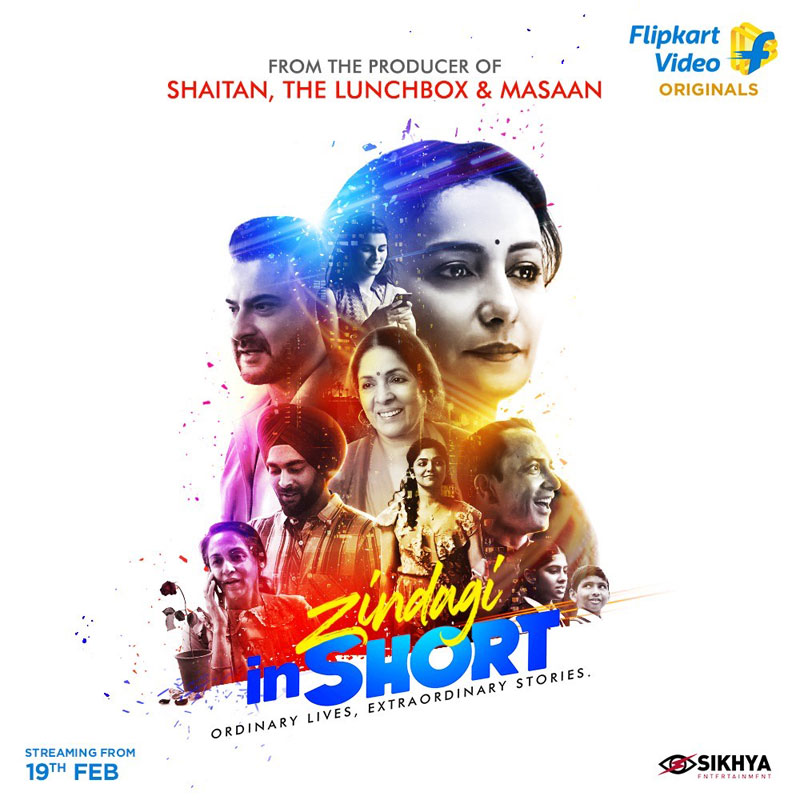
  • Flipkart Video Original ‘Zindagi inShort’ to release on 19 Feb

    Flipkart Video Original ‘Zindagi inShort’ to release on 19 Feb

    MUMBAI: Flipkart Video is all set to launch another original Zindagi inShort on 19 February. Zindagi inShort comprises seven short slice-of-life films. The cerebration of the anthology is to showcase bittersweet episodes of life in miniature configurations. 'Chajju Ke Dahi Bhalle', 'Nano So Phobia', 'Sunny Side Upar', 'Swaaha', 'Pinni', 'Sleeping Partner' and 'Thappad' are the seven short films that constitute the anthology. 

    Basking in the success of the digital show 'Backbenchers', India's homegrown e-commerce marketplace is gearing up to stream its collaboration with Sikhya Entertainment on Flipkart Video, which is available on the Flipkart app itself. 

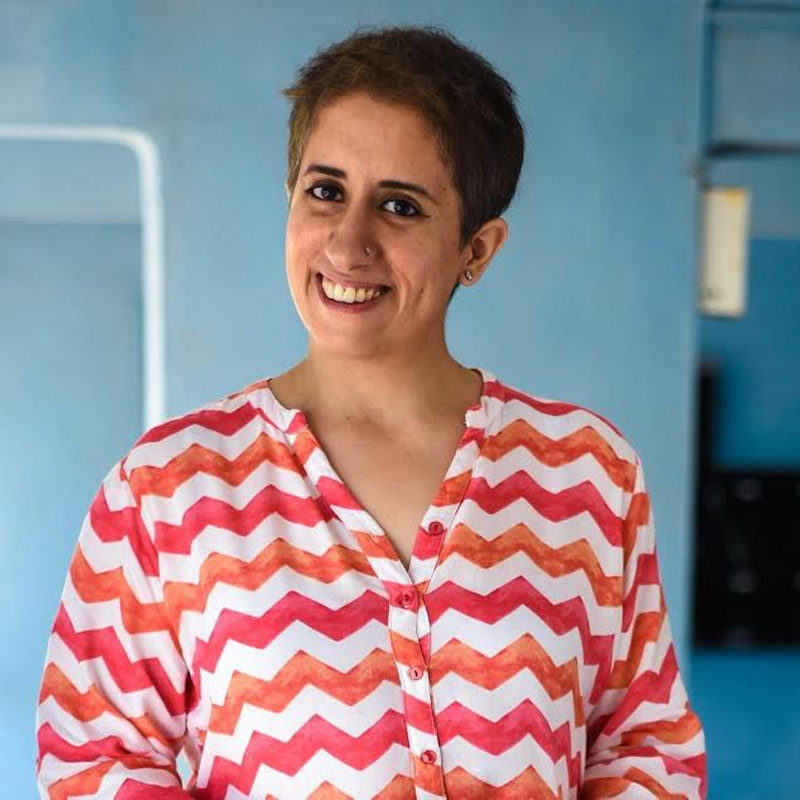
    The anthology is produced by Guneet Monga's Sikhya Entertainment. Some of the most impactful and acclaimed productions to Monga's credit are Gangs Of Wasseypur – Part 1 and Part 2, The Lunchbox, Masaan, Tigers, Dasvidaniya and Haraamkhor. Not to mention, her filmography as a producer includes the Oscar-nominated short film, Kavi, Oscar-winning short documentary, 'Period. End Of Sentence' and the Bhuvan Bam-starrer Plus Minus that won the Filmfare Award for Best Short Film. 

    The seven short slice-of-life films touch upon online romance, the innocence of childhood, the confusion of old age, the construct of being loved in a marriage, infidelity, a woman owning her role in the family and standing up for yourself when it's the hardest to do so. Themes as powerful as these have been crafted and explored in the films in small doses, that offer a bittersweet flavoured entertainment. 

    Speaking about the 'first look' of the upcoming Flipkart Video Original, Flipkart Growth and Monetisation VP Prakash Sikaria says, “Zindagi inShort is a unique collection of heartwarming stories, that everyone will be able to relate to, in one way or the other. Every story represents different stages of life, and bittersweet moments that can at times, accompany them. We are excited about this partnership with Guneet's Sikhya Entertainment and we are thrilled to provide a powerful storytelling platform for these young creators.”

    Says Guneet, "As the title suggests, Zindagi inShort has been an endeavor to capture various nuances of everyday life in short. Our anthology comprises of seven extraordinary stories, drawn from everyday lives with a promising twist, directed by seven unique voices. We are excited to bring our fresh slate of Sikhya shorts on Flipkart Video, which will help us connect with over 200 million Flipkart customers across India."

    Starring Neena Gupta, Shishir Sharma, Srishti Srivastava, Sanjay Kapoor, Divya Dutta, Deepak Dobriyal, Isha Talwar, Jitin Gulati, Nakul  Mehta, Manjot Singh, Nidhi Singh, Jagdish Nandi, Hiral Parekh, Aayan Modi, Abbas Syyad, Ajmal Khurshid, Aisha Ahmed, Geeta Agarwal Sharma, Rytasha Rathore, Rima Kallingal, Swaroop Sampat, Shafin Patel, Vedika Nawani and Arun Kushwah among others, helmed by directors Punarvasu Naik, Tahira Kashyap, Rakesh Sain, Gautam Govind Sharma, Vijayeta Kumar, Smrutika Panigrahi and Vinay Chawwal and produced by Sikhya Entertainment in association with Flipkart Video, Zindagi inShort is slated to stream on the video platform on the 19 February 2020.

  • Indian content creators must find out right stories to reach global audiences

    Indian content creators must find out right stories to reach global audiences

    MUMBAI: Over the top platforms have opened up the doors for content creators to share their creativity across the world. Despite the influx of major companies such as Netflix and Amazon Prime Video in India, content creators are still figuring out how to make their stories go global.

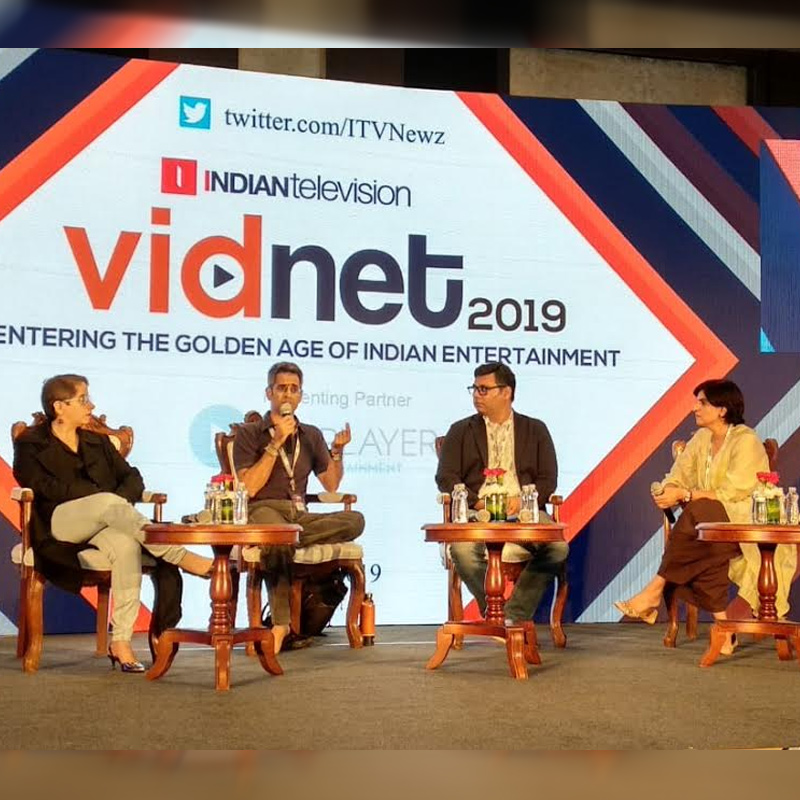
    At the stage of Indiantelevision.com’s Vidnet 2019 summit, some of the successful creators spilt the beans on their strategies. The creators of Delhi Crime, Lunch Box and Bard of Blood believe that stories that resonate and connect emotionally with the global audiences do travel. 

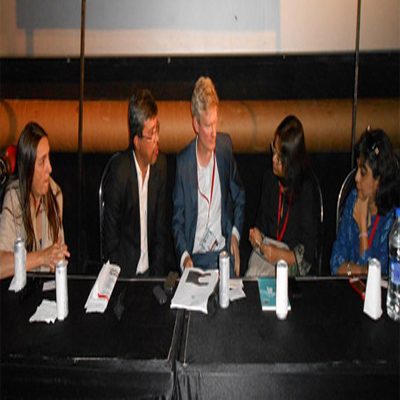
    The panel discussion ‘Making Indian Stories Travel’ in the creators’ track was moderated by BookMyShow VP content and strategy Manisha Singh Katial and the panellists were MUBI India content advisor Guneet Munga, Delhi Crime creator, director and writer Richie Mehta, and Red Chillies Entertainment chief revenue officer Gaurav Verma. 

    Katial opened the discussion by stating, “Yes, stories that are good do travel. But they also have to be culturally connected and I think that also becomes the challenge. Something that culturally connects with you resonates more, and something that connects with you emotionally, definitely works. I do feel making stories that travel is a challenge because it depends on the content that one is creating.”

    Katial asked Mehta to share the feedback he received on Delhi Crime. “The feedback for Delhi Crime is global. I have been hearing that the story has travelled quite far, and seems to have resonated with people all over the world. I knew this when I was conceiving the project.”

    He further elaborated, “I was in Delhi when the crime happened. So I reacted to it as somebody in India would. Then I left and went to Toronto and there I realised that this wasn’t just an ‘Indian’ thing, this was a humanitarian issue for the planet’s citizen. When I pieced together my work I figured out that it could have deep meaning for the Indian audience.”

    Mehta’s aim was to show a positive representation of India through his story. “It is the worst thing that has ever happened in this country and if you can spin that around to make a story of the extreme positive environment, especially for somebody outside with no knowledge and understanding about India, I certainly want to make it like that,” he said.

    Monga, the creator of Lunch Box, also expressed that content creators have tried to represent Indian beyond Bollywood’s depiction. Distribution has been the challenge previously. She said, “Across the world there are different sets of distribution, buyers and strategies. So it was not the same release day of films worldwide. Lunch Box released over two years around the world. And it is important for us to understand there are many layers to this.”

    Monga said that films can travel either because of its content or because of the choice of distribution partners. Sometimes a really good film is unable to travel because it does not have the right access. “So having the right access and having that distribution division, which is not just diaspora, is important. I feel with Netflix coming in India the lines are merging and now people will be able to see what India is with all its languages and colours, all its type of filmmaking and storytelling.”

    Katial commented that while having partners like Amazon and Netflix is great, it is also necessary to think internationally. To this, Verma added that one should not try to attempt an international story with the pressure that one has to appeal to seven billion consumers because emotional stories will connect to people. The best way to dazzle the audience is through content and script. Verma also opined that the industry is facing the issue of lack of talent. OTT platforms need writers who can understand the audiences’ need. 

    The panellists also said that apart from appealing stories and subjects, subtitles and dubbing of the content in different languages are also extremely pivotal in reaching global audiences.

  • Oscar-winning executive producer Guneet Monga joins MUBI India as content advisor

    Oscar-winning executive producer Guneet Monga joins MUBI India as content advisor

    MUMBAI: Following the recent announcement of curated global streaming service, MUBI’s expansion into South-East Asia, Guneet Monga joins the company as content advisor for India as it expands its operations in the region. Times Bridge and MUBI announced a strategic investment and partnership last year.

    Monga is an Oscar-winning executive producer and BAFTA-nominated producer, having won an Academy Award for her short film ‘Period. End of Sentence’, and has to her credit films including the smash hits like ‘The Lunchbox’ and ‘Gangs of Wasseypur’.

     At MUBI India, Monga will take forward the overall programming and acquisitions strategy for MUBI India. She brings with her a wealth of experience within the Indian film industry that will help define the content profile.

    MUBI founder and CEO Efe Cakarel said, “We bring great cinema to audiences across the globe, and in recent years have localiSed our service to cater to film lovers in more countries and more languages than ever before. With our upcoming launch in India, following our recent Malaysia launch, we are thrilled to expand our value proposition with the introduction of bespoke channels to showcase content from across the region, appeal to local tastes, and champion the work of local filmmakers.”

    Film producer Guneet Monga said, “I've been a fan of MUBI for many years now. To see a new curated film everyday through my own little window to the world of cinema, has brought me unparalleled joy. And now, as the MUBI India content strategy consultant, I am thrilled to be a part of the Times Bridge – MUBI partnership, and share with the Indian audiences the delight that this platform can be. Looking forward to bringing movies from across languages and film industries to MUBI India and watching them with the rest of the country. I will, alongside this wonderful opportunity, continue to produce movies and build my company, Sikhya entertainment.”

    Times Bridge sr vice president, investment Viral Jani said, “As part of our India playbook for MUBI, we want to build a strong connection with the Indian content ecosystem and drive strategic partnerships for wider distribution. We are excited to have Guneet on board to advise on content strategy & acquisition for MUBI India. We look forward to jointly working on localising the MUBI experience for India to bring curated high quality movie consumption experience to viewers.”

    As part of Times Bridge’s investment in MUBI, they will also be providing the company with local market expertise, talent outreach and access to commercial and festival partnerships.

    MUBI recently announced that it is expanding into South-East Asia, with offices now open in Kuala Lumpur running a localised service for the platform, and further plans to launch across more territories in the fast-developing region.

    By the end of the year, MUBI India will host a channel dedicated to curated Indian cinema as part of its offering to audiences here.

  • Zee TV HD to premiere ‘The Lunchbox’ on 8 February

    Zee TV HD to premiere ‘The Lunchbox’ on 8 February

    MUMBAI: Zee Entertainment Enterprises Limited (ZEEL) with five high definition (HD) channels in its bouquet, namely Zee TV HD, &Pics HD, Zee Cinema HD, Zee Studio HD and Ten Sports HD, last week announced its new brand identity-Zee HD League.


    The new offering is a complete bouquet with the best of Hollywood and Bollywood blockbusters, cutting-edge entertainment and best-in-class sporting action. And now, as part of the #HDFirst initiative, Zee TV HD will showcase the world television premiere of the critically acclaimed and award-winning movie The Lunchbox at 12 noon on Sunday, 8 February.


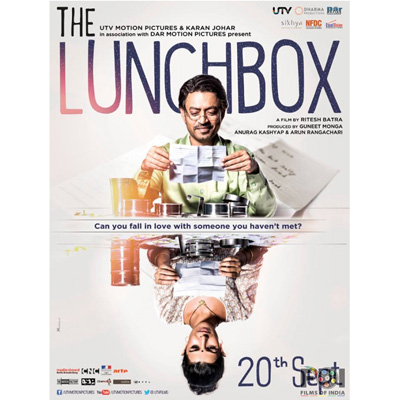
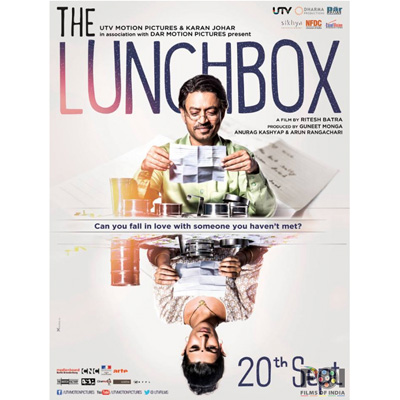
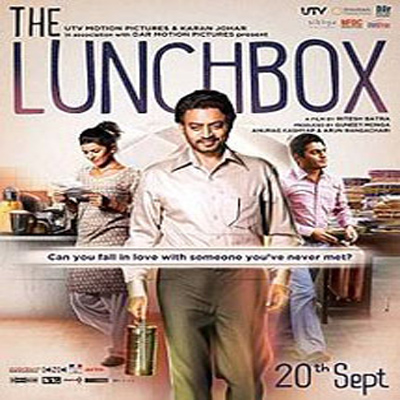
    The Lunchbox, starring Irrfan Khan, Nimrat Kaur and Nawazuddin Siddiqui, is an epistolary romantic film written and directed by Ritesh Batra, and produced by Guneet Monga, Anurag Kashyap and Arun Rangachari. The film captures what happens when a mistaken delivery in Mumbai’s famously efficient lunchbox delivery system connects a young, lonely, disillusioned housewife to an older man in the dusk of his life as they build a fantasy world together through notes in a lunchbox.


    The film was released in India on 20 September 2013 and holds the unique distinction of being an all-round box-office success along with being widely acclaimed by critics. The film was screened at International Critics’ Week at the 2013 Cannes Film Festival, and later won the Critics Week Viewers Choice Award also known as Grand Rail d’Or. It was shown at the 2013 Toronto International Film Festival. The Lunchbox was nominated for the Film Not in the English Language category of the British Academy Film Awards 2015.

  • Yes Foundation organises social film movement

    Yes Foundation organises social film movement

    MUMBAI: Yes Foundation, the social development arm of Yes Bank, is giving the public an opportunity to select the winners of India’s largest social film movement – YES! I am the CHANGE.  


    The top 50 short film entries have been shortlisted and will now compete for the Indian social filmmaking challenge 2014. The five minute long films represent the true spirit of positive social change and touched on social topics including education, women’s safety, women empowerment, animal care and responsible citizenship.


    The main aim of this campaign is to spread mass awareness about social causes through the thought provoking films made by youth participants. Over 72,000 viewers have already participated and voted for the popular choice awards. The public can watch the films Yes Foundation India’s YouTube channel and vote for their favourite film. The film with the largest number of likes will be adjudged the winner. Voting ends on 31 January 2015. 


    The top three winners of the YES! I am the CHANGE popular choice awards will receive prizes worth Rs 25,000, Rs 15,000 and Rs 10,000 respectively.


    This programme is mentored by eminent filmmakers and educationists including Shoojit Sircar, Vikramaditya Motwane, Rakeysh Omprakash Mehra, Pritish Nandy, Guneet Monga, Kailash Surendranath, Dr. Indu Shahani, Dr. Nagesh Rao and Nina Lath amongst others.

  • ‘The Lunchbox’ gets nominated at BAFTAS

    ‘The Lunchbox’ gets nominated at BAFTAS

    NEW DELHI: The internationally lauded and awarded The Lunchbox by Ritesh Batra has become the first Indian film since 1990 to be nominated at the BAFTA awards since Salaam Bombay.


    The British Academy of Film and Television Arts (BAFTA) nominated the film in the ‘Best film not in the English language category.


    Producer Guneet Monga was ecstatic at this nomination. “We are so happy that our faith in Ritesh and The Lunchbox is paying off so beautifully. It’s a film we are very proud of and earning a Foreign Film nomination is yet another reassurance that great content will always go a long way. I would like to say a big thank you to the HFPA (Hollywood Foreign Press Association) and the BAFTA jury,” said Monga.


    The award ceremony will be held on 8 February in London.


    The Lunchbox is a 2013 Indian epistolary romantic film written and directed by Ritesh Batra, and produced by Guneet Monga, Anurag Kashyap, and Arun Rangachari. The film was jointly produced by various studios including DAR motion pictures, UTV Motion Pictures, Dharma Productions, Sikhya Entertainment, NFDC (India), ROH Films (Germany), ASAP Films (France), and the Cine Mosaic (United States).


    It stars Irrfan Khan, Nimrat Kaur and Nawazuddin Siddiqui in lead roles. The film was screened at International Critics’ Week at the 2013 Cannes Film Festival, and later won the Critics Week Viewers Choice Award also known as Grand Rail d’Or.


    It was shown at the 2013 Toronto International Film Festival. The film was released in India on 20 September 2013.


  • Emraan Hashmi starred ‘Tigers’ to release next year

    Emraan Hashmi starred ‘Tigers’ to release next year

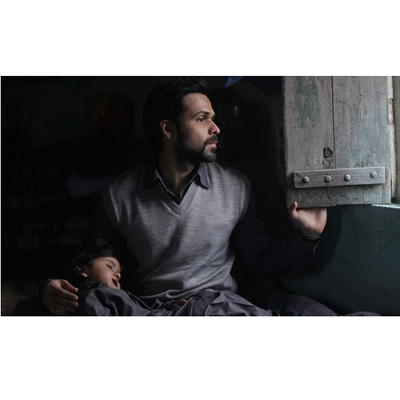
    NEW DELHI: The Emraan Hashmi starrer ‘Tigers’ directed by Danis Tanovic will be released in India on 6 March next year.


    Produced by Prashita Chaudhary of French company Cinemorphic and co-produced by Guneet Monga of Sikhya Entertainment apart from Anurag Kashyap and others, Tigers is a true story of the salesman who blew the whistle on the baby food scandal in Pakistan.


    It also stars Geetanjali Thapa, Supriya Pathak and Khalid Abdalla. The film’s music has been composed by Pritam. A salesman working in the pharmaceutical industry in Pakistan, discovers its truths, while selling baby formula products, and tries to fight against the system.


    “I’m curious to see how Indians react to Tigers. I’m very happy with the response at the festivals. The theatrical release is the next frontier,” said Tanovic.


    The film premiered at the Toronto International Film Festival in September this year followed by a screening at the San Sebastian Film Festival. 

  • Ranbir Kapoor now a creative collaborator

    Ranbir Kapoor now a creative collaborator

    MUMBAI: Bollywood heartthrob Ranbir Kapoor has now joined hands with Saavn (South Asia Audio Video Network), a US-based digital music company as its creative collaborator. The association was announced at the online music streaming press conference, which was attended by India’s top music industry executives and influencers.

    The superstar, as part of the association will work with the Saavn team on consumer marketing ideation and production, business development and content.

    Talking about the partnership Kapoor said, “I’ve been using Saavn for years now, so it’s exciting to be working with the team on a deeper level. I’ll be helping to guide the brand, influence programming, connect with the next generation of music listeners and ultimately help build the best music product in India and potentially the world.”

    “I look forward to being involved in a more business-centric capacity in the near future,” he added.

    The partnership has initially materialised in the form of a new commercial campaign featuring a 30 second television spot. Kapoor provided a significant amount of input on the creative for the campaign. The TV commercial was written by Vasan Bala, who is the screenwriter for Kapoor’s new film, Bombay Velvet, alongside Sneha Mehta and Teddy Stern of Saavn and has been produced by Golden Gaddi Films, the ad production house of Guneet Monga who is the producer of The Lunchbox.

    Saavn released a sneak-peek of its alliance with Kapoor in its “Here’s to the Music” campaign that went live earlier this year.

    Click here to watch the video

    Saavn executive chairman Paramdeep Singh said, “It felt right from the beginning. Our collaboration with Ranbir represents an evolution in the way technology companies and artists work together in India. And that bridge between art and digital is at the very heart of what we want to accomplish at Saavn.”

    The digital music company, which claims a catalog of almost two million tracks from both Indian and US record labels, will be rolling out a suite of new consumer-facing products and partnerships over the next couple of months.

  • Alternative distribution plans for indie films

    Alternative distribution plans for indie films

    MUMBAI: There are nearly 1,000 movies that are made in India every year, but only about 35-40 per cent actually mange to get a proper release across the nation. This is one of the major obstacles for small time independent filmmakers who work on a shoe-string budget on their dream projects.


    The Mumbai Film Festival in its fifteenth edition is trying to plug that hole. In what could have been termed as an intellectually and thought provoking discussion, a panel of dignitaries from the media and film space came together on one stage to show the way to independent filmmakers.


    The session held at Metro Cinema, was moderated by AV Pictures MD Chris Hainsworth and discussed the various alternative distribution avenues for independent films and filmmakers. The panel consisted of Guneet Monga, a film producer and CEO with Anurag Kashyap Films since 2009; Isabelle Dubar, head of distribution at Hapiness Distribution based in France; Anil Wanvari, Founder, CEO & Editor-in-Chief at indiantelevision.com; Nandini, a film producer and finally Shubhra Gupta, a film critic with Indian Express over the past two decades.


    The discussion kicked off with Guneet Monga who briefly started out by talking about her journey so far. “I started producing movies nearly six years ago, but started taking movies to festivals only with That Girl in Yellow Boots. I had no clue how to go about looking for buyers for the movie. But gradually, I realised that the deliverables that we have here in India is nowhere close to the scale at which films are marketed in the international film circuits, and I have learnt things the hard way.”


    On being quizzed on what would be the right place to look for buyers in the overseas market, Monga quips, “Why go anywhere when we have two very good home grown festivals – The MAMI (Mumbai Academy of Moving Image) and the Film Bazaar held in Goa every year – but yes, the scope for buyers is in plenty overseas as well. It’s just about delivering the right mix of content that is of universal appeal. And it is also important that those in the business get to know you and take you seriously because you are meeting them again and again.”


    Isabelle Dubar steps in while speaking about distribution of films. She was the one to take Gangs of Wasseypur (Part I & II) to the French market. “The French market is very outhouse in nature, with approximately 600 films from all over the world coming to the market every year,” says Dubar.


    She further clarifies that the French market is still not that open to Bollywood films and it never really caught on it in a big way, but after observing the response for Gangs of Wasseypur (GOW) at various festivals world over and the appreciation it got at Cannes, she was egged on to give it a shot.


    “We didn’t want to risk releasing both the parts together as a six hour long single feature film and thus adapted to how it was released in India. So, the first part was released around July and we promoted and marketed it like a contemporary Indian take on The Godfather,” Dubar remarks. The results were very pleasing. Though the expectations were high they still managed to get people to watch the movie.


    Dubar says, “We expected nearly 30,000 admissions, but we got 15,000 which is still a sizable number. The second part that we released during Christmas the same year didn’t get much favourable response with only 5,000 attendees. But Anurag Kashyap’s work has been appreciated and the market is open to more Indian films now, so that’s a positive sign.”


    Dubar further threw light on the fact that Kashyap’s Ugly will also be distributed by Hapiness Distribution in and around the French market. “We are also releasing The Lunchbox – a co-production with a French producer – on 11 December in France,” adds Dubar.


    Dubar finally went on to say that be it any language or genre what matters at the end is that the story and the characters should be able to have an universal connect and nothing can stop the film from being accepted and doing well globally.


    The point in question now is how will a film get the right platform to get buyers? “There are bigger markets than just festivals to be tapped into by independent filmmakers. There is Mipcom, Mip Doc and Mip TV, where nearly 11,000 people spend 1,300 Euros a piece to look for buyers or sellers of content, It’s the biggest content trade market in the world,” says Anil Wanvari.


    He further urges the independent filmmakers’ community to unite and pitch for more funding from the government in their distribution efforts. He gave the example of the UK where 50 per cent of all costs to market films and TV shows internationally at markets are paid back to the filmmakers to encourage them to find alternate streams of revenue while pushing the British  perspective and culture. “Even the Andhra Pradesh and Karnataka government offer incentives to producers of animation and gaming to attend markets worldwide to find new customers for their offerings,” he said and added, “Other state governments should be urged to do the same.”


    “Earlier, Prasar Bharti used to screen movies on Sundays from independent filmmakers, maybe that is one thing that needs to be started again. But the need of the hour is for the filmmakers’ community to get together and help raise awareness for these films. Use of social media to bring the importance of independent cinema to the government’s notice and also to transform it into a movement is very essential. More importantly, filmmakers and producers should be aware of the rights they should retain with themselves whether it is SVOD or PPV or NVOD or online or airline or shipping or DTH or whatever right. Never give away all the rights for the movies at once just because a distributor demands them and because you are a first time filmmaker struggling to get your film on the screen. You need to learn to monetise and keep monetising from the product you have created,” Wanvari expounds.


    Film producer and founder of Idyabooster.com Nandini Masinghka too thinks that the need of the hour is to get more clarity as a filmmaker whether the film he is making is for artistic pleasure or for monetising it. “Be clear about your audience; be clear how you will market, how will you distribute. Don’t just put all your money into creation and production,” she highlighted. “If you don’t have the expertise to manage this, then bring in someone who does. Thus, the industry needs more independent producers, who don’t just finance the project but are also responsible for monetising it rightly,” Nandini explains.


    After patiently listening to the conversation, film critic Shubhra Gupta says, “I am surprised that we are discussing the business of cinema without considering the art of it. If the movie is not made artistically, you anyway won’t get buyers for it.”


    Gupta also points out that after the emergence of multiplexes not many films from the independent space get their due at the box-office. “I am forced to see a Besharam on a Friday, when the movie I so wanted to see has been removed. So how will these movies get their due,” Gupta quizzes. She refers to the situation in Chennai where individuals backed and pushed the cause of independent cinema such as Pizza and made it successful.


    Monga highlighted one case in point during her early days as a film maker. “My first film was on cricket and the prints were in the theatres when news emerged that India has been eliminated from the World Cup in 2007. Immediately, the exhibitors sent me back my prints. So I took up the cause of distributing the film myself in Delhi and encouraging schoolchildren to watch it in their schools. I also sold the tickets to universities myself. I then moved this concept similarly to Punjab and made money there. I even made money on the DVD which a home video company had given up on by selling them in the foyers of the theatres where I screened the film. I never gave up on my dream and pursued monetisation from every angle.”

  • Lunch Box: A beautiful food for thought

    Lunch Box: A beautiful food for thought

    The famous ‘Dabbawalas’ of Mumbai were accorded Six Sigma performance rating by the prestigious American business publication Forbes Global. That means that only one in a 16 million deliveries goes wrong. There have been films made on romance due to a wrong number called, following blank calls, on chats and emails. Lunch Box derives its story from that one-in-16-million mistake that a ‘Dabbawala’ makes: a mistaken delivery of a tiffin.

    Producer: Guneet Monga, Anurag Kashyap, Arun Rungachari.
    Director: Ritesh Batra.
    Cast: Irrfan Khan, Nimrat Kaur, Nawazuddin Siddiqui, Bharati Achrekar.


    Irrfan Khan is a widowed Catholic man living in a Mumbai suburb. He leads the morose life of a government servant commuting on the crowded local trains to the office and back home with cigarettes being his only companions. He has been working for 35 years with a perfect record and has decided to take premature retirement and settle down in the city of Nasik. He is serving his notice period and has been asked to train a new recruit, Nawazuddin Siddiqui, before he leaves. That is when a ‘dabbawala’ delivers to him a ‘dabba’ which does not only look richer than his in packaging but also contains tasty, aromatic homemade food which is a feast, compared to the insipid food provided by his caterer every day. Irrfan makes it a point to meet his caterer on the way home to thank him and tell him to keep up this quality of cooking.

    Nimrat Kaur is a housewife and a mother of small girl. She loves to add to her expertise in cooking with a little help from an aunty a floor above her, Bharati Achrekar, who loves to share her ideas. It has been a few years since her marriage and she tries to live up the adage, ‘the way to a man’s heart is through his stomach’. She cooks a new menu everyday expecting praise from her husband every evening. This time, her tiffin has reached Irrfan. He sends a chit saying that the food was very good but there was too much salt, to which she replies the next day by putting too much chilli.


    The exchange of notes becomes a regular feature. Irrfan’s life becomes a little more exciting as he looks forward to lunch everyday, as much for a note from her as for the food. As for Nimrat, she has just realised her husband is having an affair and is hardly ever at home and this distraction helps buffer the shock. Irrfan, who is a loner who never interacts with anybody either in office or where he lives, has come to life. He even starts entertaining Nawazuddin, tries to teach him the work and, eventually, also lets him join for and share his lunch. In fact, Nawazuddin, who is an orphan, becomes his only confidante while he becomes his guardian at his Nikah.


    Irrfan and Nimrat’s notes grow from one-liners to full pages and soon two pages. Soon they think there has been enough of ‘letterbaazi’ and decide to meet instead.


    Lunch Box is built on small budget and thin theme but it is the sidetracks that fill it out. Not only does it depict a middleclass Mumbai lifestyle and its lifeline, the local trains, but also the disorganised government offices and their lifeless, robotic staff. But most of all it brings to life on screen the much celebrated 5,000-strong ‘dabbawalas’ workforce which one notices only when foreign guests like Prince Charles or Richard Branson visit them or when foreign TV channels cover them. The journey of the ‘dabba’ from collection in the morning until return in the evening becomes a part of the story. Until the justified culmination is to be reached, the film is a light watch with a subtle but unmissable humour, which is all the more effective because of Irrfan’s pokerfaced mouthing of the lines. Nawazuddin is a perfect foil to Irrfan and he is even developing a bit of suave personality with success. Nimrat is natural. The ‘dabbawalas’, the celebrities that they have become are never conscious of the camera. Bharati Achrekar only lands her voice as aunty without showing her persona but is effective.


    Phata Poster Nikhla Hero: A comedy of errors

     
    Producers: Ramesh Taurani.
    Director: Rajkumar Santoshi.
    Cast: Shahid Kapoor, Ileana DCruz, Padmini Kolhapure, Saurabh Shukla, Darshan Jariwala, Zakir Hussain, Sanjay Mishra, Rana Jung Bahadur, Salman Khan (Cemeo), Nargis Fakhri (Item number).


    New filmmakers with no big stars or budgets at their disposal are coming up with novel themes and many are succeeding. Yet makers with established names and bigger budgets don’t take such risks: their insecurity and lack of creative confidence doesn’t allow them to try something off the beaten path. Hence Rajkumar Santoshi decides to look to the past to find a ‘fresh’ entertainer. Unfortunately, he picks a mundane B-grade story and tries to give it a Manmohan Desai approach by adding a mother’s emotions, a runaway father and a villain’s den full of fools and so on to come up with a not so entertaining farce.


    Shahid Kapur is being brought up to be an honest policeman by his mother, Padmini Kolhapure. But Shahid has different plans for himself: he aspires to be a film hero and, like the Khans, wants to establish his own brand, the Vishwas Rao label which is his screen name. Every time Padmini sends him for police academy tests, he makes sure he fails. This time, he goes for a test to Mumbai and ends up at a strugglers’ hotel (many of which existed in Mumbai suburbs in 1960s and ’70s) where many others like him are lodged. The veteran is Sanjay Mishra, who did not amount to anything himself. He takes Shahid to film director, Tinu Anand, who is looking to cast a negative character. Shahid impresses him by putting on an act, the kind seen in just about all films of wannabe actors. He is cast immediately and is required to wear a police inspector’s dress.


    Every time Shahid is in police dress, Ileana D’Cruz happens to need police help and manages to bump into him. She is a journalist and a self-styled social worker who runs to the police station with so many complaints that the cops have named her Complaint Kajal. By the second such escapade, romance blossoms. Somehow, word reaches Padmini that her son has become a policeman and she decides to visit him in Mumbai to see her son in uniform. Now the only way for Shahid is to keep wearing the uniform till Padmini is with him.


    The villain, Saurabh Shukla, operates from a night club which gives Shahid scope to show his already famous dancing prowess. Somehow or the other, Shahid is present in uniform wherever there is trouble taking place and saves the situation. Neither the ACP, Darshan Jariwala, nor the corrupt cop, Zakir Hussain, in cahoots with Saurabh, has any clue who this inspector is, who is solving crimes singlehandedly!


    It is time for mother’s sentiment to come in play; Padmini comes to know her son is not a real policeman and just a bit actor. Obviously, she is devastated as she had a reason behind her ambition of making him into a cop, an honest one at that. She faints and is taken to hospital from where she lands straight into villain’s hands. Not yet, but finally the film ends.


    The film does not follow a taut script but rather pieces together gags and incidents and hence lacks flow. The director gives the film a bit of Manmohan Desai and a bit of Kundan Shah (Jaane Bhi Do Yaaro), both with ordinary results. The film has some good tunes and Shahid adds to the USP of those dancing kinds. Photography is fair. Editing is not up to mark. Action is well composed. The film is a Shahid vehicle all the way. Ilena is pretty and does a good job. Jariwala along with Saurabh, Mishra and Hussain raise laughs. Padmini makes an apt mother to Shahid.


    Phata Poster Nikhla Hero has not been received well and lacks on entertainment too.