Tag: Gulzar

  • It came at the right time – in the birth centenary year of Dadasaheb Phalke: Gulzar

    It came at the right time – in the birth centenary year of Dadasaheb Phalke: Gulzar

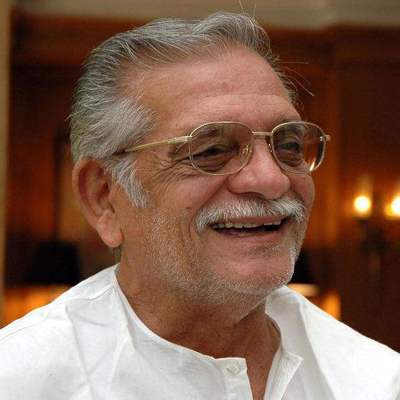
    NEW DELHI: Later this year, eminent director-screen writer-lyricist Gulzar will be honoured with the prestigious Dadasaheb Phalke Award (2013) by President Pranab Mukherjee along with the National Film Awards (2013). Gulzar will be the third lyricist after Majrooh Sultanpuri (1994) and Kavi Pradeep (1998) to win the award.


    According to Information & Broadcasting Ministry Secretary, Bimal Julka, the seven-member selection committee was unanimous in its recommendation of Gulzar for what is the nation’s highest award in cinema.


    “I am particularly happy since the choice was made by an independent committee, though set up by the Government,” said Gulzar. While many feel the honour was bestowed on him rather late, he only said, “This was special, as it came at the right time- in the birth centenary year of Dadasaheb Phalke.”


    An institution into himself, Gulzar has not only penned several Hindi film songs and dialogues but also directed a clutch of notable films. As one of the greatest authorities in the history of song in Indian cinema, he has given talks on the subject, both in India and abroad. Often accused of selecting other people’s novels/stories for adaptation, there’s no denying his talent for optimally adapting the same to Indian/Hindi film audiences.


    Biography


    Gulzar was born as Sampooran Singh Kalra to Makhan Singh Kalra and Sujan Kaur in Dina, Jhelum district, in undivided India, in what is now Pakistan. Sampooran started off as a car mechanic in a garage in Mumbai but went on to become a writer, assuming the pen name, Gulzar Deenvi. His father rebuked him for becoming a writer saying, “As a writer, you will have to depend on your brothers”. He started his film career as a lyricist, going on to write dialogues and screen plays, and later, even directing many critically acclaimed films.


    Gulzar began as a songwriter with music director Sachin Dev Burman in the movie Bandini (1963) with the song, Mora Gora Ang Lai le picturised on Nutan. Gulzar’s most successful songs as a lyricist came out of his association with S D Burman’s son, Rahul Dev Burman, whom he described as the anchor in his life. Gulzar’s lyrics were special in that they formed part of the narrative. As a lyricist, he also had award-winning associations with music directors Salil Chowdhury (Anand, Mere Apne), Madan Mohan (Mausam) and more recently Vishal Bhardwaj (Maachis, Omkara, Kaminey), A. R. Rahman (Dil Se.., Guru, Slumdog Millionaire, Raavan) and Shankar–Ehsaan–Loy (Bunty aur Babli).


    Some of Gulzar’s more notable songs are: Maine Tere Liye Hi from the film Anand; Bole Re Papihara Papihara from the film Guddi; Koii Hota Jisko Apna, a nostalgic number from Mere Apne; Aanewala Pal Janewala (Golmaal); Sun Sun Sun Didi (Khubsoorat); Ae Zindagi Gale Laga Le (Sadma); Roz Roz Aankhon Tale (Jeeva); Tum Aa Gaye Ho Noor and Tere Bina Zindagi Se from the film Aandhi; Saare ke saare gaama ko lekar gaate chale (Parichay); and Dil Dhoondhta hai (Mausam).

    Gulzar won international fame when he was awarded the prestigious Oscar Award (with A R Rehman and Sukhwinder Singh) for writing the Best Original Song  Jai Ho from the film, Slumdog Millionare. He was also honoured with the Grammy Award for Best Song Written for a Motion Picture, Television or Other Visual Media.


    Apart from films, he has written ghazals for ghazal king (late) Jagjit Singh’s albums “Marasim” and “Koi Baat Chale”. Both albums were a great success.


    For the peace campaign (Aman ki Asha) jointly flagged off by leading media houses from India and Pakistan, he wrote the anthem “Nazar Main Rehte Ho”, which was recorded by Shankar Mahadevan and Rahat Fateh Ali Khan.


    Gulzar’s poetry is partly published in three compilations: Chand Pukhraaj Ka, Raat Pashminey Ki and Pandrah Paanch Pachattar (15-05-75).


    Gulzar also wrote dialogues and screen plays for films like Aashirwad, Anand, Khamoshi and more. His short stories are published in Raavi-paar (also known as Dustkhat in Pakistan) and Dhuan (smoke). He has penned dialogues and lyrics for several Doordarshan serials including Jungle Book, Alice in Wonderland, Guchche, Hello Zindagi, Potli Baba ki and more recently, the children’s audio-book series, Karadi Tales.


    Fluent in several languages and dialects, Gulzar has written in Braj Bhasha, Khariboli, Haryanvi and Marwari though he primarily writes in Hindustani (Hindi-Urdu) and Punjabi.


    He forayed into direction with Mere Apne(1971). The film was a remake of Tapan Sinha’s Bengali film Apanjan (1969), where Meena Kumari played the lead role of Anandi Devi, an old widow caught between the local fights of unemployed and tormented youngsters. Anandi Devi’s death in one of the fights makes the youth realise the futility of violence. The film was rated “Above Average” at the Box Office.


    He then directed Parichay and Koshish, with the former based on a Bengali novel Rangeen Uttarain by Raj Kumar Maitra and inspired by the Hollywood classic, The Sound of Music. Whereas Koshish, written by Gulzar, depicts the struggle of a deaf and dumb couple. Sanjeev Kumar won the National Film Award for Best Actor for his performance in the film. The year 1973 saw another directorial venture from Gulzar named Achanak, inspired by the real-life sensational 1958 murder case K M Nanavati vs State of Maharashtra. The story writer, Khwaja Ahmed Abbas, earned a Filmfare nomination for Best story.


    Gulzar’s Aandhi, based on the Hindi novel “Kaali Aandhi” by the renowned writer Kamleshwar, told the story of a separated couple against the backdrop of politics and was often believed to be based on the story of Indira Gandhi though it was actually based on the life of Tarkeshwari Sinha. Along with various wins and nominations, the film also won the Filmfare Critics Award for Best Movie. During the emergency in 1975, the film was banned from theatres. Gulzar’s next, Khushboo, was inspired by Sharat Chandra Chattopadhyay’s Pandit Mashay. While his other film, Mausam, won the National Award for second Best Feature Film, Filmfare Best Movie and Filmfare Best Director awards, along with other six Filmfare nominations. It was loosely based on the story “Weather” from the novel, The Judas Tree, by A.J. Cronin. Sharmila Tagore for her roles of Chanda and Kajli received The Silver Lotus Award at the 23rd National Film Festival.


    Gulzar’s 1982 film Angoor was taken from William Shakespeare’s play, The Comedy of Errors. In his Maachis, a young Punjabi boy becomes a terrorist only to realise the futility of it. While Hu Tu Tu dealt with corruption and one man’s fight against it. Flashback has been an important tool of narration in Gulzar’s films including Aandhi, Mausam, Ijaazat, Machis and Hu Tu Tu among others.


    On the small screen, Gulzar created the popular series Mirza Ghalib and Tahreer Munshi Premchand ki among others. 


    Gulzar, who will turn 80 on 18 August this year, was awarded the Sahitya Akademi Award in 2002 and the Padma Bhushan in 2004. He has won a number of National Film Awards and 20 Filmfare Awards. In 2012, he received the Indira Gandhi National Integration Award.

  • Lowe Lintas dabs on emotions for Alto

    Lowe Lintas dabs on emotions for Alto

    MUMBAI:  Lowe Lintas has conceptualised a new campaign for Alto 800. The car from Maruti Suzuki went through significant changes to make it contemporary and stay relevant.

    The ‘Let’s Go’ campaign symbolises younger attitude but also has dabs of emotion.  The company wanted to capture the essence of festivals In India and the insight it got was that the festivals are celebrated by travelling; people go out shopping, meeting friends, relatives. Hence, Alto 800 wanted to integrate its promise of offering the best mileage in its class to the spirit of festivals in order to drive brand’s consideration.

    Commentating on the campaign, Lowe Lintas Delhi president Naveen Gaur says, “In India, festivals are celebrated by travelling. People go out shopping, meeting friends, relatives. Families get together to jointly celebrate. In such times a car with exceptional mileage is an ideal car to own. With the new Alto 800 commercial, Maruti Suzuki and Lowe Lintas wanted to integrate this insight, with the festival led car buying season and the brand promise of ‘Let’s go’. Additionally it was an opportunity for us to infuse a sense of festivity into the market.”

    Elaborating more on it, Gaur adds, “Mileage is something that can become very functional and manufactures’ speak, however this TVC captures the benefit unequivocally in a very warm and emotional storyline. It also captures a progressive attitude among today’s couples who are increasingly equal partners in their relationship.”

    The commercial signs off by saying ‘Agar khusiyaan baatney se badhti hain, toh rukna kyon?’ An Alto ad has always been known for its music, the latest TVC is no different, the lyrics are penned by Gulzar, sung by Shilpa Rao and composed by Rajat Dholokia.

    On the campaign, Maruti Suzuki India chief general manager Manohar Bhat says, “Alto is an iconic car. It is the largest selling car in India and is known for its fuel efficiency. Keeping the festival season in mind, we wanted to make sure that it also builds a relationship through the campaign.”

    The campaign led by TV and supported through digital and radio along with POS and outdoor presence.

  • Several film personalities to feature in Samanvay Festival of Indian Languages

    Several film personalities to feature in Samanvay Festival of Indian Languages

    Five National film award winners and one Oscar awardee are among the speakers at the third edition of the India Habitat Centre (IHC) Indian Languages’ Festival ‘Samanvay’ being held from 24 to 27 October.


    This year the festival’s theme is ‘Jodti Zubanein, Judti Zubanein: Language Connections’. Spread over four days, the festival would also have seven Padma Shri awardees, twelve Sahitya Akademi recipients, and a Padma Bhushan awardee. Twenty languages and dialects would be featured at Samanvay 2013.


    ‘Samanvay’ is a platform for bringing together expressions of human thought in the varied and diverse cultural contexts that have been nurtured and have flourished in many languages spoken in our cultural milieu. These conversations amongst brilliant and well-known writers will seek to bring to our audiences the sparkle of multilingual expressions and their inspirations.


    Participants from the world of entertainment include Gulzar, Jerry Pinto, Ketan Mehta, Mahesh Bhatt, Piyush Mishra, and Sanjay Kak.
    Samanvay 2013 is about connections between languages and the connections languages make: Jodti Zubanein, Judti Zubanein. This is a continuum of the themes that defined the first two editions of the festival; the inaugural an exercise in understanding the notion of the Indian-ness of the various literatures of the country, the second a celebration of the multi-faceted interaction between languages and dialects. It is not only about listeners, readers and authors; it is also about the ethics and ethos of connecting through a language.


    There will be conversations around oral literature, media, and translations, along with poetry performances, folk art, stand-up comedy, theatre and cultural evenings. Beyond the language specific sessions, we cover some of the issues that have shaped our intellectual and social life in recent times: sessions on civil society, activism, dalit and women writing, alternate voices from literature, cinema, radio, publishing, gender violence, aspirations, dreams and voices of the marginalized, and above all the threats of a new form of patriotism that treats itself as a religion.


    Announcing the festival, Samanvay Festival Director Raj Liberhan said, “For us at the India Habitat Centre, Samanvay is not an event but a cause. All of us in this country find ways of translating our thoughts into words. Samanvay is a multilingual platform to debate, share and ideate on issues affecting us.”

  • Nickelodeon gears up to promote Motu-Patlu

    MUMBAI: Nickelodeon is going gung-ho to promote its recently launched show titled ‘Motu Patlu‘.

    The show is being advertised aggressively on the network besides being promoted through on-ground activities and strategic promotional partnerships to ensure optimal reach.

    The channel has tied up with retail chain Pantaloons and will be actively present across 18 Pantaloons outlets in Mumbai and Delhi to ensure “maximum” brand visibility.

    In an attempt to be present wherever kids are, Nickelodeon has also tied-up with gaming outlet – Timezone. Here kids can participate in the ‘Motu Patlu‘ contest through the Kiosk‘s at Timezone and also sample the show, while they win ‘Motu Patlu‘ merchandise.

    Additionally, Motu Patlu‘s Signature dish Chole Bhature will be available and promoted across Bombay Blue outlets in Mumbai. Kids can also engage with the interactive Motu Patlu tray mats at all the outlets.

    Promotions will also be a part of the on-going Nickelodeon workshops at Hobby Ideas where kids will be exposed to the flavour of the show while they participate in ‘Art Jam‘ workshops and bring out their creative side by making Motu Patlu chocolate boxes and more. The activity spans across five cities and over seven centres.

    Sonic and Nickelodeon India executive vice president and business head Nina Elavia Jaipuria said, “This experiential marketing campaign brings alive Motu Patlu, engaging kids through innovative initiatives at multiple touch-points. Our unconventional campaign connects with kids and reaches out to them wherever they are. Thus, creating awareness for Motu Patlu.”

    Nickelodeon has also planned engagements through Van Activations in over 30 towns like Lucknow, Kanpur, Allahabad, Varanasi, Agra and Mathura in Uttar Pradesh and Gwalior, Khandwa, Indore, Ratlam, Bhopal and Jabalpur in Madhya Pradesh. The Van Activation has been designed to give kids the feel of the show and make show and its characters familiar with the kids.

    To ensure the “right connect” with the tech-savvy generation Nickelodeon has also launched Motu Patlu‘s official website – Motupatlu.in. The site hosts a content mix that includes Motu Patlu games, contests and downloads.

    In addition, motupatlu.in will also be promoted through a digital campaign that entails banners on kid gaming websites, video banners and innovative rich media banners that allows the users to interact on the banner itself. The show will also be promoted on Nick India‘s official page on Facebook and on twitter.

    As a part of the ATL promotions, Motu Patlu will also be promoted across various General Entertainment Channels and print advertisements in leading comics.

    Nickelodeon has roped in legendary lyricist Gulzar to create a title track composed by musician Sandesh Shandiliya and sung by Sukhwinder Singh. The title track of twosome‘s jodi will be played on all radio stations across Mumbai and Delhi and several other cities in Madhya Pradesh and Uttar Pradesh.

    Motu Patlu airs every day at 6:30 pm on Nickelodeon.

  • Bollywood by Gulzar finds special place in Delhi’s literary festival

    Bollywood by Gulzar finds special place in Delhi’s literary festival

    NEW DELHI: Delhi’s own literary festival Spring Fever 2012 this year attracted special participation from Bollywood.

    The third annual literature festival of Penguin Books concluded on a high note in the evening with the legendary veteran poet and lyricist Gulzar reading out his best poems from his recently launched book ‘Neglected Poems‘.

    “Epics may seem distant from our modern-day lives, but that is not right. After Pawan wrote this episode from the Mahabharat in relevance with people`s lives today, I realised it should reach out to more people,” he said.

    “Translations are very important these days, since an average person can only know two to three languages. We have so many languages in India and poems are being written in as many of them. Also, a translator should be well-versed in both languages, the original and the one in which he is translating,” he added.

    Penguin Spring Fever 2012 also saw the participation of authors like Anupam Kher and Raghav Bhal.

    The topics covered during the ten day festival varied from ‘Sex and romance outside the bedroom‘ to the ‘New Indian Consumer‘.

    A unique Bollywood quiz was held with a special round on superstar Rajnikanth, apart from performances by bands like Faridkot, Vedas and Qawwali.