Tag: Gujarat

  • IBN7 wins big at Laadli Media Award

    IBN7 wins big at Laadli Media Award

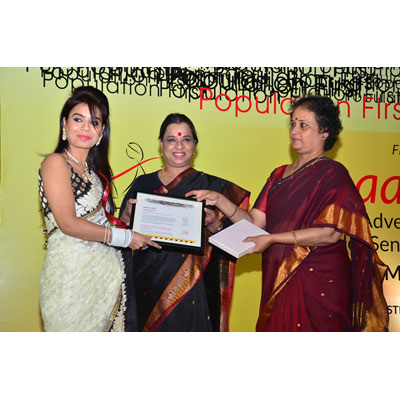
    MUMBAI: IBN7, India’s channel of impact, has bagged two awards one in the Best Hindi Feature and the other in the Best Investigative News Feature category, at the prestigious Laadli Media Award for Gender Sensitivity 2013. IBN7 has once again proved its supremacy in terms of insightful and impactful reportage in the 24X7 Hindi news space by winning two awards in the Western and Northern region at the grand ceremony held on Friday, 20th December.

    IBN7’s Nishat Shamsi from Mumbai Bureau received the award in the Best Investigative News Feature category for his documentary ‘Yaha Lagti Hai Dulhan Ki Mandi’ which is an investigative report on the heinous practice of selling women like commodities in the Vedhu Samaj of Nanded District of Maharashtra, while Neetu Rana from Delhi received the award in the Best Feature (Hindi) category for documentary ‘Surrogate Maa’ which showcases surrogate mothers from Anand, a small town in Gujarat who come forward to talk about the pain of renting out their wombs.

    The Laadli Media Awards for Gender Sensitivity, by Population First, acknowledges the efforts of the media in promoting public awareness and understanding gender issues through gender-just perspectives, portrayals and analysis programmes, policies, social trends and behaviours.
    Ashutosh, Managing Editor, IBN7, said, “IBN7 has always been upfront in highlighting the social issues. The award has strengthened our belief and commitment towards fair journalism and motivated us to continue with highlighting such crucial issues.”

  • DDB MudraMax OOH refreshes brand Star Sports

    DDB MudraMax OOH refreshes brand Star Sports

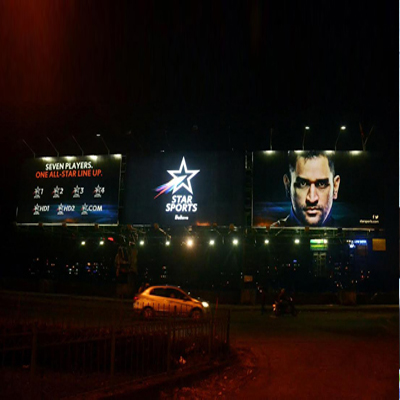
    MUMBAI: STAR India recently revamped the branding of the sports network and unveiled a new brand for Star Sports across six channels — Star Sports 1, 2, 3, 4, HD1 and HD2 and starsports.com.

    To create the awareness and buzz for the new brand identity and to communicate the new brand philosophy – Believe, Star Sports partnered with DDB MudraMax OOH.

    The campaign was rolled out when India tuned in to watch Sachin Tendulkar play the last series of his sports career. The massive OOH campaign was executed in Mumbai, Delhi and Kolkata as well as across major cities in Gujarat and UP. The campaign used multiple visuals of Mahendra Singh Dhoni as well as the brand logo as part of the campaign creative.

    On the campaign, STAR India executive vice president marketing & communications Gayatri Yadav said, “The work done by DDB MudraMax OOH for the brand refresh campaign has been outstanding. The DNA and essence of the brand refresh was well understood and reflected in the manner in which the planning and media selection was done by the agency. Especially the Star Sports zone and roadblocks conceptualized and executed at Mumbai and Delhi airports are noteworthy and have created a great impact and buzz for the refresh. We are very impressed with the positive reviews received for the campaign. DDB MudraMax has delivered on our expectations yet again.”

    Commenting on this, DDB MudraMax OOH retail and experiential president Mandeep Malhotra said, “Sport is very close to my heart and when the opportunity to associate with a brand standing tall to the passion came up, was really thrilled to create magic. The team did a wonderful job on picking up unusual formats of advertising. Various touch points were exploited and the new identity made it to top of mind recall with a smooth transition.”

    DDB MudraMax OOH VP Spencer Noronha added, “Star Sports aimed at starting a revolution in sports broadcasting and the media strategy was to amplify this sports revolution through an occasion that is relevant to all and thus inspire every Indian sports fan. This soul of this campaign was “premium and classy” and hence it was crucial that the media selection had to be in line with that imagery. We selected the most impactful, most premium and the largest of available media vehicles in each of the target cities to create a statement in the OOH space. The quality of the selected media reflected class and helped the campaign to quickly get noticed and talked about. The eye catching creatives amplified the impact and recall manifold. It’s definitely one of the most memorable OOH campaigns in 2013”

    DDB MudraMax OOH DGM Anurudha Pawar said, “OOH is a communication platform where the brand is racing against time to grab attention and communicate with the TG while he zooms past the media within a few seconds. This makes it all the more important for the brand to use the right media mix and deploy an optimized communication tailor made for the medium. We exactly did this for the refresh campaign. The media vehicles were meticulously handpicked to project class; and the creatives were kept ultra outdoor friendly to specifically communicate the grandeur of the brand. We took the innovative branding route by creating the Star Sports Zone, Stadium visibility corridors and airport roadblocks, to ensure each and every person exposed to the communication carried a positive image of the brand with him in this mind. I am sure we have succeeded doing that.”

    A multimedia approach was used for the campaign. Large format A+ grade billboards and Unipoles, Backlit Bus Shelters, Backlit Pole Kiosks, 4 Sided Backlit Pillars, Large Backlit Glow signs, Drape, Prominent Mall Facades, Digital Screens at airports and Gantries were meticulously selected at key touch points in each city. The creatives were optimized for each of the media formats used. DDB MudraMax also brought in a couple of significant planning and media innovations to help portray the grandeur of the brand refresh and garner high recall value for the campaign. Visual domination was the key.

  • TRAI gives MSOs another CAF extension till December end

    TRAI gives MSOs another CAF extension till December end

    MUMBAI: The Telecom Regulatory Authority of India (TRAI) has again shown forbearance towards multi-system operators (MSOs). The regulator has given another extension to the MSOs and asked them to submit 100 per cent consumer application forms (CAFs) by December end along with the compliance report. The regulator met the five national MSOs and a few state players today in New Delhi to get an update on the situation of DAS phase I and II cities.

    “TRAI has given us the extension looking at our performance since the last meeting held on 29 November. While we had achieved only 45 per cent CAF in DAS phase II areas when we met last, this time the figure stands at 65-70 per cent,” says one of the MSO who attended the meeting.

     The MSOs are confident of achieving the figure by the month end. “If TRAI continues its pressure and resolves to take some action against those not complying, I am sure we can achieve 100 per cent figure,” he says.

    Acknowledging the issues in Hyderabad, TRAI has shown leniency towards the city. “The 100 per cent CAF doesn’t include Hyderabad,” says the MSO.

    Apart from representatives of the five national MSOs, the others that attended the meeting chaired by TRAI principal advisor N. Parameswaran included: Manthan from Kolkata and Ranchi, UCN from Nagpur and MSOs from Vishakapatnam and Gujarat among others.

    The TRAI also reviewed the gross billing status in the DAS phase I cities. The MSOs had to start billing from December. “The subscribers need to get the bills as per their package plan from December.  The regulator has said that either the local cable operators (LCOs) or MSOs can bill the subscribers and has asked us to send the compliance report by 31 December,” informs the MSO.
    That apart, the MSOs in Kolkata and Delhi have decided to join hands and educate the consumers on gross billing. “While seven players in Kolkata will publish ads in leading newspapers in Kolkata, approximately three MSOs in Delhi have decided to come together for the print campaign,” he adds.

  • TRAI-MSO to meet on 16 Dec to assess CAF

    TRAI-MSO to meet on 16 Dec to assess CAF

    MUMBAI: The Telecom Regulatory Authority of India (TRAI) has called for a national multi-system operator (MSO) meeting on Monday, 16 December. The meeting has been called to assess the report on collection of consumer application forms (CAFs) in the 38 cities falling in Digital Addressable System (DAS) phase II. 

    Earlier, on 29 November, TRAI had met all the MSOs and had set 15 December as the deadline for submitting 100 per cent CAFs.

    We had to submit the CAFs, including subscriber details and package details by 15 December. TRAI has called for the meeting to assess the situation says SN Sharma

    “We had to submit the CAFs, including subscriber details and package details by 15 December. TRAI has called for the meeting to assess the situation. It is a follow-up of the meeting we had earlier with the regulator,” says DEN Networks CEO SN Sharma.

     The regulator has called for the meeting to review the progress made in the DAS phase II areas. “Though in the last meeting, we had asked for a one month extension to complete CAF, the regulator had given clear directions to complete CAFs in the specified period of 15 days,” adds Hathway Cable & Datacom MD and CEO Jagdish Kumar G. Pillai.

    The MSOs are struggling to meet the deadline. “Our national average for CAF is around 65 per cent. While in a few areas we have achieved 90 per cent CAF, there are also areas like Hyderabad where we have still not collected any CAF,” informs Pillai, who thinks that the collection can improve only if the Information & Broadcast Ministry announces Greater Hyderabad Municipal Corporation (GHMC) as DAS area.

    In the meeting held on 29 November, it was revealed that Gujarat Telelink Pvt Ltd (GTPL) is lagging behind in areas like Vizag and Solapur, Hathway is far behind in Vizag and Hyderabad and Den Networks had a low CAF collection in Uttar Pradesh. “We have achieved 80 per cent CAF in Gujarat, while catching up in other areas,” informs GTPL COO Shaji Mathews.

    Though in the last meeting, we had asked for a one month extension to complete CAF, the regulator had given clear directions to complete CAFs in the specified period of 15 days, says Jagdish Kumar Pillai

    The court cases related to the digitisation process that were on till quite some time in states like Madhya Pradesh, Andhra Pradesh and Gujarat have acted as a hindrance to smooth CAF collection, think the MSOs. “Digitisation in Vizag began only in September, so it will take more time for the MSOs to submit 100 per cent CAF there. Also, we are facing issues in Gujarat,” adds Mathews.

    The Gujarat Cable Operators Association has moved to the Gujarat High Court against TRAI and the case is pending in the court. “We will have to see if the TRAI gives us reprieve for customers who fall under these cable operators. If it doesn’t, then we may have to switch off signals, which will then be against court order. The situation is tricky in Gujarat and we are waiting for what the regulator has to say in the meeting,” says Mathews.

    We will have to wait and watch if TRAI comes up with another extension or penal action for non-compliance! MSOs await the meeting.

  • DAS & the LCO fightback for survival

    DAS & the LCO fightback for survival

    It’s the festival of lights. And for many the festival of noise courtesy exploding fireworks. In the hope of reducing the number of those belonging to the latter tribe, we, at indiantelevision.com, decided to put a display of firecracker articles for visitors this Diwali. We have had many top journalists reporting, analysing, over the many years of indiantelevision.com’s existence. The articles we are presenting are representative of some of the best writing on the business of cable and satellite television and media for which we have gained renown. Read on to get a flavour and taste of indiantelevision.com over the years from some of its finest writers. And have a happy and safe Diwali!

    Written By Seema Singh


    (Seema today is senior manager – PR & Communication at the Broadcast Audience Research Council. She wrote this article in 2013.)


    Posted on : 05 Dec 2013 09:45 pm


    MUMBAI: With no one giving them any guarantees about their long term survival under the government-mandated DAS regime, small time local cable operators (LCOs) are banding together as cooperatives in pockets nationally, agglomerating funds, and setting up their own headends. From Bengaluru to Kolkata to smaller towns, this is being mirrored across the country.  Digitisation has spurred a new wave of entrepreneurialism in the cable TV business.

    “Analogue cable TV spread like wildfire in the 80s and early 90s thanks to small time business men who invested and toiled away to deliver satellite TV via cable to homes,” says a cable TV industry observer.

     “Now digitisation in its current form is designed to kill those very last mile operators, big or small,” points out  Maharashtra Cable Operators Federation (MCOF) president Arvind Prabhoo.

    “Some have given up and have joined hands with the MSOs, fearing the huge investments needed for digitisation and the backlash from the national MSO,” says the cable TV industry observer. “But don’t expect all the guys who have built the cable TV industry to what it is today to yield without a fight; hence the new wave of entrepreneurialism.”

    Take the case of the Bengaluru boys.  70 independent cable TV operators got together to set up their own cable TV headend and distribution infrastructure in March 2013.

    Explains one of the members – Sagar E Technologies’ executive director Sudhish Kumar: “There were two reasons: digitisation and revenue share. We had at several instances raised voice against the MSOs with regards to billing, ownership of set top boxes (STBs) and ownership of consumers. The TRAI suggested revenue share model showed that the revenue shared between the LCOs and MSOs will be 35:65 or 40:60. We were being given a small pie. The same was the case as far as cable TV carriage, placement fees or value added fees. We were to get nothing.”

    Branded as Mirai Communication, the consortium is registered as a private limited company and has 10 directors. Its headend is located in Electronics City, Bengaluru. It is through this that the operator provides feeds across Bengaluru. “In Bengaluru we cover areas like: Central Bengaluru, Central Railway Station, Whitefield and ITPL among others,” informs Kumar.

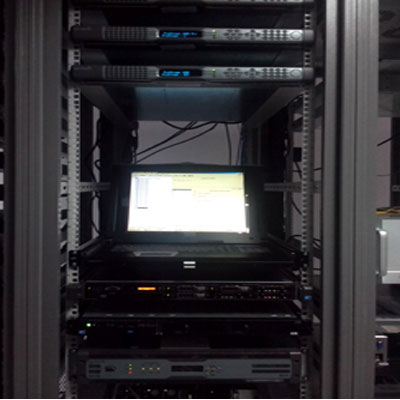
    And Kumar says its headend is future-ready technologically. “We have a Harmonic headend, costing Rs 3 crore, with a carrying capacity of 500 channels.” 

    Some 50,000 STBs imported from DTM, China with CAS from NSTV and SMS from Magnquest, have been seeded amongst its subscribers and the plan is to take the number to one lakh soon. Since some of the LCOs in the joint venture were link operators for the major MSOs in Bengaluru, their boxes have been replaced with the Mirai Communication STBs.

    “These are standard definition high quality MPEG4 boxes with one GB of DVR,” informs chief technology officer Sriram. The price tag of each box is between $16 and $19 (around Rs 1200). The final cost works out to Rs 2000- 2500. This includes CAS, cost of headend, import duty and the cost of STB.” 

    Issues with DAS implementation and revenue share got us together to setup our own headend says Sudhish Kumar

    The company has spent close to Rs 30 crore on the whole setup, which includes infrastructural help from Tata Teleservices, using the optical fibre it has laid across the garden city. “Though we have our own hybrid fiber-coax (HFC), we are using almost 400 km of Tata Teleservices underground OFC, since maintaining the network across the city is a huge task. It has given us drops at several points across the city through which the signal is made available to homes,” says Kumar.

    So what are the challenges the group has faced? “Well, the current 10 directors got along to form a team. We then proposed what we were planning to do to others in the city. It was a challenge to bring everyone to come together, but it has worked out well since,” he informs.

    Each of them was asked to choose between acting as a collection agent by becoming a link operator for a national MSO  becoming an owner by becoming a part of Mirai Communication. “Though it earlier seemed like a herculean task, with 70 operators coming together, we realised that we had to pay only Rs 2000-2500 per box. We were anyways paying Rs 1000-1500 to the MSOs for seeding boxes. So, now by paying extra Rs 1000-1500, we could own the STB and also keep our consumers intact,” explains Kumar.

    It was the Hyderabad based Fibre Optics that offered a one-stop solution and the challenge has not yet ended.  “It is an ongoing task. We have managed to get feeds from all broadcasters.  We are paying them for one lakh subscribers, when currently we have 50,000 subscribers. But, we hope to seed more boxes soon,” adds Kumar.

    What is the revenue share between the 70 cable ops who have formed the consortium? “Well! It is simple. The operator gets a share against the active boxes which are part of his own subscriber network,” he informs. Mirai Communication has started generating bills. “The revenue has started rolling out now,” he informs.

    Bengaluru’s operators are not the only ones, who have come together to setup their own headend. Following their footsteps are the 100 cable operators from Kolkata that recently announced the setting up of ‘Bengal Broadband’. As reported by Indiantelevision.com, the new entrant will be functional from FY2015 (LCO’s form ‘Bengal Broadband’ to be effective from FY15).

    Says Prabhoo, “LMOs all over India like in Bengaluru and Kolkata must group together and form a co-operative model in such a way that even the smallest LMO can survive and sustain. LMOs must register under small scale industry so that they can avail of collateral free bank loan up to Rs 1 crore.”

    We have seeded standard definition high quality MPEG4 boxes with one GB of DVR, informs Sriram
    While the State Bank of India already is providing such facilities, MCOF is also in talks with IDBI Bank and Canara Bank to offer the same. 

    “Time is running out for the MSOs and if they do not learn to act fairly soon enough then many co-operative headends will come up in most cities of India. One may find another 100-200 headends coming up with 200-300 different cooperatives formed and that will continue for a year or two and then there will be consolidation. And I see it happening. These are large cooperatives with a 500,000 or million universe,” adds Prabhoo.

    Kumar points out that they are already in talks with both independent MSOs across India and also LCOs in Mumbai, Delhi, Nasik, Kerala, Chennai, Hyderabad and Gujarat for setting up more such co-operative headends. “We are in talks with independent MSOs and asking them to collectively set up one headend for the entire country,” he concludes. 

    Change as we say is the only constant. Even in cable TV land. 
  • MCOF seminar aims to educate LMOs

    MCOF seminar aims to educate LMOs

    MUMBAI: Constituted just over a year ago to protect cable operators and safeguard their business, the Maharashtra Cable Operators’ Federation (MCOF), today organised its first business and education seminar in Mumbai.


    Held in Hindi and English,around 400 Last Mile Operators (LMOs) travelled from neighbouring states like Gujarat, Andhra Pradesh, Goa and Karnataka for it.


    The first session was to educate LMOs about the importance of customer care and enhancing the quality of service. Vishwamangal Education CEO Suman Keluskar who deals in soft skills highlighted the need for LMOs to be well groomed as well as train their subordinates to be the same to make customers feel good.
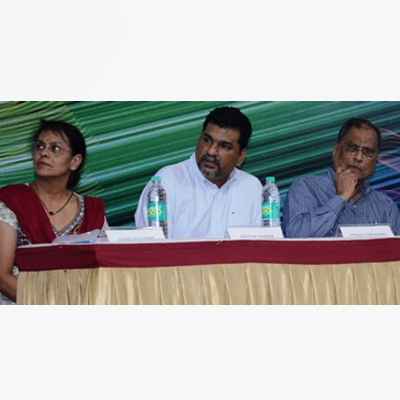
    Suman Keluskar, Vynsley Fernandes and Tony D’Silva spoke about customer care, global trends in cable TV and the upcoming HITS technology respectively


    “The reason why customers welcome a Pizza Hut boy is because he is nice to them,” she said, stressing that customers today were ready to pay for good service but for that to happen, LMOs needed to know the opportunities available to them as well as what customers were demanding. “Innovate in your production. Use the internet to advance yourself,” she said.


    Session two discussed how while LMOs across the globe have learnt to monetise their business, back home, it continues to be a loss-making one. Addressing the session, Castle Media director Vynsley Fernandes, started off by describing how developed countries such as the US, UK and Taiwan had faced the same issues that India is currently facing. But the cable ops dealt with them through innovation and have today grown to last mile digital system providers.


    “From the time the Gulf War happened and everybody wanted to watch TV, things are much different now. Multi-screen viewing is what is happening now,” he said.
    Citing the example of the US, where operators have increased their revenues despite a drop in the number of TV homes, and are expecting the ARPU to go up to $40 from $21 currently in the next five years, Fernandes reasoned this was because they had adapted to using TV along with the Internet and were offering viewers a multi-screen experience.


    He pointed out that concepts like Hybrid Broadband TV, second screen, catch up TV, time shift TV, TV on mobile etc. had already penetrated the US markets and helped cable operators exponentially.


    “Think long term as to whether you can monetise your product. Whenever you are investing in a technology, what is its future road map?” he urged, saying that the only challenge would come from OTT services such as Netflix and Hulu where movies and channels will go directly on the Internet without the need for an MSO or LMO. However, he was quick to add that this hasn’t met with much success in India, yet.

    While advertisers are approaching LMOs to target specific demographics on TV, the STBs taken up by LMOs are not so advanced, Fernandes said. Pointing out that in the US, LMOs provide a posse of services including entertainment, home monitoring, automation comfort, energy management and wellness assisted living, in India too, “an LMO should be the one-stop digital services’ stop for customers,” he concluded.


    Drawing upon his experience in broadcast and DTH to present his project on Headends in the Sky (HITS), former Sun TV CEO Tony D’Silva said this was a good prospect for LMOs to think about.


    D’Silva said that most consumers watch not more than 12 to 15 channels and so, it was necessary to create such packages and device-shifting technologies for the future.


    “You are at the threshold of a game change. Our main threat is the DTH players and we need to be above them and have a robust system,” he said, stressing that HITS was a much better option for LMOs than taking signals from MSOs. Under HITS, the agreements are directly with broadcasters, there are no carriage fees, and it would yield higher revenue (Rs 108) as compared to dealing with an MSO (Rs 59.5) or even independently (Rs 85).


    “The biggest cable company in the world today is Comcast. 17 million out of Comcast’s 22 million subscribers get supply services from HITS and Comcast gives its customers all the benefits that Fernandes spoke about,” said D’Silva, urging LMOs to adopt HITS through which they could choose and demand things as well as insert local channels, the revenue from which would be completely theirs.


    A local cable operator from Goregaon, Bernadette Dsouza, said: “I have come for the seminar to know about new opportunities as well as how to save my business from MSOs’ domination.”

    The good news is MCOF plans to hold such seminars in other states as well in the coming months.

  • Ram-Leela gets a lukewarm response, Krissh 3 continues to woo audience at BO

    Ram-Leela gets a lukewarm response, Krissh 3 continues to woo audience at BO

    MUMBAI: Alexandra Cinema near Mumbai Central station had a patronage of English movie lovers who did not know English nor was it an era of dubbing English movies. To attract the audience, the cinema management gave all films it released its own version of Hindi titles. Mara Maari Chumma Chati was the title given to the 1966 movie Kiss Kiss Kill Kill (the other examples are Hurr Hurr Darwaza Khula for Horror Of Dracula; Kabhi Garam Garam Kabhi Naram Naram for Blow Hot, Blow Cold). That Mara Maari….. aptly describes Ram-Leela for that is what it is all about; there is no third dimension to the film.


    The film released under protests and threats not even opening at some major centres of Gujarat on day one. While the film found an indifferent response at single screens, on the strength of its business at multiplexes, the film has collected a little over Rs 48 crore for its opening weekend. Monday, however, saw a noticeable drop to 50 per cent of its first Saturday business. It is a high priced product and this drop does not augur well for the film.


    Rajjo with its unimpressive storyline went unnoticed and failed to find any takers.
    Krrish 3 has done a decent second week with no real opposition to share the box office; especially in its second weekend, the collections tapering down thereafter. It collected Rs 43.3 crore taking its two week total to Rs 163.3 crore.


    Satya 2 has fared poorly. The film has collected Rs 1.8 crore in its first week.

  • LCOs challenge TRAI DAS order in High Court By Seema Singh

    LCOs challenge TRAI DAS order in High Court By Seema Singh

    MUMBAI: The Gujarat Cable Operators Association (GCOA) has approached the High Court of Gujarat against the Telecom Regulatory Authority of India (TRAI), the central government of India and state government against the ruling on digitisation.


    In the petition submitted to the HC, the petitioner has challenged the legality of Telecommunication (Broadcasting and Cable) Services Tariff and the Telecommunication (Broadcasting and Cable Services) Interconnection Regulations.


    In the current scenario, as defined by the regulator, the revenue share ratio between the MSOs and LCOs is 55:45 for free-to-air channels and 65:35 with respect to pay channels. The LCOs in Gujarat find it discriminatory and prejudicial to their interest.


    “We have challenged all the notifications passed by TRAI. This includes revenue share, consumer application forms (CAFs) and billing,” informs Gujarat Cable Operators Association president Pramod Pandya. The laws, according to Pandya are complicated and aim at completely removing the presence of LCOs from the cable industry. “We feel that every order passed till date with regards to digitisation is one-sided. All the laws have been drawn up against the LCOs,” he adds.


    The association on 2 September 2013 moved to the Supreme Court with the matter. The SC then ordered them to address the issue to the High Court first. “We then filed a petition to the Gujarat HC on 10 September,” he informs.


    The court during its 13 November hearing has asked the TRAI and government to declare the reasons for formulating the existing laws pertaining to tariff and interconnection in the next 15 days.


    “I don’t understand the basis of these laws. It is the LCOs who build the customer base and now all of a sudden we have been asked to transfer our rights to the MSOs,” says Pandya.


    The LCOs also feel that the issues relating to digitisation have never been discussed with the registered 60,000 cable operators.


    “None of the state cable operator associations were called before the process of digitisation was enforced.”


    The cable operators in Gujarat, say they are only asking for their rights. “If I don’t have a right, then why should I collect revenue or collect CAFs from consumers? We have built the customer base for all these years. The MSO give us the signal, for which we pay them a rent and then bill the customer. How can government all of a sudden ask us to not do the billing?” questions Pandya.


    According to the petition filed, of which indiantelevision.com has a copy of, the members of the petitioning association under the said provisions work under the MSOs as their revenue collecting agents while at the same time provide maintenance and services to the subscribers on behalf of the MSOs at their own cost since the entire cable network has been laid down by them over a number of years.


    The association has some 2500 cable operators as its members. “We are not targeting MSOs…they are only following what the TRAI has asked them to do.”


    The LCOs feel that their roles have been reduced to mere commission agents.


    “We are being forced to depend on the MSOs,” opines Pandya. Under digitisation, it is mandatory for the LCOs to collect and submit CAFs. “This is harsh and oppressive since it would compel the LCOs to share their subscriber’s base with the MSO’s making them more vulnerable,” says Pandya.


    He is clear that till there is no clarification on the notifications passed by TRAI, the cable operators in Gujarat will not even seed set top boxes. When asked if the operators will meet the CAF deadline he says, “It is a court case now. We have challenged every aspect of digitisation. So till this is resolved and the court passes an order on this, there will be no CAF collection or billing in Gujarat.”


    The association had in the beginning of DAS phase II approached the High Court, which had then given a stay order for 16 days for implementation of DAS. “The process of digitisation started only from 16 April in Gujarat. So far only four cities of Gujarat: Surat, Baroda, Ahmedabad and Rajkot have moved ahead on this,” he concludes.

  • It’s a SCaT man’s world!

    It’s a SCaT man’s world!

    MUMBAI: The SCaT (Satellite and Cable TV) trade show in its 22nd year took place at the World Trade Centre, Cuffe Parade here over the weekend between 25 and 27 October. The show received a great response with all the stalls sold out. The show was buzzing with energy and enthusiasm.

    “I feel like a kid in a candy shop, I am really spoilt for choice. I would love to check out all the new products and try out a few,” said one of the visitors.

    According to the organisers, they had to take additional hall space to cater to the higher demand from exhibitors. It was deliberately held over a weekend to make it convenient for outstation visitors and the number of registrations clearly out did the previous years on both days. Several operators from Maharashtra, Gujarat, Karnataka and Andhra Pradesh attended in groups and of course from all over India too.

    The show attracts visitors to review and purchase products from over 150 companies and brands, not only from India but worldwide. Over 40 international companies participated in the show this time around. The focus of SCaT 2013 was to showcase attractively priced digital headend products to meet the needs of smaller cable TV networks looking to migrate to digital cable TV within a year.

    In fact, the entire idea to hold the exhibition is to make work easier for the people in the industry, say the organisers, who also come out with a monthly magazine, SCaT. “We launched the magazine in 1993 and it was the first trade publication catering to the satellite and cable TV industry in the south-Asian region. Simultaneously, we also started organising the SCaT Trade show for which we got huge appreciation,” says SCaT Media & Consultancy publisher and MD Sudeep Malhotra.

    According to Malhotra, the entire idea was to cash in on the growing cable TV industry, which was at a nascent stage at that time. “There was a big barrier between the manufacturers of cable TV products and the cable operators who were the buyers. They could only connect through the shopkeepers, who at times were not really helpful. So, if an operator was looking for an amplifier, he would be supplied only those products that was available at the shops. He may not even be aware of the better products that are being manufactured,” says Sudeep, who with the magazine and the trade show wanted to bridge that gap.

    The organisers hosted the first show in February 1993 and had just nine companies on board. In the same year in October, the show had 30 companies participating which was a huge jump for the organisers. “Over the years, we have been growing at a rate of almost 20 to 30 per cent. Now, we have 156 companies on board, with participation of about 21 countries,” says Malhotra, also adding that they have special permissions from the government to get the products from other countries.

    The footfall has increased considerably too – from 300 people in the first show over three days to almost 18,000 in the present show. “We have visitors not just from India but from Bangladesh, Nepal, Sri Lanka etc as well. We also have cable associations visiting the show in groups of 100, 200 from various states in India,” says Malhotra.

    The exhibition was spread across two buildings and witnessed a great response in terms of visitors. The show had a great mix of companies varying from those providing headend equipments to those providing end to end solutions. There was also a prominent presence of news channels like Captain TV (Chennai) and Channel News Asia (Singapore).

    Satellite & Cable TV Magazine editor and executive publisher Dinyar Contractor expounded, “We hold this exhibition annually to let the industry get together under one roof and explore the new products that are available or will soon be available in the market. We at SCaT believe that the opportunities are manifold at this show and the industry can benefit at large.”

    With the DAS rollout and impending phase III and IV implementation, the focus was but naturally on affordable digital headends and STBs which are cost efficient for small networks of the smaller towns that are not MSO dominated. Like always, it was the Chinese, Taiwanese and Korean manufacturers who dominated. Interestingly, the key Indian hardware companies like Catvision, Channel Master, Saibaba Electronics among others had all tied up with international manufacturers and were offering complete end to end DAS solutions. 

    “While clearly the focus was on hardware, the middleware and software vendors offering value added services, SMS and billing integration were yet to see significant traction. Also on display was the sole HITS service provider JainHits offering complete services including content, having recently won his legal case against the aggregator/distributors,” said media analyst Sanjeev Hiremath.

    One of the products that caught everyone’s attention was the Android OTT IP-STBs – these are set top boxes that function on an Android 4.0 and can be easily synced with any device – which can enable internet surfing, listening to online music via WiFi or Ethernet interface. The STB also supports Live TV watching and VoD if the user has an account with the solution provider.

    Another attraction at the event was Gaian Solutions’ new product through which cable operators and DTH players can now customise the advertisements being aired not only within states, but also within the city limit. “The new technology helps you to air different ads at the same time. So if in south Mumbai, a consumer will see a Mercedes ad on TV during a programme, another consumer in other part of the city can watch a different ad, according to the need of the market,” informed Gaian Solutions director-operations Mrigesh Gaurav.

    The lobby of the Taj Vivanta President where most of the participants stayed was also a meeting place for networking and also became the hotspot for the trade party on the penultimate day.

    All in all, it was an exciting and eventful three days of knowledge enhancement, serious business and networking.

  • Simba enters Tier 2 cities with 100 stores by 2014 in India

    Simba enters Tier 2 cities with 100 stores by 2014 in India

    MUMBAI: SimbaToys, one of the largest toy manufacturers in the worldand slated to be the largest toy chain in India is all set to expand its reach to Tier 2 cities. Following the opening of existing stores across Mumbai,Delhi, Bangalore and Chennai the company is now ready to extend its reach to Orissa, Rajasthan, Gujarat and Chhattisgarh over next few months.

    Commenting on the expansion Shree Narayan Sabharwal, Business Head, Simba Toys India stated “In India, almost 70% of the toy market is unorganized. Simba Toys mission is to let kids play with better quality and safer toys. The idea behind SIMBA stores in India is to establish them as your neighborhood toy store. Through which good quality products come closer to mass consumer across all cities in India, as it’s difficult to have easy access to such toys in India.”

    “We are planning to open 50 outlets across the country by the end of this year”, he further added. German – based toy brand, Simba Toys entered the Indian market through an exclusive franchise arrangement in 2010. Simba Toys opened its first Simba store in 2012 in Mumbai, the financial capital of India.

    Eighteen stores of SIMBA are already operational in diversified locations across the country which includes Delhi-NCR, Madhya Pradesh, Bangalore Mumbai, Gujarat, Uttarakhand and Chennai. The product range includes Back to School range, Steffi, Majorette, Art and Craft, Music.