Tag: Gujarat High Court

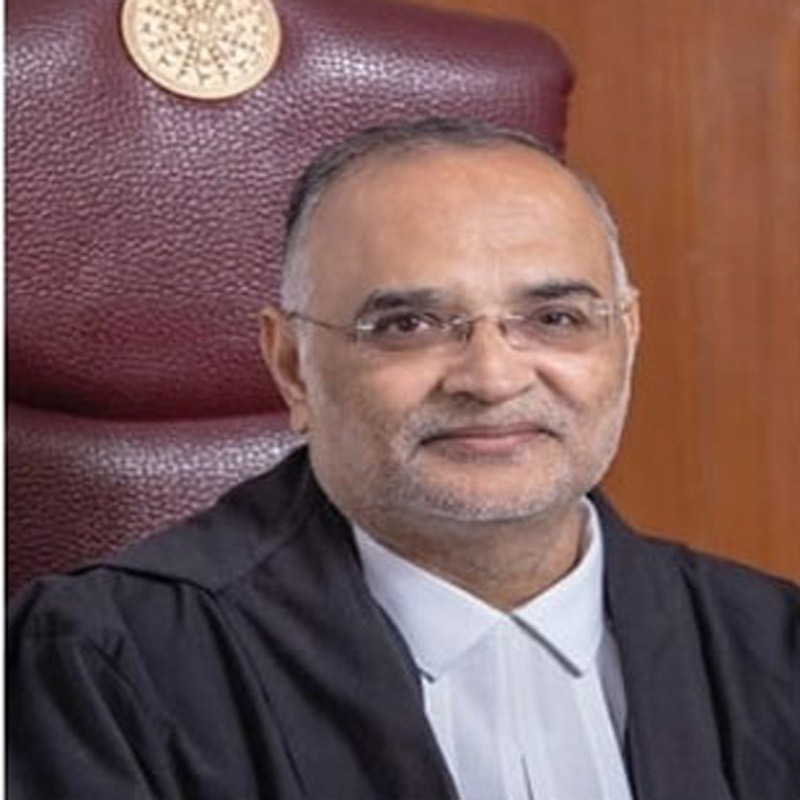
  • Delhi HC justice DN Patel appointed as chairperson of TDSAT

    Delhi HC justice DN Patel appointed as chairperson of TDSAT

    Mumbai: The central government has appointed Delhi HC justice DN Patel to the post of chairperson of Telecom Disputes Settlement and Appellate Tribunal (TDSAT) for a period of four years. Patel was appointed chief justice of Delhi high court on 7 June 2019.

    Notification issued by the law and justice ministry in this regard stated, “As approved by the appointments committee of the cabinet, the central government hereby appoints Justice D.N. Patel , chief justice of Delhi high court to the post of chairperson, Telecom Disputes Settlement and Appellate Tribunal, for a period of 04 years from the date of assumption of charge of the post, or till attaining the age of 70 years, or until further orders, whichever is the earliest.”

    “The conditions of service of Justice DN Patel as chairperson in the Telecom Disputes Settlement and Appellate Tribunal shall be governed by the provisions of the Tribunals Reforms Act, 2021 and the Tribunal (Conditions of Service) Rules, 2021,” it added.

    Prior to Delhi HC, Justice DN Patel served as acting chief justice of the Jharkhand high court and also as the judge of Jharkhand high court and Gujarat high court.

    Patel enrolled as an advocate in 1984, practicing at the Gujarat HC. He practiced in civil, criminal, and constitutional matters as well excise and customs on behalf of the Union of India at the Gujarat HC. He was appointed as special counsel of the state of Gujarat in other high courts.

  • Gujarat High Court accepts plea against TRAI NTO 2.0 amendments

    Gujarat High Court accepts plea against TRAI NTO 2.0 amendments

    MUMBAI: The empire strikes back even as TRAI has been rubbishing news that NTO 2.0  is detrimental to the industry and will put the brakes on it. Despite repeated representations from different bodies, TRAI is sticking to its guns on imposing pricing regulations. Now the industry is fighting back.

    A spate of cases has been filled in different courts in a bid to turn TRAI and the government to its point of view. Earlier broadcasters have appealed at the Bombay and Madras High Courts and now they have filed a petition in the Gujarat High Court. Sources say that a few more petitions will be filed in different courts.

    The Gujarat High Court accepted a petition filed by broadcasters challenging the new tariff order for the broadcast sector by TRAI. Hearing the petition, Justice AY Kogje of the Ahmedabad bench of the Gujarat High Court issued notices to the Union of India and TRAI, asking them to file replies by 3 February, failing which the high court would grant interim relief to the petitioners.

    Petitioners named Somabhai Makwana, Nidhi Jani, Bharat Thakore, and Falguni Shah in their petition have stated that the tariff order issued by the regulatory body is beyond the powers under Section 11(2) of the TRAI Act and is conflicting with the provisions of Cable Television Networks (Regulation) Act, 1995.

    On 1 January this year, TRAI had issued amendments to its tariff order for the broadcast sector, which received huge criticism from broadcasters and distribution operators alike.

    According to the petitioners, fixation of the network capacity fee (NCF) of Rs 130 per month per subscriber is not based on any intelligible material, and the criteria for determining the proposed amount lacks transparency.

    The case is ongoing in the Bombay High Court as well. In the previous hearing held on 14 January, the Bombay HC bench consisting of Justice SC Dharmadhikari and Justice RI Chagla had directed TRAI to file a reply in one week. They, in fact, had also refused to put a stay on the amendments pertaining to the new regulatory framework.

    Key amendments proposed by the broadcasters include the reduction of MRP cap to Rs 12, implementation of twin conditions on bouquet pricing, and other being the discount on channel bouquets to around 33 per cent.

    Earlier, Sun TV Network moved Madras High Court challenging the amendments to the new regulatory framework. The case  will be heard on 4 February. Hearing the matter, the division bench of Chief Justice Amreshwar Pratap Sahi and Justice Subramonium Prasad also issued notices to the Union of India and TRAI.

  • Gujarat HC adjourns TRAI DAS order till 13 December

    Gujarat HC adjourns TRAI DAS order till 13 December

    MUMBAI: The Telecom Regulatory Authority of India (TRAI), the central government and the Gujarat state government has time until 13 December to submit their responses to the Gujarat High Court. The three parties were dragged to court by the Gujarat Cable Operators Association (GCOA) on issues associated to the digitisation process.

    The Court adjourned the case since the lawyers representing the MSOs did not turn up for the hearing, says Pramod Pandya

    The court hearing which took place on 6 December was adjourned till 13 December as the lawyers representing the multi-system operators (MSOs) were not present at the court hearing. “It was TRAI that made MSOs a party in the case. The Court adjourned the case since the lawyers representing the MSOs did not turn up for the hearing,” said Gujarat Cable Operators Association president Pramod Pandya.

    Earlier, GCOA had filed a petition to the HC, challenging the legality of Telecommunication (Broadcasting and Cable) Services Tariff and the Telecommunication (Broadcasting and Cable Services) Interconnection Regulations. After this, in its hearing on 13 November, the Court had asked the TRAI and government to declare the reasons for formulating the existing laws pertaining to tariff and interconnection.


    Pandya had earlier told Indiantelevision.com that the TRAI aims to remove the local cable operators. “We have challenged all the notifications passed by TRAI. This includes revenue share, consumer application forms (CAFs) and billing,” he said. 

    The parties were given 15 days to submit their responses; however, it’s almost a month now since the first Court hearing took place. “We are hopeful that the HC will come out with its judgment on 13 December hearing,” he concluded.

  • Gujarat HC adjourns TRAI DAS order till 13 December

    Gujarat HC adjourns TRAI DAS order till 13 December

    MUMBAI: The Telecom Regulatory Authority of India (TRAI), the central government and the Gujarat state government has time until 13 December to submit their responses to the Gujarat High Court. The three parties were dragged to court by the Gujarat Cable Operators Association (GCOA) on issues associated to the digitisation process.


    The court hearing which took place on 6 December was adjourned till 13 December as the lawyers representing the multi-system operators (MSOs) were not present at the court hearing. “It was TRAI that made MSOs a party in the case. The Court adjourned the case since the lawyers representing the MSOs did not turn up for the hearing,” said Gujarat Cable Operators Association president Pramod Pandya.


    Earlier, GCOA had filed a petition to the HC, challenging the legality of Telecommunication (Broadcasting and Cable) Services Tariff and the Telecommunication (Broadcasting and Cable Services) Interconnection Regulations. After this, in its hearing on 13 November, the Court had asked the TRAI and government to declare the reasons for formulating the existing laws pertaining to tariff and interconnection.


    Pandya had earlier told Indiantelevision.com that the TRAI aims to remove the local cable operators. “We have challenged all the notifications passed by TRAI. This includes revenue share, consumer application forms (CAFs) and billing,” he said. 


    The parties were given 15 days to submit their responses; however, it’s almost a month now since the first Court hearing took place. “We are hopeful that the HC will come out with its judgment on 13 December hearing,” he concluded.

  • DAS extension: Karnataka HC reserves order till 16 April

    DAS extension: Karnataka HC reserves order till 16 April

    BENGALURU/NEW DELHI: The Karnataka High Court is set to decide on 16 April whether the stay on Digital Addressable System (DAS) roll-out in Bengaluru and Mysore will continue after the hearing in the matter concluded today.

    The HC reserved its order after hearing arguments of Union of India represented through Information & Broadcasting (I&B) ministry and the Indian Broadcasting Foundation (IBF), which had impleaded itself in the case on Monday.

    Earlier, the HC had heard arguments from petitioners Karnataka State Cable TV Operators (KSCOA) and Mysore Cable TV Operators Association (MCOA) and Multi System Operators (MSOs), the respondents in the case.

    The interim order restraining MSOs from disconnecting analog signals continues in both the cities.

    The KSCOA and MCOA had filed petitions, which were later clubbed together, seeking relief in digitisation deadline due to shortage of Set Top Boxes (STBs) and lack of clarity on STB ownership.

    The MSOs and IBF have sought the dismissal of petition on the ground that a large number of homes have already been seeded and there is no need for an extension to seed STBs in the remaining homes.

    Hearing in Gujarat adjourned till 16 April

    Meanwhile, the hearing of digitisation extension case in the Gujarat High Court could not take place as the court was pre-occupied with other matters. The HC has adjourned the case till 16 April which means that the stay in Ahmedabad, Rajkot, Surat and Vadodara will continue.

    The Cable Operators Association of Gujarat (COAG) had filed a petition seeking postponement of digitisation due to shortage of STBs. The COAG through its president Pramod Pandya has filed a rejoinder to an affidavit filed by I&B ministry.

    Pandya said STBs ordered from China has failed to arrive because of internal problems in that country and therefore the local cable operators (LCOs) should be given more time to seed STBs in all the homes.

    The Government has already switched off analogue signals in the remaining 30 cities that were covered under phase II of digitisation beginning 1 April.

    Along with Karnataka and Gujarat, digitisation has also been stayed in two cities of Andhra Pradesh – Hyderabad and Visakhapatnam – where the hearing is expected to commence next week.

    Also read:

    Stay continues in Karnataka and Gujarat as courts adjourn hearing to 10 April

    IBF joins MSOs to oppose DAS extension in Bengaluru and Mysore

    Stay continues in Bengaluru and Mysore as HC pushes hearing to 8 April

    DAS Phase II: Karnataka HC extends hearing to 5 April, stay to continue in Bengaluru

  • HC stays DAS rollout in Ahmedabad; other Phase II cities to follow?

    HC stays DAS rollout in Ahmedabad; other Phase II cities to follow?

    NEW DELHI: Ahmedabad can wait for DAS. That was the decision of the Gujarat High Court which stayed the switching off of analogue signals to beyond 31 March because of the non-availability of digital settop boxes.

    The High Court said Ahmedabadis will have till 9 April for the introduction of digital STBs following a petition filed by Cable Operators Association of Gujarat through its President Pramod Pandya. He said that STBs ordered from China had failed to arrive because of internal problems in that country and therefore the LCOs could not be penalised for this.

    An Information and Broadcasting ministry official confirmed the development in Ahmedabad.

    Sources, however, reveal that a stay on the rollout of DAS had also been granted by the Karnataka High Court till 1 April in Bangalore and Mysore following petitions filed by Karnataka Cable TV Operators Association President V S Patrick Raju and Mysore Cable TV Operators Association.
    However, no confirmation of this development was available to Indiantelevision.com till the time of filing this report.

    Meanwhile, Raju had earlier also raised the issue of who owns the STB that is installed at the home of a subscriber – the customer or the LCO. He had said that there was no clarity over who owns the box.

    “We have also not given any commitment to exchange the box if the customer so wants. In most cases, we are also unable to give the bill for the box as the Multi System Operators (MSOs), which are distributing them, are not giving us any bill. All that is given is the activation bill,” Raju told Indiantelevision.com over the phone from Bangalore.

    However, he said bills are being given to customers who are serviced directly by the MSOs.