Tag: Gujarat

  • PR agency Adgcraft plants flag in India’s tech capital

    PR agency Adgcraft plants flag in India’s tech capital

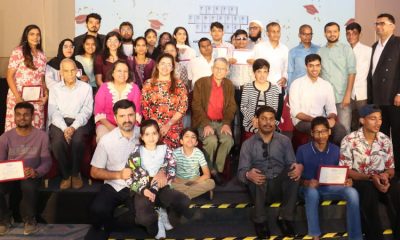
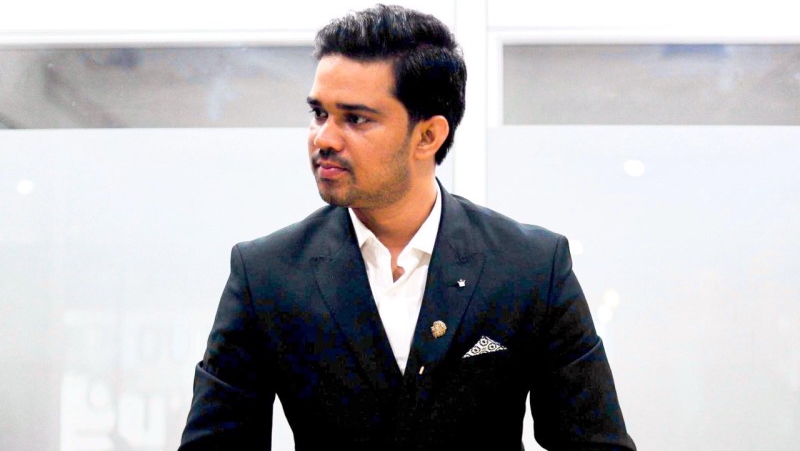
    BENGALURU: Every PR agency in India eventually opens a Bengaluru office. Adgcraft has now joined the queue. The Noida-based communications firm, founded in 2021, launched its sixth office in the Karnataka capital, positioning itself to service clients from India’s sprawling startup and technology ecosystem.

    The new operation at Awfis, Samrah Plaza in Ashok Nagar targets startups, corporates, tech firms and artificial intelligence companies—basically anyone with a pulse and a communications budget in a city teeming with thousands of IT companies and global tech giants. Adgcraft already works with over 200 brands across banking, lifestyle, hospitality and emerging tech. The Bengaluru push aims to deepen that roster whilst building a 25-person team by 2026.

    Adgcraft managing director Abhinay Kumar Singh delivered the obligatory enthusiasm. “We are excited to open our new office in Bengaluru, the tech capital of India,” he said, calling the expansion a step towards “empowering brands by combining creativity with strategy.” The agency’s motto—”Your story is your strength, and communication is ours”—suggests it’s not shy about self-promotion.

    Adgcraft operates three verticals: Adgcraft Communications, Adgcraft AI and Adgcraft Global. The Bengaluru office will drive operations in social media, performance marketing, video production and event management, alongside traditional PR mandates like media relations, crisis communications and reputation management. The agency claims experience with international clients from the US, south Korea and other markets, though it didn’t name them.

    Four years is lightning speed in the agency world. Adgcraft has already spread across Noida, Lucknow, Mumbai and Gujarat before landing in Bengaluru. Whether that pace reflects genuine growth or overextension remains to be seen. India’s PR industry is fragmented and fiercely competitive, with established players like Adfactors, Genesis BCW and Weber Shandwick dominating corporate mandates whilst boutique agencies chase startups.
    Singh claims that Adgcraft is “one of India’s most trusted PR agencies.” Trust takes time to build, especially in an industry where reputation is currency; and he seems to have managed to gain it, going by the number of clients on the agency’s roster.

    Bengaluru offers plenty of opportunity, but also plenty of rivals who’ve been working the city’s startups and tech giants for decades. Adgcraft’s challenge is  going to be proving it can deliver results that justify the expansion into the tech gold mine.

  • After Khalasi, Coke Studio Bharat drops Meetha Khaara this festive season

    After Khalasi, Coke Studio Bharat drops Meetha Khaara this festive season

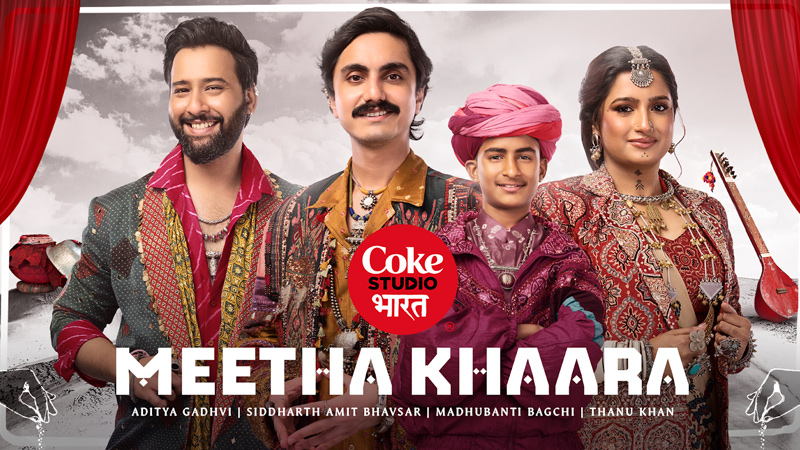
    MUMBAI: After the runaway success of Khalasi, Coke Studio Bharat is back with another soulful folk offering, Meetha Khaara. Released as part of Season 3, the track arrives in time for the Navratri festivities and celebrates the enduring spirit of Gujarat’s Agariya community.

    Curated, composed and produced by Siddharth Amit Bhavsar, Meetha Khaara brings together a powerhouse of talent: the folk brilliance of Aditya Gadhvi, the tenderness of Madhubanti Bagchi, and the fresh notes of Thanu Khan.

    Rooted in a 600-year-old legacy, the song draws from the Agariya community’s life around salt farming. In Gujarati, “meethu” means salt, a substance born from hardship yet vital and sweet in its inheritance. The track captures this paradox, portraying resilience, pride and identity through music that blends earthy folk rhythms with contemporary sounds.

    Coca-Cola INSWA, imx lead, Shantanu Gangane said, “Festivals are occasions when music serves as a cultural connector. With Meetha Khaara, our intent is to create a bridge between tradition and the youth’s passion for music. Coke Studio Bharat unites legendary voices with fresh talent to create authentic stories that connect music, culture and people across India.”

    The song’s foundation lies in Bhargav Purohit’s evocative lyrics, which were then transformed into a layered musical narrative by Bhavsar. Gadhvi’s powerful vocals anchor the track, Bagchi adds emotional depth, and Khan ties it all together with his distinct sound.

    For Aditya Gadhvi, the song continues the journey begun with Khalasi. “With Meetha Khaara, we’re carrying forward Gujarat’s folk stories in a fresh way. Making this song was pure joy, as it carries the pride of our people,” he added. 

    Echoing him, lyricist Bhargav Purohit said, “Writing this song was an honour. I wanted the words to reflect resilience and tradition with simplicity and honesty.”

    Singer Madhubanti Bagchi shared, “It allowed me to merge technique with emotion, tradition with individuality. The result felt deeply authentic.”

    And for emerging artist Thanu Khan, the experience was nothing short of a dream. “Being part of Coke Studio Bharat and contributing to *Meetha Khaara* will always be an honour,” he shared. 

  • Reliance joins hands with Google Cloud to put India’s AI future on steroids

    Reliance joins hands with Google Cloud to put India’s AI future on steroids

    MUMBAI: Reliance Industries has never done things by halves. On 29 August, India’s largest private company unfurled its latest grand project: a sweeping expansion of its alliance with Google Cloud, centred on a new, dedicated AI-first cloud region in Jamnagar, Gujarat. The ambition is as audacious as it is familiar. Having once upended India’s telecoms industry with Reliance Jio and cheap data, Mukesh Ambani is now training his firepower on artificial intelligence, promising to democratise access to computing muscle for the world’s most populous country.

    The project is being pitched as India’s “AI leapfrog moment.” Reliance will design, build, and power state-of-the-art cloud facilities, all running on renewable energy and plugged into Jio’s sprawling fibre and digital network. Google will provide the brains: its AI hyper computer, a secure and integrated generative AI stack, and the know-how to run workloads of breath taking intensity. The facility, Reliance says, will meet global service-level standards and support the most demanding AI use cases—from training large models to building next-generation applications for consumers and enterprises.

    Why Jamnagar? The coastal city is already the beating heart of Reliance’s refining and petrochemicals empire. It is also becoming a symbol of the company’s reinvention: its green energy giga factory is rising there, and now the AI cloud campus will sit alongside it. Running on renewable power, the project ticks boxes for sustainability even as it scales to hyper speed. Jio, meanwhile, will string high-capacity fibre links connecting Jamnagar to metros like Mumbai and Delhi, effectively wiring India’s AI ambitions to its business and political capitals.

    Mukesh Ambani cast the partnership in almost civilisational terms: “Just as Jio and Google came together to democratise the internet for every Indian, we will now democratise intelligence for every Indian,” he declared. The subtext was clear: Reliance does not want to merely be a customer of AI; it wants to be the platform on which India builds its AI future.

    For Google, the tie-up is equally strategic. The American giant has long struggled to monetise India at scale, despite Android’s dominance. Its alliance with Reliance, first forged through a $4.5bn investment in Jio Platforms in 2020, has been its best bet. Sundar Pichai, Google’s boss, was almost wistful: “Our work together over the last decade has helped bring affordable internet access to millions. And now, we are building on this to help shape the next leap with AI. This is only the beginning.”

    The beginning it may be, but the context is fiercer. Microsoft has partnered with the Adani group to push Azure into Indian enterprises. Amazon Web Services (AWS) has invested heavily in local data centres. By anchoring Google Cloud in Reliance’s infrastructure, Ambani is offering it the biggest distribution muscle in the country—from India’s biggest retailer to its mightiest mobile operator.

    Reliance has always built moats around scale and integration. Hydrocarbons fed petrochemicals; petrochemicals funded telecoms; telecoms birthed digital platforms; retail wrapped around them. Now AI is being woven into every strand. Reliance’s retail arm, one of the world’s fastest-growing, will be powered by predictive analytics and AI-first services. Its digital platforms can churn out generative-AI-powered customer tools. Even its energy and refining business can tap AI for predictive maintenance, efficiency, and emissions management.

    The bet is as much about geopolitics as economics. AI compute has become a strategic resource, akin to oil in the 20th century. By hosting a dedicated, hyperscale AI cloud region in India, Reliance and Google are hedging against global bottlenecks in semiconductors and compute availability. They are also offering Indian enterprises and the government a “sovereign-flavoured” cloud alternative to relying wholly on Western or Chinese platforms.

    The entire project will be underpinned by Reliance’s push into renewable power. The AI data centres, notorious for their energy hunger, will be fed through Reliance’s green energy parks and hydrogen initiatives. Jio’s high-capacity fibre, spanning metros and regions, adds the digital sinew to match the green muscle. The combination allows Reliance to brand the initiative not merely as profitable, but as sustainable—a key card to play with regulators, policymakers, and global investors.

    For India, the stakes are towering. Domestic enterprises, startups, and public sector organisations often face prohibitive costs in accessing cutting-edge AI compute. By pooling Reliance’s infrastructure with Google’s stack, the hope is to lower barriers and accelerate adoption. Small businesses may soon have access to AI tools that were once the preserve of Silicon Valley. Universities and research institutes could run high-performance AI models without prohibitive cost. And the government could scale citizen-facing AI services in health, education, and agriculture.

    But challenges remain. Building AI facilities is one thing; ensuring India has the talent, regulation, and guardrails to use them responsibly is another. AI also raises thorny issues of bias, surveillance, and security. Reliance’s ambition to become India’s AI backbone will inevitably attract scrutiny—whether from privacy hawks, antitrust watchdogs, or foreign competitors.

    Yet, if history is a guide, Reliance has a knack for bending markets to its will. When Jio entered telecoms in 2016, it offered free calls and dirt-cheap data, triggering a brutal price war that wiped out rivals and left India with the world’s cheapest mobile internet. Now, Ambani appears ready to repeat the trick with AI: offer access at scale, bundle services across Reliance’s ecosystem, and set the floor so low that competitors struggle to keep up.

    The Jamnagar AI cloud, then, is not just about servers and software. It is about a new architecture of power: technological, economic, and political. If it works, Reliance and Google may indeed make India a global leader in artificial intelligence. If it fails, it could end up as another white elephant in the deserts of Jamnagar.
    For now, though, one thing is certain. India’s AI race has just been given a jolt of steroids—and Mukesh Ambani is holding the syringe.

    (The picture featured above is representational of two businessmen joining hands and there is no intention to insinuate that it  resembles either Mukesh Ambani or Sunder Pichai. It is an AI generated image)

  • Oben rides high with Rs 100 Cr Series A charge for e-motorcycle push

    Oben rides high with Rs 100 Cr Series A charge for e-motorcycle push

    MUMBAI: Full throttle, zero emissions, Oben Electric is charging ahead, literally and figuratively. The Bengaluru-based EV startup has announced an extended Series A funding round of Rs 50 crore in May 2025, doubling its January raise and taking the total Series A tally to Rs 100 crore. With this, Oben Electric has now raised a total of Rs 200 crore to date, further fuelling its ambition to become India’s leading electric motorcycle brand.

    The latest round saw participation from both new and returning investors, including Helios Holdings, the Sharda Family Office, and the Kay family, signalling continued confidence in the company’s growth, tech edge, and strong unit economics.

    Oben plans to deploy the fresh capital to supercharge its expansion to 150 plus showrooms across 50 plus cities by FY26, roll out its O100 platform of affordable e-bikes under Rs 1 lakh, and boost manufacturing capabilities at its Bangalore facility, which already churns out up to 100,000 units annually.

    Sandesh of the Sharda Family Office said, “Oben Electric has cracked the product-market fit in a large, untapped category. Their full-stack integration from LFP batteries to control units and their high growth QoQ made this a clear bet.”

    The company currently boasts 37 retail outlets across 26 cities in 13 states, with new footprints in Punjab, Telangana, Gujarat, and Odisha, among others solidifying its rapid post-funding execution.

    At the heart of Oben’s offering is the Oben Rorr EZ, priced at Rs 99,999, targeting urban commuters with its 175 km range, 0–40 km/h in 3.3 seconds, and 95 km/h top speed. Its flagship Rorr, too, continues to make noise among performance-first riders, both powered by India’s first LFP battery tech in two-wheelers, engineered for durability and heat resistance.

    Oben’s differentiation lies in being truly R&D-led and vertically integrated, designing not just bikes but also their core systems motors, batteries, vehicle control units, and fast home chargers all in-house. With a team of 500 plus experts, 150 plus domestic vendors, and partnerships across 68,000 public chargers, Oben is laying the groundwork for long-term dominance.

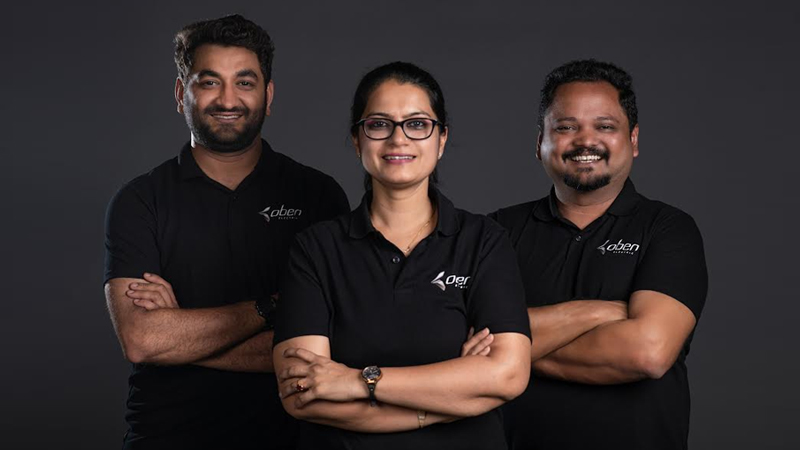
    Oben Electric founder & CEO Madhumita Agrawal summed it up, “With O100 and rapid expansion underway, we’re not just building electric motorcycles, we’re building India’s answer to global two-wheeler mobility.”

    The company now has its sights on a USD 30 million Series B fundraise in 2025, aimed at international expansion and deeper product scale-up. If Oben’s roadmap is anything to go by, India’s electric two-wheeler scene just got a whole lot more exciting.

  • Marico’s Jalashay creates over 400 crore litres of water potential nationwide

    Marico’s Jalashay creates over 400 crore litres of water potential nationwide

    MUMBAI: Water is life, and Marico Limited is making sure every drop counts. On World Water Day, the leading FMCG giant reaffirmed its commitment to sustainability by announcing that its Jalashay programme has created over 400 crores plus litres of water potential across Maharashtra, Tamil Nadu, and Gujarat by the end of FY25. With over 1,200 water harvesting structures and micro-irrigation systems across 230 plus acres, Marico is not just conserving water it’s reshaping communities.

    From drought-prone villages to government-designated aspirational districts, Marico’s Jalashay programme is making waves in water conservation. In Maharashtra’s Jalgaon, rainwater harvesting and infrastructure development have replenished water supplies, bringing much-needed relief to drought-hit areas. In Pondicherry, the initiative promotes rooftop rainwater harvesting and greywater treatment, ensuring sustainable water use in households and schools. Meanwhile, in Gujarat’s Dahod, Marico has constructed new water harvesting structures and carried out de-siltation of existing check dams, strengthening the region’s resilience against water scarcity and securing a sustainable water future for local communities.  

    To maximise efficiency, Marico has teamed up with ACWADAM, a leader in groundwater assessment, to develop a data-driven, scientific water management strategy. The company is also encouraging crop diversification to reduce reliance on water-intensive farming while promoting drip irrigation, green energy use, and water-resilient cropping techniques.

    Commenting about the programme on World Water Day Marico Limited chief legal officer group general counsel, and secretary of the CSR committee Amit Bhasin said, “We are committed to embedding water stewardship into our business strategy, recognizing the critical role it plays in ensuring a sustainable future. Our Jalashay programme is designed to address the complex water challenges faced by our communities and we are proud of the progress we have made so far. Taking this a step forward, we will continue to collaborate with stakeholders to drive meaningful impact and create a water availability for all.”  

    Under the Jalashay Jal Samrudhi project, Marico’s community-driven interventions have significantly improved water resource management, leading to enhanced agricultural productivity with assured irrigation that boosts crop yields. The initiative has also reduced dependency on erratic monsoons, providing farmers with greater income stability and securing their livelihoods. Additionally, by preventing soil erosion and preserving fertility, the project has contributed to better soil health, ensuring long-term sustainability for farming communities.  

    By aligning with global Sustainable Development Goals (SDGs), including Clean Water & Sanitation (SDG 6) and Responsible Consumption & Production (SDG 12), Marico is proving that corporate responsibility can create lasting environmental and social change.

  • Licious serves a feast of colours with ‘Gulaal & Gravy’ Holi campaign

    Licious serves a feast of colours with ‘Gulaal & Gravy’ Holi campaign

    MUMBAI: Who says Holi comes just once a year? Licious, India’s leading D2C meat and seafood brand, is bringing the festival of colours to the plate with its latest campaign, Gulaal & Gravy. The visually rich ad film captures the essence of India’s culinary diversity, turning every meal into a celebration of vibrant hues and bold flavours.

    The film opens with an irresistible shot steaming basmati rice being drenched in a rich, hearty mutton curry, setting the stage for a feast painted in shades of laal (red), hara (green), bhoora (brown), and peela (yellow). As the poetic narration proclaims, Kaun kehta hai Holi ka din ek hi baar aata hai? Dekho kaise desh mera isse har din manata hai! (Who says Holi comes only once a year? See how my nation celebrates it every day!).

    What follows is a rollercoaster of meaty indulgence, Tandoori Tikkas, Attukal Paya Soup, Galauti Kebabs, masaledaar chops, Mutton Dhansak, and an array of fragrant biryanis, each dish representing the rich tapestry of Indian cuisine.

    “Holi is about colours, and so is our food,” said Licious founders Abhay Hanjura & Vivek Gupta. “From the fiery reds of Kashmiri Rogan Josh to the golden yellows of Hyderabadi Biryani, the vibrant greens of Karnataka-style mutton chops to Kerala’s creamy coconut-infused Chicken Stew, India’s plates are a never-ending festival of colours. ‘Gulaal & Gravy’ is our ode to this vibrant diversity.”

    The film’s tagline, Kashmir se Kanyakumari, Gujarat se Arunachal, chalta rahe India ka ye swaadbhara rangon ka tyohaar (From Kashmir to Kanyakumari and Gujarat to Arunachal, may India’s delicious festival of colours go on forever!) perfectly encapsulates the thought. Because while Holi comes once a year, India’s love affair with bold flavours never stops!

  • EY’s Bhavisha Jogi: Scaling heights with determination and grit

    EY’s Bhavisha Jogi: Scaling heights with determination and grit

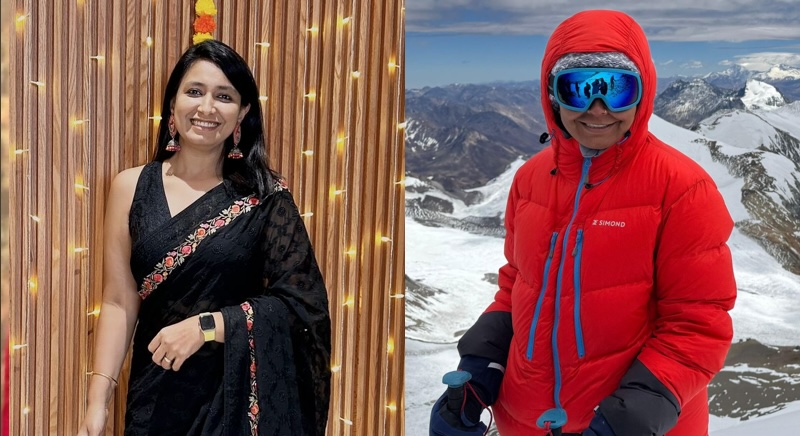
    MUMBAI: Scaling peaks gives her a high like nothing else.  Bhavisha Jogi, a seasoned marketer and branding strategist, is also an intrepid mountaineer chasing a dream that only a handful dare to pursue: the “seven summits challenge”—conquering the tallest peaks on each continent. With Kilimanjaro in Africa, Elbrus in Europe, and Kosciuszko in Australia already under her belt, Bhavisha now has her sights set on the remaining four summits.

    Her latest mountaineering effort – the fourth of the seven summits – was  a bold step into uncharted territory—South America. Fuelled by a desire to push her limits, she embarked on an expedition to summit Mount Aconcagua, the highest peak in the southern hemisphere. As a proud Bhramshatriya woman from Gujarat, Bhavisha carried the pioneering spirit of her heritage to the base camp of Plaza de Mulas and beyond, navigating rugged terrains and unforgiving conditions.
    Mt Elnrus
    Each phase of the climb was a test of her resilience, particularly the ascent to Camp 3, which she describes as one of the most challenging moments of her life. “The journey wasn’t just about reaching higher altitudes—it was about discovering what I’m made of,” she reflects.

    But for Bhavisha, mountaineering has always been about more than just summits and accolades. It’s a deeply personal endeavour—one that has taught her invaluable lessons about persistence, humility, and the importance of knowing her limits. 

    “At this point, I’ve decided not to push myself beyond 6,000 metres anymore—not because I can’t, but because I’ve learned to honour my body and the life I want to live,” she shares. 

    This decision marks a shift in her approach to extreme mountaineering. While her passion remains undeterred, Bhavisha now focuses on balancing ambition with self-care. “Know your limits, but don’t let them define you. Push when it matters, rest when it’s wise, and always be grateful for the journey,” she advises.

    But she also confessed that her mindset could change going forward in terms of going beyond 6,000 metres. “”It was brutal – the mountain terrain as well as the winds and temperature,” she shivers, even recollecting the experience. “And that’s why I am probably feeling the way I am now. But the feelings could change.”Bhavisha Jogi

    Bhavisha’s gratitude extends to her professional mentors, including Ruchi Chawla, Mayank Rastogi, Anurag Gupta, and Vivek Soni, who supported her in taking time off to pursue her dream. And of course her husband Bipin Mundada who’s stood by her side to help her  move closer to her dream.

     “Every time I go up into the mountains, his heart is in his mouth,” she says.”But he’s always encouraging me. I communicate with him too whenever I get a wifi signal to let him know I am all right. And this time Vodafone was good in south America.” 

     Her mountaineering pursuits serve as a source of inspiration, not only for her community but also for aspiring adventurers worldwide.

    Beyond the mountains, Bhavisha’s career as a marketing leader is equally impressive. Currently serving as associate director at EY, she has a robust track record of success in brand strategy, digital marketing, and customer experience. 

    Her previous roles at Edelweiss Financial Services and ING Vysya Bank showcase her expertise in crafting impactful campaigns and managing large-scale digital initiatives.

    Yet, despite her corporate accolades, it’s the mountains that have left an indelible mark on her. “The privilege to stand amidst such grandeur and the strength to endure it have profoundly shaped me,” she says. For Bhavisha, mountaineering is as much about inner growth as it is about physical achievement.

    As she continues her pursuit of the Seven Summits, Bhavisha remains a beacon of perseverance and inspiration. Her journey is a testament to the power of dreams, the courage to explore, and the wisdom to reflect. “In the end, the summit within is what matters most,” she concludes.

    With four summits down and four to go, Bhavisha’s story is far from over. Whether scaling towering peaks or leading transformative marketing campaigns, she is proof that determination and balance can lead to extraordinary heights—both literally and figuratively.

  • Airtel dials strongly into Gujarat

    Airtel dials strongly into Gujarat

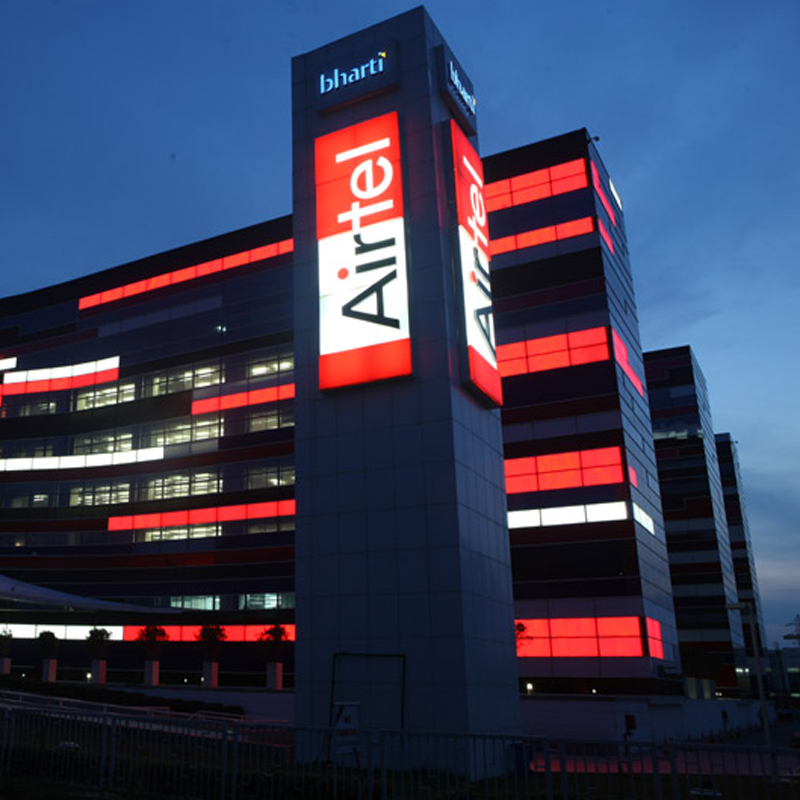
     MUMBAI: It’s taking the battle into what is considered Reliance’s home turf (and possibly Jio’s too): Gujarat. Bharti Airtel has launched an ad campaign wherein it is touting its improved coverage in the western Indian state.

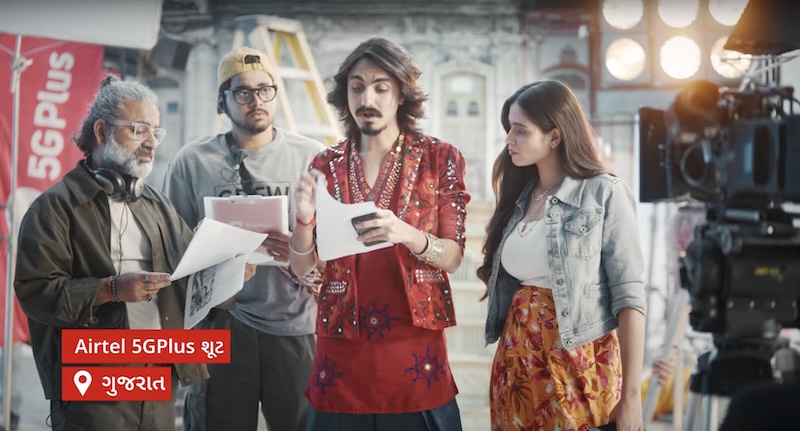
    It features Gujarati folk singer Aditya Gadhvi – known for his hit Khalasi from Coke Studio Bharat.  The ad -in Gujarati – begins with Gadhvi shooting in a desert like area for an Airtel commercial with a filming crew in which the dialogue has him saying Airtel has been adding the equivalent of eight towers a day in Gujarat. He pooh-poohs the statement; he is challenged by one of the crew members and he chooses to do a speed test. Which he does and to his bewilderment it runs up to 226 Mbps. The TVC ends with Gadhvi singing the praises of Airtel’s 5G Plus service.

    Bharti Airtel today issued a press release to the Bombay stock exchange wherein it announced that the ad campaign follows its expansion drive which saw it installing more than 1,700 new cellular towers in Gujarat over the past seven months –  which tots up to about eight every day.

    Through this initiative, the company, says it intends to expand its coverage to 7,000 villages across the state, impacting over five million people. The Airtel network will now provide connectivity in urban, semi-urban, and rural areas, including highways, tourist destinations, and trade centers, ensuring comprehensive coverage in the region, the release points out.

    Earlier in November 2023, Bharti had issued another release wherein it had stated that “within the first year of the launch of Airtel 5G Plus, it has over 2.2 million unique 5G customers in Gujarat. Airtel 5G Plus service is available across all the districts in the state.”

    In June 2024, it had made another release stating that it had installed 2,525 new towers in Gujarat between December 2022 and March 2024, with each city witnessing a considerable surge in infrastructure development. Among the major cities, Ahmedabad, then led with 273 new towers, followed by Surat with 266 towers and Vadodara with 225 towers.

    Bharti Airtel  has since then been working on strengthening its coverage in the remote parts of Gujarat. And the latest network growth push and ad campaign is only a follow up of its intention to capture more customers in the western Indian state.

    The key question now is: how will Reliance Jio react to Airtel’s aggression in its home state Gujarat? 

    One can’t forget the Ranbir Kapoor-featuring TVC promoting Jio AirFibre with the tagline being JioFibre zindagi mein aaye toh baat ban jaaye during the IPL a few months ago. But that was a national campaign and in Hindi.

    Will Reliance Jio go Gujarati as well?

    Let’s wait and watch if it will dial in too!

  • TAM AdEx: Service sector drives 31 per cent of radio ad volumes in Jan-Jun’24

    TAM AdEx: Service sector drives 31 per cent of radio ad volumes in Jan-Jun’24

    Mumbai: TAM AdEx India has released its half-yearly report on radio advertising for Jan-Jun’24, which showed a three per cent rise in ad volumes compared to the same period in 2023.

    The services sector remained the top contributor with thirty-one per cent of total ad volumes. The auto sector climbed to second place with ten per cent, followed by banking/finance/investment at eight per cent. Together, the top three sectors accounted for nearly fifty per cent of the total ad volumes. The top ten sectors remained consistent from 2023, with minor rank shifts.

    In the top ten categories, ‘properties/real estates’ and ‘hospital/clinics’ retained first and second positions, contributing sixteen per cent and seven per cent of ad volumes, respectively. ‘Cars’ moved up to third position, recording a fifty-seven per cent growth in ad volumes. ‘Retail outlets-jewellers’ grew by twenty-nine per cent, while ‘multiple courses’ and ‘schools’ entered the top ten categories.

    LIC of India held the top spot among advertisers, followed by Maruti Suzuki India. The top ten advertisers accounted for twelve per cent of the ad volumes, with LIC Housing Finance being the leading brand, followed by Alishan and LIC Jeevan Utsav. Notably, three brands in the top ten were from the banking/finance/investment sector, and two were from the auto sector.

    Gujarat led the states with a twenty per cent share, followed closely by Maharashtra at nineteen per cent. Among cities, Jaipur topped the list, contributing nine per cent of ad volumes, with Nagpur and New Delhi following.

    Evening time (5 pm to 9:59 pm) was the most preferred time band for advertising, contributing thirty-eight per cent of ad volumes, followed by the morning and afternoon slots. Ads of twenty to forty seconds in duration were the most popular, contributing sixty-seven per cent of total ad volumes. Shorter ads (under twenty seconds) saw an increase in share compared to the previous year.

  • Secureye reinforces its position in the security surveillance industry at Business Expo’24

    Secureye reinforces its position in the security surveillance industry at Business Expo’24

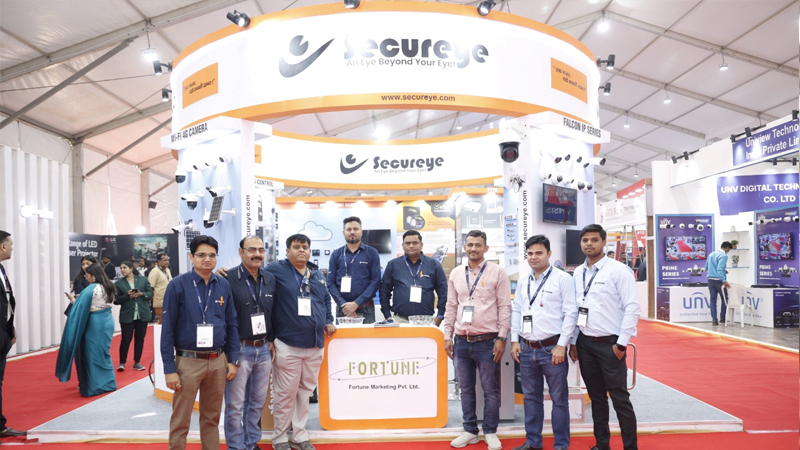
    Mumbai – Secureye, a one of the globally recognised companies in the security surveillance industry, experienced remarkable success at Business Expo’24, held at Christ College, New 150 Feet, Ring Road, Munjka, Rajkot Gujarat. The company’s pavilion drew significant attention from trade visitors and buyers, resulting in excellent sales and a high level of interest in its innovative security solutions.

    During the expo, Secureye’s pavilion was thronged with trade visitors and buyers who showed great interest in the company’s extensive range of security products. This enthusiastic response translated into outstanding sales figures, highlighting Secureye’s strong position in the market. Additionally, the expo served as a platform for Secureye to generate a substantial number of leads, promising future business opportunities and further solidifying its position as a leader in the industry. Seureye is one of the premium brands of Fortune Marketing.

    Reflecting on the tremendous response achieved by Secureye at the expo, Fortune Marketing Pvt. Ltd director Atul Gupta said, “Exhibitions like Business Expo’24 are crucial platforms for us to engage with both corporate and individual clients, offering an invaluable opportunity to showcase our latest offerings. Additionally, these events play a pivotal role in strengthening our dealer network, allowing us to foster stronger relationships within the industry and beyond. Our participation in such expos is a testament to our commitment to staying at the forefront of innovation and ensuring that our clients have access to the best security solutions available.”

    Secureye’s successful participation in Business Expo’24 reaffirms its commitment to providing cutting-edge security solutions and its dedication to meeting the evolving needs of its customers and the industry as a whole. Secureye specializes in providing cutting-edge technology in the security and surveillance domain, offering a wide range of products such as CCTV cameras, IP cameras, biometric attendance system, access control system, smart door locks and hotel locks, electromagnetic locks, video door phones, turnstiles & boom barriers, RFID cards & tags, and intrusion alarm system. Each product is designed with a focus on quality, suitability, and reliability, making Secureye a trusted name in the industry.

    Secureye’s contribution to the “Make in India” initiative is evident through its products designed to enhance the safety and security of the country. With a centralised Data Centre in India and a manufacturing plant in Noida, the company aligns with the Government of India’s AatmaNirbhar Bharat initiative, aiming to make India safer and stronger.