Tag: Guidelines

  • MIB invites comments on the guidelines of accessibility standards for disability audiences.

    MIB invites comments on the guidelines of accessibility standards for disability audiences.

    Mumbai: MIB (Ministry of Information and Broadcasting) issued a notification concerning section 29, section 42 of the Rights of Persons with Disabilities Act 2016. MIB asked for comments or feedback from general people on the announcement of a new mandate for content access to persons with disabilities.

    Mandate asked the government to take appropriate measures and initiatives for  accessibility for content, films, and universal access for promoting interest and preserving human rights. The government issued guidelines for accessibility standards in the public exhibition of feature films in cinemas for people with hearing and visual impairment.

    These guidelines are mandatory for cinema entities and theatres to follow from 10 January 2024. The film which is certified by CBFC ( Central Board of Film Certification) is mandatory to take this measure to promote global accessibility for the content.

    The focus of these guidelines is also on information and assistive devices needed by persons with disabilities to enjoy the content. The effective date is applicable from the date of the notification.

    The accessibility feature mandate depends on principles of health, education, human rights, fundamental freedom, availability, advocacy, and affordability. According to the mandate, films must arrange special shows for people with disabilities as prescribed in the notification. This film or content should enclose a subtitle, audio description, captioning, and technical specialties for the betterment of disabled persons.

    It is also mandatory for film producers to deliver two sets of films for certification to CBFC, one is for public view and the second is for accessibility features for disabilities. Film exhibitors are also entitled to provision accessibility features to disabilities. As per the mandate, providing a minimum of two pieces of equipment per 200 seats.

    As per the 2011 Census, Out of the total population, 2.21 per cent of the population is disabled out of which 19 per cent persons have vision disability and 19 per cent people with hearing disability in hearing. These new regulations will be inclusive of accessibility for social, and cultural well-being.

  • Amazon Studios launches inclusion policy & playbook

    Mumbai: This is one production studio which is putting its money where its mouth is. And it should even get a nod of appreciation from the Indian ministries of information and broadcasting, electronics and information technology, and even education. Even as many companies are talking about inclusion and diversity, the Culver City (California, US)- based Amazon Studios released on 16 June a comprehensive inclusion policy that extends its commitment to diversity, inclusion, and equity for its content and productions, as well as a playbook with guidelines for its collaborators in the creative community.

    These guides offer detailed and actionable recommendations as Amazon Studios continues to seek out stories and storytelling that amplify voices across race, ethnicity, nationality, sexual orientation, age, religion, disability (including mental health), body size, gender, gender identity, and gender expression for the global Prime Video audience.

    “Amazon Studios has long prioritised telling innovative and inclusive stories from a diverse range of creative talent, delighting our global audiences. We wanted to move beyond good intentions to creating mechanisms that hold us accountable to a high bar. This inclusion policy and inclusion playbook adds important, additional depth and guidance for our internal teams and external partners to ensure we continue to advance our shared mission of amplifying the best creatives and content around the world,” said Amazon Studios executive head of diversity, equity & inclusion Latasha Gillespie in a press release.  

    “With the establishment of our inclusion policy and inclusion playbook, Amazon Studios has committed itself to being a thought and action leader in the transformation of our industry,” said Amazon Studios head Jennifer Salke. “We know how much work there is to be done to improve representation both on-camera and behind the scenes, and it starts at home, with us. With clear directives and a commitment to accountability, these guides provide a path toward a more equitable future, both on- and off-camera.”

    Amazon Studios shared the policy and playbook with creators, including Gloria Calderón Kellett, creator and executive producer of the upcoming Amazon Original series With Love. Said Kellett, “I am so proud to be a part of a creative community at Amazon that understands the importance of what I’ve been doing my whole career. Inclusive hiring is what makes a change. Opportunity and an eye towards changing things through action is what makes a change. Thrilled that Amazon has put together this playbook to start important conversations with their other creatives. This is real action and commitment and I’m thrilled to see it!”

    Upload’s creator and executive producer, Greg Daniels said: “Having worked with Amazon Studios for several years, I can confirm their commitment to inclusiveness is deep, sincere, sensitive, and practical. These new guidelines should encourage talented people from historically underrepresented groups to feel more confident about making a career in Hollywood.”

    Establishing expectations for Amazon Studios and its creative partners, the inclusion policy covers four primary areas: developing stories and characters, hiring and production, reporting and documentation, and meeting goals. The policy ensures meaningful visibility in Amazon Studios’ content and throughout all aspects of the production process — both in the stories being told and the people hired to tell them. The policy includes specific goals for Amazon Studios productions, including:

    • Each film or series with a creative team of three or more people in above-the-line roles (directors, writers, producers) should ideally include a minimum 30 per cent women and 30 per cent members of an underrepresented racial/ethnic group. This aspirational goal will increase to 50 per cent by 2024.
    • Casting actors whose identity (gender, gender identity, nationality, race/ethnicity, sexual orientation, disability) aligns with the character they will be playing.
    • Aiming to include one character from each of the following categories in speaking roles, with a minimum 50 per cent of these to be women: LGBTQIA+, a person with a disability, and three regionally underrepresented race/ethnic/cultural groups. A single character can fulfill one or more of these identities.
    • Seeking at least three bids from vendors or suppliers on productions, one of which must be from a woman-owned business and one from a minority-owned business.
    • Pay equity across casting, behind the camera staff and crew, and vendors and suppliers.

    Amazon Studios will provide a report template for each production to indicate whether these expectations were met, which will be submitted within one month of the completion of principal photography. This reporting exceeds the minimum standards set by the US Academy of Motion Picture Arts & Sciences but ensures Amazon is poised to report on the diversity of their films for Academy Award contention.

    Through the setting of goals and tracking of adherence to these policies, Amazon Studios, says “it is expanding its commitment to increasing representation on camera and behind the scenes, contributing to efforts to move the industry forward to a more inclusive future.”

    The inclusion playbook puts in place intentional practices to minimize and disrupt biases, providing specific guidance that will help everyone within and working with Amazon Studios to meet the expectations set in the inclusion policy. The playbook provides direction on how to make inclusive decisions while telling authentic stories and hiring the best people for the job; knowledge of where to go for help, including tools to make inclusive decisions; tools to identify criteria for making creative choices, leading to balanced, consistent and informed decisions; and ways to foster curiosity and ask questions to disrupt the status quo about “how things are done.”

    Amazon Studios worked closely with Dr. Stacy Smith and Dr. Katherine Pieper of USC’s Annenberg Inclusion Initiative, and with Brenda Robinson of the International Documentary Association and Gamechanger Films on the creation of the policy and playbook. The studio also consulted with leading organizations devoted to advancing the visibility and responsible depictions of underrepresented or marginalized people, including GLAAD, Illuminative, Think Tank for Inclusion & Equity, and the Disability Rights Education and Defense Fund.

    “Frankly, the outcomes of DEI work within the entertainment industry have not been swift or sweeping. In part, that can be attributed to disingenuous approaches to address the systemic barriers to entry that have long plagued Hollywood,” said Smith. “But now, Amazon Studios has created a comprehensive new blueprint that will change Hollywood by elevating those who have historically lacked access. I’m immensely proud of this new policy and I know it will be a gamechanger throughout an industry often resistant to real change.”

    One will have to wait and watch whether Amazon’s new inclusion policy will be applicable to its Indian productions as well. The diversity, equity, and inclusion team within it which was instrumental in drawing up the changes has “telling inclusive narratives to globally diverse audiences” as one of its main focuses.

  • MIB amends DTH guidelines, directs players to clear dues for fresh licenses

    MIB amends DTH guidelines, directs players to clear dues for fresh licenses

    NEW DELHI: The ministry of information and broadcasting (MIB) has made amendments to the existing DTH guidelines that will have a wide-ranging impact on the industry. The circular issued by the ministry mentioned that the existing licensees are required to apply afresh to get a license for providing DTH services. Further, the issue of fresh license to the existing licensees will be subject to their clearing all dues and fulfilling all obligations under the terms and conditions of existing license as well as those arising out of legal cases pending before various courts of law.

    The license will be valid for a period of 20 years from the date of issue of wireless operational license by wireless planning and coordination wing of the ministry of communications. License may be renewed by 10 years at a time. However, the license can be cancelled/suspended by the licensor at any time in the interest of the Union of India.

    A vertically integrated entity will not reserve more than 15 per cent of the operational channel capacity for its vertically integrated operator. The rest of the capacity is to be offered to the other broadcasters on a non-discriminatory basis.

    No entry fee will be charged from the DTH operators holding license on the date of notification of these guidelines.

    The licensee will have to submit a bank guarantee from any scheduled bank to the MIB for an amount of five crore rupees for the first two quarters, and, thereafter for an amount equivalent to the estimated sum payable, equivalent to the license fee for two quarters and other dues not otherwise securitised. For existing DTH operators, bank guarantee from any scheduled bank for an amount equivalent to the estimated sum payable, equivalent to the license fee for two quarters and other dues not otherwise securitised. Further, the bank guarantee shall be valid for a year which should be renewed on year-on-year basis in such a manner that the bank guarantee remains valid during the entire license period.

    The amended guidelines will come into effect immediately, following the Union cabinet's approval of these amendments last week after a long period of uncertainty over DTH license fee.

    Now, the licensee shall pay an annual fee equivalent to eight per cent of its adjusted gross revenue, calculated by excluding GST from gross revenue (GR) as reflected in the audited accounts of the company for that particular financial year. The minimum annual license fee shall be subject to 10 per cent of the entry fee. The license fee is to be paid on a quarterly basis, the quantum thereof to be equal to the actual license fee payable for the preceding quarter. The annual settlement of the license fee shall be done at the end of the financial year. The licensor will have the right to modify the license fee as a fixed percentage of AGR during the validity of license period.

    The DTH operator would be permitted to operate platform services (PS) channels i.e. DTH operators' own channels exclusively available to its subscribers, to a maximum of five per cent of its total channel carrying capacity. A one-time non-refundable registration fee of Rs 10,000 per PS channel shall be charged from the DTH operator.

    DTH operators willing to share DTH platforms and transport stream of TV channels, on a voluntary basis, would be allowed to do so, wherever technically feasible. The common hardware for their subscriber management system (SMS) and conditional access system (CAS) applications can also be voluntarily shared.

    Set-top boxes offered by a DTH Service Provider shall have such specifications as laid down by the bureau of lndian standards (BlS) from time to time.

  • IPL 2018: The dos and don’ts for brands

    IPL 2018: The dos and don’ts for brands

    MUMBAI: Brands are always on the hunt to find events with high engagement and some sporting properties are just that. The Indian Premier League (IPL) has been one of the most sought after and followed sports events in India since 2008. It’s 2018 now, its eleventh edition and the IPL has come a long way.

    The T20 tournament is the fifth most popular sporting event in the world with over 335 million viewers and the number only seems to be increasing every year. Ad displays are synonymous with the IPL. Every conceivable property, right from boundary line ropes, billboards, stumps to even the sight screen is covered with brands and is monetised.

    The IPL has turned out to be the best property for advertisers, considering its short three-month schedule, high consumer involvement and television ratings. Ever since the league started, it has managed to attract major clients as sponsors, including PepsiCo, Vivo, Oppo, Havells, Vodafone, Samsung, DLF, Karbonn among other big spenders.

    With less than two months to go before the season starts in April 2018, brands have begun their hunt to pick their favourite teams.

    Any sporting event is only made possible through the commercial participation and support of sponsors, partners, licencees and broadcasters. While Vivo Mobiles is the league’s title sponsor this year, several brands have come on board to become the associate sponsors for the teams. 

    The IPL governing council issues brand and content protection guidelines for all the brands that provide guidance on appropriate and acceptable commercial and non-commercial utilisation by third parties of the IPL proprietary names, proprietary marks and trophy image and audio-visual representations of the league.

    Franchise sponsors and partners are granted certain rights by the franchises they associate with. The rights that franchises may grant to their sponsors and partners are governed by the franchise agreement, sponsorship guidelines, player ID guidelines and other applicable league rules.

    But just because a brand isn’t Vivo doesn’t mean it can’t get a boost from the game—just that it needs to be careful. The council issues many pages of guidelines on the do’s and don’ts.

    Indiantelevision.com got its hands dirty and compiled the crib sheet for advertisers and players below : 


    Players:

    Major players competing in the games have established sponsorship deals with one or several brands. But once the league begins, they need to be careful about what they say, wear and do.

    They Can

    They Cannot 

    Share their experiences at the games via social media

    Post or talk about their personal brand sponsors or mention any branded products

    Share their own photos or videos

    Mention or promote any organisations they support

    Use IPL logo, so long as its not in a commercial context

    Wear any branded apparel that isn’t official on IPL property


    Official sponsor brand:

    These are the brands that shell out big bucks for the title league partnership.  Official sponsorship is expensive stuff for a usual five-year deal which is why only mega brands end up signing on the dotted line.

    public://vivo_0.jpg

    They Can

    They Cannot 

    Advertise while the game is in progress

    Conduct any advertising or promotions that have not been pre-approved by the IPL governing council. 

    Enjoy exclusive advertising within their market category

    Cannot use IPL name or logo that is confusingly similar or likely to be mistaken for IPL footage which is unlicensed and unauthorised. 

    Mention the game on social media platforms


    Supply their goods and services on an exclusive basis within IPL venue


    Sell merchandise and team jerseys


    Can run ticket promotions or IPL prizes in contest


    Other brands: 

    Brands that are not official title sponsors but are partnering team sponsor or additional sponsor are allowed to do a limited amount of marketing during the league. These brands include brands like Kent RO, Muthoot Finance, Royal Stag, Kingfisher, Parle, Lotus Herbals among others that have come on board this season


    public://mit_0.jpg

    They Can

    They Cannot 

    Run marketing campaigns that feature the teams they sponsor

    No franchise sponsor or partner may use the IPLname or marks in any of its marketing communication or promotion 

    Merchandise with general cricket terms, India related terms, provided there is no usage of IPL name or logo

    Manufacture and sell counterfeit merchandise relating to IPL or unlicensed use of the IPL relating to any of the teams participating in the league

    Can run ticket promotions or IPL prizes in contest

    Launch a new campaign while the league is in process that talks about their association with the tournament without prior licence from the IPL committee.


    Brands cannot reproduce or distribute items during IPL and cannot be used on goods, in business names or in advertising promotions without licence from the IPL


    A formal or pre-existing association with any of the eight participating teams does not permit a team player or team sponsor to use the IPLname or logo without prior authorisation from the committee.


    Engage in ambush marketing, basically an attempt to create the false impression of an official relationship with IPL.


    Live score on mobile and SMS guideline for official and team sponsors:


    They Cannot

    Use IPL name or footage on any mobile or wireless technology including on mobile apps without licence

    SMS updates of live stores and game that utilise the IPL name 


    Brands and match schedule:

    They Can

    They Cannot 

    Use the match schedule to provide information in a purely non-commercial sense 

    Commercial use or presentation of match schedule by third parties is not permitted

    Though the rules may sound stringent, they are to safeguard the interests of parties. Brands have to be extra cautious while associating and marketing themselves during sporting events and it is not all fun and games in the end!

    Also Read :

    IPL 2018 gets a makeover with Star India

    Star India bags 5 new advertisers for IPL 2018

    IPL 2018: Team sponsorship deals may see an uptick

    Global appeal of Indian sports high, says Deloitte report

  • SC Panel announces guidelines for govt ads

    SC Panel announces guidelines for govt ads

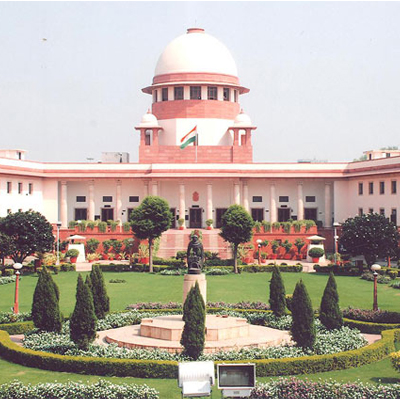
    NEW DELHI: A Supreme Court-appointed high- powered committee recently announced guidelines on government advertisements in order to prevent misuse of public funds for furthering political motives.


    The guidelines recommend that names and pictures of political parties and their office bearers should be not mentioned in government advertisements.


    The report, submitted to the apex court, also emphasises that only pictures and names of the President, the Prime Minister, Governor and Chief Ministers be published to ‘keep politics away from such ads’.


    The guidelines have been framed by a three-member committee headed by eminent academician Professor NR Madhava Menon to regulate expenditure and contents of such advertisements paid out of tax payers’ money. The committee also comprises of former secretary general of Lok Sabha TK Viswanathan and solicitor general Ranjit Kumar. The apex court had decided to frame these guidelines on 23 April to prevent the misuse of public money.


    The apex court bench headed by chief justice P Sathasivam with justice Ranjan Gogoi and N V Ramana had said that the existing guidelines of the Directorate of Advertising and Visual Publicity (DAVP) do not cover such advertisements. There was therefore a need for substantive guidelines to be issued by the Court until the legislature enacts a law in this regard.


    The report also added that the committee has included suggestions of the Election Commission about severe restrictions on such advertisements six months prior to elections.


    It further endorsed that a deadline should be fixed for prohibiting their publication and the poll panel should be authorised for the purpose.


    The report recommended that the central and state governments must decide in advance on a list of personalities whose birth or death anniversaries will be marked with ads.


    The government must then specify which Ministry should release the ad to avoid different departments and state-run companies from paying tribute to the same leader with a multitude of ads. “There should be a single advertisement only,” the Committee said.


    The Bench had also noted that the Directorate of Advertisement and Visual Publicity (DAVP) guidelines do not lay down any criteria for the advertisements to qualify for public purpose as opposed to partisan ends and political mileage, adding that there is a need to distinguish between the advertisements that are part of government messaging and daily business and advertisements that are politically motivated.


    The Government in its counter affidavit claimed that 60 per cent of the advertisements released by the DAVP on behalf of various ministries/departments/public sector undertakings of the Central Government relate to classified or display/classified category such as UPSC/SSC or recruitment, tender and public notices, etc. The respondents asserted that government advertisements sometime carry messages from national leaders, ministers and dignitaries accompanied with their photographs.


    However, Government counsel K Radhakrishnan said the purpose of such advertisements is not to give personal publicity to the leaders or to the political parties they belong to rather the objective is to let the people know and have authentic information about the progress of the programmes/performance of the government they elected and form informed opinions, which is one of the fundamental rights of the citizens in our democracy as enshrined in the constitution.

  • Election Commission issues strict guidelines to media for poll coverage

    Election Commission issues strict guidelines to media for poll coverage

    NEW DELHI: The Election Commission, which recently announced polls for the Maharashtra and Haryana assemblies, said today that news broadcasters must not air any final, formal and definite results until such results are formally announced by the returning officer. The results must have been carried with a clear disclaimer that they are unofficial or incomplete or partial results or projections which should not be taken as final results.


    The Commission, which issued detailed guidelines relating to the polls said these should be duly observed by all the concerned media.


    It reiterated that the TV/radio channels and cable networks should ensure that the contents of the programme telecast/broadcast/displayed by them during the period of 48 hours referred to in Section 126 of the Representative of People’s Act 1951 do not contain any material, including views/appeals by panelists/participants that may be construed as promoting/prejudicing the prospect of any particular party or candidate(s) or influencing/affecting the result of the election. This shall, among other things include display of results of any opinion poll and of standard debates, analysis, visuals and sound-bytes


    It said: “During the period not covered by Section 126 or Section 126A, concerned TV/Radio/Cable/FM channels are free to approach the state/district/local authorities for necessary permission for conducting any broadcast related events which must also conform to the provisions of the model code of conduct and the programme code laid down by the Ministry of Information and Broadcasting under the Cable Network (Regulation) Act with regard to decency, maintenance of communal harmony, etc. They are also required to stay within the provisions of Commission’s guidelines dated 27 August 2012 regarding paid news and related matters. Concerned Chief Electoral Officer/District Election Officer will take into account all relevant aspects including the law and order situation while extending such permission.”


    During the elections, there are sometimes allegations of violation of the provisions of Section 126 of the Representation of the People Act 1951 by TV channels in the telecast of their panel discussions/debates and other news and current affairs programmes.


    The Commission has clarified in the past that the Section 126 prohibits displaying any election matter by means, inter alia, of television or similar apparatus, during the period of 48 hours ending with the hour fixed for conclusion of poll in a constituency. ‘Election matter’ has been defined in that Section as any matter intended or calculated to influence or affect the result of

    an election. Violation of the aforesaid provisions of Section 126 is punishable with imprisonment up to a period of two years, or with fine or both.


    Attention is also invited to Section 126A of the Act, which prohibits conduct of exit poll and dissemination of their results during the period mentioned therein, that is, from the hour fixed for commencement of polls and half hour after the time fixed for close of poll.


    The Commission has drawn attention to the guidelines relating to coverage of elections issued separately for the print media by the Press Council of India and by the News Broadcasters Standards Authority.


    Among others, attention has been drawn to the Guideline that the Press should refrain from publishing false or critical statements in regard to the personal character and conduct of any candidate or in relation to the candidature or withdrawal of any candidate or his candidature, to prejudice the prospects of that candidate in the elections. The Press shall not publish unverified allegations against any candidate/party.


    News broadcasters must endeavour to avoid all forms of rumour, baseless speculation and disinformation, particularly when these concern specific political parties or candidates. Any candidate/political party, which has been defamed or is a victim of misrepresentation, misinformation or other similar injury by broadcast of information should be afforded prompt correction, and where appropriate granted an opportunity of reply.


    News broadcasters are required to scrupulously maintain a distinction between news and paid content. All paid content should be clearly marked as ‘Paid Advertisement’ or ‘Paid Content’ and paid content must be carried in compliance with the ‘norms and guidelines on paid news’ dated 24 November 2011.


    The Election Commission will monitor the broadcasts made by news broadcasters from the time elections are announced until the conclusion and announcement of election results. Any violation by member broadcasters reported to the News Broadcasting Standards Authority (NBSA) by the Election Commission will be dealt with by the NBSA under its regulations.

  • Apex Court sets up panel to study issuance of ads glorifying politicians

    Apex Court sets up panel to study issuance of ads glorifying politicians

    NEW DELHI: The Supreme Court has formed a three-member panel to frame guidelines to regulate government advertisements glorifying politicians in media.


    The apex court bench headed by chief justice P Sathasivam said that the existing guidelines of the Directorate of Advertising and Visual Publicity (DAVP) do not cover such advertisements.


    The panel will be headed by Prof NR Madhav Menon, founder director of Bangalore’s National Law University. TK Vishwanathan, former Lok Sabha secretary general and senior advocate Ranjit Kumar are the other two members of the panel. The report has to be submitted to the court in three months.


    The court has asked Information and Broadcasting Ministry secretary Bimal Julka to coordinate the meetings of the committee.


    The court passed the order on a public interest litigation (PIL) filed by the NGOs Common Cause and the Centre for Public Interest Litigation (CPIL) pleading it to frame guidelines. The petition sought issuance of guidelines for curbing ruling parties from taking political mileage by projecting their leaders in official advertisements.


    Counsel for Common Cause, Meera Bhatia, had earlier said that the glorification of politicians linked to the ruling establishment, in order to attain political mileage at the cost of public exchequer, was violative of Article 14 of the constitution.


    But counsel representing CPIL, Prashant Bhushan, had told the court that there was nothing wrong in issuing advertisements and informing the public about the programmes of the government. However, he had said such advertisement campaigns become arbitrary and malafide when aimed at gaining political mileage.

  • There  is no Plan B for TAM if we lose our appeal in court: Kantar’s Eric Salama

    There is no Plan B for TAM if we lose our appeal in court: Kantar’s Eric Salama

    The Indian television industry is possibly heading towards a crisis of an audience ratings blackout. TAM Media Research, a joint venture between Nielsen (India) and Kantar Media Research, is currently the only agency that provides television audience viewership measurement services to advertisers and broadcasters.


    TAM has hit a roadblock in India with the government issuing policy guidelines for television ratings agencies in mid-January. It has an impossible deadline of mid-February to ensure that the shareholding in TAM is in accordance with the new policy guidelines.


    Apart from having substantial (more than 10%) stakes in TAM, the joint venture partners in the Indian television ratings provider also own advertising agencies in India, which is prohibited in the policy guidelines’ cross-holding norms.


    Nielsen appears to have taken a back seat and decided to let Kantar lead the challenge against the government’s new regulations and  let TAM face the situation as it develops


    Kantar has filed a petition in the Delhi High Court to get a stay on the shareholding norms specified in the guidelines or at least get an extension on the deadline for meeting meet the norms. There’s less than a fortnight left for TAM to comply with them, and it does not like its shareholders will be able to do so in the short time that was given to them.


    The launch of television audience measurement by Broadcast Audience Research Council (BARC), an initiative of advertisers, advertising agencies and broadcasters in India, is likely only by October this year.


    If Kantar fails to get some relief from the court, TAM will have to stop releasing audience ratings by mid-February which will obviously result in the absence of viewership being metered and measured till BARC is ready with its own services. And that is something which is giving both advertisers and agencies palpitations. Television audience ratings is a key input based on which advertisers base their advertising plans on.


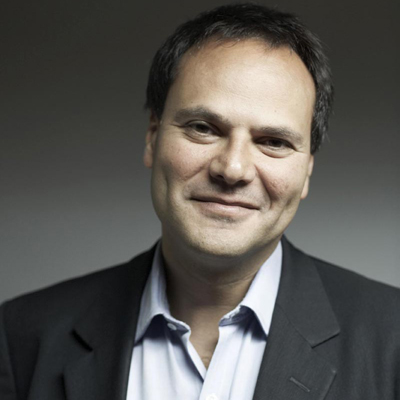
    In order to understand what the situation is and what could unfold, indiantelevision.com’s Vishaka Chakrapani spoke to Eric Salama, chairman and CEO of the Kantar group since 2007. Salama has been with global advertising agency WPP, the owner of Kantar, since 1996.


    During the interaction, Salama rued that television ratings has become a matter of public debate and a “cricket ball” for everyone to hit. Excerpts:


    How different is it operating in India as compared to other countries when it comes to television ratings?


    We operate in most countries with the exception of Iran, Cuba and North Korea.  We’ve never had problems in India before, IMRB is the oldest research agency in Asia and we see India as a key market for us going forward.  We have some of our most talented people here.  The TV ratings market is very different to other markets in that it has become a source for public debate and a cricket ball for people to hit.


    How do you see TV ratings agencies progressing in India?


    We’ll know soon enough!


    Do you believe a ratings blackout is likely to happen? What could happen in such a scenario and how will the industry respond?


    Unless the court rules in our favour on cross ownership, we are heading for a blackout which will be extremely damaging to broadcasters, programmers, agencies, advertisers and everyone who cares for the Indian media industry.


    Do you think there is space for two ratings agencies to coexist?


    It happens in some markets such as Philippines but it’s extremely rare as the industry generally wants one currency for trading.


    I believe TAM has also applied to BARC for panel management in the industry-driven television ratings service. How do you see your relations with BARC taking shape?


    Once BARC is established, TAM will either be a supplier to them for some services or not.


    Should the sample size for arriving at television ratings be far bigger?


    If people wanted us to expand our sample to 20,000 we would.  When BARC is established it will be up to them to decide what they do.


    Accusations have been hurled at TAM and its credibility has been questioned. Do you think TAM has been judged wrongly?


    Some of the comments have been libellous. Many of them have been poorly informed.  TAM has performed extremely well for a long period in a very difficult environment and under huge pressure.


    What is the plan B if TAM is not allowed to function?


    There is no plan B.

  • Why the NBA joined the respondents battling  Kantar in the courts

    Why the NBA joined the respondents battling Kantar in the courts

    MUMBAI: When Kantar Market Research Services, a shareholder of TAM media research, decided to go to court to legally oppose one of the guidelines that had been recently approved by the cabinet committee on economic affairs, it raised some eyebrows though the move was not unexpected. And even though Kantar was not given a stay  on the legality of the cross holding  legislation that it has been seeking, what came as a surprise on day two of the hearing was when the News Broadcasters Association (NBA) was made a party to the case.


    What made the biggest news broadcasting representative body in the country decide to intervene in the case and be subsequently made a part of it? Contrary to what many may believe, the NBA is not against Kantar but rather it is in favour of the guidelines. “We went as interveners to show our support to the approved guidelines and the court decided that we should be a part of it,” says a senior official from the NBA.


    The news organisation has always been vocal on the alleged  irregularities and kinks in TAM’s rating system. “We had decided a while ago that we would make a mention of our support in court. Change in the way the ratings are delivered has been pending for several years and finally the moment of truth has arrived  and so we don’t need it to be stalled again,” informed the official.


    In mid-2013, several news channels members of the NBA had decided to boycott TAM claiming that its TV ratings data was rigged. Voices in support of the upcoming agency the Broadcast Audience Research Council (BARC) grew overwhelmingly. The NBA now feels that there could be no better time than now for the guidelines to come into effect.


    The case which is ongoing in the Delhi High Court is now being fought by the petitioner Kantar  against the government of India, the Telecom Regulatory Authority of India (TRAI) and the NBA. In media interviews Kantar has stated that it won’t go down so easily and that the cross holding guideline it has challenged will make its life and existence a misery.


    In the hearing on 29 January, the HC decided not to give a stay order to Kantar since the regulation was promulgated  by a statutory body – the TRAI. On the same day, the NBA pointed out that TAM operates on a small sample size of just 8,000 people. The case will next be heard on 11 February.


    All the three respondents have a week’s time to file their respective affidavits to the court.


    In October last year when the ad cap case was ongoing in the Telecom Disputes Settlement Appellate Tribunal (TDSAT), three broadcasters namely Star, Zee and Viacom18 had tried to become  interveners in support of the 12 minute ad cap regulation but they had been barred from doing so since their representative body – the Indian Broadcasting Foundation – had decided to withdraw the appeal against the ad cap. However, the NBA claims it has consistently been vocal about its views on TV viewership ratings, hence its candidature as an intervener has validity.


    The key questions now are whether the HC will offer a lifeline to TAM  by imposing a stay on implementation of the cross holding guideline or whether will it cut off its oxygen supply?

  • TAM shareholder Kantar takes Indian govt to court on TV ratings guidelines

    TAM shareholder Kantar takes Indian govt to court on TV ratings guidelines

    MUMBAI: So Indian TV ratings agency TAM Media will not go down without a fight. At least if one goes by the action of one of its shareholders  Kantar Market Research Services. The latter approached the Delhi High Court on 20 January, filing a writ petition against the Union of India. The writ petition states that the government’s TV ratings agency registration regulations have put the existence of its venture TAM in jeopardy, and that too after it has been operating in India for more than 15 years.

    Diya Kapur, who appeared on behalf of Kantar – during the hearing today – appealed that TAM has been in the business for a very long time and the new guidelines on cross holding restrictions will mean that it will have to go out of business.

    Kantar Market Reserach Services Pvt Ltd, a shareholder of television rating agency TAM Media, was today directed by the Delhi High Court to file in a week an affidavit detailing its shareholding in any advertising/ broadcasting companies either directly or indirectly.


    A bench of justice Manmohan directed Kantar and its director Thomas Puliyel, who have challenged the guidelines for television rating agencies, to also mention “the Indian companies in which the petitoner (Kantar) holds shareholding.”

    High Court judge Justice Manmohan then asked Kantar to furnish documents relating to the shareholding pattern in TAM. “This would be in the form of an affidavit detailing its shareholding in any broadcasting firm/advertising agency, either directly or indirectly.The affidavit would also mention any other Indian company in which the petitioner holds any shareholding. It would also state that none of the aforesaid companies in which Kantar have shareholding in excess of 10 per cent has done business for any entity which was involved in any ratings exercise done by TAM. If that is not so, then the details of such instances shall be given,” the single member bench said.

    The court gave Kantar Media a week to come back with the documents and adjourned the hearing for 29 January.

    But already industry sources are questioning why did Kantar Market Research Services decide to approach the courts alone? Why did TAM Media not do so? And why did only one of the two shareholders seek legal redressal? Why wasn’t AC Nielsen also a party to the case against the Union of India?  These are questions to which indiantelevision.com has no answers to right now. But keep watching this space for further developments.

    Agencies and advertisers will be too. Various stakeholders – who need ratings to know how their money is being spent – have been urging TAM Media to take legal recourse as they are quite averse to a situation of a TV ratings dark period. But with now one of its stakeholders taking steps to try and remedy the situation, they have some hope.

    The ministry of information and broadcasting is quite clear that the course has been set and there is no going back. Speaking to indiantelevison.com MIB officials have been quite clear that they don’t want to be seen favouring anybody – especially TAM. “Industry and TAM have been given a long time to do course corrections on the ratings,” said a MIB official. “More than half a decade. Why did they not do so? Why complain now? In fact, we did not want a ratings blackout; based on industry feedback earlier – they had said BARC ratings would start rolling by March 2014 – we went easy on the TV ratings regulations and got government approval in mid-January 2014. TAM had 30 days to shape up; if it did not do so, then there would be a minimal rating blackout period, with BARC rolling out its ratings.”

    In fact, even as the Telecom Regulatory Authority of India (TRAI) had recommended a tranistion period of six months for TAM Media, the MIB had in its recommendations said zero days, but that was finally extended to 30 days by the Cabinet.

    The MIB has stated that it will take on any legal challenges, which are posed against the regulations.  Industry executives can expect some skirmishes ahead – at least in the courts.