Tag: GTPL HATHWAY

  • GTPL Hathway records standalone net profit of Rs 30.5 cr in Q1 FY22

    GTPL Hathway records standalone net profit of Rs 30.5 cr in Q1 FY22

    New Delhi: Cable TV and broadband service provider GTPL Hathway Limited (GTPL) has clocked a standalone net profit of Rs 30.5 crore for the quarter ended 30 June.

    The net sales reached Rs 391.5 crore, improving from Rs 347.6 crore recorded in the same quarter last year. The consolidated net profit for the quarter stood at Rs 53 crore, up from Rs 46.4 crore in the corresponding quarter a year ago, while the consolidated revenues stood at Rs 602 crore. The overall revenues improved on the back of improvement in the EBITDA (including EPC) levels at Rs 138 crore, which was seven per cent higher year-on-year. The Q1 FY22 PAT stood at Rs 47.5 crore, up 16 per cent y-o-y.

    The company also reduced its debt burden by Rs 16.8 crore during the quarter. The finance cost was down 78 per cent y-o-y.

    GTPL added 55,000 net broadband subscribers in Q1 FY22 and the broadband revenue crossed Rs 91. 8 crore, up by 74 per cent YoY. The total number of subscribers as on 30 June were 6. 90 lakh of which 2.50 lakh are FTTX subscribers.

    Meanwhile, the company continues to widen its footprint in its existing markets and penetrate into new markets through inorganic routes. As on Q1 FY22, paying subscribers stood at 0.73 crore.

    GTPL Hathway, managing director, Anirudhsinh Jadeja said, “GTPL Hathway continued to deliver on key KPIs during Q1 FY22. The highlight of the quarter was robust subscriber additions & subscription revenues for Broadband business, strong profitability and debt repayment. GTPL has further reduced its debt by Rs 16.8 crore in Q1 FY22.”

    Jadeja said GTPL will continue to march forward on its stated strategic roadmap by coming up with interesting new products and services, enhancing customer experience, strengthening its digital infrastructure capabilities, and accelerating its footprint in the existing and new markets. 

  • Cable operators take steps to ease vaccination process for staff

    KOLKATA: Despite the imminent health risks, the cable industry employees have continued to work on the frontlines all through the pandemic. Now with vaccination drives in full swing across the country, leading cable operators, too, are taking a step ahead and getting their employees inoculated. Apart from organising special vaccination drives in some cities, they are also helping employees schedule slots wherever the camps could not be set-up.

    NXTDigital organised a three-day vaccination camp at its head office in Mumbai in conjunction with Hinduja Hospital last week for its workforce in the city. The company extended this drive to also include employees’ families.

    “The philosophy has always been to hold the good health and safety of its employees as a paramount endeavour, something that we strived hard for since the pandemic began. NXTDIGITAL, therefore, set up an Employee Health & Safety (EHS) team to help our personnel and their families across the country impacted by COVID, including organising hospital treatment, access to critical medication and the like,” NXTDigital MD & CEO Vynsley Fernandes said.

    The EHS team is working with NXTDigital employees all across the country, not just supporting personnel to get vaccinated, but also providing every possible assistance to enhance their health and safety.

    GTPL Hathway also arranged vaccination drives for 45+ employees in many of its offices, with the help of state governments, GTPL Hathway cable TV head and chief strategy officer Piyush Pankaj said. However, the company could not organise such drives for 18-45+ due to shortage of vaccines. The human resources are helping employees to get the vaccinations scheduled, especially for people on the frontline. Teams are also trying to get the employees slots through government centres.

    On the other hand, Siti Networks could not organise the vaccination drive in one or two places given its pan-Indian footprint. But the MSO encouraged all employees to get vaccinated and reimbursed the vaccination cost, said Siti Networks group chief executive officer Anil Malhotra.

    Along with vaccination, the company informed that it would help employees procure PPE kits, masks whenever needed. It also imported oxygen concentrators to provide to employees if needed.

  • GTPL Hathway earmarks Rs 400 crore capex for FY22

    GTPL Hathway earmarks Rs 400 crore capex for FY22

    KOLKATA: Pan India multi-system operator (MSO) GTPL Hathway is increasing its capex projection for FY22 to Rs 400 crore, compared to Rs 335 crore it invested in FY21, a top executive revealed in an investors call.

    Out of the overall capex projected for this financial year, Rs 225 crore to Rs 230 crore will be invested in the broadband segment, while the rest is going to be deployed for the cable TV side, especially for expansion in new markets. All capex will be funded through internal accruals only. The company is not looking forward to any fund raising activity at this point of time, GTPL Hathway cable TV head and chief strategy officer Piyush Pankaj noted.

    Earlier, the MSO revealed its plans to grow its cable TV subscriber base by more than 50 per cent in the next three years. While the growth in FY21 was flat, the company has cited the  decline in commercial connections as reason for the sluggish addition. 

    “The hotels, corporates, housekeeping, offices, small offices and all, which have not come back totally because of the pandemic. We are looking forward that in the normal scenario this business will grow. The residential customers are growing. We have connected around half a million more residential houses in the pandemic. We are looking forward that we will continue to grow,” Pankaj commented.

    GTPL Hathway is excited about six new states it entered for potential organic growth. Moreover, there is a lot of opportunity for consolidation, Pankaj added. It is already on the verge of executing some deals. While pandemic came in the way to executing deals in FY21, it is looking at closing the consolidation deals as the situation improves going forward.

    Overall, the cable TV market has been growing from anything between four to seven per cent CAGR, mentioned GTPL Hathway chairman and non-executive director Rajan Gupta. It varies from state to state, where states like Odisha have grown higher.

    It is also optimistic about maintaining its broadband additions as well, which is around 60,000 quarterly. “If you see 31 March 2020, we were showing the ISP internet service at around Rs 5 crore, which has increased to Rs 43 crore in 2021, quarter-to-quarter it is down, but year-to-year it is ten times more,” GTPL Hathway promoter and MD Anirudhsinh Jadeja highlighted.

    Rather than increasing broadband ARPU, the current focus is to create the broadband market where it enjoys a high market share in cable like Gujarat. As upgradation happens from LAN to FTTH, there will be some ARPU increase, said  Gupta. The shift in ARPU with change in connection happened last year, and he expects the momentum to continue.

    GTPL Hathway planned to launch hybrid boxes in Q4FY21, but production has been delayed due to the pandemic. The boxes are ready and they are getting shipped, Pankaj stated.

    While Jio is adding broadband subscribers aggressively, Jadeja claims it is not a competitor yet. “It is good now that Jio is also our partner and we might say that we are getting the cost synergy benefits related to the content, infrastructure, or whatever Jio’s expertise is for the overall industry,”  remarked Jadeja.

    “Jio’s market is spread in Ahmedabad, Baroda, Surat, and some other cities in Gujarat. GTPL covers almost the majority of Gujarat with a presence in 100 towns. The major competitor is BSNL and there are no other players,” he added.

  • Fixed broadband demand peaks again as offices switch to work from home

    Fixed broadband demand peaks again as offices switch to work from home

    KOLKATA: India has exemplified its excellence in democratising internet through mobile data. But the growth of fixed broadband was at a much tepid rate until the country had to turn to work from home and school from home due to the raging Covid2019 pandemic. While more and more people needed high speed and stable internet and opted for home broadband connections last year, the demand for new connections is again on the rise as many parts of the country descend into lockdown.

    UCN Cable Network director Jagdish Paliya said that demand for connections has again picked up in last one month or so but not as much as last year. The company has witnessed a ten per cent growth in demand. In addition to that, data consumption of existing consumers has surged drastically, up 25 per cent, he added.

    Compared to the last quarter, broadband customer addition has gone up for GTPL Hathway too, one of the leading players in the segment. GTPL Hathway cable TV head & chief strategy officer Piyush Pankaj said the requirement for new connections has increased somewhere around 15-20 per cent month-on-month. However, this trend has been on an upward trajectory since March 2020 itself. As a large part of the workforce switches to WFH mode for the next few months, the incremental demand will remain for the next quarter at least, he noted.

    Kerala based Asianet is witnessing the same trend with 25 per cent surge in demand, Asianet Satellite Communications vice president & technology head Salil Thomas shared. “We saw a surge in demand when lockdown started last year because lot of employees started working from home. There was a surge in demand during first quarter of lockdown. That trend was evident throughout the year but when people started moving back to their respective workplaces at the end of the year, there was slow decrease in demand. Now, it has picked up again,” he detailed.

    Siti Networks CEO Anil Malhotra had a different take. According to him, the trend is not similar this year because the impact of the pandemic is much severe. Even the workers who do installations are at risk right now, people both in-office and on the field are getting infected. Consumers are also affected as the virus is permeating almost every household.

    Everybody is focused more on providing seamless service to existing customers rather than improving numbers, Malhotra stated. However, if the situation again culminates into a prolonged work from home culture, and more people start staying at home, there will be surge in demand in the long run, he added.

    Considerably, even the players who are seeing a surge in demand are facing on-ground issues. With a Covid positive case in almost every household, it is becoming increasingly difficult for operators to install new connections in these homes. Societies have barred entry to resist rapid spread of the deadly virus. But the situation is not dire like last year, as the service providers have learnt how to tackle the issues. On the backend of the services, broadband players are facing fewer issues with advance planning. In terms of inventories, these firms have stocked enough equipment – although a longer lockdown may create difficulties again.

    According to the Telecom Regulatory Authority of India’s report, there were 22.67 million wired broadband subscribers in the country as of 31 January 2021. The top five wired Broadband service providers were BSNL (7.69 million), Bharti Airtel (2. 90 million), Reliance Jio Infocomm Ltd (2.25 million), Atria Convergence Technologies ( 1.80 million) and Hathway Cable & Datacom ( 1. 06 million).

    “Penetration of home broadband in India is very low compared to advanced countries. We have a long way to go to reach ideal penetration,” Win Broadband MD & CEO K V Seshasayee noted. “It is cheaper to consume data through fibre than wireless. Customers can get a much better deal at a lower price. Fibre-based wired broadband is beneficial for small businesses as well.  Couple with these factors, the work from home culture will accelerate the demand for home broadband in India. Moreover, the bandwidth requirement will also go up with more users in rural areas.”

  • GTPL Hathway posts Rs 599.1 crore revenue for Q4

    GTPL Hathway posts Rs 599.1 crore revenue for Q4

    KOLKATA: On the back of strong performance in the fourth quarter of FY21, GTPL Hathway has posted Rs 599.1 crore revenue, up 29 per cent year-on-year. The pan-India multi system operator (MSO)’s revenue from operations for the last fiscal has gone up 22 per cent year-on-year to reach Rs 2148.4 crore. It has netted Rs 57.1 crore profit in Q4 compared to 13.8 crore loss in the corresponding period of FY20.

    EBITDA stood at Rs 101.16 crore for the quarter ended 31 March 2021, up 32.32 per cent from Rs 76.45 crore in the same quarter a year ago.

    GTPL’s cable TV subscription revenue stands at Rs 266.5 crore for the quarter compared to Rs 271.8 crore in Q3. However, CATV subscription revenue has grown by four per cent for FY21, reaching 1071.2 crore.

    On the other hand, its broadband revenue has grown five per cent quarter-on-quarter basis to reach Rs 81.7 crore in Q4. While CATV subscription revenue saw only one per cent year-on-year growth for the quarter, broadband business has seen a huge turnaround registering 77 per cent year-on-year spike.

    Significantly, the MSO’s overall subscriber base for pay TV universe has remained the same at eight million in FY21 but active broadband subscriber base has increased by 1.5X to reach overall 635K users. Average Revenue Per User (ARPU) has also gone up by 5.5 per cent and stands at Rs 445 at the end of FY 21. The company has added 540K new home passes in the year. In the last quarter, it has added 70K home pass and added 45K broadband subscribers.

    “GTPL Hathway consistently delivered on key KPIs, despite lockdown and restrictions in FY21. The highlight of FY21 was the growth in subscription revenues for both CATV and broadband business, strong profitability, net-debt free status, geographical expansion, healthy balance sheet and improved return ratios,” GTPL Hathway managing director Anirudhsinh Jadeja said.

    “We have reduced our gross debt by Rs 693 million in FY21. Additionally, the company’s board has recommended to increase the dividend to Rs 4 per share in FY21. The company associated with Boman Irani as its brand ambassador during Q4FY21. GTPL is gearing up to launch new products and services in FY22, thereby propelling its value-proposition in existing and new markets,” he added further.

    (All numbers stated here are on consolidated basis unless stated otherwise)

  • AIDCF elects Anirudhsinh Jadeja as new president

    AIDCF elects Anirudhsinh Jadeja as new president

    KOLKATA: All India Digital Cable Federation (AIDCF) has appointed GTPL Hathway MD Anirudhsinh Jadeja as the new president of the apex body of digital cable television players. The change has been made as the tenure of DEN Networks CEO SN Sharma as AIDCF president ended on 31 March 2021.

    Jadeja is a veteran in the cable industry and founded GTPL Hathway in 2006. His strategic vision and hands-on leadership shaped the cable business over decades.

    While giving his farewell address, Sharma welcomed Jadeja as the next AIDCF president and said, “Cable industry has witnessed many challenges in the last two years, including huge operational challenges from Covid2019 pandemic, however, due to its strong roots with the public at large, it managed to sail through. We hope the coming time will be interesting and conducive for the growth of the industry.”

    In his first statement as AIDCF president, Jadeja said the apex body will continue to focus on the inclusiveness of all industry players, growth of the cable industry and its stakeholders, and representing the relevant issues and requirements of the industry in different forums. “The broadcasting and cable industry is witnessing the transformation in technology and delivery and we, at AIDCF, will continue to work towards benefitting the end consumers through technological advancements,” he added.

    Noting that the next two years will be a period of technological upheaval in the cable industry, AIDCF secretary general Manoj P Chhangani said the federation and its members under Jadeja’s leadership will chalk out a robust path in providing advanced services to the end consumers.

    All India Digital Cable Federation (AIDCF) is India’s apex body for digital Multi System Operators (MSOs). The federation works towards the overall growth of the sector and creates an environment for not only complete digitisation of cable TV under regulatory guidelines but also delivers the benefits of digital services including broadband and other value added services to the people of India thus fulfilling the dream of ‘True Digital India.’

  • GTPL Hathway ropes in actor Boman Irani as its first-ever brand ambassador

    GTPL Hathway ropes in actor Boman Irani as its first-ever brand ambassador

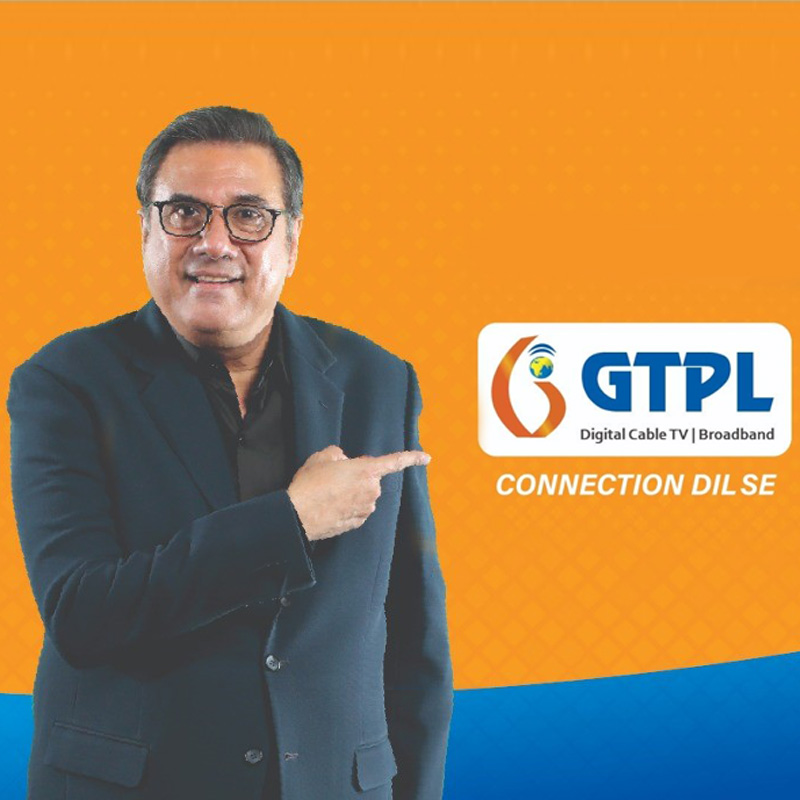
    KOLKATA: GTPL Hathway Ltd (GTPL) has roped in Bollywood actor Boman Irani as its first-ever brand ambassador. The company is launching a major advertising campaign featuring Irani with a tagline ‘Connection Dil Se’ for a deeper and wider connect with the existing and future customer base. GTPL has associated with renowned music composer duo Sachin-Jigar duo for the theme song which captures the spirit with which GTPL celebrates its connection with its customers.

    GTPL Hathway managing director Anirudhsinh Jadeja said, “GTPL is proud to onboard versatile actor Boman Irani as its brand ambassador. Irani is a highly respectable Indian film actor, theatre and voice artist whose films are watched and enjoyed by the pan-India audience. Our new tagline ‘Connection Dil se’ is in line with the company’s ethos to connect and actively engage with all the key stakeholders. The campaign is being launched in TVC, print and radio mediums and will also take a digital route to engage across all geographies.”

    Boman Irani stated, “It is indeed an honour and a pleasure to be associated with GTPL, a prominent brand in broadband and cable TV. I have been a customer of cable services since the early 90’s and broadband subscriber for almost a decade. I have always appreciated the prompt service and the relationship that a cable operator enjoys with his customers. The tagline “Connection Dil Se” resonates with all the relationships that I have cherished over the years and I am sure GTPL enjoys the same ‘Connection’ with its customers. I wish Team GTPL the best in all their endeavours and look forward to being associated with the brand.”

  • VBS 2021: Customer remains king for cable & broadband industry

    VBS 2021: Customer remains king for cable & broadband industry

    NEW DELHI: In the aftermath of Covid2019, businesses and organisations across the world tried to make sense of what hit them as they weighed their futures against the new lessons that the pandemic taught them, unlearning some of the established tenets in the process. Industry experts largely agree that the television broadcasting, video-on-demand (VoD) and broadband ecosystem had it relatively better off with their customers homebound and skyrocketing demands for connectivity and content. However, swift technological evolution and even swifter changes in consumer behaviour and demands posed challenges on this front too.

    And these challenges are what the seventeenth edition of the Video and Broadband Summit attempted to shine a light on. The insightful discussions during the summit rounded off with a session focusing on ‘Customer First’ moderated by PwC India Partner Raman Kalra. The panelists included some eminent names from the industry, such as JioFiber president Anuj Jain, Siti Networks DGM Strategy Anurag Nigam, UCN Cable Network head – operations Debashish Mohanty, GTPL Hathway vice president Yatin Gupta and Shemaroo entertainment COO – broadcasting business Sandeep Gupta.

    Kalra opened the session by commenting about how customers today are spoilt for choice when it comes to choosing content to consume, with mushrooming VoD and OTT platforms and ever increasing channels of entertainment. He noted that despite the demands for content and internet broadband having hit the roof during the pandemic, the challenge of remaining relevant is a concern for both the service and content provider in the highly competitive market today. Kalra posed the question on what strategies can be adopted by the industry players so as to ensure they continue to acquire and retain their customer base, keeping in mind the constantly changing customer demands and behaviour.

    Jain agreed that “customer first is the fundamental pillar” for their business. He stated three crucial points for the same—

    ·       How to enable the “right plan” for the customer to get associated with the brand

    ·       How do you deliver customer onboarding, meeting the promises that you made in the plan

    ·       Third is “in life” wherein after the customer gets activated, your service has to  perform and if not, you must be aware and able to pinpoint where, when and what went wrong through data analytics. To further make his point Jain shared what is referred to as the ‘death of call center’ set-up wherein the business must know about the disruption in service, before the customer breaks it to them.

    Gupta shared insights on the major consumer demand shift in the last twelve-odd months of Covid. “It reflected a huge spike in terms of subscriber base for cable TV which flattened out later. But the broadband business has continued to grow because people are still working from home, kids are still studying from home.”

    In order to deal with the impact of consumers’ pressing demands, altered business strategies had to be deployed, shared Mohanty. “In the present scenario customers have multiple demands- linear TV, OTT Content, online classes, work-from-home- everything he needs from a single desktop or device, sometimes. Basically FTH- Fibre-To-Home is the best solution for connectivity at least for the next few years.”

    He went on to say, “UCN is doing a QOS (quality of service) survey – on what the customer feels about UCN connectivity quality and bandwidth. As of now we are providing 100 Mbps which we have increased to 300 Mbps with unlimited plans,” and added that with increasing consumer demands, if a business today fails to provide a particular service, then someone else will.

    Nigam interjected how nobody could have imagined a year back that the entire India would work from home one day. “All this has forced an average household to stick to the basics, that is focus on the necessities and be frugal for as long as they can,” he said. If this continues for too long, it will impact the industry on multiple levels, whether it’s the broadcaster or a distribution partner.

    Citing an instance from MSO consumer behaviour post lockdown, he shared how consumers had become selective while opting for TV packages. “Consumers have downgraded from high value content package to low value package or they have opted for standard definition (SD) DPO pack and topped it with ala carte HD channels, instead of taking an HD package. Why? Because the pricing of SD was lower than HD, this despite having an HDTV at their disposal.” Even multiple TV households were decreasing and hybrid TVs were getting replaced with OTTs during the lockdown.

    Debashish took the discussion further by adding that lack of “exclusivity” in HD channel content is a major factor, since the customer is getting similar content on SD at a lower price. “So channel packaging needs to be done as per customer requirement,” he remarked. Entry barrier is also due to the higher pricing, as compared to SD. Only if HD content differs and is exclusive can we see real change, was broadly agreed by all.

    Competitiveness has also gotten fiercer, which can adversely impact the revenue of the whole industry in the long run. “Hence it is time that all industry players come up with product differentiation- exploring new customer segments, converting customer service departments into ‘customer experience enhancement’ departments  which can only be achieved if all the stakeholders work together towards a common goal- that’s ensuring customer success,” stated Nigam.

    From a content perspective, Shemaroo’s Sandeep Gupta said, “At Shemaroo, content is evaluated based on customer taste. So content has to keep evolving for, at the end of the day, consumers come to us looking for entertainment. For broadcasting, we look into the research and BARC data.”

    The discussion then steered to customer acquisition and on what are the leading practices being taken by the industry to ensure it. Jio’s Anuj Jain began by admitting they focused more on delivering on customer expectations and less on marketing. He added that fibre being a cherry picking market and more localised, it’s a different challenge altogether.

    When it comes to the cable industry, it is mostly a “one or two sizes fits all” kind of business, admitted GTPL Hathway’s Gupta, with not much being looked into individual customer preferences as long as they get their pack of choice. This situation is slowly changing, the company has begun ‘know your customer’ processes to understand who is the customer first and inform them about the innovative products or services on offer. “We were one of the very few platforms that started a campaign targeted at all DTH players called ‘Chhatri hatao, GTPL lagao’ to remove the Dish and replace with GTPL Hathway subscription, which got a fair amount of response from consumers,” he added.

    Knowing your consumer is a part of the process to enhance consumer experience, which also involves proactively handling tech / troubleshooting issues. “With our one million subscriber base, the total data that is collected from every customer per week is one Petabyte of data- which captures every aspect of the customer experience data- any sync issues, freezing, buffering issues etc. This is how we make customers the focus and part of the process,” explained Jain.

    Factors like user outreach and bettering their experience goes on to ensure customer stickiness. Brands need to be consistent, facilitate continuity, safeguard connectivity of service and target smooth onboarding experience to achieve this goal, suggested the panelists.

    The session concluded by highlighting that there’s a need for businesses to invest deeply in knowing and engaging with their customers. Analysing customers’ content consumption data can also lead to rich dividends and RoI. “Deep data insights and data intelligence can lead to immense possibilities for businesses,” Kalra summed up. In conclusion, enhancing customer service and experience is a key component to the success and growth of every stakeholder in the industry.
  • What is hindering the fixed broadband growth in India?

    What is hindering the fixed broadband growth in India?

    KOLKATA: The last few years have seen a major explosion in internet usage, especially post Covid2019 crisis with the boom of digital payments, e-commerce, online video consumption, e-learning. Despite the huge scope, fixed broadband sector has seen a tepid growth in India, unlike mobile broadband. Issues like poor optical fibre infrastructure, high capex cost for ground networks, hardship in obtaining Right to Way (RoW) permission are deterring the expansion of the sector, as major players have commented in response to the Telecom Regulatory Authority of India’s (TRAI) consultation paper.

    GTPL Hathway pointed out three main reasons for the poor subscription of fixed broadband service – lack of availability, affordability, accessibility. The MSO has pointed out that more and more optical fibre infrastructure in the access network needs to be rolled out across the country. Along with the high capex cost involved in rolling out of last-mile access network, obtaining NoC and RoW permissions at several levels of authority for laying cable also prevents the development, as per the MSO.

     “Fixed-line services are capex intensive as the provider needs to invest a lot of funds in providing the services in the ground networking and also at the subscriber end so availability is very limited so is the subscription,” Siti Networks said.

    However, one of the largest Internet Service Providers in India, Atria Convergence Technologies (ACT) has denied that the subscription rate of fixed broadband is low. But the reach of the optical fibre cable network needs to be greatly improved upon, ACT said.

    The telecom service provider Bharti Airtel echoed the same sentiment. Lack of single window clearance and the complicated and time-consuming process for obtaining RoW permissions coupled with exorbitant fees result in unviable commercial fibre deployments, it said.

    “Another hindrance to creating a viable fixed-line network is the cost TSPs incur in installing and maintaining the infrastructure of a fixed network. Also, the additional burden of license fees of 8 per cent on AGR further reduces the commercial viability of such networks,” Airtel added. Moreover, several government and private projects for road widening, laying of electrical cables, maintenance of water and sewer pipelines result in damage to the laid fibre, it mentioned.

    GTPL Hathway mentioned that less than 15 per cent of wireline broadband connections are working on FTTH technology. Commenting about the slower growth of fibre-to-the-home (FTTH) in the country, Siti Networks said the absence of local supply chain is a major issue. The ISP added that the government should take the initiative in developing a robust supply chain in the country in order to facilitate local production to ensure sufficient inventory.

    “The wired broadband penetration is capital intensive and it’s difficult to lure financial investors to this industry due to slow reachability, fees, and taxes applicable on the sector,” ACT added. The ISP also noted that ease in the policy framework for promoting FTTH connectivity will result in-service providers providing an affordable and better quality of services which in turn, will enable the public at large to subscribe to these services.

    While the local cable operators in the country could play significant role in fixed broadband growth, there are several factors like non-lucrative business model, the burden of AGR issues, high cost for obtaining ISP license, requirement of high capex for upgrading to new technology that is holding them back from providing broadband services. 

  • SPN’s distribution team brings cheer to Maharashtra LCOs through ‘Nukkad LIVE’

    SPN’s distribution team brings cheer to Maharashtra LCOs through ‘Nukkad LIVE’

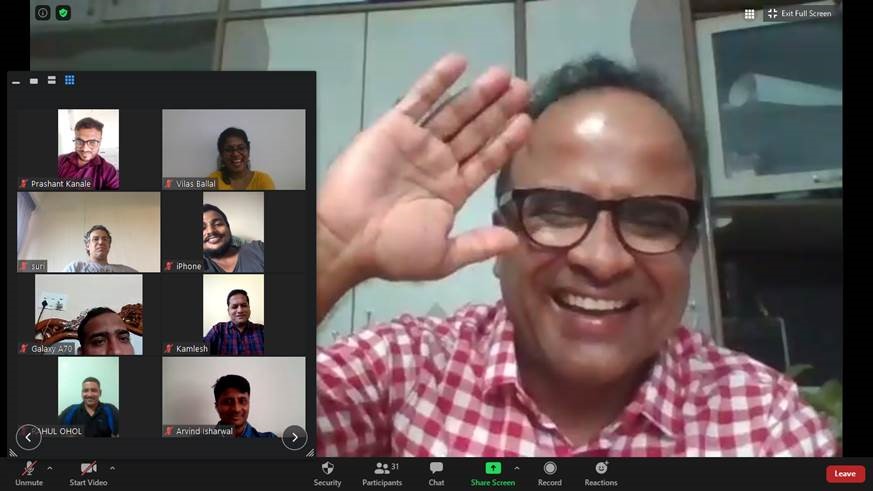
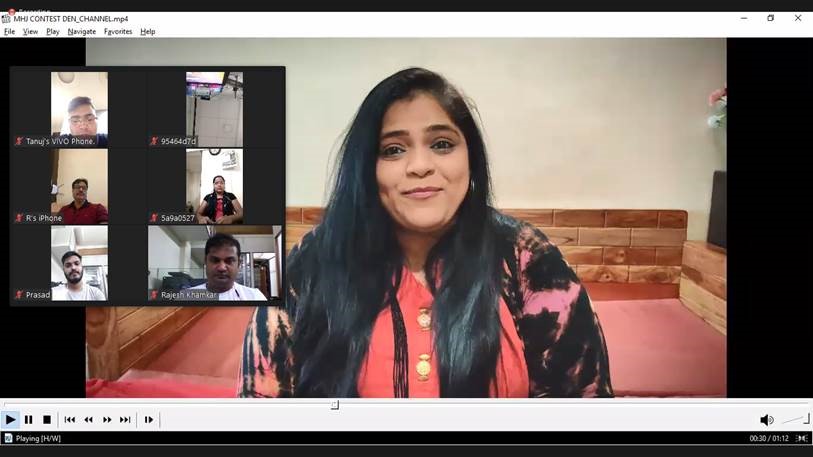
    KOLKATA: The Covid2019 pandemic has had a seismic effect not only on the way businesses run but also on several other aspects of people's lives. The cable industry, the unsaid essential service, has played a major role in the current environment keeping people entertained and informed. While a majority of the population was under a shelter-at-home directive, last mile operators kept working on-ground risking their lives to provide seamless services to their subscribers. SPN was the first network to salute these unsung heroes through its ‘Happy Hero’ campaign. Taking the relationship with the operators forward and to bring some cheer , excitement to the last mile operators, Sony Pictures Networks India (SPN) undertook a novel initiative of virtual event, ‘Nukkad LIVE.’ 

    Through ‘Nukkad LIVE’ last mile operators, more commonly known as LCOs, get to enjoy specially curated acts as well as interact with the artists & key protagonists of various SPN channel shows. 

    "The new normal in our day to day to work life has shifted to the digital interface. We have always believed in staying connected with our trade partners & we enjoy excellent partnerships with MSOs across the country. The ‘Nukkad LIVE’ initiative is really about going a step further & creating opportunities for interaction for SPN’s well known show artists with the last mile, namely the LCOs. They are really the unsung heroes who are risking their lives every day to keep the pipeline of entertainment flowing and alive. After seeing the huge success of ‘Nukkad LIVE’ in Maharashtra with the likes of DEN and GTPL, we will soon be extending this format to the Hindi GEC & sports genres,” said Sony Pictures Networks (distribution business) EVP Sales and Marketing, Makarand Palekar. 

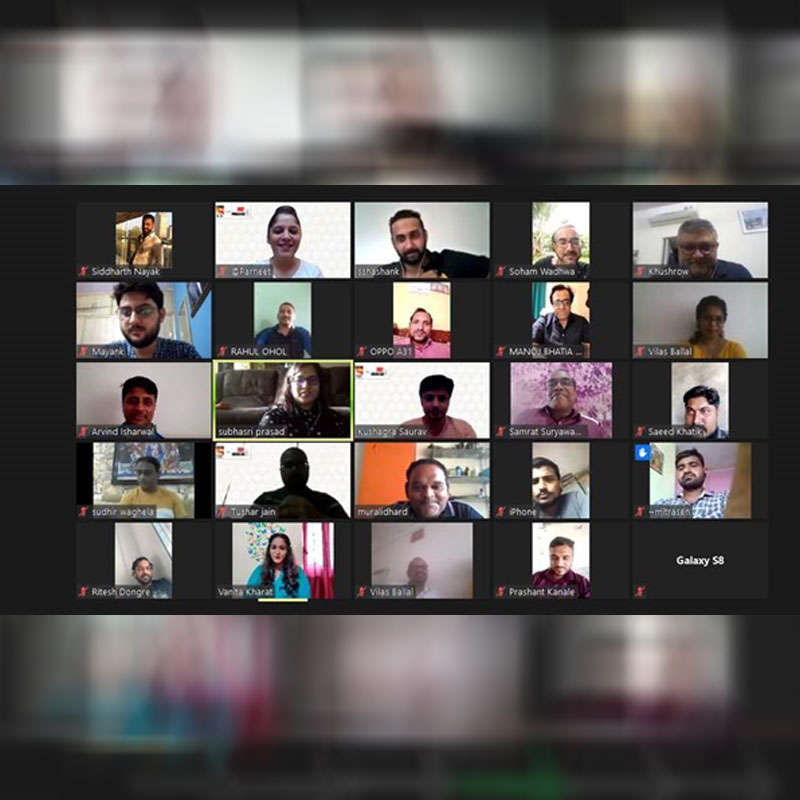
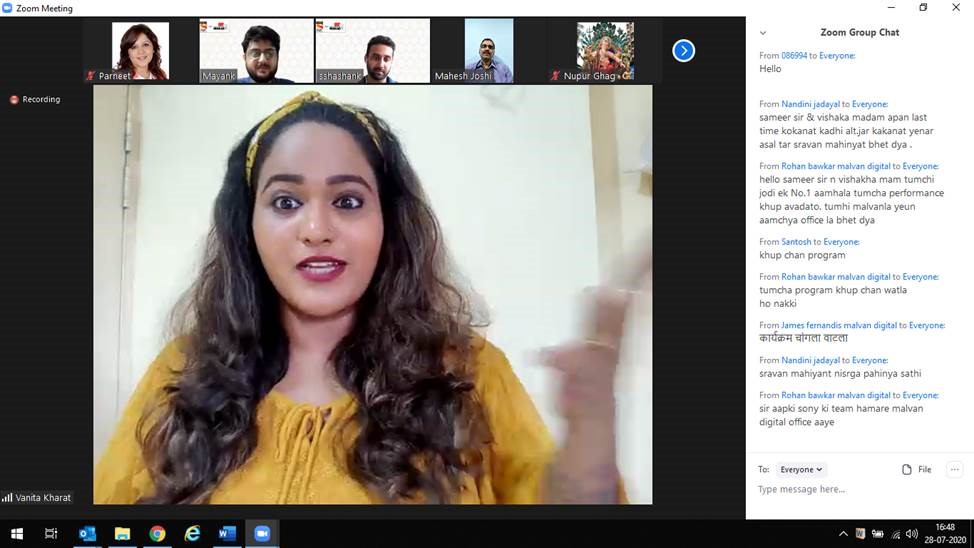
    SPN has initiated the first leg of this digital collaboration in the Maharashtra market bringing actors from Sony Marathi and leading operators from the state together. Samir Choughale, Vishakha Subhedar and Vanita Kharat, all well-known names from the Marathi entertainment industry, are part of this campaign to meet operators on the ‘Nukkad LIVE’ platform. 

    While Kharat holds the meet-up together by anchoring it, Choughale is interviewing Subhedar and the latter gets humorously offended. The fun banter ends with the stars thanking the operators for their relentless support and service to keep the show on during the lockdown period as operators made sure all the viewers got uninterrupted signals for their daily dose of entertainment. The 40-minute meet ended with both the actors interacting with the trade fraternity by answering their questions.

    Although both broadcasters and distributors are dependent on each other to run their businesses, during this crisis period, such collaborations can help to keep the touch points on both sides alive and lighten the burden of social distancing, on everyone. 

    What do the partners think?

    “Good initiative by the Sony Marathi & distribution team to connect & engage our business partners using the virtual platform. Spreading a smile is very important in the present situation where people are facing a lot of hardship. All the best to the Sony team,”  GTPL Hathway Ltd promoter and managing director Aniruddhsinh Jadeja said. 

    “This unique initiative by Sony team to bring the last mile operators together, added a new dimension to strengthen relationship between broadcaster, MSO & LCO. It helps the industry to work towards a common goal of inclusiveness by involving the last mile which further encourages them to provide better services,”  DEN Satellite director Rajeev Gavi shared. 

    “Brilliant programme! The execution of the event was seamless despite the dependency on technology. Inviting the LCOs to this event and mentioning the special relationship that Den Satellite and Sony shares further strengthens the bond between stakeholders. Artists were really entertaining and it was thoroughly enjoyed by our partners,”  DEN Satellite director Ravishankar Singh said.