Tag: GTPL

  • GTPL Hathway is gearing up to make a major HIT

    GTPL Hathway is gearing up to make a major HIT

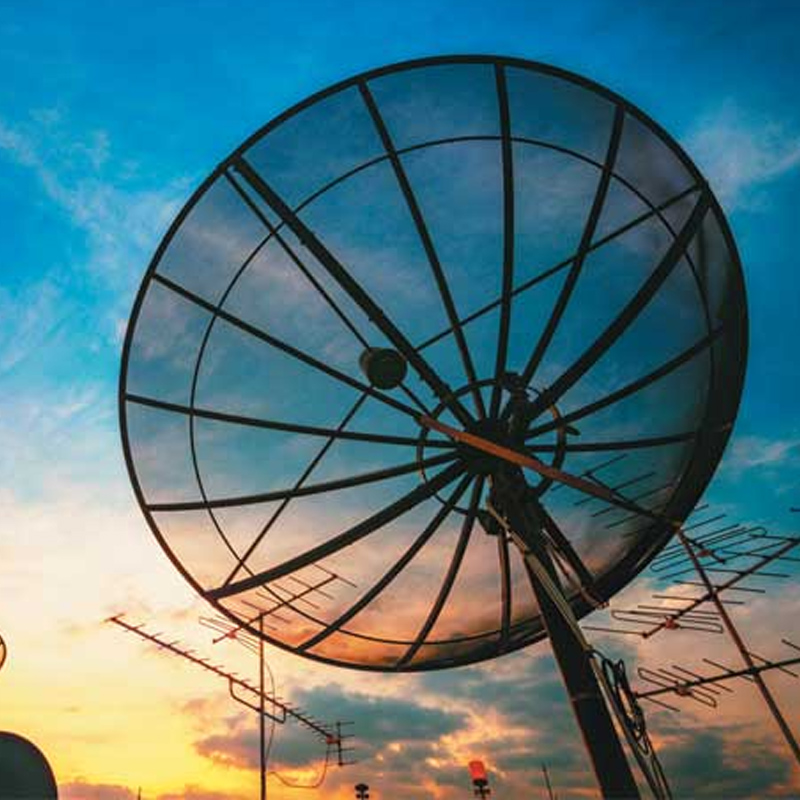
    MUMBAI: In India’s noisy and fragmented cable TV business, where margins are wafer-thin and infrastructure is patchy, a quiet revolution is taking place above our heads. Quite literally. India’s largest cable and broadband heavyweight ) GTPL Hathway is choosing to break free from the grid by betting Rs 100 crore on a satellite-led future—launching a full-scale headend-in-the-sky (HITS) operation designed to reach the parts of India that cable lines and fibre have long ignored.

    This isn’t just an upgrade—it’s a strategic reinvention. One that could upend the rules of TV distribution across Bharat.

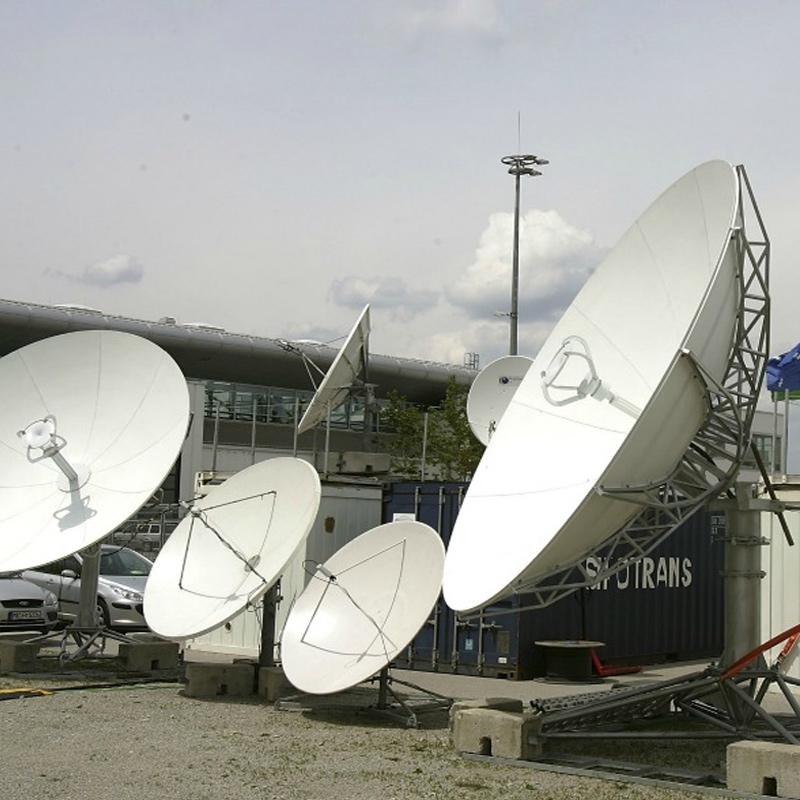
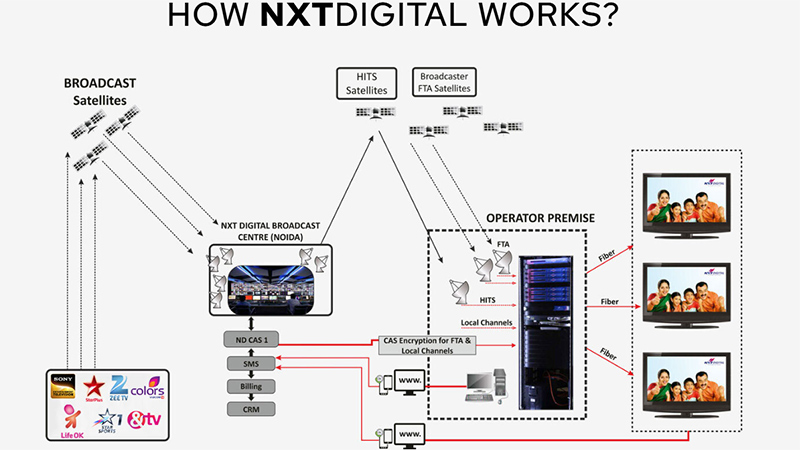
    From a sleek new uplink facility in Ahmedabad, GTPL is readying to transmit up to 900 encrypted, multiplexed channels using 12 leased C-band transponders from Indonesian satellite operator Telkomsat. The satellite signal is then beamed directly to local cable operators (LCOs), who deliver the final mile using existing coaxial or fibre lines.

    It’s a model that minimises capital investment on the ground while maximising reach—especially in India’s 130–135 million “TV-dark” homes, a figure larger than the total households of Japan and the UK combined.

    GTPL’s move brings it squarely into competition with the Hinduja-owned Nxt Digital, India’s sole HITS player until now, with a subscriber base of 2.4 million. Nxt has played a steady game—providing shared uplink infrastructure, cost-effective Cope (cable operator premises equipment) units priced between Rs 10.6–14 lakh, and STBs from Chinese OEMs like Changhong and Telesystems.

    Its model helped reduce per-subscriber costs dramatically—from Rs 17 to just Rs 7 in some cases—offering a lifeline to smaller MSOs (multi-system operators) struggling to comply with the regulatory shift to digital. But Nxt’s footprint, while impactful, has remained modest.

    GTPL is playing a different hand: scale. With 9.6 million cable TV subscribers already on its rolls and strongholds in Gujarat, Maharashtra, West Bengal and Bihar, the company intends to transition its entire base to HITS delivery over the next 24–36 months.

    The vision? To be India’s largest HITS network—leapfrogging not only NXT, but also traditional satellite and cable architectures in one swoop.

    This pivot is part of GTPL’s broader Rs 350 crore capex outlay for FY25, which also includes new broadband infrastructure and set-top boxes. The numbers make a compelling case: annual bandwidth costs, currently pegged at Rs 85–90 crore, are expected to drop by half.

    Projected revenues from the satellite platform are equally promising. At 750,000 subscribers, GTPL expects to generate Rs 99 crore annually. That rises to Rs 132 crore with 1 million users. Add Rs 12 crore more from leasing infra services to 50 smaller MSOs (each paying Rs 2 lakh per month), and the business case becomes hard to ignore. Even under conservative adoption rates, the Rs 100 crore investment could be recouped within 12 months.

    GTPL’s HITS play isn’t just about broadcast—it’s also about backend tech. The company is deploying a hybrid business model: retailing bundled TV channel packs to consumers via LCOs while offering platform-as-a-service tools to smaller MSOs. These include uplinking, encryption, conditional access system (CAS) and subscriber management system (SMS) solutions—effectively turning GTPL into a SaaS player for the cable industry.

    In a sector plagued by fragmentation, opaque billing, and outdated infrastructure, this modular model could be just the reset smaller operators need to stay compliant, competitive, and cost-efficient.

    India’s content delivery puzzle has long had three flawed pieces. OTT remains hobbled by poor last-mile broadband in rural areas, with even state-run BharatNet struggling to scale. DTH, while more pervasive, has long suffered from weather interference, installation costs, and churn. Cable TV, once the lifeline of urban India, is now chafing under regulatory pressure and infrastructure bottlenecks.

    Enter HITS—a model that combines the robustness of satellite delivery with the flexibility of LCO-based distribution. It’s weather-resistant, quick to deploy, and doesn’t require laying new wires in hard-to-reach zones.

    As a middle path, HITS may well become the delivery standard for Bharat—the vast, value-driven, and still under-connected expanse of Indian television.

    Surprisingly, GTPL’s skyward expansion has not been met with resistance. The All India Digital Cable Federation (AIDCF) has raised concerns around broader issues like OTT content regulation and fair play by broadcasters—but not specifically about the HITS model. Major networks such as Zee, Sony, and Disney Star have voiced concerns over the pricing dynamics introduced under TRAI’s NTO 3.0 framework, but formal objections to GTPL’s satellite platform are absent.

    The company, for its part, holds a valid grant of permission agreement (GOPA) from the ministry of information & broadcasting (MIB) and has participated in various TRAI and MIB consultations, signalling alignment with the regulatory ecosystem.

    GTPL’s pricing strategy will be region-specific, with affordability and adaptability built in. Final LCO-facing Cope and channel package rates will be finalised once broadcasters declare new pay channel prices. While margins may initially be tight, the long-term play is rooted in volume, retention, and backend monetisation.

    This isn’t a short-term stunt—it’s a structural realignment of India’s content delivery infrastructure.

    GTPL’s satellite push is more than just a tech upgrade—it’s a masterstroke of timing, vision, and market understanding. With one eye on underserved consumers and the other on the backend tech stack, the company is positioning itself as both a broadcaster and a platform.

    As India’s media future heads skyward, GTPL’s HITS move may well become the blueprint for digital inclusion across Bharat.

    (If you are an Anime fan and love Anime like Demon Slayer, Spy X Family, Hunter X Hunter, Tokyo Revengers, Dan Da Dan and Slime, Buy your favourite Anime merchandise on AnimeOriginals.com.)

  • GTPL sells dormant associate for Rs 1 Lakh

    GTPL sells dormant associate for Rs 1 Lakh

    MUMBAI: GTPL, the prominent multi-system operator (MSO) and broadband provider led by Anirudhsinh Jadeja, has offloaded its entire stake in a non-operational associate for Rs 1 lakh completing the transaction on 10 March.

    The cable TV and internet services company sold its 50 per cent equity holding in GTPL Jay Mataji Network Pvt Ltd to Deepak Kumar Yadav at approximately 11:00 a.m. IST, according to a regulatory filing.

    The transfer of 10,000 equity shares was finalised immediately after receipt of payment, effectively ending the associate relationship between the two entities.

    GTPL confirmed that  Yadav has no connection to its promoter or promoter group, and the transaction does not constitute a related party deal under regulatory provisions.

    Industry analysts note this move aligns with GTPL’s recent strategy of consolidating its position in core cable and broadband markets while divesting non-performing assets.

  • GTPL Hathway ropes in Verimatrix for secure Android TV rollout

    GTPL Hathway ropes in Verimatrix for secure Android TV rollout

    Mumbai: Digital cable TV and broadband service provider GTPL Hathway Ltd (GTPL) has announced its partnership with Verimatrix leveraging the latter’s Video Content Authority System (VCAS) to protect its Google Android TV-based DVB hybrid set top box.

    Verimatrix (Euronext Paris: VMX) helps power the modern connected world with people-centered security. Verimatrix VCAS is designed as a future-proof and scalable security solution for premium video content. Its DVB Hybrid offers GTPL a combination of protection and flexibility as delivery methods expand and evolve throughout India.

    “Verimatrix is a time-tested content security leader in the market that offers unprecedented ease of deployment and gives us the confidence that we will be ready to easily adapt as our offerings progress,” said GTPL Hathway MD Anirudhsinh Jadeja. “By selecting Verimatrix as our security provider, we gain much more than just studio compliant protection – GTPL gains enhanced workflow and integration options as well as the reliability that we’re ready to rapidly scale up new subscribers across our areas of operation, to any additional devices we choose later, with a single security platform.”

    “We are extremely pleased to announce GTPL Hathway as one of our latest customers,” stated Verimatrix COO and president Asaf Ashkenazi. “GTPL’s large customer base in India is provided a frictionless premium entertainment experience while their operators harness the full power of Verimatrix’s security innovations and award-winning customer support behind the scenes – ensuring GTPL is armed with the peace-of-mind it demands today and the performance and scalability it expects for tomorrow.”

  • Broadcasters promoting pay-TV on Free Dish are shooting themselves in the foot – Saurabh Sancheti

    Broadcasters promoting pay-TV on Free Dish are shooting themselves in the foot – Saurabh Sancheti

    Mumbai: With a 40 million base, which is constantly growing at the cost of Pay-TV, Prasar Bharati’s DD Free Dish is not just another competing platform, but considered by many as a precursor to the success of Free Ad-Supported Television (FAST) model in India. The implementation of NTO 2.0 is going to further intensify this cannibalisation. While broadcasters are riding the FTA wave, some fairly and some in an unfair manner, distribution platform owners are pushing for regulatory intervention and new ways to tackle the challenge.

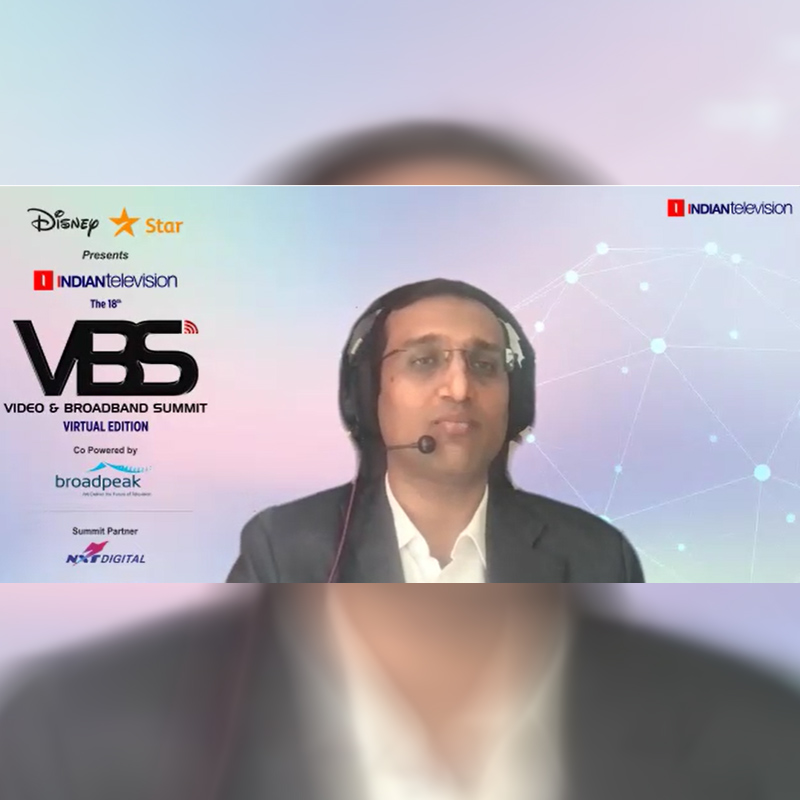
    Saurabh Sancheti – Business Head | Hathway GTPL,   has long been advocating and working towards building a ‘rupee-a-day’ product that can take on Free Dish. At the Video & Broadband Summit organised by Indiantelevision.com on 19 January, he outlined the approach that is needed to arrive at this solution.

    “Out of the country’s 280-300 million households, nearly 200 million own a television set, and of this, only about 120 million have Pay TV. MSOs and broadcasters have to work together on wooing the remaining 80 mn base with a customised product. LCOs too need to reinvent themselves by adopting digital technology that serves their customers better,” he said. Sancheti is confident that if all players can collaborate on it, not only can the economics be worked out, but the pay-TV basket can be grown by at least 30-40 million in the next couple of years.

    Cog in the wheel

    In the current scenario, (short-term) gains and survival concerns are driving the top and bottom of the pyramid. Elaborating on what he terms as “death by annual plan”, Sancheti remarked, “Broadcasters promoting Pay-TV on Free Dish are shooting themselves in the foot. No matter how big you become on Free Dish, the platform cannot be monetised.”

    “They need to understand the possibilities of working with the DPOs. As people’s income levels increase, they will spend more on subscriptions. Those who join at a Free Dish equivalent pricing today, can become our regular and even premium customers tomorrow. But instead of thinking about taking customers up the funnel, and about the long-term growth of pay-TV, they are worried about their annual and quarterly targets,” he rued.

    Further, he noted that with infrastructure sharing and cheaper bandwidths making it possible to achieve last-mile delivery to the level of a gram panchayat at very low costs, distribution networks will also have to re-engineer themselves to align with the broadband revolution that’s underway.

    It’s obvious that the postulated rupee-a-day product cannot run in the same high-touch manner as the current base is running and hence the requirement of “lot more digital, lot more long-term packs and lot more of DIY”.

    Would that mean LCOs losing control of the last mile and eventually dropping out of the value chain? Commenting on the long-standing issue, Sancehti stated, “The primary models have failed, and MSOs realise that they cannot reach out to consumers directly, but only through the LCOs. That being said, today, consumers want more control. This is the reason why DTH, which has declined globally, is still surviving in India. It is the only medium that allows you to do everything yourself; from channel selection to bill payments. So, the risk of being eliminated is clearly there, however, it’s not because of the large players but the LCOs’ unwillingness to reinvent.”

     The next big opportunity

    Sancheti believes that the linear TV model still has a lot of scope left. Out of the 200 million TV-owning households in India, the top tier of 20-25 mn has both pay-TV and fixed-line connectivity. Their number is growing, and so is their OTT consumption.

    The second set of 100 mn households, which is 70 per cent urban, consumes linear TV on the large screen and OTT on private/mobile screen. It will gradually go the 25 mn way.

    The remaining 80 million (TG for the rupee-a-day product) are the ‘cord nevers’ who are subscribed to either analogue or Free Dish today. As their income levels increase and more content and services suitable for them are made available, they will move up the ladder into the pay-TV base.

    Sancheti, however, finds the 100 million ‘TV nevers’ equally if not more promising than the 80 mn cord nevers. “At Den, Hathway, and GTPL, we believe this is where the opportunity lies to as much as double our base. As the economy progresses, spends on services will increase exponentially, and we are reinventing ourselves for the change; whether it is by way of working on connectivity/network or by value engineering the set-top boxes that begin at an 800 Rupees price point today.”

    Pinpointing the 100 mn challenge and opportunity, he added, “It’s not like the cable hasn’t reached the ‘villages’. The problem is that it has found only 500-odd homes/subscribers there. The art is in doubling this number by offering the right product and pricing.”

    Impact of NTO 2.0

    Winding up the discussion with a word on the present state of regulation and the impact of NTO 2.0, Sancheti observed that “whatever rationalisation had to happen in terms of channel selection at the customer end has already happened with NTO (2019). Beyond a point, more à la carte will only do more harm. With NTO 2.0 we are looking at a 25-30 per cent increase in prices as per published broadcaster RIOs. India being a price-sensitive and value-seeking market, this will further pressurise the PayTV base, leading to more people opting out of it.”


    Please Note : “The views expressed are personal and do not represent the views of Reliance Industries Limited or any of group companies”

  • Filamchi will now be available on Tata Sky, Airtel Digital TV, GTPL, SITI – ICNCL & SITI Network

    Filamchi will now be available on Tata Sky, Airtel Digital TV, GTPL, SITI – ICNCL & SITI Network

    strategic alliance with leading Direct-To-Home (DTH) and leading cable service providers in the country. Under these new partnerships, the premium Bhojpuri channel on boards Tata Sky, Airtel Digital TV, GTPL and SITI – ICNCL & SITI Network, giving users of the respective platforms access to the channel’s exciting movie library.

    Filamchi can now be watched on Tata Sky at channel number 1114, on Airtel Digital TV at channel number 665, on GTPL Hathway at channel number 277, on SITI (ICNCL) at channel number 219 and on SITI Network at channel number 453. The pay channel can be subscribed for a nominal charge of Rs. 0.25 (excluding taxes) across platforms. Filamchi is also available on Darsh Digital at channel number 187.

    Targeted towards the Bhojpuri speaking audiences in the country, Filamchi brings a vast range of titles across genres to entertain and engage diverse movie buffs. The channel hosts an extensive collection of Bhojpuri films, including blockbusters featuring the industry’s biggest superstars Nirahua, Khesari Lal Yadav, Pawan Singh, Arvind Akela, Yash Mishra, Chintu Pandey, and legends like Ravi Kishan and Manoj Tiwari.

    Commenting on the recent partnerships, Filamchi   strategy VP  Tarun Talreja said,“Filamchi was designed to be accessible to Bhojpuri fans across the country through a robust distribution plan. Partnering with two of the leading DTH service providers, Tata Sky and Airtel Digital TV, and leading cable service providers GTPL and ICNCL, augments our reach strategy, enabling us to bring our latest offering to a wide base of audiences in the country.”

    Apart from Tata Sky, Airtel Digital TV, GTPL and SITI – ICNCL and SITI Network, Filamchi is available on leading multi-system operators in Bihar and Jharkhand. 

  • GTPL Hathway sees demand surge on both cable, broadband amid the lockdown

    GTPL Hathway sees demand surge on both cable, broadband amid the lockdown

    MUMBAI: As the country battles the COVID-19 crisis, a large chunk of the population is confined at home. To ease the burden of social distancing, most of the people are consuming more content, both on linear TV and online. The surge in consumption has caused higher demand for cable boxes as well as broadband connection of GTPL Hathway.

    “The demands are becoming higher actually as people are staying at home. We are recovering a number of old boxes in the cable side and there is demand for new boxes as well. However, we are seeing more surge in broadband connection and bandwidth consumption is also very high. The consumption has increased on the cable side as well,” GTPL Hathway business head – video and chief strategy officer Piyush Pankaj said.

    While there is a curfew-like lockdown, it is challenging for on-ground staff to run operations. But Pankaj mentioned that as MSOs and LCOs come under essential services, the proper documentation proving that they are, is helping them to work. He also said that they are updating police permission everywhere that the service comes under essential segments.The on-ground staff have also been given proper cards and letters to save them from any hassle. To ensure safety, they have also been given health guides, hand sanitizers, dresses covering their face and body.

    However, GTPL has also reduced the manpower working on ground, as the main requirement there is the technical staff. The workforce, which do not need to be on-ground, have been given work-from-home option. Hence, while 20 per cent of the team is working from the real location, rest of the workers perform their duties from home.

    “Till now the payment side is rolling smoothly, we are sending URLs to customers and asking them to pay and in some cases operators are also collecting on their paytm also. Sometimes operators are using the URL, using paytm to pay us; somewhere consumers are paying directly to us. Lockdown started one week ago; we have not faced any problem on the credit side till then. If any problem comes, we will update technology and adhere to that,” Pankaj added.

    GTPL has put some advertisements on COVID-19 on its own local channels. Moreover, whenever a customer calls, it is giving out messages to ensure consumer’s safety as well.

  • DPOs suggest changes to draft interconnection addressable regulations by TRAI

    DPOs suggest changes to draft interconnection addressable regulations by TRAI

    MUMBAI: Distribution platform operators (DPOs) have shared their comments to modify Telecom Regulatory Authority of India (TRAI)’s draft on The Telecommunication (Broadcasting And Cable) Services Interconnection (Addressable Systems) (Amendment) Regulations, 2019.  The industry has welcomed TRAI’s move to amend Schedule III of the regulation and believes that provisions related to watermarking, fingerprinting and digital rights management along with CAS and SMS is in right direction.

    AIDCF said, “It is submitted that the provisions relating to watermarking, fingerprinting and digital rights management along with CAS and SMS, is a step in the right direction and AIDCF wholeheartedly supports the same. With respect to amendments proposed to be introduced by TRAI in the schedule III of the Interconnection Amendment Regulations 2019, AIDCF stands in agreement with the same and supports TRAI in bringing about the amendments in the regulations.”

    However, Bharti Telemedia (Airtel), Tata Sky and GTPL recommended a few changes in the draft of interconnection addressable regulations.

    Airtel, with regard to Section C Clause 8 of the regulation, recommended that the capacity of the CAS and SMS should be linked to the volume of transactions rather than the subscriber base. The rationale for the same is that each subscriber can generate multiple volumes of transactions and hence, to handle these transactions of a single customer, the system is equally consumed and therefore, the correct assessment of the system capacity should be linked to the transaction count instead of subscriber base.

    It further commented “The subscriber base may not be the appropriate criteria to assess the capacity of CAS and SMS, more so, in the current framework when a single customer can generate more than one transaction in terms of activation/deactivation of channel, recharge etc. We, therefore, suggest that the criteria of 5 per cent should be measured in context to total volume of transactions.”

    The company in its comments to TRAI also raised concern over generating customised bills. It said, “We submit that the requirement of generation of bills is applicable for the post-paid services and we, therefore, suggest that clause must specify the same to avoid any confusion.”

    Similarly, Tata Sky also expressed that bill generation is a postpaid concept. DTH operators do not have a postpaid platform and are completely prepaid. “Therefore, it is suggested that a suitable clarification be inserted in the regulations as well as the audit manual to avoid any understanding gap between the DTH operators and the auditors,” said Tata Sky.

    Tata Sky also suggested, “The STBs and VCs are issued against a CAF to a subscriber and the subscriber's address is captured in our systems. Consequently, the auditor can check our systems on a random sample basis, however, we will not hand-over our entire database along with addresses to the auditor in compliance with this requirement. We would, therefore, suggest that a suitable clarification be inserted in the regulations as well as the audit manual to avoid any understanding gap between the DPO and the auditors.”

    The draft’s Clause 12(a) & 12(c) states that it is mandated that amongst other things SMS should also be capable of viewing and printing of historical data in terms of the activations and the deactivations of STBs and generating historical data of changes in the subscriptions for each subscriber and the corresponding source of requests made by the subscriber.

    GTPL on the same commented, “It has been observed in the past audits that the auditors have demanded generation of such historical data for all subscribers and from inception which has put undue stress on the systems of the distributors and the resultant inconvenience to the customers. It is suggested that the Authority limit the generation of historical data to reasonable percentage of the total as a sample size. We suggest a sample size of 5 per cent of the active sub base for platforms which have more than 5,00,000 average active subscribers while for platforms which have a lesser active subscriber base the sample size can be 25 per cent.”

  • Jayanta Pani Resigns as CFO of GTPL Hathway

    Jayanta Pani Resigns as CFO of GTPL Hathway

    MUMBAI: Jayanta Pani chief financial officer (CFO) of GTPL Hathway has decided to part ways with the company. Pani’s last working day at GTPL, where he joined in November 2008, will be 30th June.

    “Jayanta Kumar Haribandhu Pani, Chief Financial Officer (Key Managerial Personnel) of GTPL Hathway Ltd, has tendered his resignation and his resignation will be effective from June 30, 2018 i.e. closing working hours on June 30, 2018 will be his last working day in the Company,” read GTPL Hathway’s filling with the Bombay Stock Exchange (BSE).

    Pani was appointed as CFO on 28th September 2016. He was earlier associated with GTPL Hathway Limited as Vice President of Finance.

    At GTPL, his responsibilities included dealing with overall finance and accounts department as well as the subsidiary companies

    Pani has 15 years experience in the field of account and finance.

  • Star India urges Airtel Digital subscribers to switch

    Star India urges Airtel Digital subscribers to switch

    MUMBAI: The slugfests were bound to happen in TV distribution. The time for agreement renewal is nigh between distribution platform operators and broadcasters with content contracts coming to an end. The Telecom Regulatory Authority of India’s (TRAI) proposed  tariff  and interconnection agreements are being passed  around from the High Court of Chennai to the Supreme Court and back without any resolution.

    Earlier this month, the Star Network issued a disconnection notice to one of India’s better-managed DTH operators Airtel Digital in an announcement that made waves in TV distribution circles.  Now, with the spat between the two continuing, India’s leading TV network has taken the fight to Airtel’s camp.

    It has started a digital campaign-for now at least-asking the DTH player’s subscribers to switch to other distribution platforms. Says the network on its Twitter handle: “Attention Airtel Digital  subscribers! Star has not increased channel tariffs. Airtel Digital TV  is misleading you and unilaterally increasing the prices of Star channels. To continue watching high quality Star entertainment switch to new DTH/cable operator now.”

     The digital  video,  which is doing the rounds on social media, has a voiceover that states: “You used to pay Rs 200 for the HD pack on Airtel. Now why are you being charged Rs 1,000? You can still get the same price for the same HD channels at around Rs 200! Change to another service provider. To get Star channels in a packet, make the switch.

    The video then lists operators like DEN, Fastway, SUN, Hathway, GTPL and Tata Sky that Airtel subscribers can opt for.

    We will have to wait and watch how Airtel responds to this direct attack. Will it buckle and give into the rates that Star India is asking for? Or will it hold firm and wait to see if the broadcaster will blink first?

    After all, Star has a lot at stake with the IPL coming up in the next fortnight. And it has to recover the humungous amounts it is pumping into the most prized cricketing property globally!

    Keep reading indiantelevision.com for further updates!

    Also Read:

    Airtel Digital TV disconnects Star India channels

    TDSAT tells Airtel DTH, Star to negotiate

    Tata Sky woos new customers with free Star Sports channels


  • Shaji Mathews appointed as Kerala MSO KCCL CEO

    Shaji Mathews appointed as Kerala MSO KCCL CEO

    MUMBAI: From Gujarat, where he helped steer MSO GTPL towards its IPO, he is now headed back to his home city of Kochi in Kerala. Shaji Mathews has been appointed as the CEO of Kerala Communicators Cable Ltd (KCCL), a leading cable TV and broadband network in Kerala which is a consortium of operators who are shareholders and participate in management.

    An initiative of Kerala’s independent cable operators it works under the guidance of the 4,000 member strong Cable Operators Association ( COA), the main objective of which is to develop Kerala’s cable TV sector by building wider networks, upgrading technology, finding new avenues of activity apart from addressing various issues and challenges before the industry for and on behalf of its members.

    The company is led by the chairman Boobacker Siddique and managing director PP Suresh Kumar.

    KCCL’s website states that these cable operators have cumulatively invested Rs 5 billion in equipment, networking, studios and other infrastructure all over Kerala. The cable operators have a consolidated turnover of Rs 2.5 billion per annum. KCCL has a network capacity of 300 SD channels and 60 HD channels, and provides 240 SD channels and 28 HD channels to its two million digital subscribers.

    “KCCL has been one of the front runners in Kerala on digitisation and has received appreciation from the MIB and TRAI as well,” says Mathews. “The network derives huge strength from the dedicated team of operators who have active participation in the management. It is quite similar to the state my previous company GTPL was when I joined it four years back. While KCCL has completed its digitsation, there is a lot of scope in the area of broadband for which Kerala’s citizens have a huge appetite. My objective is to create a similar success story like GTPL with KCCL as it is poised for rapid growth going forward.”