Tag: GST

  • Rajya Sabha panel approves GST with minor changes, several parties attach dissent notes

    Rajya Sabha panel approves GST with minor changes, several parties attach dissent notes

    NEW DELHI: Even though the Rajya Sabha Select Committee on the Goods and Services Tax (GST) gave its green signal today, the going will not be easy in view of the fact that the opposition – which is in a majority in the house – may ultimately have its way.


    The Committee endorsed almost all the provisions and also agreed to demands of parties like the Trinamool Congress for a five-year compensation to states. 


    Chaired by the Bharatiya Janata Party’s Bhupender Yadav, changes were suggested in some clauses pertaining to compensation, and levy of one per cent additional tax by the states on inter-state supply of goods. 


    The government plans to implement GST from April next year, which has been pending for several years with every Finance Minister making promises. The GST is expected to provide great relief as it will subsume within itself many other taxes being levied at present like excise, service tax, and local levies. 


    The report placed in the House today contains dissent notes from Congress, AIADMK and Left parties, which have expressed their opposition to the GST Constitution Amendment Bill in the existing form. 


    The GST Bill, which has already been approved by the Lok Sabha where the ruling party is in majority, will now be taken up by the Rajya Sabha for discussion. Being a Constitution Amendment Bill, it has to be approved by two-thirds of the members present and voting. 


    The Committee has suggested that the provision in the bill that provided Centre “may” compensate states for a period up to five years for any revenue loss be substituted by a commitment for compensation for five years. 


    In a clause relating to levy of one per cent additional tax by states, the committee suggested that the levy should only be on “all forms of supply made for a consideration.”


    It, however, retained the representation of the Centre and States at the proposed level at one-third and two-third despite demand to reduce Centre’s representation to one-fourth. 

  • Kyazoonga plans big to capitalize the $10 billion e-ticketing market

    Kyazoonga plans big to capitalize the $10 billion e-ticketing market

    MUMBAI: After missing out on Rio 2016 Olympics ticketing by a whisker, India budded international ticketing giant Kyazoonga has invested over Rs 100 crore to sign a multi-year deal with the Caribbean Premier League (CPL), the official T20 championship in West Indies. Kyazoonga will provide complete proprietary ticketing and accreditation solution, as part of the association.


    The deal underscores the company’s global ambitions where it is making a mark by displacing established players and disrupting legacy practices and systems. The company ticketed the CPL last year as well and the experience enthralled the venture to go for a multi-year deal, says Kyazoonga co-founder & CEO Neetu Bhatia.


    CPL CEO Damien O’ Donohoe had earlier said, ‘We have been extremely pleased with the technology, operational and system capabilities and the quality of service that Kyazoonga has brought to CPL’s ticketing programme. Having worked with other major ticketing service providers in the world, Kyazoonga felt like a breath of fresh air when they were able to quickly set up ticketing operations across multiple countries in the region and successfully overcome all the challenges that come with a geographically and culturally diverse ticketing market.  We are delighted with the deal that will help us grow the tournament bigger and better. The team from Kyazoonga never ceases to pleasantly surprise us with their positive, technology-driven approach to come up with solutions.”


    “The experience of cricket is different in Caribbean Island. It is fun filled, passionate and people love the tournament. Shah Rukh Khan recently invested big in the tournament, Hero came in as the title sponsor and most importantly there are quality players playing the game. So, overall I feel it’s a great tournament, which will get bigger and better with time and that’s why we signed this long term deal,” adds Bhatia.


    The CPL, a highly popular league with a wide array of international cricket stars, continues to expand and grow stronger. The league has a six team format with representation from the six main cricket playing countries – Trinidad & Tobago, Jamaica, Guyana, Barbados, St. Kitts and St. Lucia. Shah Rukh Khan’s Kolkata Knight Riders (KKR) recently bought Trinidad & Tobago team. In the Indian subcontinent, Sony Six and Sony Six HD will telecast the matches live.   


    The ticketing industry in India is growing fast, thanks to the growth of internet. As per analysis, the e-ticketing gate revenue in the country is over $10 billion. Reportedly, India with over 300 million internet users has already dethroned US to become the number two country in terms of consumption of internet.


    But, the e-ticketing penetration is restricted to a mere 20 per cent which signifies a huge scope of growth and possible emergence of a cluster of new e-ticketing ventures. Every month India is adding 5-6 million internet users and a mammoth 650 million users is estimated to be online by 2020 – of which 250 million will shop online – spending over $50 billion as per a recent Bain report. The report also suggests that mobile phones will dominate 70 per cent of the total number of internet users.


    Rural India, where internet is yet to witness total emergence also contributes highly to the ticketing revenue, asserts Bhatia.


    She further says, “Our experience with Raipur was highly encouraging. We generated over Rs 9 crore per match which proves that e-ticketing can grow immensely irrespective of geography and demography.”


    Goods and Service Tax (GST) can play a vital role in the growth of this industry also. “We need one tax policy and GST can bring that. I have seen people cancelling or shifting events because of tax irregularity and hence with GST we can avoid that,” opines Bhatia.


    Kyazoonga introduced professionalized e-ticketing in sports and entertainment to India in 2007 and has continued to democratise access to some of the largest events in the sub-continent such as the ICC Cricket World Cup 2011, the Sachin Tendulkar Retirement Test, several IPL teams since the first season, Bryan Adams India Concert Tour, Guns N’ Roses India Concert Tour and the annual Jaipur Literature Festival among others.

  • Indian film industry bats for simplified tax structure

    Indian film industry bats for simplified tax structure

    NEW DELHI: The Indian film industry is up in arms against the Goods and Services Tax Bill proposed by the government, as far as entertainment levies go.


    It has been voicing its concerns on the forthcoming GST bill as the proposed bill does not subsume all the taxes levied on the film sector.


    The film industry strongly feels that entertainment taxes levied by local bodies must be subsumed in the proposed GST regime. To this effect, the Film and Television Producers Guild urged the Government that all entertainment taxes, whether levied by the States or local bodies, be subsumed in the GST.


    The Government can implement this proposal by making amendment to the Constitution (122nd Amendment) Bill 2014 by deleting entry 62 to the List II (State List) to the Seventh Schedule to the Constitution of India.


    In a statement, the Guild said that the Constitution (100th Amendment) Bill 2014 passed earlier this month by the Lok Sabha gives effect to change in taxing powers of the State and Central Governments and making suitable changes to introduce Goods and Services Tax in India. The Bill has now gone to the RajyaSabha.


    The Bill seeks to subsume almost all indirect taxes charged by Central and State Governments.


    However, the Guild noted that most of the taxes would be subsumed in GST with one notable exception of the entertainment tax levied and collected by local bodies. The Bill allows the entertainment tax to be levied and collected by local bodies (that is, panchayats and municipalities). The tax would be over and above the State and Centre GST on entertainment.


    The local body entry tax (such as Octroi) estimated at Rs 14,000 crore per annum for Maharashtra alone, has been fully subsumed in GST. However, local body entertainment tax estimated at Rs 25 -Rs 30 crore across India is kept out of GST allowing such local bodies to charge an incremental entertainment tax over and above GST.


    The Bill has deleted exclusive power of the Central government to tax all services and manufacture of goods (except for excise duty on tobacco products, petroleum and alcohol for human consumption). Similarly, exclusive power to tax on sale and purchase of goods, all types of entry of goods, luxury, betting and gambling and entertainment tax (unless levied and collected by local bodies) except for tax on purchase and sale of alcohol for human consumption has been taken away.


    Film and Television Producers Guildpresident Mukesh Bhatt said, “Internationally, films are considered as arts and cultural ambassadors and offered many incentives and financial support governments around the world. Indian films have contributed significantly in uniting the nation and taken Indian culture to international audience. Films should be treated at par with other services and not be singled out for the additional entertainment tax. In fact, the Government implies to treat entertainment at par with sin goods such as alcohol and tobacco, which are also kept out of GST.”


    An Ernst and Young report titled “Subsume entertainment tax in GST” states that supplementary levies in addition to GST are warranted only for products that are harmful to health such as tobacco and alcohol or those that are detrimental for the environment (petroleum). There are no negative externalities associated with entertainment. It must be considered at par with other goods and services and should be given a fair tax treatment.


    Producer and Excel Entertainment co-founder Ritesh Sidhwani added, “Besides, levy of this tax at the local body level will neither be simple nor yield much revenue. India has a total of 640 districts, even if a small percentage of the local bodies seek to impose the tax, compliance and enforcement will be a nightmare.”


    The EY report states that for local governments, the most suitable tax base is considered to be real property, which is immobile and can readily be identified within the boundaries of a given jurisdiction. Entertainment, being mobile and available in diverse forms, is not a suitable base for municipal/local taxation. The situs of entertainment is important for municipal/local bodies that collect tax if the source of entertainment is within the boundaries of their jurisdiction. With the advent of modern technology, movies and films can be watched not just in cinema halls or through cable or DTH connections, but also on computers, laptops and media players.


    Entertainment signals could be beamed from a satellite and receivedanywhere within the footprint of the signals, which could be the whole of the country or the continent.


    At any given time, it would be difficult to determine whether the film is being watched within the limits of the municipal or local body.


    Dharma Productions’ Karan Johar said, “It will be almost impossible for the film producers to estimate the tax revenues with any precision. This appears to be against the government policy of facilitating ‘ease of doing business and ‘tax certainty’ in India.”


    It is believed that even though the tax would be charged and collected from the theaters, film producers are impacted by it since the producers generally enter into revenue sharing arrangements with the theaters, which are based on revenues net of any taxes applied on the admissions. They would need to know the taxes applied by each of the local bodies to determine their share in the revenue pool.


    Film and Television Producers Guild CEO Kulmeet Makkar added, “The Film Guild has on numerous occasions reached out to the Central Government, Empowered committee of State Finance Minister, Parliamentary Standing Committee. However, this has not been addressed in the bill.”

  • Media fraternity welcomes GST; few pose doubts over implementation

    Media fraternity welcomes GST; few pose doubts over implementation

    MUMBAI: Amidst strong controversy, Arun Jaitley led finance ministry of India tabled the Goods and Service Tax (GST) in the parliament for further debate. GST is often termed as India’s most ambitious indirect tax reform plan by economists, which aims to stitch together a common market by dismantling fiscal barriers between states. It is a single national uniform tax levied across the country on all goods and services.


    The indirect tax system in India is currently mired in multi-layered taxes levied by the Central and State governments at different stages of the supply chain such as excise duty, central sales tax (CST), value added tax (VAT) and octroi tax, among others. In GST, all these will be subsumed under a single regime. 


    Even as the entire opposition party, led by Sonia Gandhi, posed a walk out from the Parliament in protest against the procedure and particulars of the amendment, Indiantelevision.com took the opportunity to seek reactions of the vanguards of the media, cable and Direct-to-Home (DTH) industries on GST. While industry stalwarts welcomed the thought behind GST unanimously, a few posed doubts over its successful implementation.


    Dish TV CEO RC Venkateish says, “It will be good for the DTH sector. At present we are victims of multiple taxation system where we pay various taxes in entertainment tax, service tax etc. With GST, it will all get rolled under one. If the GST is approved and rolled out, we will have a tax reduction of three to 3.5 per cent and hence it will be a good move for the sector.”


    Welcoming GST wholeheartedly, Videocon D2H CEO Anil Khera opines, “GST is a welcome move. It will help the DTH sector to prosper. DTH is the biggest victim of multiple taxation policy and GST will simplify that. The industry needs a uniform taxation system and the sooner it comes the better it is.”


    Explaining why GST is good for the economy in the long run, Times Network CEO MK Anand says, “GST brings uniformity and transparency and therefore better administration. However, in the short term, there are expected to be issues. Broadcasting will move from CST, which we believe will be lower than GST as we expect and that is going to put pressure on our pricing. The broadcast ecosystem at the bottom end has elements like consultants or local operators, who may try to push for absorbing into prices. The other thing is the state wise registration and filing of GST as against the current centralised filing. This is also an additional activity that we will now have to account for and so it increases costs to some extent.”


    GTPL Hathway COO Shaji Mathews supports the concept behind GST but has doubt on its successful implementation. He explains, “Taxation has been the biggest issue when it comes to digitisation. With digitisation, often only three stakeholders are associated namely: multi system operators (MSO), broadcasters and local cable operators (LCO). However in actuality, there are two more parties involved – the government and consumers. Government has been the major gainer so far from digitisation and they have been trying to shift the tax burden on to the consumer. However the consumer is not ready to take it and hence operators have been bearing the brunt of it all. With GST, the concern is over entertainment tax, which varies from state to state. No clear information is provided whether entertainment tax will be included in GST and if yes, then at what slab. So overall, while the thought behind GST is good, there are a lot of question that are still unanswered. Moreover, since the government hasn’t made any efforts to rationalise taxation, the implementation is something that remains to be observed closely. The problem is with the mechanism that the government follows, where they don’t consider the tax payers’ point of view while implementing an amendment.”


    Another senior official from the cable fraternity asserts, “GST has the potential to emerge as a blessing in disguise. As we proceed with digitisation, uniformity in taxation is the least that we can expect. It has been very harsh on us, as we operate across different states and at times we end up paying tax for an already taxed item, which is not something that we should be facing. Overall, I welcome GST and see it as an encouraging move though only time will unfold the real story.”


    NDTV executive vice chairperson KVL Narayan Rao adds, “Frankly, GST deals more with Goods and Service providers and doesn’t impact us directly but I consider it as a beneficial move. For example, if I have to set up a new studio at a new location, GST will help me as I won’t pay multiple taxes and hence it affects the pricing.”


    Backing GST, entrepreneur Ronnie Screwvala opines, “A business friendly environment had to be developed in India and taxation is a key element to that. With the Goods and Service Tax, service tax will come down to 16 per cent, which solves many problems. Hence GST is a firm step forward towards developing a business friendly scenario in India and it will surely help the country to ensure economic growth.”


    As per information available, the government is expected to rollout GST by April 2016.With absolute majority in the Lok Sabha, it will not be a challenge for the government to pass it through in the lower house. However the bigger obstacle will come from the Rajya Sabha as Jaitley and company will have to penetrate through a larger opposition. The entire business fraternity will keenly observe the next few days of proceedings in both houses of the Parliament.

  • M&E cos plead government for rationality in taxation

    M&E cos plead government for rationality in taxation

    MUMBAI: The Media and Entertainment (M&E) sector is one of the most highly taxed sectors in India. The rollout of the proposed GST (Goods and Service Tax) is expected to be a major game changer as it will simplify the tax regime by combining a multitude of national, state and local taxes. However, whether it will ease the M&E sector’s tax burden or not, remains to be seen.


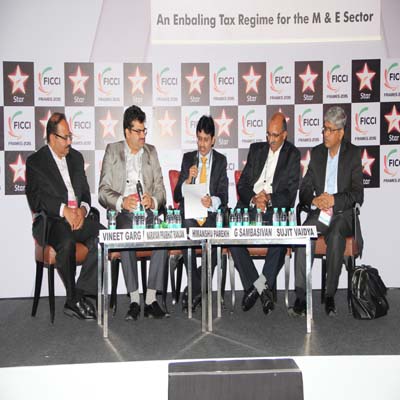
    A detailed panel discussion on the same was held in FICCI Frames moderated by KPMG executive director Himanshu Parekh with Viacom 18 CFO Narayan Prabhat Ranjan, Disney UTV CFO Sujit Vaidya, Tata Sky CFO G Sambasivan and Hathway Datacom deputy CFO Vineet Garg on the panel.


    The financial officers put up the issue of multiple taxation policy in India and inconsistency of the government, which makes scenario less business friendly. Other major issues bothering industry is lack of clarification and the biggest sufferer of that is consumer. Speaking on what the government should do, Ranjan said, “Whenever an amalgamation takes place and there is a loss, the carry forward of losses is allowed and that is something that the government should address with immediate effect. Moreover the issue of service tax VAT and excise duties should also be paid attention at. Why should one product be taxed numerous occasions with various nomenclatures?”


    Echoing Ranjan’s point of view, Vaidya added, “In other countries, if a consumer pays 100, 50 is devoted to the content. Whereas in India, due to the multiple taxation system, only 30 per cent is devoted to content. Service tax has been another pain point and entertainment tax, which varies from state to state and ranged anywhere between 10 to 40 per cent approximately is something government should look after.”


    The government in numerous occasions came on record and accepted the irregularities when it comes to taxation and GST has been portrayed as a solution. But again GST is also in experimentation stage and concrete figures are yet to be displayed in public forum. Sambasivan asserted, “Things which we expected to change did not change and there is no reason to be buoyed by GST. There is no clarity on whether entertainment tax will be subsumed or not. There is a cap of 16 – 27 per cent between which the tax will fluctuate and hence no matter how much ever we plead for a rational uniform policy, nothing of that sort comes out. Now we get 30 when someone spends 100 and if this phenomenon keeps sustaining then share holders will stop putting money as all expect high return.”


    “With digitization phase III and IV to follow, the opportunity of growth increases but at the same time there is a huge requirement of a consistent regulatory body, which has the intention to make scenarios business friendly. All the time we are suppose to devote on improvising and innovating our business model we are devoting on managing tax complacencies. AOP is an unnecessary hassle and hugely unwanted, my request to the government is to come to a consensus and make rational policy which is a win win for both the parties” concluded Garg.

  • DTH players react to Budget 2015

    DTH players react to Budget 2015

    MUMBAI: Some time before the presentation of the budget, the Direct-To-Home (DTH) Operators’ Association of India had sent its wish list to the Ministry of Information and Broadcasting (MIB) asking for certain demands to be fulfilled for the sector. The Budget 2015 saw a strong no-no with an increase in service tax from the current 12.36 per cent to 14 per cent and the demands not being fulfilled. Additionally, the date for the roll out of Goods and Service Tax (GST) has been announced.

    Expressing his displeasure on the same, Videocon d2h CEO Anil Khera tells Indiantelevision.com, “The DTH and cable sector were ignored in the budget. The hike in the service tax will further be passed on to the consumers through the packs. Nothing from the wish list was taken into account.”


    It may be recalled that the wish list had asked the service tax for DTH services to be put in the negative list of service tax. It had also demanded for infrastructure status for the DTH sector.
     
    When asked for his reaction to the budget, DTH Operators’ Association president and Dish TV CEO RC Venkateish opines that he is happy that the GST date has been announced, while it was already known that the increase in service tax would be increased in two stages. “While the announcement of the GST date i.e 1 April, 2016 will have benefits, for the short term one would pay that extra one per cent, which is not material. The GST implementation will give us a substantial reduction in overall taxes,” he says.


    Echoing his thoughts on the Budget 2015, Tata Sky CEO Harit Nagpal says that he was hoping that at least one of the two taxes that the industry pays to the Centre and the State would be absorbed, which did not happen. “We are the only industry that pays service tax to the Centre and entertainment tax to the state,” says Nagpal. 


    According to him, this long standing demand to negate one of the taxes was not granted and instead what one saw was the service tax being hiked. Differing with Khera’s point of view, Nagpal informs that the increase will not be passed on to the subscribers through an increase in price packs as the amount is minimal which is one per cent.

  • Bollywood pins hope on the new Maharashtra government

    Bollywood pins hope on the new Maharashtra government

    MUMBAI: As the new Maharashtra Chief Minister took oath to serve the state, the Film and Television Producers Guild of India has come up with a list of issues and challenges the industry currently faces. 


    The entertainment capital of India – Mumbai has been the centre of the Indian entertainment industry since its inception and this industry provides employment directly or indirectly to almost 5 million people in the country. However, serious implications caused by the various archaic laws and heavy burden of taxation on the Hindi film sector has stunted the growth of this industry and made several stalwarts displeased with the system, said the statement issued by the organisation.


    According to the Film and Television Guild of India, the high taxes imposed on the Hindi film industry in the state, like the Entertainment Tax on films, applicability of VAT on television production business and stamp duty to keep local bodies taxes out of the proposed GST, have cast a dark spell for the ‘Film Guild’.


    The absence of single window mechanism has resulted in systematic harassment and malpractices over the years, and has increased costs for the producers thereby significantly discouraging producers from shooting in the state. In addition to this, the lack of adequate cinema halls in the state (much lower than southern states) has hampered the growth of the film industry and directly resulted in increase in piracy and loss of revenues to the government, as well as the industry, states the guild.


    These issues are not only detrimental to the growth of the industry but will result in an inevitable breakdown of the entire film industry, it added.


    Speaking about the various concerns weighing down the sector, Film and Television Producers Guild of India president Mukesh Bhatt said, “Maharashtra has always been the home for the Hindi film industry. Sadly, we have been made to feel like an orphan in our own home state. Leave aside any support; we are penalized for making films in a language which does not belong to any other state in the country including Maharashtra. The impartial treatment given to Hindi film industry in our own state in the past is obvious when it comes to the high tax structure, archaic laws and multiple complications restricting growth of the film industry in the state.”


    However, showcasing hope in the new chapter of Maharashtra politics, he added, “We are confident that the new BJP government in Maharashtra will address these pending issues and help the film industry achieve newer heights.”


    Mumbai has been the dream city for a lot of Bollywood actors, who have carved their space in the history of cinema and in the hearts of their fans over the years. It’s time that the entertainment industry is rewarded for all these years of service to the people and required changes be made in the system, as they hinge their hope on the newly elected BJP government.

  • There is a need for uniform tax regime in the country: Siddharth Roy Kapur

    There is a need for uniform tax regime in the country: Siddharth Roy Kapur

    MUMBAI: A country, which is considered filmy, with the kind of movies produced and the impact it has on the people, still faces numerous challenges. And one of this is the lack of cinema screens.


    In a panel discussion at the 2nd Media & Entertainment Law Forum 2014 conducted by Legal Era, Walt Disney India MD Siddharth Roy Kapur stressed on how even with a population of 1.2 billion, there are only 13 screens for every one million people. “In fact, 3 Idiots, the greatest hit and revenue generator so far reached out to only 3 per cent of the entire Indian population, in terms of screens. All the others saw it on TV,” informed Kapur.


    M&E industry contributes 0.5 per cent of the overall GDP of the country, of which movies is a Rs 12,000 crore business. Theatrical release, satellite rights, international rights and digital screening are all different models of revenue streams for the industry currently.


    “We have so far not represented ourselves in a way that we should have to the government. We need to work with the government so that they know how well we can contribute to the economy of the country. It is only then that they will understand our challenges,” added Kapur.


    According to Kapur, infrastructure, piracy, regulation and creativity if galvanised in the right direction can take the movie industry forward.  “There is not much regulation on the piracy front as well,” he said.  


    The country also needs to invest in talent to ensure creativity. “Apart from that, of course we need good movies. The industry has to focus on writing and paying more to the writers. We need to move out of the south Asian diaspora and cater to a wider audience world over,” he opined.


    An interesting point that came out during the panel discussion was the fact that regional movies contribute to 40 per cent of the total revenue the industry generates. “Mostly it comes from the Tamil and Telugu movies,” informed Reliance Big Films CFO Shibasish Sarkar.


    Addressing the growth of regional movies, Kapur said that though these are important markets their sensibilities are different. “So it is better to ally with local partners, in terms of directors or producers at least for a couple of initial movies and then get your hands dirty. We do one Tamil movie a year now,” he informed.


    Talking on the investment in movies, Sarkar said that any investor today looks at risk return ration before investing in a project. “Unfortunately, we have not yet been able to create an environment such that the investors can be made to feel confident of their investments,” he added.


    What’s more, even with popularity of Bollywood world over and 100 per cent FDI, none of that money comes to India. “There is no venture capital environment here,” said Cinema Capital Advisory managing director and founder Samir Gupta.


    Investors, according to Gupta, look for incentivised markets and so the government should be working at giving more incentives, if not at the central level, but at the state level. “There should be a legal framework for states, which can help them grow,” he said.


    India is a tough market for animation movies, feels Kapur. “Audiences are used to watching animated content on TV for free, and so it is very difficult to get them to buy a movie ticket worth Rs 300 for an animated movie.” Another reason why animation movies have not grown in the country, Kapur opines that it lies in the fact that Indian filmmakers are not good storytellers when it comes to animation.


    The panel also felt that there is a need for a uniform tax situation in the country. “Overall Goods and Services Tax (GST) is definitely a positive,” said Kapur. According to the panelists, in a uniform GST regime, entertainment tax will get subsumed into it, and this will be a complete game changer.  

  • Exemption of service tax to be limited to films exhibited in cinema halls

    Exemption of service tax to be limited to films exhibited in cinema halls

    NEW DELHI: The Government has decided to limit the benefit of exemption of service tax to films exhibited in cinema halls.

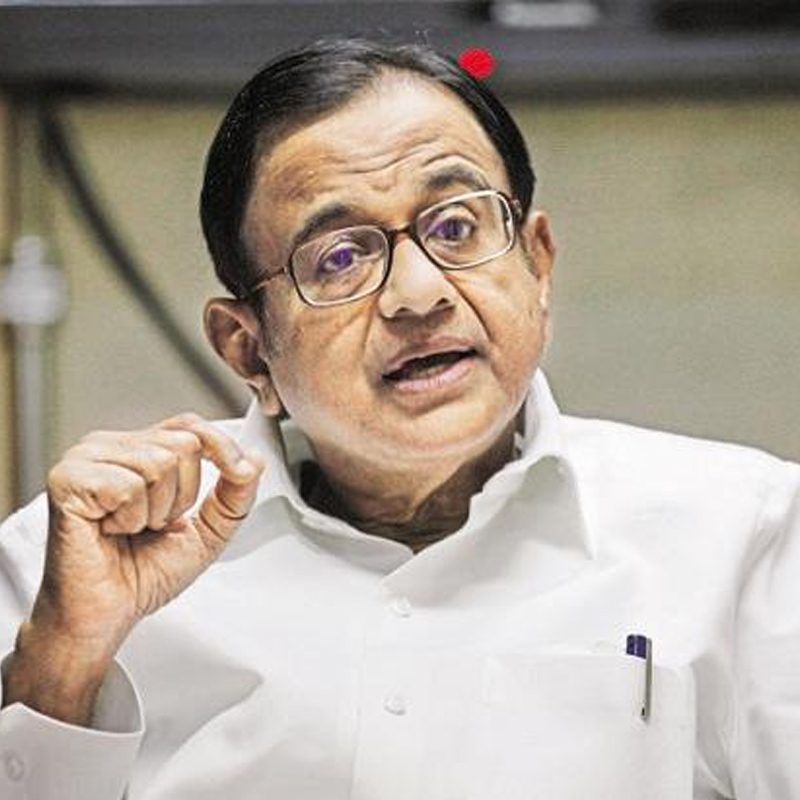
    Finance Minister P Chidambaram today said in his Budget speech for 2013-14 that he had accepted a request of the film industry in this connection.

    He pointed out that at the request of the film industry last year, full exemption of service tax was granted on copyright on cinematography.

    The Film Federation of India had in its memorandum to the Finance Ministry said that cinema theatres and digital distribution should not be subjected to service tax for Business Support Services.

    However, film industry sources said that they had expected more concessions in view of the fact that this year marks the centenary year of Indian cinema.

    Among other things, the Federation had appealed to the Government that entertainment tax imposed by states and local bodies should be subsumed in the proposed Goods and Services Tax (GST).

    The FFI said that the service tax on performing artistes should also be done away with. It was also demanded that the condition on filmmakers to fill a form under Section 52A of the Income Tax Act for all payments above Rs 50,000 should be confined to only cash payments.

    The Federation said the sale, distribution or exhibition of cinematographic films, not regarded as royalty under 9(1)(vi) of the Income Tax Act 1961, is nullified as it is not available under the Direct Tax Code 2010. As it is not regarded as royalty, it does not attract the 10 per cent with-holding tax under Section 194J of the Act. It had, therefore, said an amendment should be made to exclude this from the Code.

    Another demand was that exemption to digital conversion – and supply to cinemas – may be put in the Mega Exemption List.

    Film industry welcomes exemption move

    Film industry organisations today welcomed the benefit of exemption of service tax to films exhibited in cinema halls but felt that the Government had not taken note of the problems being faced by the film industry at a time when it was marking a centenary of Indian cinema.

    Film and Television Producers Guild of India president Mukesh Bhatt in a telephonic interview regretted that Chidambaram had not considered digital distribution of films for exemption. He said the government should realise that digital distribution is helping curb piracy of films and is, thus, helping the government earn in entertainment tax and other taxes.

    Exemption should have been given to all sectors relating to film exhibition and distribution, he told indiantelevision.com.

    Film Federation of India President Bijay Khemka told indiantelevision.com that while the industry welcomed the exemption of service tax to films exhibited in cinema halls, he wondered why the Minister had said the tax exemption would be ‘limited’ to this sector only. He said the Federation had in its memorandum to the Finance Ministry said that cinema theatres and digital distribution should not be subjected to service tax for Business Support Services.

    However, both Khemka and Bhatt felt that they would be able to say more after seeing the Finance Bill.

    Meanwhile reacting to the partial relief to the film sector, Ernst and Young Tax Partner Rakesh Jariwala said: ‘Partial relief for the film sector as the non-theatrical revenues of a movie are now brought back in the tax net. Producers and distributors will be able to recover a portion of their input credits with this change, thus mitigating a portion of the adverse impact created by the complete exemption granted last year.’

    He said for non-film business, impact of removal of exemption to copyright transactions will have to be measured in terms of eligibility of the service receiver to take credits.

    He said however that the question of double taxation of transactions in intangible rights (between service tax and Value added tax) remains unanswered.

  • Film industry wants entertainment tax to be subsumed in proposed GST

    Film industry wants entertainment tax to be subsumed in proposed GST

    NEW DELHI: The Film Federation of India has appealed to the Government that entertainment tax imposed by states and local bodies should be subsumed in the proposed Goods and Services Tax (GST).

    On its budget proposals to Finance Minister P Chidambaram, the FFI has said that the service tax on performing artistes should also be done away with.

    In the memorandum submitted to the Ministry, the Federation says the condition on filmmakers to fill a form under Section 52A of the Income Tax Act for all payments above Rs 50,000 should be confined to only cash payments.

    The Federation says the sale, distribution or exhibition of cinematographic films, not regarded as royalty under 9(1)(vi) of the Income Tax Act 1961, is nullified as it is not available under the Direct Tax Code 2010. As it is not regarded as royalty, it does not attract the 10 per cent with-holding tax under Section 194J of the Act. An amendment should, therefore, be made to exclude this from the Code.

    The exemption to digital conversion – and supply to cinemas – may be put in the Mega Exemption List.

    The exemption in customs duty provided for certain goods under the ATA Carnet (a uniform law applicable in 71 countries including India) does not include film equipment. As a result, it discourages foreign filmmakers from coming into India to shoot here. This should be amended to include film equipment so that more filmmakers come into India to shoot. This would also encourage the tourism and related industries.

    Many Indian studios are hired by foreign filmmakers for post-production work. But under the Place of Provision of Service Rules 2012, only material brought in for repairs, reconditioning or re-engineering are covered. The Federation says that post-production is also in many ways repairing and reconditioning, the Rules should be amended to cover post-production work undertaken by Indian studios for foreign filmmakers.

    Cinema theatres and digital distribution should not be subjected to service tax for Business Support Services, the Federation has said.

    Similarly, the service tax on renting of immoveable commercial properties should not include cinema houses or multiplexes.

    The services rendered by a digital cinema distributor were earlier exempted from service tax by the CBEC in March 2007. However, the introduction of the negative list-based service tax did not cover this. The industry, therefore, wants that the exemption of service tax in this regard should continue.

    Meanwhile, Dun & Bradstreet Information Services India Pvt. Ltd has in its pre-budget demands sought a unified tax structure rationalising multiple levies can ease compliance and reduce the existing tax burden from the industry. The media & entertainment industry is presently subject to a host of taxes like service tax, VAT, entertainment tax etc.

    It has also sought more clarity on the potential levy of service tax as well as VAT on activation charges and recharge coupon vouchers is expected.

    Moreover, to enhance digitisation of electronic media, the industry expects abolishing/reducing the import duty on set top boxes. This will also result in reduction of capital expenditure for cable / DTH companies.

    At present, the income tax act considers the subscription revenues earned by the foreign telecasting company as royalty or business income. The income from grant of distribution rights is in the nature of business income and not copyright. Hence, such payments should not be considered as royalty.