Tag: GST

  • Tally’s GST law awareness campaign

    Tally’s GST law awareness campaign

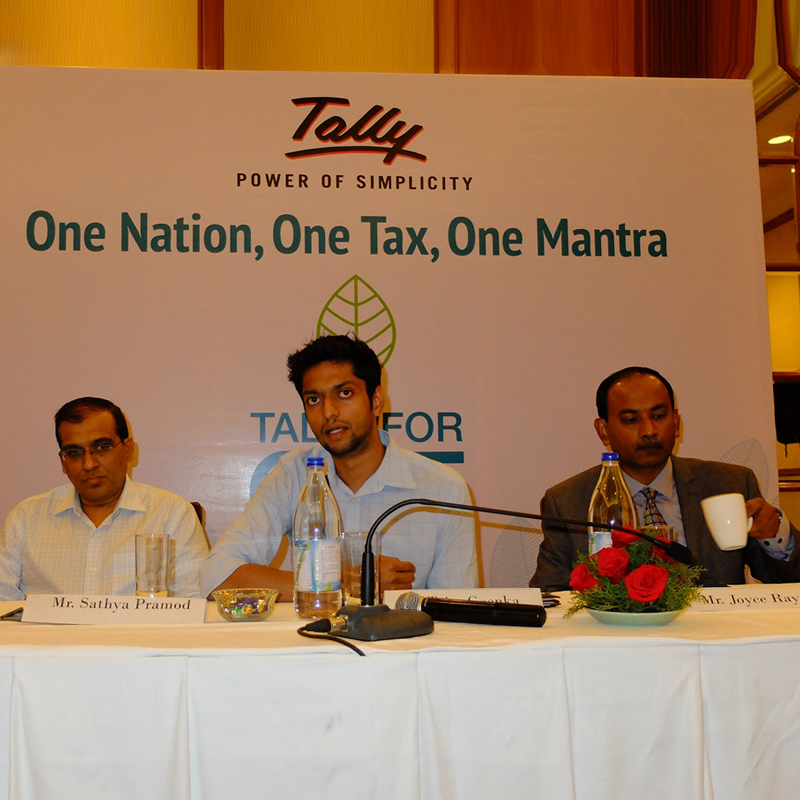
    BENGALURU: Indian software product company Tally Solutions Private Limited (TSPL) that has financial accounting package for businesses ‘Tally’ as a flagship product has launched a GST mobile application to ensure easy adoption of the technology led law. The free app, available for smartphones on Android and iOS platforms, will be a rich source of information on the yet to be implemented Goods and Services Tax (GST) law for businesses says TSPL.

    TSPL executive director Tejas Goenka said, “After a number of events that we have conducted with our partners in the ecosystem across the nation, we realised the need to develop an easy to use and yet a comprehensive tool that would ensure the business transition smoothly to GST in the coming year. It is to deliver this solution to the businesses that we have invested in the Tally for GST App.”

    The GST law is a boon of sorts for TSPL, in that it has provided it with a platform to improve revenues through upgrades and garner more users for its business software.

    TSPL says it has been making constant efforts to equip small businesses and traders and help simplify for them the process of adoption and compliance of GST. TSPL claims that its solutions power over a million (10 lakh) businesses and it is constantly mobilising its manpower and systems to help ease the transition of its existing as well additional users to the GST regime.

    Among its initiatives include collaboration with the Confederation of All India Traders (CAIT) in a bid to train the trading community on GST. The company also recently launched a blog on GST that currently has eleven experts on board. Besides, TSPL has conducted over 170 ground events across India with various partners across India to create awareness about GST. These partners include TSPL’s channel partners, trade bodies and associations and large corporate clients.

    “On an average day, we have about 5 events on GST in any part of the country where we address between 100 to 200 people, and hence we have already communicated with about 20,000 people. The number of events will only go up as the deadline of 1 April approaches,” elaborated Goenka.

    Goenka says that his team is working on a mass media communications plan that includes television commercials among other mediums about Tally’s GST upgrade, once it is available.

    The company recently qualified as a GST Suviadha Provider (GSP) by the GSTN Network, and is one more along with 33 others that are also so qualified.

  • Broadband Forum report links incentives under GST to Digital India success

    Broadband Forum report links incentives under GST to Digital India success

    NEW DELHI: As online media consumption in India has shown growth over the past few years with mobile devices having taken over as the preferred medium of consuming online media, the government needs to incentivise further mobile handset manufacturing under the proposed Goods and Services Tax (GST), according to a new study.

    The Broadband India Forum (BIF), in association with knowledge partner Ernst & Young (EY), in a research paper unveiled yesterday said that it becomes important to grant incentives to domestic manufacturing in order to set off the “local disabilities” in manufacturing, including the booming mobile handset manufacturing.

    Wider deployment of 4G networks along with affordability and indigenisation, smartphones are going to drive mobile broadband to the next level of penetration, the BFI-EY report stated, adding that mobile handset manufacturing in India has gained fresh momentum in the past two years with a number of OEMs and third-party contract manufacturers setting up facilities in the country. The number of mobile handset manufacturing facilities reached 40 in August 2016 from just three in 2014 driven by the increase in duty differential in Union Budget 2015 to 11.5 per cent from five per cent, the report highlighted.

    According to Partner EY Bipin Sapra, “(Mobile) Handset manufacturing industry has seen a tremendous growth in past few years driven by government’s ‘Make in India’ initiative and policy changes such as duty reduction on domestically manufactured handsets. It is expected that the adoption of smartphones in India will go up to 688 million by 2020 as compared to 238 million in 2015. With the introduction of GST, most of the current central and state taxes/duties will be subsumed under GST. Thus, it is expected that the incentives available to domestic manufacturers under the current regime would decrease and there is need to continue the incentives under the GST regime to meet the increasing demand through domestic production.”

    The report, which notes the country has embarked on one of the world’s most ambitious broadband project with the `Digital India’ programme seeking to transform India into a digitally empowered society and knowledge economy, suggested the government may walk the extra mile to extend similar benefits to the component manufacturers that would encourage more investment in India and give a boost to the handset manufacturing eco-system.

    Pointing out that once the eco-system is created, the prices of parts and components may also become more competitive that in turn will reduce the cost of mobile handsets and make Indian handset manufacturers more competitive globally, BIF president T.V. Ramachandran said, “The broadband device today is a smartphone. We need to increase smartphone penetration as India today has less than 30 per cent smartphone penetration. This can only happen through local manufacturing and by further increasing local value addition.”

    The GST alone will by itself not be the driver for incentivising manufacturing in a country and some of the essential factors for a sustained manufacturing environment in the country are infrastructure, a robust manufacturing ecosystem, skilled manpower, technology, R&D facilities, etc., the report said.

    The report has also come out with a formula that may be adopted to hand out incentives to domestic manufacturing under GST.

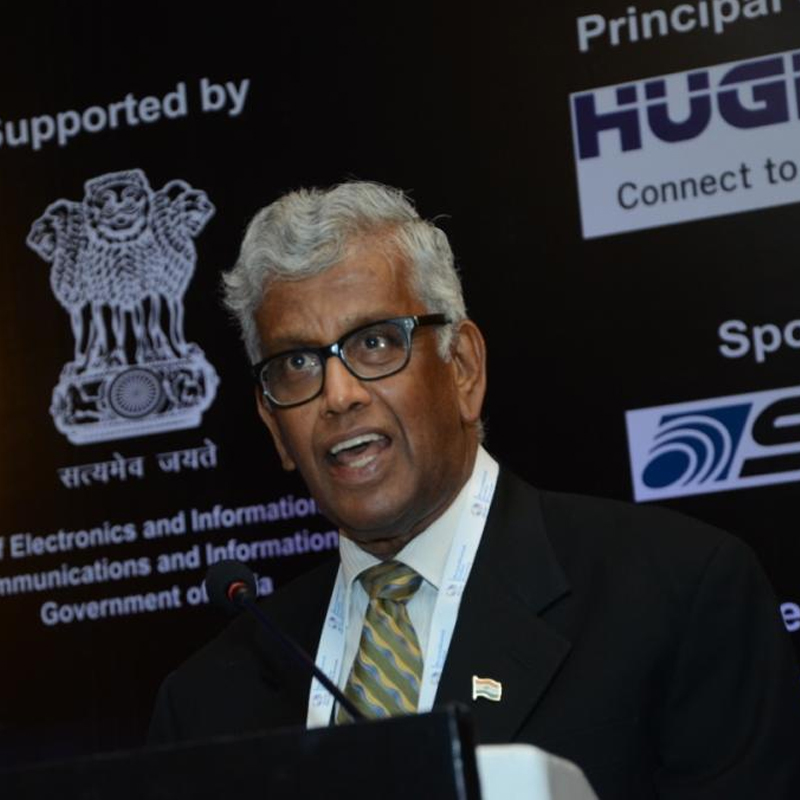
    Electronics and Information Technology secretary Aruna Sundararajan, who was present during unveiling of the report, said, “This complementary study by EY-BIF, providing how incentives can be continued under GST to the domestic handset industry, will be helpful for the government to frame a better policy and boost local handset manufacturing.”

  • Broadband Forum report links incentives under GST to Digital India success

    Broadband Forum report links incentives under GST to Digital India success

    NEW DELHI: As online media consumption in India has shown growth over the past few years with mobile devices having taken over as the preferred medium of consuming online media, the government needs to incentivise further mobile handset manufacturing under the proposed Goods and Services Tax (GST), according to a new study.

    The Broadband India Forum (BIF), in association with knowledge partner Ernst & Young (EY), in a research paper unveiled yesterday said that it becomes important to grant incentives to domestic manufacturing in order to set off the “local disabilities” in manufacturing, including the booming mobile handset manufacturing.

    Wider deployment of 4G networks along with affordability and indigenisation, smartphones are going to drive mobile broadband to the next level of penetration, the BFI-EY report stated, adding that mobile handset manufacturing in India has gained fresh momentum in the past two years with a number of OEMs and third-party contract manufacturers setting up facilities in the country. The number of mobile handset manufacturing facilities reached 40 in August 2016 from just three in 2014 driven by the increase in duty differential in Union Budget 2015 to 11.5 per cent from five per cent, the report highlighted.

    According to Partner EY Bipin Sapra, “(Mobile) Handset manufacturing industry has seen a tremendous growth in past few years driven by government’s ‘Make in India’ initiative and policy changes such as duty reduction on domestically manufactured handsets. It is expected that the adoption of smartphones in India will go up to 688 million by 2020 as compared to 238 million in 2015. With the introduction of GST, most of the current central and state taxes/duties will be subsumed under GST. Thus, it is expected that the incentives available to domestic manufacturers under the current regime would decrease and there is need to continue the incentives under the GST regime to meet the increasing demand through domestic production.”

    The report, which notes the country has embarked on one of the world’s most ambitious broadband project with the `Digital India’ programme seeking to transform India into a digitally empowered society and knowledge economy, suggested the government may walk the extra mile to extend similar benefits to the component manufacturers that would encourage more investment in India and give a boost to the handset manufacturing eco-system.

    Pointing out that once the eco-system is created, the prices of parts and components may also become more competitive that in turn will reduce the cost of mobile handsets and make Indian handset manufacturers more competitive globally, BIF president T.V. Ramachandran said, “The broadband device today is a smartphone. We need to increase smartphone penetration as India today has less than 30 per cent smartphone penetration. This can only happen through local manufacturing and by further increasing local value addition.”

    The GST alone will by itself not be the driver for incentivising manufacturing in a country and some of the essential factors for a sustained manufacturing environment in the country are infrastructure, a robust manufacturing ecosystem, skilled manpower, technology, R&D facilities, etc., the report said.

    The report has also come out with a formula that may be adopted to hand out incentives to domestic manufacturing under GST.

    Electronics and Information Technology secretary Aruna Sundararajan, who was present during unveiling of the report, said, “This complementary study by EY-BIF, providing how incentives can be continued under GST to the domestic handset industry, will be helpful for the government to frame a better policy and boost local handset manufacturing.”

  • 2016’s top hashtag trends

    2016’s top hashtag trends

    MUMBAI: From Brexit, to GST, to US elections and now demonetisation, 2016 has been an eventful year so far, and continues to throw googlys at us in the last few remaining days (Tamil Nadu CM’s death). No wonder the netizens were exceptionally chatty on Twitter this year.

    The country’s trending moments became worldwide conversations on Twitter, be it PM Modi’s revolutionary demonetisation reform (Most Influential Moment of the Year), Delhi’s rising pollution problem, the debut of Global Citizen Festival in India, and the Bollywood glam at the Filmfare Awards.

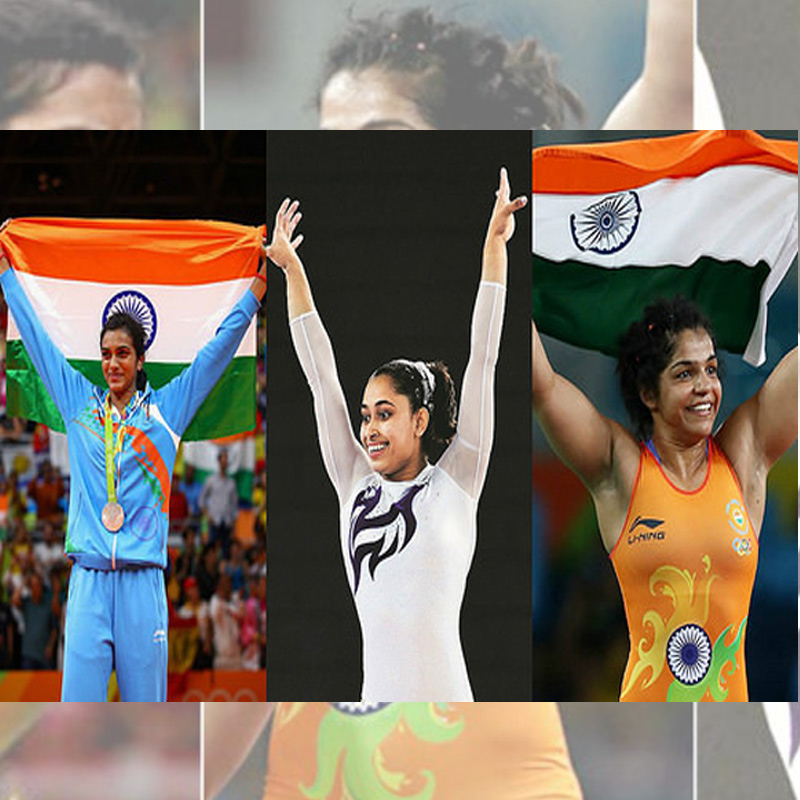
    PV Sindhu, Sakshi Malik, and Dipa Karmakar, India’s women athletes that won a million hearts on Twitter during the Olympics made #Rio2016 the Top Hashtag Trend of the Year on Twitter. Their medal victories and near-misses inspired women everywhere, and showcased a spirit of unwavering determination and grit.

    Virat Kohli’s Tweet in support of Anushka Sharma was the Golden Tweet or the most Retweeted Tweet of 2016.

    According to Twitter India, Twitter reflected and influenced Indian society that was united together in celebration, victory, protests, revolutionary reforms, crises, and significant cultural moments.

    To commemorate that, the micro blogging site has released a list of highlights from Twitter’s 2016.

    Hashtags are the anchors of any solid conversation; they enable users to discover and participate in what others are talking about for an issue they care about. With 7 of the top 10 hashtags this year related to the #Rio2016 Olympics and #WT20 cricket, sports dominated the trending Twitter conversations for the nation. The government’s flagship programme, #MakeInIndia is also one of the most popular Hashtag Trends of the year with its global appeal.

    1. #Rio2016

    All conversations surrounding this exciting sporting global moment converged on Twitter, as Indians Tweeted using the #Rio2016 hashtag. The hashtag united the country in this moment of national prominence and the Tweets reflected the pride, thrill and joy of Indians everywhere as Indian athletes won medals at the Olympics and received well-deserved cheers on the platform.

    2. #IndvsPak

    The two national teams enthralled fans with a cut-throat match in the group stage of the ICC WT20 tournament. The cricket mania took Twitter by storm as aficionados from either side of the border Tweeted fervently with #IndvsPak to join the conversation on the platform onMarch 19th.

    3. #WT20

    The apex international championship of Twenty20 cricket was religiously Tweeted about by the nation’s ardent cricket lovers. Fans rejoiced at every six and coped together with every wicket by using the #WT20 hashtag from March 15 – April 3.

    4. #IndvsAus

    India battled it out against the Aussies in the group stage of the WT20 tournament. Enthusiastic Indians Tweeted their support for the national team with the #IndvsAus hashtag and celebrated the national win when India beat Australia on March 27th.

    5. #MakeInIndia

    The Government of India uses Twitter to promote their flagship #MakeInIndia programme that encourages companies to manufacture their products in India. The Government shared updates on new deals, joint ventures and tech transfers using this hashtag around the world. Large corporations as well as SMBs across various verticals also Tweeted regarding developments related to this global #MakeInIndia initiative.

    6. #IndvsWI

    India vs West Indies was the penultimate knockout semi-final game in the WT20 tournament. #IndvsWI trended all day on March 31st and Tweets regarding the much anticipated match took over the Twitter timeline. West Indies won the match and millions of broken-hearted Indians still stood strong with Team India, in a display of true passion.

    7. #IndvsBan

    Indians around the world were united with #IndvsBan as fans Tweeted to fellow cricket lovers and joined the conversation on March 23rd. India clinched the thrilling WT20 match by defeating Bangladesh by 1 run and Twitter reflected the sentiments of this joyous moment.

    8. #PVSindhu

    India’s 1.2 billion people stood behind PV Sindhu (@Pvsindhu1) as she set out to compete against world #1 Carolina Mari in the Olympic Badminton Women’s Final. She became the first Indian woman to win a silver medal at the Olympics and Indians took to Twitter to congratulate her. #PVSindhu became an inspiring story for women empowerment as young women, mothers, and well-known women icons in India came together on Twitter to celebrate her victory.

    9. #surgicalstrike

    Debates and discussions ensued on Twitter after the Indian Army carried out a surgical strike against Pakistan on September 29th, following the Uri Attack. The nation stood divided in favour of or against this choice of action that led to a significant number of casualties of Indian soldiers.

    10. #JNU

    Jawaharlal Nehru University Students’ Union (JNUSU) president Kanhaiya Kumar was slapped with sedition charges and arrested on February 13th for a speech he gave at an event held on campus to mark the third anniversary of terror convict Afzal Guru’s hanging. The#JNU hashtag took Twitter by storm as people debated over serious issues such as condemning freedom of speech that this arrest reflected.

  • 2016’s top hashtag trends

    2016’s top hashtag trends

    MUMBAI: From Brexit, to GST, to US elections and now demonetisation, 2016 has been an eventful year so far, and continues to throw googlys at us in the last few remaining days (Tamil Nadu CM’s death). No wonder the netizens were exceptionally chatty on Twitter this year.

    The country’s trending moments became worldwide conversations on Twitter, be it PM Modi’s revolutionary demonetisation reform (Most Influential Moment of the Year), Delhi’s rising pollution problem, the debut of Global Citizen Festival in India, and the Bollywood glam at the Filmfare Awards.

    PV Sindhu, Sakshi Malik, and Dipa Karmakar, India’s women athletes that won a million hearts on Twitter during the Olympics made #Rio2016 the Top Hashtag Trend of the Year on Twitter. Their medal victories and near-misses inspired women everywhere, and showcased a spirit of unwavering determination and grit.

    Virat Kohli’s Tweet in support of Anushka Sharma was the Golden Tweet or the most Retweeted Tweet of 2016.

    According to Twitter India, Twitter reflected and influenced Indian society that was united together in celebration, victory, protests, revolutionary reforms, crises, and significant cultural moments.

    To commemorate that, the micro blogging site has released a list of highlights from Twitter’s 2016.

    Hashtags are the anchors of any solid conversation; they enable users to discover and participate in what others are talking about for an issue they care about. With 7 of the top 10 hashtags this year related to the #Rio2016 Olympics and #WT20 cricket, sports dominated the trending Twitter conversations for the nation. The government’s flagship programme, #MakeInIndia is also one of the most popular Hashtag Trends of the year with its global appeal.

    1. #Rio2016

    All conversations surrounding this exciting sporting global moment converged on Twitter, as Indians Tweeted using the #Rio2016 hashtag. The hashtag united the country in this moment of national prominence and the Tweets reflected the pride, thrill and joy of Indians everywhere as Indian athletes won medals at the Olympics and received well-deserved cheers on the platform.

    2. #IndvsPak

    The two national teams enthralled fans with a cut-throat match in the group stage of the ICC WT20 tournament. The cricket mania took Twitter by storm as aficionados from either side of the border Tweeted fervently with #IndvsPak to join the conversation on the platform onMarch 19th.

    3. #WT20

    The apex international championship of Twenty20 cricket was religiously Tweeted about by the nation’s ardent cricket lovers. Fans rejoiced at every six and coped together with every wicket by using the #WT20 hashtag from March 15 – April 3.

    4. #IndvsAus

    India battled it out against the Aussies in the group stage of the WT20 tournament. Enthusiastic Indians Tweeted their support for the national team with the #IndvsAus hashtag and celebrated the national win when India beat Australia on March 27th.

    5. #MakeInIndia

    The Government of India uses Twitter to promote their flagship #MakeInIndia programme that encourages companies to manufacture their products in India. The Government shared updates on new deals, joint ventures and tech transfers using this hashtag around the world. Large corporations as well as SMBs across various verticals also Tweeted regarding developments related to this global #MakeInIndia initiative.

    6. #IndvsWI

    India vs West Indies was the penultimate knockout semi-final game in the WT20 tournament. #IndvsWI trended all day on March 31st and Tweets regarding the much anticipated match took over the Twitter timeline. West Indies won the match and millions of broken-hearted Indians still stood strong with Team India, in a display of true passion.

    7. #IndvsBan

    Indians around the world were united with #IndvsBan as fans Tweeted to fellow cricket lovers and joined the conversation on March 23rd. India clinched the thrilling WT20 match by defeating Bangladesh by 1 run and Twitter reflected the sentiments of this joyous moment.

    8. #PVSindhu

    India’s 1.2 billion people stood behind PV Sindhu (@Pvsindhu1) as she set out to compete against world #1 Carolina Mari in the Olympic Badminton Women’s Final. She became the first Indian woman to win a silver medal at the Olympics and Indians took to Twitter to congratulate her. #PVSindhu became an inspiring story for women empowerment as young women, mothers, and well-known women icons in India came together on Twitter to celebrate her victory.

    9. #surgicalstrike

    Debates and discussions ensued on Twitter after the Indian Army carried out a surgical strike against Pakistan on September 29th, following the Uri Attack. The nation stood divided in favour of or against this choice of action that led to a significant number of casualties of Indian soldiers.

    10. #JNU

    Jawaharlal Nehru University Students’ Union (JNUSU) president Kanhaiya Kumar was slapped with sedition charges and arrested on February 13th for a speech he gave at an event held on campus to mark the third anniversary of terror convict Afzal Guru’s hanging. The#JNU hashtag took Twitter by storm as people debated over serious issues such as condemning freedom of speech that this arrest reflected.

  • Bihar govt trebles cable TV entertainment tax to Rs 50

    Bihar govt trebles cable TV entertainment tax to Rs 50

    MUMBAI: Even as the government is working on subsuming entertainment and other incidental taxes into a goods and service tax (GST) which would be around 18 per cent, cable TV subscribers in Bihar are about to be delivered a blow to their wallets. A couple of days ago, the state’s cabinet stamped its approval on a proposal to hike entertainment tax from Rs 15 to Rs 50 per subscriber.

    That’s a 200-plus per cent escalation, and it places the state amongst the top entertainment tax-levying states in India. According to earlier statistics released by the Telecom Regulatory Authority of India (TRAI), Bihar accounts for about three per cent of the cable TV subscribers in India. That means the state has anywhere between two million and three million subs.

    According to data released by cable TV tracking firm Chrome Data, Bihar had achieved only 68 per cent digitization by February 2016. Additionally, TV viewers in the state had been opting for DTH, rather than cable with the DTH subscriber base, jumping 32 per cent in just one month, following the imposition of digitization. Estimates are that only the city of Patna has a 400,000 cable TV subscribers.

    Currently, TV viewers’ cable bills are anywhere between Rs 250 and Rs 350 per month for their cable TV connection. With the Rs 50 entertainment tax levy, cable TV MSOs are expecting these to rise to between Rs 300 and Rs 400.

    The Times of India has stated that the Bihar government is taking this step to plug the revenue gap that has sprung up following the imposition of prohibition. It says the government had a shortfall of Rs 5,000 crore. Additionally, the commercial taxes department has been set a tax collection target of Rs 22,000 crore for fiscal 2016-2017. And, of course, cable TV is an easy target.

    However, with disclosures from the fragmented cable TV trade being as they are, observers wonder whether the tax hike will yield the desired results.

  • Bihar govt trebles cable TV entertainment tax to Rs 50

    Bihar govt trebles cable TV entertainment tax to Rs 50

    MUMBAI: Even as the government is working on subsuming entertainment and other incidental taxes into a goods and service tax (GST) which would be around 18 per cent, cable TV subscribers in Bihar are about to be delivered a blow to their wallets. A couple of days ago, the state’s cabinet stamped its approval on a proposal to hike entertainment tax from Rs 15 to Rs 50 per subscriber.

    That’s a 200-plus per cent escalation, and it places the state amongst the top entertainment tax-levying states in India. According to earlier statistics released by the Telecom Regulatory Authority of India (TRAI), Bihar accounts for about three per cent of the cable TV subscribers in India. That means the state has anywhere between two million and three million subs.

    According to data released by cable TV tracking firm Chrome Data, Bihar had achieved only 68 per cent digitization by February 2016. Additionally, TV viewers in the state had been opting for DTH, rather than cable with the DTH subscriber base, jumping 32 per cent in just one month, following the imposition of digitization. Estimates are that only the city of Patna has a 400,000 cable TV subscribers.

    Currently, TV viewers’ cable bills are anywhere between Rs 250 and Rs 350 per month for their cable TV connection. With the Rs 50 entertainment tax levy, cable TV MSOs are expecting these to rise to between Rs 300 and Rs 400.

    The Times of India has stated that the Bihar government is taking this step to plug the revenue gap that has sprung up following the imposition of prohibition. It says the government had a shortfall of Rs 5,000 crore. Additionally, the commercial taxes department has been set a tax collection target of Rs 22,000 crore for fiscal 2016-2017. And, of course, cable TV is an easy target.

    However, with disclosures from the fragmented cable TV trade being as they are, observers wonder whether the tax hike will yield the desired results.

  • GST: Both good and bad for the Indian cable TV sector

    GST: Both good and bad for the Indian cable TV sector

    MUMBAI: India’s most ambitious indirect tax reform, the Goods and Service Tax (GST) got the green flag from the Lok Sabah on 8 August.

    While, taxation rates under the GST regime are yet to be finalised, an indicative figure of 18 per cent is being talked of in various circles.

    Indiantelevision.com has already postulated that DTH companies like Dish TV could be beneficiaries when GST goes live. Broadcasters, however, could be slapped on their wrists as GST is likely to result in their tax payment going up.

    However, cable TV distribution sector is going to benefit like its country cousin – the DTH segment. Estimates are that multisystem operators could end up saving around five to 10 per cent in taxes in many Indian states. However, in some the tax payouts could likely go up courtesy GST.

    MSOs operating in states like Punjab (with up to Rs 15000 annual entertainment tax), and Gujarat (Rs 6 per cable TV sub per month), Harayana (no tax), Kerala (Rs 5), Orissa (Rs 3) are going to be impacted negatively with their tax bill climbing up once GST becomes applicable. Other states like Maharashtra (Rs 45 per month subscriber), Jharkhand with Rs 30-50 per month per subscriber, Rs 20 in Delhi, Bihar Rs 15 per month per subscriber, will see a lightening of their tax burden.

    Says a cable TV industry observer: “Cable operators normally maintain three sets of books. One for the tax folks, one for the content providers, and one which has the real facts about their business. Many of them are not tax payers at all. Under the new regime, they will have to clean up their acts, get their registration done, get their subscriber information all in order. And then pay their GST. That’s even if their margins keep coming under pressure on account of this.”

    Keep watching this space for further updates!

  • GST: Both good and bad for the Indian cable TV sector

    GST: Both good and bad for the Indian cable TV sector

    MUMBAI: India’s most ambitious indirect tax reform, the Goods and Service Tax (GST) got the green flag from the Lok Sabah on 8 August.

    While, taxation rates under the GST regime are yet to be finalised, an indicative figure of 18 per cent is being talked of in various circles.

    Indiantelevision.com has already postulated that DTH companies like Dish TV could be beneficiaries when GST goes live. Broadcasters, however, could be slapped on their wrists as GST is likely to result in their tax payment going up.

    However, cable TV distribution sector is going to benefit like its country cousin – the DTH segment. Estimates are that multisystem operators could end up saving around five to 10 per cent in taxes in many Indian states. However, in some the tax payouts could likely go up courtesy GST.

    MSOs operating in states like Punjab (with up to Rs 15000 annual entertainment tax), and Gujarat (Rs 6 per cable TV sub per month), Harayana (no tax), Kerala (Rs 5), Orissa (Rs 3) are going to be impacted negatively with their tax bill climbing up once GST becomes applicable. Other states like Maharashtra (Rs 45 per month subscriber), Jharkhand with Rs 30-50 per month per subscriber, Rs 20 in Delhi, Bihar Rs 15 per month per subscriber, will see a lightening of their tax burden.

    Says a cable TV industry observer: “Cable operators normally maintain three sets of books. One for the tax folks, one for the content providers, and one which has the real facts about their business. Many of them are not tax payers at all. Under the new regime, they will have to clean up their acts, get their registration done, get their subscriber information all in order. And then pay their GST. That’s even if their margins keep coming under pressure on account of this.”

    Keep watching this space for further updates!

  • GST: How concerned should the advertising world be?

    GST: How concerned should the advertising world be?

    MUMBAI: The Finance Act of India 1994 (defines ‘advertising’ as the sale of space or time services, and any such facility offered by an advertising agency or person is considered a taxable service. Why the need to put such a dry perspective to an otherwise vibrant and creative business?

    The answer is closely related the top trending topic among both netizens and citizens : Goods and Services Tax AKA GST.

    This very definition highlights that the advertising fraternity, much like any service sector industry functions in compliance with ‘Service Tax’ that is levied by the central government, whether it is on the advertiser, the seller or the agency facilitating. Therefore any major rehaul of the service tax system makes an impact on the sector — be it good or bad.

    So far industry observers and stakeholders have identified two key areas where GST has direct or indirect implication on the advertising industry of India — first is the incidence of tax or tax burden levied on the service sector, and secondly, cost of adapting new processes to deal with new tax regime.

    “In compliance with the general commentary on the issue, industry is predicting that the tax on services is likely to go up due to GST. Clearly, from our perspective, that will not be a welcome piece of news. Especially at a time when India is looking to speed up the process of economic growth, in which this industry has a very vital role to play. It would be in the country’s interest, our industry’s interest and that of our many clients’ that this activity is incentive-ised rather than the other way round,” the newly elected AAAI president and Publicis south Asia CEO Nakul Chopra observes.

    “We hope that the government in its wisdom, will hopefully keep the taxes at the current level or minimise any hikes,” Chopra adds.

    Elaborating on his second point of concern, Chopra says: ”The government has been working for some time on the IT backbone which is required to handle the immense change in the process in transitioning from Service Tax era to GST. This can also have a lot of implications for our industry and our members. Manufacturing industry, to which excise and sales tax, are already on similar processes that is projected to implement GST. It won’t be a large shift for them. Whereas service tax is administered in a completely different way and has been a central levy. Hence, for the advertising industry it is a totally different story.“

    Currently it is being taxed at 15 per cent after progressively going up over the years.

    When it comes to the advertiser – media owner equation, barring radio and television media, most other print and digital forms of advertising enjoyed tax exemption under special provisions from the government, until finance minister Arun Jaitley removed digital advertisement from ‘Negative list of Services,’ in Budget 2014, and brought digital ads under the purview of service tax. This, observers, believe has already made the ecosystem more challenging for digital media to compete with the rest, being the late entrant in it. Although, it is true that analysts have also projected that GST will facilitate a larger digital penetration in the country as it would ease up the logistics in the tech industry.

    Echoing Chopra’s concern, Dentsu Aegis Network chairman and South Asia CEO Ashish Bhasin opines: “As of now the advice from noted consultants seems to be that GST will actually make taxation much more complicated, particularly for advertising agencies, who operate in multiple states because there will be a Central GST and State GST, which will increase the complexity contrary to the government’s intent.”

    Bhasin hopes the government will be able to focus on this area and address this issue urgently so that the bill achieves its intent of simplification and ease of business, even for the service industry.

    Much of which will depend on the exact rate that is yet to be decided. Till now the discussions were mostly on whether the amendment will be made in the first place, is what most industry stalwarts had to say. But now there will be a more focused debate on the taxation rate and the method of administration.

    The concerns over the bill haven’t completely overshadowed the promise of an economic growth that the new tax regime is expected to bring with itself. Bhasin feels that GST willl be brilliant for business in general, once it settles down. “Some industries will gain significantly, not just by the adjustment of rates but by the simplification of the process,” he says.

    “If GST has a lot of positive impact on our clients, that eventually would benefit us as well. The onus is upon us as an industry body to address the concerns so that the advertising industry can make the most of the positives that come with GST,” Chopra states.

    Most industry observers believe that some sectors that were heavily taxed like the automobile category will now see government levies being more than halved. That will lead to a reduction in costs for the end consumer, which is likely to lead to a surge in sales, that will then lead to more spends on advertising and marketing, and that could then lead to a spurt in business for the advertising industry – both in terms of creative and media planning and buying.

    “Now the industry can look at it as a glass half empty or half-full,” says an advertising veteran. “The bullet had to be bit sometime, the best time is now. Yes, the administration and paper work of what appears to be a complicated exercise involving Central GST, State GST and an IGST,, but in the long run we will learn to live with it. So I guess we will have to go with both the positive and negative impacts and reap the benefits when everything settles down.”

    Bhasin is willing to look at GST beyond its short-term impact on the sector. “There may be some interim inflationary effect because of the potential increase in rate from 15 per cent service tax to say 18 per cent of GST but I think since the set off is going to be available, other benefits will far outweigh this disadvantages,” he adds on an optimistic note.