Tag: GST

  • Top M&E industry honchos see no major benefit from Budget ’17

    Top M&E industry honchos see no major benefit from Budget ’17

    MUMBAI: With the Union Budget’s focus on rural and infrastructure sectors, the media and entertainment (M&E) industry seems to be disappointed as the budget does not offer much. Though the sector is hoping to get some benefit through the digital push mentioned in the budget, expectations were high as the budget overlooked the sector even in the previous two budgets.

    No clarity on foreign direct investment (FDI) policy, goods and services tax (GST), no further reduction in the service tax, no direct benefit for the digital ecosystem, MSOs, telecom, and many such misses has upset the M&E industry at large.

    Impetus on digital payments and transactions will eventually help the OTTs/VoDs platforms subscription model. The government’s move to abolish Foreign Investment Promotion Board (FIPB) is believed to make it largely easier for foreign investors to invest in Indian companies.

    Reliance Broadcast Network Limited

    Reliance Broadcast Network (RBNL) CEO Tarun Katial said, “Budget 2017 is Neutral for the M&E sector although the consumption centric budget will put more money in the pocket of the common man and hence help the advertising and broadcast industries. Radio broadcast industry has requested specific policy measures like five per cent GST rate, reduction in custom duty for capex, etc and we look forward to the announcements when the GST rates are announced.”

    Mukta Arts 

    Mukta Arts MD Rahul Puri asserted, “The Union Budget this year has focused more on uplifting some of India’s poorest sections of society. While this year again the media and entertainment sector has been overlooked, however some announcements will definitely help our industry in many ways. Setting up the cyber security teams will help fight piracy, similarly, the government’s push towards Internet penetration in rural markets will help increase content consumption and increase the audience base. Further the abolishment of FIPB will make it easier for foreign investors to invest in Indian companies.”

    Worldwide Media 

    Worldwide Media CEO Deepak Lamba added, ‘’The Union Budget 2017 announced today, doesn’t include much on the  M&E sector, however there are some points that will have a positive impact on our industry. The budget reinforced India’s huge shift towards digitization especially with the proposed deployment of high optic cables to increase internet penetration in rural India. This is a big positive for content creators like us, as it will boost the digital content consumption across online and mobile platforms. Further impetus on digital payments and transactions will eventually help the subscription model. Also, the government’s move to abolish FIPB to make the inflow of FDI smoother and to consider liberalization of the FDI policy will have a positive impact for players across sectors in the long run.”

    KSS Limited (K Sera Sera)

    KSS Limited group CEO and KSS Digital Cinema CEO Rahul Kanani added, “The Union Budget 2017 introduces the abolition of the Foreign Investment Promotion Board which is a positive step leading to inducing more foreign studios investment in India. More investments coupled with technological upgradation will certainly be a boon for the Indian film industry. Further, with the digital transactions getting a boost the industry especially single screen businesses which have suffered hugely because of the recent demonetization will help get a push.”

    Pixel Pictures 

    Pixel Pictures CEO Prashanti Mallisetti said, “The budget on the onset looks quite positive and is in-line with the recent reforms. Though there are no major takeaways for any industry in particular that can affect a trajectory movement – the curb on cash transactions of 3 Lakhs is the one that is going to be a predominant factor in the demonetization short term scenario. More clarity in GST would have been great, but I guess we have to wait for that a little longer.”

    Dome Entertainment

    Dome Entertainment’s Mazhar Nadiadwala added, “GST would be implemented on the entertainment and events industry, and this would unify the indirect tax administration in India and help the country in two ways. Firstly, it will simplify and make it easy for the consumers to understand. Secondly, it will ease doing business in India. Also, application of GST will result into growth of the country and there will be transparency in the transactions. Under GST, service tax or state tax will be available as a credit which will reduce overall costs and eliminate dual levies of service tax and VAT on transactions. However, every coin has two sides, at one end where we have advantages of GST, on the other end certain businesses will face initial challenges, especially the ones who use traditional methods for transactions.”

    ActorsApply.com 

    An ActorsApply.com spokesperson said, “Government’s proposed reduction in the income tax for smaller organisations will add to the agenda of Startup India thereby expanding the scope for aspiring start ups. Also, the plan to provide a seven-year tax relief will help startups to overcome the losses incurred post demonetisation. The increase in time frame from 5 to 7 years for profit linked deductions was a much needed move specially for emerging start ups. The budget also levelled India’s huge shift towards digitization supporting it with the announcement of use of optic fibre cables for high-speed broadband connectivity in rural areas. This will mean increased Internet penetration through mobile and online mediums thereby boosting the start up sector overall.”


  • Demonetisation hits Dish TV numbers for Q3-17

    Demonetisation hits Dish TV numbers for Q3-17

    BENGALURU: Indian direct to home (DTH) company Dish TV India Limited (Dish TV) has reported just 3.3 per cent increase in subscription revenue for the quarter ended 31 December 2016 (Q3-17, current quarter) as compared to the corresponding year ago quarter (quarter ended 31 December 2015, Q3-16). Total Income from operations (TIO) in the current quarter actually declined three per cent as compared to Q3-17.

    Further, despite the sunset dates for DAS phases III and IV quickly approaching, the company could add just 220,000 subscribers (net additions) in the current quarter as compared t0 317,000 (net additions) in Q3-16. Dish TV says that it closed the current quarter with 1.53 crore net subscribers.

    In its earnings release, Dish TV says that only 30  of its subscribers made payments by digital means until demonetisation day – 8 November 2016. CMD Jawahar Goel explained further, “Limited cash supply made people defer their DTH recharges by a few days or weeks depending on the urgency of other basic necessities. The impact was stronger in the second tier and below towns and cities as most of the economy in these areas runs on cash. Our subscription revenues during the quarter could have been higher by around 8 per cent in a non-adverse scenario. Lower growth eventually resulted in lower average revenues per user as well.”

    The company says that the fiscal third quarter being the period of festivals is generally the largest contributor to new subscriber additions during the year. Demonetization however impacted Dish TV’s new subscriber additions also with the company recording an estimated 8-10 per cent lower subscriber adds during the quarter.

    Goel said further, “Subscribers as well as trade partners were extended temporary credit facilities basis their past transactions pattern. Subscriber awareness drives to promote alternate methods of payment were run both on the ground and on screen in addition to various other initiatives. Looking at the brighter side of it, demonetization does promise an eventual less-cash dependent population that should use online payment interfaces over cash for DTH recharges. That’s going to be a boon for the DTH business.”

    Goel is optimistic about the future. He said, “Though demonetization has led to an initial distress, it also will result in certain structural changes that are going to benefit the economy in the long run. As far as our business is concerned, the effect has already started coming in. As online payment transactions, credit cards and a less-cash society become buzz words today, we are happy to note an increase in our online transacting subscriber base from 30 percent to around 38 percent with around 22 digital wallets and the like being integrated with the company. Every online recharge transaction vis-à-vis EPRS based transaction implies savings on recharge commissions paid by us.”

    Let us look at the numbers reported by Dish TV for Q3-17

    As mentioned above, subscription revenue in the current quarter increased 3.3 percent to Rs 692.10 crore from Rs 669.90 crore. TIO declined 3 percent to Rs 747.98 crore from Rs 771.48 crore.

    Profit after tax (PAT) declined to almost a third (declined 61.0 Percent) to Rs 26.68 crore (3.6 percent margin – of TIO) in Q3-17 from Rs 68.49 crore (8.9 percent margin) in Q3-16. EBIDTA in the current quarter declined 6 percent to Rs 249.51 crore (33.4 percent margin) from Rs 265.45 crore (34.4 percent margin).

    Total Expenditure in Q3-17 increased 1.8 percent year-over-year (y-o-y) to Rs 664.04 crore from Rs 652.33 crore. Programming/content and other costs increased 6.2 percent y-o-y to Rs 220.10 crore in the current quarter from Rs 207.31 crore.

    Employee Benefits Expense in the current quarter increased 25.2 percent to Rs 36.12 crore from Rs 28.85 crore. Other expenses in Q3-17 increased 9.7 percent y-o-y to Rs 118.09 crore from Rs 107.68 crore. Other operating costs declined 36.6 percent in the current quarter to Rs 66.82 crore from Rs 105.35 crore in the corresponding year ago quarter.

    Finance costs in Q3-17 increased 8.3 percent to Rs 59.1 crore from Rs 54.46 crore in the corresponding year ago quarter.

    Commenting on the results, Goel said, “We believe that the negative impact of demonetization is only temporary and that with a strong subscriber growth rate, tight control on costs, reasonably steady free cash flows and a healthy balance sheet we should deliver sustainable growth. The rollout of the Goods and Services Tax (GST), a hopefully favourable license fee regime and a revenue conscious cable industry should only add to the strengths of Dish TV going forward.”

    Notes:The unit of currency in this report is the Indian rupee – Rs (also conventionally represented by INR). The Indian numbering system or the Vedic numbering system has been used to denote money values. The basic conversion to the international norm would be:

    (a) 100,00,000 = 100 lakh = 10,000,000 = 10 million = 1 crore.

    (b) 10,000 lakh = 100 crore = 1 arab = 1 billion.

    Also Read:

    The growth of DTH in India

    DTH adds 14 lakh active subscribers in Q2-17 as per TRAI data

    DishTV expands its HD offering

    Dish TV offers ‘Digishala’ to 15 million subs

  • Demonetisation hits Dish TV numbers for Q3-17

    Demonetisation hits Dish TV numbers for Q3-17

    BENGALURU: Indian direct to home (DTH) company Dish TV India Limited (Dish TV) has reported just 3.3 per cent increase in subscription revenue for the quarter ended 31 December 2016 (Q3-17, current quarter) as compared to the corresponding year ago quarter (quarter ended 31 December 2015, Q3-16). Total Income from operations (TIO) in the current quarter actually declined three per cent as compared to Q3-17.

    Further, despite the sunset dates for DAS phases III and IV quickly approaching, the company could add just 220,000 subscribers (net additions) in the current quarter as compared t0 317,000 (net additions) in Q3-16. Dish TV says that it closed the current quarter with 1.53 crore net subscribers.

    In its earnings release, Dish TV says that only 30  of its subscribers made payments by digital means until demonetisation day – 8 November 2016. CMD Jawahar Goel explained further, “Limited cash supply made people defer their DTH recharges by a few days or weeks depending on the urgency of other basic necessities. The impact was stronger in the second tier and below towns and cities as most of the economy in these areas runs on cash. Our subscription revenues during the quarter could have been higher by around 8 per cent in a non-adverse scenario. Lower growth eventually resulted in lower average revenues per user as well.”

    The company says that the fiscal third quarter being the period of festivals is generally the largest contributor to new subscriber additions during the year. Demonetization however impacted Dish TV’s new subscriber additions also with the company recording an estimated 8-10 per cent lower subscriber adds during the quarter.

    Goel said further, “Subscribers as well as trade partners were extended temporary credit facilities basis their past transactions pattern. Subscriber awareness drives to promote alternate methods of payment were run both on the ground and on screen in addition to various other initiatives. Looking at the brighter side of it, demonetization does promise an eventual less-cash dependent population that should use online payment interfaces over cash for DTH recharges. That’s going to be a boon for the DTH business.”

    Goel is optimistic about the future. He said, “Though demonetization has led to an initial distress, it also will result in certain structural changes that are going to benefit the economy in the long run. As far as our business is concerned, the effect has already started coming in. As online payment transactions, credit cards and a less-cash society become buzz words today, we are happy to note an increase in our online transacting subscriber base from 30 percent to around 38 percent with around 22 digital wallets and the like being integrated with the company. Every online recharge transaction vis-à-vis EPRS based transaction implies savings on recharge commissions paid by us.”

    Let us look at the numbers reported by Dish TV for Q3-17

    As mentioned above, subscription revenue in the current quarter increased 3.3 percent to Rs 692.10 crore from Rs 669.90 crore. TIO declined 3 percent to Rs 747.98 crore from Rs 771.48 crore.

    Profit after tax (PAT) declined to almost a third (declined 61.0 Percent) to Rs 26.68 crore (3.6 percent margin – of TIO) in Q3-17 from Rs 68.49 crore (8.9 percent margin) in Q3-16. EBIDTA in the current quarter declined 6 percent to Rs 249.51 crore (33.4 percent margin) from Rs 265.45 crore (34.4 percent margin).

    Total Expenditure in Q3-17 increased 1.8 percent year-over-year (y-o-y) to Rs 664.04 crore from Rs 652.33 crore. Programming/content and other costs increased 6.2 percent y-o-y to Rs 220.10 crore in the current quarter from Rs 207.31 crore.

    Employee Benefits Expense in the current quarter increased 25.2 percent to Rs 36.12 crore from Rs 28.85 crore. Other expenses in Q3-17 increased 9.7 percent y-o-y to Rs 118.09 crore from Rs 107.68 crore. Other operating costs declined 36.6 percent in the current quarter to Rs 66.82 crore from Rs 105.35 crore in the corresponding year ago quarter.

    Finance costs in Q3-17 increased 8.3 percent to Rs 59.1 crore from Rs 54.46 crore in the corresponding year ago quarter.

    Commenting on the results, Goel said, “We believe that the negative impact of demonetization is only temporary and that with a strong subscriber growth rate, tight control on costs, reasonably steady free cash flows and a healthy balance sheet we should deliver sustainable growth. The rollout of the Goods and Services Tax (GST), a hopefully favourable license fee regime and a revenue conscious cable industry should only add to the strengths of Dish TV going forward.”

    Notes:The unit of currency in this report is the Indian rupee – Rs (also conventionally represented by INR). The Indian numbering system or the Vedic numbering system has been used to denote money values. The basic conversion to the international norm would be:

    (a) 100,00,000 = 100 lakh = 10,000,000 = 10 million = 1 crore.

    (b) 10,000 lakh = 100 crore = 1 arab = 1 billion.

    Also Read:

    The growth of DTH in India

    DTH adds 14 lakh active subscribers in Q2-17 as per TRAI data

    DishTV expands its HD offering

    Dish TV offers ‘Digishala’ to 15 million subs

  • Budget ’17: Media segments seek succour, digital direction from govt

    Budget ’17: Media segments seek succour, digital direction from govt

    NEW DELHI/MUMBAI: Despite government attempting to allay many fears of the various sectors of the Indian industry, the uncertainty prevailing after demonetisation continues and everybody is looking for the Union Budget 2017 to provide some indications, if not clear-cut answers, on various issues, including a high tax regime, incentivising digital uptake and, of course, the Goods and Services Tax (GST).

    Reliance Broadcast Networks Ltd (RBNL) feels as most radio broadcast players had been advocating for reduction in tax and custom duty on capital equipment, especially given the proposed launch of new frequencies, their expectation this year too remains the same as also the demand for granting infrastructure status to the broadcast industry.

    “Reduction in service tax would be a boon for the media and entertainment industry as a whole,” said Reliance Broadcast Network Limited COO Ashwin Padmanabhan.

    “The media and advertising industry in India is one of the fastest growing in the world. With the Union Budget 2017 expectation will rise for ‘Push for Digital India’ as India ranks second globally with 30 per cent Internet penetration, still to catch up with China (50 per cent) and USA (87 per cent). The implementation of GST is expected to benefit the industry bringing rationalisation of taxation policy by making the taxation process simple, transparent and easy to pay,”  Interspace Solutions CEO Praveen Vadhera.

    Shop CJ COO Dhruva Chandrie, while taking the bigger picture in account, opined if measures are taken to positively impact the overall consumer sentiment and propel their spending trends, it would definitely be good for the Indian economy. “While the government has set a goal of creating around 400 million jobs by 2020, one million people are entering the job market each year. In the given scenario, the government’s quick implementation of programs to create new jobs will give our economy the much needed boost,” he said.

    According to Mukta Arts MD Rahul Puri, the exhibition industry’s biggest hope for the Budget revolved around a formal announcement on the implementation of GST, which is not going to happen till July, but more details could emerge during the Budget speech. “Beside this, we hope that the government would continue to rationalise the corporate tax regime, which would be beneficial for the industry as a whole,” he added.

    Sphereorigins CMD Sunjoy Waddhwa felt that as times were changing for the media and entertainment industry, costs too are going up all round — from remunerations of artistes to costs of production of good programming. “However, I think GST would not have a lot of impact on our industry per se as long as the percentage is not too high,” he added.

    Echoing similar sentiments on rising cost of doing business, Pixel Pictures CEO Prashanti Malisetti said the entertainment industry players were under “heavy burden of multiple taxation and levies” such as license fee, service tax, VAT, etc. Buying props, for instance, currently attract high rates of VAT, depending on the State in question, she explained, adding, “In an ideal world, new technology adaptation should be viewed under a different category and new tax benefits should be applicable despite the age of the production house…(as) current import duties are high and can be a hindrance to smaller companies to make the jump.”

    While highlighting new format of shows in the non-fiction and game show category and arrival of VoD services have led to a host of new opportunities for production companies in the television industry, Malisetti also felt that the entertainment industry was particularly keen to get some clarification on GST.

    Demonetisation and, at times, the present BJP-led government’s unorthodox stand on various policies have been a common theme and, therefore, expectations from various quarters of the media and entertainment industry too have revolved around hoping to get clarifications from the government. Fractal Ink Design Studio CEO, co-founder and CCO Tanay Kumar highlighted that with demonetization “adding friction to our daily routines”, it would be interesting to witness steps taken towards “improving parallel transaction mechanisms”.

    Shop CJ Dhruva Chandrie, while taking the bigger picture in account, opined if measures are taken to positively impact the overall consumer sentiment and propel their spending trends, it would definitely be good for the Indian economy. “While the government has set a goal of creating around 400 million jobs by 2020, one million people are entering the job market each year. In the given scenario, the government’s quick implementation of programs to create new jobs will give our economy the much needed boost,” he said.

    According to Mukta Arts MD Rahul Puri, the exhibition industry’s biggest hope for the Budget revolved around a formal announcement on the implementation of GST, which is not going to happen till July, but more details could emerge during the Budget speech. “Beside this, we hope that the government would continue to rationalise the corporate tax regime, which would be beneficial for the industry as a whole,” he added.

    Sphereorigins CMD Sunjoy Waddhwa felt that as times were changing for the media and entertainment industry, costs too are going up all round — from remunerations of artistes to costs of production of good programming. “However, I think GST would not have a lot of impact on our industry per se as long as the percentage is not too high,” he added.

    Echoing similar sentiments on rising cost of doing business, Pixel Pictures CEO Prashanti Malisetti said the entertainment industry players were under “heavy burden of multiple taxation and levies” such as license fee, service tax, VAT, etc. Buying props, for instance, currently attract high rates of VAT, depending on the State in question, she explained, adding, “In an ideal world, new technology adaptation should be viewed under a different category and new tax benefits should be applicable despite the age of the production house…(as) current import duties are high and can be a hindrance to smaller companies to make the jump.”

    While highlighting new format of shows in the non-fiction and game show category and arrival of VoD services have led to a host of new opportunities for production companies in the television industry, Malisetti also felt that the entertainment industry was particularly keen to get some clarification on GST.

    Demonetisation and, at times, the present BJP-led government’s unorthodox stand on various policies have been a common theme and, therefore, expectations from various quarters of the media and entertainment industry too have revolved around hoping to get clarifications from the government. Fractal Ink Design Studio CEO, co-founder and CCO Tanay Kumar highlighted that with demonetization “adding friction to our daily routines”, it would be interesting to witness steps taken towards “improving parallel transaction mechanisms”.

    “As we see a lot of movement in the start-up world to take on the big pie of the digital world, we hope the Budget 2017 has some easing-down policies on regulatory aspects that will help them concentrate better on problem solving than running after compliance and taxation issues. With unique and easy payment methods like UPI and formation of payment banks, spending patterns and consumer behaviour is going to see a huge shift from being conservative to being more liberal and trusting. We, as a digital experience design agency, expect the Budget to be hugely in favour of creating digitally smart and enabled India in the coming times,” Kumar explained.
    TalentNext.com CEO Shekhar Purohit also felt that this year’s Budget could prove to be critical for the media and entertainment industry as major challenges remain with dual taxation (service tax and VAT), which unduly increases the cost of doing business.

    Pointing out that the media and entertainment industry continues to be a sunrise sector for India, Purohit said, “The implementation, application, and impact of GST on our industry must be addressed immediately and this year’s Budget should also support digitization to the fullest to foster digital empowerment.”

    Also Read:

    Budget 2017 Wish-list: MSOs demand industry status, rationalisation of entertainment & services taxes

    Broadcasters bat for parity with print medium under GST

  • Budget ’17: Media segments seek succour, digital direction from govt

    Budget ’17: Media segments seek succour, digital direction from govt

    NEW DELHI/MUMBAI: Despite government attempting to allay many fears of the various sectors of the Indian industry, the uncertainty prevailing after demonetisation continues and everybody is looking for the Union Budget 2017 to provide some indications, if not clear-cut answers, on various issues, including a high tax regime, incentivising digital uptake and, of course, the Goods and Services Tax (GST).

    Reliance Broadcast Networks Ltd (RBNL) feels as most radio broadcast players had been advocating for reduction in tax and custom duty on capital equipment, especially given the proposed launch of new frequencies, their expectation this year too remains the same as also the demand for granting infrastructure status to the broadcast industry.

    “Reduction in service tax would be a boon for the media and entertainment industry as a whole,” said Reliance Broadcast Network Limited COO Ashwin Padmanabhan.

    “The media and advertising industry in India is one of the fastest growing in the world. With the Union Budget 2017 expectation will rise for ‘Push for Digital India’ as India ranks second globally with 30 per cent Internet penetration, still to catch up with China (50 per cent) and USA (87 per cent). The implementation of GST is expected to benefit the industry bringing rationalisation of taxation policy by making the taxation process simple, transparent and easy to pay,”  Interspace Solutions CEO Praveen Vadhera.

    Shop CJ COO Dhruva Chandrie, while taking the bigger picture in account, opined if measures are taken to positively impact the overall consumer sentiment and propel their spending trends, it would definitely be good for the Indian economy. “While the government has set a goal of creating around 400 million jobs by 2020, one million people are entering the job market each year. In the given scenario, the government’s quick implementation of programs to create new jobs will give our economy the much needed boost,” he said.

    According to Mukta Arts MD Rahul Puri, the exhibition industry’s biggest hope for the Budget revolved around a formal announcement on the implementation of GST, which is not going to happen till July, but more details could emerge during the Budget speech. “Beside this, we hope that the government would continue to rationalise the corporate tax regime, which would be beneficial for the industry as a whole,” he added.

    Sphereorigins CMD Sunjoy Waddhwa felt that as times were changing for the media and entertainment industry, costs too are going up all round — from remunerations of artistes to costs of production of good programming. “However, I think GST would not have a lot of impact on our industry per se as long as the percentage is not too high,” he added.

    Echoing similar sentiments on rising cost of doing business, Pixel Pictures CEO Prashanti Malisetti said the entertainment industry players were under “heavy burden of multiple taxation and levies” such as license fee, service tax, VAT, etc. Buying props, for instance, currently attract high rates of VAT, depending on the State in question, she explained, adding, “In an ideal world, new technology adaptation should be viewed under a different category and new tax benefits should be applicable despite the age of the production house…(as) current import duties are high and can be a hindrance to smaller companies to make the jump.”

    While highlighting new format of shows in the non-fiction and game show category and arrival of VoD services have led to a host of new opportunities for production companies in the television industry, Malisetti also felt that the entertainment industry was particularly keen to get some clarification on GST.

    Demonetisation and, at times, the present BJP-led government’s unorthodox stand on various policies have been a common theme and, therefore, expectations from various quarters of the media and entertainment industry too have revolved around hoping to get clarifications from the government. Fractal Ink Design Studio CEO, co-founder and CCO Tanay Kumar highlighted that with demonetization “adding friction to our daily routines”, it would be interesting to witness steps taken towards “improving parallel transaction mechanisms”.

    Shop CJ Dhruva Chandrie, while taking the bigger picture in account, opined if measures are taken to positively impact the overall consumer sentiment and propel their spending trends, it would definitely be good for the Indian economy. “While the government has set a goal of creating around 400 million jobs by 2020, one million people are entering the job market each year. In the given scenario, the government’s quick implementation of programs to create new jobs will give our economy the much needed boost,” he said.

    According to Mukta Arts MD Rahul Puri, the exhibition industry’s biggest hope for the Budget revolved around a formal announcement on the implementation of GST, which is not going to happen till July, but more details could emerge during the Budget speech. “Beside this, we hope that the government would continue to rationalise the corporate tax regime, which would be beneficial for the industry as a whole,” he added.

    Sphereorigins CMD Sunjoy Waddhwa felt that as times were changing for the media and entertainment industry, costs too are going up all round — from remunerations of artistes to costs of production of good programming. “However, I think GST would not have a lot of impact on our industry per se as long as the percentage is not too high,” he added.

    Echoing similar sentiments on rising cost of doing business, Pixel Pictures CEO Prashanti Malisetti said the entertainment industry players were under “heavy burden of multiple taxation and levies” such as license fee, service tax, VAT, etc. Buying props, for instance, currently attract high rates of VAT, depending on the State in question, she explained, adding, “In an ideal world, new technology adaptation should be viewed under a different category and new tax benefits should be applicable despite the age of the production house…(as) current import duties are high and can be a hindrance to smaller companies to make the jump.”

    While highlighting new format of shows in the non-fiction and game show category and arrival of VoD services have led to a host of new opportunities for production companies in the television industry, Malisetti also felt that the entertainment industry was particularly keen to get some clarification on GST.

    Demonetisation and, at times, the present BJP-led government’s unorthodox stand on various policies have been a common theme and, therefore, expectations from various quarters of the media and entertainment industry too have revolved around hoping to get clarifications from the government. Fractal Ink Design Studio CEO, co-founder and CCO Tanay Kumar highlighted that with demonetization “adding friction to our daily routines”, it would be interesting to witness steps taken towards “improving parallel transaction mechanisms”.

    “As we see a lot of movement in the start-up world to take on the big pie of the digital world, we hope the Budget 2017 has some easing-down policies on regulatory aspects that will help them concentrate better on problem solving than running after compliance and taxation issues. With unique and easy payment methods like UPI and formation of payment banks, spending patterns and consumer behaviour is going to see a huge shift from being conservative to being more liberal and trusting. We, as a digital experience design agency, expect the Budget to be hugely in favour of creating digitally smart and enabled India in the coming times,” Kumar explained.
    TalentNext.com CEO Shekhar Purohit also felt that this year’s Budget could prove to be critical for the media and entertainment industry as major challenges remain with dual taxation (service tax and VAT), which unduly increases the cost of doing business.

    Pointing out that the media and entertainment industry continues to be a sunrise sector for India, Purohit said, “The implementation, application, and impact of GST on our industry must be addressed immediately and this year’s Budget should also support digitization to the fullest to foster digital empowerment.”

    Also Read:

    Budget 2017 Wish-list: MSOs demand industry status, rationalisation of entertainment & services taxes

    Broadcasters bat for parity with print medium under GST

  • Budget 2017 Wish-list: MSOs demand industry status, rationalisation of entertainment & services taxes

    Budget 2017 Wish-list: MSOs demand industry status, rationalisation of entertainment & services taxes

    NEW DELHI: Annually various sectors of the Indian industry draw wish-list and hope that the government will grant them some relief during the presentation of the annual Budget of the country. MSOs are no exception and the All India Digital Cable Federation (AIDCF) has not only demanded an industry status, which will give it related financial incentives, but also rationalisation of various other taxes, including service and entertainment taxes.

    “Grant us infrastructure status for the (distribution) industry and remove the 8 per cent AGR applicable for MSOs offering broadband via cable,” said AIDCF Secretary-general Saharsh Damani when asked by indiantelevision.com about what the organisation would like Finance Minister Arun Jaitley to announce during his Budget presentation on February 1, 2017.

    AIDCF has also exhorted the government to grant them parity with manufacturing sector vis-a-vis u/s 2A as a disparity between the service and the manufacturing sectors is “adversely affecting” the growth and consolidation of service sector of which the MSOs are part of.

    “The tax benefits under Section 72A of the Income-tax Act, 1961 in respect of amalgamation or demerger (carry forward and set off of accumulated loss and unabsorbed depreciation allowances) are currently limited to industrial undertakings or a ship, hotel, aircraft or banking. The definition of industrial undertaking should be widened to include service industry, broadcasters and content production companies,” Damani said.

    The AIDCF, which is said to be a new and digital avatar of MSO Alliance, would also like removal of dual applicability of service and entertainment taxes on the cable TV.

    According to the apex body of MSOs, till the time GST (Goods and Services Tax) comes in place, entertainment tax paid to a state government may also be made creditable against the service tax liability of the cable TV sector. What does it mean? When a cable TV network, for example, pays an entertainment tax of Rs 100, then it should be able to adjust the same against the service tax payable and get a credit there on, AIDCF said.

    “This will be a short term measure, but will give higher declaration of entertainment tax and will bring in sufficient numbers to ensure that (overall revenue) collection of the government on service tax does not drop,” AIDCF’s Damani explained.

    Originally GST was supposed to have rolled out from April 1, 2017, but because of political wrangling and some states raising doubts on their share of the tax collected under a GST regime, Finance Minister Jaitley, according to media reports, has opined the new tax regime could be rolled out some time middle of 2017.

    Apart from that, AIDCF has also urged the government to rationalise indirect taxes like import duties on network equipment. Further, the organisation has suggested allowing use of USO (Universal Service Obligation) Funds for broadband infrastructure expansion would greatly benefit the industry.

    Also Read:

    Broadcasters bat for parity with print medium under GST

    India, US should resolve IPR issues at earliest: IACC

  • Budget 2017 Wish-list: MSOs demand industry status, rationalisation of entertainment & services taxes

    Budget 2017 Wish-list: MSOs demand industry status, rationalisation of entertainment & services taxes

    NEW DELHI: Annually various sectors of the Indian industry draw wish-list and hope that the government will grant them some relief during the presentation of the annual Budget of the country. MSOs are no exception and the All India Digital Cable Federation (AIDCF) has not only demanded an industry status, which will give it related financial incentives, but also rationalisation of various other taxes, including service and entertainment taxes.

    “Grant us infrastructure status for the (distribution) industry and remove the 8 per cent AGR applicable for MSOs offering broadband via cable,” said AIDCF Secretary-general Saharsh Damani when asked by indiantelevision.com about what the organisation would like Finance Minister Arun Jaitley to announce during his Budget presentation on February 1, 2017.

    AIDCF has also exhorted the government to grant them parity with manufacturing sector vis-a-vis u/s 2A as a disparity between the service and the manufacturing sectors is “adversely affecting” the growth and consolidation of service sector of which the MSOs are part of.

    “The tax benefits under Section 72A of the Income-tax Act, 1961 in respect of amalgamation or demerger (carry forward and set off of accumulated loss and unabsorbed depreciation allowances) are currently limited to industrial undertakings or a ship, hotel, aircraft or banking. The definition of industrial undertaking should be widened to include service industry, broadcasters and content production companies,” Damani said.

    The AIDCF, which is said to be a new and digital avatar of MSO Alliance, would also like removal of dual applicability of service and entertainment taxes on the cable TV.

    According to the apex body of MSOs, till the time GST (Goods and Services Tax) comes in place, entertainment tax paid to a state government may also be made creditable against the service tax liability of the cable TV sector. What does it mean? When a cable TV network, for example, pays an entertainment tax of Rs 100, then it should be able to adjust the same against the service tax payable and get a credit there on, AIDCF said.

    “This will be a short term measure, but will give higher declaration of entertainment tax and will bring in sufficient numbers to ensure that (overall revenue) collection of the government on service tax does not drop,” AIDCF’s Damani explained.

    Originally GST was supposed to have rolled out from April 1, 2017, but because of political wrangling and some states raising doubts on their share of the tax collected under a GST regime, Finance Minister Jaitley, according to media reports, has opined the new tax regime could be rolled out some time middle of 2017.

    Apart from that, AIDCF has also urged the government to rationalise indirect taxes like import duties on network equipment. Further, the organisation has suggested allowing use of USO (Universal Service Obligation) Funds for broadband infrastructure expansion would greatly benefit the industry.

    Also Read:

    Broadcasters bat for parity with print medium under GST

    India, US should resolve IPR issues at earliest: IACC

  • Broadcasters bat for parity with print medium under GST

    Broadcasters bat for parity with print medium under GST

    NEW DELHI: The Indian Broadcasting Foundation (IBF) today urged the government to level the playing field under the proposed GST regime for “all mediums”, including electronic, radio and print, as businesses across sectors had taken a hit due to demonetisation of high value currency notes November last.

    In a statement put out on Friday, the IBF, which is dedicated to the promotion of television broadcasting in and from India as an organisation, exhorted the government to treat broadcasting community at par with the print medium.

    “Just like the print media that has been clamouring for a zero rating of newspapers under the new GST regime, fuming under mass retrenchment and closing down of various editions, the electronic and the radio media, though bleeding under cancellations of advertisements (of) over Rs. 2000 crore (Rs. 20 billion) have requested the government to treat them at par with the print counterpart as they cater to imparting of not only news, entertainment, but also help educate the masses,” the statement said.

    The IBF statement comes a day after Minister of Information and Broadcasting M. Venkaiah Naidu directed his ministry’s top official, Secretary Ajay Mittal, to examine various concerns raised by the print media players, including the tax regime that would be ushered in under the proposed Goods & Services Tax (GST), wages in the sector and the way government hands out advertising business to newspapers and magazines.

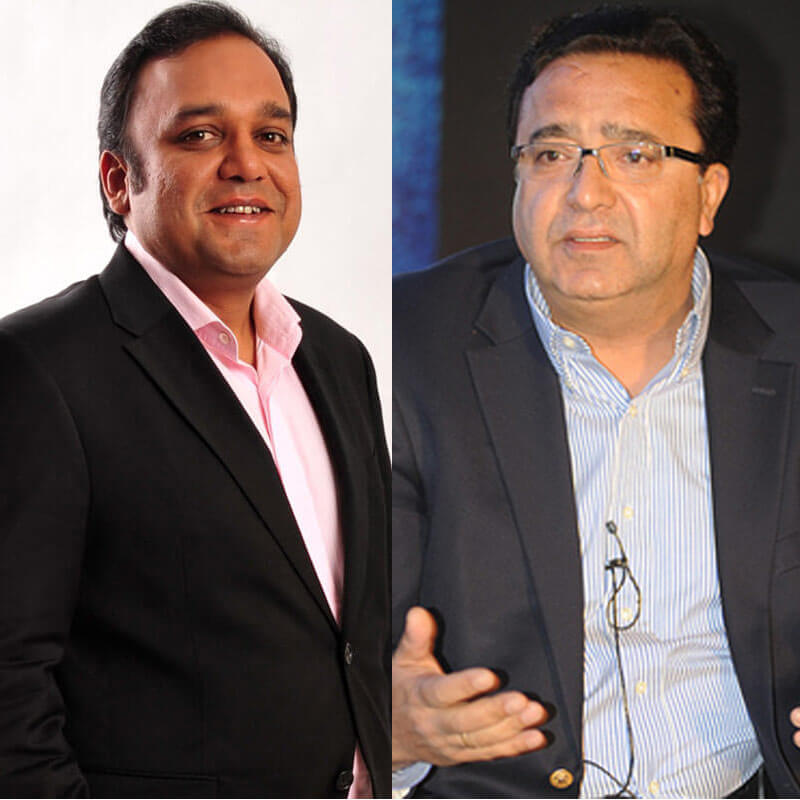
    President of IBF, representing broadcasters in the country with more than 400 channels and 90 per cent of viewership in the country, Punit Goenka said, “It is important that the government recognises TV services, which has evolved over the years as a product/service of mass consumption, to be classified and categorized under the item of mass consumption having a GST rate of 5 per cent so that it becomes affordable to masses.”

    Goenka further added: “Going by the number of TV households, which stands at 120 million, we submit to the government that broadcast services, that is, TV and radio, must be treated at par with the print (medium) in the new GST regime. This submission is based entirely on the fact that TV services have become integral part of everyday life of the vast majority in the country and the general economic downturn globally has impacted the sector extensively.”

    According to MIB data as on 31 December 2016, there are 899 licensed TV channels in the country of which 399 are news and current affairs channels, while 500 fall under the non-news and current affairs category. Building on this data, IBF highlighted that while many news channels had shuttered or are doing so, some others were downsizing to cope with falling revenues — a fall out of shrinking advertising revenue following demonetisation — and rising infrastructure and contest costs. “It seems that many (TV channel) licenses would get either get cancelled or submitted (back) voluntarily by the stakeholders,” IBF warned.

    Pointing out that the rates of DAVP advertisements (the government body that hands out government ads to media), which all broadcasters have to mandatorily carry on their networks, have remain unchanged since 2010, Sony Pictures Networks India president, network sales and international business Rohit Gupta said, “The rock-bottom rates are not at all in keeping with the existing market rates and allows little flexibility to carry out businesses.”

    Dwelling on the impact that rising costs can have on smaller TV channels’ investments in content, which can have “cascading” effects on viewer choice, Zee Entertainment president, legal & regulatory, A Mohan said, “We urge the government to free the media, print, television and radio (mediums) from obsolete taxation squeezes and attacks on revenue streams, as the vitality of this industry is essential to protect the fibre of the country, both socially and economically.”

    The IBF statement, which cautioned government against job losses and disruptions in the vibrant Indian media industry, advocated non-stifling tax regime that can reflect in the upcoming Budget 2017.

  • Broadcasters bat for parity with print medium under GST

    Broadcasters bat for parity with print medium under GST

    NEW DELHI: The Indian Broadcasting Foundation (IBF) today urged the government to level the playing field under the proposed GST regime for “all mediums”, including electronic, radio and print, as businesses across sectors had taken a hit due to demonetisation of high value currency notes November last.

    In a statement put out on Friday, the IBF, which is dedicated to the promotion of television broadcasting in and from India as an organisation, exhorted the government to treat broadcasting community at par with the print medium.

    “Just like the print media that has been clamouring for a zero rating of newspapers under the new GST regime, fuming under mass retrenchment and closing down of various editions, the electronic and the radio media, though bleeding under cancellations of advertisements (of) over Rs. 2000 crore (Rs. 20 billion) have requested the government to treat them at par with the print counterpart as they cater to imparting of not only news, entertainment, but also help educate the masses,” the statement said.

    The IBF statement comes a day after Minister of Information and Broadcasting M. Venkaiah Naidu directed his ministry’s top official, Secretary Ajay Mittal, to examine various concerns raised by the print media players, including the tax regime that would be ushered in under the proposed Goods & Services Tax (GST), wages in the sector and the way government hands out advertising business to newspapers and magazines.

    President of IBF, representing broadcasters in the country with more than 400 channels and 90 per cent of viewership in the country, Punit Goenka said, “It is important that the government recognises TV services, which has evolved over the years as a product/service of mass consumption, to be classified and categorized under the item of mass consumption having a GST rate of 5 per cent so that it becomes affordable to masses.”

    Goenka further added: “Going by the number of TV households, which stands at 120 million, we submit to the government that broadcast services, that is, TV and radio, must be treated at par with the print (medium) in the new GST regime. This submission is based entirely on the fact that TV services have become integral part of everyday life of the vast majority in the country and the general economic downturn globally has impacted the sector extensively.”

    According to MIB data as on 31 December 2016, there are 899 licensed TV channels in the country of which 399 are news and current affairs channels, while 500 fall under the non-news and current affairs category. Building on this data, IBF highlighted that while many news channels had shuttered or are doing so, some others were downsizing to cope with falling revenues — a fall out of shrinking advertising revenue following demonetisation — and rising infrastructure and contest costs. “It seems that many (TV channel) licenses would get either get cancelled or submitted (back) voluntarily by the stakeholders,” IBF warned.

    Pointing out that the rates of DAVP advertisements (the government body that hands out government ads to media), which all broadcasters have to mandatorily carry on their networks, have remain unchanged since 2010, Sony Pictures Networks India president, network sales and international business Rohit Gupta said, “The rock-bottom rates are not at all in keeping with the existing market rates and allows little flexibility to carry out businesses.”

    Dwelling on the impact that rising costs can have on smaller TV channels’ investments in content, which can have “cascading” effects on viewer choice, Zee Entertainment president, legal & regulatory, A Mohan said, “We urge the government to free the media, print, television and radio (mediums) from obsolete taxation squeezes and attacks on revenue streams, as the vitality of this industry is essential to protect the fibre of the country, both socially and economically.”

    The IBF statement, which cautioned government against job losses and disruptions in the vibrant Indian media industry, advocated non-stifling tax regime that can reflect in the upcoming Budget 2017.

  • Tally’s GST law awareness campaign

    Tally’s GST law awareness campaign

    BENGALURU: Indian software product company Tally Solutions Private Limited (TSPL) that has financial accounting package for businesses ‘Tally’ as a flagship product has launched a GST mobile application to ensure easy adoption of the technology led law. The free app, available for smartphones on Android and iOS platforms, will be a rich source of information on the yet to be implemented Goods and Services Tax (GST) law for businesses says TSPL.

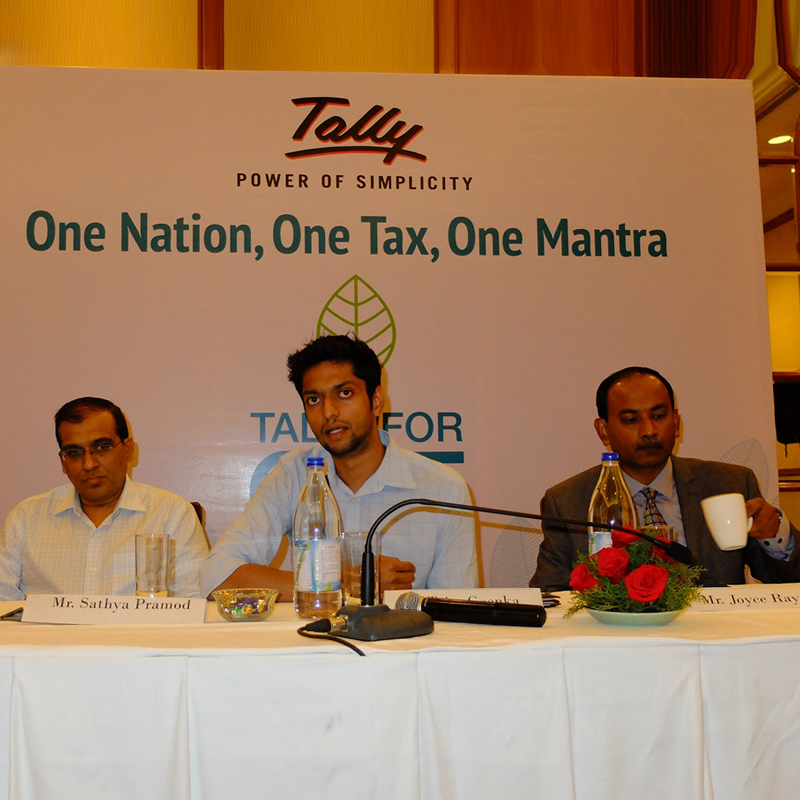
    TSPL executive director Tejas Goenka said, “After a number of events that we have conducted with our partners in the ecosystem across the nation, we realised the need to develop an easy to use and yet a comprehensive tool that would ensure the business transition smoothly to GST in the coming year. It is to deliver this solution to the businesses that we have invested in the Tally for GST App.”

    The GST law is a boon of sorts for TSPL, in that it has provided it with a platform to improve revenues through upgrades and garner more users for its business software.

    TSPL says it has been making constant efforts to equip small businesses and traders and help simplify for them the process of adoption and compliance of GST. TSPL claims that its solutions power over a million (10 lakh) businesses and it is constantly mobilising its manpower and systems to help ease the transition of its existing as well additional users to the GST regime.

    Among its initiatives include collaboration with the Confederation of All India Traders (CAIT) in a bid to train the trading community on GST. The company also recently launched a blog on GST that currently has eleven experts on board. Besides, TSPL has conducted over 170 ground events across India with various partners across India to create awareness about GST. These partners include TSPL’s channel partners, trade bodies and associations and large corporate clients.

    “On an average day, we have about 5 events on GST in any part of the country where we address between 100 to 200 people, and hence we have already communicated with about 20,000 people. The number of events will only go up as the deadline of 1 April approaches,” elaborated Goenka.

    Goenka says that his team is working on a mass media communications plan that includes television commercials among other mediums about Tally’s GST upgrade, once it is available.

    The company recently qualified as a GST Suviadha Provider (GSP) by the GSTN Network, and is one more along with 33 others that are also so qualified.