Tag: GST Bill

  • Zeel chairman Subhash Chandra takes Rajya Sabha oath

    Zeel chairman Subhash Chandra takes Rajya Sabha oath

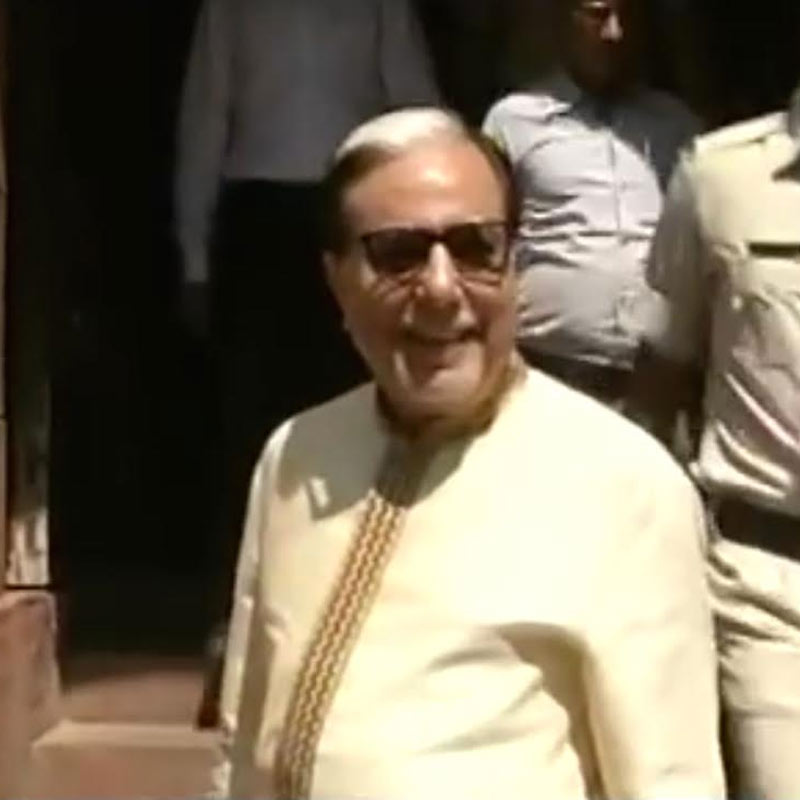
    MUMBAI: 3 August 2016. The day the GST Bill was approved by the upper house of the Indian parliament will be a special day for Zee Entertainment Enterprises Ltd chairman Dr Subhash Chandra. That is the day when the media industry pioneer took his oath as member of the Rajya Sabha, his first steps into politics.

    For Chandra, it has been a long journey to the corridors of power. While he has – with the help of his younger brothers, Jawahar, Laxmi and Ashok and the next generation of the family – built up an empire (encompassing media and entertainment, manufacturing, precious metals, infrastructure, real estate) which does billions of dollars of annual revenue, he says the time has come for him to give back to India.

    Of course, he and his organisations are involved in several spiritual and charitable causes, like the Buddhist Pagoda outside Mumbai, but he would now like to make a difference through governance, by entering the government.

    Speaking to reporters outside parliament yesterday he said: “I have done a great deal of business in my life – from the young age of 17 years until 65 years. I thought the time has come to give back to the society and as an MP, I can perhaps help lakhs of people by raising important issues and coaxing different parties to come together as I have good relations with all.”

    He is quite optimistic about the government’s initiatives in recent times and going forward. While applauding the passage of the GST bill, he however, had a note of caution, saying that it would not be a panacea for all the ills facing the economy and businesses. He expressed confidence in the Narendra Modi government’s ability to push through other tax reforms which would give business a further push, that would only further help Indian citizens courtesy the trickle down effect.

    He stated that he would be first working towards bettering the state of Haryana. “I will be inviting all 90 MLAs for dinner soon and request them to tell me whatever they have in mind for Haryana’s benefit,” he said. “My hallmark has been to raise issues that are often neglected by others. I’ll keep at it

    Media observers are hoping that the midas touch that has helped him turn almost everything he touches into success, will serve him well as he begins his journey into politics.

  • Zeel chairman Subhash Chandra takes Rajya Sabha oath

    Zeel chairman Subhash Chandra takes Rajya Sabha oath

    MUMBAI: 3 August 2016. The day the GST Bill was approved by the upper house of the Indian parliament will be a special day for Zee Entertainment Enterprises Ltd chairman Dr Subhash Chandra. That is the day when the media industry pioneer took his oath as member of the Rajya Sabha, his first steps into politics.

    For Chandra, it has been a long journey to the corridors of power. While he has – with the help of his younger brothers, Jawahar, Laxmi and Ashok and the next generation of the family – built up an empire (encompassing media and entertainment, manufacturing, precious metals, infrastructure, real estate) which does billions of dollars of annual revenue, he says the time has come for him to give back to India.

    Of course, he and his organisations are involved in several spiritual and charitable causes, like the Buddhist Pagoda outside Mumbai, but he would now like to make a difference through governance, by entering the government.

    Speaking to reporters outside parliament yesterday he said: “I have done a great deal of business in my life – from the young age of 17 years until 65 years. I thought the time has come to give back to the society and as an MP, I can perhaps help lakhs of people by raising important issues and coaxing different parties to come together as I have good relations with all.”

    He is quite optimistic about the government’s initiatives in recent times and going forward. While applauding the passage of the GST bill, he however, had a note of caution, saying that it would not be a panacea for all the ills facing the economy and businesses. He expressed confidence in the Narendra Modi government’s ability to push through other tax reforms which would give business a further push, that would only further help Indian citizens courtesy the trickle down effect.

    He stated that he would be first working towards bettering the state of Haryana. “I will be inviting all 90 MLAs for dinner soon and request them to tell me whatever they have in mind for Haryana’s benefit,” he said. “My hallmark has been to raise issues that are often neglected by others. I’ll keep at it

    Media observers are hoping that the midas touch that has helped him turn almost everything he touches into success, will serve him well as he begins his journey into politics.

  • GST Bill, DTH and broadcasting

    GST Bill, DTH and broadcasting

    MUMBAI: When the The Constitution (122nd Amendment) Bill, 2014 was passed in the Rajya Sabha late Wednesday night, it heralded the rollout of the goods and service tax era in India. In the making for nearly 16 years it is estimated to inject an additional one to two points in growth to the world’s fastest growing economy.

    GST, as envisaged by the government, is one indirect tax for the whole nation, which will make India one unified common market. It will subsume central excise duty, additional excise duty, service tax, additional customs duty commonly known as countervailing duty, and special additional duty of customs at the Central level. GST will also subsume state value added tax/sales tax, entertainment tax, central sales tax, octroi and entry tax, and purchase tax at the state level.

    Last year when finance minister Arun Jaitley had tabled the Bill then for debate, indiantelevision.com had spoken to industry stalwarts. Videocon D2H CEO Anil Khera had at that stage opined: “GST is a welcome move. It will help the DTH sector to prosper. DTH is the biggest victim of multiple taxation policy and GST will simplify that. The industry needs a uniform taxation system and the sooner it comes the better it is.”

    Speaking to CNBC TV18 on 2 August Dish TV chairman and managing director Jawahar Goel had said that the passage of the GST amendments would benefit his company to the tune of three to four per cent initially and this would likely improve to four to five per cent going forward.

    “Currently our outgo on indirect taxes is roughly around 23 percent and then for tax administration also, our expenditure is almost 1-1.5 percent, for managing our logistics in each of the states. The savings should go directly to our bottomline,” he had shared with the business news channel.

    Broadcasters would likely be impacted too as the indirect taxes that they pay currently are around 14-15 per cent. Observers expected the outgo for them could rise to about 18-20 per cent the introduction of GST.

    (Because this is a developing story, more facts may emerge as we go along. Hence it will be updated with new viewpoints then.)

  • GST Bill, DTH and broadcasting

    GST Bill, DTH and broadcasting

    MUMBAI: When the The Constitution (122nd Amendment) Bill, 2014 was passed in the Rajya Sabha late Wednesday night, it heralded the rollout of the goods and service tax era in India. In the making for nearly 16 years it is estimated to inject an additional one to two points in growth to the world’s fastest growing economy.

    GST, as envisaged by the government, is one indirect tax for the whole nation, which will make India one unified common market. It will subsume central excise duty, additional excise duty, service tax, additional customs duty commonly known as countervailing duty, and special additional duty of customs at the Central level. GST will also subsume state value added tax/sales tax, entertainment tax, central sales tax, octroi and entry tax, and purchase tax at the state level.

    Last year when finance minister Arun Jaitley had tabled the Bill then for debate, indiantelevision.com had spoken to industry stalwarts. Videocon D2H CEO Anil Khera had at that stage opined: “GST is a welcome move. It will help the DTH sector to prosper. DTH is the biggest victim of multiple taxation policy and GST will simplify that. The industry needs a uniform taxation system and the sooner it comes the better it is.”

    Speaking to CNBC TV18 on 2 August Dish TV chairman and managing director Jawahar Goel had said that the passage of the GST amendments would benefit his company to the tune of three to four per cent initially and this would likely improve to four to five per cent going forward.

    “Currently our outgo on indirect taxes is roughly around 23 percent and then for tax administration also, our expenditure is almost 1-1.5 percent, for managing our logistics in each of the states. The savings should go directly to our bottomline,” he had shared with the business news channel.

    Broadcasters would likely be impacted too as the indirect taxes that they pay currently are around 14-15 per cent. Observers expected the outgo for them could rise to about 18-20 per cent the introduction of GST.

    (Because this is a developing story, more facts may emerge as we go along. Hence it will be updated with new viewpoints then.)

  • GST Bill crucial for Start-Up India, Digital India success: IAMAI

    GST Bill crucial for Start-Up India, Digital India success: IAMAI

    MUMBAI: Industry body – Internet and Mobile Association of India (IAMAI) has urged the Parliament to pass the crucial GST (Goods & Services Tax) Bill in the forthcoming budget session. The industry body has said that the smooth passage of GST Bill is crucial for the success of mega economic and social projects, especially Digital India and Start-Up India.

    The GST Bill, which subsumes all indirect taxes to create one rate and integrate the country into a single market, is the biggest tax reform that is being undertaken since Independence, but is pending approval of the Rajya Sabha.

    The Digital India plan is about connecting, empowering and enabling citizens and encouraging local electronic manufacturing. Similarly, Start-Up India is focused on promoting entrepreneurship, and through small entrepreneurs, generating employment.

    Local manufacturing, NoFN, e-Gov, as a part of Digital India, where private sector is involved, crucially rests on the successful passage of GST Bill in Parliament, which seeks to create one market through one tax system. Similarly, start-ups, online market places, and other online service providers, all require a single market plan.

    IAMAI president Subho Ray said, “The extant tax structure of India is heavily fragmented, with multiple indirect taxes levied by different authorities at different stages of a transaction. Fiscal federalism has led to different procedures and rates of VAT and other forms of LBTs across the states. This creates logistical challenges for the industry, besides giving rise to compliance related complications. Conflict of interests between tax authorities in case of inter-state transaction is a major pain point for the industry today. GST will help the digital industry business model flourish by providing uniformity in tax rates and regulations across the country. This will help doing business in India easier, allow free-play to market dynamics and allow deeper penetration of these services.”

    Given that much of the developments in the digital industry are disruptive innovations, business models like online platforms, aggregators, etc are essentially services provided by intermediaries. Such services are revolutionising the existing markets of both goods and services. Thus, online ticketing services or e-tailing are providing newer modes of access for consumers to existing goods and services, said IAMAI.

    The digital industry unequivocally stands for the smooth passage of GST and hopes that the bill will be passed in the upcoming budget session, as any further delay will push back the transformative projects of the government.

  • GST Bill crucial for Start-Up India, Digital India success: IAMAI

    GST Bill crucial for Start-Up India, Digital India success: IAMAI

    MUMBAI: Industry body – Internet and Mobile Association of India (IAMAI) has urged the Parliament to pass the crucial GST (Goods & Services Tax) Bill in the forthcoming budget session. The industry body has said that the smooth passage of GST Bill is crucial for the success of mega economic and social projects, especially Digital India and Start-Up India.

    The GST Bill, which subsumes all indirect taxes to create one rate and integrate the country into a single market, is the biggest tax reform that is being undertaken since Independence, but is pending approval of the Rajya Sabha.

    The Digital India plan is about connecting, empowering and enabling citizens and encouraging local electronic manufacturing. Similarly, Start-Up India is focused on promoting entrepreneurship, and through small entrepreneurs, generating employment.

    Local manufacturing, NoFN, e-Gov, as a part of Digital India, where private sector is involved, crucially rests on the successful passage of GST Bill in Parliament, which seeks to create one market through one tax system. Similarly, start-ups, online market places, and other online service providers, all require a single market plan.

    IAMAI president Subho Ray said, “The extant tax structure of India is heavily fragmented, with multiple indirect taxes levied by different authorities at different stages of a transaction. Fiscal federalism has led to different procedures and rates of VAT and other forms of LBTs across the states. This creates logistical challenges for the industry, besides giving rise to compliance related complications. Conflict of interests between tax authorities in case of inter-state transaction is a major pain point for the industry today. GST will help the digital industry business model flourish by providing uniformity in tax rates and regulations across the country. This will help doing business in India easier, allow free-play to market dynamics and allow deeper penetration of these services.”

    Given that much of the developments in the digital industry are disruptive innovations, business models like online platforms, aggregators, etc are essentially services provided by intermediaries. Such services are revolutionising the existing markets of both goods and services. Thus, online ticketing services or e-tailing are providing newer modes of access for consumers to existing goods and services, said IAMAI.

    The digital industry unequivocally stands for the smooth passage of GST and hopes that the bill will be passed in the upcoming budget session, as any further delay will push back the transformative projects of the government.