Tag: GST

  • News broadcasters press Sitharaman for GST relief on ads and credits

    News broadcasters press Sitharaman for GST relief on ads and credits

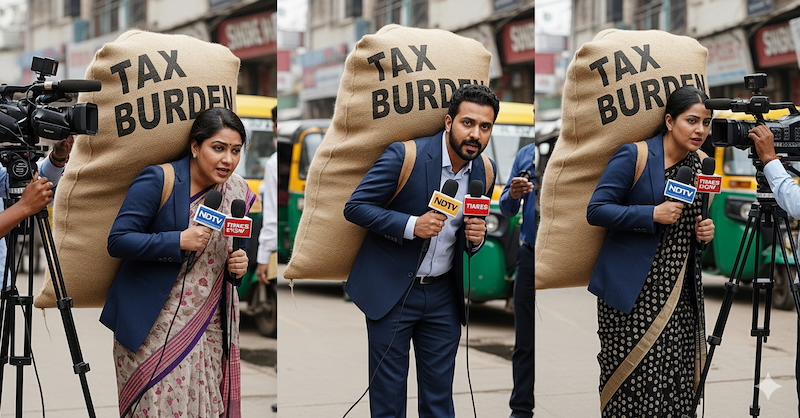
    NEW DELHI: India’s news broadcasters have taken their tax fight to the top. The News Broadcasters & Digital Association (NBDA), led by president Rajat Sharma, has written to finance minister and GST Council chair Nirmala Sitharaman, warning that the current goods and services tax regime is throttling the financial health of television and digital news outlets.

    In its 28 August representation, NBDA said the system of taxing advertising sales at the point of invoicing, rather than when payments are actually received, is crippling cash flow. Broadcasters, it noted, are often left waiting months for money from government departments, state agencies, PSUs and even the government’s own ad-buying arm DAVP. Yet GST has to be coughed up immediately, leaving newsrooms to carry the burden of taxes on income not yet in hand.

    The association also demanded a rethink of Section 17(5) of the GST Act, which denies input tax credit on everyday operational spends such as vehicle hire, catering, employee insurance and even routine services like beauty treatments required for on-air talent. NBDA argues these restrictions make little sense for an industry that runs on people, mobility and presentation.

    Sharma said the relief sought is not a handout but a rational correction. “The changes will align taxation with actual revenue flow and remove arbitrary blocks on legitimate business costs,” the letter states.

    The news business, already squeezed by weak advertising growth, digital disruption and rising costs, says it can ill afford such tax distortions. NBDA’s blunt message to North Block: fix the GST rules, or risk further erosion of an industry vital to India’s democracy.

  • Cable TV lobby urges tax cut to 5 per cent as sector reels under strain

    Cable TV lobby urges tax cut to 5 per cent as sector reels under strain

    NEW DELHI:The All India Digital Cable Federation (AIDCF), the apex body of cable operators, has petitioned information and broadcasting minister Ashwini Vaishnaw and finance minister Ashwini Vaishnaw  to slash goods and services tax on cable television from 18 per cent to 5 per cent.

    The appeal rides on prime minister Narendra Modi’s push for “next-generation GST reforms” and a two-rate structure. The federation argues that cable remains the cheapest mass medium, reaching 64 million households and sustaining 10–12 lakh jobs, yet is under siege from rising costs and unregulated OTT rivals.

    Powered by 852 multi-system operators and 1.6 lakh local cable operators—mostly small entrepreneurs—the sector was even recognised as an “essential service” during the pandemic. But the economics are dire. Broadcaster fees have surged nearly 600 per cent, pushing up subscription costs by 35–40 per cent. With consumers balking at higher tariffs, margins are collapsing.

    “Market dynamics have become unfair for MSMEs in cable TV, as they are bound by tariff regulations while OTTs operate without comparable oversight,” AIDCF wrote.

    The lobby claims a GST cut would restore affordability for households, ease working capital pressures, enable fresh broadband investment under Digital India, and protect lakhs of jobs.

    AIDCF secretary general Manoj P Chhangani urged the government to table the matter at the next GST Council meet: “A reduction will safeguard the viability of MSOs and LCOs and preserve cable’s role in inclusive connectivity.”

    Industry watchers caution that while OTT is growing fast, cable still dominates in small towns and villages. A tax reprieve, they say, could decide whether it remains India’s broadcast backbone—or fades into obsolescence.

  • Eight years of GST: India’s landmark tax reform turns a corner

    Eight years of GST: India’s landmark tax reform turns a corner

    MUMBAI: Eight years after its midnight launch, the Goods and Services Tax (GST) stands as a defining milestone in India’s economic reform journey. Introduced by the Modi 1.0 government on 1 July 2017, GST replaced 17 indirect taxes and 13 cesses, creating a unified tax system aimed at transforming revenue collection and compliance mechanisms.

    From its inception, GST has aimed to simplify the tax landscape and improve compliance—especially for small and medium enterprises (SMEs). Prime Minister Narendra Modi recently reiterated this in a social media post, calling GST a “powerful engine” of economic growth and an exemplar of cooperative federalism, where states act as equal partners in market integration.

    GST revenues have seen consistent growth—from Rs 7.19 lakh crore in 2017–18 to Rs 22.08 lakh crore in 2024–25. Registrations have more than doubled, rising from 60 lakh to 1.51 crore active taxpayers. The government credits this to technology-led compliance features such as e-invoicing, auto-populated returns, AI-driven analytics, and e-way bills, which together have helped reduce fraud and encourage voluntary adherence.

    The media and marketing industry has also undergone a structural shift under GST. Earlier fragmented under multiple state-level service taxes, the sector now operates under a more uniform 18 per cent GST slab, enabling centralised billing and improving cash flow predictability for agencies and broadcasters. For the television industry, in particular, GST eliminated disparities between content producers and distributors across states, streamlining operations and reducing cascading taxes. However, smaller agencies have flagged concerns about delayed input credit refunds and compliance costs, prompting calls for more sector-specific easing.

    Leaders across industry reflected on GST’s journey. Anand Mahindra, chairman of Mahindra Group, called it “India awakening as a common market for the first time.” Vijay Shekhar Sharma, founder of Paytm, termed GST “the dawn of a new India.” Kiran Mazumdar-Shaw, executive chairperson of Biocon, described it as “transformational,” while also calling for further simplification.

    Despite progress, key issues remain. Over two lakh disputes are pending due to the delayed establishment of GST appellate tribunals. The presence of multiple tax slabs and inverted duty structures—particularly in textiles and fertilisers—continues to create inconsistencies. Petroleum products and real estate remain outside GST’s ambit, limiting its scope as a truly comprehensive indirect tax.

    Tax experts from PwC India advocate for rationalising the rate structure to three tiers and gradually bringing petroleum products under GST to remove economic distortions. The GST Council has indicated that such reforms are under active consideration. Plans to operationalise 31 appellate tribunals by December aim to address the litigation backlog.
     

  • Term insurance for self-employed: A guide for freelancers and small business owners

    Term insurance for self-employed: A guide for freelancers and small business owners

    Self-employment is rapidly becoming one of the top choices among job seekers and businesspeople. It is one of the few employment opportunities where you need not depend on others to pay you. You create your own job and your own profits. This sense of creation and self-satisfaction quickly ripples into other parts of life. That is why term insurance for self-employed is so desirable.

    What is term insurance? 
    Term insurance is a type of life insurance policy which you can avail to secure the future financial well-being of your loved ones.

    A term insurance policy is a highly affordable form of life insurance that is available with a very high sum assured as compared to the very reasonable premium rate. The policy tenure may vary from 10-100 years. Additionally, you can choose term insurance policies based on your financial needs.

    Here is a list of the types of term insurance available:

    . Increasing term plan – They increase the overall sum assured annually, which helps meet the rate of inflation in the future and increases your family’s financial protection.

    . Decreasing term plan – They decrease the sum assured annually but use the money to repay lenders and reduce your liabilities.

    . Level term plan – They are steadfast term insurance policies that abide by the terms and conditions agreed upon in the initial contract.

    . Term insurance with return of premium – These are unique term insurance policies that offer maturity benefit if you survive the policy tenure.

    . Single premium term insurance plan – They allow you to purchase a term insurance policy with all its benefits with a single lump sum premium instead of regular payments.

    You can evaluate the pros and cons to choose the policy that best suits your needs and those of your loved ones.

    What is GST, and how does it affect self-employed individuals? 

    Self-employed individuals have a lot of responsibilities. Aside from making a living to support your family, you also have financial responsibilities toward the government. This holds true in any country, but thankfully in India, the introduction of GST in 2017 simplified and streamlined the taxation process. 

    So, what is GST? 

    GST is nothing but the tax levied on goods and services in India. Earlier, before the government conceptualized what is GST, there were a number of taxes that you had to pay based on your type of profession and income. Now, the single goods and services tax has streamlined the tax that you need to pay so you never violate the taxation laws in the country.

    GST has replaced several forms of indirect taxes. This is particularly beneficial for the self-employed as you have taxes levied on your income with variations. Instead, now you can acquire a GSTIN which helps simplify the process of filing your taxes. You can also avail of multiple benefits on term insurance premiums due to a streamlined GST process.

    Why term insurance for self-employed is necessary? 

    Self-employed individuals are highly self-reliant. You create your jobs, make money, and take care of your loved ones. However, the income source may be unstable. Freelancing and self-employment bring you money as it corresponds to individual contracts. Therefore, dry months are a possibility during which you may need to acquire loans or credit. Savings or wealth development also takes time and efficiency.

    In the event of your sudden, untimely demise, the liabilities of mortgages, debts, and household expenses transfer to your loved ones. Any outstanding business expenses are also your family’s burden to bear.

    Here are a few top reasons why term insurance for self-employed is so important:

    . It allows you to build a corpus for your loved ones to handle their future goals and ambitions.

    . You can avail of single premium term insurance for self-employed. It helps you acquire the plan’s benefits using a single lump sum premium.

    . You can avail of increasing term insurance that assures a higher sum assured. In the future, if your loved ones assess higher liabilities, then the higher sum assured can help navigate the burden without succumbing to the pitfalls of inflation.

    . Term insurance for self-employed offers tax benefits which can help you save money while you prepare for your family’s financial security.

    . Term insurance for self-employed is an affordable plan with a higher sum assured than most life insurance policies.

    . It also helps you build a corpus for your golden years. Term insurance with a return of premium assures a lump sum maturity benefit that you can use for future financial crises.

    . You can add riders to amplify the coverage on your term plan. These payouts help pay for medical expenses in case of accidental death, critical illnesses, etc.

    Term insurance for self-employed is a safeguard that protects your loved ones after your death. It provides peace of mind knowing that your loved ones will be well taken care of despite the unstable income source and liabilities that you may leave behind.

  • For India to become a gaming hub, it needs clear, consistent & credible policies: Dr Aruna Sharma

    For India to become a gaming hub, it needs clear, consistent & credible policies: Dr Aruna Sharma

    Mumbai: The online gaming industry in India is rapidly evolving amidst a backdrop of regulatory scrutiny and technological advancement. With a staggering 28 per cent CAGR from FY20-23 and a market valuation of ₹16,428 crore, it has caught the attention of global investors and developers alike. As policymakers navigate challenges around GST implementation and classification of games, the industry seeks a stable regulatory framework to propel it towards becoming a global hub for game developers, leveraging India’s vast potential and cultural richness.

    Delving deeper, Indiantelevision.com caught up with development economist and retired secretary of Government of India, Dr. Aruna Sharma, to gain more insights on how regulatory dynamics and technological advancements are shaping the future of the Indian online gaming industry.

    Edited Excerpts:

    On the current trends shaping the Indian online gaming industry

    The gaming industry in India is evolving rapidly. It is focusing on avoiding misleading ads, ensuring secure digital payments, and keeping an open dialogue with policymakers. The rise of smartphones, better internet access, and new gaming start-ups is exciting. We’re seeing challenges being tackled both with policymakers and in courts. What’s unique about India is how it differentiates between games of skill and games of chance. There’s also a growing perception of online games as valuable learning tools.

    On the implementation of GST impacting the online gaming industry, and the changes you would recommend for a more balanced taxation policy

    In 2023, the GST on online games of skill jumped from 18 per cent to 28 per cent, which was a big shock to the industry. Thankfully, courts have stayed with this increase, recognising the issue, and an inter-ministerial group is now looking into GST rationalisation. The retrospective application from July 2017 was especially tough. However, a recent amendment in Section 11A allows the government to waive these retrospective taxes and penalties, and a quick, positive decision on this is essential.

    Moreover, GST is currently imposed on the entire amount on the table, including player contributions and winnings, which aren’t classified as goods or services. This needs to be corrected, and hopefully, the Supreme Court will address it soon.

    On responsible online gaming contributing to India’s goal of becoming a $5 trillion economy and a global hub for game developers

    Responsible gaming involves several key practices: including SROs among its members, ensuring KYC for all players, mandating digital payments, storing all data on blockchain for easy retrieval and analysis, implementing filters for time spent, money limits, and age restrictions, reporting any signs of money laundering, and adhering to advertising codes to prevent misleading ads.

    For India to become a gaming hub, it needs clear, consistent, and credible policies. All gaming companies should register in India and pay taxes here. India has the talent to develop new, culturally relevant games and a significant potential for expansion. Games should be classified as either games of skill or games of chance, with no bans on any type of game.

    On cultural localisation impacting the success of online games in India

    Online gaming can be a great learning tool, especially for games of skill. People can learn game rules, strategise, and play in teams. India’s rich storytelling tradition can be transformed into engaging games. Online games can also teach kids important skills like color recognition, pattern identification, and grouping. They can even include lessons on civic sense and traffic rules in a fun way.

    On the convergence of online gaming with other digital sectors like fintech and e-governance

    Online gaming is a unique product. Its use of blockchain, digital payments, and KYC helps detect and prevent misuse like money laundering, with data that can be easily traced. While e-governance can use online gaming for skill development, the two remain distinct. Fintech has stricter rules to follow, as it involves finance. All digital transformation platforms need their own core discipline.

    On the impact of too many intrusive ads in mobile games, and the industry striking a balance between monetisation and maintaining a positive user experience

    Many digital platforms have moved to a subscription model instead of relying solely on ads. Plus, many platforms offer the option to pay extra for an ad-free experience, which users appreciate.

    On envisioning the future of the online gaming industry in India over the next decade, especially in terms of technological advancements, regulatory changes, and market growth

    Technological advancements will spread globally. If we delay implementing the right policies, online gaming might move offshore, and India could miss out. We need policies that are convergent, consistent, and credible.

    Today, 60 per cent of mobile phones in India are smartphones. With secure digital payments and expanding internet access, the market for online gaming will grow exponentially. India has the potential to become a hub for game developers and a leading platform for online gaming.

    Currently, games of chance are registered under the Gambling Act. However, online games of skill are only registered for taxation purposes, as MeitY has not yet established an SRB, set parameters to define money and non-money games as skill-based, or enabled all Indian and offshore developers to register in India and legitimise the process.

  • Proposed 28% GST on online gaming could lead to decline in active users: ASSOCHAM & EY Report

    Proposed 28% GST on online gaming could lead to decline in active users: ASSOCHAM & EY Report

    MUMBAI: According to a joint report by Assocham and EY, titled ‘GST on Online Skill-Based Gaming’, GST Council’s Group of Ministers (GoMs) are examining the GST on online gaming. One of the considerations by GoM is recommending a levy of 28 percent Goods and Services Tax (GST) on the complete contest entry amount including the prize pool, which can have an adverse effect on the industry. Levy of GST on the contest entry amount would increase the tax burden on the nascent industry by 10 to 20 times. The industry currently pays GST at the rate of 18 percent on the platform fee or the Gross Gaming Revenue (GGR) earned directly by the gaming operators.

    The report estimates that the industry contributes more than Rs 2,200 crore of GST in 2022 and the winnings from online games are subject to income tax, which also contribute a significant amount to the exchequer.

    The report has also listed out the unique features that set online skill-based gaming apart from games of chance. It entails technology solutions that are provided by operators to enable user-interface as well as build a gaming ecosystem and act as facilitators. The fee charged is a fixed consideration and is not dependent on outcome. Its success is also dependent on the superior knowledge of the user and engagement with the game, making skill the predominant element.

    The report notes that the proposed levy of tax at 28 percent from 18 percent, along with 30 percent income tax on winnings, takes the rate of taxation on online gaming between 45-50 percent. With the GST tax proposal leading to higher taxation, it could lead to a decline in active users and discourage domestic gaming industries.

    According to recent industry estimates, there are 500 gaming companies in the country, which have provided employment to thousands of people and have also seen an inflow of Foreign Direct Investment (FDI) worth $2.7 billion. However, they are likely to be impacted by high taxations and would open doors for offshore operators. The report states: “This sector could also help in facilitating the government’s vision for the Animation, Visual Effects, Gaming and Comic (AVGC) sector and encourage the domestic players rather than driving users to foreign companies/ offshore platforms; thereby enhancing government’s revenue collection.”

    Assocham secretary general Deepak Sood said, “The Assocham-EY report on the impact of GST on online skill-based gaming is quite revelatory. The growth of the online gaming industry comes as no surprise as it’s largely youth-driven and has been fuelled by the increasing usage of internet and smartphones, especially during the pandemic. India is expected to become one of the world’s leading markets in the gaming industry, which also bodes well in terms of a robust digital economy GDP as well as an employment-generator. Therefore, any step that the government takes to strengthen the sector through an optimal tax structure is welcome.”

    The report asserts that the right tax structure can have a positive impact on the industry and drive tax revenues. “The crystallisation of the GST valuation mechanism could be a catalyst in enabling ease of doing business and spur growth of this rising sector,” it concludes.

  • Industry bodies raises concern over revised GST rates in online gaming

    Industry bodies raises concern over revised GST rates in online gaming

    Mumbai: The three largest online skill gaming associations in the country, E-Gaming Federation (EGF), All India Gaming Federation (AIGF) and Federation of Indian Fantasy Sports (FIFS), expressed concern at the recent media reports, which suggest that the GST rate on online skill games may be increased from existing 18 per cent to 28 per cent.

    In an official statement released, the three industry bodies said that what is more worrying is some media reports suggesting that the tax may be levied on total pool (prize money pooled plus the platform commission) and not on gross gaming revenue (GGR). The latter, if implemented, they said, will mean the demise of the online skill gaming industry in India.

    EGF CEO Sameer Barde said, “Such a step is not only in dissonance with international best practices but is also violative of the principles of GST. Essentially, the online skill gaming operators are platforms, which bring players from various geographies together. The money pooled is eventually distributed to the winning player. The platform charges a predetermined fee, known as GGR, and pays tax on that. If you were to charge an increased tax rate on the entire quantum (pooled money plus commission), it is not only principally incorrect but will also annihilate this sunrise sector.”

    Highlighting that the sector has immense economic benefits, the industry associations appealed to the GST Council to understand the salience of games of skill and take a decision considering international taxation best practices.

    “Global studies have shown that incidence of taxation, on prize money instead of gaming revenue, leads to reduced tax collections for the exchequer and ends up giving a fillip to the black-market operators at the expense of legitimate tax paying players,” said FIFS CEO Anwar Shirpurwala. He further added that any regulations or taxation related to skill gaming should not be treated at par with games of chance, as these are very divergent activities both in terms of law and in practice.

    With a combined membership of around 100 operators, between them, EGF, AIGF and FIFS, represent more than 90 per cent of the online skill gaming market in India. In the last few years, the online skill gaming sector has emerged as a growth engine for the Indian economy with direct benefits to a lot of sectors such as fintech, sports, animation & graphics, semiconductor, edtech and software development. The sector has also witnessed investments from marquee global venture capital and private equity firms. In the last six years, the online skill gaming sector has received foreign investment of over two billion dollars. The sector already employs around 50,000 people.

    AIGF CEO Roland Landers said, “At one level the sector is very upbeat at the prospect of contributing towards growth of the Indian economy. We are very encouraged by the encouragement shown by the government, through formation of AVGC task force, constitution of inter-ministerial task force and the recent initiatives by MeITY to engage with the industry. But all this will amount to nothing, if it is not supported by a progressive taxation regime. An increased tax rate, and then levying the tax on the entire contest entry amount (instead of GGR), will be catastrophic for the industry, even nipping its potential in the bud.”

  • E-Gaming Federation urges govt to maintain 18% GST for online skill gaming sector

    E-Gaming Federation urges govt to maintain 18% GST for online skill gaming sector

    MUMBAI: The GST Council reconstituted a Group of Ministers (GoM) in February 2022 to study the GST rates for casinos, racecourses, and online gaming. The panel’s terms of reference stated that it will examine the valuation of services offered by casinos, racecourses, and online gaming portals, as well as the taxability of some casino transactions, all within the context of existing legal provisions and court orders. In addition, if an alternative is recommended, the GoM will investigate any changes that are required in the legal provisions and the administration of such valuation provision. The group will also assess the impact on other similar services, such as the lottery.

    Earlier this month, Meghalaya Chief Minister Conrad Sangma, Convener – GoM held a meeting with other members and officials to discuss various aspects including the possible GST rates for online gaming, valuation modalities for levying the tax, and other technicalities regarding such activities.

    Currently, a tax rate of 18 percent is levied on the commission (Gross Gaming Revenue or GGR) collected by the online gaming platforms for each game that does not involve betting or gambling. This rate is in line with global best practices since online gaming industry tax structures in countries such as the USA, UK, Germany, and Australia, range between 15 percent to 20 percent. In recent years, the online gaming industry has experienced significant growth. The sector generated Rs 115 billion in revenue in 2020, and it is predicted to expand at a CAGR of 38 percent to Rs 384 billion by 2025.

    The contribution to the government exchequer by this industry was 15 to 20 billion in 2020, and the same is expected to reach 35 to 50 billion by 2025.

    If the current taxation regime is revised and charged on stakes rather than gross gaming revenue (GGR), it will prove to be disastrous to the burgeoning potential of the Indian online gaming industry. The hike will raise the tax by over 800 percent – 900 percent and encourage illicit market operations, which will expose players to unscrupulous operators (predominantly offshore), substantially reduce tax revenues for the government, and all but wipe out a legitimate sunrise sector with the potential to generate $25 billion in annual revenues and hundreds of thousands of jobs by 2030.

    E-Gaming Federation (EGF), an organisation representing top online skill gaming operators in India urges the government to consider Gross Gaming Revenues (GGR) for levying GST and keeping the service at an 18 percent slab.

    EGF CEO Sameer Barde said, “A higher tax burden will make the industry unviable. The gaming platform operators will be unable to continue operations at any meaningful level. Growth, innovation, employment opportunities, government revenues and most important responsible and safe gaming will be impacted in a big way. We urge the GoM to consider the industry’s unique needs and recommend the continuance of the current practice of considering GST to be paid on GGR, with the rate remaining at 18 percent. As online gaming is different from gambling and the Supreme Court and several High Courts have reaffirmed the status of skill-based games as legitimate business activity, rational tax treatment of online skill gaming will help in creating mutually benefitting situations for all the stakeholders.”

    EGF added that PM Modi endorsed India’s gaming industry as a potential world leader, emphasising on the industry’s socioeconomic and cultural importance in today’s globalised and digitised economy. The sector received further impetus after Finance Minister Nirmala Sitharaman announced the setting up of the Animation, Visual Arts, Gaming and Comics (AVGC) Task Force, in her budget speech this year. “We are witnessing the start of a new era in India’s gaming sector. The fact that the government is supporting the industry is really encouraging. The sector’s true growth story, however, will be determined by progressive and favourable policies that establish best practices and encourage responsible gaming.”

  • NDTV to implement 10-40% salary cut

    NDTV to implement 10-40% salary cut

    MUMBAI: New Delhi Television (NDTV) has decided to implement a salary cut for employees from 1 April as a cost-cutting measure on the back of decreasing ad revenue due to the COVID-19 pandemic.

    Says the BSE filing of NDTV: “The management of NDTV Group has been forced to implement a salary cut, effective 1 April, of between 10-40 per cent based on income slabs for a period of three months across its employee base.”

    The group points out that it won’t implement a salary cut for those employees who earn Rs 50,000 per month or less than that. It also said that the salary deduction step for three months is subject to detailed review at the end of the period.

    NDTV, in its filing, says that this measure is the result of uncertainty surrounding the recovery of the global and Indian economy. And, the falling economic situation has forced the group to undertake certain cost-cutting measures with immediate effect.

    The nation-wide lockdown due to the COVID-19 situation has put all business plans on backtrack. The news channels, lately, have been facing the burden of high operating costs with no or fewer ad sales.

    The News Broadcasters Association, in this regard, has urged the government to either reduce, remove or bring the goods and services tax on advertisement in line with print media. Currently, the GST on advertisement in the broadcast industry is at 18 per cent, whereas in print media it is at five per cent.

  • Expectations from the government in formulating national retail trade policy in Budget 2020

    Expectations from the government in formulating national retail trade policy in Budget 2020

    India is the fifth-largest global destination in the retail space. With the budget 2020 being around the corner, there is a hope that the new policies will have a positive impact on the retail and the consumer sector. The retail sector is the most dynamic sector in recent times, there has been drastic changes and has witnessed high consumer activism, supply chain model, marketing and advertising activities and introduction of new players in the market. 

    A joint report by Assocham and MRRSIndia.com suggest that the retail the Indian retail / consumer market is set to cross the $1 trillion mark by 2020 due to rise in per capita income and consequent expenditure. 

    Below are the 8 challenges which were faced by the retail sector in 2019:

    • Higher GST rates for retail players have been resulting in accumulation of non-refundable credit due to substantial spend on advertising and branding spending capacity. 
    • There has been multiplicity of laws and regulations governing the sector
    • Restrictive conditions under the foreign direct investment (FDI) policy for single-brand retail trading leading to ambiguities and hurdles for the e-commerce sector. Improvising conditions and minimalizing restrictions will further give a boost to FDI.
    • Lack of clarity and understanding of regulations/guidelines governing imposed on online retail trading. 
    • Lack of proper physical and digital infrastructure, developed supply chain resulting in inefficiencies and higher costs. 
    • Growth in retail sector has resulted in a growing demand in the real estate sector thus resulting in a rise in overall real estate cost
    • Lack of effective supply management. Solid infrastructure and developed supply chain will improvise the foundation and overall profitability
    • Lack of incentives for the new players in the retail market. 

    Budget 2020 gives an opportunity to the government to address the main problems faced by the retail sector and push the economy to a higher growth. Some of the expectations from the government in Budget 2020 are listed below.

    • GST slab to be simplified and successful / structured implementation of new mechanism that will help ease the process. We also look forward to the reduction of the GST which will encourage more people to spend.
    • The budget may focus on simplification of the government laws will have a positive impact on the sector and will give freedom to try new techniques and introduce new trends. Also Clarifications on open issues and introduction of measures for ease of doing business would be of great help.
    • The budget should consider educating the retailer and traders and clarifying regulations for retailers ensuring sound risk management practices and KYC (know your client) mechanisms.
    • Promoting partnership and collaboration for accessing new channel capabilities, digital technologies and easier entry into new market may help in optimizing costs.
    • A further initiative by the government by introducing laws and rules to reduce the real estate cost would prove to be of great help to common man who look forward to live in beautiful homes or for investment purposes. Stabilisation of tax policies on properties would also be beneficial since there is a constant change in rate slabs.
    • Introducing new incentives and bold reforms will encourage the new-bees in the retail industry to expand their activities across various platforms.
    • Supporting rural growth and expecting positive initiatives like MGNREGA, increase in the MSP for select crops, focus on electrification of villages, farmer friendly technologies, etc.
    • We expect new entrants/ investors in the FMCG space with the introduction of simplified tax structures, stability in custom duty and a less aggressive tax administration.
    • A special start-up growth fund to support start-ups will boost the start-up ecosystem immensely.
    • We expect the budget to provide impetus for digital payments (Debit and credit cards, UPI)

    With all believe in the government we expect new reforms in budget 2020 keeping in mind the betterment of the retail sector and in the best interest of retailers and common man.

    (The author is retail head, Kalpataru Ltd. The views expressed are his own and Indiantelevision.com may not subscribe to them)