Tag: GSMA

  • Billions still offline despite mobile internet surge: GSMA

    Billions still offline despite mobile internet surge: GSMA

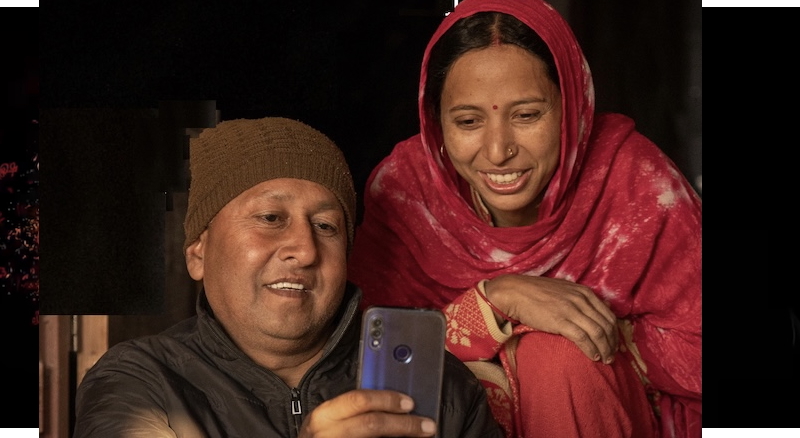
    LONDON: The world is more connected than ever, yet the digital divide stubbornly persists. According to the GSMA’s State of Mobile Internet Connectivity 2025 report, some 4.7 billion people – 58 per cent of the global population – now use mobile internet on their own device, with another 710 million (9 per cent) getting online via shared phones. The leap in 2024, when 200 million joined the ranks of mobile internet users, was the fastest growth since 2021.

    Still, that leaves 3.4 bIllion people offline. Just 4 per cent of the global population, around 300 million individuals, live in areas with no mobile coverage – the “coverage gap”. Far more troubling is the “usage gap”: 3.1 billion people, or 38 per cent of humanity, live under a signal but remain disconnected. The problem is not technology but barriers like high handset costs, poor digital literacy, low awareness of the internet’s uses, and patchy electricity supply.

    The divide is starkest in low- and middle-income countries (LMICs), which account for 93 per cent of the unconnected. In these regions, adults in rural areas are 25 per cent less likely to be online than their urban counterparts, while women are 14 per cent less likely than men to use mobile internet. Sub-Saharan Africa lags furthest behind, with only one in four people online and a coverage gap of 10 per cent.

    Affordability remains the single biggest brake. Entry-level internet-enabled handsets cost 16 per cent of monthly income in LMICs and nearly half the earnings of the poorest quintile. , GSMA director general Vivek Badrinath argues that a $30 handset could transform access for up to 1.6 billion people. To that end, the GSMA last year launched a Handset Affordability Coalition with backing from operators, device-makers, multilateral lenders and development agencies.

    Connectivity infrastructure, meanwhile, has reached maturity in many markets. 4G networks now cover 93 per cent of the world’s population and 5G more than half, though 4G rollout is slowing as investment shifts to 5G. The real obstacle is adoption: most of the offline live within coverage zones but either lack a device or the ability to use it effectively. Two-thirds of the usage gap stems from people without a handset at all.

    Even among those connected, “meaningful use” remains elusive. Many people restrict their mobile internet activity to a narrow band of services such as messaging or social media, barely scratching the surface of what digital access can offer in healthcare, education, commerce or banking.

    The economic stakes are high. Closing the usage gap, the GSMA estimates, could unlock $3.5trn in additional global GDP by 2030. But that will require not only affordable handsets and cheaper data, but also policy action to address gender disparities, build digital skills, improve electricity access, and generate locally relevant content.

    “Although the digital divide has been on the agenda for over a decade, the time has come for meaningful progress,” Badrinath said. “Infrastructure is no longer the main barrier. The challenge now is ensuring billions more can actually use it.”

  • Mobile World Congress to go ahead in June as planned

    Mobile World Congress to go ahead in June as planned

    New Delhi: Spanish authorities have given the green signal to conduct this year’s Mobile World Congress (MWC) as per plans in Barcelona from 28 June to 01 July. The decision was made after the authorities reviewed the health and safety plans put forward by the organizers for the upcoming event. 

    Touted to be the biggest annual gathering in the telecom industry, MWC will be the first one of the first big technology conferences staged in Europe since the outbreak of the coronavirus pandemic. The 2020 edition of MWC was canceled due to the Covid scare, and this year, organizers have left no stones unturned by ensuring all safety measures to conduct the event. 

    During the pre-pandemic times, MWC typically attracted around one lakh attendees every year where telecom companies showed off their latest products and executives met to carry out various deals. This year, the event will be conducted both physically and virtually, but in-person attendance will not be as high when compared to previous years. 

    GSMA, the industry association that hosts the congress, revealed that 70 per cent of the roughly 600 speakers at the conference will be physically present at the event. However, several companies like Nokia, Samsung, Ericsson, and Cisco have pulled out from attending the event in person citing pandemic scare, some of them have expressed their interest in attending the event virtually. 

    “When we speak to the exhibitors, some are very hesitant, while some are saying we are not coming as we have a travel policy, and some are saying that we normally send 250 people, we are just going to send five. But, those five are the right people, it is the CEO, or the CTO, or the CFO,” said GSMA director general Mats Granryd, Reuters reports.

  • Karix Mobile Gearing to Send a ‘Message’ on World Stage

    Karix Mobile Gearing to Send a ‘Message’ on World Stage

    MUMBAI: Karix Mobile Pvt. Ltd. (formerly known as mGage India), world’s largest messaging solution and mobile engagement company, has announced its participation in the Mobile World Congress (MWC) 2018 being organised by the GSMA (Groupe Spécial Mobile Association). The 2018 edition of MWC is being organized in Barcelona, Spain from 26th February –1st March 2018. Visitors can meet the Karix team at their stand located in – Hall 8.1 Stand B58.

    Excited on the participation, the company spokesperson says, “The Mobile World Congress is one of the biggest events of the mobile & technology industry and it is a grandstand for us to showcase our solutions alongside a host of companies from around the world. Being the market leader for Mobile engagement solutions for marketing and customer care, we look forward to connecting with marketers and application developers at the event and showcase our solutions for real-time communication.”

    Karix Mobile helps businesses connect seamlessly with their customers using communication channels such as SMS, email, voice and data. The company processes over 100 billion messages annually for its enterprise customers and the Govt. of India.

  • Broadband speed: TRAI extends ideas date to 20 July

    NEW DELHI: The Telecom Regulatory Authority of India has extended the date for inputs of stakeholders on ensuring transparency and customer awareness regarding data speeds under wireless broadband plans to 20 July with counter-comments by 5 August 2017.

    TRAI had issued a consultation paper on Data Speed under Wireless Broadband Plans for which the last date was 29 June for responses.

    However, TRAI said it was extending the date as this issue involved several technical, network and business issues.

    The paper issued on 1 June 2017 had said wireless access networks are the main source of delivering broadband in the country. Global mobile subscriptions are growing around 5 percent year-on-year. The Ericsson’s mobility report said India grew the most in terms of net additions during the third quarter of 2016 by adding 15 million connections. These figures have increased substantially in the last few quarters. Out of the total 236.09 million broadband subscribers in the country as of 31 December, 2016 approximately 92.32% i.e. 217.95 million subscribers are through wireless access.

    According to a GSMA report titled ‘The Mobile Economy, India, 2016’, at the end of June 2016, 616 million unique users subscribed to mobile services in India, making it the second largest mobile market in the world. Almost half the country’s population now subscribes to a mobile service.

    The report suggests that improving affordability; falling device prices and better network coverage aided by operator investment will help deliver over 330 million new unique subscribers by 2020, taking the penetration rate to 68 per cent. It further adds that as more users migrate to high-speed broadband, mobile data traffic is expected to grow 12-fold between 2015 and 2020, at a CAGR of 63 per cent.

    Data usage by GSM users has already shown an unprecedented growth in the recent months from an average usage of 236MB per month in September, 2016 to 884 MB per month in December, 2016. Along with this, the composition of revenues earned by operators is also changing. Mobile operators in India have so far reported limited revenue contribution from data services, generating 17 per cent of service revenues at the end of 2015. This is forecast to increase to 23 per cent by 2020.

    The paper listed nine questions for the stakeholders:

    Q1: Is the information on wireless broadband speeds currently being made available to consumers is transparent enough for making informed choices?

    Q2: If it is difficult to commit a minimum download speed, then could average speed be specified by the service providers? What should be the parameters for calculating average speed?

    Q3: What changes can be brought about to the existing framework on wireless broadband tariff plans to encourage better transparency and comparison between plans offered by different service providers?

    Q4: Is there a need to include/delete any of the QoS parameters and/or revise any of the benchmarks currently stipulated in the Regulations?

    Q5: Should disclosure of average network performance over a period of time or at peak times including through broadband facts/labels be made mandatory?

    Q6: Should standard application/ websites be identified for mandating comparable disclosures about network speeds?

    Q7: What are the products/technologies that can be used to measure actual end-user experience on mobile broadband networks? At what level should the measurements take place (e.g., on the device, network node)?

    Q8: Are there any legal, security, privacy or data sensitivity issues with collecting device level data?

    a) If so, how can these issues be addressed?

    b) Do these issues create a challenge for the adoption of any measurement tools?

    Q9: What measures can be taken to increase awareness among consumers about wireless broadband speeds, availability of various technological tools to monitor them and any potential concerns that may arise in the process?

  • Wireless b’band speed: TRAI invites transparency & customer awareness ideas

    NEW DELHI: The Telecom Regulatory Authority of India wants stakeholders to give their views on ensuring transparency and customer awareness regarding data speeds under wireless broadband plans and has suggested various tools that may be deployed for measuring data speeds

    In a Consultation Paper on ‘Data Speed under Wireless Broadband Plans’, the Authority has asked stakeholders to respond to nine questions raised by it by 20 June with counter-comments if any by 13 July.

    At the outset, it says the National Telecom Policy of 2012 (NTP-2012) has the vision of Broadband on Demand and envisages leveraging telecom infrastructure to enable all citizens and businesses, both in rural and urban areas, to participate in the Internet and web economy thereby ensuring equitable and inclusive development across the nation. It provides the enabling framework for enhancing India’s competitiveness in all spheres of the economy

    Wireless access networks are the main source of delivering broadband in the country. Global mobile subscriptions are growing around 5 percent year-on-year. According to the Ericsson’s mobility report, India grew the most in terms of net additions during the third quarter of 2016 by adding 15 million connections. These figures have increased substantially in the last few quarters. Out of the total 236.09 million broadband subscribers in the country as of 31st December 2016 approximately 92.32% – 217.95 million subscribers – are through wireless access.

    According to a GSMA report titled ‘The Mobile Economy, India 2016’, at the end of June 2016, 616 million unique users subscribed to mobile services in India, making it the second largest mobile market in the world. Almost half the country’s population now subscribes to a mobile service. The report suggests that improving affordability; falling device prices and better network coverage aided by operator investment will help deliver over 330 million new unique subscribers by 2020, taking the penetration rate to 68%. It further adds that as more users migrate to high-speed broadband, mobile data traffic is expected to grow 12-fold between 2015 and 2020, at a CAGR of 63%.

    Data usage by GSM users has already shown an unprecedented growth in the recent months from an average usage of 236MB per month in September, 2016 to 884 MB per month in December 2016.

    Along with this, the composition of revenues earned by operators is also changing. Mobile operators in India have so far reported limited revenue contribution from data services, generating 17% of service revenues at the end of 2015. This is forecast to increase to 23% by 2020.

    The Broadband Policy of 2004 defined broadband as “An ‘always-on’ data connection that is able to support interactive services including Internet access and has the capability of the minimum download speed of 256 kilo bits per second (kbps) to an individual subscriber from the Point of Presence (POP) of the service provider intending to provide broadband service where multiple such individual broadband connections are aggregated and the subscriber is able to access these interactive services including the Internet through this POP. The interactive services will exclude any services for which a separate license is specifically required, for example, real-time voice transmission, except to the extent that it is presently permitted under ISP license with Internet Telephony”.

    The questions raised in the paper, which discusses the various initiatives that have been taken by the Authority in relation to broadband speeds in India and their current status and provides a summary of the international experience on similar issues, are:

    Q1: Is the information on wireless broadband speeds currently being made available to consumers is transparent enough for making informed choices? Q2: If it is difficult to commit a minimum download speed, then could average speed be specified by the service providers? What should be the parameters for calculating average speed?

    Q3: What changes can be brought about to the existing framework on wireless broadband tariff plans to encourage better transparency and comparison between plans offered by different service providers? Q4: Is there a need to include/delete any of the QoS parameters and/or revise any of the benchmarks currently stipulated in the Regulations?

    Q5: Should disclosure of average network performance over a period of time or at peak times including through broadband facts/labels be made mandatory? Q6: Should standard application/ websites be identified for mandating comparable disclosures about network speeds?

    Q7: What are the products/technologies that can be used to measure actual end-user experience on mobile broadband networks? At what level should the measurements take place (e.g., on the 26 device, network node)? Q8: Are there any legal, security, privacy or data sensitivity issues with collecting device level data?

    a) If so, how can these issues be addressed? b) Do these issues create a challenge for the adoption of any measurement tools?

    Q9: What measures can be taken to increase awareness among consumers about wireless broadband speeds, availability of various technological tools to monitor them and any potential concerns that may arise in the process?

  • TRAI & FCC sign LoI on accelerating broadband deployment & aligning spectrum policy

    MUMBAI: The Federal Communications Commission (FCC, U.S.) has taken an important step to strengthen its relationship with one of its foreign regulatory counterparts, the Telecom Regulatory Authority of India (TRAI).

    During a meeting on the sidelines of the GSMA Mobile World Congress in Barcelona, Spain, FCC chairman Pai and TRAI chairman R.S. Sharma signed a Letter of Intent (LoI) for cooperation between the two agencies. The non-binding agreement sets out a framework for the mutually beneficial exchange of ideas through activities such as best practices sharing, bilateral workshops, and digital video conferences.

    To guide these efforts, the FCC and TRAI have determined topics of shared interest, including accelerating broadband deployment and aligning spectrum policy to meet increasing mobile broadband demand.

    FCC chairman Pai said, “I look forward to working with Chairman Sharma and his staff as both of our agencies strive to promote innovation, investment, and growth in communications technologies in order to bring digital opportunity to all of our people.”

    Given the broader bilateral partnership between the United States and India, the FCC has long engaged with Indian counterparts on issues of telecommunication regulatory policy. The new agreement reinforces the ongoing positive working relationship between the FCC and TRAI and identifies opportunities for further collaboration in an increasingly interconnected world.

    Earlier, in a report from the MIB (India), the government admitted that digital cable TV networks were vital infrastructure for penetration of broadband through which e-government services could be deployed.

    According to the latest telecom subscription up to 31 December 2016 released by TRAI, Indian consumers quickly got over the demonetisation hiccup – at least as far as subscribing to mobile broadband, and dongles are concerned. Growth at 8.89 per cent has come back in the December month with the total number of mobile broadband subscribers rising to 217.36 million from 199.61 million subs earlier.

    This increase has come about primarily due to Reliance Jio’s relentless drive to build a user base: it had 72.16 million mobile broadband users, whereas Bharti Airtel (43.56 million), Vodafone (35.02 million), Idea Cellular (27.04 million), and BSNL (20.36 million) followed. The top five Indian service providers constituted 83.93 percent market share of the total broadband subscribers at the end of Dec-16.

    Also Read:

    MIB report: 50% digital STBs seeded during DAS’ first three phases

    TRAI data: Mobile b’band subs get over DeMon in December 2016

    Jio juggernaut rolls on, wired segment wobbles

  • TRAI questions Jio tariff; GSMA seeks 700 MHz band price recalibration

    TRAI questions Jio tariff; GSMA seeks 700 MHz band price recalibration

    MUMBAI: There has been palpable unrest among the Indian telcos since Reliance Jio disrupted the telecom ecosystem by bringing in lucrative data and voice offers for the price-conscious Indian consumer a few weeks ago. Telecos instantly put together their counter-offers and also made some quick tie-ups to face the newest competition from the late entrant. Blocking inter-connectivity to calls to and from Jio seemed to a part of strategy of some telcos while the regulator TRAI watched from close quarters.

    After several meetings with the competing telcos, TRAI has now sought an explanation from Reliance Jio Infocomm over its offer of free-calling as it differed from the Rs 1.20-per-minute voice tariff plan reported to the regulator. Jio officials reportedly may soon make changes in their tariffs, which would be conveyed to TRAI.

    TRAI officials discussed with Reliance Jio executives seeking details of the tariff plan, TOI reported. Jio had printed two paise-per-second call plan on its SIM card brochures.

    Jio may have to tackle an issue related to an amendment to the 2004 telecom tariff order. Telecom companies cannot have tariffs below the interconnect user charge (IUC), or the charge that a mobile operator pays to another for terminating its calls. The IUC rate is currently 14 paise per minute, while Jio has made calls free.

    Telcos had alleged that Jio was engaging in predatory practices by offering free voice calls. However, TRAI did not find any merit in this accusation.

    Meantime, GSMA wants the government to revisit 700 MHz spectrum band pricing. Global mobile industry body GSMA has called upon the government to reconsider pricing of 700 MHz band that failed to find takers in the just-concluded auction due to its “unrealistically” high price.

    GSMA chief regulatory officer John Giusti, urged the government to reassess the approach to spectrum auction reserve prices after India “failed” to sell any of the critical 700 MHz band last week. The reserve prices for this highly sought-after band were set at an unrealistically high level of more than USD 60 billion (over Rs 4 lakh crore), Glusti said.

    GSMA added that high reserve prices inhibit investment or delay deployment in next-generation networks at a time when demand for mobile data is growing mani-fold.

    “Regulators should consider the conditions of the local market while setting reserve prices for spectrum auctions. In India, mobile operators have been asked to pay some of the highest rates for spectrum compared to other markets even though it has a low average revenue per user, PTI quoted Glusti’s statement.

    Urging the Indian government to work with the regulator to recalibrate spectrum pricing, GSMA said that timely deployment of this spectrum will expand the reach of mobile broadband services and deliver positive social and economic benefits to the country’s citizens, creating a truly digital India.

  • TRAI questions Jio tariff; GSMA seeks 700 MHz band price recalibration

    TRAI questions Jio tariff; GSMA seeks 700 MHz band price recalibration

    MUMBAI: There has been palpable unrest among the Indian telcos since Reliance Jio disrupted the telecom ecosystem by bringing in lucrative data and voice offers for the price-conscious Indian consumer a few weeks ago. Telecos instantly put together their counter-offers and also made some quick tie-ups to face the newest competition from the late entrant. Blocking inter-connectivity to calls to and from Jio seemed to a part of strategy of some telcos while the regulator TRAI watched from close quarters.

    After several meetings with the competing telcos, TRAI has now sought an explanation from Reliance Jio Infocomm over its offer of free-calling as it differed from the Rs 1.20-per-minute voice tariff plan reported to the regulator. Jio officials reportedly may soon make changes in their tariffs, which would be conveyed to TRAI.

    TRAI officials discussed with Reliance Jio executives seeking details of the tariff plan, TOI reported. Jio had printed two paise-per-second call plan on its SIM card brochures.

    Jio may have to tackle an issue related to an amendment to the 2004 telecom tariff order. Telecom companies cannot have tariffs below the interconnect user charge (IUC), or the charge that a mobile operator pays to another for terminating its calls. The IUC rate is currently 14 paise per minute, while Jio has made calls free.

    Telcos had alleged that Jio was engaging in predatory practices by offering free voice calls. However, TRAI did not find any merit in this accusation.

    Meantime, GSMA wants the government to revisit 700 MHz spectrum band pricing. Global mobile industry body GSMA has called upon the government to reconsider pricing of 700 MHz band that failed to find takers in the just-concluded auction due to its “unrealistically” high price.

    GSMA chief regulatory officer John Giusti, urged the government to reassess the approach to spectrum auction reserve prices after India “failed” to sell any of the critical 700 MHz band last week. The reserve prices for this highly sought-after band were set at an unrealistically high level of more than USD 60 billion (over Rs 4 lakh crore), Glusti said.

    GSMA added that high reserve prices inhibit investment or delay deployment in next-generation networks at a time when demand for mobile data is growing mani-fold.

    “Regulators should consider the conditions of the local market while setting reserve prices for spectrum auctions. In India, mobile operators have been asked to pay some of the highest rates for spectrum compared to other markets even though it has a low average revenue per user, PTI quoted Glusti’s statement.

    Urging the Indian government to work with the regulator to recalibrate spectrum pricing, GSMA said that timely deployment of this spectrum will expand the reach of mobile broadband services and deliver positive social and economic benefits to the country’s citizens, creating a truly digital India.

  • World’s First Narrowband IoT Open Lab opens to provide a Test Bed for manufacturers and application developers

    World’s First Narrowband IoT Open Lab opens to provide a Test Bed for manufacturers and application developers

    NEW DELHI: Global information and communications technology (ICT) solutions provider Huawei and Vodafone Group have opened an Open IoT Lab to work on the development of products and applications relating to Narrowband Internet of Things (NB-IoT) technology.

    The lab will provide a pre-integration testing environment for application developers and device, module and chip manufacturers. The facility, which is the first of seven that Huawei plans to open, will also offer support to developers and partners. They will work with both companies to explore cutting edge developments including network solution verification, new application innovation, device integration, and product compliance certification. 

    Vodafone Group R&D Director and Chairman of the GSMA NB-IoT Forum Luke Ibbetson said: “As one of the founding members of the GSMA NB-IoT forum, we are delighted that the first lab is up and running. Over the past twelve months we’ve made significant progress establishing industry standards for the technology and the new labs will be critical to the next phase of development, which is to build a vibrant NB-IoT ecosystem.”

    Huawei Wireless Product Line President David Wang said: “With our decade-long strategic partnership with Vodafone, the creation of this lab is another important milestone in our long term relationship. Working with Vodafone, we have accelerated standardization of the technology and carried out successful pre-commercial trials.  This facility will be crucial in supporting the deployment of NB-IoT globally and contribute to the promotion of its ecosystem.”

    “The GSMA’s Mobile IoT initiative has been instrumental in aligning the industry behind three complementary technologies in NB-IoT, Extended Coverage GSM For IoT (EC-GSM-IoT) and Cat-M that will underpin a diverse range of solutions in the burgeoning LPWA market,” said GSMA Head of Connected Living Programme Graham Trickey. “There are already a number of pilots taking place around the world and we welcome the work of the GSMA NB-IoT Forum that will help to accelerate the availability of commercial solutions in licensed spectrum.”

    The narrowband technology provides significantly improved network coverage for Internet of Things communications, supports deeper coverage, a large number of connections, while lowering power consumption. 

  • World’s First Narrowband IoT Open Lab opens to provide a Test Bed for manufacturers and application developers

    World’s First Narrowband IoT Open Lab opens to provide a Test Bed for manufacturers and application developers

    NEW DELHI: Global information and communications technology (ICT) solutions provider Huawei and Vodafone Group have opened an Open IoT Lab to work on the development of products and applications relating to Narrowband Internet of Things (NB-IoT) technology.

    The lab will provide a pre-integration testing environment for application developers and device, module and chip manufacturers. The facility, which is the first of seven that Huawei plans to open, will also offer support to developers and partners. They will work with both companies to explore cutting edge developments including network solution verification, new application innovation, device integration, and product compliance certification. 

    Vodafone Group R&D Director and Chairman of the GSMA NB-IoT Forum Luke Ibbetson said: “As one of the founding members of the GSMA NB-IoT forum, we are delighted that the first lab is up and running. Over the past twelve months we’ve made significant progress establishing industry standards for the technology and the new labs will be critical to the next phase of development, which is to build a vibrant NB-IoT ecosystem.”

    Huawei Wireless Product Line President David Wang said: “With our decade-long strategic partnership with Vodafone, the creation of this lab is another important milestone in our long term relationship. Working with Vodafone, we have accelerated standardization of the technology and carried out successful pre-commercial trials.  This facility will be crucial in supporting the deployment of NB-IoT globally and contribute to the promotion of its ecosystem.”

    “The GSMA’s Mobile IoT initiative has been instrumental in aligning the industry behind three complementary technologies in NB-IoT, Extended Coverage GSM For IoT (EC-GSM-IoT) and Cat-M that will underpin a diverse range of solutions in the burgeoning LPWA market,” said GSMA Head of Connected Living Programme Graham Trickey. “There are already a number of pilots taking place around the world and we welcome the work of the GSMA NB-IoT Forum that will help to accelerate the availability of commercial solutions in licensed spectrum.”

    The narrowband technology provides significantly improved network coverage for Internet of Things communications, supports deeper coverage, a large number of connections, while lowering power consumption.