Tag: GSLV

  • ISRO ready for nexGen vehicle, GSLV can launch 2.2 tonne satellites to GTO

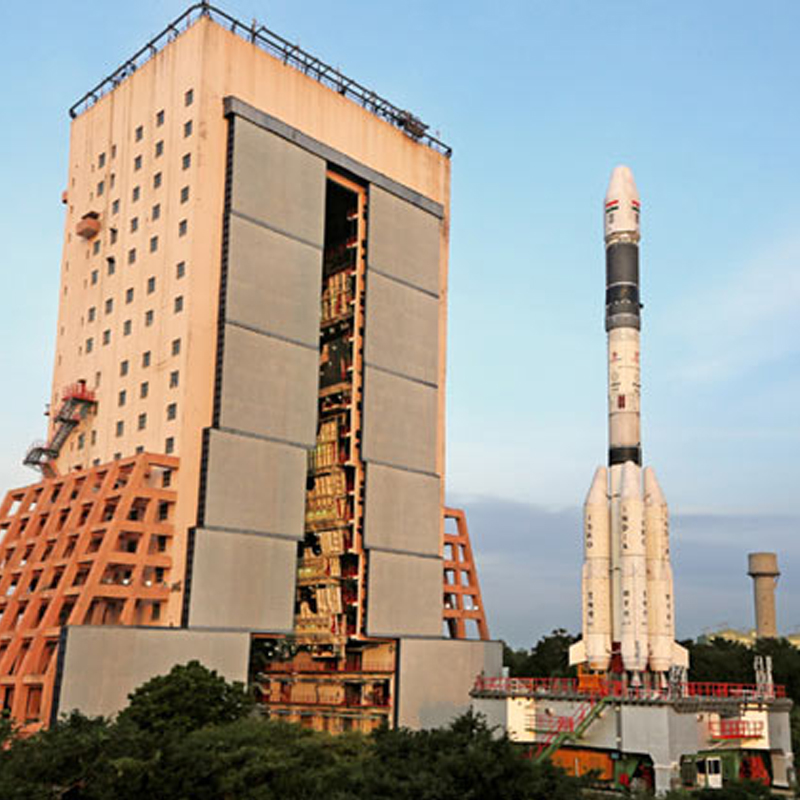
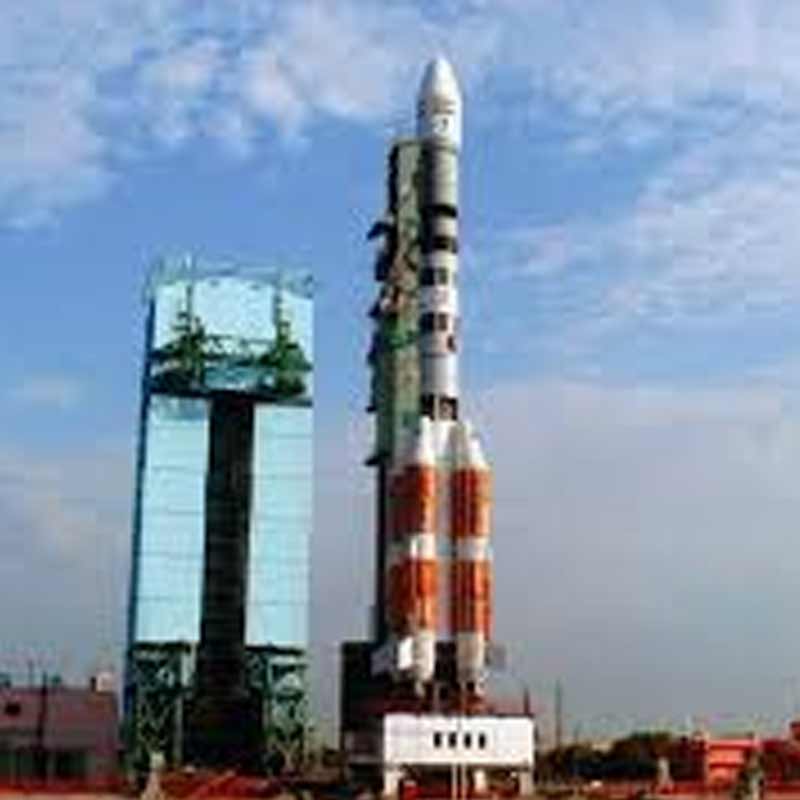
    NEW DELHI: India, which already has the capacity to launch 1700 kg to Sun Synchronous Polar Orbit (600 km) with its Polar Satellite Launch Vehicle (PSLV), is all set to launch the next generation launch vehicle Geosynchronous Satellite Launch Vehicle (GSLV MkIII) with indigenous high thrust cryogenic stage to launch 4 tonne class of communication satellites to GTO.

    The Indian Space Research Organization is all set to make the first developmental flight in the second quarter of 2017, the space minister Jitendra Singh told the Parliament. The development of Semicryogenic engine has also been undertaken to further enhance the GTO payload capability of GSLV MkIII to 6 tonnes.

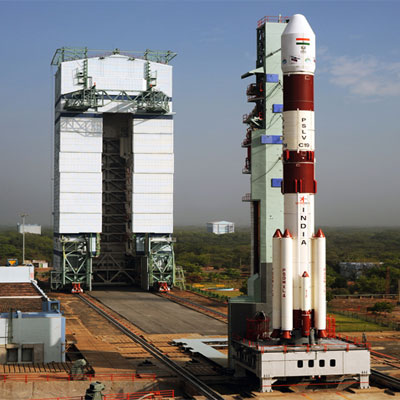
    The PSLV has proven its versatility in launching multi-satellite/multi-orbit missions as well as lunar (Chandrayaan-1) and interplanetary missions (Mars Orbiter Mission).

    Until now, PSLV has completed 38 consecutive successful missions, during which it has launched 46 Indian satellites (weighing ~ 43.2 tonnes) and 180 foreign satellites (weighing ~ 6.3 tonnes). It has already established itself as a preferred launch vehicle, in its class, in the global market for launch services, especially for smaller satellites.

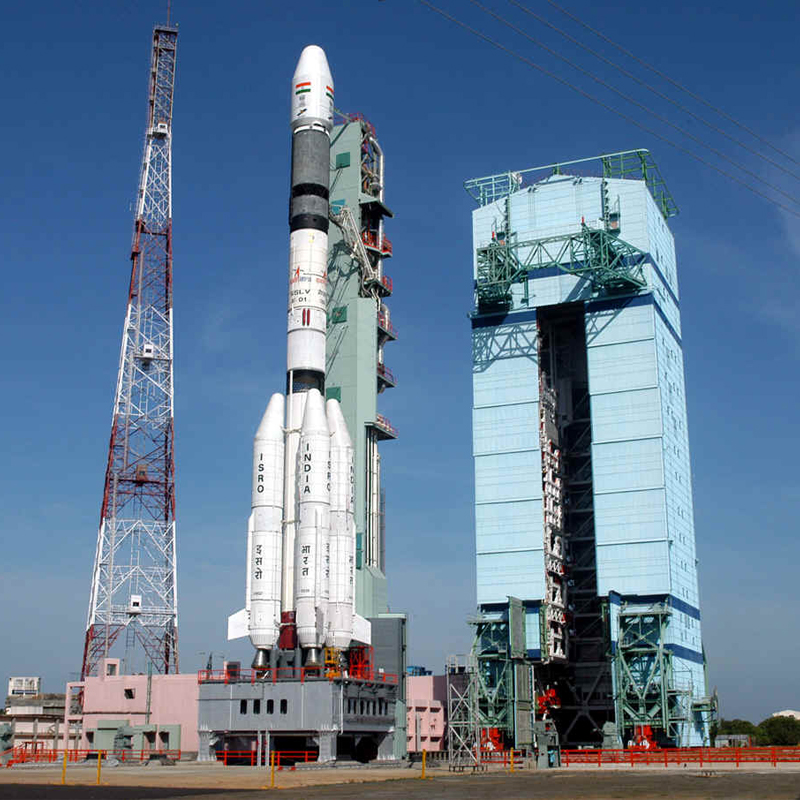
    The GSLV, with indigenous cryogenic upper stage, has the capability to launch satellites up to 2.2 tonnes to Geosynchronous Transfer Orbit (GTO). GSLV has demonstrated its reliability through three consecutive successful missions in the past three years.

    The maximum GTO capability of other space launch agencies to launch satellites are: European Space Agency (ESA): 10.5 tonnes, US: 13.8 tonnes, Russia: 6.5 tonnes, China: 14 tonnes, and Japan: 8 tonnes.

    ISRO has proved the level of efficiency in the area of space science through – (i) planning, development & execution of Lunar mission ‘Chandrayaan-1’ and High resolution imaging & Systematic topographic mapping of the Moon; (ii) successful insertion of Mars Orbiter Mission (MOM) around the planet Mars in very first attempt, achieving all planned objectives and continuing the operations of MOM beyond its designed mission life of 6 months; (iii) placing India’s first observatory in space ‘Astrosat’, which enables simultaneous multi-wavelength observations (Ultraviolet to X-Ray) to study Stars and Galaxies; (iv) indigenous development & validation of several new technologies viz. autonomy, deep space communication, scientific instruments in space science missions.

    Future missions in space science include second mission to Moon ‘Chandrayaan-2’, consisting of an indigenous Orbiter, Lander & Rover and mission for solar studies ‘Aditya-L1’ to study the solar corona in different wavebands.

    The capability to set up a space station needs capability of lifting heavy payloads into space. While there is no specific plan for space station, ISRO is working towards this capability through launch vehicles using cryogenic and semi-cryogenic engines.

  • ISRO to launch 83 satellites on single rocket, create world record

    ISRO to launch 83 satellites on single rocket, create world record

    MUMBAI: The Indian space agency ISRO, in a move to set a world record, is planning to put into orbit 83 satellites — two Indian and 81 foreign — on a single rocket in early 2017, said a top official of Antrix Corporation, the commercial arm of Indian Space Research Organisation (ISRO).

    The official said the company’s order book stands at Rs 500 crore while negotiations are on for launch order for another Rs 500 crore.

    Antrix Corporation chairman-cum-managing director Rakesh Sasibhushan told IANS that, during the first quarter of 2017, ISRO planned plan to launch a single rocket carrying 83 satellites. Most foreign satellites were nano satellites, he said.

    He said all the 83 satellites will be put in a single orbit and hence there will not be any switching off and on of the rocket. The major challenge for the proposed mission is to hold the rocket in the same orbit till all the satellites are ejected. He said ISRO will use its Polar Satellite Launch Vehicle XL (PSLV-XL) rocket variant for the record launch.

    For ISRO, launch of multiple satellites at one go is not a new thing as it has done it several times in the past. According to Sasibhushan, the total payload/weight carried off into space by the PSLV-XL rocket will be around 1,600 kg.

    Meanwhile, ISRO is conducting high-altitude tests with its own cryogenic engine that is expected to power the heavier rocket Geosynchronous Satellite Launch Vehicle-Mk III (GSLV Mk III). The GSLV Mk III has a capacity to carry around four tonnes of load. The rocket is scheduled to be flown in January 2017.

    The GSLV Mk III rocket is expected to save precious foreign exchange for India as it pays to launch heavier satellites through foreign space agencies.

    ISRO chairman A.S. Kiran Kumar said the agency is looking forward to develop four-tonne communication satellites that will give the same output as a six-tonner.

  • ISRO to launch 83 satellites on single rocket, create world record

    ISRO to launch 83 satellites on single rocket, create world record

    MUMBAI: The Indian space agency ISRO, in a move to set a world record, is planning to put into orbit 83 satellites — two Indian and 81 foreign — on a single rocket in early 2017, said a top official of Antrix Corporation, the commercial arm of Indian Space Research Organisation (ISRO).

    The official said the company’s order book stands at Rs 500 crore while negotiations are on for launch order for another Rs 500 crore.

    Antrix Corporation chairman-cum-managing director Rakesh Sasibhushan told IANS that, during the first quarter of 2017, ISRO planned plan to launch a single rocket carrying 83 satellites. Most foreign satellites were nano satellites, he said.

    He said all the 83 satellites will be put in a single orbit and hence there will not be any switching off and on of the rocket. The major challenge for the proposed mission is to hold the rocket in the same orbit till all the satellites are ejected. He said ISRO will use its Polar Satellite Launch Vehicle XL (PSLV-XL) rocket variant for the record launch.

    For ISRO, launch of multiple satellites at one go is not a new thing as it has done it several times in the past. According to Sasibhushan, the total payload/weight carried off into space by the PSLV-XL rocket will be around 1,600 kg.

    Meanwhile, ISRO is conducting high-altitude tests with its own cryogenic engine that is expected to power the heavier rocket Geosynchronous Satellite Launch Vehicle-Mk III (GSLV Mk III). The GSLV Mk III has a capacity to carry around four tonnes of load. The rocket is scheduled to be flown in January 2017.

    The GSLV Mk III rocket is expected to save precious foreign exchange for India as it pays to launch heavier satellites through foreign space agencies.

    ISRO chairman A.S. Kiran Kumar said the agency is looking forward to develop four-tonne communication satellites that will give the same output as a six-tonner.

  • India’s weather satellite INSAT-3DR launched successfully

    India’s weather satellite INSAT-3DR launched successfully

    MUMBAI: India’s Geosynchronous Satellite Launch Vehicle, equipped with the indigenous Cryogenic Upper Stage (CUS), on Thursday, successfully launched the country’s weather satellite INSAT-3DR, into a Geosynchronous Transfer Orbit (GTO) in its tenth flight (GSLV-F05). The achieved orbit is very close to the intended one.

    This flight of GSLV highlights the success of ISRO in mastering the highly complex cryogenic rocket propulsion technology

    The launch took place from the Second Launch Pad at the Satish Dhawan Space Centre SHAR (SDSC SHAR), Sriharikota, the spaceport of India. This was the first operational flight of GSLV equipped with CUS and the fourth to carry the indigenous CUS.

    This GSLV flight was the third consecutive success achieved by GSLV carrying indigenous CUS. The 2211-kg INSAT-3DR is the heaviest satellite to be launched from India.

    In its oval shaped GTO, the INSAT-3DR satellite is now orbiting the earth with a perigee (nearest point to the earth) of 169.76 km and an apogee (farthest point) of 36,080.5 km with an orbital inclination of 20.62 deg with respect to the equator.

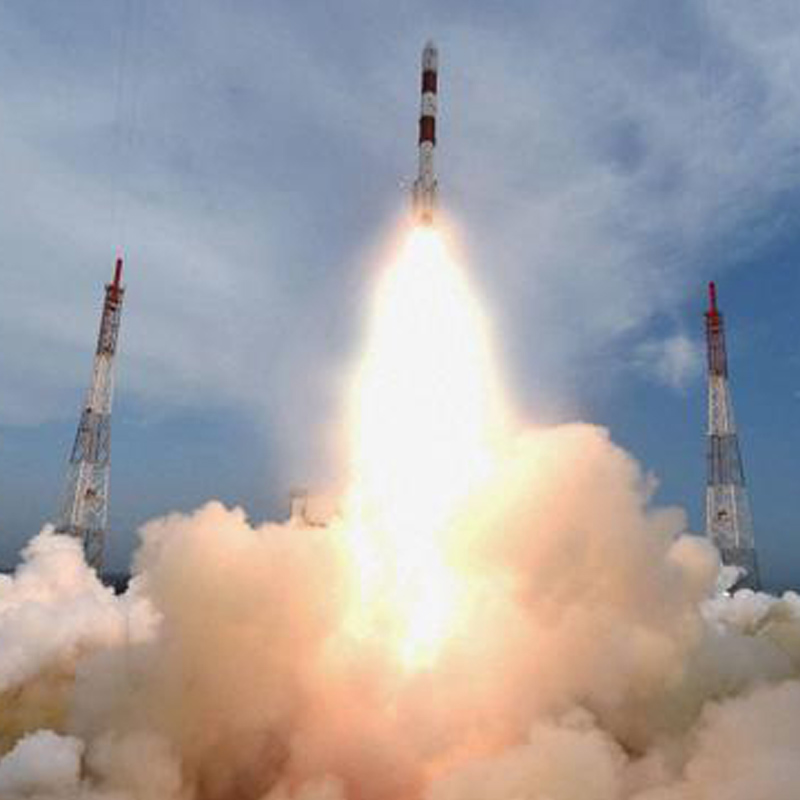
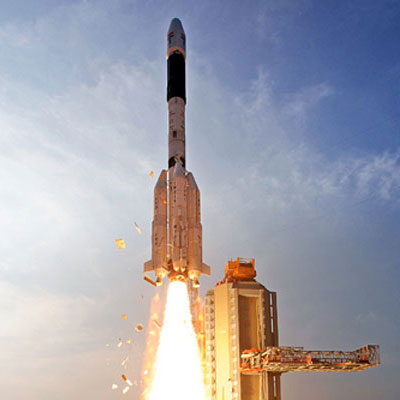
    After a 29 hour 40 minutes countdown, the 415 tonne, 49 metre tall GSLV-F05 carrying INSAT-3DR, lifted off at the rescheduled time of 16:50 hrs IST. The 40-minute delay in the launch was due to an anomaly observed in the functioning of a pressure release valve in the liquid Oxygen filling ground segment which was resolved later.

    At 4.8 seconds before the countdown reached zero, the four liquid propellant strap-on stages of GSLV-F05, each carrying 42 tonne of liquid propellants, were ignited. At count zero, and after confirming the normal performance of all the four strap-on motors, the 139-tonne solid propellant first-stage core motor was ignited and GSLV lifted off. The major phases of the flight included the core motor burn-out, strap on burn-out, ignition of the second stage, separation of the core motor together with strap-ons, payload fairing separation, second stage separation, CUS ignition and its timely shut down after satisfactory performance.

    About 17 minutes after lift-off, INSAT-3DR was successfully placed in GTO.

    Soon after, the solar array of INSAT-3DR was automatically deployed and the Master Control Facility (MCF) at Hassan in Karnataka took control of the satellite.

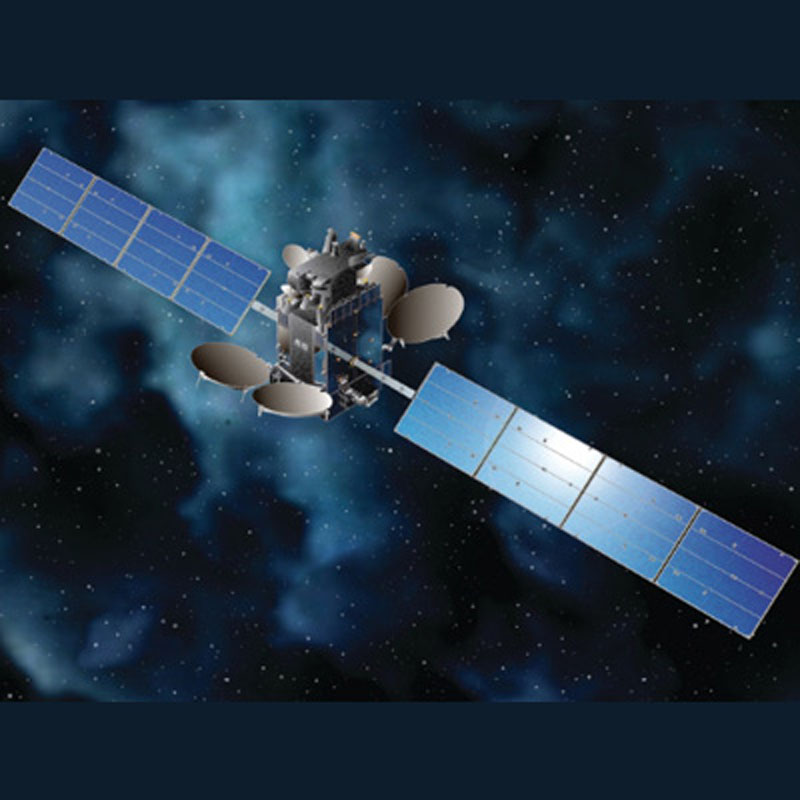
    Like its predecessor INSAT-3D which is providing service from orbit since 2013, INSAT-3DR is an advanced meteorological (weather observation) satellite built by India to provide a variety inputs essential for accurate weather forecasting. For this, it is equipped with three payloads (instruments), namely, a Multispectral Imager, Sounder and weather Data Relay Transponder.

    INSAT-3DR also carries a satellite aided Search and Rescue Transponder that picks up and relays alert signals originating from distress beacons of maritime, aviation and land based users.

    In the coming days, INSAT-3DR’s orbit will be raised from its present GTO to the final circular Geostationary Orbit (GSO) by firing the satellite’s Liquid Apogee Motor (LAM) in stages. The satellite will be commissioned into service after the completion of orbit raising operations and the satellite’s positioning in its designated orbital slot of 74 degree East longitude in the GSO and in-orbit testing of its payloads.

  • India’s weather satellite INSAT-3DR launched successfully

    India’s weather satellite INSAT-3DR launched successfully

    MUMBAI: India’s Geosynchronous Satellite Launch Vehicle, equipped with the indigenous Cryogenic Upper Stage (CUS), on Thursday, successfully launched the country’s weather satellite INSAT-3DR, into a Geosynchronous Transfer Orbit (GTO) in its tenth flight (GSLV-F05). The achieved orbit is very close to the intended one.

    This flight of GSLV highlights the success of ISRO in mastering the highly complex cryogenic rocket propulsion technology

    The launch took place from the Second Launch Pad at the Satish Dhawan Space Centre SHAR (SDSC SHAR), Sriharikota, the spaceport of India. This was the first operational flight of GSLV equipped with CUS and the fourth to carry the indigenous CUS.

    This GSLV flight was the third consecutive success achieved by GSLV carrying indigenous CUS. The 2211-kg INSAT-3DR is the heaviest satellite to be launched from India.

    In its oval shaped GTO, the INSAT-3DR satellite is now orbiting the earth with a perigee (nearest point to the earth) of 169.76 km and an apogee (farthest point) of 36,080.5 km with an orbital inclination of 20.62 deg with respect to the equator.

    After a 29 hour 40 minutes countdown, the 415 tonne, 49 metre tall GSLV-F05 carrying INSAT-3DR, lifted off at the rescheduled time of 16:50 hrs IST. The 40-minute delay in the launch was due to an anomaly observed in the functioning of a pressure release valve in the liquid Oxygen filling ground segment which was resolved later.

    At 4.8 seconds before the countdown reached zero, the four liquid propellant strap-on stages of GSLV-F05, each carrying 42 tonne of liquid propellants, were ignited. At count zero, and after confirming the normal performance of all the four strap-on motors, the 139-tonne solid propellant first-stage core motor was ignited and GSLV lifted off. The major phases of the flight included the core motor burn-out, strap on burn-out, ignition of the second stage, separation of the core motor together with strap-ons, payload fairing separation, second stage separation, CUS ignition and its timely shut down after satisfactory performance.

    About 17 minutes after lift-off, INSAT-3DR was successfully placed in GTO.

    Soon after, the solar array of INSAT-3DR was automatically deployed and the Master Control Facility (MCF) at Hassan in Karnataka took control of the satellite.

    Like its predecessor INSAT-3D which is providing service from orbit since 2013, INSAT-3DR is an advanced meteorological (weather observation) satellite built by India to provide a variety inputs essential for accurate weather forecasting. For this, it is equipped with three payloads (instruments), namely, a Multispectral Imager, Sounder and weather Data Relay Transponder.

    INSAT-3DR also carries a satellite aided Search and Rescue Transponder that picks up and relays alert signals originating from distress beacons of maritime, aviation and land based users.

    In the coming days, INSAT-3DR’s orbit will be raised from its present GTO to the final circular Geostationary Orbit (GSO) by firing the satellite’s Liquid Apogee Motor (LAM) in stages. The satellite will be commissioned into service after the completion of orbit raising operations and the satellite’s positioning in its designated orbital slot of 74 degree East longitude in the GSO and in-orbit testing of its payloads.

  • ISRO to build 15 PSLV launcher by decade end

    ISRO to build 15 PSLV launcher by decade end

    NEW DELHI: A total of 15 Polar Satellite Launch Vehicles (PSLV) launchers worth Rs 3090 crore have been sanctioned by the Government for being built during 2017-20. 


    The launchers proposed by Indian Space Research Organisation (ISRO) in the coming years (that is till March 2017) include ten PSLV, two Geosynchronous Satellite Launch Vehicles (GSLV) and one developmental flight of GSLV Mk III. 


    The indigenous GSLV will launch 2-ton class of communication satellites in space. 


    Space Department sources said ISRO has been utilising the Indian industry for the manufacturing and production of the various components and sub-assemblies required for the development of space technology since 1976. In order to ensure the smooth supply chain of hardware, components and sub-systems, ISRO is planning to magnify the role of industry partners by increasing the scope of work from sub-system/hardware level to system level in a phased manner.


    The entire gamut of activities that goes into the realization of the launch vehicles or satellites could be performed by the industry, except mission critical activities and launch operations. 

  • Failure analysis committee on GSLV-F02 constituted

    Failure analysis committee on GSLV-F02 constituted

    BANGALORE: Following the unsuccessful launch of Geosynchronous Satellite Launch Vehicle (GSLV-F02) with INSAT-4C on board from Satish Dhawan Space Centre SHAR (SDSC-SHAR), Sriharikota on 10 July, a Failure Analysis Committee has been constituted by Isro.

    Former director of SDSC-SHAR and presently senior advisor at the Centre chairs the Committee, K Narayana will head the team. According to an Isro release, the 15 member Committee includes experts from academic and research institutions besides those from various Centres of ISRO.

    The Committee will review the performance of all subsystems of GSLV-F02 from lift-off to the termination of flight, identify specific reasons for anomalies observed and recommend corrective measures for future course of action.

    The Committee is expected to submit its report in a month’s time.

  • Insat4c: ISRO gears up for 10-15 July launch

    Insat4c: ISRO gears up for 10-15 July launch

    MUMBAI: 10 to 15 July 2006. That’s the launch window that the Indian Space Research Organisation has set aside for the launch of DTH services satellite Insat 4C. According to ISRO chairman Madhavan Nair the indigeneously designed launch vehicle has been moved to the launch pad in Sriharikota.

    The GSLV Mark II is a 49-metre tall rocket weighing around 40 tonnes at lift-off. Its payload is the Insat 4C satellite, with 12 ku band transponders and a mission life span of 10 years.

    Most of the satellite’s capacity has been booked for DTH services by the Sun Network, National Informatics Centre and VSAT (very small aperture terminals) operators.

    The succesful launch of the GSLV will pitchfork India’s ISRO into an elite group of countries and groups with indigeneous satellite design and launch capabilities: United States, Russia, Japan, China and the European Space Agency (ESA).

    Nair was speaking to journalists at a satellite navigation conference which was held at its offices in Bangalore yesterday. He said that the launch window date will be kept, good weather permitting.

    Isro spokespersons have been pointing out that using indigeneous launch vehicles will result in a saving of about 30-40 per cent or Rs 1.5 billion in expenses per launch. With four satellites to be launched by GSLV Mark II and Mark III, the savings thus will be substantial. It will, however, be using the services of Arianespace to launch the Insat 4B satellite from Kouru in French Guiana next year.

    “With the commissioning of the Rs 3.5 billion ($75mn) second launch pad at Sriharikota, India is the only country to have such a state-of-the-art facility to launch different types of vehicles Ranging from PSLV (polar satellite launch vehicle), GSLV Mark-1, GSLV Mark-II to the upcoming GSLV Mark-III in the four-tonne class,” a top ISRO official is reported to have said sometime back.