Tag: GSAT-7

  • 13 indigenous communication satellites over Indian skies

    13 indigenous communication satellites over Indian skies

    New Delhi: Thirteen of the 34 Indian satellites operational in the country are communication satellites.  

    These sare: INSAT-3A, INSAT-3C, INSAT-4A, INSAT-4B, INSAT-4CR, GSAT-6, GSAT-7, GSAT-8, GSAT-10, GSAT-12, GSAT-14, GSAT-15 and GSAT-16.  The others include 12 Earth Observation Satellites; seven Navigational Satellites;and two Space science Satellites. 
    About 30 service providers are utilising Ku-band (a part of K band) transponders onboard indigenous communication satellites for various communication applications, which include direct-to-home television, digital satellite news gathering, telecommunication, VSAT services for banking, tele-education, business communication. The government is not seeking any foreign assistance/collaboration for satellite operations, Space Department minister Jitendra Singh has told Parliament. 

    The Indian Space Research Organization has an action plan in place for developing indigenous satellites, with the participation of Indian industries, for earth observation, communication, navigation and space science and planetary exploration. 

    Meanwhile, ISRO has signed MoU/ cooperative agreements for exploration and use of outer space with 37 countries viz. Argentina, Australia, Brazil, Brunei Darussalam, Bulgaria, Canada, Chile, China, Egypt, France, Germany, Hungary, Indonesia, Israel, Italy, Japan, Kazakhstan, Kuwait, Mauritius, Mexico, Mongolia, Myanmar, Norway, Peru, Republic of Korea, Russian Federation, Saudi Arabia, Spain, Sweden, Syria, Thailand, The Netherlands, Ukraine, United Kingdom, United Arab Emirates, United States of America and Venezuela. 

    The fields to explore newer research activities addressed in these MoUs include Joint development of advanced scientific instruments to observe earth and universe; joint realization of satellite missions; jointly carrying out calibration and validation experiments; conducting airborne campaign with advanced instruments; deep space navigation and communication support for space science missions; development of advanced technologies for building and launching of spacecrafts for earth observation and space science exploration. 

    Application possibilities in the field of remote sensing addressed in these MoUs include – natural resource management; vegetation biomass estimation; meteorological & oceanographic applications; atmospheric parameter retrieval & modelling; climate monitoring and weather forecasting; disaster management support.

  • 13 indigenous communication satellites over Indian skies

    13 indigenous communication satellites over Indian skies

    New Delhi: Thirteen of the 34 Indian satellites operational in the country are communication satellites.  

    These sare: INSAT-3A, INSAT-3C, INSAT-4A, INSAT-4B, INSAT-4CR, GSAT-6, GSAT-7, GSAT-8, GSAT-10, GSAT-12, GSAT-14, GSAT-15 and GSAT-16.  The others include 12 Earth Observation Satellites; seven Navigational Satellites;and two Space science Satellites. 
    About 30 service providers are utilising Ku-band (a part of K band) transponders onboard indigenous communication satellites for various communication applications, which include direct-to-home television, digital satellite news gathering, telecommunication, VSAT services for banking, tele-education, business communication. The government is not seeking any foreign assistance/collaboration for satellite operations, Space Department minister Jitendra Singh has told Parliament. 

    The Indian Space Research Organization has an action plan in place for developing indigenous satellites, with the participation of Indian industries, for earth observation, communication, navigation and space science and planetary exploration. 

    Meanwhile, ISRO has signed MoU/ cooperative agreements for exploration and use of outer space with 37 countries viz. Argentina, Australia, Brazil, Brunei Darussalam, Bulgaria, Canada, Chile, China, Egypt, France, Germany, Hungary, Indonesia, Israel, Italy, Japan, Kazakhstan, Kuwait, Mauritius, Mexico, Mongolia, Myanmar, Norway, Peru, Republic of Korea, Russian Federation, Saudi Arabia, Spain, Sweden, Syria, Thailand, The Netherlands, Ukraine, United Kingdom, United Arab Emirates, United States of America and Venezuela. 

    The fields to explore newer research activities addressed in these MoUs include Joint development of advanced scientific instruments to observe earth and universe; joint realization of satellite missions; jointly carrying out calibration and validation experiments; conducting airborne campaign with advanced instruments; deep space navigation and communication support for space science missions; development of advanced technologies for building and launching of spacecrafts for earth observation and space science exploration. 

    Application possibilities in the field of remote sensing addressed in these MoUs include – natural resource management; vegetation biomass estimation; meteorological & oceanographic applications; atmospheric parameter retrieval & modelling; climate monitoring and weather forecasting; disaster management support.

  • GSAT-7 Transponders successfully switched on as scheduled

    GSAT-7 Transponders successfully switched on as scheduled

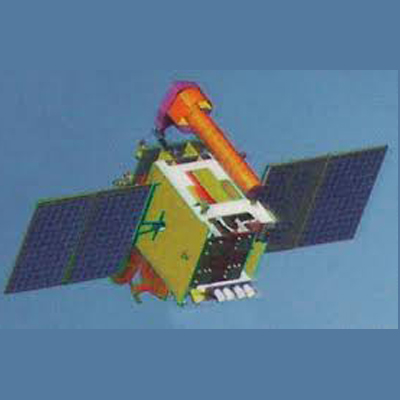
    NEWDELHI: All the 11 communication transponders operating in UHF, S, C and Ku-bands of India’s advanced multiband communication satellite GSAT-7 have been successfully switched on and their performance is found to be normal.

    GSAT-7 is now positioned at its designated orbital slot of 74 deg east longitude in the geostationary orbit and In Orbit Testing (IOT) of the 11 transponders is in progress.

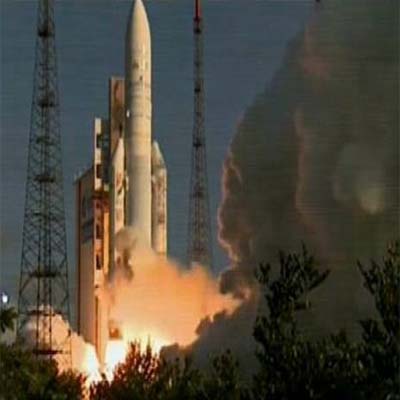
    GSAT-7 was launched from Kourou, French Guyana in the early hours of 30 August and was successfully placed in the Geosynchronous Orbit with an altitude of about 36,000 km above Earth’s surface on 3 September morning, after successfully completing the last of the three orbit-raising maneuvers commanded from ISRO`s Master Control Facility (MCF) at Hassan.

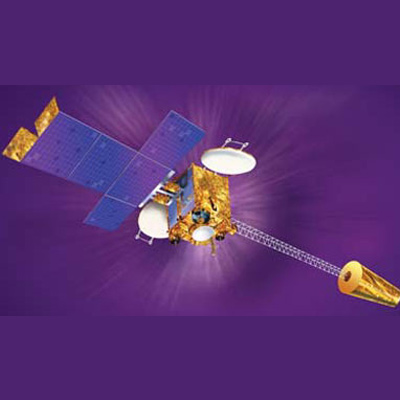
    Earlier in 3 September, the communication antennae of GSAT-7, including the UHF Helix antenna, were deployed successfully. Following this, GSAT-7 was put in its final orbital configuration, stabilised on its three-axis by the momentum wheels.

    The GSAT-7 Satellite was expected to reach its assigned orbital slot of 74 degree east longitude in the Geostationary Orbit within 10 days.

    Based on current availability of hardware and components, the GSLV Vehicle assembly and checkout is expected to be completed at the Vehicle Assembly Building by the first week of December 2013 and the launch could take place by December 2013.

  • GSAT-7 Satellite placed in Geosynchronous Orbit

    GSAT-7 Satellite placed in Geosynchronous Orbit

    NEW DELHI: India’s advanced multi-band communication satellite GSAT-7, launched from Kourou, French Guyana in the early hours of 30 August and now has been successfully placed in the Geosynchronous Orbit with an altitude of about 36,000 km above Earth’s surface yesterday (3 September) morning, after successfully completing the last of the three orbit-raising maneuvers commanded from ISRO`s Master Control Facility (MCF) at Hassan.

    Later in the day, the communication antennae of GSAT-7, including the UHF Helix antenna, were deployed successfully. Following this, GSAT-7 was put in its final orbital configuration, stabilised on its three-axis by the momentum wheels.

    The GSAT-7 Satellite would reach its assigned orbital slot of 74 degree East longitude in the Geostationary Orbit within the next 10 days.

    On 14 September, the communication transponders in UHF, S, C and Ku bands are planned to be switched on.

    Based on current availability of hardware and components, the GSLV Vehicle assembly and checkout is expected to be completed at the Vehicle Assembly Building by the first week of December 2013 and the launch could take place by December 2013.

  • DD telecasts live launch of India’s maritime communications satellite GSAT-7

    DD telecasts live launch of India’s maritime communications satellite GSAT-7

    NEW DELHI: Doordarshan telecasts the launch of GSAT-7 maritime Communications Satellite live from Kourou in French Guyana.

    The live telecast on the national channel was from 02:00 am till the end today. A recording of the launch will be repeated from 10.00 am.

    The launch from the European space consortium, Arianespace will be India’s 71st satellite developed by the Indian Space Research Organisation (ISRO) since 1975.