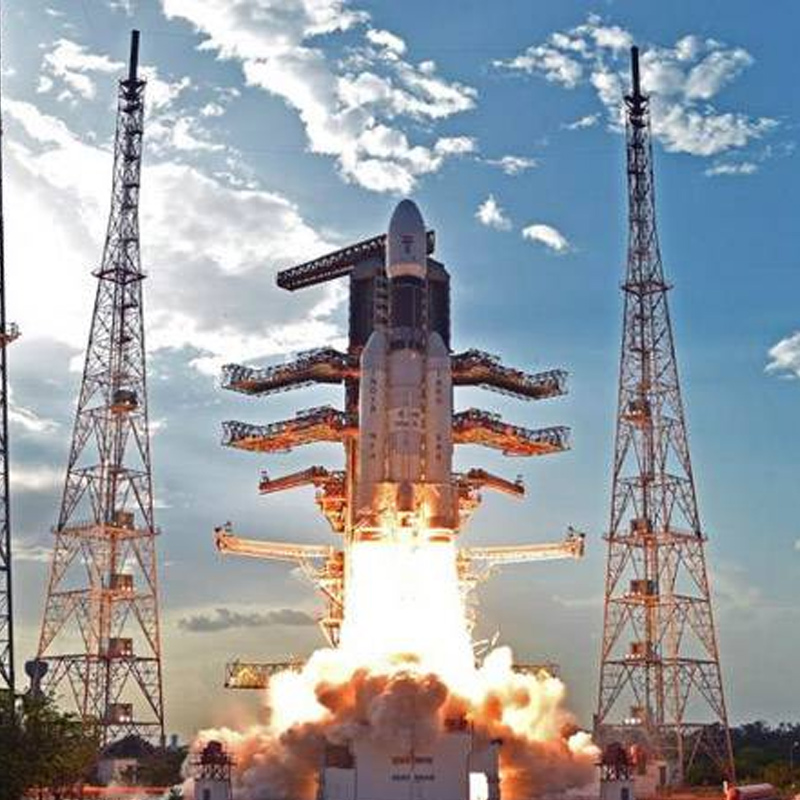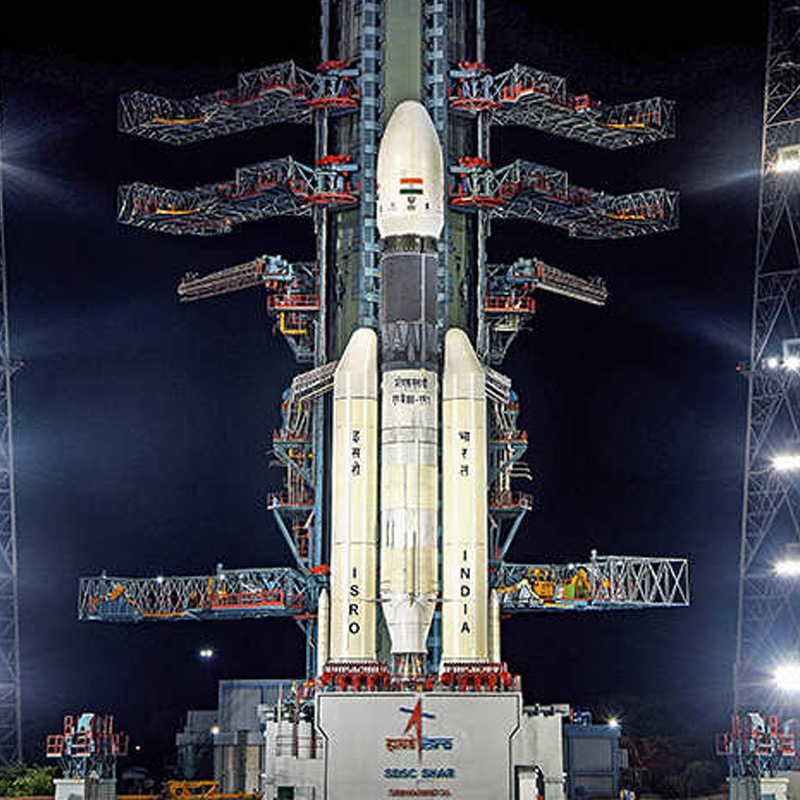
Tag: GSat 30

  • Assamese channel Prag News engages Kunal Deshamukhya as COO

    Assamese channel Prag News engages Kunal Deshamukhya as COO

    MUMBAI: Prag News – Assam’s oldest news channel – has got a new operational boss. Veteran Kunal Deshamukhya has joined AM Television Pvt Ltd – the company which runs the news channel – as chief operating officer.

    Kunal has been in the television and distribution trade and has in the past worked with Star India, Star Den, BBC Worldwide, GTPL Hathway, Digi Jadoo Broadband and Afghani channel Ariana Radio and TV network. He has had stints with Joyco, Mother Dairy and has also tried his hand at turning entrepreneur.

    Prag News which is beaming off a GSat 30 transponder is owned by chairman & managing director Sanjive Narain.

    A free to air service, it is available on various DPOs including top ones like: Tata Play, Airtel DTH, and Dish TV.


  • #Throwback2020: Success in space and satellites

    #Throwback2020: Success in space and satellites

    NEW DELHI: The pandemic may have slowed down life on earth, but it could not deter the world from looking beyond. As most activities came to a sudden halt, the space agencies across the globe persevered through the crisis. Some had to push back their crucial space missions, others struggled to keep them on track, while a few managed to script history.

    Indian Space Research Organization (ISRO) began the year with the launch of a high-powered communication satellite GSAT-30 on-board a European rocket from French Guiana. It replaced the aging INSAT 4A to continue providing high quality television, telecommunication, broadcasting services to the Indian subcontinent with extended coverage over Asia and Australia.

    The lockdown ensured no further launch took place for the next ten months, until November, when India’s premier space agency returned to the launch pad to inject EOS-01–an earth observation satellite—into space along with nine other customer satellites. This was soon followed by the launch of the country's forty second communications satellite CMS-01 in December which replaced the aging GSAT-12.

    While ISRO managed to keep its regular satellite launches on track, the pandemic cast a shadow on its bigger space missions. This included a fresh bid to achieve a successful soft landing on the moon which Chandrayaan-2 had failed to achieve last year, and first of the two unmanned missions of Gaganyaan, India’s first human-spaceflight programme which was expected to take off this December. 

    Nonetheless, the groundwork for the 2022 Gaganyaan mission continued. The agency completed the selection of the astronauts and began their training. The process of human rating for GSLV MkIII selected for the historic mission also remained in progress. 

    Globally, as many as 101 orbital launches took place in this turbulent year. The US was top of the leader board with 40 successes out of 44. China came next with 33 successful launches out of 37 attempted. Russia had a perfect score with 16 satellites reaching their orbital locations. Ditto with Japan which had four immaculate launches, and Europe had four clear takeoffs and one failure with Iran and India acing it with two successes each.

    A large share of the launches were accounted for by low earth orbiting birds which were meant for earth observation, technology demonstration and to provide internet in select areas.

    Amongst the big communications birds which were sent into space included: Tiantong 1-02 (mobile communications, China), Galaxy 30 (Intelsat, communications, North America), BSat4b (Broadcasting Satellite System Corp, communications, Japan), Ekspress 80 and Ekspress 103 (Russian Satellite Communications Co, communications, Russia), Apstar 6D (APT Holdings; communications, China), JCSat 17 (Sky Perfect JSat Corp; communications, Japan), GSat30 (ISRO, communications, India, Kourou), and Eutlesat Konnect (Eutelsat, communications, Africa & Europe). Palapa N1 – a satellite owned by Palapa Satelit Nusantara Sejahtera, a joint venture between Indosat Ooredoo and Pasifik Satelit Nusantara, or PSN – met with a fiery end after its launch vehicle the Long March 3B had engine failure.

    The year will be noted for the achievement by the Mission Extension Vehicle MEV-1 which became the first telerobotically-operated spacecraft to service another satellite on-orbit when in February 2020 it completed the first phase of a five-year mission to extend the life of the Intelsat 901 (I-901) satellite. It was brought back from the graveyard orbit to a geosynschronous one by April 2020, opening up a future where human intervention is not needed for on-orbit satellite servicing, like it was for dealing with the Hubble telescope in the early 2000s.   

    2020 also marked the first time a private company successfully undertook a crewed mission into the low earth orbit. Elon Musk's SpaceX achieved the feat after it was able to put two astronauts into space aboard its spacecraft Crew Dragon, heradling a new chapter in commercial space operations. It was a busy year for the American aerospace manufacturer which injected as many as 26 satellites into space. The company is racing to get its Starlink constellation in operation to provide high speed internet connection from the skies.

    The year also witnessed the return of UK based broadband satellite communications company, OneWeb which put a total of 36 communication satellites into space on board a Russian Soyuz rocket. The satellite operator which recently emerged from bankruptcy is eyeing to build a massive constellation of over 650 satellites to beam internet service to people. Early this year, India’s Bharti Global had picked up a 45 per cent stake in the company.

    In the global space arena, Mars continued to allure the space agencies and three countries managed to keep their date—a brief time window which comes around every two years.

    The first was the United Arab Emirates (UAE) which scripted history with the successful launch of its spacecraft named Hope— the first-ever interplanetary mission by any Arab country. It was followed by the launch of Tianwen-1 by China in July and Perseverance rover by the United States a week later. All three spacecraft are expected to enter the Martian orbit early next year.

    However, the pandemic marred Europe and Russia's joint Mars mission and the launch of its first Mars rover, Rosalind Franklin probe, was postponed to 2022.

    Among other ground-breaking missions of 2020 was China’s Chang'e-5 lunar capsule which returned to Earth carrying fresh samples of moon rocks. China has now become just the third country to explore the moon's surface, after the US and the former Soviet Union, and the first to successfully return from the moon since Soviet Union’s Luna 24 spacecraft in 1976.

  • ISRO to replace INSAT-4A with GSAT-30

    ISRO to replace INSAT-4A with GSAT-30

    Mumbai: The location: Kourou, French Guiana. The date: 17 January 2020. The time: 02:35 am IST. Indian Space Research Organisation (ISRO) scientists will be at their consoles, their brows creased in concentration as the countdown for the liftoff off its new generation communication satellite GSAT 30 off Arianespace’s Ariane 5 rocket begins. Weighing 3,375 kg, GSAT-30 is set to replace one of the early birds in the ISRO fleet, the ageing Insat 4A.

    Insat-4A was launched in 2005 with a lifespan of at least 12 years and has been operational way beyond that. Even though it is functioning fine, ISRO has decided to put in a replacement with advanced features and network strength. Amongst the two major  occupants and users of transponder capacity on Insat 4A are Tata Sky and Star India group.

    Along with GSAT 30, Arianespace will also be putting into orbit global operator Eutelsat’s Konnect satellite on the same launch vehicle. GSAT-30 is the lower passenger in the Ariane-5 spacecraft, with Konnect its copassenger being released first.  This will be Arianespace’s 107th Ariane 5 mission.

    To be positioned at a longitude of 83° East, GSAT-30 will provide high-quality television, telecommunications and broadcasting services over Indian mainland and islands. GSAT-30 is configured on ISRO’s enhanced I-3K platform to provide communications services from geostationary orbit in C- and Ku-band for a lifetime greater than 15 years. Last year, Arianespace had delivered the GSAT-31 into orbit.

    GSAT-30 will provide extended coverage in C-band to Gulf countries, a large part of Asia and Australia. The move will help Indian broadcasters beam their content to Gulf countries, large parts of Asia and Australia, as well as the Indian mainland.

    The GSAT-30 was speculated to launch in June last year, but was postponed to 2020 as India’s pioneer space agency got busy in launching military satellites in space in order to boost strategic assets in space as well as its moon mission.

    In its GSAT-30 launch kit, ISRO said: “GSAT will be extensively used for supporting VSAT networks, Television uplinking and teleport Services, Digital Satellite News Gathering (DSNG), DTH-television services cellular backhaul connectivity and many such applications”.

    Eutelesat Konnect on the other hand will offer total capacity of 75 Gbps and by next autumn will allow Eutelsat to provide Internet access services for companies and individuals alike at up to 100 Mbps. The satellite will help to fight against the digital divide by bringing broadband Internet across 40 countries in Africa and 15 countries across Europe.

    Produced by Thales Alenia Space, it is the first to use the company’s Spacebus NEO platform developed under the Neosat Partnership Project conducted by the European and French space agencies (ESA and CNES). Eutelsat Konnect will weight approximately 3,620 kg. at liftoff and is to operate from an orbital slot at 13 degrees East.

    The proceedings will of course be telecsast live online as well on DD. To watch a live, high-speed online transmission of the launch (including commentary in French and English from the launch site), go to arianespace.com or to youtube.com/arianespace on 16 January 2020, beginning 20 minutes before liftoff.