Tag: GSAT-18

  • Communication facilities increased with 7 satellites in last 3 years

    NEW DELHI: Satellite Communication capability was augmented with seven more satellites in the last three years with GSAT-6, GSAT-9, GSAT-15, GSAT-16, GSAT-17, GSAT-18, and GSAT-19.

    Another major achievement since June 2014 has been the realisation of South Asia Satellite to enable South Asian countries to establish SATCOM based services such as Television/DTH, VSAT, e-governance, banking, tele-medicine & tele-education etc., with coverage over South Asia.

    The Parliament was told by the minister of state in the department of space Dr Jitendra Singh that the Indian Space Research Organisation (ISRO) had accomplished 41 missions, which includes 19 launch vehicle missions, 19 satellite missions and three technology demonstrator missions.

    A notable achievement has been the successful launch of the first developmental flight of GSLV-MkIII, which validated new version of Indigenous Cryogenic Engine. With this capability, it will be possible to launch upto 4-tonne class of communication satellites into Geosynchronous Transfer Orbits (GTO).

    ISRO has successfully enabled a host of applications using synergy of earth observation, communication and navigation satellites in governance and development.

    India has created a niche in the field of space science & technology with launch services, earth observation, communication & navigation and application of space technology for national development.

    Today, India stands one among the top six space faring nations in the world, the Minister said.

    The areas which are benefitted/ likely to be benefitted with the utilization of space technology and its applications include broadcasting and telecommunications.

    Also Read :

    India’s GSAT-17 communication satellite launched successfully

    32 free DTH educational channels on Dish TV & FreeDish start functioning

    GSAT 17 to be inducted into INSAT/GSAT system after tests

    Transponder leasing yields Rs 7.5 bn for communication satellites


  • GSAT-18 successfully launches, new capacity for DTH operators, TV channels

    GSAT-18 successfully launches, new capacity for DTH operators, TV channels

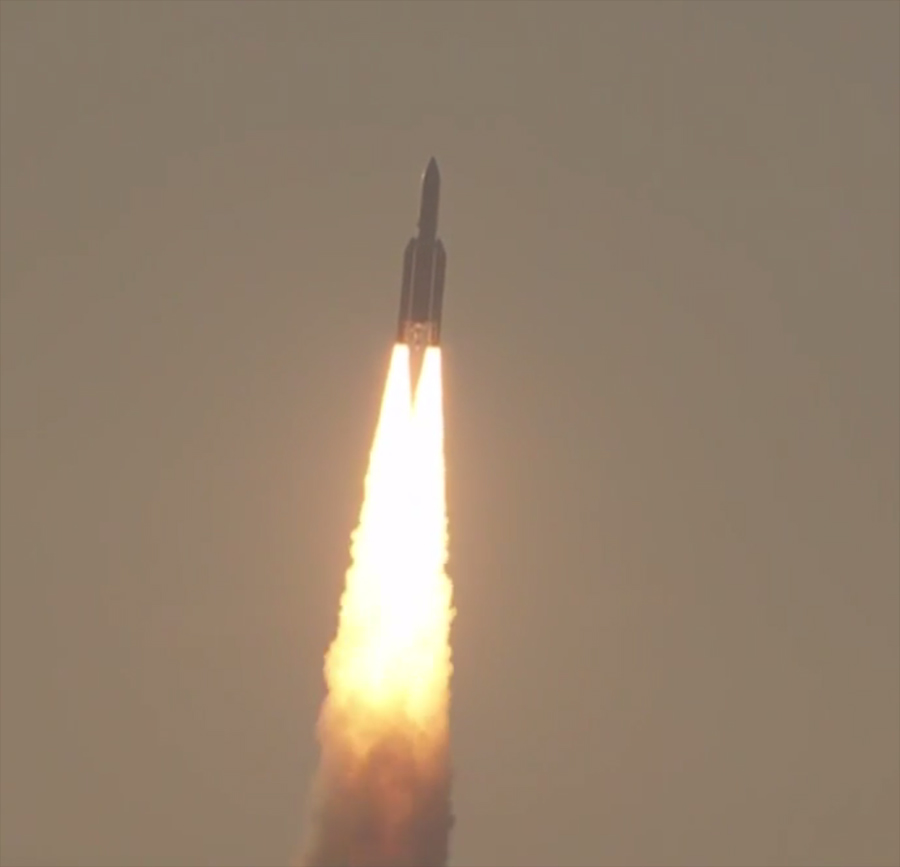
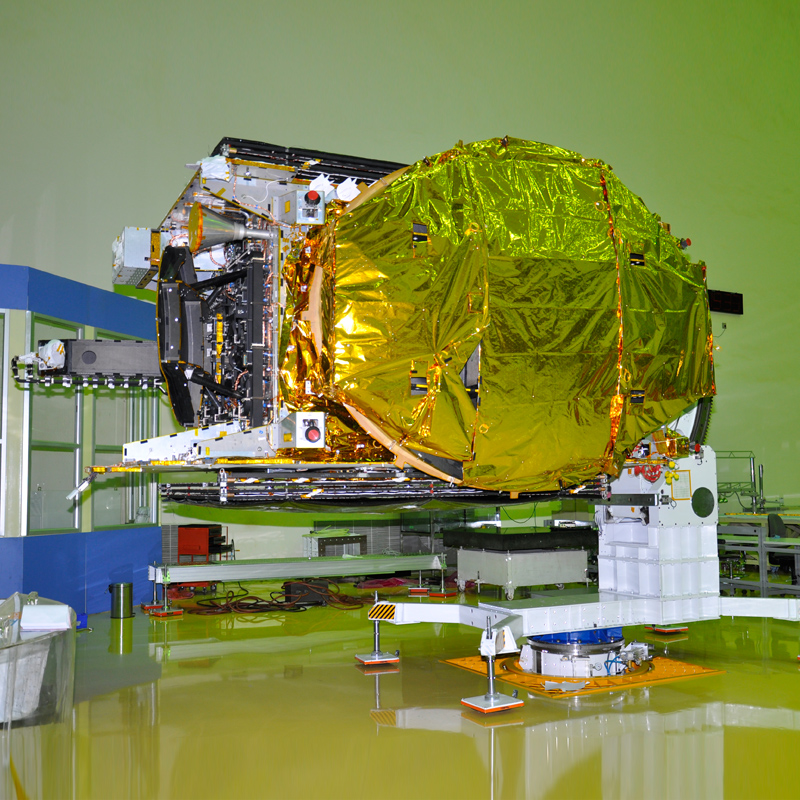
    MUMBAI: Indian DTH operators, television channels, VSAT and digital satellite news gathering providers are a happy lot because of a development in Kouro French Guiana this morning. The reason: the successful launch of Arianespace’s Ariane 5 VA 531 rocket with its passenger, the Indian Space Research Organisation’s GSAT-18 satellite. When the satellite starts ticking fully a few weeks later, its 48 transponders ranging from Ku-band, C-Band to extended C-Band will be beaming their signals over India to Indian TV viewers and companies.

    32:28 minutes after blasting off from the launch site, the 3,400 kg GSAT-18 was placed in geo-synchronous transfer orbit (GTO) this morning around 2:30 am. And, ISRO officials including the Indian ambassador in France Mohan Kumar leapt up, fisting the air in triumph.

    Following that, ISRO’s master control facility took charge of it and will perform operations which will result it being placed in a circular geo-stationary orbit. Following this, ISRO will deploy the solar panels – which will provide it power over its 15 year life – and antenna. The satellite will then be stabilized on three axis, placed at 74 degrees East longitude, and become part of ISRO’s 14 telecom fleet in space

    Later, it is planned to experimentally turn on the communication payloads of GSAT-18. After the successful completion of all the in-orbit tests, GSAT-18 will be ready for operational use.

    This was the Indian space organisation’s twentieth satellite mission through Arianespace. It will add to that count when it launches two more satellites – GSAT 11 and GSAT-11 – using Arianespace launchers in 2017.

    The VA 531 flight had another payload – Australia’s SkyMuster II satellite – which too was placed successfully in orbit. SkyMuster II aims to provide broadband facilities to remote locations in Australia.

    Prime minister Narendra Modi sent out his congratulatory message on Twitter to the scientists at ISRO.

  • GSAT-18 successfully launches, new capacity for DTH operators, TV channels

    GSAT-18 successfully launches, new capacity for DTH operators, TV channels

    MUMBAI: Indian DTH operators, television channels, VSAT and digital satellite news gathering providers are a happy lot because of a development in Kouro French Guiana this morning. The reason: the successful launch of Arianespace’s Ariane 5 VA 531 rocket with its passenger, the Indian Space Research Organisation’s GSAT-18 satellite. When the satellite starts ticking fully a few weeks later, its 48 transponders ranging from Ku-band, C-Band to extended C-Band will be beaming their signals over India to Indian TV viewers and companies.

    32:28 minutes after blasting off from the launch site, the 3,400 kg GSAT-18 was placed in geo-synchronous transfer orbit (GTO) this morning around 2:30 am. And, ISRO officials including the Indian ambassador in France Mohan Kumar leapt up, fisting the air in triumph.

    Following that, ISRO’s master control facility took charge of it and will perform operations which will result it being placed in a circular geo-stationary orbit. Following this, ISRO will deploy the solar panels – which will provide it power over its 15 year life – and antenna. The satellite will then be stabilized on three axis, placed at 74 degrees East longitude, and become part of ISRO’s 14 telecom fleet in space

    Later, it is planned to experimentally turn on the communication payloads of GSAT-18. After the successful completion of all the in-orbit tests, GSAT-18 will be ready for operational use.

    This was the Indian space organisation’s twentieth satellite mission through Arianespace. It will add to that count when it launches two more satellites – GSAT 11 and GSAT-11 – using Arianespace launchers in 2017.

    The VA 531 flight had another payload – Australia’s SkyMuster II satellite – which too was placed successfully in orbit. SkyMuster II aims to provide broadband facilities to remote locations in Australia.

    Prime minister Narendra Modi sent out his congratulatory message on Twitter to the scientists at ISRO.

  • Bad weather pushes forward GSAT-18 launch

    Bad weather pushes forward GSAT-18 launch

    MUMBAI: The nation – and communication satellite trackers – will have to wait for another day. The Indian Space Research Organisation (ISRO) has announced that the launch of its GSAT-18 communications satellite has been delayed by a day. According to its launch partner, Arianespace, the flight was forced to be postponed on account of unfavorable weather conditions.

    GSAT-18 was slated to be launched early 5 October 2016 morning (Indian standard time) by Arianespace using an Ariane 5 rocket from Kouro in French Guiana. Now, the launch date has been pushed forward to 6 October at 1:15 am.

    This is not the first time that GSAT-18’s launch has been delayed. It was initially to be launched on 12 July 2016 along with the Japanese satellite Superbird-8 but a shipping mishap which damaged the latter forced the cancellation of the liftoff. The Indian satellite has another passenger on board the Araine’s Fligh VA 231, Australia’s broadband satellite SkyMuster II.

    GSAT-18 is to be placed at 74 degrees east and has a payload of 24 C-band transponders, 12 upper extended C-band transponders, 12 Ku-band transponders and 2 Ku-Beacon transmitters. The bird has a lifespan of 15 years and it will primarily go to augment the capacity of DTH television, broadcast TV, as well as telecom services in India.

  • Bad weather pushes forward GSAT-18 launch

    Bad weather pushes forward GSAT-18 launch

    MUMBAI: The nation – and communication satellite trackers – will have to wait for another day. The Indian Space Research Organisation (ISRO) has announced that the launch of its GSAT-18 communications satellite has been delayed by a day. According to its launch partner, Arianespace, the flight was forced to be postponed on account of unfavorable weather conditions.

    GSAT-18 was slated to be launched early 5 October 2016 morning (Indian standard time) by Arianespace using an Ariane 5 rocket from Kouro in French Guiana. Now, the launch date has been pushed forward to 6 October at 1:15 am.

    This is not the first time that GSAT-18’s launch has been delayed. It was initially to be launched on 12 July 2016 along with the Japanese satellite Superbird-8 but a shipping mishap which damaged the latter forced the cancellation of the liftoff. The Indian satellite has another passenger on board the Araine’s Fligh VA 231, Australia’s broadband satellite SkyMuster II.

    GSAT-18 is to be placed at 74 degrees east and has a payload of 24 C-band transponders, 12 upper extended C-band transponders, 12 Ku-band transponders and 2 Ku-Beacon transmitters. The bird has a lifespan of 15 years and it will primarily go to augment the capacity of DTH television, broadcast TV, as well as telecom services in India.

  • Over Rs 1860 crore spent on 15 communication satellites in last 3 years

    Over Rs 1860 crore spent on 15 communication satellites in last 3 years

    NEW DELHI: After the announcement of Budget 2014 allocations, the space department has laid down the future programme for 2020.


    The plan envisages development of advanced launch vehicle systems, thematic earth observational satellites with improved resolution, high-power, high-throughput communication satellites, microwave multi-spectral remote sensing satellites, weather and climate studies, constellation of satellites for regional navigation, development of critical technologies for human spaceflight and satellites for space science and planetary exploration purposes.


    Fourteen of the 58 space missions slated in the 12th Five Year Plan, 2012-17 are linked to communication.  In addition, five launch vehicle missions will also be linked to these satellites.


    GSAT-10, GSAT-15, GSAT-16, GSAT-17 and GSAT-18 are specifically communication satellites to augment the INSAT system with C and Ku band transponders. GSAT-9 will be a communication satellite to augment the INSAT system with C band transponders. GSAT-14 and GSAT-11S will be experimental communication satellites, while GSAT-6 and GSAT-6A will be multi-media mobile communication satellites for strategic applications.


    GSAT-7 is a communication satellite for special users, and both GSAT-11 and GSAT-Ka are advanced Ka band satellite for VSAT communications.  GSAT-19E is a new generation experimental communication satellite.


    Close to Rs 1867 crore has been spent on the five satellites meant for communication launched in the last three years, out of the total Rs 1987 crore allocated for this purpose. It can be noted this amount was spent by 31 March this year.


    According to sources in the Department of Space, these satellites are GSAT-14 (launched on 5 January this year), GSAT-7 (launched on 30 August last year to reach a wide area over the oceans including the Indian mass), GSAT-10 (launched on 29 September 2012 for communication and navigation), GSAT-12 (launched on 15 July 2011) and GSAT-8 (launched on 21 May 2011 for communication and navigation).