Tag: GSAT-17

  • Communication facilities increased with 7 satellites in last 3 years

    NEW DELHI: Satellite Communication capability was augmented with seven more satellites in the last three years with GSAT-6, GSAT-9, GSAT-15, GSAT-16, GSAT-17, GSAT-18, and GSAT-19.

    Another major achievement since June 2014 has been the realisation of South Asia Satellite to enable South Asian countries to establish SATCOM based services such as Television/DTH, VSAT, e-governance, banking, tele-medicine & tele-education etc., with coverage over South Asia.

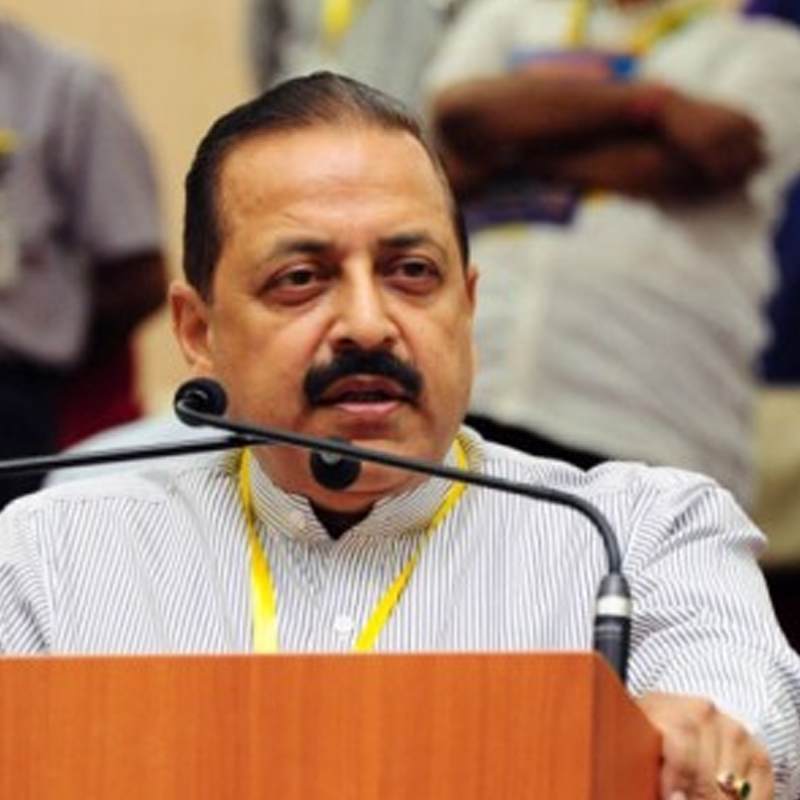
    The Parliament was told by the minister of state in the department of space Dr Jitendra Singh that the Indian Space Research Organisation (ISRO) had accomplished 41 missions, which includes 19 launch vehicle missions, 19 satellite missions and three technology demonstrator missions.

    A notable achievement has been the successful launch of the first developmental flight of GSLV-MkIII, which validated new version of Indigenous Cryogenic Engine. With this capability, it will be possible to launch upto 4-tonne class of communication satellites into Geosynchronous Transfer Orbits (GTO).

    ISRO has successfully enabled a host of applications using synergy of earth observation, communication and navigation satellites in governance and development.

    India has created a niche in the field of space science & technology with launch services, earth observation, communication & navigation and application of space technology for national development.

    Today, India stands one among the top six space faring nations in the world, the Minister said.

    The areas which are benefitted/ likely to be benefitted with the utilization of space technology and its applications include broadcasting and telecommunications.

    Also Read :

    India’s GSAT-17 communication satellite launched successfully

    32 free DTH educational channels on Dish TV & FreeDish start functioning

    GSAT 17 to be inducted into INSAT/GSAT system after tests

    Transponder leasing yields Rs 7.5 bn for communication satellites


  • GSAT 17 to be inducted into INSAT/GSAT system after tests

    GSAT 17 to be inducted into INSAT/GSAT system after tests

    NEW DELHI: The GSAT-17 launched last month is undergoing in-orbit tests after which it will be inducted into the INSAT/GSAT system for providing various communication services to the country in C, Extended-C and S-band.

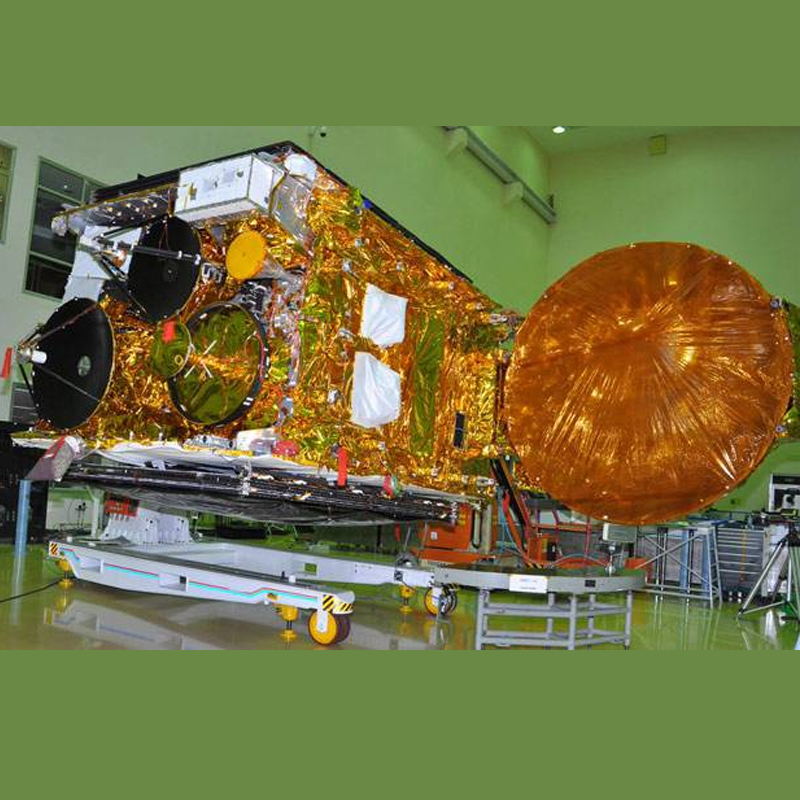
    The communication satellite, with a lift-off mass of 3477 Kg – carrying communication, Data Relay Transponder (DRT), Search & Rescue Payload – was successfully launched on 29 June using Ariane-5 launch vehicle from Kourou launch base of Arianespace.

    Space department minister Jitendra Singh told the Parliament that the GSAT-17 carries a Data Relay Transponder for receiving meteorological, hydrological and oceanographic data from Automatic Weather Stations, Automatic Rain Gauges and Agro Met Stations and relaying back for down linking in extended C-Band.

    It also carries a Search & Rescue Payload, which picks up and relays the alert signals originating from the distress beacons of maritime, aviation and land based users to help in rescue services.

    Also Read :

    India’s GSAT-17 communication satellite launched successfully

    Arianespace to launch ISRO-built DTH & telecom satellites

    DTH-aiding GSAT-19 launch plan under way

  • India’s GSAT-17 communication satellite launched successfully

    India’s GSAT-17 communication satellite launched successfully

    MUMBAI: GSAT-17 became India’s third communication satellite to successfully reach orbit in the past two months. GSAT-17 was launched in the early morning hours using the European Ariane 5 Launch Vehicle from Kourou, French Guiana. The 3477 kg GSAT-17 carries communication payloads in C-band, Extended C-band and S-band for providing various services to the country.

    The satellite also carries equipment for meteorological data relay and satellite based search and rescue services. After its lift-off at 0245 hrs (2:45 am) IST and a flight lasting about 39 minutes, GSAT-17 separated from the Ariane 5 upper stage in an elliptical Geosynchronous Transfer Orbit (GTO) with a perigee (nearest point to Earth) of 249 km and an apogee (farthest point to Earth) of 35,920 km, inclined at an angle of 3 degrees to the equator.

    ISRO’s Master Control Facility (MCF) at Hassan in Karnataka took over the command and control of GSAT-17 immediately after its separation from the launch vehicle. Preliminary health checks of the satellite revealed its normal functioning.

    In the coming days, orbit raising manoeuvres will be performed to place GSAT-17 satellite in the Geostationary Orbit (36,000 km above the equator) by using the satellite’s propulsion system in steps.

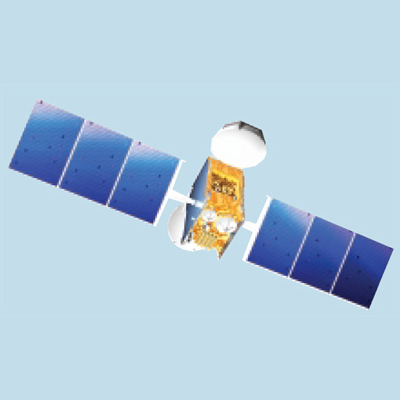
    During the final stages of its orbit raising operations, the two solar arrays and both the antenna reflectors of GSAT-17 will be deployed. Following this, the satellite will be put in its final orbital configuration. GSAT-17 will be positioned at its designated orbital slot in the geostationary orbit and will be co-located with some of the Indian operational geostationary satellites. Later, it is planned to turn on the communication payloads of the satellite. After the successful completion of all the in-orbit tests, GSAT-17 will be ready for operational use.

  • Over Rs 1860 crore spent on 15 communication satellites in last 3 years

    Over Rs 1860 crore spent on 15 communication satellites in last 3 years

    NEW DELHI: After the announcement of Budget 2014 allocations, the space department has laid down the future programme for 2020.


    The plan envisages development of advanced launch vehicle systems, thematic earth observational satellites with improved resolution, high-power, high-throughput communication satellites, microwave multi-spectral remote sensing satellites, weather and climate studies, constellation of satellites for regional navigation, development of critical technologies for human spaceflight and satellites for space science and planetary exploration purposes.


    Fourteen of the 58 space missions slated in the 12th Five Year Plan, 2012-17 are linked to communication.  In addition, five launch vehicle missions will also be linked to these satellites.


    GSAT-10, GSAT-15, GSAT-16, GSAT-17 and GSAT-18 are specifically communication satellites to augment the INSAT system with C and Ku band transponders. GSAT-9 will be a communication satellite to augment the INSAT system with C band transponders. GSAT-14 and GSAT-11S will be experimental communication satellites, while GSAT-6 and GSAT-6A will be multi-media mobile communication satellites for strategic applications.


    GSAT-7 is a communication satellite for special users, and both GSAT-11 and GSAT-Ka are advanced Ka band satellite for VSAT communications.  GSAT-19E is a new generation experimental communication satellite.


    Close to Rs 1867 crore has been spent on the five satellites meant for communication launched in the last three years, out of the total Rs 1987 crore allocated for this purpose. It can be noted this amount was spent by 31 March this year.


    According to sources in the Department of Space, these satellites are GSAT-14 (launched on 5 January this year), GSAT-7 (launched on 30 August last year to reach a wide area over the oceans including the Indian mass), GSAT-10 (launched on 29 September 2012 for communication and navigation), GSAT-12 (launched on 15 July 2011) and GSAT-8 (launched on 21 May 2011 for communication and navigation).

  • 14 Isro space missions in 12th Plan linked to strengthening communications

    14 Isro space missions in 12th Plan linked to strengthening communications

    NEW DELHI: Fourteen of the 58 space missions to be launched by the Indian Space Research Organisation (Isro) as a part of 12th Five Year Plan, 2012-17 are linked to communications.

    In addition to the fourteen satellites, five launch vehicles missions will also be linked to these satellites.

    A Plan outlay of Rs. 397.5 billion in 12th Five Year Plan period has been provisionally earmarked under the Plan budget for space programmes. During the current year 2012-13, a sum of Rs 56.15 billion has been allocated and the amount spent up to the end of October 2012 was Rs.18.7153 billion. The Plan includes 33 satellite missions and 25 launch vehicles missions.

    GSAT 10, GSAT 15, GSAT 16, GSAT 17, and GSAT 18 will specifically be communication satellites to augment the INSAT system with C and Ku band Transponders.

    GSAT 9 will be a communication satellite to augment the INSAT system with C band Transponders.

    GSAT 14 and GSAT 11S will be experimental communication satellites, while GSAT 6 and GSAT 6A will be multi-media mobile communication satellites for strategic applications.

    GSAT 7 is a communication satellite for special users, and both GSAT 11 and GSAT Ka are advanced Ka band satellite for VSAT communications. GSAT 19E is a new generation experimental communication satellite.

    The five launch vehicle missions are GSLV – D5 (Development flight with indigenous cryogenic stage for launching GSAT 14 satellite); GSLV D6 (for launching of GSAT 6 into Geosynchronous transfer orbit); GSLV F09 (for launching of GSAT 9 communication satellite); GSLV – F11 (for launching of GSAT-6A satellite); and GSLV Mk III D1 (first developmental flight of GSLV Mk III for launching GSAT-19E satellite).