Tag: GSAT-16

  • GSAT-16 to launch in December 2015

    GSAT-16 to launch in December 2015

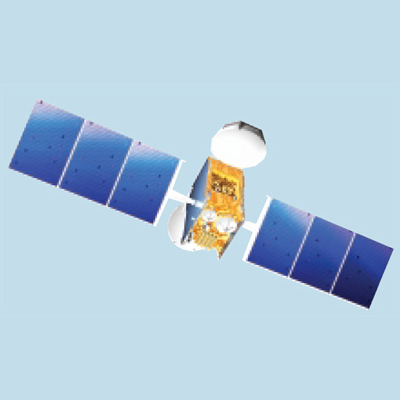
    MUMBAI: The Indian Space Research Organisation (ISRO) has decided to launch two satellites by next year. GSAT-16 was scheduled to launch by mid 2015, but a new announcement from the ISRO states that it will be launched by December 2014 itself.


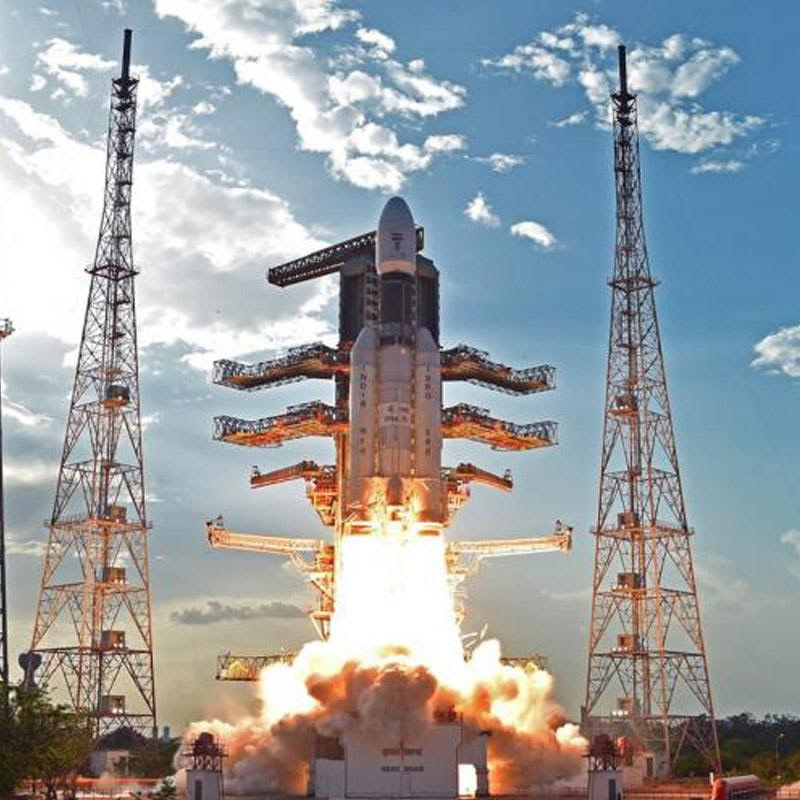
    The 3100 kg aircraft will be lifted into space six months earlier on a European Ariane 5 launcher. The decision for advancement was taken due to the expiration of INSAT 3E that expired earlier this year and was to be replaced by GSAT-16. A tentative launch date is 6 December.


    GSAT-16 will have 24 transponders in the C-band, 12 in the extended C-band and 12 in the Ku band to support public and private television and radio services, internet and telephone operations.


    The government had approved Rs 865 crore to build this satellite including fee for foreign launch and insurance that constitute Rs 628 crore.


    The satellite will be positioned at 55 degree east.

  • GSAT-15 and GSAT-16 satellites to be launched by mid 2015

    GSAT-15 and GSAT-16 satellites to be launched by mid 2015

    NEW DELHI: Two GSAT missions are expected to be launched by the Indian Space Research Organisation (ISRO) by mid 2015. GSAT-15 will be launched in FY 2014-15 while GSAT-16 will be launched by mid 2015, the c was informed by Minister of State for Department of Space Jitendra Singh.


    The launches are expected to augment the communication facilities including the Ku-band and Upper Extended C-band.


    The government has approved a budgetary support of Rs 859.5 crore including a foreign exchange component of Rs 622.5 crore for realisation of GSAT-15 spacecraft project including launch services and insurance. It has also approved a budgetary support of Rs 865.5 crore including a foreign exchange component of Rs 628 crores for realisation of GSAT-16 spacecraft project including launch services and insurance.


    GSAT-15, which had been approved by the government on 17 July last year, will carry 24 Ku-band transponders and provide replacement for the Ku-band capacity of INSAT-3A and INSAT-4B spacecrafts to augment and support the existing DTH and VSAT services in the country. It will also carry a GAGAN (GPS Aided Geo Augmented Navigation) payload to meet the in-orbit redundancy requirement for safety of life (SOL) operations benefiting the civil aviation services in the country.


    GSAT-16, also approved on 17 July last year, will carry 48 transponders in C-band, Ku-band and Upper Extended C-bands and provide replacement for the INSAT-3E spacecraft and augment the C and Upper Extended C-band capacity. The spacecraft will be utilised in augmenting and supporting the existing telecommunication, television, VSAT and other satellite based services in the country.

  • Over Rs 1860 crore spent on 15 communication satellites in last 3 years

    Over Rs 1860 crore spent on 15 communication satellites in last 3 years

    NEW DELHI: After the announcement of Budget 2014 allocations, the space department has laid down the future programme for 2020.


    The plan envisages development of advanced launch vehicle systems, thematic earth observational satellites with improved resolution, high-power, high-throughput communication satellites, microwave multi-spectral remote sensing satellites, weather and climate studies, constellation of satellites for regional navigation, development of critical technologies for human spaceflight and satellites for space science and planetary exploration purposes.


    Fourteen of the 58 space missions slated in the 12th Five Year Plan, 2012-17 are linked to communication.  In addition, five launch vehicle missions will also be linked to these satellites.


    GSAT-10, GSAT-15, GSAT-16, GSAT-17 and GSAT-18 are specifically communication satellites to augment the INSAT system with C and Ku band transponders. GSAT-9 will be a communication satellite to augment the INSAT system with C band transponders. GSAT-14 and GSAT-11S will be experimental communication satellites, while GSAT-6 and GSAT-6A will be multi-media mobile communication satellites for strategic applications.


    GSAT-7 is a communication satellite for special users, and both GSAT-11 and GSAT-Ka are advanced Ka band satellite for VSAT communications.  GSAT-19E is a new generation experimental communication satellite.


    Close to Rs 1867 crore has been spent on the five satellites meant for communication launched in the last three years, out of the total Rs 1987 crore allocated for this purpose. It can be noted this amount was spent by 31 March this year.


    According to sources in the Department of Space, these satellites are GSAT-14 (launched on 5 January this year), GSAT-7 (launched on 30 August last year to reach a wide area over the oceans including the Indian mass), GSAT-10 (launched on 29 September 2012 for communication and navigation), GSAT-12 (launched on 15 July 2011) and GSAT-8 (launched on 21 May 2011 for communication and navigation).

  • GSAT-15 and GSAT-16 get the go ahead from the Cabinet

    GSAT-15 and GSAT-16 get the go ahead from the Cabinet

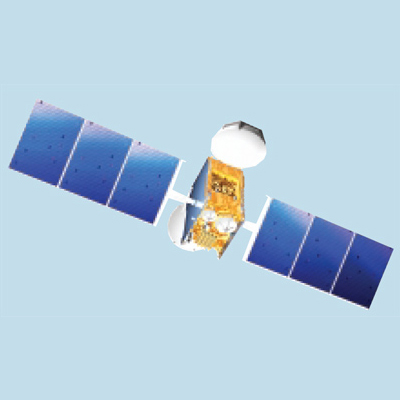
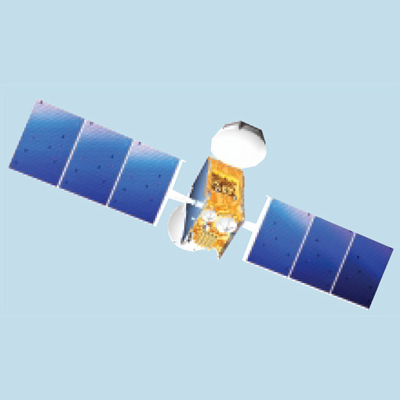
    MUMBAI:Two Indian birds are on the way to Indian skies in the next two to three years (if launch schedules are kept). The Union Cabinet earlier today gave its approval to the proposals from the Indian Space Research Organisation (Isro) to enhance its satellite capacity through the GSAT-15 and GSAT-16 communication satellite projects. The government‘s nod now allows it to go ahead with its process to get a good launch partner as well as the required insurance cover for the two satellites.

    In the past decade, Isro has relied on commercial launch consortium Arianespace as its launch partner for a majority of its big bird communication launches from Kourou, French Guiana.

    GSat-15 and GSat-16 are part of Isro‘s efforts towards building in-orbit spare capacity to meet contingency requirements and to protect the services of existing users.

    GSat-15 (similar to GSat-10 which is yet to provide services to its clients despite a launch some nine months ago) is slated to be put together and launched in 18 months at an approved cost of Rs 859.5 crore. As compared to this, GSat-10 cost the agency around Rs 750 crore at the time of its launch in September 2012.

    GSat-15 will provide required redundant capacity, will augment Ku-band capacity, and shall provide in-orbit redundant requirement of safety of life operations benefitting civil aviation services in the country. It will be located at 93.5 degrees east with a payload of 24 Ku-band transponders with an EIRP of 52 dBW.

    On the other hand, GSAT-16 has an approved satellite production and launch budget of Rs 865.50 crore with a launch timeline of 24 months. It is targeted to meet contingency requirements, protect services of existing users and will augment and support existing telecommunication, television, VSAT and other satellite based services in the country

    The satellite will have 48 transponders providing C-band, extended C-band, and Ku-band frequencies (24 normal C, 12 extended C and 12 Ku-band). Its Ku-band beacon transmistter is expected to be the highest for an Indian satellite. G-Sat 16 is to be co-located with GSat-8 at 55 degrees East.

    Isro currently has nine operational INSAT/GSAT satellites in orbit with nearly 195 transponders providing different frequency bands to its customers.

    Its Insat 3D meteorological satellite has already been lined up for a 25 July launch using an Ariane 5 launch vehicle from Kourou, French Guiana.
  • 14 Isro space missions in 12th Plan linked to strengthening communications

    14 Isro space missions in 12th Plan linked to strengthening communications

    NEW DELHI: Fourteen of the 58 space missions to be launched by the Indian Space Research Organisation (Isro) as a part of 12th Five Year Plan, 2012-17 are linked to communications.

    In addition to the fourteen satellites, five launch vehicles missions will also be linked to these satellites.

    A Plan outlay of Rs. 397.5 billion in 12th Five Year Plan period has been provisionally earmarked under the Plan budget for space programmes. During the current year 2012-13, a sum of Rs 56.15 billion has been allocated and the amount spent up to the end of October 2012 was Rs.18.7153 billion. The Plan includes 33 satellite missions and 25 launch vehicles missions.

    GSAT 10, GSAT 15, GSAT 16, GSAT 17, and GSAT 18 will specifically be communication satellites to augment the INSAT system with C and Ku band Transponders.

    GSAT 9 will be a communication satellite to augment the INSAT system with C band Transponders.

    GSAT 14 and GSAT 11S will be experimental communication satellites, while GSAT 6 and GSAT 6A will be multi-media mobile communication satellites for strategic applications.

    GSAT 7 is a communication satellite for special users, and both GSAT 11 and GSAT Ka are advanced Ka band satellite for VSAT communications. GSAT 19E is a new generation experimental communication satellite.

    The five launch vehicle missions are GSLV – D5 (Development flight with indigenous cryogenic stage for launching GSAT 14 satellite); GSLV D6 (for launching of GSAT 6 into Geosynchronous transfer orbit); GSLV F09 (for launching of GSAT 9 communication satellite); GSLV – F11 (for launching of GSAT-6A satellite); and GSLV Mk III D1 (first developmental flight of GSLV Mk III for launching GSAT-19E satellite).