Tag: GSAT -15

  • Zee Media’s permission to transmit channels in Ku Band, revoked

    Zee Media’s permission to transmit channels in Ku Band, revoked

    Mumbai: The disgruntled TV networks couldn’t be any happier. In what seems to be a relief for most TV networks, an order passed by the Ministry of Information & Broadcasting (MIB) on 23 September, Zee Media’s authorisation to transmit 10 television channels available in Ku band on GSAT -15 satellite has been revoked. As noticed by MIB, the media conglomerate was gaining an unfair advantage over its competitors, as these channels were also accessible on DD Free Dish, the DTH platform of Doordarshan.

    Since quite some time, a lot of the TV networks had been vocal about the fact that Zee Media was reaping in undue advantage of having its channels being accessed on DD Free Dish. Infact, Prasar Bharati (PB) had also asked Indian TV viewership measurement body Barc to take necessary action against Zee Media regarding the same. But it was all in vain.

    Ten regional news channels of Zee Media namely Zee Hindustan, Zee Rajasthan, Zee Punjab Haryana Himachal, Zee Bihar Jharkhand, Zee Madhya Pradesh Chhattisgarh, Zee Uttar Pradesh Uttarakhand, Zee Salam, Zee 24 Kalak, Zee 24 Taas, and Zee Odisha (now Zee Delhi NCR Haryana) were permitted to operate on C-Band as per MIB’s permission, stated the recent order.

    The statement further mentioned, “Zee Media applied (in 2019) for permission to uplink the 10 channels simultaneously in Ku Band on GSAT -15 satellite from the teleport of Dish TV. The justification given by the applicant seeking uplinking on Ku-band was that many operators have desired to receive channels in the Ku-Band. These operators desire to receive only one of two channels of the Zee Media in many cases, and do not own or operate a C-Band receiving dish of 4 Meters (16 feet) due to their location in crowded locales where such installations are not possible. The applicant further mentioned that Ku-band allows smaller dish antennas for its application, hence installation is cheaper and easier and it incurs lesser terrestrial interference.”

    On the request of Zee Media, MIB had granted permission to the media giant in 2019 for uplinking of the channels simultaneously in Ku Band on GSAT 15 Satellite through the teleport of Dish TV. However, subsequently, it came to the notice of the Ministry that these 10 channels of Zee Media are getting available on DD Free Dish.

    On analysis of the dispute, it was noticed that the channels were getting available on DD Free Dish because of proximity and co-location of transponders of both DD Free Dish and Dish TV on the same satellite, that is GSAT 15 Satellite and non-encryption of the signals by both of them.

    “Due to availability of the channels of Zee Media on DD Free Dish, Zee Media was having a competitive advantage vis-a-vis other private broadcasters (who are not on Ku Band) and having a leverage of the large subscriber base of DD. The Ministry also received references from Prasar Bharati and many private broadcasters regarding this unfair advantage to Zee Media due to permission of simultaneous uplinking of 10 TV Channels on Ku-Band in addition to uplinking in C-Band,” the statement pointed out.

    Understanding that uplinking simultaneously to the two bands is prohibited, Zee Media stated that the situation had arisen due to colocation of DD Free Dish and Dish TV on the same satellite i.e. GSAT 15 Satellite and non-encryption of the signals by Prasar Bharti which is a violation of the DTH guidelines.

    “As per the Policy Guidelines for downlinking, the broadcasters should provide signals to Distribution Platform Operators (that is MSO/DTH/HITS/IPTV) only and are not supposed to reach consumers directly. Due to the permission granted by MIB (in 2019), channels of Zee Media are directly available to the consumers due to co-location. In this regard, Telecom Regulatory Authority of India (TRAI) has observed that a registered channel shall give its signals only to an authorized Distribution Platform Operator (DPO) (registered cable operator or DTH operator or Internet Protocol Television (IPTV) Service Provider or a HITS operator). However, because of the fact that the channels of Zee Media are unencrypted and are on Ku Band, they are being received by the subscribers of DD Free Dish directly and not through any DPO. Hence, this arrangement is in violation of the policy guidelines for downlinking of a TV channel.  In order to provide a level playing field to all the stakeholders in the TV channel industry, the decision for grant of permission to Zee Media for simultaneous uplinking of its 10 TV channels in Ku Band on GSAT- 15 Satellite through the teleport of Dish TV has been reviewed and withdrawn with immediate effect,” the statement said.

    For the record, the statement also made clear that Prasar Bharati is an autonomous body setup under the Prasar Bharati Act. Further, DD Free Dish has been set-up by Prasar Bharati with the approval of the Union Cabinet. The DTH Guidelines and the policy guidelines for uplinking and downlinking are applicable to only those TV Channels/distribution platforms for which any permission or license is granted by the Ministry of Information and Broadcasting. Since DD Free Dish is a special dispensation, approved by the Union Cabinet, these guidelines of MIB are not applicable to it.

  • Sun Direct may add 20 HD, 100 SD channels

    Sun Direct may add 20 HD, 100 SD channels

    MUMBAI: Sun Direct, the DTH service from Sun Network, is likely to add 20 new high definition (HD) and 100 new standard definition (SD) channels and has been allocated 144 MHz of spectrum on the recently launched Measat-3B satellite.

    A social media user by the name of ‘Raja Chennai‘ shared a screenshot of the application made by the company informing the Department of Telecommunications (DoT) about the allocation of the new satellite capacity, according to an article on Ultra News.

    Once these channels find a home on the new Measat satellite, Sun Direct will be able to add an extra 20 HD channels to take its total HD channel count to 80 while increasing total SD channel list to 320.

    The company was forced to halt its HD channel expansion on GSAT 15 two months ago due to the termination of its channel-sharing deal with Reliance Digital TV and divert some of the HD capacity to handle the fallout.

    public://inside_1.jpg

    In the application, the company is shown informing the DoT that four new transponders of 36 MHz each have been allocated to it by the Department of Space for use on its DTH service.

    Sun Direct has been facing a severe spectrum crunch due to a fire on an ISRO satellite that knocked out most of its satellite capacity in 2010. The fire forced the company to move satellite to Malaysian-owned Measat 3A, and manually realign the dish antennae of millions of its customers.

    Some relief was in sight when Measat launched a second satellite at the same location in 2014, boosting capacity.

    Sun Direct was widely expected to book extra capacity on the new satellite, particularly after it lost a sharing deal two months ago with Reliance Digital TV. Reliance Digital TV changed hands when the Anil Ambani Group sold it to another group as part of a fire sale.

    The DTH service is expected to start adding new channels in a matter of days.

    The new capacity is expected to lead to the addition of around 100 new SD channels while another 50 channels are expected to be moved to it from GSAT 15—the HD satellite for Sun Direct.

    Also Read:

    The growth of DTH in India

    Sun Direct partners Harmonic to add 80 HD channels

  • DD Free Dish to include more channels in MPEG 2, DD denies glitches in satellite migration

    DD Free Dish to include more channels in MPEG 2, DD denies glitches in satellite migration

    NEW DELHI: Even as the migration to MPEG 4 will commence from April, Prasar Bharati is making attempts to increase the capacity of television channels that can be carried by its free-to-air DTH platform DD Free Dish under the existing MPEG 2.

    While declining to give the number of channels that it will gain in MPEG 2, a Prasar Bharati source confirmed to Indiantelevision.com that the switch-over to MPEG4 will be in two phases and the aim was to take the total capacity to 112.

    The source confirmed that the channels that bid successfully in the auction being held next week will be accommodated within MPEG 2.

    Meanwhile, the source denied any glitches in the transfer of DD Free Dish channels from INSAT 4B to GSAT 15 and said clear guidelines had been given to all channels on the steps they had to take in the regard and the Engineering section of Doordarshan was stepping in wherever needed. The source also said that it had been responding to calls from various channels in this connection.

    Asked why the ratings of some popular channels were falling on DD Free Dish, the source added that this was a question best answered by the channels.

    The official was reacting to a comment that even after the Broadcast Audience Research Council (BARC) India had commenced including rural area ratings in its weekly reports, there had been no perceptible increase in the figures of DD viewership despite claims by the pubcaster that it has the largest viewership in the country.

    The source said the popularity of DD Free Dish could be gauged from the fact that Aaj Tak and Big Magic, which are pay channels, were being run as FTA on Free Dish.

    A DD source added that the viewership of Big Magic, which had earlier been on Free Dish but had left it early this year had seen a steep fall and the channel had decided to come back on the platform.

    DD Free Dish is adopting the conditional access system (CAS) designed by the Bangalore-based ByDesign India Pvt Ltd.

    The ByDesign model is totally indigenous and built for DVB-C setup. This CAS solution will enable broadcasters and network operators to control access to their services by viewers, and thereby enabling them to extend their business models to subscription based schemes.

    This will mean that the Free Dish will become encrypted but will remain FTA. In addition to helping increase the number of channels on the platform, this will enable Free Dish to gauge the exact number of households relying on Free Dish as encrypted set top boxes will only be available with authorised dealers.
    DD Free Dish currently has 64 channels including its own channels and Rajya Sabha and Lok Sabha TV. It also carries channels of All India Radio.

    The ByDesign CAS is provided by making access possible to the content, depending on subscriber credentials, which are generated by this CAS and sent through the broadcast system to receivers in the field. 

    Doordarshan has for the first time made a conscious effort to attract regional television channels by fixing a lower reserve of Rs 2 crore even as the price for the other channels remains the Rs 4.3 crore for its 26th e-auction slated for 15 February.

    This has been done considering the tremendous reach of DD Free Dish in semi-urban and rural areas all over the country.

    Reserved slot for regional language channel includes only Non-Hindi Channels (News or Non-News). Bhojpuri channels and Hindi regional channels have been kept as part of the general slots.

  • DD Free Dish to include more channels in MPEG 2, DD denies glitches in satellite migration

    DD Free Dish to include more channels in MPEG 2, DD denies glitches in satellite migration

    NEW DELHI: Even as the migration to MPEG 4 will commence from April, Prasar Bharati is making attempts to increase the capacity of television channels that can be carried by its free-to-air DTH platform DD Free Dish under the existing MPEG 2.

    While declining to give the number of channels that it will gain in MPEG 2, a Prasar Bharati source confirmed to Indiantelevision.com that the switch-over to MPEG4 will be in two phases and the aim was to take the total capacity to 112.

    The source confirmed that the channels that bid successfully in the auction being held next week will be accommodated within MPEG 2.

    Meanwhile, the source denied any glitches in the transfer of DD Free Dish channels from INSAT 4B to GSAT 15 and said clear guidelines had been given to all channels on the steps they had to take in the regard and the Engineering section of Doordarshan was stepping in wherever needed. The source also said that it had been responding to calls from various channels in this connection.

    Asked why the ratings of some popular channels were falling on DD Free Dish, the source added that this was a question best answered by the channels.

    The official was reacting to a comment that even after the Broadcast Audience Research Council (BARC) India had commenced including rural area ratings in its weekly reports, there had been no perceptible increase in the figures of DD viewership despite claims by the pubcaster that it has the largest viewership in the country.

    The source said the popularity of DD Free Dish could be gauged from the fact that Aaj Tak and Big Magic, which are pay channels, were being run as FTA on Free Dish.

    A DD source added that the viewership of Big Magic, which had earlier been on Free Dish but had left it early this year had seen a steep fall and the channel had decided to come back on the platform.

    DD Free Dish is adopting the conditional access system (CAS) designed by the Bangalore-based ByDesign India Pvt Ltd.

    The ByDesign model is totally indigenous and built for DVB-C setup. This CAS solution will enable broadcasters and network operators to control access to their services by viewers, and thereby enabling them to extend their business models to subscription based schemes.

    This will mean that the Free Dish will become encrypted but will remain FTA. In addition to helping increase the number of channels on the platform, this will enable Free Dish to gauge the exact number of households relying on Free Dish as encrypted set top boxes will only be available with authorised dealers.
    DD Free Dish currently has 64 channels including its own channels and Rajya Sabha and Lok Sabha TV. It also carries channels of All India Radio.

    The ByDesign CAS is provided by making access possible to the content, depending on subscriber credentials, which are generated by this CAS and sent through the broadcast system to receivers in the field. 

    Doordarshan has for the first time made a conscious effort to attract regional television channels by fixing a lower reserve of Rs 2 crore even as the price for the other channels remains the Rs 4.3 crore for its 26th e-auction slated for 15 February.

    This has been done considering the tremendous reach of DD Free Dish in semi-urban and rural areas all over the country.

    Reserved slot for regional language channel includes only Non-Hindi Channels (News or Non-News). Bhojpuri channels and Hindi regional channels have been kept as part of the general slots.

  • Arianespace launches GSAT-15 successfully

    Arianespace launches GSAT-15 successfully

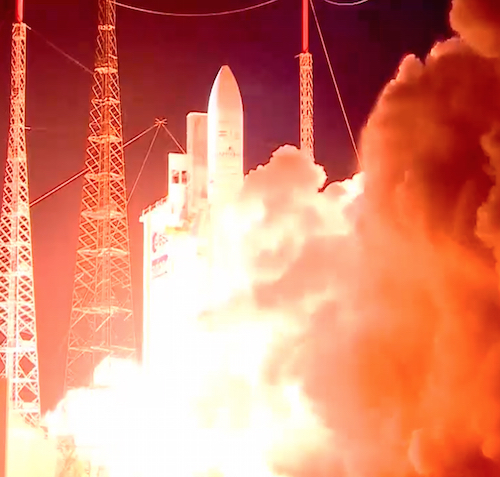
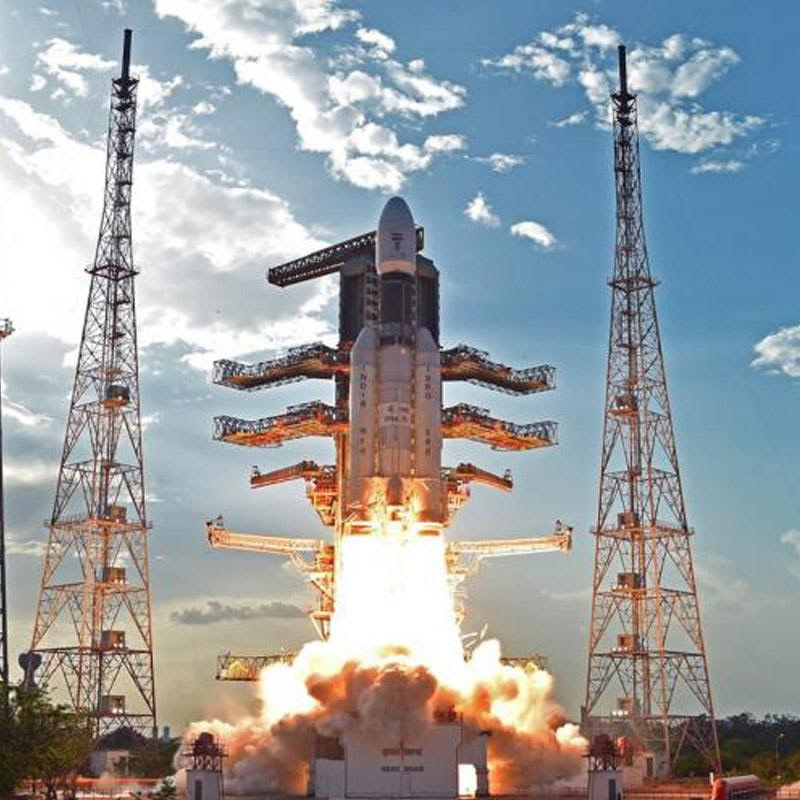
    MUMBAI: At 3:04 this morning, Arianespace’s A5 rocket blasted off from its launch pad in Kouru, French Guiana with its payload of two satellites Arabsat 6B (BADR7) and GSAT-15. The former found its slot in space 27 minutes later, while the latter attained its Geosynchronous Transfer Orbit (GTO) 43 minutes after launch.  It was a flawless launch on a perfect evening, said officials from ISRO and Arianespace.


    India’s satellite control centre at Hasan in Karnataka is in control of the satellite  at the time of writing and maneuvres over the next three days will see it attaining its geo-stationary orbit at 93.5 degrees East. It will be replacing two ageing satellites Insat3A and Insat 4B.


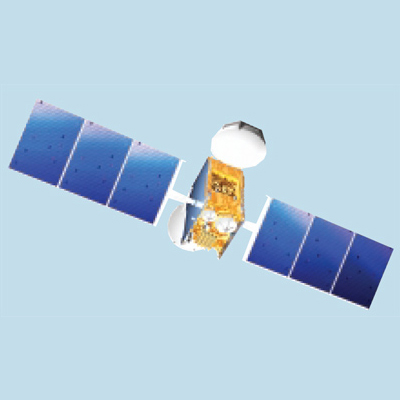
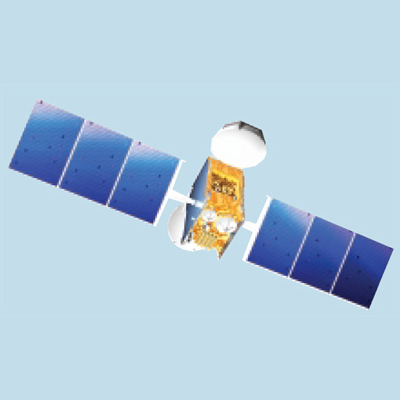
    GSAT-15 has 24 Ku-band transponders to serve the needs of DTH and satellite TV operators over India as well as  VSAT operators who provide DSNG operations to news channels. It  also carries the  GPS-Aided GEO Augmented Navigation (GAGAN) payload operating in L1 and L5 bands,  to enable communications for civil aviation and other location-based services.


    Speaking from Kouru ISRO Satellite Centre (ISAC) Director M Annadurai said two other  communication satellites GSAT-17 and GSAT-18 are getting ready for launch by an Ariane vehicle in the next year. “The realisation of both the satellites is in a very advanced stage,” he said.


  • ISRO’s GSAT-15 launch on 11 November; DTH to benefit

    ISRO’s GSAT-15 launch on 11 November; DTH to benefit

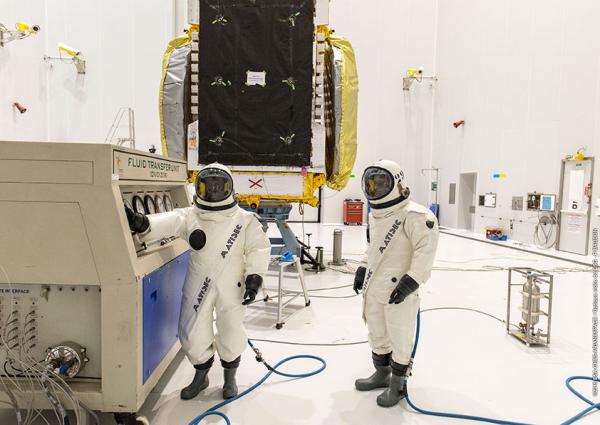
    NEW DELHI: Even as Indians are celebrating the festival of lights, a new bird  from the Indian Space Research Organisation (ISRO) is set to be blasted off into geostationary orbit come early 11 November from Kouro in French Guiana.  The satellite GSAT-15 – with its 24 Ku-band transponders – is going to provide a lifeline to India’s DTH television operators.


    It is currently waiting at the launch pad as a payload of an Ariane 5 Rocket  – launch firm Arianespace’s trusted launcher – in launch complex No 3 in Kouru. The satellite cost – including the launch fee – is at Rs 860 crore.


    The GSAT-15 will replace two older birds – INSAT-3A and INSAT-4B – both are which are at the fag end of their lives. INSAT 3A will expire in November while 4b will cease functioning later next year.


    Most of the transponder capacity on these two satellites is being utilized by Prasar Bharati’s DD and  DTH operators FreeDish and  Sun Direct, according to satellite TV tracker Lyngsat.


    GSAT-15 will thus see these services being shifted to its transponders, which will also serve the needs of VSAT operators who offer Digital satellite news gathering operations to India’s news channels. It will also be carrying as a GPS-Aided GEO Augmented Navigation (GAGAN) payload operating in L1 and L5 bands as  a backup service for airlines and other users of augmented GPS-based system.  According to ISRO, it has a design life of 12 years and its weight will be 3,164 kg at lift-off


    The Ariane-5 VA-227 launch vehicle, which will launch GSAT 15, will also carry Arabsat-6B for Arabsat, Saudi Arabia. Arabsat-6B, to be renamed BADR-7 once in orbit, will be the ninth satellite orbited by Arianespace for use by the operator Arabsat, based in Riyadh, Saudi Arabia. It is the initial sixth-generation satellite for Arabsat’s fleet, providing broadcast, broadband and telecommunications services over the Middle East, Africa and Central Asia.


    The Ariane 5 mission will have a total payload lift performance of 9,810 kg, Arianespace said. This includes the two satellites’ mass at liftoff – 5,798 kg for Arabsat-6B and 3,164 kg for GSAT-15 – along with launcher integration hardware and Ariane 5’s dual-passenger deployment system, it added.


    The launch is planned to take place during a launch window of 21:34 and 22:17 pm coordinated universal time (around 03:04 am IST).


    Interested viewers can watch it live on http://www.arianespace.tv.

  • Six satellites including two for communications to launch in 2015-16

    Six satellites including two for communications to launch in 2015-16

    MUMBAI: India is planning to launch six more satellites during 2015-16, of which two are communication satellites – GSAT-6 and GSAT-15.


    The Rajya Sabha was today informed by MoS in the Prime Minister’s Office and minister of state in the Ministry of Personnel, PG and Pensions, Dr Jitendra Singh about the same.


    The other satellites include three Navigation satellites IRNSS-1E, IRNSS-1F and IRNSS-1G; and one space science satellite ASTROSAT.


    In addition, plans are also afoot to launch 13 more satellites from four countries using Polar Satellite Launch Vehicle.


    Antrix Corporation, which is the commercial arm of Department of Space, is already marketing remote sensing data (images) from Indian Remote Sensing satellites in the global market through establishment of International Ground Stations and reseller network.


    As on April 2015, Indian Space Research Organisation (ISRO) has launched 74 satellites. Out of these, seven satellites failed to reach the orbit due to launch failure and three satellites failed in orbit.


    In addition, ISRO has successfully launched 40 foreign satellites from 19 countries and four micro and nano satellites built by students of Indian Universities using Polar Satellite Launch Vehicle (PSLV).

  • GSAT-15 and GSAT-16 satellites to be launched by mid 2015

    GSAT-15 and GSAT-16 satellites to be launched by mid 2015

    NEW DELHI: Two GSAT missions are expected to be launched by the Indian Space Research Organisation (ISRO) by mid 2015. GSAT-15 will be launched in FY 2014-15 while GSAT-16 will be launched by mid 2015, the c was informed by Minister of State for Department of Space Jitendra Singh.


    The launches are expected to augment the communication facilities including the Ku-band and Upper Extended C-band.


    The government has approved a budgetary support of Rs 859.5 crore including a foreign exchange component of Rs 622.5 crore for realisation of GSAT-15 spacecraft project including launch services and insurance. It has also approved a budgetary support of Rs 865.5 crore including a foreign exchange component of Rs 628 crores for realisation of GSAT-16 spacecraft project including launch services and insurance.


    GSAT-15, which had been approved by the government on 17 July last year, will carry 24 Ku-band transponders and provide replacement for the Ku-band capacity of INSAT-3A and INSAT-4B spacecrafts to augment and support the existing DTH and VSAT services in the country. It will also carry a GAGAN (GPS Aided Geo Augmented Navigation) payload to meet the in-orbit redundancy requirement for safety of life (SOL) operations benefiting the civil aviation services in the country.


    GSAT-16, also approved on 17 July last year, will carry 48 transponders in C-band, Ku-band and Upper Extended C-bands and provide replacement for the INSAT-3E spacecraft and augment the C and Upper Extended C-band capacity. The spacecraft will be utilised in augmenting and supporting the existing telecommunication, television, VSAT and other satellite based services in the country.

  • Over Rs 1860 crore spent on 15 communication satellites in last 3 years

    Over Rs 1860 crore spent on 15 communication satellites in last 3 years

    NEW DELHI: After the announcement of Budget 2014 allocations, the space department has laid down the future programme for 2020.


    The plan envisages development of advanced launch vehicle systems, thematic earth observational satellites with improved resolution, high-power, high-throughput communication satellites, microwave multi-spectral remote sensing satellites, weather and climate studies, constellation of satellites for regional navigation, development of critical technologies for human spaceflight and satellites for space science and planetary exploration purposes.


    Fourteen of the 58 space missions slated in the 12th Five Year Plan, 2012-17 are linked to communication.  In addition, five launch vehicle missions will also be linked to these satellites.


    GSAT-10, GSAT-15, GSAT-16, GSAT-17 and GSAT-18 are specifically communication satellites to augment the INSAT system with C and Ku band transponders. GSAT-9 will be a communication satellite to augment the INSAT system with C band transponders. GSAT-14 and GSAT-11S will be experimental communication satellites, while GSAT-6 and GSAT-6A will be multi-media mobile communication satellites for strategic applications.


    GSAT-7 is a communication satellite for special users, and both GSAT-11 and GSAT-Ka are advanced Ka band satellite for VSAT communications.  GSAT-19E is a new generation experimental communication satellite.


    Close to Rs 1867 crore has been spent on the five satellites meant for communication launched in the last three years, out of the total Rs 1987 crore allocated for this purpose. It can be noted this amount was spent by 31 March this year.


    According to sources in the Department of Space, these satellites are GSAT-14 (launched on 5 January this year), GSAT-7 (launched on 30 August last year to reach a wide area over the oceans including the Indian mass), GSAT-10 (launched on 29 September 2012 for communication and navigation), GSAT-12 (launched on 15 July 2011) and GSAT-8 (launched on 21 May 2011 for communication and navigation).

  • GSAT-15 and GSAT-16 get the go ahead from the Cabinet

    GSAT-15 and GSAT-16 get the go ahead from the Cabinet

    MUMBAI:Two Indian birds are on the way to Indian skies in the next two to three years (if launch schedules are kept). The Union Cabinet earlier today gave its approval to the proposals from the Indian Space Research Organisation (Isro) to enhance its satellite capacity through the GSAT-15 and GSAT-16 communication satellite projects. The government‘s nod now allows it to go ahead with its process to get a good launch partner as well as the required insurance cover for the two satellites.

    In the past decade, Isro has relied on commercial launch consortium Arianespace as its launch partner for a majority of its big bird communication launches from Kourou, French Guiana.

    GSat-15 and GSat-16 are part of Isro‘s efforts towards building in-orbit spare capacity to meet contingency requirements and to protect the services of existing users.

    GSat-15 (similar to GSat-10 which is yet to provide services to its clients despite a launch some nine months ago) is slated to be put together and launched in 18 months at an approved cost of Rs 859.5 crore. As compared to this, GSat-10 cost the agency around Rs 750 crore at the time of its launch in September 2012.

    GSat-15 will provide required redundant capacity, will augment Ku-band capacity, and shall provide in-orbit redundant requirement of safety of life operations benefitting civil aviation services in the country. It will be located at 93.5 degrees east with a payload of 24 Ku-band transponders with an EIRP of 52 dBW.

    On the other hand, GSAT-16 has an approved satellite production and launch budget of Rs 865.50 crore with a launch timeline of 24 months. It is targeted to meet contingency requirements, protect services of existing users and will augment and support existing telecommunication, television, VSAT and other satellite based services in the country

    The satellite will have 48 transponders providing C-band, extended C-band, and Ku-band frequencies (24 normal C, 12 extended C and 12 Ku-band). Its Ku-band beacon transmistter is expected to be the highest for an Indian satellite. G-Sat 16 is to be co-located with GSat-8 at 55 degrees East.

    Isro currently has nine operational INSAT/GSAT satellites in orbit with nearly 195 transponders providing different frequency bands to its customers.

    Its Insat 3D meteorological satellite has already been lined up for a 25 July launch using an Ariane 5 launch vehicle from Kourou, French Guiana.