Tag: GSAT-14

  • ISRO’s GSLV D5  successfully launches GSAT-14

    ISRO’s GSLV D5 successfully launches GSAT-14

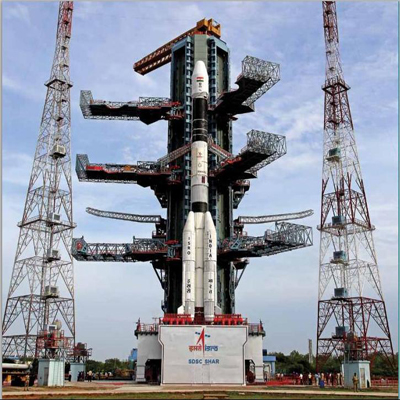
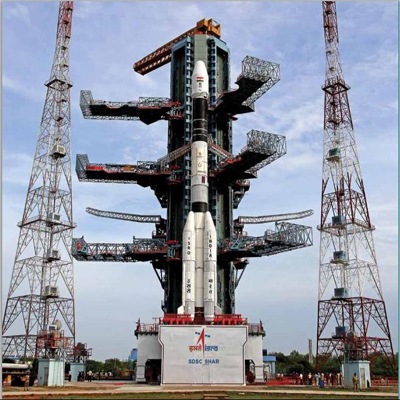
    MUMBAI: The first time it was about to launch in august 2013 a technical snag forced an abortion. But now Indian Space Research Organisation’s (ISRO) twenty third communication satellite GSAT-14 has been successfully launched on 5 January 2014 from launch vehicle Geosynchronous Satellite Launch Vehicle GSLV-D5 that is using an indigenous cryogenic engine for the first time. The launcher propelled the satellite into a Geosynchronous Transfer Orbit (GTO) after which it used its own propulsion system to settle itself at 74 degrees east longitude orbit.

    The mission was an important one for ISRO since India has been developing cryogenic engines or two decades but till now had been dependent on Russian ones. This launch puts India at a prominent position in space science at par with countries like the US and Russia. Previous attempts at launches using a cryogenic engine have ended up in a mess. The launch that was telecast live on DD National saw the rocket being propelled up into space with each stage crossing at its intended time. 

    ”Team ISRO has done it. The cryogenic engine has performed as predicted and injected GSAT- 14 in the intended orbit. This is an important day for science and technology and space technology in the country. 20 years of our effort in realising an indigenous crygoenic engine has now fructified. We have put in excruciating efforts of three and a half years after test flight of cryogenic stage in 2010,” said an ecatatic ISRO chairman K Radhakrishnan as the whole team rejoiced  when the the cryogenic stage was initiated and completed and years of ISRO’s hard work paid off. The launch cost approximately Rs 370 crore.

    The previous attempt to blast off GSLV into space was aborted following a fuel leak in its engine that developed hours before launch. ISRO worked on it and gave it a better metal covering following which it decided to give it another shot. A three stage rocket- the first stage runs on solid fuel, second on liquid fuel and third on the cryogenic engine – the GSLV-D5 carried the 1982 kgs GSAT-14 to replace GSAT-3 that wa decomissioned in 2010.

    The new satellite’s structure is based on ISRO’s two ton weighing (I-2k satellite bus). The satellite has six Ku band transponders (51.5 dBW EOC-EIRP), six C band transponders (36 dBW EOC-EIRP) and 2 Ka band transponders and will be co-located with INSAT-3C, INSAT-4CR and KALPANA-1.

    A 29 hour countdown began at 11: 16 am on 4 January and the launch was at 4: 18 pm on 5 January from the Satish Dhawan Space Centre at Sriharikota in Andhra Pradesh. The 17 minutes and 8 second flight launch is the first of 2014 after the postponement of Space X’s launch of Thaicom-6 from 3 January to between 6 to 9 January. The Elon Musk backed company decided to go in for a later liftoff as problems had emerged with Falcon-9 rocket’s fairing.

    This mission is likely to have a beneficial spinoff. It could lead to orders to build more rockets that can carry payloads of up to 5 tonne to Lower Earth Orbit. Till now ISRO has been using Polar Satellite Launch Vehicle (PSLV) that carries loads of around a tonne.

  • 2014’s first space mission to be India’s GSAT-14

    2014’s first space mission to be India’s GSAT-14

    MUMBAI: The first time it was about to launch in August 2013, a technical snag forced an abortion. But now, India’s Indian Space Research Organisation’s (ISRO’s)  twenty third communication satellite GSAT-14 by the is all set to be launched into space on 5 January 2014 on the Geosynchronous Satellite Launch Vehicle (GSLV)-D5.  The launcher will propel the bird into a Geosynchronous Transfer Orbit (GTS) after which it will use its own propulsion system to reach its geostationary orbital home at 74 degrees east longitude.


    The mission is important for ISRO which has been seeking to get a piece of the satellite launch action globally. But it has found things difficult since four out of the seven launches of GSLV have been failures and three previous attempts to use indigenous cryogenic engine have also ended up in a mess.


    The previous attempt to blast off GLSV into space in August 2013 was aborted following a fuel leak which developed in its engine hours before launch. ISRO worked on it and gave it a better metal covering, following which it has decided to give it another shot.


    A three stage rocket – the first stage runs on solid fuel, the second on liquid fuel and third on a cryogenic engine – the GSLV- D5 will be carrying the 1982 kgs (lift off mass) GSAT-14, which will be replacing GSAT-3 that was decommissioned in 2010. The new satellite’s structure is based on ISRO’s two ton weighing (I-2K satellite bus). The satellite has six Ku band (51.5 dBW EOC-EIRP) transponders, six C band (36 dBW EOC-EIRP) transponders and two Ka band beacons and will be co-located with INSAT-3C, INSAT-4CR and KALPANA-1.


    Most of the C- and Ku-band capacity on GSAT-14 will be utilized for long distance education and telemedicine, while the Ka band transponders will help in studying rain and atmospheric effects. This ninth operational geostationary satellite is expected to have a mission life of 12 years and will be able to provide enhanced broadcasting as compared to GSAT-3 for the whole of India.


    According to the ISRO website, the mission has three main objectives- to augment the in-orbit capacity of extended C and Ku-band transponders and to provide a platform for new experiments such as fiber optic gyro, active pixel sun sensor, Ka band beacon propagation studies and thermal control coating experiments.


    The 29 hour countdown to the launch began at 11:18 am on 3 January with the launch time set as 4:18 pm on 4 January from its launch pad at Satish Dhawan Space Centre (SDSC SHAR) at Sriharikota in Andhra Pradesh. GSLV-D5 is expected to have a 17 minute, eight second flight duration. If successful, this will be 2014’s first space launch as SpaceX’s launch of Thaicom-6 has been postponed from 3 January to between 6 and 9 January. The Elon Musk backed company decided to go in for a later liftoff as problems had emerged with Falcon 9 rocket’s fairing.


    If ISRO’s GSLV-D5 successfully plants GSAT- 14 into orbit, it is likely to have a beneficial spinoff which it badly needs. It could lead to orders to build more rockets that can carry payloads of up to four tonnes. Till now ISRO has been using the Polar Satellite Launch Vehicle (PSLV) that carries loads of around a tonne.


    The mission will be telecast live on Doordarshan and on the web from 3: 52 pm on Sunday.