Tag: GSAT-11

  • Gsat-11, India’s heaviest comms satellite, launched

    Gsat-11, India’s heaviest comms satellite, launched

    NEW DELHI: Indian Space Research Organisation (ISRO)’s heaviest and most-advanced high throughput communication satellite GSAT- 11 was successfully launched from the Spaceport in French Guiana during the early hours of today.

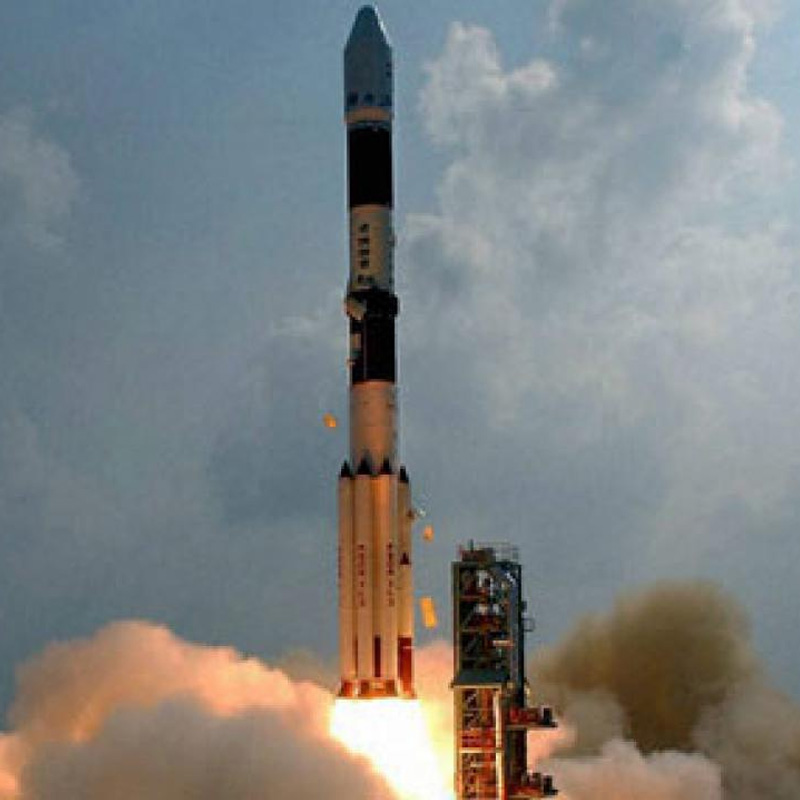
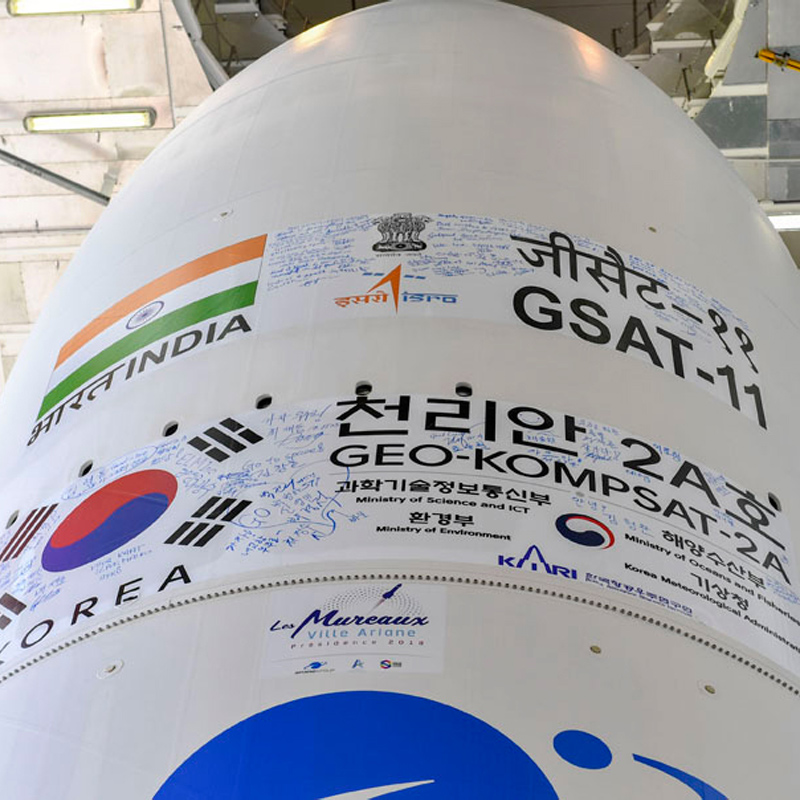
    The launch vehicle Ariane 5 VA-246 lifted off from Kourou Launch Base, French Guiana at 2.07 am (IST) carrying India’s GSAT-11 and South Korea’s GEO-KOMPSAT-2A satellites, as scheduled. Ariane 5 is one of three launch vehicles operated by Arianespace along with Soyuz and Vega.

    After a 30-min flight, GSAT-11 separated from the Ariane 5 upper stage in an elliptical geosynchronous transfer orbit. The achieved orbit was very close to the intended one.

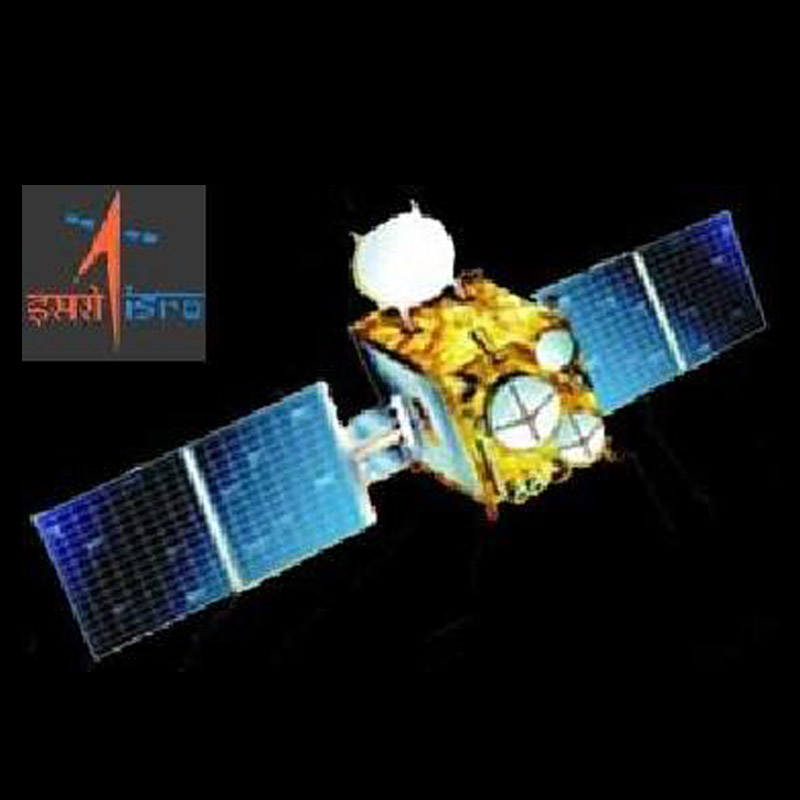
    The 5,854-kg GSAT-11 will provide high data rate connectivity to users of Indian mainland and islands through 32 user beams in Ku-band and 8 hub beams in Ka-band.

    “GSAT-11 will boost the broadband connectivity to rural and inaccessible gram panchayats in the country coming under the Bharat Net project, which is part of Digital India programme,” ISRO chairman Dr K Sivan said.

    The Bharat Net project aims to enhance the public welfare schemes like e-banking, e-health, e-governance and entertainment services among others.

    Sivan said GSAT-11 will act as a forerunner to all future high throughput communication satellites. “Today’s successful mission has boosted the confidence of the entire team,” he added.

    This 10th mission in 2018 reflects the availability and flexibility of Arianespace, which has performed a launch every two weeks since 6 November, the European company said on its website, adding since the launch of India’s APPLE experimental satellite on Ariane Flight L03 in 1981, Arianespace has won nearly all of India’s geostationary orbit launch contracts opened to non-Indian launch vehicles, and has signed 24 launch contracts with the Indian space agency.

    GSAT-11 is the 22nd satellite from ISRO to be launched by Arianespace, and the largest and heaviest satellite ever built by India’s space agency. Arianespace has two other ISRO satellites in its order book to launch: GSAT-30 and GSAT-31. The latter, GSAT-31, will be lifted by Arianespace early next year.

    GSAT-11 was initially planned for launch on 25 May 2018 but was rescheduled with the ISRO citing the need for additional technical checks.

  • ISRO’s Gsat-11 sent back from space centre ahead of May-end launch

    ISRO’s Gsat-11 sent back from space centre ahead of May-end launch

    NEW DELHI: In what was being touted as probably the last Indian satellite launch by a foreign space agency, ISRO’s heavy-duty GSAT-11 communications satellite has been sent back to India for “unexplained” reasons from the Europe-based launch pad, according to a media report from Paris.

    “India’s GSAT-11 high-throughput satellite, which arrived at Europe’s Guiana Space Center spaceport on March 30 in preparation for launch on an Ariane 5 rocket, has been returned to India following unexplained issues encountered at the spaceport, industry officials said,” SpaceIntelReport.com tweeted on 23 April 2018, adding the satellite was to be launched late-May via Ariane 5 that was scheduled to carry some other birds, too, including the Azerspace-2/Intelsat-38 satellite.

    However, till the time of writing this report, no confirmation or any additional information was available from India’s space agency ISRO, which has very ably been charting the country’s space policy and the visions of policy-makers and space scientists.

    GSAT-11, according to information put out by ISRO earlier, is a multi-beam high-throughput communications satellite operating in Ka and Ku bands employing a new bus. It provides 32 user beams in Ku band and eight gateway beams in Ka band, which would have gone a long way in strengthening India’s all-round communications, including TV and broadband services. The payload includes Ka x Ku band forward-link transponders and Ku x Ka band return-link transponders. According to Wikipedia, GSAT-11’s cost will be Rs 500 crore (Rs 5 billion).

    In a news report few days back, Times of India said that GSAT-11 was “so massive that each solar panel is over four metres long” and quoted ISRO chairman Dr K Sivan as saying that the heavy-duty Gsats would “provide high-bandwidth connectivity” of up to 100 gigabit per second and “high-speed internet connectivity in rural areas as well and help bridge the digital divide.”

  • ISRO eyes 100th satellite on 12 Jan; GSAT-11 launch in April

    ISRO eyes 100th satellite on 12 Jan; GSAT-11 launch in April

    NEW DELHI: The Indian Space Research Organisation (ISRO) will launch its 100th satellite along with 30 others, including those from other countries, in a single mission on 12 January 2018 from Sriharikota It will be a milestone event in the country’s space history even as communications satellite GSAT-11 is being prepared for an April launch.

    ISRO said it was “back in the game” with the launch, the first Polar Satellite Launch Vehicle (PSLV) mission after the unsuccessful launch of the navigation satellite IRNSS-1H in August last, PTI stated Tuesday in a report from Bengaluru.

    “The 31 spacecrafts, including weather observation Cartosat-2 series satellite, will be launched by PSLV-C40,” ISRO Satellite Centre (ISAC) director M Annadurai said. Stating that 28 of the satellites were from other countries, the official noted that the launch of three Indian satellites during the mission would mark the roll out of the 100th satellite from ISRO.

    “When the last satellite is ejected out it will become the hundredth satellite…the first century we have done. It is the maiden century. So PSLV-C40 marks maiden century of Indian satellite….we are eagerly waiting for that,” the official was quoted in the PTI report as saying.

    PSLV-C40 will launch the 710 kg Cartosat-2 series satellite for earth observation and 30 co-passengers (together weighing about 613 kg) at lift-off on 12 January 12 at 9.28 am, ISRO said. It will be launched from the first launch pad of the Satish Dhawan Space Centre at Sriharikota, about 100 km from Chennai.

    The co-passenger satellites include one micro and nano-satellite each from India. Three micro and 25 nano satellites from six countries, (Canada, Finland, France, Republic of Korea, the UK and the USA) make up the other payload. Referring to the PSLV-C39 failure, Annadurai said ISRO had understood it and repeated tests had been conducted to ensure that such problems did not reoccur.

    On 31 August 2017, India’s mission to launch its backup navigation satellite IRNSS-1H on board PSLV-C39 failed after a technical fault in the final leg following a perfect launch. ISRO then said the heat shield did not separate and, as a result, IRNSS-1H got stuck in the fourth stage of the rocket.

    The total weight of all the 31 satellites carried on board PSLV-C40 is about 1323 kg.

    Regarding plans for the year, Annadurai said Chandrayaan-2 or Mission Moon was in the final stage of testing and integration of the orbiter, lander and rover, and was expected for launch this year.

    Also, IRNSS-1I, a follow-on satellite will be the first satellite whose assembly, integration and testing will be fully done by the private industry, he said, adding “we are enabling the private industry”.

    GSAT-11, a six-tonne class communication satellite, he said, was at the final leg of testing, and the launch target was April.

    ALSO READ:

    ISRO to double annual satellite launch

    Arianespace to launch ISRO-built DTH & telecom satellites

    ISRO gears up for GSAT-19, GSLV Mk III launch today

    ISRO stresses on indigenization; TRAI for Open Sky policy

  • Communication satellite with Ku bands slated for launch

    Communication satellite with Ku bands slated for launch

    NEW DELHI: The GSAT-11 spacecraft, a first generation high throughput communication satellite, is to be launched towards the end of 2016 or the first quarter of 2017, Space minister Jitendra Singh told parliament today.

    GSAT-11 has a lift-off mass of about 5600 kg, operating in Ka/Ku bands. It is a multi-beam satellite with 32 user beams and 8 hub beams over India. The spacecraft capability includes providing broadband connectivity to rural areas with higher bandwidth as compared to traditional communication satellites. 

    It is planned to launch GSAT-11 spacecraft using procured launch services. At present, the indigenous capability to launch this weight class of satellite is not available. The in-orbit testing of GSAT-11 satellite is planned to be conducted from the Master Control Facility (MCF) in Hassan, Karnataka and other suitable locations of ISRO Centres. 

  • Communication satellite with Ku bands slated for launch

    Communication satellite with Ku bands slated for launch

    NEW DELHI: The GSAT-11 spacecraft, a first generation high throughput communication satellite, is to be launched towards the end of 2016 or the first quarter of 2017, Space minister Jitendra Singh told parliament today.

    GSAT-11 has a lift-off mass of about 5600 kg, operating in Ka/Ku bands. It is a multi-beam satellite with 32 user beams and 8 hub beams over India. The spacecraft capability includes providing broadband connectivity to rural areas with higher bandwidth as compared to traditional communication satellites. 

    It is planned to launch GSAT-11 spacecraft using procured launch services. At present, the indigenous capability to launch this weight class of satellite is not available. The in-orbit testing of GSAT-11 satellite is planned to be conducted from the Master Control Facility (MCF) in Hassan, Karnataka and other suitable locations of ISRO Centres.