Tag: GSAT 10

  • DD India and DD Sports moved to different satellites from today

    DD India and DD Sports moved to different satellites from today

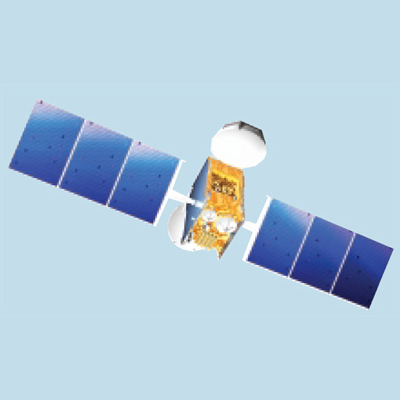
    NEW DELHI: Doordarshan’s international channel DD India will be available from today (5 July 2016) on Satellite INSAT-4B (93.5°E).

    The Downlink parameters are Frequency: 3925 MHz, Pol:H, FEC:3/4, Symbol Rate:27.5 MSPS.

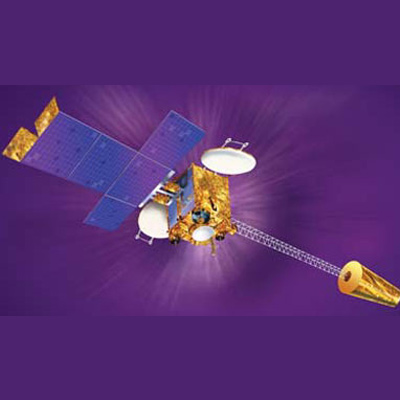
    The satellite for DD Sports is also being changed and it will now be available on Satellite GSAT-10 (83°E).

    Until now, DD India was beamed from GSAT 10.

    The Downlink parameters Frequency: 3885 MHz, Pol:V, FEC: 3/4, Symbol Rate: 27.5 MSPS.

    Earlier this year, DD had from 1 February moved its direct-to-home Freedish to the new satellite GSAT 15 from INSAT – 4B.

    DD sources said this was part of a move to shift all channels to new satellites to ensure better viewer experience.

    Meanwhile, the source said all DD channels have always been on Indian satellites.

  • DD India and DD Sports moved to different satellites from today

    DD India and DD Sports moved to different satellites from today

    NEW DELHI: Doordarshan’s international channel DD India will be available from today (5 July 2016) on Satellite INSAT-4B (93.5°E).

    The Downlink parameters are Frequency: 3925 MHz, Pol:H, FEC:3/4, Symbol Rate:27.5 MSPS.

    The satellite for DD Sports is also being changed and it will now be available on Satellite GSAT-10 (83°E).

    Until now, DD India was beamed from GSAT 10.

    The Downlink parameters Frequency: 3885 MHz, Pol:V, FEC: 3/4, Symbol Rate: 27.5 MSPS.

    Earlier this year, DD had from 1 February moved its direct-to-home Freedish to the new satellite GSAT 15 from INSAT – 4B.

    DD sources said this was part of a move to shift all channels to new satellites to ensure better viewer experience.

    Meanwhile, the source said all DD channels have always been on Indian satellites.

  • 13 indigenous communication satellites over Indian skies

    13 indigenous communication satellites over Indian skies

    New Delhi: Thirteen of the 34 Indian satellites operational in the country are communication satellites.  

    These sare: INSAT-3A, INSAT-3C, INSAT-4A, INSAT-4B, INSAT-4CR, GSAT-6, GSAT-7, GSAT-8, GSAT-10, GSAT-12, GSAT-14, GSAT-15 and GSAT-16.  The others include 12 Earth Observation Satellites; seven Navigational Satellites;and two Space science Satellites. 
    About 30 service providers are utilising Ku-band (a part of K band) transponders onboard indigenous communication satellites for various communication applications, which include direct-to-home television, digital satellite news gathering, telecommunication, VSAT services for banking, tele-education, business communication. The government is not seeking any foreign assistance/collaboration for satellite operations, Space Department minister Jitendra Singh has told Parliament. 

    The Indian Space Research Organization has an action plan in place for developing indigenous satellites, with the participation of Indian industries, for earth observation, communication, navigation and space science and planetary exploration. 

    Meanwhile, ISRO has signed MoU/ cooperative agreements for exploration and use of outer space with 37 countries viz. Argentina, Australia, Brazil, Brunei Darussalam, Bulgaria, Canada, Chile, China, Egypt, France, Germany, Hungary, Indonesia, Israel, Italy, Japan, Kazakhstan, Kuwait, Mauritius, Mexico, Mongolia, Myanmar, Norway, Peru, Republic of Korea, Russian Federation, Saudi Arabia, Spain, Sweden, Syria, Thailand, The Netherlands, Ukraine, United Kingdom, United Arab Emirates, United States of America and Venezuela. 

    The fields to explore newer research activities addressed in these MoUs include Joint development of advanced scientific instruments to observe earth and universe; joint realization of satellite missions; jointly carrying out calibration and validation experiments; conducting airborne campaign with advanced instruments; deep space navigation and communication support for space science missions; development of advanced technologies for building and launching of spacecrafts for earth observation and space science exploration. 

    Application possibilities in the field of remote sensing addressed in these MoUs include – natural resource management; vegetation biomass estimation; meteorological & oceanographic applications; atmospheric parameter retrieval & modelling; climate monitoring and weather forecasting; disaster management support.

  • 13 indigenous communication satellites over Indian skies

    13 indigenous communication satellites over Indian skies

    New Delhi: Thirteen of the 34 Indian satellites operational in the country are communication satellites.  

    These sare: INSAT-3A, INSAT-3C, INSAT-4A, INSAT-4B, INSAT-4CR, GSAT-6, GSAT-7, GSAT-8, GSAT-10, GSAT-12, GSAT-14, GSAT-15 and GSAT-16.  The others include 12 Earth Observation Satellites; seven Navigational Satellites;and two Space science Satellites. 
    About 30 service providers are utilising Ku-band (a part of K band) transponders onboard indigenous communication satellites for various communication applications, which include direct-to-home television, digital satellite news gathering, telecommunication, VSAT services for banking, tele-education, business communication. The government is not seeking any foreign assistance/collaboration for satellite operations, Space Department minister Jitendra Singh has told Parliament. 

    The Indian Space Research Organization has an action plan in place for developing indigenous satellites, with the participation of Indian industries, for earth observation, communication, navigation and space science and planetary exploration. 

    Meanwhile, ISRO has signed MoU/ cooperative agreements for exploration and use of outer space with 37 countries viz. Argentina, Australia, Brazil, Brunei Darussalam, Bulgaria, Canada, Chile, China, Egypt, France, Germany, Hungary, Indonesia, Israel, Italy, Japan, Kazakhstan, Kuwait, Mauritius, Mexico, Mongolia, Myanmar, Norway, Peru, Republic of Korea, Russian Federation, Saudi Arabia, Spain, Sweden, Syria, Thailand, The Netherlands, Ukraine, United Kingdom, United Arab Emirates, United States of America and Venezuela. 

    The fields to explore newer research activities addressed in these MoUs include Joint development of advanced scientific instruments to observe earth and universe; joint realization of satellite missions; jointly carrying out calibration and validation experiments; conducting airborne campaign with advanced instruments; deep space navigation and communication support for space science missions; development of advanced technologies for building and launching of spacecrafts for earth observation and space science exploration. 

    Application possibilities in the field of remote sensing addressed in these MoUs include – natural resource management; vegetation biomass estimation; meteorological & oceanographic applications; atmospheric parameter retrieval & modelling; climate monitoring and weather forecasting; disaster management support.

  • Over Rs 1860 crore spent on 15 communication satellites in last 3 years

    Over Rs 1860 crore spent on 15 communication satellites in last 3 years

    NEW DELHI: After the announcement of Budget 2014 allocations, the space department has laid down the future programme for 2020.


    The plan envisages development of advanced launch vehicle systems, thematic earth observational satellites with improved resolution, high-power, high-throughput communication satellites, microwave multi-spectral remote sensing satellites, weather and climate studies, constellation of satellites for regional navigation, development of critical technologies for human spaceflight and satellites for space science and planetary exploration purposes.


    Fourteen of the 58 space missions slated in the 12th Five Year Plan, 2012-17 are linked to communication.  In addition, five launch vehicle missions will also be linked to these satellites.


    GSAT-10, GSAT-15, GSAT-16, GSAT-17 and GSAT-18 are specifically communication satellites to augment the INSAT system with C and Ku band transponders. GSAT-9 will be a communication satellite to augment the INSAT system with C band transponders. GSAT-14 and GSAT-11S will be experimental communication satellites, while GSAT-6 and GSAT-6A will be multi-media mobile communication satellites for strategic applications.


    GSAT-7 is a communication satellite for special users, and both GSAT-11 and GSAT-Ka are advanced Ka band satellite for VSAT communications.  GSAT-19E is a new generation experimental communication satellite.


    Close to Rs 1867 crore has been spent on the five satellites meant for communication launched in the last three years, out of the total Rs 1987 crore allocated for this purpose. It can be noted this amount was spent by 31 March this year.


    According to sources in the Department of Space, these satellites are GSAT-14 (launched on 5 January this year), GSAT-7 (launched on 30 August last year to reach a wide area over the oceans including the Indian mass), GSAT-10 (launched on 29 September 2012 for communication and navigation), GSAT-12 (launched on 15 July 2011) and GSAT-8 (launched on 21 May 2011 for communication and navigation).

  • Tata Sky to reply to MIB’s showcause notice

    Tata Sky to reply to MIB’s showcause notice

    MUMBAI: A month after the ministry of information and broadcasting (MIB) came out with its mandate that 24 Doordarshan channels have to be carried on all DTH platforms; the ministry has cracked the whip on three DTH players in the country for not obeying the notification. Showcause notices have reportedly been sent to Reliance Digital TV, Sun Direct and Tata Sky as to why action shouldn’t be taken against them for not complying with this requirement.


    Now, one of the big players is all set to give a fitting reply to the ministry – Tata Sky, which has unsuccessfully been chasing the MIB for transponders on ISRO’s GSAT-10 satellite. “Our licence with Doordarshan was to carry eight channels but we were carrying 15 since our customers wanted them. We have been running pillar to post to get capacity but no one has been helping us,” says and agitated Tata Sky CEO Harit Nagpal.


    The DTH operator has signed long term contracts with all its channels and has no more capacity left for any more channels. “I am ready to carry the 24 channels that the government says I should but I need time to figure out how to do it. Capacity creation takes time. There are only two ways to create capacity- either get more transponders or remove channels. If I remove channels, customers may not be too happy with it,” adds Nagpal. “And also my contracts with other broadcasters for carriage of their channels have to be kept in mind.”


    The notice was sent to Tata Sky yesterday and it has a deadline of 15 days to submit its reply. However, going by the looks of it, it won’t be too long before the ministry gets Nagpal’s reply. “We had written even when the notification was passed requesting them to reconsider since we could not do it since it had failed to help us get capacity. We got no response from the MIB for that letter,” he reveals.


    According to the rule, all DTH operators have to provide 24 DD channels irrespective of whether they provide them a-la-carte or in packages to their subscribers.


    The channels which cable operators must show are DD National, DD News, DD Bharati, DD Urdu, DD Sports, DD India, DD Kashir, DD Punjabi, DD Girnar, DD Sahyadri, DD Saptagiri, DD Malayalam, DD Podhigai, DD Chandana, DD Bangla, DD North East, DD Bihar, DD Uttar Pradesh, DD Rajasthan, DD Madhya Pradesh, DD Oriya, Gyan Darshan, Lok Sabha TV and Rajya Sabha TV. 

  • Rs 800 crore earmarked for two communication satellites in current year

    Rs 800 crore earmarked for two communication satellites in current year

    NEW DELHI: A budget of Rs 800 crore has been set aside for the launch of the GSAT 15 and GSAT 16 communication satellites during 2013-14.

    However, the total budget for GSAT-15 is Rs 859.5 crore and the figure for GSAT-16 is Rs 865.5 crore.

    GSAT-15 is a geostationary communication satellite which will carry 24 Ku-band transponders and one GAGAN (GPS Aided Geo Augmented Navigation) payload. GSAT-15 satellite will support the existing Direct-To-Home (DTH) and Very Small Aperture Terminal (VSAT) services in the country and the GAGAN payload will be a part of GAGAN space segment to provide better air traffic management over Indian Air Space.

    GSAT-16 is a geostationary communication satellite which will carry 24 C-band, 12 Ku-band and 12 Upper Extended C-band transponders. GSAT-16 satellite will support satellite based telecommunication, television, VSAT and other services in the country.

    GSAT-15 and GSAT-16 satellites are targeted for launch during the 2014-16 timeframe. The two satellites were approved in July this year, Minister of State in Prime Minister’s Office V Narayansamy told Parliament.

    The revenue earned by ANTRIX Corporation, the commercial arm of the department, through leasing of INSAT/GSAT transponders during the year 2012-13 is approximately Rs 482.67 crore.

    This revenue accrues from service providers of Direct-To-Home (DTH) services, TV Uplink services, Digital Satellite News Gathering (DSNG) services and Very Small Aperture Terminal (VSAT) services. This revenue does not include the capacities provided to various societal applications such a tele-education, tele-medicine, Village Resource Center, Disaster Management and part of public broadcasting services, which are not of the nature of revenue-earning services.

    At present, there are nine operational INSAT/GSAT communication satellites: INSAT-3A, INSAT-3C, INSAT-3E, INSAT-4A, INSAT-4B, INSAT-4CR, GSAT-8, GSAT-10 and GSAT-12. The total number of transponders available at present from these satellites is 195 operating in C, Extended C, Ku, and S-bands.

    Transponders on communication satellites are leased to users after the launch and operationalisation of the satellite. The Department of Space leases the transponders on INSAT/GSAT satellites through ANTRIX.

  • 14 Isro space missions in 12th Plan linked to strengthening communications

    14 Isro space missions in 12th Plan linked to strengthening communications

    NEW DELHI: Fourteen of the 58 space missions to be launched by the Indian Space Research Organisation (Isro) as a part of 12th Five Year Plan, 2012-17 are linked to communications.

    In addition to the fourteen satellites, five launch vehicles missions will also be linked to these satellites.

    A Plan outlay of Rs. 397.5 billion in 12th Five Year Plan period has been provisionally earmarked under the Plan budget for space programmes. During the current year 2012-13, a sum of Rs 56.15 billion has been allocated and the amount spent up to the end of October 2012 was Rs.18.7153 billion. The Plan includes 33 satellite missions and 25 launch vehicles missions.

    GSAT 10, GSAT 15, GSAT 16, GSAT 17, and GSAT 18 will specifically be communication satellites to augment the INSAT system with C and Ku band Transponders.

    GSAT 9 will be a communication satellite to augment the INSAT system with C band Transponders.

    GSAT 14 and GSAT 11S will be experimental communication satellites, while GSAT 6 and GSAT 6A will be multi-media mobile communication satellites for strategic applications.

    GSAT 7 is a communication satellite for special users, and both GSAT 11 and GSAT Ka are advanced Ka band satellite for VSAT communications. GSAT 19E is a new generation experimental communication satellite.

    The five launch vehicle missions are GSLV – D5 (Development flight with indigenous cryogenic stage for launching GSAT 14 satellite); GSLV D6 (for launching of GSAT 6 into Geosynchronous transfer orbit); GSLV F09 (for launching of GSAT 9 communication satellite); GSLV – F11 (for launching of GSAT-6A satellite); and GSLV Mk III D1 (first developmental flight of GSLV Mk III for launching GSAT-19E satellite).