Tag: GSAT

  • MIB says ISRO upping capacity to facilitate migration from foreign satellites

    MIB says ISRO upping capacity to facilitate migration from foreign satellites

    NEW DELHI: The Indian government has admitted that inadequate capacity on Indian satellites has compelled domestic direct to home (DTH) operators to use a large number of transponders on foreign satellites and that India’s space agency Indian Space Research Organisation (ISRO) is gearing up to meet growing demands owing to proliferation of HD TV channels.

    “Presently DTH services are being supported by 42 transponders on indigenous satellites (INSAT/GSAT) and about 69 transponders on foreign satellites. There is a registered demand of additional about 64 transponders for immediate future,” junior minister at Ministry of Information and Broadcasting (MIB) Rajyavardhan Rathore informed fellow parliamentarians in Lok Sabha or the Lower House of Parliament recently.

    Without stating it in so many words though, Rathore said that as ISRO increases its satellite capacity to be able to meet the demands of Indian DTH operators, a migration from foreign satellites would become a reality — a move that MIB and Department of Space are slowly implementing to nudge users of satellite services, especially TV channels, to move away from non-Indian birds.

    “It is expected that over a period of next three years adequate capacity would be added through Indian satellites to facilitate migration of foreign capacity to Indian [satellite] capacity,” the minister said, adding, according to Telecom Regulatory Authority of India (TRAI) data, there has been a significant growth in the number of high definition (HD) satellite TV channels. The number has grown from three in 2010 to 83 in 2017.

    Dwelling on TRAI’s recommendations on sharing of infrastructure on a voluntary basis, Rathore clarified that till date MIB has not received any proposal from DTH operators for sharing of satellite transponders and earth station facilities with another such player or distribution platforms. “Enabling sharing of infrastructure may address the issue of demand-supply mismatch and reduce capital and operating expenditure of the service provider to an appreciable extent,” he added.

    Meanwhile, addressing another set of queries raised by parliamentarians relating to DTH, the minister said a total number of 1922 complaints/grievances against private DTH service providers were received through monitoring systems of the government and TRAI over the last three years on various issues ranging from technical/financial/policy matters to delay or improper installation, malfunctioning of STBs, issues of interoperability, disruption of signals during bad weather, improper billing, channel packaging, FTA channels, etc. As many as 1811 complaints were addressed by MIB till date.

    As soon as complaints are received, they are brought to the attention of the DTH operator concerned and later a follow-up action too is undertaken to evaluate compliance and whether the problems were resolved or not, the minister explained.

    According to the minister, sector regulator TRAI had issued last year a set of tariff guidelines to boost healthy competition among DTH service providers and bring down the subscription prices for consumers. The guidelines were legally contested by some stakeholders and are awaiting judicial advice, he added.

    ALSO READ:

    MIB admits no DTH infra sharing permission sought

    MIB, DoS nudge TV channel to use Indian satellites

    MIB to collect data on satellite capacity needs, digital chatter

    MIB, TRAI allay industry fears on sat capacity leasing & content regulations


  • ISRO readies GSAT-6A satellite for launch

    ISRO readies GSAT-6A satellite for launch

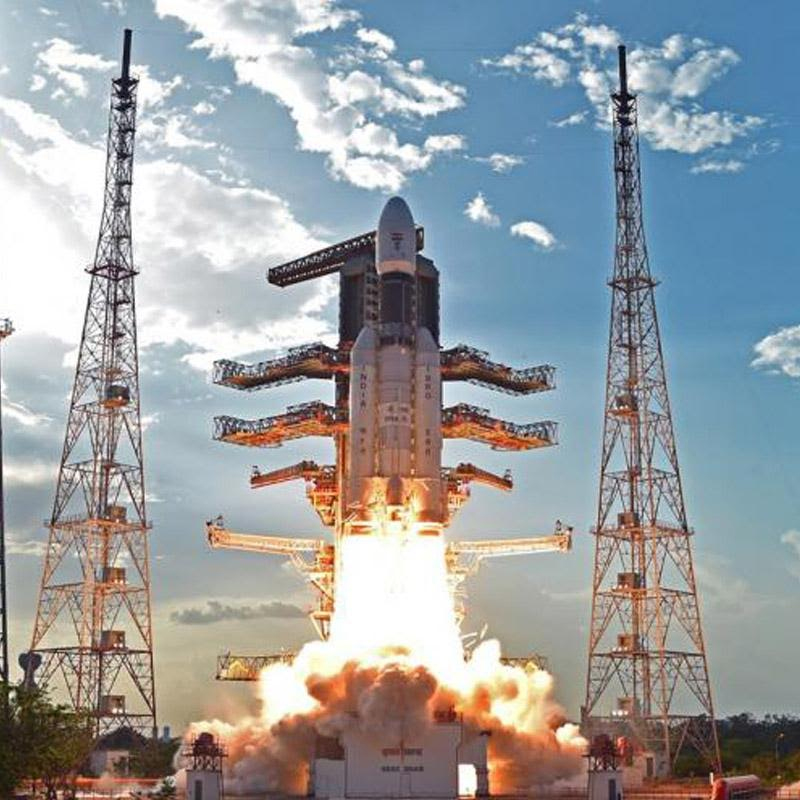
    MUMBAI: Indian Space Research Organisation (ISRO) is set to launch its high-power GSAT-6A communications satellite onboard GSLV Mk-II (GSLV F08) on 29 March 2018. The government-funded organisation will use one of its rockets for the launch, from the Sriharikota island site in Andhra Pradesh province on the edge of the Indian Ocean.

    The satellite is equipped with C-band and S-band transponders, which ISRO says will provide a platform for developing technologies such as demonstration of its massive 6m S-Band deployable antenna (the largest launched by India), which can then be used for mobile phones, vehicular communications and network management techniques as well as multimedia applications.

    It will be placed at 83 degrees East and have a life of nine to 10 years.

    This will be the Geosynchronous Satellite Launch Vehicle’s 12th flight and sixth flight with indigenous cryogenic stage. The rocket will take off from the second launch pad at the Satish Dhawan Space Centre.

    According to ISRO, GSAT-6A, weighing 2140kg, is a high-power S-band communication satellite, just like its predecessor GSAT-6.

    Also Read :

    ISRO, DoT turf wars delaying connectivity reach: govt official

    ISRO eyes 100th satellite on 12 Jan; GSAT-11 launch in April

    ISRO to double annual satellite launch

  • Transponder leasing yields Rs 7.5 bn for communication satellites

    NEW DELHI: Communication satellites earned revenue of Rs 7.4668 billion through leasing of INSAT/ GSAT transponders in 2016-17.

    Minister in the department of space Jitendra Singh told the Parliament that 15 of the 42 Indian satellites in space are used for communication.

    Out of the others, four for meteorological observations, 14 for earth observations, seven for navigation, and two for space science purposes.

    The annual income from sale of remote sensing satellite data is Rs 251.7 million.

    The data and value added services derived from earth observation, meteorological, communication & navigation satellites are used to support various applications viz. resource monitoring, weather forecasting, disaster management, location based services, including societal applications.

    The expenses to realise and launching of these satellites are less than those of other countries, the Minister said.

    Also Read :

    MIB: No DPO request for infra sharing, DTH ops’ transponder demand up

    Transponder charges: Plan afoot to retain DTH services on Indian sats

    ISRO’s ‘South Asia Satellite’ to carry 12 ku-band transponders


  • Transponder charges: Plan afoot to retain DTH services on Indian sats

    NEW DELHI: The Department of Space (DoS) has said that a technical strategy is under formulation to retain direct-to-home services in the indigenous INSAT/GSAT system as well as to migrate DTH services from foreign satellite systems to indigenous system.

    This has been stated by the DoS to the Public Accounts Committee (PAC) of the Parliament, which had, early in 2016, in its fortieth report, complained about loss due to non-revision of transponder charges.

    In its action-taken report (ATR) tabled in the Parliament by the PAC recently, it has also noted that a Committee to look into the subject matter is being constituted, and its recommendation will be addressed by the DoS.

    Referring to non-revision of prices for transponders, the DoS told the PAC that lease agreements with foreign satellites are entered for a short term in order to make a provision for the end user to migrate the services from foreign satellite to the Indian satellite. This approach, the DoS claimed, is in line with the recommendation of the Cabinet approved ‘Norm, guidelines & procedures for implementation of the policy framework for satellite communication in India’.

    The Department said as the foreign operators quote lease charges in dollar terms, differential charges among indigenous capacity and foreign lease is unavoidable due to currency fluctuations and withholding taxes.

    However, it said it will work towards a scenario wherein the best possible solution for DTH services will be arrived at.

    In its original report last year, PAC had noted that DTH transponder lease agreements had a lease period from 5 to 10 years with no provision for revision of prices whereas lease agreement varied from 5% to 33%. The lack of such basic provisions resulted in revenue forgone to the tune of Rs 361.7 million.

    Furthermore, Vetted Comments of Audit Central PAC in its report last year had also wanted the DoS to set up an inquiry to look into the lease agreements with various parties and take stringent action against those responsible for agreeing to terms that were against the interest of the exchequer and apprise the Committee of the action taken within three months.

    However, it noted in the Action Taken Report that the Department did not initiate any action and instead said it had appointed a committee to look into these aspects as the lease agreements with foreign satellites are entered for a short term period and to examine periodic revision clause.

    But, the Committee said the fact remained that DTH transponder lease agreements had a lease period from 5 to 10 years with no provision for revision of prices whereas lease agreements with foreign satellites ranged from one to 6 years with provision for price revision from 5 to 33%. The price revision clause is required to be there in all the transponder lease agreements which extend for more than one year irrespective of the fact that the contract is for a shorter duration or longer duration.

  • ISRO to increase transponder capacity for Indian DTH players to use INSAT

    ISRO to increase transponder capacity for Indian DTH players to use INSAT

    NEW DELHI: With five Direct-to-Home (DTH) service providers using transponder capacity leased from foreign satellites, the Indian Space Research Organization (ISRO) is taking measures to augment satellite capacity in India so that these users have the option to migrate to the INSAT system. 


    Giving this information, Space Department Minister Jitenda Singh told the Lok Sabha today that ISRO has given a proposal for pricing of satellite transponders for public and non-government users.


    A proposal for continuing the existing method of transponder pricing, which is based on type of services, band of operations, coverage area, power level is under consideration. 


    There are 13 INSAT/GSAT satellites in orbit, out of which 11 are communication satellites and two are meteorological satellites. In INSAT/GSAT communication satellite systems, there are about 37 Government users and about 49 non-Government users. 


    The transponder characteristics in terms of power, coverage, frequency band, etc., vary according to the type of service, which requires differential pricing.  

  • Eleven communication satellites operational; six more under development: Govt

    Eleven communication satellites operational; six more under development: Govt

    NEW DELHI: Eleven Indian satellites including four for communications were successfully launched during the last three years between January 2012 and February 2015, apart from the launch of 13 foreign satellites.


    Out of these, the expenditure incurred on launching the Indian satellites being used for communications in the last three years was pegged at Rs 1656.11 crore. The breakup is as follows: GSAT-14: Rs 173 crore, GSAT-10: Rs 406.82 crore, GSAT-7: Rs 495.29 crore and GSAT-16: Rs 581 crore.


    There are a total of eleven communication satellites out of the 27 satellites that are operational in the country currently.


    These are: INSAT-3A, INSAT-3C, INSAT-4A, INSAT-4B, INSAT-4CR, GSAT-7, GSAT-8, GSAT-10, GSAT-12, GSAT-14 and GSAT-16.


    A total of six communication satellites namely GSAT-15, GSAT-9, GSAT-6, GSAT-6A, GSAT-7A and GSAT-11, are being developed indigenously as part of the XII Five Year Plan (2012-17).


    A total of 95 Ku-band (a part of K band) transponders onboard indigenous communication satellites are being utilised for various communication applications.


    Minister of State in the Prime Minister’s office Jitendra Singh told Parliament that the government is also working on resolving the connectivity issues in the hilly areas.

  • GSAT signs new capacity on SES satellites NSS-11 and SES-9

    GSAT signs new capacity on SES satellites NSS-11 and SES-9

    MUMBAI: SES has announced that the Philippine direct-to-home (DTH) satellite TV provider Global Satellite (GSAT) has contracted its fourth transponder on NSS-11, cementing SES’ orbital position of 108.2 degrees east as one of Asia’s leading video neighbourhoods.

    The multi-year deal will see the transfer of current capacity usage by GSAT from NSS-11 to SES-9, currently scheduled for launch in 2015. When launched, SES-9 will be the largest SES satellite dedicated to the Asia-Pacific region. The new spacecraft will be providing expansion capacity for DTH, enterprise, mobility and government services across the region.

    GSAT, the satellite division of First United Broadcasting Corp (FUBC), launched its DTH service in 2008 on the NSS-11 Ku-band satellite, providing subscribers with access to an improved mix of international programmes including English, Mandarin, Korean, Tagalog, Japanese and Spanish channels. With this additional capacity, GSAT will be offering 12 high definition (HD) channels and 47 standard definition (SD) channels to more than 200,000 subscribers across the Philippine archipelago.

    FUBC president and CEO Philip J. Chien said, “Our ability to offer highly reliable DTH satellite TV to our growing base of subscribers in the Philippines is largely due to the comprehensive footprints of NSS-11, and, from 2015, SES-9. We are confident that SES’ expertise will enable us to grow in our market and increase both the quality and quantity of channels in our pay-TV offerings.”

    SES Asia-Pacific and the Middle East sr. VP commercial Deepak Mathur said, “We are delighted to confirm that GSAT, our long-term customer on NSS-11, will become a key anchor customer on SES-9. At SES, we are investing in new satellites to make sure that our customers enjoy business continuity, as well as delivering vital capacity to support their growth in some of the most dynamic media markets in the world.”

  • Why Tata Sky’s Harit Nagpal is pained about the MPEG-4 STB rollout

    Why Tata Sky’s Harit Nagpal is pained about the MPEG-4 STB rollout

    MUMBAI: A press release hit indiantelevision.com yesterday disclosing how US chip company Broadcom had got a massive order to supply standard definition MPEG-4 set top boxes (STBs) to Tata Sky. A simple release right. But it surely got the goose of Tata Sky managing director Harit Nagpal.

    Tata Sky MD Harit Nagpal is still awaiting a response from ISRO officials
    “This entire exercise is costing Tata Sky about Rs 1000 crore,” was Nagpal’s admission, when indiantelevision.com called him up. “We are replacing close to 5-6 million MPEG-2 SD STBs at no cost to consumers over the next year. All of this is coming in from internal accruals.” Nagpal says the DTH operator normally supplies about three million STBs a year for new acquisitions and churn. “This year we will be doing about 9-10 million STBs,” says he.


    The volumes have forced him to bring in emergency teams to make sure they install 500,000 STBs a month (made by Huawei and Humax apart from other international STB makers). This is apart from the regular service teams, which handle regular installation and problems.

    “For us even at Tata Sky it is a massive exercise and we have been working on it for the past three months and have just started the rollout,” he reveals.

    But isn’t that good? “Upgrading the boxes will give me more capacity for 12-14 channels,” he admits. “But I am being forced to do this because Indian Space Research Organisation’s (ISRO) has yet to give me my transponders. I could have put this money elsewhere on expanding my digitisation plans.”

    Tata Sky’s signals are being beamed off Insat 4A; but it had signed a contract to lease 12 transponders on ISRO’s GSAT-10 satellite around five years ago which have not been delivered to Tata Sky yet, even after the satellite launched in to space in September 2012.

    “It is sad that after national publications and a medium such as yours have carried my complaint against ISRO, I have not got a single revert from it about our transponders. We intend to take legal action since all our attempts to reach ISRO have failed. The courts are on vacation now, when they open again, we will move them,” added Nagpal.

    The transponders would have allowed Tata Sky to increase its channel offerings to consumers. However, now the new STBs will allow Tata Sky to add more channels to its bouquet. “We have been adding channels in a phased manner; the process will now be accelerated with the MPEG-4 STB. By June-July next year we should be able to revise our channel offerings to consumers,” said Nagpal.