Tag: GroupM

  • Adversioning advertising gains currency

    Adversioning advertising gains currency

    MUMBAI: A national jewellery brand had to reach out to the diverse markets in south India. It needed a solution that would allow it to simultaneously beam on a national television channel different creatives for the diverse markets in the region, each featuring a regional celebrity.


    Thanks to technology solutions, the jewellery company could get its different creatives beamed to relevant demographics at the same time on the same channel.


    The concept is called adversioning or geo-targeted advertising in the media world.


    Technology for such simultaneous telecast of different advertisements on the same channel has been available for a few years now but advertisers have begun to use it on a significant scale only recently.


    Advertisers are increasingly making use of geo-targeting. These include fast moving consumer goods major Hindustan Unilever.


    The geo-targeted advertisements in value terms now account for about 20 per cent of total ads on television. In the US, the proportion of such ads is almost 40 per cent. According to GroupM, total advertising spend on television in 2013 was Rs 16,860 crore.


    But the potential for geo-targeted ads in India is seen to be much, much higher considering the extent of diversity in the country, says SureWaves founder Rajendra Khare. SureWaves is a technology solution provider for geo-targeted advertising and had provided its service to the national jewellery brand but decline to disclose the name of the brand.


    Khare says it makes sense for any advertiser to opt for geo-targeted advertising to not only break the language barrier but also to target differently the different the socio-cultural groups across the country with a sharp and direct emotional connect.


    So, the next time when you are on a trip to Chennai, don’t be surprised if you come across an ad by Fastrack Cabs on a national channel.


    The Indian market is a complicated one. From regional differences to numerous brands, one needs to stand out in a clutter to catch the attention of as many consumers as possible.


    Apart from SureWaves, there is amagi Media Labs that offers advertisers and broadcasters solutions for geo-targeted advertising.


    Geo-targeting or adversioning is done with the help of a barcode system and cloud-based infrastructure on which TVCs are stored. The technologies solutions then enable playing of different ads in different regions on the same air-time band on a particular channel.


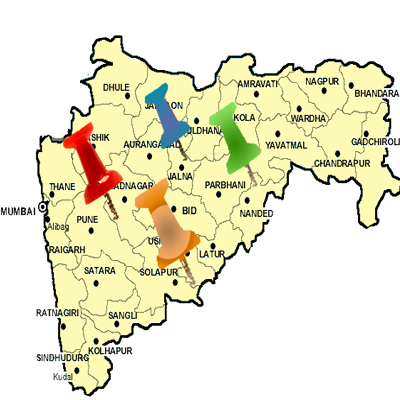
    There’s a possibility of making available different solutions to meet different needs. For instance, Carat Media which handles baby products maker Libero’s account, wanted to reach out to non-Marathi female audience in Maharashtra. Amagi’s technology enabled Libero to use channels with a national footprint for the launch campaign of Libero in a specific market like Maharashtra.


    Amagi which had to answer a lot of questions when it started out in 2008 feels that those doubts have now been put to rest.


    “Today, largest national players like HUL, GSK too want to follow a regional plan and have different communication depending on the region,” says Amagi’s co-founder KA Srinivasan.


    Geo-targeting or adverisioning implies customised broadcast of creative communication to different markets in the same ad slot. In other words, it means splitting up of the national beam of a broadcaster into local beams akin to what national newspapers do for their local editions.


    ‘How can we sell a standardised product to local and different consumers?’ has been a dilemma for most marketers. However, with the adversioning concept, things are supposed to change.


    According to GroupM Trading (CTG) south Asia Managing Partner Prasanth Kumar, who is a big votary of adversioning, says, “clients can benefit in multiple ways as spill-over reduces, national channels can be used to run local promotions, the same 30 second slot can be used for multiple creatives (different brands in different markets, different language versions in specific markets). Majority of the clients who have used this availability are local clients.”


    There might be companies which don’t feel the need to make an ad locally oriented, but there are a few which opt to geo-target ads. One of the main reasons a brand may geo-target ads is because it only offers services/products within specific areas. There is a huge and compelling demographic component involved with geography that can influence click-through-rate (CTR) and conversion rates as well.


    Recalling how cable operators’ years ago would show local advertisements, Havas Media India managing director Mohit Joshi says if we take a look at the southern market, one can see a lot of local players which isn’t the case in the northern part of the country. “The concept makes sense for local clients/marketers a lot as it gives them a chance to target their TG.”


    But will the local marketers be able to find their place and compete with national players? Answers Kumar, “Yes. Local advertisers form a large part of the 2,000 plus clients who have tried this concept. They see value in placing their ads on national channels as these channels were earlier much more difficult to afford and local players have specific market requirements.”


    On the same lines, Pipal Majik CEO CD Mitra highlights how brands too have been emphasizing on “localisation” and if adversioning helps them achieve it then many will opt for it.


    “For example, if a particular tea brand wants to sell its particular blends in certain regions then this is the perfect solution for them to advertise in a certain regional beam of a national channel.”


    Talking about the cost of geo-targeted ads, experts say creative production cost is just a small segment of the overall marketing budget a brand allocates.


    The credit for the growth of the format and news, movies and GEC channels experimenting with it goes to the fact that vernacular media has been growing at a much quicker pace than the national media, Kumar elaborates.


    “The reason for the growing importance of Class B and Class C towns for advertisers, the growing education levels, expansion of vernacular publications into new markets with categories like retail, real estate along with FMCG is fuelling the growth,” he adds.


    Khare adds that a marketer needs to utilize both national as well as regional channels to reach out to as many people as possible. “It is not national vs. regional, but how one can utilize both for its benefit. We have to also understand the importance of spot TV which is the most cost effective way for advertisers to market.”


    Technology plays an important part of the concept to become a part of life, soon. Joshi says, “If the technology is not there to support the concept then it will surely fall flat in its face. We as an industry will have to invest in it to see it grow and become an integral part of advertising soon.”


    Apart from this, industry professionals feel that pricing too plays an important role here. The competition between national and local players will vary and also depend on it. “Broadcasters in the end need money. If they get it from local players or national ones, it doesn’t matter. Hence, stakeholders have to come up with attractive pricing and strategies to make it real,” says Mitra when asked if broadcasters would opt for local marketers over national ones.


    Zee TV has been selling ad spots split into regional beams since late last year and has had a good experience with it. Zeel chief sales officer Ashish Sehgal says, “The concept has helped us  increase number of clients if we offer them a strategic plan which will help them reach out to their TG better.”


    He further says the sum of revenues from a divided ad spot has been higher than the revenue it would have got having sold it as one national beam.


    Sehgal says Zee TV has seen an increase in local marketers through geo-targeting. “In the past few months, around 25-30 SMEs have come to us to use the platform.”


    Bennett Coleman & Co president corporate development Sunil Lulla says adversionsing is very much a reality now with many brands and broadcasters using it.


    However, he says that a broadcaster has to be clear about this with the clients otherwise it can hurt some advertisers who pay for a national beam but sometimes local/regional beams could be sold to another client. “We (broadcasters) have to understand that there is a big (regional) market which can be tapped through this and it will benefit everyone.”
  • GroupM crowned ‘The Dream Company to Work For’

    GroupM crowned ‘The Dream Company to Work For’

    MUMBAI: GroupM India, the country’s largest media investment conglomerate, was honored with the ‘The Dream CompanyTo Work’Award for in the Media and Entertainment sector. GroupM is also in the overall list of ‘Dream Employer of the Year’in India. The awards have been conferred by the World HRD Congress 2014 in Mumbai.

    The ‘Dream Companies To Work’ is an annual event organized by the World HRD Congress to reward and recognize People and Talent initiatives of organizations across various sectors. Over 100 companies participate at the World HRD Congress 2014event including Accenture, Angel Broking, Citibank, HDFC, Infosys, Samsung, SBI, Cavin Care,Reliance, Novartis,TCS and many more.This was the first time that GroupM participated at the ‘Dream Companies to Work For’ Awards.

    CVL Srinivas, CEO, GroupM South Asia said, “GroupM is extremely proud to receive the awards from the World HRD Congress. The awards reaffirm that investing in our people is the best way to ensure cutting edge product quality and superlative customer delight. Talent management remains a critical focus area for us at GroupM South Asia.”

    Added Gaurav Hirey, Chief Talent Officer, GroupMSouth Asia, “GroupMand its agencies have pioneered some of the best Talent practices in the South Asia markets. We are investors in people and in the last year, we have aggressively pursued a people transformation agenda. We have worked on various capability-building initiatives like the Youth Executive Committee (YCo), The New ME Initiative for digital orientation and looked at getting in fresh ideas and talent through an engaging Campus Connect effort. This allows us to provide huge value to all our stakeholders, especially our clients and our employees.”

    Over the last 11 plus years, GroupMIndia has cemented its position as an innovator and thought leader in the media industry. GroupM also has a distinction of having invested in a full fledged talent management team the only one in the media and entertainment industry. Over the last year, GroupM has made a paradigm shift in the way it operates in South Asia, keeping in mind the ever changing media landscape. With digital at the heart of their processes and planning, it has resulted in the conglomerate winning over 82 new businesses across its agencies and specialist units.


  • Q3: Digitisation boosts broadcasters’ revenues

    Q3: Digitisation boosts broadcasters’ revenues

    MUMBAI: Digitisation of cable TV services in major cities has helped broadcasters improve their income from subscriptions in the third quarter ended 31 December, 2013, but the cap on advertising has hit some of them badly as the regulation got implemented at the beginning of the quarter.


    The advertising revenues of the industry rose by about 10 per cent in the third quarter, largely on account of robust growth at general entertainment channels (GECs), according to analysts.


    ADVERTISING REVENUE


    Sun TV saw its advertising revenue fall 7.2 per cent on year to Rs 272 crore in the third quarter, as the cap on advertising hurt the leading television network from south India. The fall in Sun TV’s advertising revenue was despite an increase in advertising rates, analysts said.


    GroupM’s Senior Director, Analytics, Central Trading Group, Harsh Deep Chhabra, says news channels are expected to take a bigger hit than the GECs because of the ad cap. While the impact of the advertising cap on news channel could be as high as up to 35 per cent, it could be 10-15 per cent on GECs.


    Zee Entertainment Enterprises’ ex-sports advertisement revenue growth was more than 20 per cent year on year, due to gains in market shares and launch of new channels.


    Barring the short-term impact of reduction in advertising inventory, advertising spends on television are expected to grow in healthy double digits over the next many years, according to Zee Entertainment Managing Director and Chief Executive Officer, Punit Goenka.


    The advertising revenue growth at Zee Media, which has a group of general and business news channels, was 3.1 per cent at Rs 61.39 crore in the third quarter, against its subscription revenue growth of 21.6% at Rs 270 crore.


    The third quarter had seen relaunch of Zee News channel with refreshed programming and look.


    TV18 Broadcast’s consolidated advertising revenues grew 3 per cent year on year, as entertainment channels led by Colors and MTV delivered strong double digit advertising revenue growth. Advertising environment for news and infotainment continued to be sluggish.


    In the first half of 2013-14 too, advertising revenues at TV18 Broadcast had grown by 3 per cent year on year, with the advertising revenues at Colors growing by more than 15 per cent.


    SUBSCRIPTION REVENUE


    Sun TV’s subscription revenues rose 27% year on year to Rs 167 crore in the third quarter, basically driven by a 45.9% increase in analogue subscription revenue and a 19.6% rise in direct-to-home subscription revenue. The company expects robust growth in subscription revenue to continue as the full benefits of phase I and Phase II digitisation of cable TV are yet to be reflected as Chennai and Coimbatore are yet to be fully digitised.


    The Chennai-based broadcaster’s operating profit margin came under pressure because of higher cost of content, in addition to a decline in advertising revenue.  Multiple non-fiction shows telecast during the quarter led to a 428 basis points year-on-year contraction in operating margin to 73.6%, according to a results update by Angel Broking.


    It said Sun TV management expects content cost to go down in the next quarter as no non-fiction shows are planned to be telecast in the fourth quarter of 2013-14.


    TV18’s net distribution income (subscription revenues minus carriage/placement fees) continued to grow steadily. In the third quarter, the net distribution income was  Rs 43.6 crore, a growth of 145 per cent year on year.


    Zee Entertainment’s subscription revenues were up 11.4 per cent year on year to Rs 456.50 crore in the third quarter. The company’s domestic subscription revenues grew by 12.2 per cent year on year to Rs 332.20 crore in the third quarter.


    ZEE Media’s subscription revenue was up 21.6 per cent year on year at Rs 270 crore in the third quarter.


    New Delhi Television did not provide a break-up of its revenues from its broadcast operations. The news broadcaster said its Hindi news business remains buoyant with NDTV India reporting robust revenue growth. NDTV only said its revenues from broadcast operations in the third quarter were up 22 per cent year on year at Rs 131.02 crore.


    B.A.G. Films & Media reported improved a 29.1 per cent year on year rise in operating revenue to Rs 23.60 crore in the third quarter. The break-up of the revenue was not available.


    OPERATING PERFORMANCE:


    TV18 Broadcast reported its highest ever quarterly operating profit at Rs 77.5 crore, up 61 per cent year on year. Its net distribution income continued to grow steadily. In the third quarter, the net distribution income was  Rs 43.6 crore, a growth of 145 per cent year on year.


    On a proforma basis, including the results of ETV Entertainment, TV18 Broadcast’s operating profit was Rs 108.1 crore. ETV Entertainment reported a sharp reduction in losses compared to the previous two quarters as programming and marketing investments made in the first half led to an upswing in ratings and revenues.


    NDTV’s reported Rs 3.29 crore of operating profit in the third quarter against an operating loss of Rs 1.98 crore a year ago.


    B.A.G. Films too had an operating profit (of Rs 8.56 crore) in the third quarter against operating loss of Rs 1.51 crore a year earlier.


    Zee Entertainment’s operating profit in the third quarter was Rs 290.70 crore, up 11.3 per cent despite operating profit margin contracting to 24.5 per cent from 27.8 per cent a year ago.


    Sun TV’s operating profit fell 1.1 per cent year on year to Rs 372 crore in the third quarter, as its revenues were impacted by fall in advertising revenue and increase in content cost due to reality shows.

  • #WPPStream to discuss India’s digital future

    #WPPStream to discuss India’s digital future

    MUMBAI: If you thought business meetings can only be done in conference rooms and around round tables, it’s time to think again! To make work more than just work, Sir Martin Sorrel founded WPP’s best strategic planners are gathering in Jaipur to think about the digital future and what that means for communications, what it means for creativity and what it means for business.


    #WPPStream, an annual (un)conference, organised by WPP Group company is about no keynote presentations, no panel discussions and no ‘networking breaks’.


    Being held in India for the first time, Stream will see GroupM India employees along with WPP clients, WPP agencies and the broader technology industry gathering in Jaipur from 12-15 February. WPP Country Manager – India Ranjan Kapur will be playing the host in the country along with critically acclaimed filmmaker Shekhar Kapur.


    The focus of Stream India will be to celebrate and explore the growth and development of digital innovation in India. It will also bring Brands together with regional leaders from media and technology companies for a debate on India’s digital future.


    With over one hundred discussion sessions, Ignite talks (15 slides in 15 seconds), pitch show, tech lab, etc Stream India is going to be really prolific.


    Some of the topics to be discussed are:


    * More mobiles than books in India – can technology be used for better literacy?

    * Are Indian publishers geared up for digital publishing?

    * In Digital age, do we get connected or disconnected?

    * Digital technology is not a substitute to strong communication idea.

    * Mobile, your personal smart screen – how India is evolving

    * Online video – how will it change the concept of communication in India

    * Too much information. Does it lead to clarity or confusion?

    * If Medium is the Message, Can it light a Billion Souls?

    * Mobile – continuation or gradual transition of digital Web : Aren’t we killing the core proposition?

    * Will Mobile marketing be the gateway to digital for most brands in India?


    Midnight cooking, cinema, elephant polo and many other things are a part of the plan for an unwinding experience. 

  • GroupM estimates 11.6% increase in AdEx in India in 2014

    GroupM estimates 11.6% increase in AdEx in India in 2014

    MUMBAI: GroupM, the leading media investment planning conglomerate in India, today released their annual estimated advertising expenditure report called the This Year, Next Year (TYNY) 2014. Along with the Advertising Expenditure (AdEx) numbers, GroupM India also released the mTrends, the list of the biggest media and communication trends in the country.


    As per GroupM’s in-depth research of the Indian media industry, the projected AdEx growth estimate is 11.6%. Digital media shows the maximum growth with 35%. This is followed by 12% in TV, a drop from 13.6% in 2013. Cinema remains constant at 12% for this year as well. The print medium shows a significant increase by 8.5% as against the 2013 estimate of 4.6%, owing to growth in vernacular print publications across the country.


    CVL Srinivas, CEO, GroupM South Asia said, “We are cautiously optimistic about the media industry in 2014. Sectors like FMCG, Auto and Retail will continue a stable increase in ad spends. We will see an increase in rural spending by FMCG and Telecom.” He added, “The first half of the year will continue to be uncertaingiven the general economic &political environment, and ambiguity surrounding the measurement system. However advertising by political parties is expected to give a boost to the AdEx by upto +2.5%. We envisagea stronger second half with an upsurge in ad spends.”


    The TYNY report is the most comprehensive understanding of the estimated media spends by advertisers in the current year. It also highlights some of the industry sectors that will have a major effect on advertising spends across media.This year GroupM also launched mTrends, a quick reference book of the hottest media and communications opportunities in 2014. This list of 20 trends is a derivative of the TYNY 2014 report and has been put together by the team at GroupM India, including the agencies and specialist units.

    ­­­­­­­­­­­­­­­


    About GroupM


    GroupM is the leading global media investment management operation. It serves as the parent company to WPP media agencies including Mindshare, Maxus, MEC, MediaCom, and Motivator in India.  Our primary purpose is to maximize the performance of WPP’s media communications agencies on behalf of our clients, our stakeholders and our people by operating as a parent and collaborator in performance-enhancing activities such as trading, content creation, sports, digital, finance, proprietary tool development and other business-critical capabilities. The agencies that comprise GroupM are all global operations in their own right with leading market positions. The focus of GroupM is the intelligent application of physical and intellectual scale to benefit trading, innovation, and new communication services, to bring competitive advantage to our clients and our companies. www.groupm.com


    For further information, please contact:

    Ishita Mookherjee

    GroupM India

    Email: ishita.mookherjee@groupm.com

    Phone: +919819838566


    Business category overview for key advertising sectors


    Elections

    • With general elections and 5 state elections on the anvil, Government spending and political party election spending adding significantly to the ADEX of all media


    FMCG

    • Volume growth back for FMCG companies on the back of good monsoon and hence good rural income
    • Raw material prices benign and hence more flexibility with advertisers
    • Ad spends of most FMCG companies on the rise to ride on the back of higher disposable income due to election spending


    Retail

    • Category growth story continues

     – More players getting into the food & beverage segment

     – E-commerce making inroads into small town India

     – Regional players expanding getting into national arena


    Auto

    • Despite slowdown in the 4wheeler segment, bullish on entry level cars, sports utility vehicles and multi utility vehicles.
    • 2wheelers to continue the focus on small town and rural India. Competiitve intensity on the back of recent market developments leading to more launches by existing players and subsequently higher ad spends


    Telecom

    • Smartphones penetration rising. Stiff competition in the segment to continue
      • Phablets & connected devices gaining popularity
      • Cellular phone service providers witnessing growth in revenue and ARPU. With service providers slashing prices for 3G schemes competitive activity expected to pick up in this segment


    Banking, Financial Services & Insurance

    • Revival expected in the segment on the back of likely rate reduction.
    • IPO market to pick up pre-election owing to better market sentiments
    • Recent RBI policies leading to a more favourable business environment


    New bank licenses likely to push ADEX of the category


    Click here for the full report

  • MEC and Britannia Good Day Wish ‘Happy Good Day To You’

    MEC and Britannia Good Day Wish ‘Happy Good Day To You’

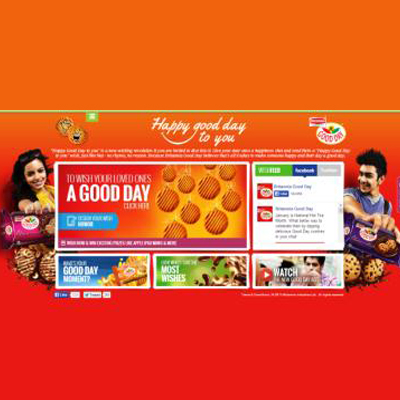
    MUMBAI: MEC, a leading global media agency and a founding partner of GroupM, has designed and implemented an engaging digital campaign for Britannia Good Day biscuits. The campaign titled HappyGoodDayToYou isaimed at bringing a smile through small actions without a rhyme or reason.

     
    “Happy Good Day to you” is a new wishing revolution which invites users to simply send daily greetings to their loved ones. Britannia Good Day believes that small acts are all that it takes to make someone happy. The team strategized the digital campaignthat will bring a smile upon a loved one’s face knowing that someone somewhere is thinking of you. The campaign has a dedicated website with thematic messages to express different emotions and feelings of Friendship, Love and Humor. Since the activation started in December, special greetings for Christmas/New Year were also incorporated. The site also allows the user to personalize their greeting, customize the message and add images which will let their loved ones have a Happy Good Day.

     
    The campaign has been linked to Facebook, which keeps the audience updated on the campaign developments. Through the page, the audience is made aware of the contest winners, traffic generated to the microsite, update on entries and interesting contest pictures.

    The website has many interesting features incorporated into it. The first one being The Wish Meter. It is like a tracker, which tracks the number of wishes sent by each city and the top eight cities are mentioned on this Meter. Another interesting and fun feature on the website is the “What’s Your Good Day Moment?” It urges viewers to share their delightfulmoments and let the happiness spreadon to all others viewing the website. All the user has to do is upload happy pictures and make the world smile 🙂

    MEC, known for its specialization in providing genuine integrated solutions to its clients has reached out successfully to Britannia Good Day’s audience by using appropriate platforms to convey the message – ‘Small acts is all that it takes to make someone happy.’ According to The Wish Meter, there have been over 1 lakh wishes already sent.

     
    Giving details on the campaign ZubinTatna, National Director Planning, MEC India said “MEC is delighted to partner with such a reputed brand that has been there for more than 25 years. The brief given to us by Britannia Good Day was to popularize the greeting “Happy Good Day to You”. The team at MEC was successful in capturing this message through this campaign. Making someone happy, can be as simple as sending a greeting or a pleasantry across. We are glad that the campaign has been appreciated and has received great response from the target audience. We are certain that through this initiative, we have helped Britannia Good Day attract more visibility across the country.”

    Sharing her views on the campaign, AnuradhaNarasimhan , Director – Marketing, Britannia Industries Limitedsaid “The new campaign of Good Day is all about having a good day, every day. And this thought is captured beautifully in the wish “Happy good day to you”. Our objective with the digital campaign was to take this wish to everyone and get people to start using it in common parlance. MEC helped us do just that by devising a comprehensive digital strategy to get India to start wishing each other “Happy Good Day to you”. Through our website, www.happygooddaytoyou.com, we have been able to get over 1.75lac consumers from the length and breadth of the country to spread the happiness with a simple “Happy Good Day to you” wish. Because the brand believes that’s all it takes to make someone’s day a good day. Happy to partner with MEC in bringing happiness to our consumers”

     
    Contest closes on 31st January, 2014
    For more details log on to http://www.happygooddaytoyou.com


  • GroupM wins highest number of awards at Yahoo! Big Chair 2013

    GroupM wins highest number of awards at Yahoo! Big Chair 2013

    MUMBAI: GroupM agencies won the highest number of awards at the Yahoo! Big Chair Awards 2013.

    While GroupM Interaction won the gold for the best use of technology for the Heineken Inner Voice campaign, Maxus India won four awards including three silvers and one bronze. The silvers were won in the following categories: ‘Best content Marketing Award’ for the Mentos Riddle campaign, ‘Best Use of Display’ for Mathrubhumi and ‘Best Use of Mobile Advertising’ for the Tata Sky campaign. MEC Global took home one bronze for the Colgate Mahakumbh Mela activity.

    “We are extremely delighted with the awards we won at the Yahoo! Big Chair 2013. Over the last year the digital teams across the GroupM agencies have been winning an award every other day, a testament to the great work and innovations the teams are churning out for our clients. It is great to end the year with six more awards to add to our tally of 204,” said GroupM Interaction south Asia managing partner Tushar Vyas.

    Added Maxus head of digital Unny Radhakrishnan, “We are happy for the continuing recognition of our work and also that these awards span different verticals in digital as well as a wide range of brands.”

    The GroupM agencies manage the digital and integrated communications mandate for some of the country’s most iconic brands including Vodafone, Google, Star TV, Tata Sky, Nokia, Kellogg’s, Colgate, Aditya Birla Group, Castrol, United Breweries, Pepsico, Uninor, Domino’s Pizza, Britannia and Havell’s to name a few.

  • GroupM delves into Digital World 2013

    GroupM delves into Digital World 2013

    MUMBAI: “Internet is just a world passing around notes in the classroom,” said American television host and stand-up comedian Jon Stewart about the whole world wide web.

    Considering that the classroom has increased manifolds in the past couple of years with each and everyone using the internet ever second, every day of their life, Indiantelevision.com takes a look atGroupM’s recently released report, “This Year Next Year Interaction 2014” which highlights the impact of technology and tech companies on consumers and advertiser behaviour.

    The preview report mostly talks about the social media and video platforms and how the platforms have been utilised by various brands. The penetration and growth of smartphones in the world is stating the obvious and hence, it elaborates on how a few of the next billion online users will use a PC-like object as the principal method of access. Tablets and smartphones rule the roost, these days.

    The report goes on to state that by one mean or other, one-third of the world population is online. With television and print taking a backseat, advertisers have made PCs and now mobile devices a priority to reach out to the attentive audiences.   

    “However, with magnification of fragmentation, multi-tasking, active screen time and increasing adoption of over-the-top (OTT) and often ad-free media, the challenges among advertisers is increasing. Advertisers have to deliver effectively in more places and on more platforms with little additional resources,” highlights the report.

    The report goes on to say that 25 years after the web’s conception, what it delivers to consumers and to the business could not have been imagined by its creator. “Google is the 800-pound gorilla that has seamlessly combined its core revenue engine, search with a strong position in online video and successfully evolved both into mobile.”

    The report adds, “More significantly, Youtube has become the uber-network of video networks and is the wireframe on which more and more of the world’s video content hangs. With 25 per cent of all views on mobile devices and by Google’s definition that excludes tablets, Youtube sits alongside Facebook, twitter and Goggle search as one of the dominant applications of mobile consumption.”

    Global Youtube revenue is estimated, as per the report, at $5 billion and the top 10 brands which have been the platform’s biggest content creators include: Blackberry, DCShoecoUSA, Google, Coca Cola, Old Spice, GoPro, Samsung, Nike, Volkswagen and RedBull.

    Furthermore, the report goes on to say that if 2013 was the year of mobile advertising then Facebook and Twitter made it so. “Of its 700 million daily users, 500 million use the platform of Facebook via a mobile device. And if advertisers create more high-frequency engagement, they will in turn increase the algorithmics distribution of messages to a greater percentage of their fans and beyond, reducing the need to pay for that reach,” says the report.

    Also in 2013 Facebook positioned itself to participate in two new areas – search, long dominated by Google and ‘moments’ news, TV and otherwise on which Twitter has begun to build its revenue base. However, the report also states that twitter will never achieve the level of penetration of Facebook. “The platforms are so often referenced in the same sentence yet they have little in common other than as examples of the network effect as a catalyst of growth.”

    The top brands on the social networking site, as mentioned  in the report, are: Coca Cola, MTV, Disney, Red Bull, Converse, Starbucks, etc.

    Having said that, the report adds how many media companies have embraced Twitter as a tool  to extend the reach of their programming and deepen their advertiser relationship by re-distributing content on it. Top brands on Twitter are: Samsung, Starbucks, Whole Foods, Blackberry, Disney, Zappos, Chanel, says GroupM.

    The agency’s report has highlighted the benefits that professional networking site Linkedin provides to HR managers globaly, even, surprisingly in China. One third of the world’s profesionals, 95 per cent of Americans and 40 per cent Europeans use Linkedin, it says. With a quarter of a billion individual profiles, as well as 300,000 corporate profiles, it states and  goes on to explain how corporations, through their own profiles, sponsored updates and influencer content postings are investing significantly in building their brands and cohorts of followers.  The most-followed companies on the professional networking site are Google, IBM, HP, Microsoft, Apple etc.

    The report also looks at the online presence of  Apple, and its online music service iTunes and iTunesRadio. With almost 700 million iOS users globally, and 200 million iTunes accounts in the US it is a tour de force able to offer varying advertising options to advertisers. The report then goes on to examine how Yahoo, Microsoft (it acquired Nokia’s handset business this year), AOL, Amazon (almost 35 per cent of all digital customer journeys in the US end up at this online retailer, GroupM research states) and Electronic Arts have been dealing with the rapid evolution online and in digital and what kind of advertiser offerings they are drawing up, and how much success they are achieving.

    If one has to wrap up the year and see what’s next? “For advertisers the world will get more complex. The promise of the cloud and of big data implies an information adjacency and the ability to deliver content to the customer that promises super-precision in segmentation and targeting and by inference a value in an increasingly granular, dynamic and data-informed media environment,” as per the report.

    The report aims to give readers a real understanding of what’s happening in the world of online, and how they as marketers can get prepared to efficiently use the evolving ecosystem.

  • GroupM promotes Gaurav Hirey as chief talent officer, South Asia

    GroupM promotes Gaurav Hirey as chief talent officer, South Asia

    MUMBAI: GroupM has announced the appointment of Gaurav Hirey as chief talent officer, south Asia.

    Hirey has been a part of GroupM since 2008 and is currently the regional HR director, APAC. In his new expanded role as CTO, South Asia, he will be responsible for driving the agenda on people, culture and values at GroupM which will include employee acquisition, training, development, retention and growth for India, Pakistan, Bangladesh and Sri Lanka.

    On his new role, Hirey said “India and South Asian markets are exciting markets. We have been able to innovate and raise the bar year after year. Mumbai is home ground and so always a pleasure to be back! I am very excited about the new leadership and the new vision at GroupM South Asia and look forward to leveraging the last 2 years of my international exposure and the network to help and impact business results.”

    He will continue to work with GroupM APAC regional talent team and will be based out of Mumbai from 1 January, 2014. And will also be a part of the GroupM aouth Asia executive committee and will report to GroupM South Asia CEO CVL Srinivas and GroupM global CTO Angela Ryan.

    Speaking on the appointment, CVL Srinivas said, “GroupM has always placed a lot of emphasis on Talent and over the years we have built a strong talent team. As we move to the next stage of the People Transformation journey, I am pleased to welcome Gaurav Hirey back as our Chief Talent Officer (CTO) – South Asia. Gaurav has a successful track record of making things happen and is the best person to lead our people agenda. We look forward to having him back with us.”

    Hirey had joined GroupM in 2008 in Mumbai and built the human resources function at GroupM India, making it one the best employer brands in the country, before moving into a regional role in Singapore. Under his direction, GroupM is the only media agency to have won the Employer Branding Award for ‘Best Employer’ three years in a row from 2009 to 2011. For the last two years Hirey was based in Singapore where he worked on GroupM APAC projects and also had the mandate of being a business partner for Maxus APAC.

  • Kartik Sharma to take over from Ajit Verghese in January 2014

    Kartik Sharma to take over from Ajit Verghese in January 2014

    MUMBAI: GroupM and Maxus has announced the new managing director for Maxus South Asia, Kartik Sharma. Sharma takes over the reins from current managing director Ajit Varghese wef January 2014, as Verghese moves into a new regional role as CEO Maxus Asia-Pacific.

    Kartik moves up from Managing Partner, Maxus and will report into GroupM South Asia CEO CVL Srinivas and Verghese. He will also now be a part of the GroupM South Asia EXCO.

    Commenting on Sharma’s Appointment, CVL Srinivas said, “Kartik has done a stellar job as managing partner, Maxus, working closely with Ajit in shaping the Maxus brand, creating client delight, winning several new businesses and helping Maxus dominate industry awards. I wish him the very best and also welcome him to the GroupM South Asia EXCO which will benefit immensely from his product knowledge and experience.”

    On handing over the charge, Verghese added, “Kartik is an excellent choice for Maxus going forward especially considering his product strengths and client focus. A long standing employee of GroupM, he has the in-depth knowledge and insight of what is needed to take Maxus to the next level. Kartik has been the key architect in growing the Maxus Mumbai office 3 fold in the last 6 years and building up a collaborative culture of working across offices and between various teams inside GroupM.”

    With over 18 years of experience under his belt, Sharma said on his appointment, “The last six years at Maxus has been very exciting. What I love most is the passion & collaborative culture where every team member works hard to deliver on our 10/10 vision of delighting clients. Our focus on constantly improving the product and the ability to develop a unique work culture has helped us deliver winning solutions for clients. I look forward to my new journey and am confident it will be equally exciting & fulfilling.”