
Tag: GroupM

  • Bajaj V and Paper Boat set trends in content marketing

    Bajaj V and Paper Boat set trends in content marketing

    MUMBAI: In the current state of disruption in the media and entertainment industry, two things have come forth as absolute truths — firstly, the need for brands to adapt and explore non-traditional marketing; and secondly the power of pure undiluted content.

    Be it GroupM’s This Year Next Year report or the KPMG – FICCI 2016 report, pick up any recognisable marketing study, and one can tell where the M and E industry is headed with double figure digital growth rates.

    Going with that idea, several brands and marketers are toeing the lines of content marketing. But few have gone ahead and taken a leap of faith with content and storytelling being the main focus.

    “We are used to seeing brands sponsoring television programs. ‘Buniyaad brought to you by Colgate’ is an example. But there is nothing ‘Colgate’ in Buniyaad. Whereas in the case of long format digital videos, the kind of content brands would go for is somewhere related to the concept of the brand. The format of digital allows you to experiment a lot more at a far lesser cost,” shared MullenLowe Lintas chairman and CCO R. Balki, on why it is viable for brands to produce their own content on digital.

    When asked, Balki named Leo Burnett’s campaign for Bajaj V as his favourite in the last year. At the same time, he referred to ‘Sons of Vikrant’ as a campaign, not a documentary. “Anything which is released around the bike is all part of building the brand. And that is why I say it is one of the most beautiful works I have seen recently.”

    When Bajaj released its new model for the commuter segment backed by the inspiring story of INS Vikrant, the power of weaving a story as the two wheeler’s brand identity was instantly revealed when record breaking units of the bike were sold on the very first day.

    But it didn’t end at that. Soon the brand launched a 16 minute video titled ‘Sons Of Vikrant’, conceptualised by its creative agency Leo Burnett, documenting the lives of the war veterans who were once aboard the warship.

    Bajaj Motorcycles marketing VP Sumeet Narang said, “As we delved deeper into Vikrant and started talking to people who worked on it, we realised that there are many untold stories and memories behind the naval battleship INS Vikrant and its heroes. Since we had brought back the essence of Vikrant in the form of V, we realised that the onus was also on us to bring these stories together and share them with the nation.”

    The video was launched through a gala event where the who’s who of the media and entertainment industry were invited. Amidst the glitz and glory, the anecdotes of life on INS Vikrant and war stories successfully created awe and inspired attachment around the warship. Suddenly Bajaj V wasn’t a two wheeler anymore, it was a story everyone wanted to own.

    “With Sons of Vikrant, our idea was to bring out the untold stories of INS Vikrant and the war veterans and share the feeling of pride with millions,” quipped Leo Burnett south Asia CEO Saurabh Varma when asked about the concept of releasing a documentary as part of the awareness building for a product.

    “To create this documentary, we met many people who were part of the war to learn their stories. The footage ran into hours, which we had to bring down to 16 minutes,” Varma added.

    Though the digital platform, without the time constraint, does lend itself for more creative exploration, it isn’t necessarily the long format that is working for the brands. As per Balki, digital audience is far more ADHD than a television viewer, with little patience for the content to take shape. “If the story is very well integrated with what the brand stands for, the content will bring benefits for the brand hugely, irrespective of the length of the video.

    “Fundamentally if you have a terrific piece of communication, the brand will benefit from it irrespective of the length of the video. Unless the film is very riveting people lose patience quickly. Some creatives grab on to the digital media thinking and finally they don’t have to fight with the client for the extra five seconds. I don’t think so. I feel a lot of the long forms we see are boring and could have been done shorter. If one wants to go beyond 60 secs they better have something compelling,” Balki simply stated.

    While Bajaj went the non-fiction way to bring out the real emotions people had for the warship and subsequently the bike, Hector Beverages’ flagship brand Paper Boat drinks, dabbled in non-fiction recently to achieve the same.

    The three and half minute video called Rizwan: The Keeper of the Gates of Heaven instantly transports the viewer into an incredible fairy tale of superhero saving the day that evokes all senses.

    “Paper Boat as a brand often speaks of different tastes and smells that can trigger memories, it is an important part of our brand communication. I realised that short films and features are a great way to tell such stories,” shared Paper Boat marketing head Parvesh Debuka.

    Soon Paper Boat’s agency Humour Me came up with Rizwan, written by Dhruv Sachdeva, which strongly resonated with the brand’s identity and therefore the brand went ahead with it.

    It has only been five days since the film has been put up on the brand’s YouTube channel and there are already 7,00,000 plus views, with positive comments like i forgot i was watching something else and this popped up” following the video.

    When asked how effective this brand communication has been compared to the traditional marketing tools, Debuka said, “It is hard to compare as the metrics are different. A brand communication is supposed to deliver a certain thing. Our 20 second spot for the Chilli Guava flavour did extremely well as well. It served the purpose of spreading awareness that we have that flavour. On the contrary Rizwan has taken our storytelling a notch higher, in terms of screenplay, the cinematic experience, in terms of animation. It is no longer creating awareness but building a bond.”

    Debuka is not opposed to the idea of brands producing their own content and exploring further visibility options with it. “For starters, a video such as this when released on the digital platform, garners way more eyeballs organically than what it would take to be visible on television. But as a piece of content it can be shown on television, and even cinema theatres for that matter, but then we will have calculate distribution cost, etc.”

    Going by the cost as well, a brand might come out with more in their pockets when making a video for the digital audience as opposed to putting up an ad spot on television. This window for a more ROI centric marketing is driving brands to go the content way. “Obviously when you end up making a TV commercial, you spend a little more than you would spend to make a film like Rizwan,” Debuka shared.

    Given the fanfare these brand produced contents have created, more brands are likely to explore the area more extensively and start producing their own content. One can’t help but ask if that will affect the way advertising industry works.

    “Agencies have to reorient themselves for the digital era. We are going to see more and more digital thinking in the works. It is no longer about marketing in digital platform but it is digital in marcom thinking. That’s a fundamental shift, and those that make this quick shift quickly and swiftly will survive. I wouldn’t say that agencies and other stakeholders in the system need to feel completely threatened by this new trend of brands making their videos. But since the industry is at a cusp of disruption now, some casualties are expected,” pointed out Vizeum India MD Shripad Kulkarni.

    While there is growing enthusiasm to see more work like Paper Boat’s Rizwan and Bajaj’s Sons Of Vikrant, industry veterans are also cautioning brands against jumping the content marketing bandwagon simply out of the herd mentality. “Often we see that people absorb good content for its own sake and completely forget the brand. Therefore the story needs to be well integrated with what the brand stands for, therein the content will benefit the brand hugely,” shared Balki.

    Echoing similar sentiments, Debuka added, “The primary requirement is how strongly enmeshed is your brand in the story. Whether it is told on television or digital or radio or even on the print platform. One has to ask if the brand can own that story. The content that a brand produces should be a natural extension of the brand communication. If that is not to be, then none of the mediums will work for the brand.”

  • Bajaj V and Paper Boat set trends in content marketing

    Bajaj V and Paper Boat set trends in content marketing

    MUMBAI: In the current state of disruption in the media and entertainment industry, two things have come forth as absolute truths — firstly, the need for brands to adapt and explore non-traditional marketing; and secondly the power of pure undiluted content.

    Be it GroupM’s This Year Next Year report or the KPMG – FICCI 2016 report, pick up any recognisable marketing study, and one can tell where the M and E industry is headed with double figure digital growth rates.

    Going with that idea, several brands and marketers are toeing the lines of content marketing. But few have gone ahead and taken a leap of faith with content and storytelling being the main focus.

    “We are used to seeing brands sponsoring television programs. ‘Buniyaad brought to you by Colgate’ is an example. But there is nothing ‘Colgate’ in Buniyaad. Whereas in the case of long format digital videos, the kind of content brands would go for is somewhere related to the concept of the brand. The format of digital allows you to experiment a lot more at a far lesser cost,” shared MullenLowe Lintas chairman and CCO R. Balki, on why it is viable for brands to produce their own content on digital.

    When asked, Balki named Leo Burnett’s campaign for Bajaj V as his favourite in the last year. At the same time, he referred to ‘Sons of Vikrant’ as a campaign, not a documentary. “Anything which is released around the bike is all part of building the brand. And that is why I say it is one of the most beautiful works I have seen recently.”

    When Bajaj released its new model for the commuter segment backed by the inspiring story of INS Vikrant, the power of weaving a story as the two wheeler’s brand identity was instantly revealed when record breaking units of the bike were sold on the very first day.

    But it didn’t end at that. Soon the brand launched a 16 minute video titled ‘Sons Of Vikrant’, conceptualised by its creative agency Leo Burnett, documenting the lives of the war veterans who were once aboard the warship.

    Bajaj Motorcycles marketing VP Sumeet Narang said, “As we delved deeper into Vikrant and started talking to people who worked on it, we realised that there are many untold stories and memories behind the naval battleship INS Vikrant and its heroes. Since we had brought back the essence of Vikrant in the form of V, we realised that the onus was also on us to bring these stories together and share them with the nation.”

    The video was launched through a gala event where the who’s who of the media and entertainment industry were invited. Amidst the glitz and glory, the anecdotes of life on INS Vikrant and war stories successfully created awe and inspired attachment around the warship. Suddenly Bajaj V wasn’t a two wheeler anymore, it was a story everyone wanted to own.

    “With Sons of Vikrant, our idea was to bring out the untold stories of INS Vikrant and the war veterans and share the feeling of pride with millions,” quipped Leo Burnett south Asia CEO Saurabh Varma when asked about the concept of releasing a documentary as part of the awareness building for a product.

    “To create this documentary, we met many people who were part of the war to learn their stories. The footage ran into hours, which we had to bring down to 16 minutes,” Varma added.

    Though the digital platform, without the time constraint, does lend itself for more creative exploration, it isn’t necessarily the long format that is working for the brands. As per Balki, digital audience is far more ADHD than a television viewer, with little patience for the content to take shape. “If the story is very well integrated with what the brand stands for, the content will bring benefits for the brand hugely, irrespective of the length of the video.

    “Fundamentally if you have a terrific piece of communication, the brand will benefit from it irrespective of the length of the video. Unless the film is very riveting people lose patience quickly. Some creatives grab on to the digital media thinking and finally they don’t have to fight with the client for the extra five seconds. I don’t think so. I feel a lot of the long forms we see are boring and could have been done shorter. If one wants to go beyond 60 secs they better have something compelling,” Balki simply stated.

    While Bajaj went the non-fiction way to bring out the real emotions people had for the warship and subsequently the bike, Hector Beverages’ flagship brand Paper Boat drinks, dabbled in non-fiction recently to achieve the same.

    The three and half minute video called Rizwan: The Keeper of the Gates of Heaven instantly transports the viewer into an incredible fairy tale of superhero saving the day that evokes all senses.

    “Paper Boat as a brand often speaks of different tastes and smells that can trigger memories, it is an important part of our brand communication. I realised that short films and features are a great way to tell such stories,” shared Paper Boat marketing head Parvesh Debuka.

    Soon Paper Boat’s agency Humour Me came up with Rizwan, written by Dhruv Sachdeva, which strongly resonated with the brand’s identity and therefore the brand went ahead with it.

    It has only been five days since the film has been put up on the brand’s YouTube channel and there are already 7,00,000 plus views, with positive comments like i forgot i was watching something else and this popped up” following the video.

    When asked how effective this brand communication has been compared to the traditional marketing tools, Debuka said, “It is hard to compare as the metrics are different. A brand communication is supposed to deliver a certain thing. Our 20 second spot for the Chilli Guava flavour did extremely well as well. It served the purpose of spreading awareness that we have that flavour. On the contrary Rizwan has taken our storytelling a notch higher, in terms of screenplay, the cinematic experience, in terms of animation. It is no longer creating awareness but building a bond.”

    Debuka is not opposed to the idea of brands producing their own content and exploring further visibility options with it. “For starters, a video such as this when released on the digital platform, garners way more eyeballs organically than what it would take to be visible on television. But as a piece of content it can be shown on television, and even cinema theatres for that matter, but then we will have calculate distribution cost, etc.”

    Going by the cost as well, a brand might come out with more in their pockets when making a video for the digital audience as opposed to putting up an ad spot on television. This window for a more ROI centric marketing is driving brands to go the content way. “Obviously when you end up making a TV commercial, you spend a little more than you would spend to make a film like Rizwan,” Debuka shared.

    Given the fanfare these brand produced contents have created, more brands are likely to explore the area more extensively and start producing their own content. One can’t help but ask if that will affect the way advertising industry works.

    “Agencies have to reorient themselves for the digital era. We are going to see more and more digital thinking in the works. It is no longer about marketing in digital platform but it is digital in marcom thinking. That’s a fundamental shift, and those that make this quick shift quickly and swiftly will survive. I wouldn’t say that agencies and other stakeholders in the system need to feel completely threatened by this new trend of brands making their videos. But since the industry is at a cusp of disruption now, some casualties are expected,” pointed out Vizeum India MD Shripad Kulkarni.

    While there is growing enthusiasm to see more work like Paper Boat’s Rizwan and Bajaj’s Sons Of Vikrant, industry veterans are also cautioning brands against jumping the content marketing bandwagon simply out of the herd mentality. “Often we see that people absorb good content for its own sake and completely forget the brand. Therefore the story needs to be well integrated with what the brand stands for, therein the content will benefit the brand hugely,” shared Balki.

    Echoing similar sentiments, Debuka added, “The primary requirement is how strongly enmeshed is your brand in the story. Whether it is told on television or digital or radio or even on the print platform. One has to ask if the brand can own that story. The content that a brand produces should be a natural extension of the brand communication. If that is not to be, then none of the mediums will work for the brand.”
  • Motivator’s ‘Pimple’ campaign for Himalaya breaks clutter this IPL season

    Motivator’s ‘Pimple’ campaign for Himalaya breaks clutter this IPL season

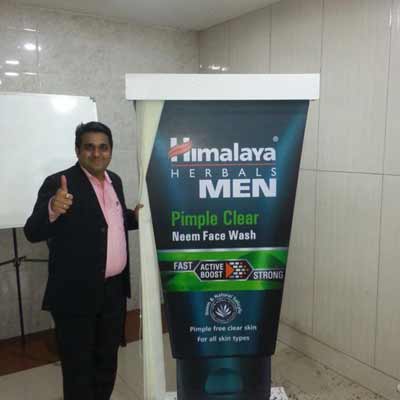
    Mumbai, 18th April, 2016: Motivator, India’s fastest growing media agency (in the last 3 years) as per RECMA 2015 has created a one-of-a-kind campaign for FMCG major Himalaya with close collaboration with ESP Properties, the entertainment and sports arm of GroupM. The innovative strategy for Himalaya Men’s Face Wash will see the brand let go off its logo for the very first time. The campaign rides on a single word ‘Pimple?’, thereby creating intrigue and sparking conversations amongst viewers this IPL.

    Himalaya Men’s Face Wash has doubled its market share in its respective product category to current 8% versus a year ago with a strong distribution and smart media planning processes. The brief was to build on the momentum for the brand, where Motivator’s Team Himalaya working on their Frugal Intervention thinking framework seems to have cracked something interesting in the logo attention economy. 

    The envisaged strategy is being seen as a move to leverage IPL as a platform to target Himalaya’s key consumers by associating with Royal Challengers Bangalore (RCB) team. Through the innovative campaign, the problem being addressed by the brand is stated in a single word ‘Pimple?’ visibly inscribed on the caps of the Royal Challengers Bangalore team players.
     
    All the team players will be seen sporting these caps in the ongoing matches of the tournament. This is further supported by the smart use of the lead players – Virat Kohli, Shane Watson, Sarfaraz Khan and Stuart Binny in a teaser film launched on Youtube video masthead and was timed to be played during IPL match breaks using special technology partner.

    Giving his views on the overall strategy, Rajesh Krishnamurthy, Business Head, Himalaya said, “Sports sponsorship has always provided an ideal platform for engagement with Men.  The Himalaya- Motivator- RCB Team however wanted to bring in innovation in this genre and developed a very engaging brand idea for IPL season. It provided us a great opportunity to build our brand in the growing men’s segment while creating excitement among the IPL fans. We are very excited with the way the campaign has shaped up, and we hope to build on the intrigue that we’ve created amongst viewers thus far.” 

    Adding on this, Ashwani Gandhi, Category Manager, Himalaya Men said, “It’s been an exciting campaign, performing beyond expectations. In this highly competitive Men’s category, we had to come up with an innovative way to communicate the core proposition of “Curing Pimples” and this idea does just that. With the various fields available for us to associate ourselves, sports was a natural choice and what better than Cricket. Cricketers are known for their performance, fitness, wellness and grooming quotient both on and off field. They become the ideal role model for young men to look upto when it comes to inculcating the habit of looking good and taking care of their skin problems. This communication blends perfectly our core proposition and this outlook towards cricketers, in helping us hit a sweet spot.”

    Commenting on the unique campaign that has been rolled out, Zahid Shaikh, Head of South Operations, Motivator said, “In today’s day and age, branding has evolved to become more than just mere flashing of a logo. Moreover, audiences are increasingly connecting with brands on a conceptual level, rather than just plainly on a logo level, as the case has been traditionally. We are thrilled to see that the campaign has received an overwhelming response, ranking up 1.135 million views in just one single day on YouTube. It is further performing well on twitter’s trending charts, after creating a series of conversations on social media.” 

    “Consumer is exposed to several messages in a cluttered environment through the IPL season. If sponsorship has to work for the brand, it needs to be on the back of an innovative idea that links back to the brands promise. This is truly a brand innovation that spawned beyond just a logo presence and media spends,”opined Vinit Karnik, Business Head, ESP Properties.

  • Motivator’s ‘Pimple’ campaign for Himalaya breaks clutter this IPL season

    Motivator’s ‘Pimple’ campaign for Himalaya breaks clutter this IPL season

    Mumbai, 18th April, 2016: Motivator, India’s fastest growing media agency (in the last 3 years) as per RECMA 2015 has created a one-of-a-kind campaign for FMCG major Himalaya with close collaboration with ESP Properties, the entertainment and sports arm of GroupM. The innovative strategy for Himalaya Men’s Face Wash will see the brand let go off its logo for the very first time. The campaign rides on a single word ‘Pimple?’, thereby creating intrigue and sparking conversations amongst viewers this IPL.

    Himalaya Men’s Face Wash has doubled its market share in its respective product category to current 8% versus a year ago with a strong distribution and smart media planning processes. The brief was to build on the momentum for the brand, where Motivator’s Team Himalaya working on their Frugal Intervention thinking framework seems to have cracked something interesting in the logo attention economy. 

    The envisaged strategy is being seen as a move to leverage IPL as a platform to target Himalaya’s key consumers by associating with Royal Challengers Bangalore (RCB) team. Through the innovative campaign, the problem being addressed by the brand is stated in a single word ‘Pimple?’ visibly inscribed on the caps of the Royal Challengers Bangalore team players.
     
    All the team players will be seen sporting these caps in the ongoing matches of the tournament. This is further supported by the smart use of the lead players – Virat Kohli, Shane Watson, Sarfaraz Khan and Stuart Binny in a teaser film launched on Youtube video masthead and was timed to be played during IPL match breaks using special technology partner.

    Giving his views on the overall strategy, Rajesh Krishnamurthy, Business Head, Himalaya said, “Sports sponsorship has always provided an ideal platform for engagement with Men.  The Himalaya- Motivator- RCB Team however wanted to bring in innovation in this genre and developed a very engaging brand idea for IPL season. It provided us a great opportunity to build our brand in the growing men’s segment while creating excitement among the IPL fans. We are very excited with the way the campaign has shaped up, and we hope to build on the intrigue that we’ve created amongst viewers thus far.” 

    Adding on this, Ashwani Gandhi, Category Manager, Himalaya Men said, “It’s been an exciting campaign, performing beyond expectations. In this highly competitive Men’s category, we had to come up with an innovative way to communicate the core proposition of “Curing Pimples” and this idea does just that. With the various fields available for us to associate ourselves, sports was a natural choice and what better than Cricket. Cricketers are known for their performance, fitness, wellness and grooming quotient both on and off field. They become the ideal role model for young men to look upto when it comes to inculcating the habit of looking good and taking care of their skin problems. This communication blends perfectly our core proposition and this outlook towards cricketers, in helping us hit a sweet spot.”

    Commenting on the unique campaign that has been rolled out, Zahid Shaikh, Head of South Operations, Motivator said, “In today’s day and age, branding has evolved to become more than just mere flashing of a logo. Moreover, audiences are increasingly connecting with brands on a conceptual level, rather than just plainly on a logo level, as the case has been traditionally. We are thrilled to see that the campaign has received an overwhelming response, ranking up 1.135 million views in just one single day on YouTube. It is further performing well on twitter’s trending charts, after creating a series of conversations on social media.” 

    “Consumer is exposed to several messages in a cluttered environment through the IPL season. If sponsorship has to work for the brand, it needs to be on the back of an innovative idea that links back to the brands promise. This is truly a brand innovation that spawned beyond just a logo presence and media spends,”opined Vinit Karnik, Business Head, ESP Properties.

  • India’s sports sponsorship grew to Rs 51,854 million in 2015; PayTM, Hero, CEAT and MRF emerge as big spenders

    India’s sports sponsorship grew to Rs 51,854 million in 2015; PayTM, Hero, CEAT and MRF emerge as big spenders

    MUMBAI: For those you are into sports, be it for the love of the game or love of the business that revolves around it, the welcome news is that  India has set itself to become a sporting nation that thrives not only on cricket but number of other sports as well. India with a thriving culture around sports is not a distant mirage but a near reality. The figures in the  3rd edition of Sporting Nation In The Making – III is a testament to this growth.

    This comprehensive report compiled by GroupM’s entertainment and sports arm ESP Properties and SportzPower shows that sports sponsorship in India has grown from Rs 46,165 million (Rs 4,616.50 crore) in 2014 to Rs 51,854 million (Rs 5,185.40 crore) in 2015 accounting for 10.4 per cent of the total Indian advertising expenditure. That is a  whooping 12.3 per cent growth.

    ESP Properties business head Vinit Karnik emphasised how sports can be harnessed as a successful communication medium by brands. He said, “There is definitely a cultivated sense of understanding between corporate sponsors, sports teams and federations. A symbiotic marketing relationship has emerged within the sporting ecosystem in India. 2016 will be fantastic for not only players and federations, but also for brands and spectators, with a deeper engagement with sporting properties.”

    Despite the challenges, ICC World Cup managed to garner Rs 5000 million (Rs 500 crore) in advertising revenues in 2015. On air sponsorships over all increased by 6.8 per cent YoY from Rs 25,180 million (Rs 2,518 crore) to Rs 26,900 million (Rs 2,690 crore). Out of which, 30 to 35 per cent was contributed by the emerging sports in India, while cricket took the bulk of the share.

    Interestingly, only  30 percent of the growth came from On Air deals, while the rest of the 70 percent came from  on ground sponsorships, team sponsorships, franchise fee and athlete’s brand endorsement deals, with on ground seeing  most of the action. It grew by 30 per cent from Rs 7948 million (Rs 794.80 crore) to Rs 10,305 million (Rs 1,030.50 crore).

    Though cricket bit the biggest chunk off this sponsorship pie, emerging sports leagues were the real growth drivers. Going by the figures roughly 51.38 per cent of the on ground sponsorship share was cricket’s contribution while the rest was all emerging sports.

    “Sports other than cricket have successfully established themselves in terms of revenue and fandom within the Indian sporting firmament,” SportzPower co founder Thomas Abraham shared. “Sports like kabaddi andfFootball have massively increased sponsorship revenues in 2015 and we saw return editions of sports like tennis and hockey as well. The successful launch of the Pro Wrestling League bodes well for 2016, which will see the advent of more franchise based leagues. We expect 2016 to be a good year for cricket as well as other sports, generating ad spends and clocking in corporate investments at an exponential pace,” he added.

    Infact, football saw an amazing 91.6 per cent sponsorship growth from the previous year valuing it at Rs 1140 million (Rs 114 crore) in 2015.  The biggest success story is perhaps Pro Kabaddi League, which grew by 300 per cent YoY and clocked at Rs 480 million (Rs 48 crore) in on ground sponsorship deals without a title sponsor. As per Karnik, it was a clever strategy by the broadcaster to not lock down their title sponsor and raise the bar for the next season.

    eCommerce brands took the lead as top spenders in the total ad spends on sports in 2015, followed closely by automobile brands. PayTM, CEAT Tyres and MRF Tyres together contributed Rs 1078 million (Rs 107.8 crore) per year, increasing cricket’s on ground ad spends by 14 per cent.

    Endorsements played a huge role in upping the sponsorship ante in 2015 with the sector seeing 27 per cent growth. The biggest endorsement deal was undoubtedly Tata Motors’ bringing Lionel Messi onboard on a two year deal of worth Rs 600 million (Rs 60 crore) per year. 2015 also saw Virat Kohli entering the Rs 1,000 million (Rs 100 crore) endorsement club that God Of Cricket Tendulkar and MS Dhoni earlier ruled.

    “Women are ruling the endorsement game when it comes to non-cricketing sports,” said Karnik. “Between Saina Nehwal, Sania Mirza and MC Mary Kom, the ladies share almost 40 per cent of the endorsement spends in the market with over 10 brands in each player’s kitty.” Abraham credited their sophisticated and enthusiastic engagement of fans over social media to be the driving factor apart from their continued  good performance throughout the year.

    The stress on digital, and social engagement is reiterated by both Abraham and Karnik as critical to players and teams as stats show that 70 percent of fans bring mobile phones to the stadium to share their experience, while 46 percent of mobile internet users search for sports related news and content online.

    Karnik calls 2016 to be the year of the fans and points out two key trends that will drive growth in the sector. “Now that we have sowed the seeds of a sporting nation in India, 2016 will see a great synergy between broadcasters, association’s, franchise owners, players and all other stakeholders to come together to build a culture around sports and build the fanbase. Secondly longer seasons or play for they sport will give more opportunities for brands to engage with the fans,” shared Karnik, adding that Pro Kabaddi League will see two seasons this year. Abraham on the other hand names volleyball to be the next big entrant in emerging sports league scene, which will launch with three separate sub-leagues to its name — beach volleyball, men’s volleyball and women’s volleyball league.

  • India’s sports sponsorship grew to Rs 51,854 million in 2015; PayTM, Hero, CEAT and MRF emerge as big spenders

    India’s sports sponsorship grew to Rs 51,854 million in 2015; PayTM, Hero, CEAT and MRF emerge as big spenders

    MUMBAI: For those you are into sports, be it for the love of the game or love of the business that revolves around it, the welcome news is that  India has set itself to become a sporting nation that thrives not only on cricket but number of other sports as well. India with a thriving culture around sports is not a distant mirage but a near reality. The figures in the  3rd edition of Sporting Nation In The Making – III is a testament to this growth.

    This comprehensive report compiled by GroupM’s entertainment and sports arm ESP Properties and SportzPower shows that sports sponsorship in India has grown from Rs 46,165 million (Rs 4,616.50 crore) in 2014 to Rs 51,854 million (Rs 5,185.40 crore) in 2015 accounting for 10.4 per cent of the total Indian advertising expenditure. That is a  whooping 12.3 per cent growth.

    ESP Properties business head Vinit Karnik emphasised how sports can be harnessed as a successful communication medium by brands. He said, “There is definitely a cultivated sense of understanding between corporate sponsors, sports teams and federations. A symbiotic marketing relationship has emerged within the sporting ecosystem in India. 2016 will be fantastic for not only players and federations, but also for brands and spectators, with a deeper engagement with sporting properties.”

    Despite the challenges, ICC World Cup managed to garner Rs 5000 million (Rs 500 crore) in advertising revenues in 2015. On air sponsorships over all increased by 6.8 per cent YoY from Rs 25,180 million (Rs 2,518 crore) to Rs 26,900 million (Rs 2,690 crore). Out of which, 30 to 35 per cent was contributed by the emerging sports in India, while cricket took the bulk of the share.

    Interestingly, only  30 percent of the growth came from On Air deals, while the rest of the 70 percent came from  on ground sponsorships, team sponsorships, franchise fee and athlete’s brand endorsement deals, with on ground seeing  most of the action. It grew by 30 per cent from Rs 7948 million (Rs 794.80 crore) to Rs 10,305 million (Rs 1,030.50 crore).

    Though cricket bit the biggest chunk off this sponsorship pie, emerging sports leagues were the real growth drivers. Going by the figures roughly 51.38 per cent of the on ground sponsorship share was cricket’s contribution while the rest was all emerging sports.

    “Sports other than cricket have successfully established themselves in terms of revenue and fandom within the Indian sporting firmament,” SportzPower co founder Thomas Abraham shared. “Sports like kabaddi andfFootball have massively increased sponsorship revenues in 2015 and we saw return editions of sports like tennis and hockey as well. The successful launch of the Pro Wrestling League bodes well for 2016, which will see the advent of more franchise based leagues. We expect 2016 to be a good year for cricket as well as other sports, generating ad spends and clocking in corporate investments at an exponential pace,” he added.

    Infact, football saw an amazing 91.6 per cent sponsorship growth from the previous year valuing it at Rs 1140 million (Rs 114 crore) in 2015.  The biggest success story is perhaps Pro Kabaddi League, which grew by 300 per cent YoY and clocked at Rs 480 million (Rs 48 crore) in on ground sponsorship deals without a title sponsor. As per Karnik, it was a clever strategy by the broadcaster to not lock down their title sponsor and raise the bar for the next season.

    eCommerce brands took the lead as top spenders in the total ad spends on sports in 2015, followed closely by automobile brands. PayTM, CEAT Tyres and MRF Tyres together contributed Rs 1078 million (Rs 107.8 crore) per year, increasing cricket’s on ground ad spends by 14 per cent.

    Endorsements played a huge role in upping the sponsorship ante in 2015 with the sector seeing 27 per cent growth. The biggest endorsement deal was undoubtedly Tata Motors’ bringing Lionel Messi onboard on a two year deal of worth Rs 600 million (Rs 60 crore) per year. 2015 also saw Virat Kohli entering the Rs 1,000 million (Rs 100 crore) endorsement club that God Of Cricket Tendulkar and MS Dhoni earlier ruled.

    “Women are ruling the endorsement game when it comes to non-cricketing sports,” said Karnik. “Between Saina Nehwal, Sania Mirza and MC Mary Kom, the ladies share almost 40 per cent of the endorsement spends in the market with over 10 brands in each player’s kitty.” Abraham credited their sophisticated and enthusiastic engagement of fans over social media to be the driving factor apart from their continued  good performance throughout the year.

    The stress on digital, and social engagement is reiterated by both Abraham and Karnik as critical to players and teams as stats show that 70 percent of fans bring mobile phones to the stadium to share their experience, while 46 percent of mobile internet users search for sports related news and content online.

    Karnik calls 2016 to be the year of the fans and points out two key trends that will drive growth in the sector. “Now that we have sowed the seeds of a sporting nation in India, 2016 will see a great synergy between broadcasters, association’s, franchise owners, players and all other stakeholders to come together to build a culture around sports and build the fanbase. Secondly longer seasons or play for they sport will give more opportunities for brands to engage with the fans,” shared Karnik, adding that Pro Kabaddi League will see two seasons this year. Abraham on the other hand names volleyball to be the next big entrant in emerging sports league scene, which will launch with three separate sub-leagues to its name — beach volleyball, men’s volleyball and women’s volleyball league.

  • Mindshare named Agency Network Of The Year: Festival Of Media Asia Pacific  Awards 2016

    Mindshare named Agency Network Of The Year: Festival Of Media Asia Pacific Awards 2016

    MUMBAI: Mindshare, the global media agency network that is part of WPP, has been named the Agency Network of the Year at the Festival of Media Asia Pacific Awards 2016.

    The agency won 12 awards across multiple categories, markets and clients in the regional competition, and took home the most Gold trophies on the night:

    · Best Targeted Campaign (Gold) for KFC – How KFC Won with China’s Gamers, China

    · Best Use of Mobile (Gold) for Heineken – Where Next? Let Heineken Lead You, Malaysia

    · Best Use of Mobile (Bronze) for Unilever, Sunlight – Sunlight Mobile Campaign, Sri Lanka

    · Best Content Creation (Bronze) for Brooke Bond Red Label – Stories of Togetherness, India

    · Best Social Media Strategy (Silver) for Showcase – Foxtel Game of Thrones -Home of Thrones, Australia

    · Best Use of Digital Media (Silver) for KFC – How KFC Won with China’s Gamers, China

    · The Creative Use of Media Award (Silver) for Walt Disney, Marvel – Marvel’s Ant-Man: Heroes Don’t Get Any Bigger, Singapore

    · Best Experiential Campaign (Silver) for Hindustan Unilever, Surf Excel – Eco Ganesha, India

    · The Effectiveness Award (Silver) for Hindustan Unilever, Kissan Tomato Ketchup – Kissanpur – Where Experiences Happen, India

    · The Utility/Public Service Award (Silver) for Hindustan Unilever, Surf Excel – Eco Ganesha, India

    · Twitter Live Marketing (Gold) for PepsiCo, Lay’s – When Google Maps went beyond giving directions to people. It unlocked a treasure. Thanks to Lay’s, India

    · Twitter Live Marketing (Silver) for PepsiCo, Pepsi – Pepsi’s Preemptive Strike on Social Media, India

    In addition to the APAC title, Mindshare Indiawas also awarded Agency of the Year.

    Ashutosh Srivastava, Chairman & CEO of AMEA & Russia/CIS at Mindshare said: “I’m delighted to see work being recognized from such a large number of our offices in the region. It underlines the fact that our network continues to be streets ahead of others on quality and depth of talent in this part of the world and lead the market. The India team was outstanding again. It was also great to see the caliber of the winning and shortlisted work from China, Malaysia, Australia, Singapore, the small yet highly talented Sri Lanka team. Big congratulations to our teams and equally to our clients who back their ideas, and encourage their creativity. ”

    Mindshare South Asia CEO Prasanth Kumar commented “It is a great honor and encouragement to have competed and won against some incredible work across the APAC media industry.  The effort of each and every team member has contributed to our success at the Festival of Media Awards 2016. It is our constant endeavor to raise standards, challenge staus quo and innovate marketing frameworks to create landmark campaigns for clients.  We have had a fantastic 2015 and the agenda for 2016 is to keep the momentum going.”

    Mindshare just ended 2015 with accolades ofMedia Network of the Year by Campaign Asia Pacific and Mobile Agency Network  of the Year in the APAC MMA Smarties awards.

  • Mindshare named Agency Network Of The Year: Festival Of Media Asia Pacific  Awards 2016

    Mindshare named Agency Network Of The Year: Festival Of Media Asia Pacific Awards 2016

    MUMBAI: Mindshare, the global media agency network that is part of WPP, has been named the Agency Network of the Year at the Festival of Media Asia Pacific Awards 2016.

    The agency won 12 awards across multiple categories, markets and clients in the regional competition, and took home the most Gold trophies on the night:

    · Best Targeted Campaign (Gold) for KFC – How KFC Won with China’s Gamers, China

    · Best Use of Mobile (Gold) for Heineken – Where Next? Let Heineken Lead You, Malaysia

    · Best Use of Mobile (Bronze) for Unilever, Sunlight – Sunlight Mobile Campaign, Sri Lanka

    · Best Content Creation (Bronze) for Brooke Bond Red Label – Stories of Togetherness, India

    · Best Social Media Strategy (Silver) for Showcase – Foxtel Game of Thrones -Home of Thrones, Australia

    · Best Use of Digital Media (Silver) for KFC – How KFC Won with China’s Gamers, China

    · The Creative Use of Media Award (Silver) for Walt Disney, Marvel – Marvel’s Ant-Man: Heroes Don’t Get Any Bigger, Singapore

    · Best Experiential Campaign (Silver) for Hindustan Unilever, Surf Excel – Eco Ganesha, India

    · The Effectiveness Award (Silver) for Hindustan Unilever, Kissan Tomato Ketchup – Kissanpur – Where Experiences Happen, India

    · The Utility/Public Service Award (Silver) for Hindustan Unilever, Surf Excel – Eco Ganesha, India

    · Twitter Live Marketing (Gold) for PepsiCo, Lay’s – When Google Maps went beyond giving directions to people. It unlocked a treasure. Thanks to Lay’s, India

    · Twitter Live Marketing (Silver) for PepsiCo, Pepsi – Pepsi’s Preemptive Strike on Social Media, India

    In addition to the APAC title, Mindshare Indiawas also awarded Agency of the Year.

    Ashutosh Srivastava, Chairman & CEO of AMEA & Russia/CIS at Mindshare said: “I’m delighted to see work being recognized from such a large number of our offices in the region. It underlines the fact that our network continues to be streets ahead of others on quality and depth of talent in this part of the world and lead the market. The India team was outstanding again. It was also great to see the caliber of the winning and shortlisted work from China, Malaysia, Australia, Singapore, the small yet highly talented Sri Lanka team. Big congratulations to our teams and equally to our clients who back their ideas, and encourage their creativity. ”

    Mindshare South Asia CEO Prasanth Kumar commented “It is a great honor and encouragement to have competed and won against some incredible work across the APAC media industry.  The effort of each and every team member has contributed to our success at the Festival of Media Awards 2016. It is our constant endeavor to raise standards, challenge staus quo and innovate marketing frameworks to create landmark campaigns for clients.  We have had a fantastic 2015 and the agenda for 2016 is to keep the momentum going.”

    Mindshare just ended 2015 with accolades ofMedia Network of the Year by Campaign Asia Pacific and Mobile Agency Network  of the Year in the APAC MMA Smarties awards.