Tag: GroupM

  • GroupM reveals 2018-19 ad investment forecast

    GroupM reveals 2018-19 ad investment forecast

    MUMBAI: GroupM, the investment group of WPP Media, has revealed its updated 2018-19 ad investment forecasts. The growth projections for 2019 are also mentioned from 3.9 per cent to 3.6 per cent, with total new investment anticipated to reach Rs 1.33 lakh crore ($19 billion) instead of the Rs 1.61 lakh crore ($23 billion) earlier predicted.

    The group revealed that the recent US dollar appreciation versus just about every other currency led to the suppression of the predicted growth. Stress on the auto category stood out in feedback from GroupM’s worldwide network, as did the absence of any rebound in CPG investment with traditional media.

    While China remains the largest contributor to the group, 2019 will be its sixth successive year with single-digit ad growth and mark its lowest growth rate yet recorded. Following China, the other top contributors are USA and India. India is expected to contribute Rs 9500 crore ($1.35 billion) of growth.

    GroupM futures director Adam Smith said, “GroupM’s still strong but slightly fraying 2018 view ties to macro questions: tighter money, China’s slowing growth, and the potential for pricey trade wars.”

    He added, “Real interest rates are edging up globally, but serious potential problems remain limited to a fragile five – Argentina, South Africa, Brazil, Turkey, and Venezuela.”

    GroupM forecasts that ten countries will provide 83 per cent of all 2019 growth.

  • Broadcasters see regional adex space growing

    Broadcasters see regional adex space growing

    MUMBAI: Now that the Hindi fervour has died down, broadcasters and advertisers have latched on to the regional segment. It's no wonder that the adex in the space is expected to grow as well.

    According to the global ad growth forecast of GroupM, India’s adex is expected to grow at 14.2 per cent compared to the global growth average of 3.9 per cent in 2019 and is likely to change. Indian adex has grown by 13.2 per cent in 2018 as per estimates by the media agency network. Moreover, according to the KPMG report 2018, regional and Hindi GECs continued to be the leading genres in terms of advertisement expenditure in FY18. However, the adex on Hindi GECs declined by 9 per cent in FY18 as compared to an increase of 5.4 per cent in adex on regional channels, outlining the overall growth of the regional market in India.

    Throwing light on the Tamil and Marathi genre, they saw a marginal decline of 2 per cent and 9 per cent respectively while other major regional languages such as Telugu, Kannada, Bengali, Malayalam and Oriya, saw a growth in their contribution to the overall adex in FY18. This indicates that other regional languages are picking up quick.

    In Februrary 2018, Viacom18 entered the Tamil GEC market with the launch of Colors Tamil, with an availability across 11 million households in Tamil Nadu and 22 hours of weekly original content at launch.  

    Commenting on the same, Viacom18 head regional entertainment Ravish Kumar said that part of it could possibly be caused by the FTA channels which have come up in Hindi. The viewership has moved to them and that has led to margin dilution as opposed to margin accretion. “On the regional space, you must have seen a lot of consolidation on the top end so where the strong are getting stronger and the weak are getting weaker, more margins are analysed which normally means that the ability to command high rates are high.” He added that it is backed up with a lot of investment in formats like reality, movie premiers or events which typically tend to command higher rates.

    He further added that the growth in regional space is in double digits. Commenting on the decline in Tamil and Marathi, Kumar said that the ratings of regional channels have only increased steadily over the years and short term ups and downs are expected.

    The other factors that would aid adex growth are big ticket events such as several state elections, government advertising and cricketing events. FMCG continues to contribute 51 per cent to the total television spends followed by telecom 12 per cent and auto 8 per cent that helped reach a growth of Rs 820 crore in television adex in 2017. Hindi GECs, including FTA, contributed 28 per cent of overall television adex and Hindi is by far the largest contributor to television adex.

    As per the report, Times Network MD and CEO MK Anand said, “2018 will be a good year for adex overall. The economy has more or less come to terms with the earlier disruptions. We don’t expect any major new policy changes since it’s an election-eve year. And not to forget, the 2017 base is a depressed one. So growth will be decent.”

    Speaking about the Bengali cluster, Zee Bangla had recently refreshed its channel’s campaign by observing a wide surge in the viewership off late. Meanwhile, in an interview with Indiantelevision.com, ZEEL business head for Zee Bangla and Zee Bangla Cinema Samrat Ghosh said that in terms of ad space, it has observed a good amount of contribution to the national players as well as the local players and it sees a lot of opportunity in West Bengal in the GEC space in terms of viewership. “As I have already said that the Bengal TV viewership is growing at a CAGR of 5 per cent whereas the ad expenditure is growing at 13 per cent.”

    Adding more relevance to Ghosh’s point, ZEEL cluster head regional markets Amit Shah said that the total Bengali TV ad market is pegged at Rs 1000 crore with 90 per cent of the spends going towards Bengal GECs. “National advertisers are seeing a lot of merit in choosing Bengal for their incremental purpose where the national brand is concerned. Now, most companies divide the country into zones. According to that division, East zone in most cases is growing faster than the rest of the country which itself means that there is some good momentum in the market.”

    Whereas, in terms of Kerala market ZEEL CMO Prathyusha Agarwal said that South GECs is a larger universe with larger audience. “It actually contributes 33 per cent viewership of the network and 23 per cent of the adex share. Hence, there is scope to grow there. The total adex in the Kerala market is estimated to be Rs 650-700 crore.”

    As per the reports, with increasing focus on quality content in the regional markets, the production costs also saw an increase in FY’18. The production cost of a single original episode in the southern languages ranged between Rs 1.75-2 lakh and the acquisition price for a single ready dubbed Hindi series episode was between Rs 35,000-50,000 per episode. The proportion of local advertisers in regional channels ranges from 40-60 per cent, with the remaining being national advertisers, and this mix is skewed in favour of local advertisers for regional GECs outside the top three to four.

    Star India south business MD K Madhavan said, “The content costs saw an increase in FY18 on account of significant improvements in the quality and production value of regional content. For non-fiction properties like Big Boss Tamil, the content costs were significantly higher, an indicator of the quality that audiences are now expecting.”

    It remains to be seen what does the year 2019 have to say to the broadcasters about adex in the near future.

  • BrandVid 2018: Hyperlocal content a new opportunity for brands

    BrandVid 2018: Hyperlocal content a new opportunity for brands

    MUMBAI: Time spent and attention levels are sliding down for digital as there is so much content to offer that if the content doesn’t have some uniqueness nobody will show interest. The answer to change this is branded content.

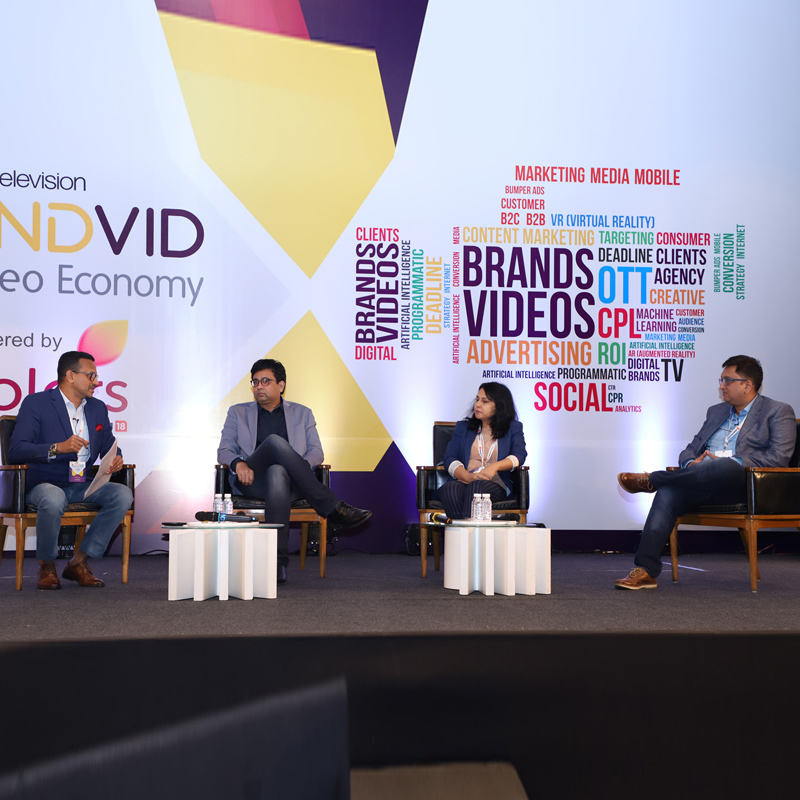
    Speaking at Indiantelevision.com’s new video economy event BrandVid powered by Colors, Y&A Transformation co-founder and MD S Yesudas said, “Content is king because people don’t watch platforms, people watch content. So the belief system changed to 'content is king' but instead of meaningful content, distribution actually became god.”

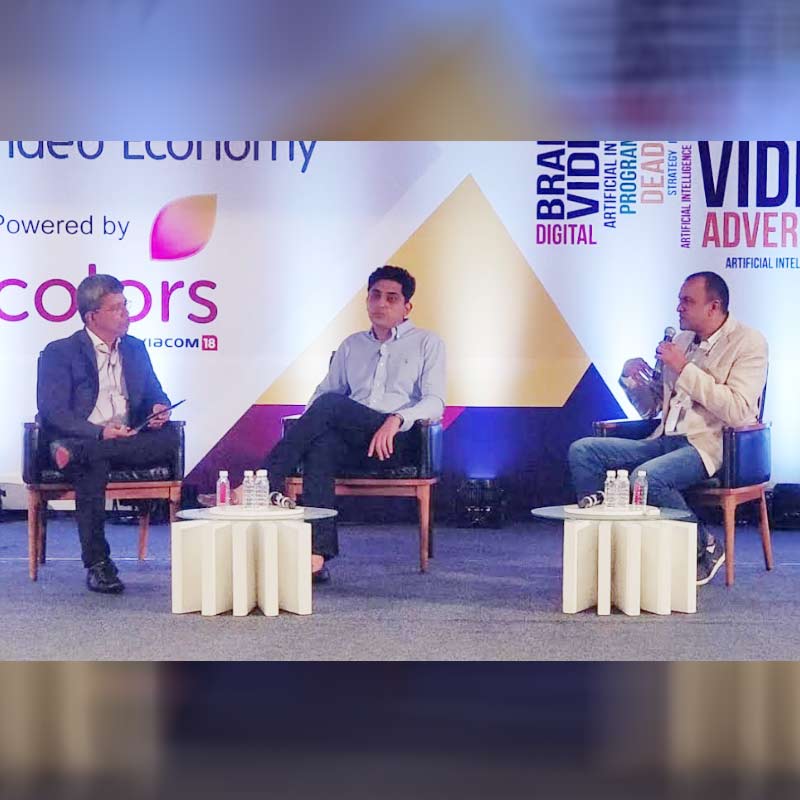
    The event was organised by Indiantelevision.com on 30 October 2018, for the brands, agencies, marketers, broadcasters, publishers and producers to understand how to work closely and create short form and long form content which will connect with the audience directly.

    There is an ocean of opportunities for brands today to not just be extremely confined to certain predefined norms of looking at integrating brands with videos but start looking at the whole arena that hyper-local has to offer.

    Talking about the difference in distribution channels from a traditional media perspective, Jagran Prakashan COO digital media Rachna Kanwar said, “We create content for nine websites which spans across news, media, lifestyle, education and many more. We being of the print legacy, are today competing with a lot of TV content put on digital platforms. How you are able to catch the user's attention is important and therefore distribution is very important. It is the key to give your content to the user. As content creators we have to reach wherever the user is and today actually the user is on search, social media on YouTube.”

    According to Lokmat Media senior EVP and head- digital business Hemant Jain, content technology and distribution when synced in the right proportion will deliver growth to any business aspiring to attain scale in the digital space. The early belief of putting print onto a website is not exactly how an online publishing business typically works. Even the e-paper formats of today are a low hanging fruit according to him. From e-paper the traditional publishers went on to a journey which is now called as a very hyper competitive environment of news publishing.

    GroupM business head- entertainment sports and live events Vinit Karnik said, “Content has always been the king and distribution is the god but the missing link between content and distribution is data. Data is the new oil.”

    “I don’t think that the way you define your content strategy is going to remain the same which is very important for the creators and brands to take notice of. While video would definitely give a much better brand impact but you can’t keep distributions in isolation," Jain added. He even highlighted that Pune is a very important market for Lokmat. 50 per cent of traffic which is close to 4 million monthly active users comes from Pune.

    The attention spans are increasingly reducing and one size fits all is not the norm anymore. From a one channel and couple of print mediums, the market has got into cluttered environment.

    Talking about the tech interventions, Karnik said, “Tech interventions are absolutely important you just can’t ignore it, shorter the content size better ability for it to register. Today if you look at e-paper or app of the Lokmat or Jagran, the good old days of you going back to the audience to do a research to understand what they will consume is out of the park. Today, every app gives a consumer an option to choose the kind of interest level he/she has right there on the app and the owners will get the data in real time. Today news is also served to everyone based on their preferences,” Karnik added.

    “Today it’s not like we are giving a big overview to the client or the buyer, we are slicing our data and giving them specifics about which is the time of the day that audience is going to be more receptive for a particular kind of content,” Kanwar added.

    “From a content strategy perspective 20 per cent of the resources go into content creation and conveying and the remaining 80 per cent goes into distribution,” Yesudas added.

    “Distribution is more complex now, if you want to optimise it right. Within the 80 per cent today you have to over emphasis on which platform to choose,” Jain concluded.

  • BrandVid 2018 sees industry stalwarts discussing video marketing in depth

    BrandVid 2018 sees industry stalwarts discussing video marketing in depth

    MUMBAI: Video is the new glue fusing brands with their consumers thanks to the massive explosion in consumption on digital and handheld devices. Marketers are working overtime to understand the nuances of video storytelling, platforms ‐ social or web destinations and distribution in order to build stronger bonds between brands and their fans. 

    Brands are increasingly realising the importance of branded content and video marketing as a whole. It is no longer a one size fits all formula but rather customised content that is often native and geo-targeted. To learn and delve deeper into understanding video marketing as a crucial marketing tool, Indiantelevision.com hosted industry stalwarts at Sahara Star, Mumbai for BrandVid 2018, powered by Colors. The annual event is the ideal place for the industry to converge, discuss and ideate on the way forward for brand marketing.

    The day-long summit was held with a vision to optimise the use of video as a brand communication tool and get a better bang for the buck for all those operating in the ecosystem. BrandVid brought together publishers, broadcasters, digital platforms, agencies, technology, brands and social media outlets to share notes and best practices, exchange ideas, understand and forecast video trends and build relationships.

    The glittery event saw industry leaders from Facebook, Twitter, YouTube, Myntra, Marico, Fastrack, GroupM, VICE India, Bosch Home Appliances, Syska Group, Prajakta Koli, Miss Malini, Times Network, TVF, Onida, White Rivers Media, L'Oréal and more. 

    The conference began with a keynote from Havas Media CEO India and South Asia Anita Nayyar where she discussed at length about how digital videos have grown significantly over the past two years from mere 60 million in 2015 to an astounding 200+ million digital video reach in 2017. She also highlighted that India stands second in the global mobile traffic share and the impact of Jio saw 48 per cent drop in data prices amongst other players. She also mentioned that today, 39 per cent of the content coming out of brands is meaningless and also 55 per cent of the youth is still watching television.

    This was followed by a panel discussion on how important are branded videos to print publications and broadcasters and how are print and television media companies taking advantage of the large reach that they have through content in video format. On this, Group M business head of entertainment sports and live events Vinit Karnik said that if content is the king, distribution is god, then data is new oil that will pump up the mechanism. In the same discussion, Lokmat Media senior EVP and head of digital business Hemant Jain also noted that there is an over emphasis on data, due to which creativity is getting lost in the hype.

    Facebook, Twitter and Youtube are the social giants today but what is the play for branded videos with these giants?  What is each of them offering to brands and how do brands operate in this universe were some of the key questions that were highlighted in the next panel where YouTube India entertainment head Satya Raghavan pointed out that the best practice a brand can follow is to think like a creator rather than a brand itself.

    Speaking on the top 5 things to keep in mind for branded videos for both television and digital, Byju’s marketing head Atit Mehta highlighted that the hero of Byju’s business is the content that they create in house. An important insight that was highlighted at the session was that 75 per cent of videos played on Facebook were without sound which goes to prove that the audience is ‘looking’ at the content more rather than ‘watching' and listening to it. Hence, it is important for marketers to create more visually engaging videos. UltraTechCement brand building head Sanchita Ganguly concluded by stating that insights, respecting medium, conversation and being dynamic is important for branded video.

    In a fireside chat with Indiantelevision.com editor in chief Anil Wanvari, Vice India CEO Chanpreet Arora spoke about how brands can be at the forefront in videos and there is no need to hide brands as consumers love to be entertained.

    The event was also the appropriate venue for Vidooly to unveil a report on the rise of branded content in India that forecast that the branded content ecosystem in India is going to be worth Rs 745 crore in 2022.

    We all agree that influencers have become celebrities in themselves and they carry a brand value. The products they use, the car they drive or the mobile phone they use have at some point or the other influenced our buying decisions. Hence, investing in influencers is key to a brand. But how can broadcasters, publishers use the influencers they have to build their communities and marry them with brands to have that multiplier factor? On this panel, White Rivers Media CEO and co-founder Shrenik Gandhi said that the fundamental of influential marketing is trust whereas Loose Cannons Studio COO Gaurav Lulla added that influential marketing may not necessarily mean brand endorsement and it goes way beyond that. 

    The last session of the evening was an analysis of measuring the efficacy of videos where Legrand India head of marketing communications Laxman Tari stated that brand integration is reassuringly possible for entertainment industry and it does not work with news or current affairs. For L’Oreal India 60-70 per cent of its advertising money goes into videos. On a concluding note, the brand’s media and digital head Neel Pandya pointed out that unified measurement of TV and digital is the biggest challenge today for companies.

    For marketers there never has been a better time to create and distribute videos. But it has also never been so complicated to reach audiences. They need to remember that whatever is the format of the content, it needs to be meaningful!

  • Mausumi Kar appointed India MD for Motivator

    Mausumi Kar appointed India MD for Motivator

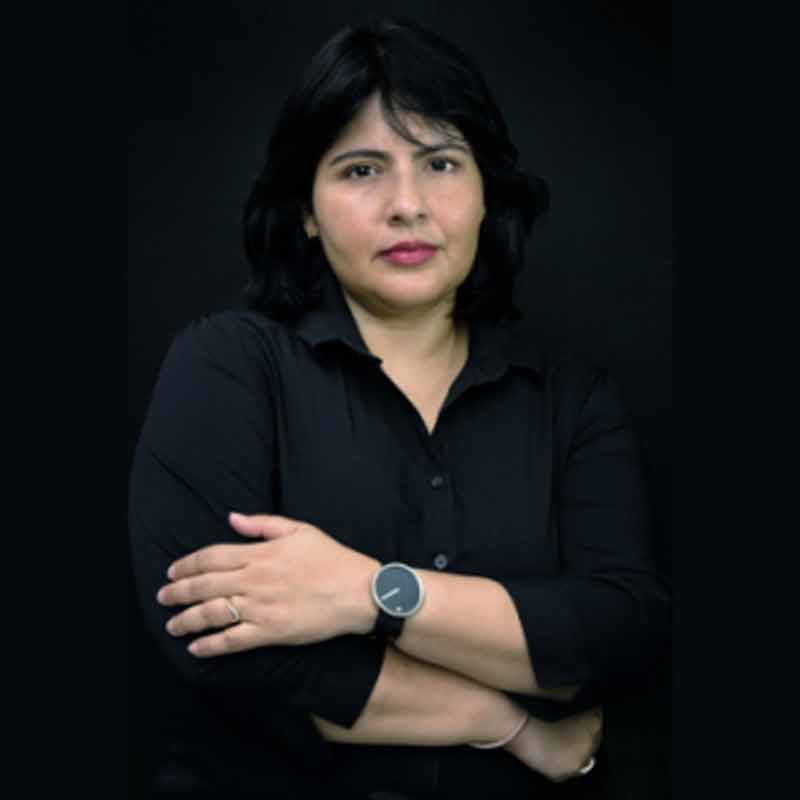
    MUMBAI: Motivator, an integral part of GroupM – world’s largest media investment agency –  has appointed Mausumi Kar as its India managing director effective from 1 October 2018.

    She will be Motivator’s first woman managing director and will report to GroupM South Asia CEO Sameer Singh.

    Mausumi has been associated with GroupM for over 10 years and has handled multiple roles from heading Maxus–North and East, to leading the Google Partnership for GroupM nationally. Before the move, she led the independent SBU that handled the Airtel mandate.

    On the announcement Sameer Singh said, “It’s a welcoming change in the organisation. I have seen her work and feel her leadership skills and experience will play a vital role in the firm. I’m looking forward to working with her and wish her all the best for her new role.”

    Talking about her new role, Mausumi Kar said, “It has been a rewarding journey at GroupM. I am excited and looking forward to the new assignment. My aim  would be to become a trusted advisor to my clients and help them in delivering superior value while  delivering the best to our partners . I would like to thank Sam and the leadership team for reposing their faith  in me. I am grateful to my team which has made me shine.”

    Mausumi has over 25 years of experience in the field of media, entertainment and advertising and excels in Brand Management, Communication Planning, Consumer Insights, Ideation and Execution and Digital Strategy. In her professional tenure, she has held prestigious roles at IPG Group, Havas Group and ESPN-Star Sports.

  • Karthik Nagrajan joins Wavemaker India as chief content officer

    Karthik Nagrajan joins Wavemaker India as chief content officer

    MUMBAI: Media agency network Wavemaker has appointed Karthik Nagarajan as chief content officer.

    In his new role Nagarajan will be working closely with Wavemaker chief executive officer South Asia Kartik Sharma to build and integrate content, creative and technology services.

    Sharma said, “Content is at the heart of our value proposition along with media and technology. These three pillars drive our rapid growth planning agenda. With Karthik coming on board, I am confident we will be able to elevate our content narrative through his vision and drive growth and innovation.”  

    On his new role Nagarajan said, “Content has given brands an opportunity to create occasions of conversation, that are relevant to the purchase journey. We are at an inflection point in the business of content in India, where brands have a unique opportunity to not just ride this wave but also shape this industry. And I firmly believe that Wavemaker is uniquely positioned to drive this change for our clients.”

    He has been with GroupM for the last seven years, prior to this he led NM Incite the JV between Nielsen and McKinsey in India. Karthik also led marketing for Shipcom Wireless – an RFID start-up based in Houston.

  • Navin Khemka to take over MediaCom South Asia as CEO

    Navin Khemka to take over MediaCom South Asia as CEO

    MUMBAI: Media agency MediaCom has appointed Navin Khemka as CEO of its South Asia operations effective 16 July 2018. Khemka takes on the role from Debraj Tripathy who will be leaving the organisation to explore new opportunities outside the group. He will be based in Delhi and report to the incoming GroupM South Asia CEs Sam Singh and Mediacom Asia Pacific CEO Mark Heap.

    Tripathy joined MediaCom in 2011 and under his leadership, MediaCom India has been among the fastest growing and most awarded agencies in South Asia. In recent years, MediaCom India was recognised among the top 10 agencies in the Gunn Media 100 Agency Report, named Agency of the Year at the Festival of Media Asia, and delivered many award-winning campaigns recognised as among the best in the world, including Ariel’s “Dads Share the Load”, Gillette’s “Bachelor of Shaving”, and Wrigley’s “Doublemint #Startsomethingfresh”.

    Khemka is currently the managing partner of North and East and new business development lead for the GroupM agency Wavemaker India. He has over 20 years’ experience, working with brands such as Perfetti Van Melle, Hero, Pernod Ricard, PayTM, Nokia, Samsung, Reckitt Benckiser etc. A MICA alumnus, Navin has played a stellar role in growing Maxus and later Wavemaker in New Delhi with his client-centric approach. He joined GroupM to lead the New Delhi branch of Maxus in 2014. He has previously worked in Zenith Optimedia, Cheil and Mudra.

    With the dynamic media landscape in India, Khemka’s challenge will be to drive relevance and effective ROI for the agency’s brands, including several blue-chip clients.

    MediaCom is a member of WPP, the world’s largest marketing communications services group, and part of GroupM, WPP’s consolidated media investment management arm.

    WPP India country manager CVL Srinivas says, “WPP and GroupM are making many investments into areas that will further enhance our market-leading capabilities in India and South Asia. We are excited to see Navin take on this role. With his experience and energy, we are sure he will take MediaCom to even further heights by leveraging all that our group has to offer, for the benefit of our clients. Debraj has done a terrific job leading MediaCom. He has been a fantastic colleague and a very admired leader.”

    Heap adds, “The search for a new leader has been an exciting one as there is no shortage of strong talent in India. We considered many candidates from within and outside the group and unanimously knew that Navin was the choice. In Navin, we have a leader with stellar raw talent and a real thirst for growth, who can capitalise on the enabling assets of the MediaCom global network and the strength of GroupM and WPP India.”

    MediaCom is one of the world’s leading media communications specialists, with billings of US$33 billion employing 7,000 people in 125 offices across 100 countries. Its global client roster includes Dell, Coca-Cola (TCCC), Mars, NBC Universal, P&G, PSA, Sony, Shell and Richemont.

  • Volvo India urges women to reclaim their streets

    Volvo India urges women to reclaim their streets

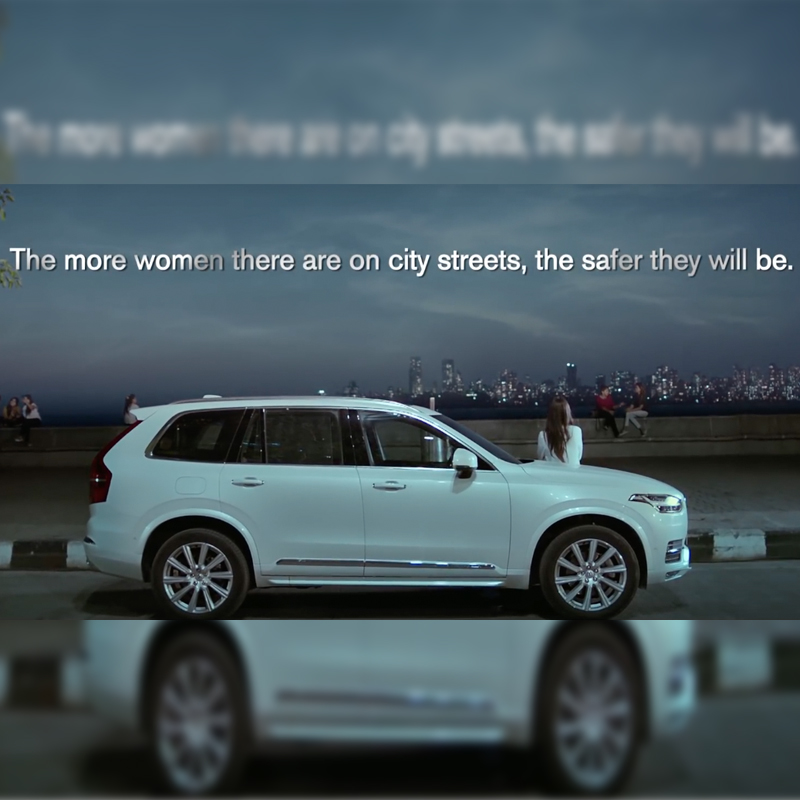
    MUMBAI: Mindshare, a full service media agency and a part of GroupM, has collaborated with world renowned Swedish automobile manufacturing company Volvo Car India to launch #MakeYourCitySafe, a campaign aimed at empowering women to take a stand for their safety.

    Culminated in Mumbai, the campaign had been organised in partnership with CrossBow Miles, with partners such as the National Commission for Women and The Hans Foundation backing the cause. With Volvo Car India acting as the Safety Partner, the campaign took the form of a desperate plea from the city to its female residents, to not give up or lose hope in it, and instead, to take to the streets and make their city safer for themselves. It was started with a thoughtful and poetic brand film which urged women to step out in large numbers and reclaim the streets to make them safer, for women themselves hold the key to the burning issue of women safety.

    Volvo Car India managing director Charles Frump says, “Women safety and empowerment are two issues that we feel strongly about. A society can be truly progressive if women get equal opportunities, feel safe and confident. We support Srishti Bakshi in her mission and urge everyone to join us during the Mumbai Night Walk to show solidarity towards the cause.”

    Being a progressive, culturally rooted, and socially conscious brand, Volvo Car India not only wishes to make a stand for women’s safety, but follow up on it through a collaboration with others who’re doing something about it, as well. Thus, it has tied up with CrossBow Miles, whose founder Bakshi has just completed a 3800 km nation-wide journey from Kanyakumari to Kashmir on foot to encourage women to come out of their houses and empower themselves.

    Mindshare South Asia chief innovation officer Mac Machaiah adds, “Being a highly forward thinking agency, we are eagerly looking forward to this collaboration, and are proud to receive this opportunity to raise awareness about such a burning issue. Together with Srishti Bakshi of Crossbow Miles, Volvo, and the women of Mumbai, we hope to help make the streets, and the city, safer for women.”

    As part of the campaign, Volvo, in collaboration with Srishti, called on the women of the city to embark on an iconic walk into the night, and disengage violence with city spaces, de-villainising streets, and reminding men and women both, that these spaces are meant for all. She was joined by other men and women in an action to make their cities safer, challenge norms, break them, and change them, as well.

    Volvo was responsible for launching the Volvo XC90, recently bestowed with the title of ‘Safest Car in the World’ by IIHS, and now, it endeavours to make the environment safer too, for women. This association with Mindshare, a brand well known for its hugely successful track record of providing competitive marketing advantages to businesses and their brands, is expected to help unite women and encourage them to reclaim their streets, without letting fear and daily headlines of violence and assault deter them. This is because, the more the number of women on the streets, the safer they become for them. The walk was meant to be a symbolic wake up call for its residents from High Street Phoenix, Lower Parel till Haji Ali, covering a distance of roughly 3 km. From there, Srishti and Volvo continued their walk into various parts of the city.

    Bakshi mentions, “CrossBow Miles has been walking for women’s safety and empowerment through the country, covering a distance of 3800 km on-foot, from Kanyakumari to Kashmir. It was a perfect synergy of belief with Volvo’s #MakeYourCitySafe campaign because we have been conducting night walks across the country to encourage women to step out of their homes and realise their true potential.”

  • Rabinder Thirumurthy is Wavemaker MENA CEO

    Rabinder Thirumurthy is Wavemaker MENA CEO

    MUMBAI: Wavemaker, the media, content and technology company, has named Rabinder Thirumurthy as CEO for the MENA region.

    Also known as Rabe Iyer, he joins from GroupM India’s media agency Motivator where he was managing director in Delhi. He will shift to Dubai officially from 10 June.

    Commenting on the development, Wavemaker global president of marketing development Ajit Varghese said, “I’ve known Rabe since he joined Motivator and I’ve always been impressed by his commitment to excellence. He’s a proven leader with strong business acumen and I’m sure that he, together with our fantastic leadership team across the region, is perfectly positioned to make Wavemaker MENA a formidable future-facing agency.”

    GroupM MENA CEO Filip Jabbour said, “Rabe is a great plus for Wavemaker; he has the skill, the vision and the deep understanding of our industry to lead and grow our business in the region.”

    Iyer added, “Wavemaker’s ambition, it’s obsession with the purchase journey and desire to connect and scale its capabilities, is exciting. I believe that MENA has a large potential for growth and I look forward to working with the talented team here to deliver on the agency’s ambition across the region.”

    His successor at Motivator will be announced soon.