Tag: GroupM

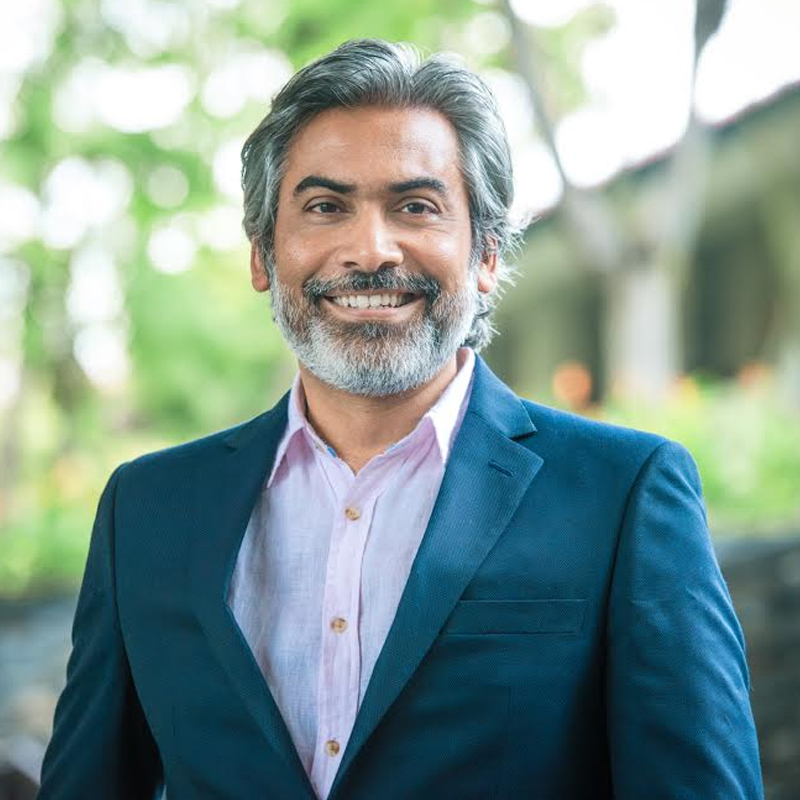
  • Essence elevates T. Gangadhar as APAC CEO

    Essence elevates T. Gangadhar as APAC CEO

    NEW DELHI – Essence, a global data and measurement-driven media agency which is part of GroupM, has appointed T. Gangadhar aka Gangs as the company’s CEO for APAC. Succeeding Essence’s global CEO Kyoko Matsushita, who previously served as APAC CEO, Gangs will be responsible for driving continued client-centric innovation in data, analytics, and technology, as well as business growth and company culture across the agency’s fastest-growing region. Based out of Mumbai in India, Gangs will work closely with Essence’s global and APAC leadership teams and will continue to report to Matsushita.

    Gangs most recently served as president, growth and strategy, APAC for Essence, in charge of the agency’s business strategy, development, and growth. He first joined Essence in 2018 as chairman, India with more than two decades of experience in marketing, advertising, and media. He previously held the role of managing director, south Asia at MEC & senior vice president, head of marketing at Sony Entertainment Television in India, and began his career in creative agency account management and strategic planning.

    “Gangs’ extensive experience in the industry, his knowledge of Essence’s culture and our clients, and his vision for our business in the region make him the ideal person to lead us into our next phase of growth and innovation in APAC. As the most senior member of our regional leadership team, Gangs has done an outstanding job in partnering with me to navigate our business through the challenges of 2020 and I am truly excited about what we will be able to achieve with him at the helm in APAC going forward,” said Matsushita. 

    “I am honored to have the opportunity to lead this truly special agency in APAC. Essence is pioneering the use of data, analytics, and technology at a time when more and more companies are looking to take advantage of data-driven media and creativity. I am excited about leveraging our best-in-class capabilities to discover new ways to add value for our clients, consumers, and employees – in these current times and in the post-Covid2019 future ahead of us,” said Gangs.

    Since Essence’s entry into APAC in 2013, the agency has expanded rapidly across the region, opening offices in Beijing, Bengaluru, Delhi, Jakarta, Melbourne, Mumbai, Seoul, Shanghai, Singapore, Sydney, and Tokyo. Essence’s diverse portfolio of clients in APAC now includes Airtel, Britannia, Coty, Faces Canada, the Financial Times, Flipkart, Games24x7, Google, Hermès, HMD (Nokia), Honda motorcycles and scooters, Livspace, Roborock, NBCUniversal, Nitori, Scoot, Toytron, Vedantu, Wakefit, War Horse, and Zee5.


  • MediaCom bags media mandate for Lionsgate Play

    MediaCom bags media mandate for Lionsgate Play

    NEW DELHI: Following a competitive multi-agency pitch, GroupM’s media agency MediaCom has won the media mandate for Lionsgate Play in India.

    As their full form AOR, MediaCom will be responsible for the media strategy, planning, buying and implementation for all media as per Lionsgate’s requirements. The last year has been exciting for MediaCom with a couple of big wins, with Lionsgate adding another feather in their hat. 

    The account will be managed and supervised by the MediaCom Mumbai office.

    Lionsgate is a global content platform whose stellar range of films, television series, digital products and linear and over-the-top platforms are available to audiences around the world. Lionsgate Play is the global giant’s most recent OTT service offering in India, which features internationally acclaimed content such as Twilight series, Hunger Games, Wonder, Now You See Me, John Wick series, recently Oscar-nominated Knives Out and Bombshell to name a few to the Indian audiences.

    Lionsgate South Asia MD Rohit Jain said, “This is an exciting year for Lionsgate Play. We will be launching our B2C app soon and aim to reach out to the maximum number of audiences with the right media mix. We are glad to partner with MediaCom and are confident about their result-oriented approach.”  

    MediaCom South Asia CEO Navin Khemka says, “Content consumption has witnessed unprecedented growth in the last couple of years more so over the last few months as a result of the lockdown. Lionsgate Play has some great content in their arsenal. Being the first OTT platform in the country to also focus on offering key Hollywood content in region-specific language will definitely make the right connect with the Indian consumer. We look forward to creating an unmatched brand experience for them.”

  • GroupM’s INCA brings in robot Sophia as its brand ambassador

    GroupM’s INCA brings in robot Sophia as its brand ambassador

    NEW DELHI- INCA, GroupM’s brand-safe influencer marketing solution roped in Sophia, a human-like robot from the house of Hanson Robotics as its brand ambassador. Sophia will be available as an influencer to brands in the APAC region. 

    This is the first-ever collaboration of Sophia as a brand ambassador with any agency. Hanson has previously worked with renowned brands such as Etihad Airlines, Audi, Alexander Wang, and Huawei to magnify Sophia’s status as the world’s first robot citizen and connect with audiences across the globe. 

    She now joins INCA’s global network of brand-safe content creators and influencers to help brands create influential content that brings brand stories to life. 

    INCA APAC lead Atique Kazi said, “Sophia is the perfect ambassador for brands looking to intelligently engage with their consumers. As an advocate for scientific education and sustainable development. Her persona is a natural fit for many brands looking to create compelling content, reach, and engagement around these incredibly important topics. She has the capability to generate facial expression, mirror people's posture, and discern emotions from the tone of voice, all of which help people to identify and form a connection with her.” 

    Kazi added: “While we see changes in how consumers are influenced by multiple sources, we are confident that this is the right time to introduce a new influencer into our network that exemplifies humanity as well as the technological achievements of our time. As we collaborate with Sophia, we are in awe of how technology can showcase the marvels of artificial intelligence (AI) in a humanoid form.” 

    Influencer marketing has unlocked new opportunities for brands to connect with their customers and is predicted to grow in the next few years by 30.6 % CAGR as marketers seek more efficient and data- driven options in reaching out to the consumers. INCA’s partnership with Sophia showcases how it also enables the use of technology to build human connections with brands. 

    INCA enables brands to run content marketing campaigns across and beyond social channels in achieving real and tangible outcomes for marketers. With the ambassadorship for INCA, Sophia will be working with brands to create relevant and engaging bite-sized content and connect with brand audiences across various social media platforms. 

    As a unique combination of science, engineering, and artistry, Sophia is simultaneously a human-crafted science fiction character depicting the future of AI and robotics, and a platform for advanced robotics and AI research. The character of Sophia captures the imagination of global audiences. She is the world’s first robot citizen and the first robot Innovation Ambassador for the United Nations Development Programme. Sophia is now a household name, with appearances on the Tonight Show and Good Morning Britain, in addition to speaking at hundreds of conferences around the world.

  • Digital is pushing other mediums towards accountability

    Digital is pushing other mediums towards accountability

    NEW DELHI: In the post-Covid2019 world, measuring the efficacy of advertising spends will become even more critical for companies as they navigate their recovery given the significant pressure of their cash flows and liquidity positions. How can the various M&E segments respond to these enhanced requirements on attribution? How can measurement become timelier and more precise for brands? Addressing these questions at the 21st edition of FICCI Frames, industry members discussed the ‘Attribution at the forefront of the conversation.’

    GroupM South Asia president growth and transformation Tushar Vyas asserted, “We always say that half of the advertising is wasted but we don’t know which half, it’s a problem which keeps resurfacing in a new avatar even in the digital area. One of the reasons is because of the complexities associated with this area. There are issues like brand safety, ad frauds and many markets don’t have a set of common measurement across the various channel of mediums, even tonnes of data are making it more complex."

    This year’s FICCI report released in March stated that in 2019, advertising grew by Rs 4000 crore but Rs 3700 crore were spent on digital and new media while the growth in traditional media was only Rs 300 crore.

    BARC CEO Sunil Lulla shared that the pandemic has shifted the consumption pattern of content across mediums. He said, “I don’t think ROI has always been less important perhaps but what we have today is better measurability than ten years ago. We are still not there where a market has a unified independent measure, like on TV there is an independent measure, on digital, there are many digital providers.”

    “There used to be conversation on digital vs television but the consumer is shifting from one screen to another. In the pandemic, we have seen a steep rise in TV consumption in certain categories such as kids, news and movies. As there was no original content, people started watching repeated content and Doordarshan became the no.1 channel after 1986, and digital was moving in parallel. TV is equally important that’s why July has the same volume as in January. TV is good for building brands, it’s good for targetting an entire family and digital is good for sharp targetting,” he added.

    Due to Covid2019 print and radio took a much bigger hit. “I believe when the economy opens up fully, we could see all these mediums working in a better partnership that can be a big outcome from this period,” Lulla opined.

    The panellists echoed that due to Covid2019 there are higher chances of brands shifting their spends to the digital landscape.

    Vyas said, “Advertisers are going to follow where the consumers are going. It’s all about building an entire connected environment where you’re linking the consumer to commerce.  The focus is shifted more from output to outcome now. Earlier the conversation was about reach and frequency which is now moving to a different level. The conversation today is more about what it is going to do to my business or brand. That’s the change which digital is bringing, which is resulting in that kind of accountability from other mediums as well.”

    Vyas stressed that it’s important to build a first-party data ecosystem and knowing the consumer in-depth from their perspective.

    “As an industry, we need to work together on how we report and agree on the metrics. We need some common practices to build these measurements, and then agree to the standardisation of data, and as time goes by, AI and MI can supplement these data,” he said.

    He also said that agencies will always require the TV medium. Said Vyas: “Parties can’t do without TV because it’s the entertainment and information medium of the household and digital is for the individual.”

  • Global TV advertising to decline by 17.6% in 2020: GroupM mid-year forecast

    Global TV advertising to decline by 17.6% in 2020: GroupM mid-year forecast

    NEW DELHI:  Several mid-size or larger markets are expected to witness a decline of more than 20 per cent in the advertising economy this year, including India, Brazil, Spain, and the MENA region, reveals the GroupM TYNY Global Mid-Year Forecast. It adds that the global advertising economy will fall by 11.8 per cent, excluding the effects of increased political advertising in the US, a sharp decline from the 6.2 per cent growth rate of 2019. 

    The report further reads, “Including U.S. political advertising, we estimate global advertising will decline by 9.9 per cent in 2020. The median market should decline by more, or 12.2 per cent, which in part reflects that declines are less pronounced in the world’s top two advertising markets, the U.S. (expected to fall 7.5 per cent including political advertising) and China (expected to fall 2.8 per cent).” 

    The only multi-billion-dollar market, expecting growth this year, is Indonesia, where expectations are for 5.8 per cent growth. Argentina is the only other market expected to grow in nominal terms, although it should decline on an inflation-adjusted basis. 

    This decline can still be considered “modest” given the scale of the impact of the pandemic on global GDP, which will fall much more significantly than it did in the 2009 global financial crisis. In that year, when GDP declined by one per cent, GroupM estimates indicate that global advertising fell by 11.2 per cent.

    “However, we do see positive news on the horizon as we expect global advertising to grow in 2021 by double digits for half of the top 10 markets and by single digits for the other half,” the forecast highlights. 

    As per the findings, it is estimated that, in 2020, digital extensions of TV, radio, print and outdoor advertising should equate to $31 billion, or 13 per cent of total advertising activity. The figure is seven per cent up from $22 billion of five years ago.  

    Digital extensions are most pronounced in the outdoor sector, where they account for $9 billion this year, or 31 per cent  of the total outdoor sector’s activities. Digital extensions of traditional television equate to $12 billion this year, nine per cent of that medium’s total.

    Despite this, digital advertising is expected to decline by 2.3 per cent in 2020. This follows nearly a decade of double-digit growth, with many years exceeding 20 per cent at a global level.

    During 2020, digital advertising will have a 52 per cent share of media captured, up from 48 per cent in 2019 and 44 per cent in 2018. Share growth should abate somewhat going forward, adding one to two per cent each year. 

    “Our new estimates also break out search from non-search digital advertising, with search accounting for $109 billion in revenue during 2020, falling 2.6 per cent. Other forms of digital advertising that account for $172 billion (excluding digital extensions of traditional media) will fall by less, or 0.6 per cent this year,” pitches the report. 

    Additionally, television advertising is expected to decline by 17.6 per cent in 2020, ex-US political advertising, before rebounding slightly to grow 5.9 per cent next year.

    Digital extensions and related media, including advertising associated with traditional media owners’ streaming activities, as well as Hulu, Roku, etc., will fare much better, with growth of +3.7 per cent this year and +11.3 per cent the next year – around nine per cent of total TV spending this year.

    Also, OOH advertising is expected to decline by 25.0 per cent, including digital out-of-home media. A partial rebound with 14.9 per cent growth is expected the next year.

    The report notes, “Beyond 2021, we expect outdoor advertising to grow by low or mid-single digits and generally lose share of total advertising, although we do expect larger brands to generally increase their allocations of budgets to the medium.”

  • Consumers react more positively to television ads: GroupM report

    Consumers react more positively to television ads: GroupM report

    MUMBAI: Consumers react more positively to television ads and around 37 per cent of consumers feel digital ads are too intrusive, reveals the recently released “Consumer Trust In Digital Marketing” report by GroupM. The report was created based on a survey of 14,000 consumers in 23 countries with the aim to uncover consumers’ concerns with digital marketing and suggest important considerations for marketing on digital platforms. 

    The report revealed that on average, two times more consumers say TV ads provide a more positive impression of brands than common digital formats. 

    The report also made some important revelation about consumer concern with data privacy. According to the findings, six in 10 consumers are less inclined to use a product if their data is used for any purpose. Additionaly, 56 per cent of consumers want more control over their data. 

    The report also noted that brands should be careful while picking the appropriate medium to advertise on digital as 64 per cent of consumers would have a negative opinion of a brand next to inappropriate content. 

    “With pervasive reports of data security and privacy missteps, consumers are increasingly wary of information gathering about them as they move online,” said GroupM Global CEO Christian Juhl. 

    Juhl added, “Media has evolved dramatically and it’s crucial the industry work collaboratively to make advertising work better for people around the world. As marketers, it’s our responsibility to ensure that we are using consumer information responsibly and transparently.” 

    GroupM’s report also highlights interesting findings on the appreciation consumers have for different types of brand communications and points to, in some cases, big differences of opinion across markets. For example, an average of 59 per cent of consumers globally appreciate receiving discounts and offers, but only 20 per cent appreciate invitations to complete satisfaction surveys. 

    75 per cent of consumers in New Zealand said they would be less willing to buy or use a product or service if companies used their personal data, whereas only 38 per cent of consumers in Indonesia said the same. 

    “To make digital advertising work better for everyone, we must listen to what consumers are saying and refine our strategies accordingly,” said report author and GroupM APAC regional director Chris Myers. “Marketers should not pull back on digital advertising; on the contrary, they should push forward in ways that respect consumers’ evolving relationship with digital media.” 

  • Digital advertising saw 24 per cent growth in 2019 : FICCI-EY report

    Digital advertising saw 24 per cent growth in 2019 : FICCI-EY report

    MUMBAI: Despite headwinds, India’s importance in global advertising increased in 2019. The forecasted 2020 growth rate of 11 per cent for India is more than twice the average rate of the top ten countries, according to FICCI-EY 2020 report. As per GroupM, India became the eighth largest ad market in the world in 2019, up from tenth largest in 2018. It contributed the third most to incremental ad spends in 2019 after the USA and the UK.

    Dentsu Aegis Network CEO APAC and chairman India Ashish Bhasin said, “India will be the fastest growing major market in the advertising world over the next five to 10 years. We are in a unique situation in India where all media will grow, albeit at very different rates, over the next five years, with digital leading the charge and print continuing to grow relatively slow. The pace of change, the omnipresence of mobile and the preponderance of voice, video and vernacular will dominate the Indian advertising scenario for the next five years.”

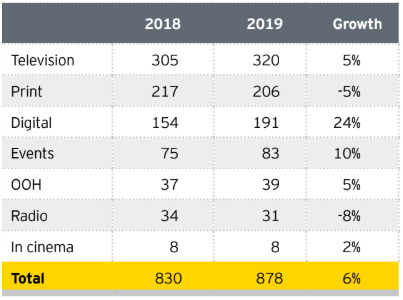
    While overall advertising spends grew, there was a marked slowdown during the latter half of 2019 due to fears of economic slowdown. With advertising and events reaching Rs 878 billion in 2019, it was a considerably tough year for traditional advertising.  Growth rate of traditional advertising (television, print, OOH, radio) fell because of print and radio, where both saw over five per cent degrowth for the first time.

    However, digital saw a growth of 24 per cent, the highest among all.

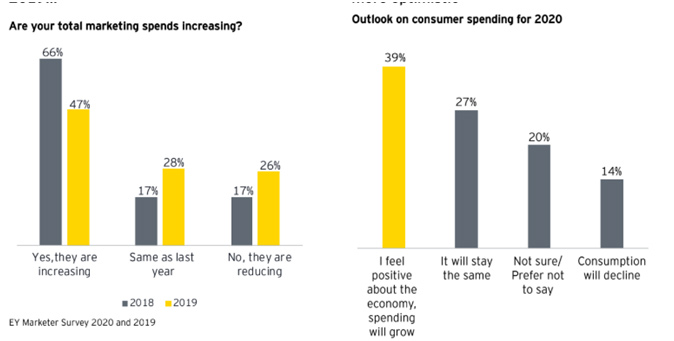
    Marketer ad spend sentiment saw a dip in 2019 with only 47 per cent of marketers increasing their marketing spends in 2019 as compared to 66 per cent in 2018. However, 17 per cent of marketers kept the spending constant or reduced them.

    The dip in the ad spend in 2019 can largely be attributed to the New Tariff Order and resultant revision in ad rates, coupled with a sluggish auto-sector and a slowing economy in the second half of the year.

    Although marketers’ future outlook seems more optimistic, 39 per cent of the respondents feel positive about the economy. They believe that the ad spends will grow in 2020. This appears to be corroborated by initial signs witnessed in January 2020, which indicated an expansion in both manufacturing and services sectors, with services activity hitting a seven-year high and manufacturing PMI at an eight-year high.

    However, supply chain disruptions due to the novel coronavirus could again dampen ad spends.

    Havas Media CEO India and South East Asia Anita Nayyar says, “More than the NTO or any other factor, it is COVID-19 that is impacting the ad spends. There is a lot of caution on ad spends in the market. The current fiasco in the banking sector is just adding fuel to fire. Advertisers are waiting and only undertaking crucial spends.”

    Digital advertising continues to be the fastest growing platform in the country. As per the report marketers will continue to grow their digital advertising budgets.

    37 per cent of marketers allocated five to 10 per cent of their ad spends on digital advertising. Meanwhile 50 per cent of the marketers had begun spending over 10 per cent of their total spends on digital advertising.

    Out of the total marketers surveyed 82 per cent are expected to grow spends on digital by over 10 per cent during the next two years.

    The top priorities for Indian marketers’ in 2020 include direct-to-consumer (D2C) market. More than one in five respondents in the US plans to make 40 per cent or more of their purchases from D2C companies.

    As per the survey, India is not far behind D2C interaction being a leading priority, right after improved RoI on spends. According to an estimation, 100 D2C brands have already launched in India.

    Amidst the growth witnessed in the digital ad industry, continuous incidents of fraud are a matter of concern. However, the worry of ad fraud seems to have reduced in 2019 with 30 percent as compared to 34 per cent in 2018. The report states that despite the risk of ad fraud in digital industry 56 percent of the respondents in 2019 increased their spending as compared to from 45 per cent in 2018.

    The FICCI EY report suggests that the budget for influencer marketing in India is going to increase. Over 72 per cent of Indian firms are planning to increase their spending on social media influencers, big and small, in 2020. However, the report mentions that it hasn’t taken into account the impact of Covid-19 so the estimate is pre-Covid era.

    Digital platform has opened new avenues for content creators. Consumers will look for content and ads that take up less time. According to a recent survey by Vuclip, 85 per cent viewers preferred short-form video content (i.e., short films/ videos of 10 minutes) on smartphones. The report predicts that the demand for short-form content will increase several times in 2020.
     

  • Indian sports sponsorship grew by 17% to Rs 9k cr in 2019: GroupM’s ESP Properties

    Indian sports sponsorship grew by 17% to Rs 9k cr in 2019: GroupM’s ESP Properties

    MUMBAI: In 2019, the overall sports sponsorship industry grew by 17 per cent to Rs 9000 crore, says a report released by ESP Properties – the entertainment and sports division of GroupM India.

    The 2020 report on sports sponsorship mentions that last year cricket dominated sports advertising sector grew unanimously due to International Cricket Council 2019 World Cup and IPL 2019. Both these events gave a major push in on-ground sponsorship and media spends.

    For the first time ever, the on-ground sponsorship grew by 25 per cent to Rs 2000 crore. Whereas, the overall industry upsurge was Rs 1347 crore, of which Rs 800 crore was contributed by media spends alone with a growth of 18 per cent in 2019.

    The report says, “TV continues to grow as the biggest medium for ad spends in sports, brands are also having a clear digital plan along with a presence on TV to build a rapport with their consumers by reaching out to them in more ways than one.”

    The digital advertising in 2019 grew by 87 per cent to Rs 875 crore from Rs 475 crore. In this regard, the report points out that the engagement and interactivity are important elements of consumer marketing, and digital technology can be leveraged well to give differentiated solutions to sports lovers.

    ESP Properties’ business head Vinit Karnik said: “Going forward, we see a strong CAGR of 12.8 per cent in the sports’ business over the last 10 years, making it one of the strong pillars of the Indian economy.”

    Karnik expects, “With the sports industry growing at 17 per cent in 2019, the momentum on sports with added thrust from the government provides a holistic opportunity for the sector. Similarly, initiatives like Khelo India and Fit India movement are drivers towards making India a truly sporting nation.”

    Meanwhile, GroupM South Asia’s chief executive officer Prasanth Kumar said, “The sports industry has been witnessing a significant upward shift in the overall ad spends. The passion and excitement that’s involved in this platform have only strengthened.”

    He further added, “We see more and diverse audience indulging with this platform. Many innovations and leverage of assets in this space are powerful opportunities. As we are unfolding another decade, we see this space to be providing powerful thrust for greater brand stories.”

    The report also mentions that the Board of Cricket Council of India (BCCI) saw double the jump in sports sponsorship amounts in the home series deals. Paytm’s bid stood at 58 per cent incremental value as compared to the previous per match value.

    Dream11, Lafarge Holcim (ACC Cement and Ambuja Cement), Hyundai will be the official sponsors for the next four years. The three sponsors will layout 73 per cent to Rs 2.59 crore per match more than the previous round, the report added.

    The endorsement industry grew by 11 per cent where cricketers contributed the most yet again validating the point that sports leagues and celebrity endorsements go hand in hand. At least 70 new brand endorsement deals happened in 2019 alone, of which 50 were done by cricketers.

    While Indian skipper Virat Kohli has 85 per cent of total brand endorsements, MS Dhoni has bagged 63 per cent of the total endorsements. In all, 329 endorsement deals took place in 2019, of which 228 brands signed up with cricketers.

    The non-cricketing space was dominated by women athletes, wherein Badminton player PV Sindhu was leading the athlete in 2019 in terms of brand endorsements. Sindhu added four brands to her portfolio, one of them was with VISA that made her first Indian athlete to endorse the financial services brand.

    Mary Kom was another prominent name in the list of brand endorsers, who added four brands to her tally. Sprinter Hima Das and Olympic medallist Sakshi Malik had also marked their names in brand endorsements. In all, the women athletes added 11 new brands in 2019, taking up the tally to 45.

  • MediaCom wins media mandate for Citroën India

    MediaCom wins media mandate for Citroën India

    MUMBAI: GroupM's media agency, MediaCom, continues its expansion in the Indian market with the recent acquisition of the media mandate of Citroën India. The Citroën brand is a globally successful brand of the auto conglomerate, Groupe PSA.

    Groupe PSA entered the Indian market in April 2019, with the launch of its iconic brand, Citroën, which hits the roads in 2020. MediaCom has been working on the brand since its entry into India. As their full form AOR, MediaCom will be responsible for the media strategy, planning, buying and implementation for all media. The account will be managed and supervised from the MediaCom Bangalore office.

    MediaCom South Asia  CEO Navin Khemka adds, “Groupe PSA is an iconic brand and it is an honour to be associated with them. We are excited to launch the Citroën brand in India, in the category which is now getting totally redefined with the new launches. We are confident to craft a stellar success story with them in the dynamic Indian automobile market.”

    2019 has been a fantastic year for Mediacom India on new wins. They have won clients including Parle Agro, MPL, Sharechat, Revolt, GOQii, Orra, Fonterra, Merck. Billings added USD 70 mn+ in 2019 alone.

  • Indian ad spends estimated to grow at 10.7 per cent in 2020: GroupM’S TYNY report

    Indian ad spends estimated to grow at 10.7 per cent in 2020: GroupM’S TYNY report

    MUMBAI: GroupM, the media investment group of WPP, today announced their advertising expenditure (adex) forecasts for 2020.  As per the GroupM futures report ‘This Year, Next Year’ (TYNY) 2020, India will continue to top the list as the fastest-growing major ad market in the world. TYNY forecasts India’s advertising investment to reach an estimated Rs. 91,641 crores this year. This represents an estimated growth of 10.7 per cent, for the calendar year 2020.

    India will continue to be the third-highest contributor to the incremental ad spends, only behind UK and USA while China drops to the fourth spot and the eight fastest-growing country with respect to ad spends across the globe. 

    Commenting on the TYNY 2020 report, GroupM South Asia CEO Prasanth Kumar said, “We expect the global adex to grow by 5.1 per cent. The Indian media landscape is constantly evolving, will continue to witness the fastest growth of 10.7 per cent to reach Rs 91,641 crores. While we expect sustained and stable investment across media in India, Digital to garner 65 per cent of incremental ad spends in 2020. In 2020, India faces challenges and uncertainties across sectors just like other markets. However, this also brings opportunities for brands to innovate because of which we see an evolving media stack. This will be propelled by greater use of technology and better content across media.”

    Digital secures number two position as the most used media vehicle and is estimated to reach 30 per cent of ad spend in 2020 with growth coming from 3Vs (video, voice, vernacular-Indic) and advertising on e-commerce. The growth of digital is set to soar high because of changing consumer habits.

    “There are multiple advancements happening in technology which is transforming digital advertising and other mediums. India being a diverse country, digital will keep growing, especially with the rise of content platforms and its availability in multiple languages powered by the growth of 3Vs. From a predominantly ‘at home’, ‘urban’, ‘English print’ & ‘TV’ consuming market, the Indian media consumer evolved to include ‘on the move’, ‘rural’ & ‘regional’ counterparts, experimented with digital media in the early 2010s’, adopted social media in middle of the decade and started consuming digital videos voraciously after 2016,”  GroupM South Asia president growth and transformation Tushar Vyas said.

    Even with an overall slowdown in the global economy Indian media spends are expected to be between low to moderate in H1, with robust growth anticipated in H2 2020.

     “The format of print storytelling is changing but the content is still the strongest. With print media organizations undergoing transformation across India. Publication houses have invested heavily in promoting digital subscriptions and have started limiting access to digital versions of epapers. We believe that this would pave the way for newer business models. Print will continue to remain relevant to advertisers wanting to build credible brands. Television will continue to grow at a steady pace. This year, the growth rate for TV is estimated to be 7 per cent and Radio is expected to grow at 6 per cent. While cinema and OOH will grow at 15per cent and 6per cent respectively in 2020,” GroupM India investments and pricing president Sidharth Parashar said.

    OTT has seen a faster evolution in India, which is now complementing television. OTT hybrid models looking at both advertising and subscription will continue to be an effective model.

     “While there are challenges and uncertainties in the market, it is a world of abundant opportunities in the content eco-system. This gives us vibrant options to reach and engage with consumers. It necessitates us to be agile, invest in new-age talent and technology while keeping an eye on the future. The key is to be always prepared while we are shaping the media landscape,” GroupM India partnerships and trading president Ashwin Padmanabhan commented.

    GroupM also shared some of the top watch-outs that will shape the Indian consumer & therefore industry in the coming decade. The trends presented were around emerging technology, behavioural changes, data, etc, that put the consumer at the centre and emphasize digital driving the change across all formats of media.