Tag: GroupM India

  • Natasha Dave rises at Netflix, taking APAC talent reins

    Natasha Dave rises at Netflix, taking APAC talent reins

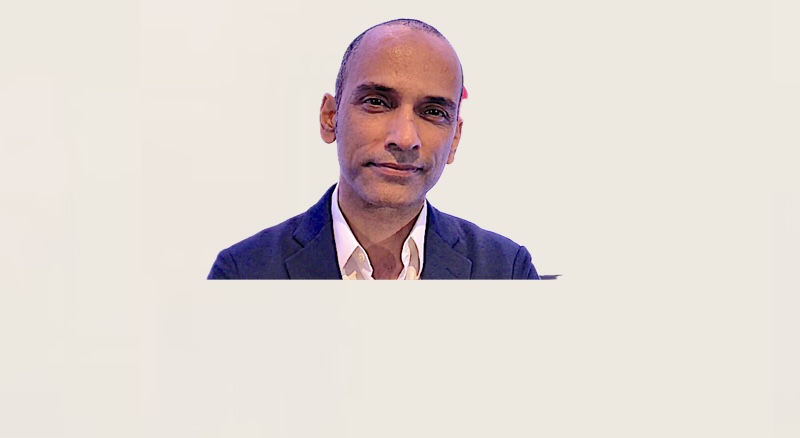
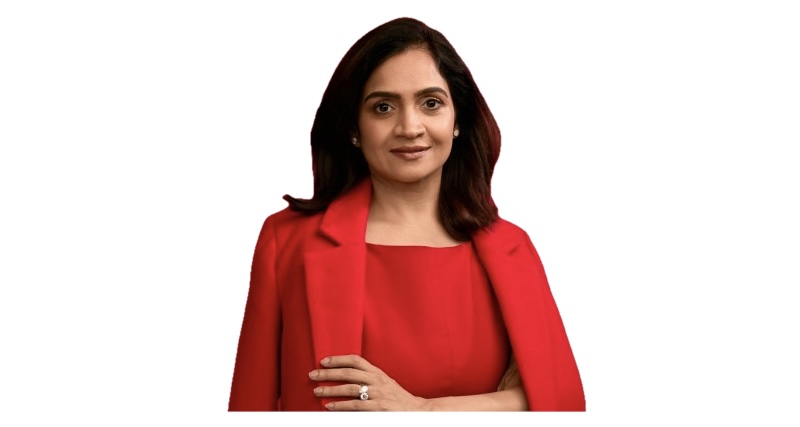
    MUMBAI: In a move that highlights Netflix’s commitment to empowering its talent across the Asia-Pacific region, Natasha Dave has been named the talent management lead for APAC. Dave, a seasoned HR leader with over 18 years of experience in talent management, strategic HR partnership, and organisational development, transitions to her new role after two and a half years with Netflix, where she previously served as HR business partner for India.

    Describing her journey at Netflix as a transformative experience, Dave credits the streaming giant’s culture and values for shaping her professional growth. Before Netflix, she led talent initiatives at GroupM India and Mindshare, managing chaos with a method to the madness and driving people-centric strategies. Her extensive career also includes leadership roles at Housing.com, Altisource, Intelenet Global Services, HSBC Securities, and Computer Sciences Corp.

    As she steps into her new role, Dave is set to steer Netflix’s APAC talent management strategy, ensuring that the region’s talent thrives in a dynamic, high-performance culture

  • Indian sports sponsorship scores big, nearing $2 billion mark

    Indian sports sponsorship scores big, nearing $2 billion mark

    MUMBAI: The Indian sports sponsorship scene has flexed its muscles, punching through the Rs. 16,633 crore barrier, according to GroupM ESP’s latest Sporting Nation report. That’s a six per cent year-on-year growth, propelling the overall market towards a cool $2 billion. Since 2008, the sector’s seen a sevenfold surge, a proper blinder of a result.

    While cricket remains the undisputed captain, the rise of non-cricket sports is giving it a run for its money. Athlete endorsements have hit an all-time high, leaping 32 per cent to Rs. 1,224 crore. Forget just sixes and wickets, we’re talking about the likes of Neeraj Chopra and PV Sindhu, who’ve spearheaded a 46 per cent hike in non-cricket endorsements. The Olympic buzz has clearly got everyone’s knickers in a twist, boosting emerging sports sponsorships by 19 per cent. Fancy a jog? Distance running alone accounts for a quarter of that, showing India’s keen to get its trainers on.

    GroupM South Asia  chief operating officer Ashwin Padmanabhan reckons industry is  continuing its remarkable trajectory, but the industry is e witnessing a dynamic shift driven by both legacy and emerging sports. “Cricket’s still the cornerstone, but the non-cricket athletes, the Olympic buzz, and the digital revolution are reshaping the landscape. With brands increasingly recognising the power of sports as a platform for deeper consumer engagement, the momentum is undeniable. This is not just growth in numbers—it’s the
    evolution of an industry that is more diverse, digital, and driven by innovation than ever before,” he said.

    GroupM India managing director content, entertainment & sports Vinit Karnik, chipped in, saying,  The
    Indian sports economy has firmly established itself as a high-growth sector, surging 7x since 2008 to near the $2 billion mark. While traditional powerhouses continue to drive momentum, the real story lies in the rise of emerging sports, athlete-driven brand value, and the digital explosion, which alone saw a 25 per cent  jump in media spends. The record-breaking Rs. 1,224 crore  in athlete endorsements signals a shift—brands are betting big on individual icons across sports. As we enter a new era of engagement, innovation will be key in unlocking the next wave of commercial success in Indian sport.”

    Despite a slight wobble in sponsorship growth this year, thanks to IPL and ICC rights resets, the market’s showing its staying power. With digital engagement going through the roof and audience preferences swerving faster than a fast bowler’s out swinger, the Indian sports scene is poised for even more fireworks. It’s a proper scorcher.

  • India’s ad spend set to hit Rs 1.64 trillion in 2025, growing by 7 per cent

    India’s ad spend set to hit Rs 1.64 trillion in 2025, growing by 7 per cent

    MUMBAI: India’s advertising industry isn’t just growing; it’s strutting down the marketing runway like a star-studded campaign launch. The media investment giant under WPP, GroupM has unveiled its latest This Year, Next Year (TYNY) report, forecasting a seven per cent boost in India’s ad market, pumping total spend up to Rs 1,64,137 crore in 2025. That’s a jaw-dropping Rs 10,730 crore more—now that’s what we call an ROI worth bragging about!

    Digital is the undisputed king, now commanding a hefty 60 per cent of ad revenues. As brands compete for attention, they are diving deep into AI-driven marketing, immersive content, and hyper-personalised engagement to stay ahead.

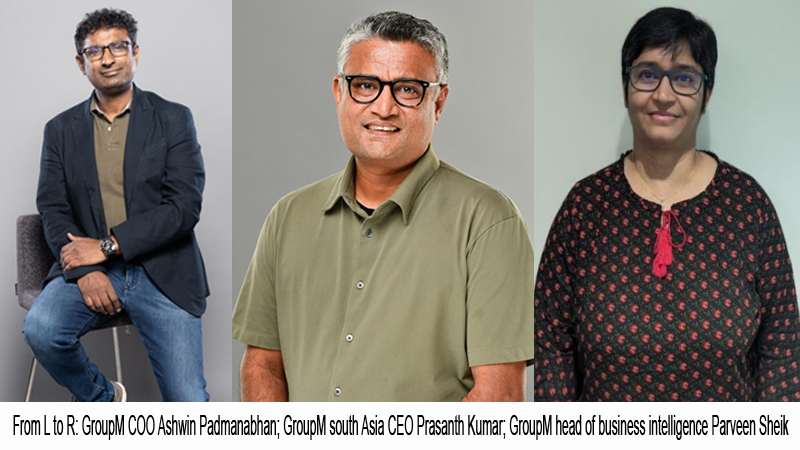
    GroupM south Asia CEO Prasanth Kumar stated, “India is at the forefront of a marketing revolution driven by AI and data privacy. As global ad spend surpasses $1 trillion, India emerges as a top 4 growth market, with digital now accounting for over 60 per cent of ad spend. With a shift to personalised engagement, commerce-driven marketing, and responsible innovation, mixed reality and immersive tech fuel experiential content. While TV remains vital, AI agents are transforming customer interactions, and emerging formats like programmatic CTV and AI-driven retail media are redefining brand-audience connections. All of this positions India for unprecedented innovation and impact in the modern marketing era.”

    TV and digital together are the powerhouses of India’s ad industry, contributing a colossal 86 per cent of total ad spend. Streaming TV is no longer an afterthought either, now making up 12.6 per cent of total TV ad revenue.

    “India’s advertising ecosystem is being reshaped by digital dominance and shifting consumer behaviours,” said GroupM COO Ashwin Padmanabhan. “Key sectors like SMEs, real estate, education, BFSI, and tech/telco—contributing 60 per cent of total advertising—are set to grow at around 10 per cent, further accelerating market expansion. Additionally, rising investments from EVs, fintech, and gaming are fuelling the market’s momentum.”

    Despite economic fluctuations across the globe, India’s GDP is projected to expand by 6.5 per cent in 2025, keeping its advertising sector resilient and strong. GroupM head of business intelligence Parveen Sheik highlighted, “With India’s GDP projected to grow by 6.5 per cent in 2025, its advertising market remains strong, ranking 9th globally. Digital ad spend is now close to Rs 1 lakh crore, driven by AI, commerce, retail media, and hyper-personalisation marketing. As the economy grows, brands must embrace agility, data intelligence, and sustainable strategies to maximise impact in this dynamic landscape.”

    Trends shaping 2025: What’s hot in advertising?

    GroupM’s TYNY report reveals a host of transformative trends set to redefine India’s advertising scene in 2025. Here’s what brands should keep an eye on:

    ●   AI agents take over: Marketing campaigns are being revolutionised with AI-driven customer interactions.

    ●   Immersive experiences explode: Mixed reality, immersive tech, and smartphones are fuelling India’s surge in experiential content.

    ●   Privacy takes centre stage: Data clean rooms are shaping India’s privacy-first marketing landscape.

    ●   Retail media booms: Omnichannel strategies are redefining India’s e-commerce future.

    ●   Quick commerce accelerates: The e-commerce sector is shifting gears with lightning-fast commerce solutions.

    ●   Generative AI rules search: Traditional search and SEO are evolving as AI takes the lead.

    ●   AI influencers rise: Forget traditional celebrities; AI-driven brand storytelling is taking centre stage.

    ●   Chief prompt officers arrive: India’s content marketers are leading a global transformation in AI-driven campaigns.

    ●   CTV goes big: Streaming TV’s rise is ushering in an era of hyper-personalisation and programmatic ads.

    ●   Data privacy & AI converge: New integrated measurement frameworks are addressing fragmentation and privacy concerns.

    With AI shaping every facet of marketing, India’s advertising industry is on an unstoppable trajectory—like a viral ad campaign that refuses to be skipped. Brands that embrace this digital-first, AI-powered landscape will thrive, riding the Rs 1.64 trillion wave of opportunity. Those that don’t? Well, they’ll be the advertising equivalent of a banner ad—ignored, blocked, and eventually forgotten. 

  • HT Media announces leadership change: Sameer Singh to succeed Praveen Someshwar as group CEO

    HT Media announces leadership change: Sameer Singh to succeed Praveen Someshwar as group CEO

    MUMBAI: – HT Media’s board of directors, in a meeting held on 11 January, accepted the resignation of managing director &  CEO Praveen Someshwar, effective 28 February 2025. The board has approved the appointment of Sameer Singh as group chief executive officer, effective 1 March  2025, based on the recommendation of the nomination and remuneration committee.

    An alumnus of IIM Calcutta, Sameer Singh brings over 30 years of experience in digital innovation, brand marketing, and leadership across global markets. He currently heads north America global business solutions at TikTok/ByteDance, leading advertising and sales teams for the region. Previously, he held a similar leadership role for the Asia-Pacific region.

    Sameer has an impressive track record in media and marketing, having served as CEO of GroupM India and south Asia, where he championed digital transformation and content-driven strategies for clients. His career also includes key roles at Google, GSK, Procter & Gamble, and IPG, where he was instrumental in advancing digital strategies and optimising media investments.

    Having worked in cities such as New York, New Delhi, Palo Alto, Boston, London, Dubai, and Guangzhou, Sameer’s global perspective and expertise make him a strategic choice to lead HT Media into its next phase of growth.

    The leadership transition marks a significant step for HT Media as it continues to evolve in a rapidly changing media landscape.

  • The new paradigm of selling sport…

    The new paradigm of selling sport…

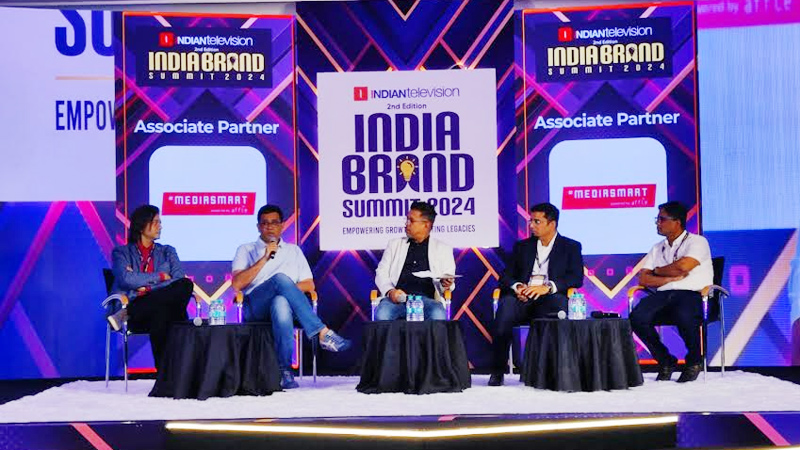
    The India Brand Summit 2024 hosted a riveting panel discussion featuring prominent voices in the sports industry. The discussion explored innovative strategies to market sports content effectively and adapt to the evolving demands of advertisers and focused on how sports marketing has evolved, particularly in attracting advertisers by localising sports content.

    This session was moderated by Indian Television Dot Com group’s founder, chairman and editor-in-chief Anil NM Wanvari, GroupM India, managing director of content, entertainment & sports, Vinit Karnik, Polycab’s lead of category marketing B2C, Amit Sethiya, CricViz India’s Director of Sales, Subhayu Roy and Dentsu X India, senior partner for client leadership, Prabhat Naik.

    Vinit Karnik highlighted the significant growth of non-cricket sports like Pro Kabaddi League (PKL) and volleyball. He emphasised that these sports, which started as niche activities, have managed to sustain themselves for over eight years, marking a shift in the sports marketing landscape. “Things have changed dramatically in sports marketing,” Karnik stated. “The fact that many people are playing and watching these sports—whether on the ground or streaming platforms—indicates a growing interest that attracts advertisers. The market size has grown exponentially, from ₹1,500 crore to ₹20,000 crore in less than two decades.” Karnik’s insight underscores how sports beyond cricket are becoming valuable advertising platforms due to increased viewership, signalling the industry’s wider acceptance of sports as integral to pop culture.

    Amit Sethiya explained how sports marketing has moved beyond simple inventory buying. He pointed out that in earlier days, cricket was the go-to platform for brands. However, with leagues like PKL and Indian Super League (ISL) gaining traction, marketers now leverage rich data to make informed decisions. “Today, it’s no longer about just buying inventory,” Sethiya noted. “The focus is on how brands can utilise the data accumulated over years of these properties. Broadcasters and organisers are helping brands see the potential of connecting with audiences in Tier 2 cities, even with limited budgets.”

    This shift has democratised sports marketing, allowing smaller brands to associate with emerging sports without needing deep pockets. The ability to analyse data and understand audience demographics allows advertisers to invest strategically in sports marketing.

    Subhayu Roy emphasised the role of data in driving value for advertisers. He explained how CricViz collects up to 60 data points during events, offering insights that enhance viewer engagement and inform advertisers. “For example, when Virat Kohli is at the crease, data suggests that Royal Challengers Bangalore (RCB) have never lost a match in the second innings,” Roy shared. “This type of analysis helps retain viewership by keeping fans engaged, thus preventing them from switching channels.” Roy also discussed how data is used to create new monetization streams for advertisers. “From selling ad slots to monetizing player stats, the ability to quantify performance data opens up various revenue avenues for broadcasters and brands alike. This approach allows advertisers to make calculated investments, ensuring their marketing spend delivers the maximum impact.”

    Prabhat Naik highlighted the shift from traditional media to digital platforms, attributing it to the growing trend of on-demand content consumption. “Victory lies in the flexibility that digital platforms offer,” Naik said. “While television demands appointment viewing, digital content is always accessible, anytime, anywhere,” Naik stressed that while television still holds its ground, the future of sports marketing lies in adapting to a more digital-first approach. This flexibility is driving advertisers to focus more on digital, making it an essential part of their marketing mix.

    The discussion at the India Brand Summit demonstrated that sports marketing is rapidly evolving. With new sports gaining popularity, rich data driving advertiser decisions, and digital platforms offering unmatched flexibility, the industry is embracing innovative ways to engage audiences and deliver value to advertisers. As Vinit Karnik summarised, “Sports is no longer just entertainment; it’s a cultural phenomenon. The way we sell and market sports has changed, and it will continue to grow as an essential platform for brands.”

  • GroupM Strengthens India Operations with appointment of Praseed Prasad as chief growth officer

    GroupM Strengthens India Operations with appointment of Praseed Prasad as chief growth officer

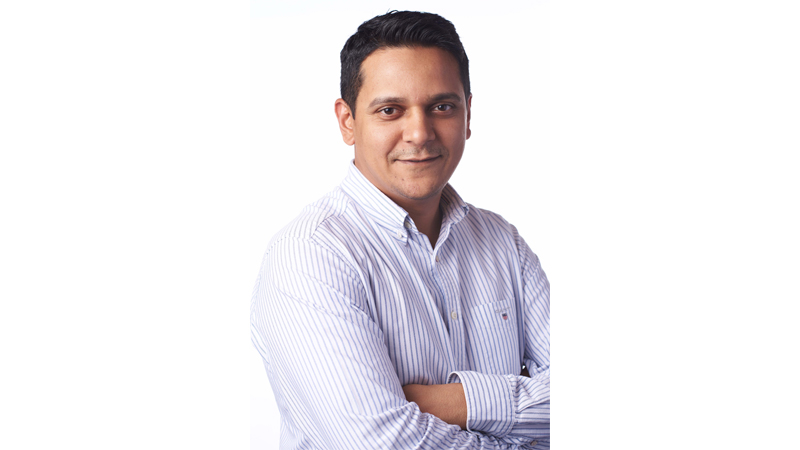
    Mumbai: GroupM India, WPP’s media investment group, today announces the appointment of Praseed Prasad as chief growth officer. In its newly created role, Praseed will lead GroupM’s growth, marketing and communications. The role is further designed to accelerate GroupM’s growth and strengthen its position as the industry’s leader in media investments and marketing partner.

    In his new role, Praseed will oversee strategy and operations for GroupM’s business development, growth, marketing, and communications to clients, employees, and industry audiences. He will work closely with the agency and GroupM leadership to identify growth opportunities, develop integrated solutions that leverage the skills and expertise of the industry’s deepest bench of talent, and effectively communicate GroupM’s value proposition.

    Praseed, returning back to GroupM, brings a wealth of experience to this position. Prior to joining IceCream Labs in 2015, he held key roles within GroupM, including heading Digital Trading and overseeing digital investments for all GroupM clients. His diverse background also includes stints at Flipkart, where he ran the Ads Agency Business and led Media and Partnerships, as well as at Google, where he managed Media Operations for EMEA markets and later ran the Google APAC Agency and Partner business.

    GroupM South Asia CEO Prasanth Kumar said, “It is great to have Praseed back to GroupM as Chief Growth Officer. His extensive experience in understanding client needs, strategic initiatives, industry knowledge, and cross-functional collaboration positions will help us enhance our market growth. His track record underscores his ability to navigate complex ecosystems and deliver results. We anticipate that his leadership will directly benefit our clients and the brands we work with, driving innovation and enhancing performance.”

    Praseed said, “I am delighted to return to GroupM where I grew during the early days of my career and spent more than a decade setting up new business units and functions. I look forward to strengthening opportunities for our clients and brands that will allow me to apply my experiences to help grow the GroupM business onwards and upwards. Am excited to collaborate with all the agency teams to help drive our clients’ business impact and deliver them exceptional growth.”

    Praseed will be based out of GroupM’s Bangalore office and report into Prasanth Kumar. 

  • “India is the second largest TV market globally with 210Mn Tv HHs”: GroupM’s Atique Kazi

    “India is the second largest TV market globally with 210Mn Tv HHs”: GroupM’s Atique Kazi

    Mumbai: The emergence of addressable TV has been nothing short of ground-breaking. Offering targeted advertising opportunities and personalized content delivery, addressable TV has swiftly carved out a significant niche in the industry. India, with its burgeoning digital market and rapidly expanding connectivity, has been at the forefront of this transformative shift.

    The latest insights from GroupM’s TYNY 2024 report shed light on the remarkable momentum witnessed in the realm of TV in India. Unlike the global market, TV marked a seven per cent growth with the market share of 29 per cent. With each passing year, the adoption of connected TV and the prevalence of addressable TV homes have surged, reshaping the way audiences engage with television content and advertising.

    The report cites phenomenal momentum in the space of addressable TV over the last few years. By the end of 2023, there were 34 million addressable TV homes streaming on connected TV in India. As per the report, in 2024, this growth is expected to be reaching 45 million homes with a YoY growth of 21 per cent.

    By delving into the key findings of the report, it becomes evident that addressable TV is not just a passing trend but a fundamental evolution in the media landscape, poised to reach unprecedented heights in the year 2024. With projections indicating substantial growth in the number of addressable TV homes, India stands on the brink of a new era in television broadcasting and advertising.

    Let’s explore the implications of this growth and future of media consumption in India as Indiantelevision on the sidelines of the GroupM event, caught up with GroupM India president (Data Performance and Digital Products) Atique Kazi, where he shared a lot of insights on the current addressable & linear TV space….

    Edited excerpts

    On the growth of addressable and linear TV in India

    In recent years, the growth of addressable TV homes has been significant. With 7-8 million Addressable TVs in 2021, it quickly rose to 17-18 million and now crossed 34 million. Current projections suggest it could breach 45 million, translating to approximately 21% of TV households in India, given there are around 210-213 million Television households. This growth is fuelled partly by the widespread availability of unlimited broadband, allowing people to stream content without constraints. Interestingly, many of the 45 million users are not completely abandoning traditional TV but are instead switching between linear and on-demand content. Primarily, these users are younger than 40, as older individuals may struggle with new user interfaces & habits. People are making smarter choices based on their viewing habits, opting for platforms that offer their preferred content without additional costs. This trend indicates a shift towards more flexible viewing options.

    On difference between USA and India’s television business and India reaching on par with the developed nations

    India is the second largest TV market globally with 210Mn Tv HHs. Recent increases in prices and the abundance of content accessible through streaming platforms are prompting consumers to transition from Pay TV to Free TV, often supplemented by low-cost or ad-supported streaming services made possible by improved internet connectivity. In the United States, over 85% of households are users of Connected TV (CTV), whereas in India, CTV penetration stands at only approximately 16% (FYR only 34mn/210mn), indicating significant growth potential in India. CTV advertising constitutes 7% of the total media expenditure in the US, while India has just embarked on this journey in the last three years, with digital extensions already accounting for 4% %( FYR only 5750cr/155386 cr ) of the overall advertising expenditure and expected to surpass the US average.

    On consumers preferring TV over mobile phones for media consumption

    The preference for viewing always rests with the consumer based on their convenience. For example, while I am outside home and want to catch on to my favourite content, mobile is definitely an option. But at the comforts of home when you have access to a large screen, preferences change. What has happened now is the ease of access to content is the same on TV & mobile, what changes is the environment with whom/where you watch them. With features such in IPL like multi camera viewing angles and enhanced post-match production, viewers are provided with an improved viewing experience, influencing their choice on a big screen vs small screen.

    On the fall of DTH industry according to TRAI’s latest reports on losing 1.32 paid subscribers in July-September 2023

    The DTH industry is shifting towards free-to-air (FTA) content over pay TV, building the need for smarter, internet-enabled set-top boxes. The advancement I foresee is for the insertion of addressable ads on linear television, revolutionizing the advertising ecosystem. However, the industry faces challenges due to broadcasters’ split strategy for television and their digital platforms, as well as the disconnect between broadcasters and distributors. Without collaboration to effectively sell addressable ads, the potential benefits of this technology, as seen in markets like Korea, may not be easy in India. Airtel and Tata Play have introduced smart set-top boxes capable of addressable ads, but without broadcaster collaboration, unlocking their full potential may prove difficult.

  • GroupM India’s 2024 TYNY Report unveils surprising trends and insights

    GroupM India’s 2024 TYNY Report unveils surprising trends and insights

    Mumbai: GroupM India has released its annual This Year Next Year (TYNY) report on 13 February 2024. The overall ad revenue is expected to reach Rs 1,55,386 crore in 2024, with an incremental Rs 14,423 crores compared to 2023.

    GroupM South Asia CEO Prasanth Kumar said, “Despite facing macroeconomic challenges, we remain optimistic about the industry. At 10.2% India will be the fastest growing top market. 2024 will also see an upside from the spends leading to the General Elections. Digital particularly retail media and digital extensions of TV are expected to drive the growth. SME continues to fuel the growth. Linear TV is at a point of inflection and needs to be enabled with rapid deployment of technology to stay relevant.”

    GroupM – India president – Investments, Trading, and Partnerships Ashwin Padmanabhan said, “The advertising landscape is evolving with the fragmentation of search, rapid rise of influencer marketing and retail media. Reflecting this, at INR 88,502 crores of the overall INR 1,55,386 crore, digital will contribute to 57% of all ad revenue. Within digital ad revenue, search contributes 22%, retail media 18% and the rest 60%. Sectors like Auto, Realty and Offline Retail are expected to power the overall advertising growth.”

    GroupM India business Intelligence head Parveen Sheik said, “Global advertising presents a steady picture: a projected 5.3% global growth in ad revenue for 2024, reaching $936 billion, with digital leading the charge at a commanding 79% share of all ad revenue. India continues to be ranked 8th globally and its ad revenue growth among its peers is a testament to its potential and resilience. Adaptability is key to navigating an evolving advertising landscape amidst inflation and geopolitical tensions.”

    The GroupM TYNY report also unveiled several evolving trends for 2024.

    Key trends include:

    1   Increasing influence of gen-alpha will drive distinctive marketing strategies

    2   Attention Planning – customising insights for actionability

    3   21% of television homes to be addressable in 2024

    4   Sports to focus on immersive experience journeys

    5   Brand marketing becomes more accountable on performance, breaking silos

    6   Step-up on search

    7   Ecommerce drives deeper into organisations

    8   India’s general & modern trade getting digitized leading to rise of omni channel commerce

    9   Rapid developments in AI will transform media, messaging, and measurement

    10   AI & technology dominate the content landscape & creator economy

    11   Importance of niche consumer segments will power the growth of micromarketing

    12   With consent becoming critical, zero party data will empower various areas of marketing

    https://indgrm.com/TYNY/

  • GroupM’s Goat and Forbes India unveil the Top 100 Digital Stars List

    GroupM’s Goat and Forbes India unveil the Top 100 Digital Stars List

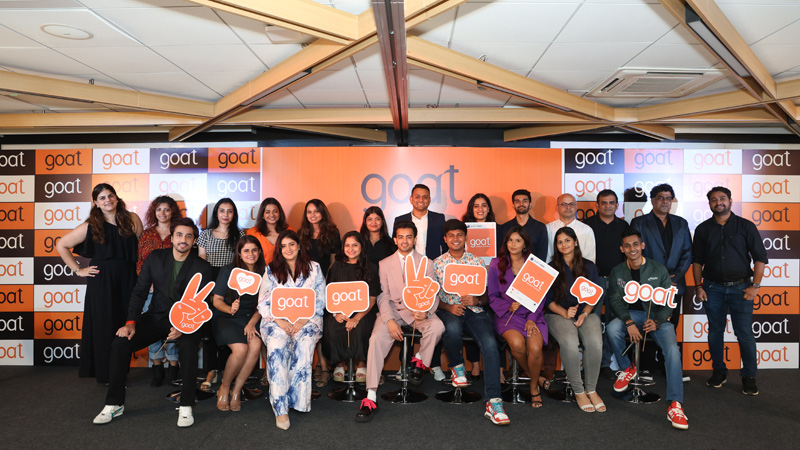
    Mumbai: GroupM, the media investment group under WPP, has announced the Top 100 Digital Stars List for 2023 curated by The Goat Agency, GroupM’s  influencer and content marketing solution, in partnership with Forbes India. This list  showcases India’s most influential digital personalities, celebrating their exceptional  contributions across various domains including comedy, beauty & fashion, business &  finance, fitness, food, tech, travel, and social work.

    The focus is on original content creators, with tech, travel & photography, and comedy  influencers constituting over 50 percent of the list. Notably, the list boasts a balanced  representation of both men and women, showcasing the diversity of talent in the vibrant  influencer community.

    “This collaboration between Goat and Forbes India has resulted in the identification of  India’s most influential digital stars,” said GroupM India, business head, Goat, Kunal Sawant. “We are highlighting original content creators who are ‘influencing’ their  audiences in the best possible way and driving positive impact. Key metrics such as  followers, engagement, views, reach and impressions across social media platforms  have been taken into account in the curation of this list. We’ve also included the Goat  changemakers – a roster of socially conscious creators, and an integral part of GroupM  Goat’s Responsible Investment Framework.”

    To compile this list, a multi-step process was initiated. Beginning with the identification  of top creators in nine specified genres based on engagement rate and follower count,  the selection was then narrowed down to the top 100 influencers through a  comprehensive assessment of vital metrics, including reach, engagement, impressions, and follower count. Goat’s proprietary scoring algorithm played a crucial role in the  process. This algorithm, which compares creators within similar categories, types, and  audience sizes, ranks their content based on engagement rate. The careful consideration  of authenticity-verified profiles, compliance with disclosure labels, and platform presence  ensured a fair and data-driven assessment, highlighting the real impact of these  influencers in the digital landscape.  

    “In the digital age, influencing has been honed into a science, thanks to the availability  of gazillions of data that help quantify and measure the degree of influence. The number  of followers and engagement metrics like shares and comments help determine the  success or lack of it of an influencer. Forbes India-Goat’s 2023 India’s Top 100 Digital  Stars takes into account those producing engaging content and with the views,  engagement and reach to show for their efforts,” said Forbes India editor Brian Carvalho.

  • GroupM launches South cinema audience behaviour report

    GroupM launches South cinema audience behaviour report

    Mumbai: GroupM, WPP’s media investment group, has launched the South Cinema audience behaviour report. This report sheds light on the movie-going habits of the South Cinema audience and provides valuable insights to advertisers and marketers.  

    According to the report, ‘watching a movie at a theatre’ has the highest monthly average frequency of all outdoor leisure activities among South cinema audiences – with an average of 1.8 visits per month, translating to 22 visits annually. The report also reveals that 8 out of  10 South Cinema audience visit a theatre at least once a month, which is twice the national average.

    Commenting on the report, GroupM India MD – cinema and OOH Ajay Mehta said, “Our report is a game-changing tool for marketers and advertisers looking to engage with South Cinema audience. By shedding light on the unique preferences and behaviours of this audience, we can now tailor our campaigns to resonate with them on a deeper level. A  noteworthy example is the exceptional success of ‘Jailer,’ starring Rajinikanth, which has become the top-grossing Tamil film in India. Impressively, ‘Jailer’ ranks as the second fastest Tamil film to amass an astonishing Rs 550 crore worldwide at the box office. The fact that a heavy cross-section of South Cinema audience is watching 32 movies in a year highlights the immense potential of this market. With the South cinema audience behaviour report, we are equipped with the insights needed to tap into this potential and  drive real business results.”

    The report further highlights that ‘heavy’ South moviegoers visit the cinema on an average of 32 times annually, which is 20 visits more than the national average. Further, the heavy cross-section of South Cinema audience from Andhra Pradesh & Telangana and, Kerala watches 36 movies in a year.

    The report also throws a light on language preferences among the South Cinema audience.  

    In Karnataka, Telugu is the second most preferred language among those preferring  Kannada, while in Kerala, Tamil is the second most preferred language for those preferring  Malayalam. The report also suggests that horror/thriller is the top genre for visiting a  cinema in Andhra Pradesh & Telangana and, Kerala.

    Andhra Pradesh & Telangana cine-goers prefer to watch a movie on the first day with a  preference of 66 per cent for any show on the first day. Apparently, all South cinema audience consider nearby theatres.

    The South Cinema Audience Behaviour Report provides marketers and advertisers with valuable insights into the preferences and behaviors of Southern states regular cine-goers.

    The data and insights from this report will enable advertisers to create more effective marketing campaigns and better connect with the South Indian audience.

    References:

    * All India average cinema visits are for the year 2017 and quoted from a study conducted in 2017.