Tag: GroupM ESP

  • Indian sports sponsorship scores big, nearing $2 billion mark

    Indian sports sponsorship scores big, nearing $2 billion mark

    MUMBAI: The Indian sports sponsorship scene has flexed its muscles, punching through the Rs. 16,633 crore barrier, according to GroupM ESP’s latest Sporting Nation report. That’s a six per cent year-on-year growth, propelling the overall market towards a cool $2 billion. Since 2008, the sector’s seen a sevenfold surge, a proper blinder of a result.

    While cricket remains the undisputed captain, the rise of non-cricket sports is giving it a run for its money. Athlete endorsements have hit an all-time high, leaping 32 per cent to Rs. 1,224 crore. Forget just sixes and wickets, we’re talking about the likes of Neeraj Chopra and PV Sindhu, who’ve spearheaded a 46 per cent hike in non-cricket endorsements. The Olympic buzz has clearly got everyone’s knickers in a twist, boosting emerging sports sponsorships by 19 per cent. Fancy a jog? Distance running alone accounts for a quarter of that, showing India’s keen to get its trainers on.

    GroupM South Asia  chief operating officer Ashwin Padmanabhan reckons industry is  continuing its remarkable trajectory, but the industry is e witnessing a dynamic shift driven by both legacy and emerging sports. “Cricket’s still the cornerstone, but the non-cricket athletes, the Olympic buzz, and the digital revolution are reshaping the landscape. With brands increasingly recognising the power of sports as a platform for deeper consumer engagement, the momentum is undeniable. This is not just growth in numbers—it’s the
    evolution of an industry that is more diverse, digital, and driven by innovation than ever before,” he said.

    GroupM India managing director content, entertainment & sports Vinit Karnik, chipped in, saying,  The
    Indian sports economy has firmly established itself as a high-growth sector, surging 7x since 2008 to near the $2 billion mark. While traditional powerhouses continue to drive momentum, the real story lies in the rise of emerging sports, athlete-driven brand value, and the digital explosion, which alone saw a 25 per cent  jump in media spends. The record-breaking Rs. 1,224 crore  in athlete endorsements signals a shift—brands are betting big on individual icons across sports. As we enter a new era of engagement, innovation will be key in unlocking the next wave of commercial success in Indian sport.”

    Despite a slight wobble in sponsorship growth this year, thanks to IPL and ICC rights resets, the market’s showing its staying power. With digital engagement going through the roof and audience preferences swerving faster than a fast bowler’s out swinger, the Indian sports scene is poised for even more fireworks. It’s a proper scorcher.

  • Sports industry spending exceeds Rs 9,500 cr in 2021: GroupM report

    Sports industry spending exceeds Rs 9,500 cr in 2021: GroupM report

    Mumbai: The year 2021 saw a resounding comeback for sports sponsorships and media deals, as compared to 2020 when the pandemic took over. The size of the Indian sports industry spending is estimated to have surpassed Rs 9,500 crore last year, according to the latest sports sponsorship report released by GroupM India’s entertainment, e-sports and sports division GroupM ESP. 

    With Rs 6,018 crore, sports advertisement expenditure (adex) surpassed 2019 levels in both TV and digital. Cricket yet again, remains the most popular sport, accounting for 94 per cent of the sports adex. The media spending on cricket in 2021 was higher (Rs 5,657 crore) than the overall media spends of 2019 (Rs 5,232 crore).

    The ninth edition of Sporting Nation in The Making – GroupM ESP’s sports report takes into consideration the sponsorship spends, player endorsements and media spends on sports properties. The spending on sports celebrity endorsement grew by 11 per cent year-on-year in 2021, says the report. A total of 444 brand endorsement deals have happened in 2021, with cricketers accounting for 318 endorsement deals and 87 per cent of total brand endorsement value. The Olympic Year of 2021 increased emerging sports athletes’ endorsements by 79 per cent, accounting for 13 per cent of the overall brand endorsement value, as per the report. 

    2021 got our sporting nation back to a billion-dollar scale with a 62 per cent growth over 2020, the report said. India’s performance at the Tokyo Olympics has been a morale booster for budding sports talent in the country and 2022 will bring new opportunities in multi-sport events.  

    The household penetration of TV sets in different markets over the country saw a major role in the growth of sports properties. With this, TV continues to be the largest medium since 2021 saw overall ad spends of Rs 5,051 crore, which was a growth of 59 per cent over 2020 and we saw digital spends touching Rs 965 crore.

    “2021 was a year of a major comeback for the sports industry. Not only in sports but we saw growth in sponsorships, endorsements, and media expenses in 2021,” remarked GroupM South Asia CEO Prasanth Kumar. “This year will also be a good re-start point for brands to invest in sports properties since sports will see a rise and will in-turn deliver ROI to brands.”

    “We even saw e-sports gaining significant traction and there was a major rise in the number of gamers in the country. Properties like PKL, ISL, etc. are also seeing a major rise in followers which goes to show that India is heavily invested in overall sports from an interest and inquisitiveness standpoint. As for cricket, we are seeing a growing interest by foreign private equity giants investing in Indian cricket which is proving that cricket will continue seeing a huge surge in India and with 2021 getting cricket back on track, we are seeing 2022 racing ahead, aiming to cross Rs 10,000 crore mark,” Kumar further said.

    Acceptance of visual media for live sports broadcast by fans led to a great demand of platforms like SonyLiv and Disney+ Hotstar who are now streaming a variety of sports for their audiences, says GroupM. The study finds the OTT space becoming more competitive in the years to come since India is adopting OTT for live streaming sporting action.

    “India as a sporting nation has finally arrived, overcoming all barriers brought in by the pandemic,” stated GroupM South Asia  head – sports, entertainment and e-sports Vinit Karnik. “Cricket being the hero of India, contributed 88 per cent of the sports spends. IPL and T20 WC boosted the sports adex growth. We also saw emerging sports contributing 12 per cent on the overall sports  spends. The media spends in 2021 were the biggest contributors, who accounted for almost two-thirds of all sports industry spending.”

    “While sports celebrity endorsement was on the rise in 2021, Virat Kohli, MS Dhoni, Rohit Sharma, Neeraj Chopra and PV Sindhu are the top athletes in the sports celebrity brand endorsement space. 2022 will be an exciting year with the Asian Games, Fifa World Cup, Premier Badminton League, and many more properties coming up, and the fans are in for a treat. The sports arena is an exciting drive ahead from the fanbase lens and the business lens too and we have a host of opportunities in the Indian sports industry,” he added.

    With an action-packed 2021, media spends in sports saw some heavy scoring in India as brands and consumers were brought closer by broadcasters and technology also played a very crucial role in evolving the way people appreciate sports, according to GroupM. 

  • What spells success for Indian sports leagues?

    What spells success for Indian sports leagues?

    MUMBAI: The sports industry in emerging markets is changing rapidly today. Amongst the various changes that is impacting sports and its allied businesses, is the emergence of sports leagues.


    According to a white paper released in collaboration between GroupM ESP and IIM –Ahmedabad, the success of the league is dependent on factors such as the sport and its fan base, the performance of the national team for the sport, design of the league, initiatives to build the fan experience, relationship of the league with relevant sports associations and the involvement of celebrities in the league.


    By studying what worked and what didn’t, the report brings to light best practices in the formation and running of sports leagues in a manner that will make them successful.


    Sports – The game is changing


    Over the past 10 years, the sports firmament has changed fundamentally. There has been an increase in the marketing of sports as well as a rise in the use of sports marketing purposes.


    Research indicates that there has been a sharp increase in the governmental support to sports as it is believed to increase societal and economic welfare of the country as well as promote the nation on the global front.


    Increased economic activity has also contributed to the growth of sports and its following. Today, sports serves two purposes: One, to be a platform to create marketing opportunities for brands and secondly, to actually create value for sports fans.


    These twin purposes go hand in hand, and serve the business and industry as well as the sports fans. For brands and advertisers, it is a win-win situation, in so much as when they pay to sponsor or promote a sport; the sporting event offers them a platform to reach their audience.


    As per an industry study report, sports industry in both mature and emerging economies has been growing at a rate faster than the GDP. As of 2011, the size of the industry was estimated at $620 million, growing at a rate of 6 per cent. While the sports economy has always been strong in North America and Europe; in the recent past, it is experiencing a major push in emerging markets.


    The report further states that all the BRIC nations have shown impressive growth in sports (India – 17 per cent, China – 20 per cent, Brazil – 7 per cent and Russia – 53 per cent).The growth of sporting events in emerging markets has been accompanied with the rise of several sports leagues.


    Professional sports leagues like the Major League Baseball (MLB), National Basketball Association (NBA), National Football League (NFL), English Premier League (EPL) etc have achieved great success in North America (US and Canada) and Europe.


    The report states that these leagues have gained worldwide popularity and fan following and in turn has inspired the setting up of similar sport leagues in emerging countries such as India, South Africa, and Sri Lanka.


    With a number of new sports leagues being formed in the recent past, the report highlights interesting set of differences.  Some of these leagues are in infancy, a few others are already defunct, and there are a few which seem to have attained some degree of maturity.


    As per an industry study, it is estimated that in India, the proportion of spending by average household on education and recreation will rise from 5 per cent in 2005 to 9 per cent in 2025. This, coupled with the rise in middle-class segment (from 4 per cent to 41 per cent from 2005 to 2025) will present a huge opportunity for business of sports to cater to recreational needs of such a large population.


    Interest in sports has increased with economic, educational and social advancement of the society. These trends underlie the development and popularity of sports leagues. A brief overview of the various leagues operating within sports in India was analysed as follows:


    Hockey – Federation rivalry stymies the initial leagues


    There have been several attempts to set up Hockey Leagues in India. The first such attempt was with The Premier Hockey League which started in 2005, but folded up by 2008. Then came the World Series Hockey in 2012. These leagues have been able to attract fans as they presented a more exciting format of the game through minor modification of the rules. However, they failed to sustain interest in the game. Reason: existence of two rival national hockey federations which were involved in disputes. This impacted the participation of players in the leagues.


    The country currently has Hockey India, a national federation, which has started the Hockey India League (HIL) that has run two seasons and has performed better than the two earlier avatars.


    Cricket – Success after a false start


    The professional league trend in cricket began with the launch of the Indian Cricket League (ICL), which was started by Zee Group, a television broadcast company. The BCCI in its wisdom did not endorse ICL and banned players contracted with BCCI from playing in ICL matches. It also exerted pressure on the International Cricket Council, the international cricket federation to stop other national federations from supporting ICL.  With this concerted denial of support, ICL folded up in 2008, three years after it opened shop.


    BCCI then launched Indian Premier League (IPL) in 2008, which forever changed the face of professional leagues in the country. IPL has attracted the best of the international players from across the globe.


    Kabaddi – The Indian contact sport that has touched the heart of millions


    The Pro Kabaddi League (PKL) was started in 2014 with eight teams from different cities. The league is supported by the national and international Kabaddi federations. The teams follow the system of salary caps and its owners are personages from the industry, movies, and sports business. The first season of PKL enjoyed unprecedented viewership and fan following. Another league – The World Kabaddi League which began at around the same time as PKL could not duplicate the success of the latter, even though it had a number of film stars as owners of teams in their league.


    Badminton – Shuttling towards increased popularity


    Badminton started becoming increasingly popular in India and attracted huge following with the emergence of some world-class players. The Indian Badminton League (IBL) is managed commercially by a sports management firm and has the backing and support of the Badminton Association of India. It started the competitive games in 2013, and was fairly popular as it was able to attract some foreign players, including the world’s number one. It failed though to get some of the best Chinese players. Indian Badminton League has recently been facing issues related to scheduling due to other international tournaments.


    Findings

    • Fan acceptability of Leagues – Rather than financial viability, fan acceptability seems to be a better measure of predicting future success of leagues.  To sports leagues and businesses, sportsmen and others who are investing their time, effort and money in sports leagues, this is an important parameter to track and follow-up with concerted action to improve the chances of success.
    • Choice of Sports – The choice of sports can impact the success of a league. Higher the fan base of a sport, the more the fan base of the leagues in that sport. Also, better the performance of the national team, in a particular sport, the higher is the acceptability of the league in that sport. Managers, sports persons and sponsors investing in a league will benefit from analysing the two factors mentioned above, even as they analyse the probable future of the sporting league. Starting a league for a sport that has a large fan following and a national team that is performing at par may be a way to ensure its early survival and growth.
    • Design of the League – The design of the league, more specifically the salary structure can impact the success of the league. Salary caps tend to distribute talent across teams, and lead to more intense competition which has a positive effect on the success.
    • Team Location – Regional teams can help in building team character. Thus, regional team locations enable association with fans of that particular region resulting in a captive fan base, while providing a competitive spark with respect to other regional teams.
    • Game Format and Scheduling – Fans respond positively to minor changes in the game format, but are alienated by major changes. The timing and scheduling of games can impact the success of the league.
    • Fan Experience – The more the social media initiatives by the league, the more the fan acceptability.  Improve the TV viewing experience through engaging broadcast and improve fan acceptability. Employ greater in-stadia engagement for higher fan acceptability of the league.
    • Players – When top regional players, famous foreign players and world class sportsmen participate in the league games, what happens is a cascading of their respective following into the league following. So each of these people are stakeholders in enhancing fan engagement and acceptance.
    • League – Federation Leadership -The relationship between the league and the federation can impact the success of the league. Starting a league in harmony and full cooperation with the federation that controls the game is almost a hygiene factor for the success of the league.
    •  

    Celebrity involvement


    Celebrity involvement is a key factor in increasing acceptability and marketability of the league. Stars in the game and stars outside the game are a good combination for league success.


  • GroupM ESP lists top 10 trends for IPL season 8

    GroupM ESP lists top 10 trends for IPL season 8

    MUMBAI: Move over Cricket World Cup, welcome Indian Premier League (IPL) Season 8! 


    With the home grown league becoming a global reputable property, GroupM ESP (Entertainment & Sports Partnerships), has predicted top trends in 2015.  


    Commenting on the trends for this season, Group M ESP national director Vinit Karnik said that the sports entity has come a long way in how it addresses sponsorship sales and convergence of technology. “From selling tickets to selling an experience, IPL has come a long way. This further extends from the execution of sponsorships across major platforms — all the way to the idea/solution generation phase during the sales process,” he added.


    Karnik also stated that in 2015 teams will continue investing in the in-stadia experience content delivery. With feeds available through internet, Sony’s regional channels, mobile applications etc the content is truly taking the center stage. “It makes sense because if fans aren’t in the stadium consuming content, they’re consuming it somewhere else — work/ home/ in a cafe… wherever,” he informs.


    According to him there will be an amalgamation of technology integration and enhancement throughout the sport. The proliferation of video and statistical information backed by increased social exchange will define the popularity of teams.


    Uniquely positioned at the intersection of media and marketing, GroupM ESP has made the following predictions: 


    1) Smart talent acquisition by franchises increasing competitiveness with teams evenly matched.


    2) Enhanced broadcast production quality with regional language feeds from the broadcaster MSM.


    3) Fan Park idea will heighten interest and involvement in smaller cities and towns.


    4) Digital platforms to create sustained and deep engagement with real time analytics.


    5) Surround content to drive social conversations via social media platforms.


    6) Technology to enhance spectator interactions and engagement inside stadium.


    7) Realistic sponsorship pricing strategies resulting in repeat purchases and a stable sponsor ecosystem.


    8) Apparel as an emerging and popular sponsor category among franchises.


    9) Sponsor’s increased dependence on crowd sourcing to create excitement around their brands .


    10)  E-commerce brands will dominate ad spends on broadcast platform.


    “In all aspects, IPL offers a consumer delight by integrating newest technologies and enhanced fan experience while building affinity with future generations of fans who have moved from passive viewers to engaged amplifiers. We also see a lot of new generation brands jump onto the IPL bandwagon, making it a high spend high visibility and now high engagement business,” concluded Karnik.

  • MTV revamps Coke Studio format; to air all year round

    MTV revamps Coke Studio format; to air all year round

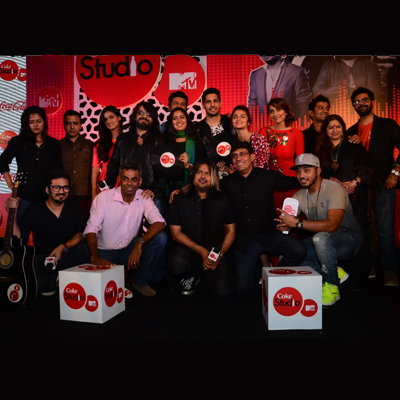
    MUMBAI: An experiment that began with fusion music over three seasons back is all set to return once again. Coke Studio @MTV season four is all set to telecast in a new format this year.


    Speaking to Indiantelevision.com about the same, MTV EVP and business head Aditya Swamy said that the success of the property today lay in the fact that filmmakers have started asking music composers to produce songs, which have a Coke Studio feel to them.


    MTV and Coca Cola have followed two cues to take the show’s new season forward. “Firstly, we have decided to bring audio and video together to refresh audiences through music videos. Secondly, it has been learnt that people are consuming singles rather than albums. Therefore, we will move from episodes to singles throughout the year.”


    The format for this year will see a change. The property will move from seasons to “always on” for one year now. It will be narrated in the form of a story instead of just vanilla songs. The series will begin on 1 March 2015 and will air every first Sunday of the month at 8 pm. 


    The production will include three elements. The first element of the show will include producer profiles and the idea behind the song. Secondly, it will have studio sessions and the setup of the band and lastly there will be a novel element, which will be a stylized video and audio told in the form of a story. Each of these videos and audios will release simultaneously across all MTV platforms. It will be deployed across all audio and video platforms like YouTube, Saavn, Gaana and iTunes by Zee Music. The channel will also be re-releasing two audience favourites “Madari” and “Kattey” with new music videos.


    Speaking about the learning’s the channel has picked up so far, Swamy said that it has been to come up with better innovations. “In the technical sphere we have learnt to produce audio and video side by side. With the response we have garnered, we could find courage to innovate and come up with a format that not only caters to loyalists but also help bring on board new consumers,” Swamy informed.


    Talking about the brand integration concept, Swamy said that the two have seen a long term investment partnership. “People will take to branded content if the music is good, but if the content is not good and is in the consumers face directly they will hate the same,” he opined.


    The global beverage brand Coca Cola owns the IP of the property, which has its presence in other countries like Pakistan and therefore the channel does not resort to other advertisers coming onboard. 


    Speaking about the brand’s association with MTV, Coca Cola India and South West Asia VP marketing and commercial Debabrata Mukherjee said, “We are constantly in touch to come up with engaging content. When we began, we did not realise the groundswell response we would receive. Since 2013 to 2014 we have visited more than 15 cities visiting different colleges as part of our on ground events.” 


    This year Coke Studio will continue bring the live experiences through 50 concerts and outreach programmes reaching 100 colleges across 10 cities.


    Mukherjee informed that the property has become hugely popular over seasons. Sharing some insights, he said Coke Studio @MTV has registered over 150 million+ reach across all three seasons. On social media platforms, it has garnered 64 million view on YouTube and 2.9 million fans on Facebook. He also informed that the brand is open to inviting international artists to India.


    Speaking on the association of the two partners Group M ESP national director- entertainment sports and live events Vinit Karnik opined, “The property has become very much synonymous with the brand. There is also a lot of cult following that consumes this kind of music. At some point in time, it will definitely resonate with the brand and the TG. From a relevance point of view this has worked for the brand Coca Cola as people have become very much synonymous with the brand.”


    The line up for this season includes the likes of Amit Trivedi, Pritam, Papon, Clinton Cerejo, Sachin-Jingar, Ram Sampath, Sneha Khanwalkar, Harshdeep Kaur, Raftaar and Rekha Bhardwaj. 


    When asked about the property’s USP, Bhardwaj said, “Coke Studio @MTV has allowed us artists to treat the platform as our own. It has also helped popularise folk as well contemporary music through fusion. Every episode will feature a single song and will allow us to take our own interpretation to the audiences.”

  • Sporting entities to evolve by building digital and social assets: GroupM ESP

    Sporting entities to evolve by building digital and social assets: GroupM ESP

    MUMBAI: The year 2014 saw the sports landscape in the country being altered as maiden sports leagues were introduced. But what will be the road ahead for the category? GroupM ESP (Entertainment and Sports  Partnerships) has released its top 10 trends for 2015 to look out for in sports and entertainment marketing.


    The report states that with the rise of leagues across various sporting formats and with increase in co-branded promotions, the opportunities for brands to associate with movies and sports are also increasing. Positioned at the intersection of media and marketing, the study predicted the following for the year ahead:


    1) An increased role and usage of celebrities as digital influencers.

    2) Sporting entities will evolve by building digital and social assets to drive their valuation.

    3) A blurring gap between the entertainment and sports category.

    4) “Associative” to “Associative + Integration + Surround + Social.”

    5) From Advertisers to Sponsors.

    6) New avenues for traditional licensing – for example, branded real estate.

    7) TV fiction characters to be seen as brand ambassadors

    8) Non-cricket sports to help expand the sports business ecosystem

    9) Sports businesses to help build strong grassroots engagement through experiential programs

    10) And finally, music concerts to grow bigger than award shows


    Commenting on the trends, GroupM ESP national director Vinit Karnik said, “As we scale up our practice, 2015 will see a change in the way consumers interact with the sports and entertainment category. Sporting entities will evolve by building digital and social assets to drive their valuation and brands will increase role and usage of celebrities as influencers especially across digital assets.”


    He further adds that celebrities have been using the digital medium extensively – from promoting their movies to inviting fans to attend a social cause – celebs have been making use of the medium in a great way. “With millions of followers, celebrities have the power to influence their fans and effectively get their message forward,” Karnik added.


    He informs that in order to increase the fan base, sporting franchisees and leagues will develop fan following around them by efficient use of the digital medium. “With immense focus on digital rights of sporting leagues, digital video sites will be competing with television broadcasters for eyeballs in the near future,” he concluded.


  • The year of improved sports marketing and production

    The year of improved sports marketing and production

    The year 2014 may have seen a few new leagues coming up but cricket very clearly rules the roost both from an on ground and on air perspective.  While gap between cricket and other sports have shortened, it’s still quite significant.  Indian Super League (ISL) has begun well with aggressive marketing and managed to garner eyeballs for Indian football. ISL has also garnered encouraging response from advertisers. For the first time a non-cricket sports has more than six central on ground sponsors.  Though lot of work need to be done in the grass root development of football, it’s been a great beginning considering its first season.

    Moving onto FIFA, the market in India for the sport is growing every four years as can be seen from the last three editions.  We have beaten the benchmarks of 2010 in 2014. It also generated lot of hype that helped garner newer audiences and fan base. Overall football, as a sport is growing and FIFA being the biggest football tournament has managed to score on all counts. The cumulative efforts over the last five to eight years, by  FIFA, European Soccer Leagues and the broadcast community backed by audience desire to see a more local flavor of football has helped in the formation of the ISL. 

    The surprise package of 2014 was the Pro Kabaddi League (PKL), a pleasant surprise I must say. It was a league which was very well marketed and packaged with fantastic production value. While everyone thought of Kabaddi as rural sports, it’s quite interesting to see viewership numbers ticking from metros.  Looking forward to season 2 of PKL with a hope that it continues to attract audience and build stickiness.

    Indian Badminton League (IBL) launched in 2013 with top international talent and lot of fan following, missed the show in 2014. Hope to see IBL back with bigger and better show in 2015. The Hockey India League (HIL) also showcased fabulous production quality and packaging. HIL has also managed to grab reasonable response from advertisers till now. Currently with the fabulous winning performance of team India, in 2015 we would like to see a better marketing of HIL to attract and hold audience attention.

    The Champions Tennis League (CTL) and the International Premier Tennis League (IPTL) both failed to generate buzz because of lack of marketing efforts. CTL has been a bit disappointing with respect to the production value, while IPTL’s production was world class. Expectations from IPTL were quite high considering the participation of big current stars and legends like Roger Federer, Novak Djokovic, Pete Sampras, Serena Williams etc…. Aspirational and emotional connect with IPTL was very high for the fans who have been following tennis for more than two decades. It was like a dream coming true to see the likes of Roger Federer, Novak Djokovic, Pete Sampras, Serena Williams or even Sania Mirza playing in India. There was high interest in fans to go and see their heroes play live and get to meet them or get a closer glimpse of them.  But would that translate into TV viewership is something we will have to wait and watch. Therefore while CTL’s structure is towards building affinity for tennis as a sport with a hope that more Indian start playing the game. IPTL is clearly going after the experience of getting up and close with the big international stars and ride on their popularity to garner eyeballs. However considering the structure of both leagues, the overall objective of both leagues is little unclear.

    Marketing and production values of these sports have been a key highlight this year.  Sport marketing in India has been ahead of the curve in terms of marketing and production value. Great production values along with a greater thrust on marketing has led to a stronger audience and advertising interaction.

    ICC Cricket World Cup 2015 is the biggest sporting event in 2015 and will continue to attract audience in large numbers. The advertising pie will grow and be bigger than 2011 as other sports are still catching up and are in the development phase.


    (These are purely personal views of GroupM ESP national director entertainment sports and live events Vinit Karnik and indiantelevision.com does not necessarily subscribe to these views)

  • Freecharge and Delhi Dynamos partner for the Indian Super League

    Freecharge and Delhi Dynamos partner for the Indian Super League

    MUMBAI: Freecharge, one of the pioneers in online mobile recharge has been named as the presenting partner for Delhi Dynamos which is one of the eight teams in the ongoing Hero Indian Super League (ISL). The association was activated by media agency MEC and GroupM ESP and will be leveraged on the digital platform and other channels through a series of social media contests and sweepstakes and other content.


    The contests will run for the complete season which ends in December.


    Freecharge CEO Alok Goel said, “As a young and aspirational brand, associating with football was a natural fit for us. We are happy to contribute our bit for the promotion of ‘the beautiful game’ in our country. Delhi Dynamos is an exciting team and we hope this turns out to be a mutually beneficial partnership.”


    MEC India head brand activation Sidhraj Shah commented, “Freecharge as a young vibrant brand has already struck a fantastic chord with the youth. Given that football is the ultimate water-cooler sport amongst youth, this association between Freecharge and Delhi Dynamos is a perfect match.”


    Freecharge is a concept where customers can recharge their prepaid, DTH or data cards subscriptions practically for free – because they get equal-value discount coupons from big brands such as McDonalds, Costa Coffee, PVR cinemas, Cafe Coffee Day etc.


    GroupM ESP specialises in evaluating, negotiating, developing, activating and measuring strategic content platforms and partnerships around movies, music, sports, live, celebs, characters and causes. Delhi Dynamos, owned by Den Networks, are the football team to hail from the nation’s capital.

  • Star India and brands gear up for the launch of Hero ISL

    Star India and brands gear up for the launch of Hero ISL

    MUMBAI:  As India is gearing up for its own Waka Waka moment with the Hero Indian Super League kicking off tomorrow, football fans from across the country are invited to be a part of the footballing moment.  With an ambitious broadcast and on ground blue print in place, the Hero ISL by IMG-Reliance and Star India along with the AIFF  is gearing up to score a goal through its campaign- ‘C’mon India, Let’s football’.  The league kicks off tomorrow at the Salt Lake Stadium Kolkata.

    The league unlike the Pro Kabaddi league has already garnered a good amount of sponsorship interest. Hero MotoCorp has come on board for the league as the title sponsor while Maruti Suzuki has been signed as the associate sponsor. FMCG brands PepsiCo India and Amul are the official partners. The Muthoot Group along with Puma and Dr Reddy’s Nise Gel have also been signed as the official partners of the league. Industry sources peg the title sponsorship deal at Rs 54 crore for a period of three years. According to sources, the associate sponsorship deal could be pegged close to Rs 20 to Rs 22 crore for three years while the associate sponsors could have shelled out close to Rs 13 crore to Rs 15 crore for three years.

    Ogilvy & Mather has created the official TV campaign for the league which includes TVCs and snippets featuring the co-owners of various teams like Sachin Tendulkar, Virat Kohli, Saurav Ganguly and Virat Kohli urging football fans to take to the game.  The ad is being telecast across the Star network. A peppy soundtrack for the same has been composed by Amit Trivedi. Industry sources say that Star which has around a 30 per cent stake in the league is spending close to Rs 25 to Rs 30 crore on its marketing initiatives and create visibility for the league in different cities.

    GroupM ESP national director entertainment sports and live events Vinit Karnik speaking on the various stakeholders of the league says, “The Hero ISL has come at the right time to India. The grassroots programme undertaken by the various teams and the support provided by the league organisers such as the strategic partnership with the English Premier League is fantastic. Star’s move to broadcast the league in five languages will see a very high reach through its various platforms. Brands on the other hand, need to look at this league as long term investments that will provide good returns.”

    The eight different teams for the league are Atletico de Kolkata, Chennaiyin FC, Delhi Dynamos FC, FC Goa, FC Pune City, Kerala Blasters FC, Mumbai City FC and Northest United FC. The teams too are busy promoting the league and undertaking various grassroots programme in their home turfs. FC Pune City CEO Gaurav Modwel says that his team is creating visibility through multiple pub and mall activations in Pune. Various schools are being targeted while many BTL and ATL activities are being initiated. The team has got on board Avanse Education Finance Services and lifestyle brand HRX as its sponsors.

    Down South, Kerala Blasters general manager Viren D’silva says that some brands already believe that the league will succeed.  “There are the believers who are optimistic about the sport and then there are the non-believers who are playing a wait and watch game to see how the game pans out before investing,” he says.  When asked if it is easier to lure sponsors since cricketing icon Sachin Tendulkar is a co owner of the team, D’silva replies that the master blaster is not just an owner but part of the team’s psychology and  the deals they are working with are commercially independent and brands look at it from the returns they would receive.  Muthoot Pappachan is the title sponsor for the team which has also locked deals with other local brands.

    Some of the teams too have got sponsors on board. Chennaiyin FC has Ozone Group as the principal sponsor. Atletico de Kolkata has Aircel as its principal sponsor while its other partners include Peerless Hospitals and Lux Cozi. Max Healthcare is the health partner for Delhi Dynamos which has an alliance with Dutch club Feyenoord that will help in development of the team besides providing players and technical staff. Videocon d2h is the principal sponsor of FC Goa while Usha International is its co sponsor.
    Madison Media COO Karthik Lakshminarayanan elaborating further on these brands locking deals with the franchises says, “Given the success of the Star Sports Pro Kabaddi League, people are hoping the same for the Hero ISL. Kabaddi was not a very popular sport until now and with football already having a fan following in the country, advertisers are optimistic that the league will be a success.”

    And money was not an issue when both domestic and international players were selected during the draft. Close to Rs 16 crore was spent on international players who were picked by eight teams in seven rounds while on the other hand, Rs 24 crore was spent by teams during the domestic draft. The total insurance cover for the league is pegged close to Rs 600 crore including that of the teams.
     
     The league will be televised on Star Sports 2 (English), Star Sports 3 (Hindi), Star Sports HD 2 (English), Star Gold (Hindi), Star Utsav (Hindi), Asianet Movies (Malayalam), Jalsha Movies (Bengali) and Suvarna Plus (Kannada) while there will be live streaming on www.starsports.com.  The portal will present video on demand content, match highlights and full match replays. The channel says with this move it plans to reach around 85 per cent of India’s television audience. Star has partnered with international agencies such as IMG for the live programming of the matches. It has also roped in Argentina-based 4HUMANS to put forth superlative graphics design and the UK-based AE Graphics for its execution.

    The league featuring 56 matches will have its final match on 20 December 2014.The entertainment packed proceedings will be telecast tomorrow starting 6 pm on the eight channels and on www.starsports.com, whereas the on-ground entertainment will start 5:20 pm onwards. The highlight of the grand opening ceremony will be a special performance by Bollywood diva Priyanka Chopra, accompanied by Salim Merchant of the Salim and Suleiman famed duo. Following the inauguration ceremony, the first match of the Hero ISL will be played between Atletico de Kolkata and Mumbai City FC, locking horns against each other on the field.
    Star India COO Sanjay Gupta had earlier said, “We believe in the potential of football as a sport that cuts across culture, race, religion and economic might. As the leading sports broadcasting network in India, we plan to take the viewer experience to the next level. The magnitude of what we are setting out to do has never been attempted.”


  • Champions League T20 2014 gets two key sponsors

    Champions League T20 2014 gets two key sponsors

    MUMBAI: The sports, entertainment and content arm of GroupM; GroupM ESP has enabled key deals for the upcoming Champions League T20 2014.The pivotal title sponsorship with Oppo India and central associate sponsor with Birla White was facilitated and closed by the ESP Mumbai and Delhi team.


    Commenting on this achievement GroupM ESP national director of sports and live practice Vinit Karnik said, “CLT20 marks the beginning of festive season in India where brands are looking to increase their share of voice need clutter breaking and engaging platform to occupy consumer mind space. GroupM ESP is delighted to announce Oppo mobiles as the title sponsor and Birla White as associate sponsor of CLT20 2014. We are confident that the league will help brands achieve their desired marketing communication objectives. What really makes this clutter breaking is the new entrant brands like Oppo who aim to get the reach and visibility through a game like cricket.”


    Oppo mobiles India CEO Tom Lu said, “We are truly fortunate to have won the title sponsorship rights for such a prestigious and popular cricket tournaments. We are sure, with Oppo Champions League T20, more and more Indian users will get to know about our brand, the technology and the experience our smart phones deliver.”


    UltraTech Cement general manager marketing services Kedar Rele commented, “CLT20 offers a unique platform to reach out these followers which will help promote the Birla White brand and hence the association. Whenever consumers’ think of painting or any interior beautification, our brand should be top of the mind. CL T20 will help us drive this!”