Tag: Group M

  • “Think mobile as ad dollars are heading there”: CVL Srinivas

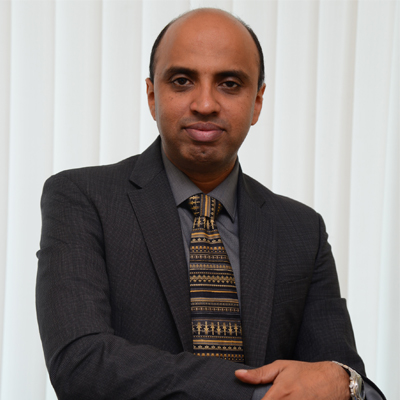
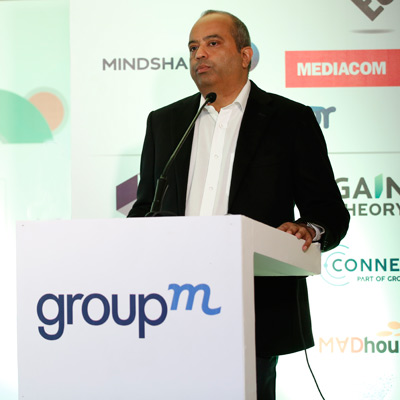
    “Think mobile as ad dollars are heading there”: CVL Srinivas

    MUMBAI: Several market forecasts that we have seen in the past couple of months project digital advertising and marketing growing by leaps and bounds this year. The historical galloping growth rates have led marketers and planners to consider the possibility that the medium will overtake television spends in the near future.
     

    Brand custodians are no longer investing in digital as an added benefit but are thinking about investments on that front from the get-go. So is digital gnawing away at television’s share of ad spends or is its growth coming courtesy a new breed of brand builders?


    Group M South Asia CEO CVL Srinivas does not think that TV is losing its edge. “Television is riding the digital wave, and smartly so”, says the veteran waving off any worries of television ad revenues seeing a dip this year. Not denying the obvious growth one sees in the digital space, Srinivas gives indiantelevison.com a complete breakdown of  how the digital growth works in favor of broadcasters and content providers, while also touching upon the key trends in the market, the changing role of media agencies and his take on the currently mushrooming of several digital agencies in the market. Excerpts from an interview with indiantelevision.coms Papri Das. 


    Here it is:


    How was 2015 for GroupM as a whole? What were the agency’s benchmark developments?


    2015 was a great year for us in GroupM. All our agencies performed well, especially when it comes to client retention which I consider most important. On the client acquisition front as well, we grew our business with several new accounts.


    Last year has also been kind to us when it came to awards. The GroupM Office of Year award, which is given out by GroupM APAC, was given to us last year. That’s something I consider as another high for us.


    For me, 2015 would be the year when we truly broke out of the mould of pure play media agency and delivered a range of different services to our clients to help them keep ahead of the curve. Over the years we have made investments in data, analytics and experiential marketing, cinema advertising and rural marketing and so on. All of that delivered excellent value to our clients last year. That has helped us diversify our offerings and in turn win us new and interesting mandates as well. Apart from that we have actively involved ourselves in the Mobile Marketing Association to help set standards and get some measurements going.


    Out of the four agencies under GroupM in India, which one do you think performed the best?


    I think all of them did exceptionally well and I say this with confidence based on each of the agency’s client retention and the newer arenas that they ventured successfully into.


    How was the year for the industry at large? Did you notice any changes that majorly impacted the industry?


    Last year we projected 12.7 per cent growth in ad expenditure and I must say we erred on the conservative side at the start of the year and we ended up with 14.2 per cent, but no one’s complaining!


    Several factors led to this development. The FMCG sector despite all the pressure it is facing continues to invest big money behind brands. You also saw huge growth coming in through e-commerce and there were quite a few brands that continued to invest throughout the year.


    What key trends do you see emerging in the market in 2016?


    Very clearly, our clients and brands in general are adapting to mobile as a medium. Till few years ago we hardly had ten or twenty clients, today the count is around 150. Advertisers are actively investing in campaign after campaign, month after month, by experimenting with new formats and following the measurements.  That is something I see taking off in a major way this year as several enablers are supposed to come into place in 2016.


    E commerce is emerging as a platform for advertisers in 2016 which can give an interesting spin to ecosystem.


    Apart from this we see several interesting initiatives happening in the content space, especially in the video and branded content space. This can give a further push to mobile advertising. The real big headline for me is mobile driving digital growth and in turn driving ad growth in India, and getting all traditional medium owners – be it broadcasters or be it print publication – to think mobile fast and think mobile first, because that’s where most of the advertising dollars are gonna flow to.


    What do you think will dictate how marketers spend this year?


    Right now we observe that marketers are a bit circumspect on where and when to invest. We are not yet seeing any major budget cuts otherwise our numbers in the GroupM This Year Next Year report for 2016 wouldn’t have looked so good.  But there is definitely an amount of cautiousness creeping in amongst advertisers.


    I think this year they are going to look at a lot more Return On Investment (ROI) and accountability across different media platforms. I also think they will wait and watch the market before deploying any of their long term campaigns and investments across media channels. Unless a property is tried and tested it will go through intense scrutiny before marketers decide to invest. Tracking of ROI and tracking of what the marketing spends are doing to the overall business will be key drivers for brands this year.


    Brands are increasingly seen as the sum of all customer touch points and this in turn increases the scope of marketing. In this context, how is the role of agencies changing?


    We think we are becoming even more relevant in the current scenario and important at the end of the day given the way the marketing and the media landscapes are shaping. Today consumers have multiple choices when it comes to brands and media consumption channels. In the same way advertisers and marketers also have multiple options to invest in. It can become highly confusing for the clients. That’s where GroupM  went ahead of the curve and started investing in multiple media investment management  services so that our clients can have a holistic marketing strategy and solution.


    What percentage of your business is “traditional” or core media now?


    I can’t share the break up but if you look at the market split, and the fact that we are future focused we tend to concentrate on wherever the marketing is moving to step ahead of it.


    A lot has been said about digital advertising overtaking television as the primary medium. What’s the ground reality?


    If you look at the trends in the last few years, not just in India but across markets we see a lot of synergy between television and digital. Looking at it from a consumer’s lens, you and I watch television and also consumer media on our second screen be it mobile or laptop. There is some amount of interplay happening between the screens.


    Looking at it from a broadcaster or content providers angle, most major broadcasters today have their own digital arms. And hence, I say television is actually riding the digital wave. Broadcasters are doing it very smartly, unlike other media which are getting swamped by digital. We see that trend continuing. Inf act if you look at our forecast figures, TV and digital account for close to 60 per cent of the market share of the total ad expenditure, and we see that number move to 70 to 80 per cent in near future.


    Is India truly ready for mobile marketing? Do we have a road map for it?


    There are several developments that have happened in the recent past. I have been personally involved in setting up the Mobile Marketing Association (MMA). Despite India being one of the top markets globally for mobile, we did not did not earlier have a body that monitors the digital marketing space. Therefore we needed this body where all stakeholders can come and ideate and put in place systems and structures for the medium. A lot of useful discussions have happened in the recent past be it on measurement and advertising standards and MMA as a body has done phenomenal work across the market. That is one of such several initiatives that will show its effect in 2016.


    What impact did BARC rural inclusive data have on the TV industry and on advertisers?


    I think it’s still early days to comment on BARC’s rural ratings. It’s only few weeks that they have come out. It is a very positive development. Rural India’s viewership accounts for a sizable chunk of our market. It’s a very aspirational class and important segment for many products and categories. To have data for this segment is a very good development.


    Though we will have to wait on watch how the data impacts the market, it is sure that advertisers are going to look at rural markets a lot more seriously especially in terms of media investment deployment across TV and other media options. Similarly content creators are also going to look at that space a lot more seriously today and come up with relevant products and offerings.


    And over all it is good for the economy and the country because we are finally becoming a lot more inclusive.


    How will the advertising landscape change with the completion of cable television digitization in India?


    Funny thing about India is that nothing ever happens sequentially…..everything happens together….somehow amalgamating. This actually makes our job fun because on the one hand you have the whole cable TV digitization playing out and DAS phase III being rolled out, and a lot of DTH players have gotten very active. On the other hand you have the 4 G launch that will open up a lot more bandwidth and infrastructure in digital and you have mobile crossing 1 billion connections.


    For marketers and advertisers what this means is to be aware of the developments, keep a close eye on them and see what are the opportunities they can capitalize on in short term and where is it that they need to invest, test and learn so that they can start capitalizing on them in the long term.


    The big lesson for us and specially me has been that we need to be constantly in a state of beta. What do we keep testing and learning today which could become a big thing tomorrow. Staying dynamic is the way to go.


    2015 also saw several well-known creatives and executives setting up their own startups, resulting in a mushrooming of several branded content and digital agencies. What is your take on this development?


    I think it is a good thing that bright young individuals are setting up companies on their own.  In fact some of us wouldn’t have jobs if this wasn’t done earlier. It also shows that today there are so many different areas that are emerging, and with the way the industry is being revolutionized there are many different expertise and special skill sets that the marketers need. I believe all of us can co-exist as one happy family because of the way the whole pie is getting fragmented. A lot of them are my dear friends and I wish them all the best.

     

  • GroupM’s Motivator ropes in Amol Mohandas as client leader

    GroupM’s Motivator ropes in Amol Mohandas as client leader

    MUMBAI: GroupM’s media agency Motivator has appointed Amol Mohandas as the client leader on all businesses. He will be based out of Mumbai and will look after all the businesses of Motivator in the city.


    With over 15 years of experience, Mohandas  joins Motivator from Percept Media. Prior to joining Percept Media, he established his own venture, Weave Through Communications, which provided multi-platform communication solutions to  clients. He has also been a part of Mediacom as the general manager for the UAE region, Starcom MediaVest Group as the associate media director and Mindshare.


    Motivator general manager Trishul Bhumkar said, “All our clients have had a fantastic 2015 and the momentum is only going to increase. We are getting ready to deliver on their business ambitions going forward. To do this we found the right senior leader in Amol. With a deep understanding of communication planning and having been an entrepreneur himself, Amol will be able to deliver on our client’s business results. Under him, Motivator’s Mumbai client leadership team is fully strengthened.”


    Mohandas added, “It is a happy feeling to be a part of an organisation where the objectives – the individual and the organisation – match! Looking forward to a long and exciting journey ahead where I can leverage my 360 experience across diverse work environments and contribute to the success of our client’s businesses.”

  • WPP acquires 61% stake in STW for $512 million

    WPP acquires 61% stake in STW for $512 million

    MUMBAI: STW Group, Australasia’s marketing content and communications services group, comprising over 75 operating companies, is all set to merge with WPP’s Australian and New Zealand businesses.


    Martin Sorrell helmed WPP has acquired a 61 per cent controlling stake in STW for approximately $512 million, of which $387 million will be paid via new shares with STW assuming debt of $125 million.


    Post the merger, STW CEO Michael Conaghan will continue in his current post and Robert Mactier will also remain chairman of the company.


    Mactier said, “Bringing together the respective iconic brands and wonderfully talented people of STW and WPP Australia and New Zealand under a single common ownership and will unlock tremendous local and global capability, experience and efficiencies for our clients as well as establishing a fantastic platform for our people to prosper.”


    “The transaction is EPS accretive as a result of the issue of new STW shares at a premium to market and also delivers a material reduction in STW’s leverage and the opportunity to unlock a range of synergies thereby creating significant value for our shareholders. Importantly, binding governance protocols and shareholder protections have been agreed for the benefit of the continuing minority stakeholders. I consider this a genuine win-win transaction for all our stakeholders. Post completion, we look forward to working seamlessly with WPP as our major shareholder and strategic partner as we embark on the exciting journey that is in front of us,” he further added.


    Connaghan said, “To finally align our shareholdings in those existing partnerships (J Walter Thompson, Mindshare, Maxus and Added Value) and now to expand our relationships across the full STW and WPP Australia and New Zealand portfolio of companies is an amazing opportunity. WPP is the leading player on the global stage in our industry. We have the potential to create a group unparalleled in this part of the world, totally focussed on our home markets, but allowing our clients and people open access to the best thinking on a global level.”


    Sorrell added, “The merger of our Australian and New Zealand operations with STW, will give us a unique opportunity to offer our local and international clients a comprehensive set of services and to make sure we can offer the best talent through country management. It will also enable STW to focus on the Australian and New Zealand markets, which it knows best, with a structure that will strongly incentivise its people.”

  • ‘Technology is the future of experiential marketing:’ Vidur Patney

    ‘Technology is the future of experiential marketing:’ Vidur Patney

    MUMBAI: When talking of marketing campaigns we often come across the term ‘on ground activation.’ While at a rudimentary scale, it’s how a brand markets itself through direct engagement with consumers, its utility and purview is infinitely evolving. The idea is to create a bond between the consumer and the brand beyond ‘buying and selling’ by immersing them in a fun and memorable experience, which evokes emotions within the consumers that they thereafter associate with the brand instead.


    From a simple handing out of Red Bull cans at a music concert to Multi Screen Media’s open air bus ‘Bulaava Express,’ which toured the country across 13 cities creating euphoria for the 2014 IPL — the beauty of experiential marketing lies in its flexibility of mode and scale to target the consumers.


    While the concept isn’t new to marketers, its rapid evolution over the years armed by technology and digitisation has made it increasingly important to understand experiential marketing from an insider’s perspective.


    With that in mind, Indiantelevision.com approached recently appointed Maxus national director – experiential marketing Vidur Patney to shed light on the changing landscape of experiential marketing, and the role it is going to play in the near future.


    Purview:


    From on ground and van activations through major cities to team building activities from brands at corporate level, experiential marketing plays on a wide range, and the possibilities are endless.


    How you use the formula to connect with your consumer, what chord you strike with them in the process is what puts you at an advantage when it comes to this form of marketing. The idea is to wow the consumers with unique interactions and engagements that leave impressions in their minds. Creating vanilla experiences that the consumers can then start associating with the brand is also part of the process.


    Though the possibilities are endless, it is getting increasingly challenging to come up with new ways to give consumers that vanilla experience. The only way forward is to use the available digital and technological tools at our disposal. By identifying how the consumers engage with such tools, we come up with concepts that allow us to make the most of it.


    Evolution:


    The evolution of experiential marketing has happened in three phases. Often considered an old school marketing art, the first hurdle was to get brands and marketers to realise its potential in the current ecosystem. To make them look beyond the generic TVC marketing and acknowledge that today consumers are not content with just knowing a brand through their television sets.


    Once that was established, phase two was to explore the various ways in which experiential marketing can be used, and integrated with the headlining campaigns. This was the period we saw an increase in on-ground activities, contests, product launches where consumers could interact with brand ambassadors, etc.


    Once that was achieved, we had to think how to expand the reach of experiential marketing, take it from being a space restricted solution, to a trigger that leads to conversations and interactions about a brand on a larger scale. That’s why currently we are concentrating on making way for more and more shareable experiences using the digital platforms.


    Role of technology:


    There’s no denying the fact that technology is the way forward when it comes to marketing, be it at the concept level or while executing. It has become an integral part of our consumers’ lifestyle. We can not only target consumers better with analytical tools made available to us through technology, but also engage consumers to give them the best of experiential.


    Technology is also the differentiator when a brand wants to stand out and grab eyeballs. It is no longer something people are averse to. People are willing to accept technology into their lives and know more. As a result, to customise for them, to garner more participation and deliver a powerful brand message, technology plays a very important role.


    The tools could be one on one engagement through technology, giving consumers a virtual experience. Use of technology is important because it is something today’s generation is excited about. If used right, it helps give that wow factor and conveys a much stronger message for the brand. Also, it goes a long way into consumers accepting what you are saying and giving them something memorable.


    For example, the recent use of virtual reality (VR) and augmented reality technology can and has opened up new avenues when it comes to experiential marketing. People can now get a first hand interaction with how a brand functions. These are extremely useful tools for automobile and technology related brands where a consumer can see the inner workings of a car or a phone. It has a much bigger impact than simply sharing the specs with a consumer. But its use is endless when it comes to other sectors as well. One may argue that applying virtual and augmented reality in marketing may rack up the cost of marketing for brands but that’s just the initial phase. Just like any other technology, it’s the first investment that costs more, after which one can cash in on them while enjoying more innovations.


    Going beyond metros:


    Experiential marketing can be a very important marketing tool when it comes to tier II and tier II cities. We have noticed that while on ground activations work in metros, its reach is becoming limited. It only draws in a niche crowd. The urban consumer isn’t easily wowed by simple events, you need to spend more and innovate your engagement concepts to keep their interest. They get easily bored. Consumers in tier II and tier III cities, on the other hand, can still be catered with vanilla experiences by creating simple engaging moments. With brands now looking their way to expand consumer base, use of experiential marketing becomes crucial in those areas.


    We recently did an on-ground activation for a movie screening in Indore where hundreds of kids and their parents turned up by simply allowing them to play games on an app we developed for the event. In a metro that would have only interested a niche group, way below hundred.


    Experiential marketing in sports:


    If there is one section where experiential marketing dominates, it is sports. We all interact with sporting events for a personal connection, be it our passion for the sport, our loyalty to a team or love for a favourite player. That is why brands love to associate with sporting events. It is easier to create those memorable moments, which brands would to be credited for. They want consumers to associate their favourite on ground memories with the brands.


    There are numerous possibilities for experiential marketing for any sporting event, be it Indian Premiere League, Indian Super League, Pro Kabaddi League, etc.


    A holistic marketing solution:


    Experiential marketing and digital marketing forms two important pillars of the core media solution that we provide our clients. Having an experiential marketing arm gives Maxus an added advantage of providing a holistic marketing solution.


    It’s a three way communication within Maxus that helps us achieve that. When it comes to digital technology and bringing it on ground, we have Metalworks. Figuring out how that technology can be used to wow and create a memorable experience for the consumer is what we at Experiential Marketing do. When these come together with Maxus’s core media vertical, we are able to give brands the best possible solution to engage with the consumer.


    Going only experiential:


    So far experiential has worked in collaboration with core media and other arms of marketing. While there are certain brands that can go only experiential as their marketing strategy, it highly depends on the brand’s target audience and the type of campaign. There are some products for which experiential gets the lion’s share of the marketing budget.


    While there is no set rule, more and more brands are keeping budgets aside for experiential marketing because it’s the last mile of communication between the brand and a consumer.


    Experiential works best when it’s area specific. If a brand launches a product aimed at consumers of a certain area, having a localised approach makes more sense rather than a TVC.

  • Motivator appoints Debarshi Chakravorti as national head

    Motivator appoints Debarshi Chakravorti as national head

    MUMBAI: Motivator has appointed Debarshi Chakravorty as national head of digital communication and planning.


    Chakravorty has over 12 years of experience and will work from the company’s Gurgaon office. He will report to Motivator chief growth officer V Narayanan. 


    Narayanan said, “We are thrilled to welcome Deb. Motivator’s digital centricity has helped in building successful partnerships within WPP and outside breaking new grounds in marketing in a digital world. Deb harbours Motivator’s essential expertise to drive frugal interventions that affect clients business and effect social change.”


    Chakravorty added, “My formative years in advertising and my prolonged stint at my last digital media agency has helped me develop strong fundamentals around communications and digital. With the progression of media, there is a need to shift from delivering campaign centric solutions to business centric solutions for clients and partners. Motivator’s comprehensive vision for the future to provide business centric solutions, keeping digital at the center, seemed an interesting proposition and was right up my alley.”

  • Mindshare leads Media Abby Awards metal tally; Bennett, Coleman & Co. leads publisher category

    Mindshare leads Media Abby Awards metal tally; Bennett, Coleman & Co. leads publisher category

    GOA: If women empowering the Republic Day parade saw a revolution in the Indian armed forces, women representation during the Abby Awards of the 10th Goa fest was a supreme encouragement. There were more women creative minds representing agencies when compared to men.

    In a flamboyant evening of joy and happiness in Goa, the Abby award winners for Publisher and Media category were announced. The awards were distributed by eminent personalities like Madison World chairman Sam Bhalsara, Group M South Asia CEO CVL Srinivas, Goa Fest Jury chairman Pratap Bose, Dentsu Aegis chairman India and CEO South Asia Ashish Bhasin, Times Network CEO MK Anand and Lodestar Universal India CEO Shashi Sinha.

    Speaking about the competition and entries in the 2015 edition of the Goa Fest, Bose said, “The number of entries has increased to 674 compared to 619 last year in the media category. Entries this year have been highest when compared to any edition of the festival. The decision was taken after four days of detailed analysis by dignitaries from respective countries. The Publisher award started last year, saw 62 entries, which is exactly the same as 2014. This sector needs to improve.”

    Apart from India, entries were accepted from Sri Lanka, Bangladesh and Pakistan and when asked if there was a possibility of expanding it beyond the Asian sub-continent, Bose said, “Not in near future! There is no plan of further expansion as the beauty is that these are Indian awards judged by Indian dignitaries, who understand the market for the agency that they work for.”

    He added, “There is no such difference in quality of work compared to last year and there is no trend or platform emerging as dominant. The work has been as versatile as it was. Winners from Sri Lanka and Bangladesh signify that international entries have been commendable, which is a huge encouragement.”

    Media metals tally is lead by Mindshare with a total of 11 metals, followed by Madison Media with 10. Out of the 74 distributed metals, there were 12 Golds, 23 Silvers and 39 Bronze awards.

    Click Here for the winners list:


  • Research imperative to exploit big sports leagues

    Research imperative to exploit big sports leagues

    MUMBAI: The year 2014 witnessed the emergence of sports as it rekindled the nation’s hope and sports channels played a huge role in creating buzz in the arena of sports.


    The successful league models in Kabaddi, Cricket, Hockey, Football, Badminton and Tennis paved the way to create viable career options for young Indians. However, the key to success remains in monetization and return of investment for stakeholders and the sustainability of their business models.


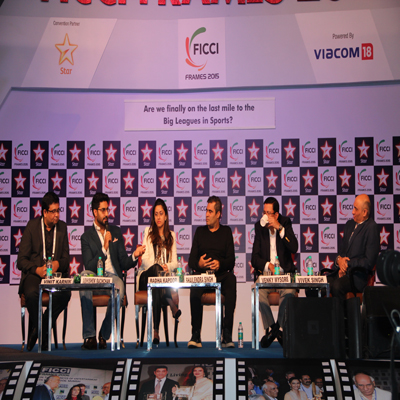
    In a session of FICCI Frames moderated by Group M national director sports and entertainment Vinit Karnik, which had Percept joint MD Shailendra Singh, DOIT media founder Radha Kapoor, KKR CEO Venky Mysore and various sports franchise owner Abhishek Bachchan, panelists spoke on the issues relating to a national policy on sports.


    Infrastructure status to build stadiums and facilities, challenges before rights holders to monetise sports content, franchisees business models and a national curriculum on sports were some of the topics that were touched upon.


    The panel spoke aggressively against federation becoming a regulatory body and intruding into business strategies of a privately owned entity. Speaking on the same Singh said, “The growth is determined by demand and supply, you can make money of something you go for it. India has a large youth population desperately waiting for an opportunity to make a career out of sports but what’s stopping them is poor infrastructure and that is where Narendra Modi is going wrong. The federations are unwanted obstacles headed by corrupts. They make things difficult and people walk off from doing a business. I organised a similar tournament like IPL in 1999 but Dalmiya called it Masala and asked me to stop it immediately. Today BCCI cherishes the IPL.”


    While Venky Mysore, who closely works with the BCCI being the CEO of Kolkata Knight Riders (KKR), emphasised on the commercial sector saying, “While it’s easier to work with the BCCI considering the fact that one has to deal with less number of people compared to the sports ministry, their intrusion in the business and strategic affairs of the franchisee is a bit irrational. KKR has made money out of IPL and we are a debt free franchisee – a fact that I am proud of. For any brand to work in India you need fans and the ratings show that KKR matches always bag the pole position. So every new sport has room but it should not be rushed as the loss is immense.”


    While non-cricketing sports are also emerging in the major sporting league category, making money out of them is difficult for broadcasters, addressing the issue Bachchan said, “When Charu came to me with the Pro Kabaddi concept, I was shocked. But after seeing the ground reality my perception changed. There are more than 1500 Kabaddi clubs in Mumbai desperately looking for an opportunity and a platform to showcase their talent and Star and Pro Kabbadi League opened it up for them. The Indian Super League (ISL) is another example of broadcasters and corporates coming together to put up an exquisite event. Due to the ISL deal that ensures ground level improvement of the sport, more kids are getting the infrastructure they deserve, which will show its relevance 10 years down the line.”


    DOIT Media founder served for more women participation and declared new platforms for women in India. “We are launching a new kabaddi league dedicated to women, which will ensure their participation and it’s just the beginning. Every sport in future may have a female version too because the talent exists but gets rusted due to lack of use.”


    Every major sport now has two leagues but all of them are not profitable for the broadcaster. Kabbaddi changed rules to rope in more revenue generating opportunities and the federation supported it, cricket also did the same with innovations like strategic time out. While it is very important not to lose the authenticity of the sport, generating revenue is a big necessity in order to ensure longitivity.     

  • Cinema advertising to grow at 20%: Interactive Television’s Ajay Mehta

    Cinema advertising to grow at 20%: Interactive Television’s Ajay Mehta

    MUMBAI: Movie buffs prefer visiting a cinema for the almost minimal number of advertisements that play during the movie run. Advertisers are still somewhat hesitant of opting for these ads since there is a lack of measurement of these ads. Contrary though according to Group M’s biannual advertising expenditure futures report titled ‘This Year Next Year’ (TYNY) cinema advertising closed 2014 with a 25 per cent increase.

    When asked at what rate he expects cinema advertising to grow for this year, Interactive Television CEO Ajay Mehta says that it will grow at 20 per cent.

    Interactive Television specializes in cinema advertising and releases the CAM report. According to Mehta, for the last two – three years cinema has been the second fastest growing medium after the digital. “While digital is on a different growth trajectory, the basic level of cinema in the country is low,” says Mehta. 

    “Even though we are a cinema savvy country, the total cinema spends is less than one per cent, which is even lower than the global average. When you look at global averages there are countries where cinema is hardly part of the consumer’s habit,” he adds.

    There are a few reasons why the segment is seeing a growth. Firstly it is because of the low base number, which is increasing today. Secondly, over the last two to three years there has been the phenomenon of “multiplexisation” of the industry, which is getting reflected because of a whole round of consolidation that will continue in 2015. “As players like PVR, INOX, Cinepolis and Carnival get bigger and stronger, the whole consolidation will further aid growth.”

    The growth can also be attributed to the digitisation process of single screen theaters wherein films are being delivered directly via satellite to theaters as compared to the costlier traditional prints, which has reduced costs and is creating transparency as practically the entire single screen universe (barring an odd 500) is digitised.

    According to industry estimates, a 60 second ad in a multiplex for one week (which is minimum of 21 shows and can go up to 28)  in the top metros would cost Rs 10,000 to Rs 12,000, while the cost for single screens would between Rs 1,500 to 2,000 for the same period. The cost in areas such as South Mumbai and South Delhi multiplexes is much higher than the average figures for multiplexes.

    As per a report by Interactive Television brands such as Choc On, HDFC Life, Vicco Vajradanti, Engage, Vicco Sugarfree, Woodland, TVS Apache, Vicco Shaving Cream, LIC and Bhima Jewellers have been consistently advertising on cinema. The report takes into account their presence on cinema for the period August 2013 to January 2015. Choc On as a brand is totally built on cinema as majority of their spends are on this medium.

    The selection process of including cinema advertising spends depends on the brand’s target audience and cinema space in their priority markets. While a regional brand could select a single screen cinema, for brands with larger pockets it could be an “and” option wherein both multiplexes and single screens are combined.

    Telecom is one category that has started advertising recently on cinema on both single screens and multiplexes as it seek to penetrate its brand campaign in Tier III and rural markets, like the FMCG category. “In 2014 we saw e-commerce brands like Flipkart and Amazon including specific travel verticals like travel websites increase their spends, which will continue,” opines Mehta.

    2014 also for the first time saw luxury brands taking to multiplexes, especially car brands such as Mercedes, Jaguar and Audi. “In 2015, when the economy promises to be better, there are a lot of launches lined up and auto is going to be one interesting category for multiplexes,” says Mehta.

  • Omnicom named most creative agency by Gunn Report

    Omnicom named most creative agency by Gunn Report

    MUMBAI: Gunn Report for Media named Omnicom Media Group Agency OMD Worldwide as world’s most creative media agency. This year, the perennial first ranked network was joined in the top three by sister Omnicom Media Group agency PHD Worldwide, which claimed the third place ranking.


    The Gunn Report for Media is the industry standard for evaluating media creativity, ranking agencies according to their performance in the top industry awards shows around the world. Most importantly, it recognizes the vital role media agencies play in today’s highly competitive and fragmented communications landscape. The rankings reflect a point system based on awards won in more than 50 annual award competitions worldwide.


    In addition to OMD leading the list with 521 points, the top five slots were claimed by Starcom-Mediavest (Publicis) with 467 points; Omnicom Media Group’s PHD (357 points); Mindshare (Group M) with 294 points; and UM (IPG) with 209 points.


    With agencies claiming the first and third slots on the ranking, Omnicom Media Group is the only media holding group to have two agencies in the ranking’s top five. With a combined 878 points earned by its OMD and PHD networks, Omnicom Media Group also earned the most combined points of any media holding group in the ranking, followed by GroupM, which earned a total of 738 points earned across its four agency networks.


    For its ninth showing at the top of the list, OMD’s top ranking reflects recognition earned in 2014 by agencies in every region across its network, with stand-out performers including OMD Singapore, OMD UK, OMD Colombia and OMD MENA, which was the most awarded media agency at the 2014 Effies.


    PHD joins the Top Three for the first time, having won four Gold Media Lions in Cannes – the most Golds won by any media agency in 2014. Among the standout performers are PHD UK and PHD India; as well as PHD Hong Kong, PHD New Zealand, PHD China, PHD Denmark and PHD Colombia. PHD was also recognized in the report for having two of the world’s most awarded campaigns in 2014.


    Omnicom Media Group CEO Daryl Simm said, “Awards are a great testament to the innovation and creativity of our networks and our people. No source provides as comprehensive a measure of an organization’s ability to deliver great work on a global level as the Gunn Report — we’re very proud of this recognition.”

  • Sony Six’s on-ground activities push NBA’s viewership

    Sony Six’s on-ground activities push NBA’s viewership

    MUMBAI: If numbers are to be believed then basketball has started getting its due in the cricket-crazy country.

     The National Basketball Association (NBA) is seeing its popularity levels scale upwards on television thanks to a wide on-ground marketing push. Sony Six, which broadcasts the NBA action, has seen a 70 per cent increase in its viewership this season, claims the channel. When asked about the reasons behind the same, the channel’s business head Prasana Krishnan says, “One, the overall penetration and popularity of the game is increasing in India.  Two, our on-ground marketing initiatives in 16 cities, which propelled this growth. We have been marketing the brand and product intensively.”

    NBA India and Multi Screen Media (MSM) had signed a three year television agreement beginning 2012.

    NBA India, this year, launched its on ground activity, the NBA JAM in 16 cities. The event which took place from 22 September to 6 December featured a 3 on 3 tournament format, which had more than 3,000 teams participating. The tournament also saw more than 600 colleges participating. The 16 cities included Chennai, Guwahati, Kochi, Lucknow, Jaipur, Nagpur, Bangalore, Kolkata, Chandigarh, Ahmedabad, Bhubaneswar, Delhi, Indore, Hyderabad, Pune and Mumbai. In Mumbai, celebrity Neetu Chandra was roped along with the Sacramento Kings dance team, who were flown in from the US to entertain fans during the event.

    Krishnan says that one of the key learning’s for the channel from this season was that it witnessed a growth in southern markets. “Last year, we visited only Bangalore and Hyderabad. This year, besides these two, we also visited Kochi and Chennai where these markets have improved. So have also interior markets, like Jaipur, Indore, Lucknow, Chandigarh etc.” Krishnan informs.  It was also the core marketing proposition of the channel during the launch this year.

    The business head opines that the potential for continued growth in non-cricket sports properties is very high and the challenge ahead for the channel would be to continue the momentum. He feels that the biggest challenge ahead can be transformed into the biggest opportunity which is to make the sport better entrenched and bigger in the country.

    Speaking on this success of the new found sport, Group M ESP national director- entertainment sports and live events Vinit Karnik says, “After football, if there is a low hanging fruit, it is basketball. This is because most schools in India have had a basket, if not a proper court.  It is one of the most sampled sports at the school level but since for a long time nothing concrete was organised for players in the country, the game never got its dues. But with NBA and its 3 by 3 format, these schools and colleges will bring the sport back in lime light and the potential is set to grow.”