Tag: Group M

  • Group M-owned MediaCom India wins Rs 200 crore media mandate for Parle Agro

    Group M-owned MediaCom India wins Rs 200 crore media mandate for Parle Agro

    MUMBAI: Parle Agro, one of India’s largest beverage company with iconic brands like – Frooti, Appy & Appy Fizz, has awarded its media mandate worth Rs 200 crores to Group M owned media agency MediaCom India, following a multi-agency pitch that lasted well over three months.

    As the full form AOR for Parle Agro in India, MediaCom will be responsible for the media strategy, planning, buying and implementation for all media in Indian sub-continent. Atahe account will be supervised by the MediaCom Mumbai office starting December 2019.

    Announcing the deal, Nadia Chauhan, Joint Managing Director and CMO, Parle Agro said, “We are happy to have MediaCom on board.  As Parle Agro gears up for the next level of growth, our strategic partnership with MediaCom will help drive our aggressive targets through innovative and disruptive media strategies.“

    Commenting on the win, Prasanth Kumar, CEO, Group M South Asia, said, "First, massive congratulations to Mediacom on the Parle Agro business win. It’s a very special moment for us. It is a fantastic opportunity to work on the portfolio of iconic brands across the Parle Agro group. And am confident Navin and his team will continue to bring in their collective experience and leverage our network’s strengths to deliver the best for Parle Agro’s portfolio of brands."

    Navin Khemka, CEO, MediaCom South Asia, added, "Parle Agro has a long and illustrious history – it has established leading household beverage brands by creating innovative and iconic products for over 34 years. We are completely in sync with their philosophy – and what makes this partnership even more exciting is that pursuing growth is our primary target, which calls for an extremely dynamic association. We are looking forward to creating an unmatched brand experience for our consumers. "

    A pioneer in the beverage industry, Parle Agro Pvt. Ltd. is the largest Indian beverage company with a brand turnover of Rs 5000 crore.

  • Mindshare collaborates with Apollo Tyres to focus on the SUV segment

    Mindshare collaborates with Apollo Tyres to focus on the SUV segment

    MUMBAI: Mindshare, India’s largest full-service media agency, a part of Group M, launched an integrated media campaign for Apollo Tyres’ new range – Apollo Apterra AT2. This all-terrain tyre complements Apollo’s existing Apterra range including specialised Highway Luxury (HL), Highway Terrain (HT), High Performance (HP) and the All-Terrain (AT) tyres for the SUVs.

    The riveting all-India TVC for Apollo Tyres’ SUV segment seeks to add more to ‘Bad roads go to good places’, which is the key message for the company’s tyres for SUV enthusiasts. The campaign aims at establishing Apollo Tyres as a high-technology brand, which has unmatched traction and durability and has been thoroughly tested in the toughest of conditions in South Africa before being introduced.

    Mindshare used its proprietary tools like [m]Platform and Adaptive Marketing Framework to capture the interests of the auto enthusiasts. For Apterra, Mindshare partnered with online video platforms with a hybrid approach of behavioural targeting & high reach via Cricket (Ind-SA T20 series) and Entertainment (KBC). High affinity platforms and niche movie premieres were also utilised to establish the proposition. Partnering a leading auto-portal, Mindshare also did an off-roading day sponsorship. Taking the campaign a step further – key highways of India were identified for off-roading, and impactful creatives were being placed along them.

    Commenting on the launch of the Apollo Apterra AT2 tyres, Apollo Tyres Ltd president, Asia Pacific, Middle East & Africa (APMEA) Satish Sharma said, “We are sharpening our focus on the SUV segment in India, with specialised tyres for different terrains, as this vehicle segment is growing faster than passenger cars. The excellent test results, and the global efforts that have gone into developing the Apollo Apterra AT2, gives us the confidence that this tyre will set a new benchmark in the all-terrain tyre space, and will further propel our leadership in the SUV segment.”

    Sharing her thoughts on the new campaign, Mindshare North & East senior vice president, client leadership Ruchi Mathur said, “There is an organic momentum in the SUV category and therefore, this was the perfect time to launch Apollo Apterra AT2. Our primary task was to decode, identify and then reach the SUV enthusiast. Given that we were talking to a niche segment, we needed a hyper customised approach, which our proprietary tool ([m]Platform) and framework (the Adaptive Marketing Framework), helped with. By leveraging these, we understood the interests of the target audience and converted these insights into a strong strategy and action plan, across offline and online channels. We played to the niche segment, but with scale.”

    Apollo Tyres has also curated #BadRoadBuddies, a community for budding and existing off-roaders to come together and discover the unexplored beauty that beholds in this vast terrain that is India. The people who belong to this community are the ones who go the distance to make it through some of the harshest roads in the country to get breath-taking views and lifetime worth of experiences.

  • Group M global CEO Kelly Clark Steps down

    Group M global CEO Kelly Clark Steps down

    MUMBAI: As reported by The Drum, Group M global chief executive officer Kelly Clark has resigned from his post after serving it for three years. He, reportedly, will be replaced by current Group M agency Essence chief executive officer Christian Juhl.

    The agency is still finding a replacement for Juhl.

    Clark has led the WPP media giant globally since October 2016 and before that ran its North America and European operations. He has served exclusively in WPP agencies since joining its JWT advertising firm as a media director in New York in 1988.

    From there, Clark moved to Mindshare where he held chief exec roles in Asia Pacific and the UK and he also enjoyed a four-year spell in charge of Maxus before taking the reins at Group M.

  • Tarannum Alam Joins MX Player as Head – Agency Business

    Tarannum Alam Joins MX Player as Head – Agency Business

    Mumbai, 27 November, 2018: MX Player, the largest local video player in the world has appointed Tarannum Alam as Head – Agency Business. In her new role, she will be responsible for driving relationships across advertising/media agencies pan India with a focus on revenue growth for the app. She will be based out of Delhi and will report to Viraj Jit Singh – Sr. VP & Head Revenue, MX Player.

    With a vast experience of over 18 years, Tarannum has worked with leading advertising agencies and managed media  across categories like FMCG, Telecom, Consumer Electronics, Travel, Mobile Handsets, E-commerce and Automobile.

    In her last assignment, Tarannum was with Havas Media as Executive Vice President and handled clients like Hyundai, Emirates, Voltas, Kohler among others. She started her career with McCann Erickson in the year 2000 and worked on the Nestle and L’Oreal businesses. She was also associated with Madison, Vivaki Exchange, Group M and Reliance BIG FM in the past.

  • The rise of young execs in agencies

    The rise of young execs in agencies

    MUMBAI: When you walk into a government office or a bank, chances are you will find over half the employees above the age of 35 years. The office environment is dull, boring and serious. On the contrary, if you were to visit an advertising agency, you would be surprised to see young executives driving the growth for the company and donning the executive hat. Today, agencies don’t blink an eye before appointing exes who are as young as 25 years and oh boy, they run the company!

    Generation-Y is the first generation that grew up with the internet, and these youngsters, also termed as millennials, are used to having everything at their fingertips. They are pragmatic, connected, bold, and eclectic. Millennials also have a heightened social consciousness compared to previous generations. They believe they can change the world and are not afraid to take risks and challenge the status quo. They are forthright and fearless, insist that their voices are heard, keen to share their ideas, opinions and views on a subject, not afraid of hierarchies to ask questions. This obviously leads to a positive business impact and makes them a great asset for companies.

    Big brands hop onto campus placements to source the next wave of fresh talent for their businesses or offer internships that turn into fully fledged employment. The world’s largest advertising media company, GroupM, hires close to 30 leadership trainees from the top B-schools and they undergo a six-month training before they are assigned to their roles. GroupM also hires lateral talent from premier B-schools due to which they are able to assign bigger roles to them fairly early in their careers.

    iProspect India CEO Rubeena Singh notes that we are currently in the digital age of disruption and millennials are better equipped to navigate it. They are usually more abreast with the latest in technology and are comfortable in using it for seeking solutions. In many ways, they are making agencies more tech-savvy, helping them meet complex client needs in a fast-changing digital economy.

    Mentioning that this generation has led to breaking silos and more collaboration, which is good for clients and agencies, Singh believes this is because millennials tend to work across departments, tapping into broader expertise rather than struggling on their own in the hope of claiming the glory. She adds that they are quick learners and are willing to go the extra mile, not limited to a hierarchy or an insular structure and the focus is on getting the job done.

    Having internal employee mobility programmes is the core of ensuring talent retention and elevating the younger lot to explore various roles early in their career. GroupM chief HR and talent officer of South Asia Rohit Suri mentions that the group runs an extensive employee mobility program which provides its employees the opportunity to apply for various roles within the organisation in India and across the region and GroupM India is the largest exporter of talent to the APAC region.

    Agencies are also increasingly investing in employee training programmes which help them in updating their skills and talent. Media agency Vizeum appoints its star performers to a program called Route 500 every year wherein such candidates are accorded disproportionate training and development opportunities and a fast track growth path within the network.

    India’s largest integrated communications agency Ogilvy undertakes leadership sessions to enhance the younger generation’s skills through workshops and training sessions. Ogilvy India national head of talent and HR Monty Bharali believes that learning interventions potentially accelerate a professional’s capability and possibly, growth and these days that’s very welcome.

    The people and teams are usually the backbone of a company. Without them, it’s impossible to run a business, especially one involving servicing. Investing in talent is extremely crucial for companies as it’s now almost a prerequisite for organisations to have development programmes for their employees. iProspect has a number of programmes to nurture talent and give its employees scope to move forward. A program such as NEXTGEN is designed for individuals to identify their calibre and accelerate their career to a higher / leadership level, employee exchange programs providing them with the opportunity for knowledge sharing and collaboration across global markets, iProspect University which is a central learning platform, Certified iProspect Learning Series that is crafted for employees to be informed on every aspect of digital marketing, national and international conferences, employee of the month title and fun Fridays.

    The millennial employee group is extraordinarily creative, believes in excellence and is impatient to be shown in all of its capabilities. In an organisation built around creativity and excellence, its human capital will always be the greatest strength. Bharali opines that it’s essential to retain great young talent today as agility and adaptability are the need of the hour.

    Young talent is probably the most expensive asset for agencies and Vizeum media associate general manager Saumya Agarwal points that talent retention continues to gain more importance as the availability of right talent remains a big challenge and it takes far more time, energy and money to replace than to groom an existing talent.

    On a different note, The Glitch co-founder and content chief Varun Duggirala thinks that the idea should not be talent retention but talent farming. “Companies need to build great talent, nurture them and if and when they move on, be happy that you’ve sent the right kind of talent into the world,” he says.

    One can criticise millennials for being fickle job-hoppers who show little interest in their work, but they actually care more about professional development than the previous generations which will only lead to more young executives in the industry going forward.  

    ALSO READ:

    The Glitch to leverage GroupM data to reach rural India

    We focus on employee learning & development: Rohit Suri, GroupM

    How agencies deal with defaulters

    Has advertising finally begun to embrace AI?


  • AXN kick-starts a bold, thought provoking campaign for the premiere of ‘Handmaids Tale’ in india

    AXN kick-starts a bold, thought provoking campaign for the premiere of ‘Handmaids Tale’ in india

    AXN will host the Indian television premiere of the most talked about show ‘Handmaids Tale’ on February 5th and the channel has undertaken a unique, innovative and disruptive marketing campaign that will make everyone sit up and take notice.  

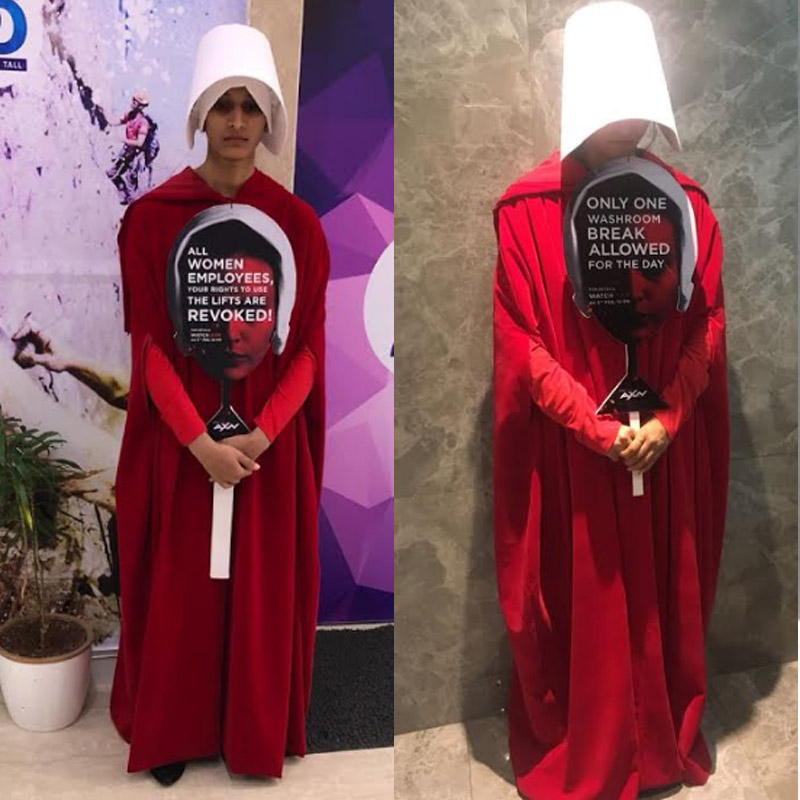
    Women dressed in red robes with white hats holding placards with bold messaging are swarming malls and offices across Delhi NCR, Mumbai, Bangalore and Chennai in places like Cyber Hub, Phoenix Mall Chennai, Palladium, Group M, Lodestar to name a few.

    These Handmaids are holding placards with thought provoking and impactful messages such as ‘Women’s rights to use the lifts are revoked’ outside the lifts, ‘Women employees are allowed only one washroom break for the day’ outside the washrooms. Without uttering a word or enforcing the rules, these women are giving people a glimpse into the life of a Handmaid and how they are forbidden from exercising basic living rights.

    Set in a dystopian future ‘The Handmaids Tale’ follows the life of fertile women who are forbidden to hold jobs, own property or even read. Their life’s purpose is to bear children for the rich. The show has created a stir worldwide and has emerged as the best drama show of 2017. Apart from winning 8 Emmy and 2 Golden Globes, the show has been appreciated for the powerful performances and a brave theme that makes people question the future.

  • Cable & broadcast biggies discuss issues on day 1 of CASBAA Convention

    Cable & broadcast biggies discuss issues on day 1 of CASBAA Convention

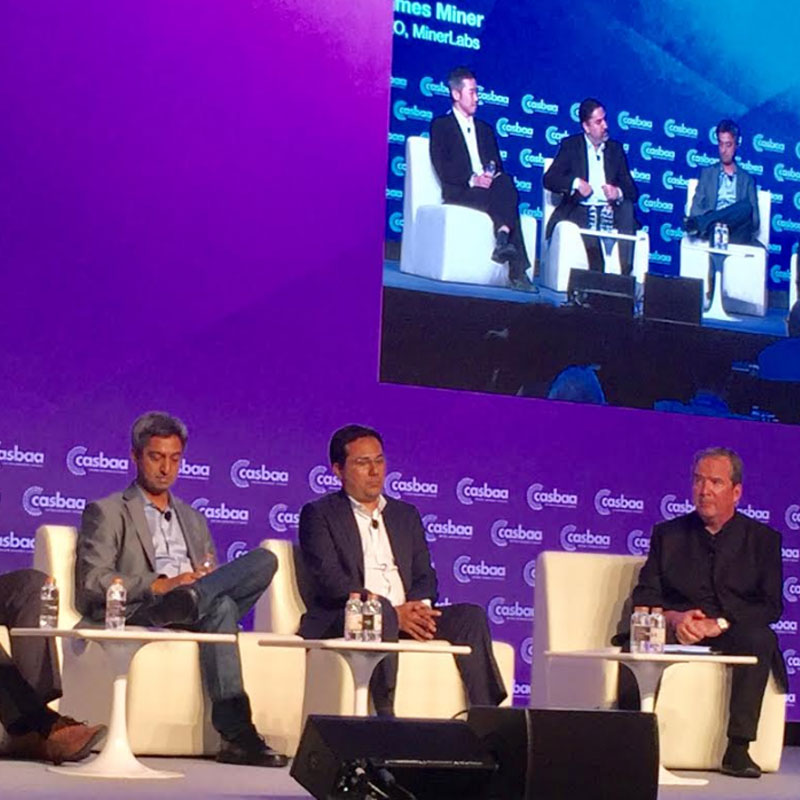
    MACAU: The CASBAA Convention 2017 in Macau kicked off on 7 November 2017 with welcoming remarks from 21st Century Fox CASBAA Board Chairman and SVP Public Affairs Asia Joe Welch, during which he highlighted the association’s escalating efforts to curb the on-going regional revenue leakage caused by piracy.

    “Most importantly”, said Welch, “CASBAA recently launched the Coalition Against Piracy, funded by 18 of the region’s content players and distribution partners”.

    In the meantime, CASBAA CEO Christopher Slaughter, emphasised the yet to be fully-realised digital dividends for the Asia Pacific.

    According to CASBAA, TV production quality is soaring across Asia. Audiences are engaging as never before. New ways of video distribution such as over-the-top (OTT) broadband services are reaching millions of additional customers across a CASBAA footprint that reaches from India and Pakistan to Japan and Korea, from China and Mongolia to Australia and New Zealand.

    Operator workshops and conference sessions such as “New Ecosystems: Myanmar & Cambodia” and “OTT in China” showcased the plus side, while digital negatives were highlighted during sessions such as “Under Attack” and “the ISD Battle”, as well as clear-eyed examinations of the India market and new content offerings both domestic and international.
    Some noteworthy points mentioned through the day:

    New Wine, New Bottles: Astro COO Henry Tan said,“We need to expand beyond our domestic market, it would be foolhardy to be satisfied, with 75 per cent of Malaysian households. The way the world is going, is mergers, acquisitions, and partnerships.”

    “Last year at the CASBAA Conventions I met with Group M’s Irwin Gotlieb; he told me ‘Bet on transactions’. Since we have 75 per cent market share, how to do that? Home shopping, eCommerce. We have to see ourselves as a consumer care company, our biggest asset is our customer base.”

    On Piracy:

    Premier League Kevin Plumb said,“In the past 18 months the illegal broadcasting of live Premier League matches in pubs in the UK has been decimated.”

    Sky UK Matthew Hibbert said,“Site-blocking has moved the goalposts significantly. In the UK you cannot watch pirated live Premier League content any more.”

    Federation Aganst Copyright Theft (FACT) Kieron Sharp said,“The most successful thing we’ve done to combat piracy has been to undertake criminal prosecutions against ISD piracy. Everyone is pleading guilty to these offences.”

    UK Intellectual Property Office (UKIPO) Ros Lynch said,“The UKIPO provides intelligence and evidence to industry and the Police Intellectual Property Crime Unit (PIPCU) in London who then take enforcement actions. We first heard about the issues with ISDs from TVB in Hong Kong and we then consulted the UK rights holders who responded that it wasn’t a problem. Two years later the issue just exploded.”

    On New Content New Platforms:

    Vice Media Hosi Simon said, “The business isn’t in some regional office where people send out emails, it’s about local offices building local content.”

    “What Vice trades in is being able to identify emerging trends – artists, music, movements – that young people care about. We trade on an understanding about cultural diversity and nuance, and we don’t believe there is just one global lens, the excitement is about the local story.”

    The Death Of Television?:

    The Promotion Fix @ The Drum Sam Scott said,“As Ad Contrarian Bob Hoffman said, we need to counter the falsehood that TV is dying by pointing out that it’s having babies.”

    “Marketers are not normal people. We love social media, but most people do not. 93% of marketers are on LinkedIn. Among everyone else, it’s 14 per cent. 81 per cent of marketers use Twitter. Everyone else, 22 per cent.”

    “The marketing industry has its own ‘fake news’ problem. Too many marketers – especially in digital marketing – accept what is said in our industry’s echo chamber without thinking critically or asking for evidence.”

    “Don’t let those who are biased towards digital mediums and tactics frame the debate.”

    On C-band and Satellite:

    APT Satellite Huang Baozhong: “With complementary OTT services, we add value instead of lowering prices.”

    “If other countries will follow [the US/FCC]: Japan, Europe, Australia, Korea and others … this will completely destroy the broadcasting industry in C-band.”

    ABS Raymond Chow: “C-band is a precious resource, not only for broadcast, but also mission-critical for military applications.”

    On OTT:

    BrightCove Greg Armshaw said, “Really start understanding your customer base is the essential to selling OTT …. Even though there are free offers, not everyone is signing up to it, so personalised offers, being flexible about bundling and looking at marketing partnerships are key…”

    Fox Network Group Rohit d’Silva said, “Data science is now front and centre for a multitude of industries. In the media industry the sooner they understand that data science is a huge part their operations, then they won’t get left behind.”

    Sony India Uday Sodhi said,“There is a huge mindset change required, when you move from traditional the broadcast business, to digital platforms. You have to deal with the huge explosion of data that you develop.”

  • Twitter initiated APAC business leadership summit #TwitterUdaan

    Twitter initiated APAC business leadership summit #TwitterUdaan

    MUMBAI: Twitter launched its first business leadership summit in Asia titled #TwitterUdaan in Gurgaon. The summit brought together approximately 200 industry leaders over thought-provoking presentations and panel discussions on the theme of #FutureForward.

    Along with Twitter’s executives, other representatives present at the inaugural forum were from Future Brands, Group M, HDFC Life, Ogilvy & Mather, OLX, PepsiCo, Starcom, Tata Motors, Unmetric, Vodafone India, Yes Bank, and Yu.

    #TwitterUdaan was punctuated with the launch of Twitter’s first-ever #TwitterInfluencerIndex, a study to understand the effects of C-Suite engagement, who are the top CEOs on Twitter are and what constitutes their success on the influential communications platform. The index highlighted the 100 top C-suite executives on Twitter from around the world. The various leaders were Mahindra Group chairman and MD Anand Mahindra, Kotak Mahindra Band executive vice chairman and MD Uday Kotak, Zomato founder and CEO Deepinder Goyal, Flipkart executive chairman and founder Sachin Bansal, Olacabs.com co-founder and CEO Bhavish Aggarwal, Snapdeal.com co-founder and CEO Kunal Bahl and InMobi founder and CEO Naveen Tewari.

    “India is the growth engine for Asia-Pacific on Twitter. We are committed to India and the launch of #TwitterUdaan is about celebrating the creativity and innovation from India. The time is ripe for India to lead innovation and we want to help them soar and leverage Twitter in the digital age,” said Twitter VP International markets Shailesh Rao. “CEO participation on Twitter leads to better communication and it is heartening to see India account for nearly 50 percent of Asia Pacific C-suite executives listed in the #TwitterInfluencerIndex.”

    The summit was focused on five big trends of 2016 i.e. live, video, disruption innovation, content marketing, data, and media-first. The opening keynote on ‘Future is Live’ was presented by Twitter managing director of Southeast Asia, India, Middle East and North Africa Parminder Singh who opened up the floor for engaging conversations with his presentation on Twitter’s live connection to culture.

    Following to that was an engaging fireside chat between FutureBrands India MD Shailesh and CEO Santosh Desai on how brands need to build authentic relationships with their customers.

    Global Brands and Agencies VP Jean-Philippe (JP) Maheu took the audience through content best practices in ‘Future is Content’ and provided insight on how to engage a customer, hold their attention and why video and media-rich content always wins on the platform.

    Brand Strategy Asia Pacific head Steven Kalifowitz challenged advertising norms, showcased case studies and ideas that stood out of the clutter, and asked brands to think out-of-the-box using innovative, disruptive strategies in ‘Disruptive Innovation’.

    Guest speaker Unmetric CEO and co-founder Lakshmanan Narayan presented a data-driven future showing how brands can use data to drive social media accountability and business outcomes.

    While Twitter Asia Pacific and emerging markets senior director product specialist Maya Hari presented on a media-first future how we are now living at a time where media is increasingly live, interactive, and visual. This led to a thought-provoking panel discussion with guest speakers from CNBC TV18, PepsiCo, Tata Motors and The Economist on how being media-forward is not an option anymore.

    #TwitterInfluencerIndex measures how influential the world’s top executives are on Twitter. The Index highlights how CEOs develop their digital influence and their ability to create an effect, change opinions and behaviours, and drive measurable outcomes using Twitter.Reach, relevance and resonance on Twitter are the cornerstones of the Index. 

  • Twitter initiated APAC business leadership summit #TwitterUdaan

    Twitter initiated APAC business leadership summit #TwitterUdaan

    MUMBAI: Twitter launched its first business leadership summit in Asia titled #TwitterUdaan in Gurgaon. The summit brought together approximately 200 industry leaders over thought-provoking presentations and panel discussions on the theme of #FutureForward.

    Along with Twitter’s executives, other representatives present at the inaugural forum were from Future Brands, Group M, HDFC Life, Ogilvy & Mather, OLX, PepsiCo, Starcom, Tata Motors, Unmetric, Vodafone India, Yes Bank, and Yu.

    #TwitterUdaan was punctuated with the launch of Twitter’s first-ever #TwitterInfluencerIndex, a study to understand the effects of C-Suite engagement, who are the top CEOs on Twitter are and what constitutes their success on the influential communications platform. The index highlighted the 100 top C-suite executives on Twitter from around the world. The various leaders were Mahindra Group chairman and MD Anand Mahindra, Kotak Mahindra Band executive vice chairman and MD Uday Kotak, Zomato founder and CEO Deepinder Goyal, Flipkart executive chairman and founder Sachin Bansal, Olacabs.com co-founder and CEO Bhavish Aggarwal, Snapdeal.com co-founder and CEO Kunal Bahl and InMobi founder and CEO Naveen Tewari.

    “India is the growth engine for Asia-Pacific on Twitter. We are committed to India and the launch of #TwitterUdaan is about celebrating the creativity and innovation from India. The time is ripe for India to lead innovation and we want to help them soar and leverage Twitter in the digital age,” said Twitter VP International markets Shailesh Rao. “CEO participation on Twitter leads to better communication and it is heartening to see India account for nearly 50 percent of Asia Pacific C-suite executives listed in the #TwitterInfluencerIndex.”

    The summit was focused on five big trends of 2016 i.e. live, video, disruption innovation, content marketing, data, and media-first. The opening keynote on ‘Future is Live’ was presented by Twitter managing director of Southeast Asia, India, Middle East and North Africa Parminder Singh who opened up the floor for engaging conversations with his presentation on Twitter’s live connection to culture.

    Following to that was an engaging fireside chat between FutureBrands India MD Shailesh and CEO Santosh Desai on how brands need to build authentic relationships with their customers.

    Global Brands and Agencies VP Jean-Philippe (JP) Maheu took the audience through content best practices in ‘Future is Content’ and provided insight on how to engage a customer, hold their attention and why video and media-rich content always wins on the platform.

    Brand Strategy Asia Pacific head Steven Kalifowitz challenged advertising norms, showcased case studies and ideas that stood out of the clutter, and asked brands to think out-of-the-box using innovative, disruptive strategies in ‘Disruptive Innovation’.

    Guest speaker Unmetric CEO and co-founder Lakshmanan Narayan presented a data-driven future showing how brands can use data to drive social media accountability and business outcomes.

    While Twitter Asia Pacific and emerging markets senior director product specialist Maya Hari presented on a media-first future how we are now living at a time where media is increasingly live, interactive, and visual. This led to a thought-provoking panel discussion with guest speakers from CNBC TV18, PepsiCo, Tata Motors and The Economist on how being media-forward is not an option anymore.

    #TwitterInfluencerIndex measures how influential the world’s top executives are on Twitter. The Index highlights how CEOs develop their digital influence and their ability to create an effect, change opinions and behaviours, and drive measurable outcomes using Twitter.Reach, relevance and resonance on Twitter are the cornerstones of the Index. 

  • “Think mobile as ad dollars are heading there”: CVL Srinivas

    “Think mobile as ad dollars are heading there”: CVL Srinivas

    MUMBAI: Several market forecasts that we have seen in the past couple of months project digital advertising and marketing growing by leaps and bounds this year. The historical galloping growth rates have led marketers and planners to consider the possibility that the medium will overtake television spends in the near future.
     

    Brand custodians are no longer investing in digital as an added benefit but are thinking about investments on that front from the get-go. So is digital gnawing away at television’s share of ad spends or is its growth coming courtesy a new breed of brand builders?


    Group M South Asia CEO CVL Srinivas does not think that TV is losing its edge. “Television is riding the digital wave, and smartly so”, says the veteran waving off any worries of television ad revenues seeing a dip this year. Not denying the obvious growth one sees in the digital space, Srinivas gives indiantelevison.com a complete breakdown of  how the digital growth works in favor of broadcasters and content providers, while also touching upon the key trends in the market, the changing role of media agencies and his take on the currently mushrooming of several digital agencies in the market. Excerpts from an interview with indiantelevision.coms Papri Das. 


    Here it is:


    How was 2015 for GroupM as a whole? What were the agency’s benchmark developments?


    2015 was a great year for us in GroupM. All our agencies performed well, especially when it comes to client retention which I consider most important. On the client acquisition front as well, we grew our business with several new accounts.


    Last year has also been kind to us when it came to awards. The GroupM Office of Year award, which is given out by GroupM APAC, was given to us last year. That’s something I consider as another high for us.


    For me, 2015 would be the year when we truly broke out of the mould of pure play media agency and delivered a range of different services to our clients to help them keep ahead of the curve. Over the years we have made investments in data, analytics and experiential marketing, cinema advertising and rural marketing and so on. All of that delivered excellent value to our clients last year. That has helped us diversify our offerings and in turn win us new and interesting mandates as well. Apart from that we have actively involved ourselves in the Mobile Marketing Association to help set standards and get some measurements going.


    Out of the four agencies under GroupM in India, which one do you think performed the best?


    I think all of them did exceptionally well and I say this with confidence based on each of the agency’s client retention and the newer arenas that they ventured successfully into.


    How was the year for the industry at large? Did you notice any changes that majorly impacted the industry?


    Last year we projected 12.7 per cent growth in ad expenditure and I must say we erred on the conservative side at the start of the year and we ended up with 14.2 per cent, but no one’s complaining!


    Several factors led to this development. The FMCG sector despite all the pressure it is facing continues to invest big money behind brands. You also saw huge growth coming in through e-commerce and there were quite a few brands that continued to invest throughout the year.


    What key trends do you see emerging in the market in 2016?


    Very clearly, our clients and brands in general are adapting to mobile as a medium. Till few years ago we hardly had ten or twenty clients, today the count is around 150. Advertisers are actively investing in campaign after campaign, month after month, by experimenting with new formats and following the measurements.  That is something I see taking off in a major way this year as several enablers are supposed to come into place in 2016.


    E commerce is emerging as a platform for advertisers in 2016 which can give an interesting spin to ecosystem.


    Apart from this we see several interesting initiatives happening in the content space, especially in the video and branded content space. This can give a further push to mobile advertising. The real big headline for me is mobile driving digital growth and in turn driving ad growth in India, and getting all traditional medium owners – be it broadcasters or be it print publication – to think mobile fast and think mobile first, because that’s where most of the advertising dollars are gonna flow to.


    What do you think will dictate how marketers spend this year?


    Right now we observe that marketers are a bit circumspect on where and when to invest. We are not yet seeing any major budget cuts otherwise our numbers in the GroupM This Year Next Year report for 2016 wouldn’t have looked so good.  But there is definitely an amount of cautiousness creeping in amongst advertisers.


    I think this year they are going to look at a lot more Return On Investment (ROI) and accountability across different media platforms. I also think they will wait and watch the market before deploying any of their long term campaigns and investments across media channels. Unless a property is tried and tested it will go through intense scrutiny before marketers decide to invest. Tracking of ROI and tracking of what the marketing spends are doing to the overall business will be key drivers for brands this year.


    Brands are increasingly seen as the sum of all customer touch points and this in turn increases the scope of marketing. In this context, how is the role of agencies changing?


    We think we are becoming even more relevant in the current scenario and important at the end of the day given the way the marketing and the media landscapes are shaping. Today consumers have multiple choices when it comes to brands and media consumption channels. In the same way advertisers and marketers also have multiple options to invest in. It can become highly confusing for the clients. That’s where GroupM  went ahead of the curve and started investing in multiple media investment management  services so that our clients can have a holistic marketing strategy and solution.


    What percentage of your business is “traditional” or core media now?


    I can’t share the break up but if you look at the market split, and the fact that we are future focused we tend to concentrate on wherever the marketing is moving to step ahead of it.


    A lot has been said about digital advertising overtaking television as the primary medium. What’s the ground reality?


    If you look at the trends in the last few years, not just in India but across markets we see a lot of synergy between television and digital. Looking at it from a consumer’s lens, you and I watch television and also consumer media on our second screen be it mobile or laptop. There is some amount of interplay happening between the screens.


    Looking at it from a broadcaster or content providers angle, most major broadcasters today have their own digital arms. And hence, I say television is actually riding the digital wave. Broadcasters are doing it very smartly, unlike other media which are getting swamped by digital. We see that trend continuing. Inf act if you look at our forecast figures, TV and digital account for close to 60 per cent of the market share of the total ad expenditure, and we see that number move to 70 to 80 per cent in near future.


    Is India truly ready for mobile marketing? Do we have a road map for it?


    There are several developments that have happened in the recent past. I have been personally involved in setting up the Mobile Marketing Association (MMA). Despite India being one of the top markets globally for mobile, we did not did not earlier have a body that monitors the digital marketing space. Therefore we needed this body where all stakeholders can come and ideate and put in place systems and structures for the medium. A lot of useful discussions have happened in the recent past be it on measurement and advertising standards and MMA as a body has done phenomenal work across the market. That is one of such several initiatives that will show its effect in 2016.


    What impact did BARC rural inclusive data have on the TV industry and on advertisers?


    I think it’s still early days to comment on BARC’s rural ratings. It’s only few weeks that they have come out. It is a very positive development. Rural India’s viewership accounts for a sizable chunk of our market. It’s a very aspirational class and important segment for many products and categories. To have data for this segment is a very good development.


    Though we will have to wait on watch how the data impacts the market, it is sure that advertisers are going to look at rural markets a lot more seriously especially in terms of media investment deployment across TV and other media options. Similarly content creators are also going to look at that space a lot more seriously today and come up with relevant products and offerings.


    And over all it is good for the economy and the country because we are finally becoming a lot more inclusive.


    How will the advertising landscape change with the completion of cable television digitization in India?


    Funny thing about India is that nothing ever happens sequentially…..everything happens together….somehow amalgamating. This actually makes our job fun because on the one hand you have the whole cable TV digitization playing out and DAS phase III being rolled out, and a lot of DTH players have gotten very active. On the other hand you have the 4 G launch that will open up a lot more bandwidth and infrastructure in digital and you have mobile crossing 1 billion connections.


    For marketers and advertisers what this means is to be aware of the developments, keep a close eye on them and see what are the opportunities they can capitalize on in short term and where is it that they need to invest, test and learn so that they can start capitalizing on them in the long term.


    The big lesson for us and specially me has been that we need to be constantly in a state of beta. What do we keep testing and learning today which could become a big thing tomorrow. Staying dynamic is the way to go.


    2015 also saw several well-known creatives and executives setting up their own startups, resulting in a mushrooming of several branded content and digital agencies. What is your take on this development?


    I think it is a good thing that bright young individuals are setting up companies on their own.  In fact some of us wouldn’t have jobs if this wasn’t done earlier. It also shows that today there are so many different areas that are emerging, and with the way the industry is being revolutionized there are many different expertise and special skill sets that the marketers need. I believe all of us can co-exist as one happy family because of the way the whole pie is getting fragmented. A lot of them are my dear friends and I wish them all the best.