Tag: Green Gold Animation

  • Green Gold’s golden Mumbai launch

    Green Gold’s golden Mumbai launch

    MUMBAI: Green Gold Animation is all set to hit the green running with its new offshoot Golden Robot. The Rajiv Chilaka-run animation outfit has been wowing everyone with its deals for animation series with both Netflix and Amazon Prime. 

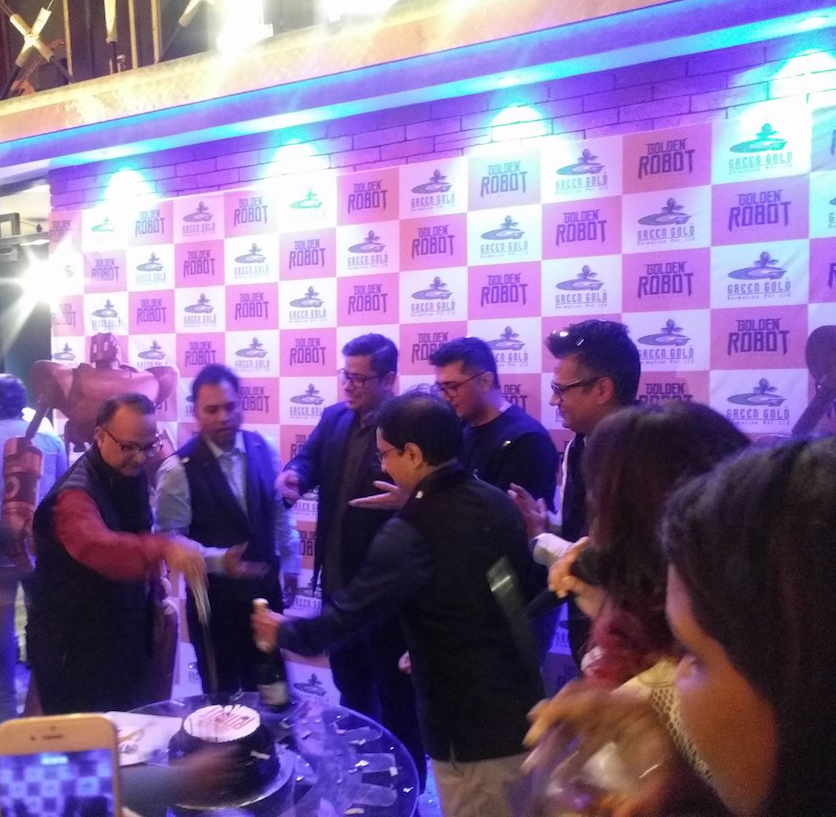
    But the occasion this time was the celebration of the launch of Golden Robot’s new Mumbai studio in Mumbai’s Goregaon West area’s DLH Park (which also has the presence of Red Chillies’ VFX facilities) earlier this week.

    Spread over some 10,000 sq feet, Golden Robot is Chilaka’s third animation initiative. Its purpose: to capture more outsourced work from international studios. While Green Gold will house the original IP creating arm – churning out episodes of Chhota Bheem, Mighty Raju, and many others, Golden Robot will be producing episodes for large American and European studios.

     The whos who of the animation industry made it a point to attend the launch party which was cheered on by Golden Robot’s 250 or more employees. Among those who came to congratulate Rajiv, Srinivas, and Samir Jain included Nick boss Anu Sikka, Sony Pictures Networks India vice-president programming Ronojoy Chakraborty, Amazon Prime’s Manish Menghani and Abhishek Goradia, Bioscopewalla Pictures’ Nishit Takia and AnimationXpress.com’s Anil Wanvari.

    They all came in to wish the team luck, and of course a golden pot for Golden Robot.

    Also Read:

    Green Gold, Amazon Prime put Kerala martial art on the map

    Chhota Bheem-makers launch Golden Robot Animation

    Chhota Bheem becomes Mighty with Netflix

  • Green Gold, Amazon Prime put Kerala martial art on the map

    Green Gold, Amazon Prime put Kerala martial art on the map

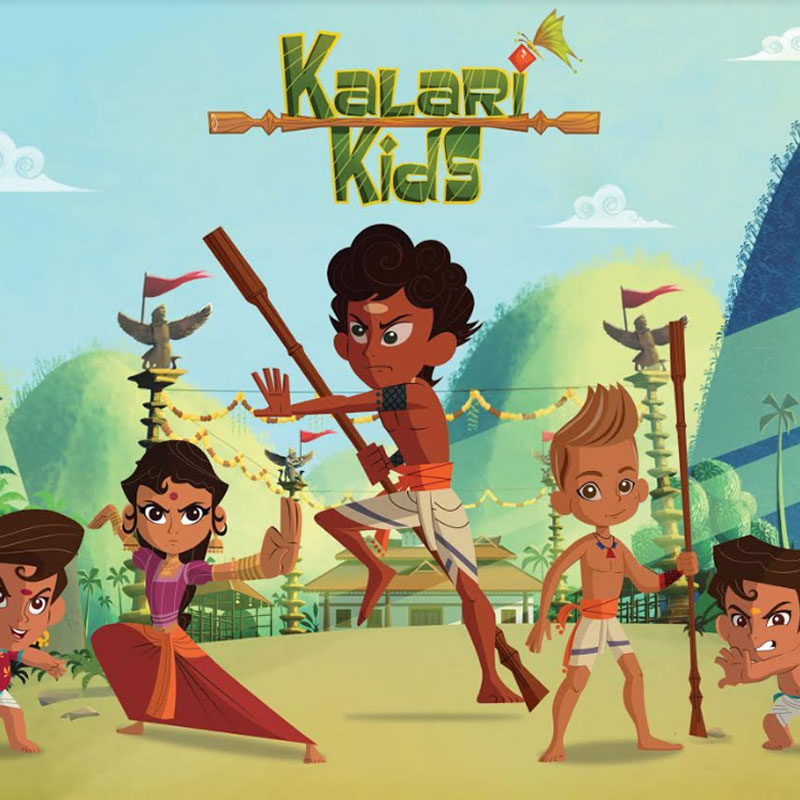
    MUMBAI: Green Gold Animation is rediscovering Kalaripayattu, a lost martial art form of Kerala. With the purpose to educate through entertainment, the animation studio is making an exclusive series for Amazon Prime titled Kalari Kids. The series will be launched around Christmas with 20 episodes of 11 minutes each in season one.

    Recently, the animation house also inked a deal with Netflix to digitally broadcast Mighty Little Bheem—a spinoff of its popular character Chhota Bheem.

    Talking about the new series, Green Gold Animation CEO Rajiv Chilaka said, “The IP rights of Kalari Kids will be with Green Gold but we may have co-producers as partners. Amazon Prime will hold the OTT rights and programming license. This is a multi-season deal between us. The first season will take a year of production to complete.”

    The show will be telecast on television later as one episode per week. Currently, the deal is under process to give television rights to the broadcaster. The production cost of Kalari Kids is higher than Chhota Bheem but lower than Mighty Little Bheem. Green Gold is making a total of 60 episodes for Amazon over three seasons with a dedicated team of 100. Twelve episodes are already in the bank.

    According to Green Gold Animation vice president (content sales) Bharath Laxmipati, Kalaripayattu is a dying art and not many kids are aware of it. “We have never made any show on Indian martial art form, so for us, it is an opportunity to entertain kids with a purpose. Therefore, through our show, we want to teach martial arts and talk about courage & bravery because a sport like Kalari builds strength and character in children,” he said.

    The marketing and promotions of the show will be done by the Amazon Prime team with heavy focus on digital. According to Laxmipati, Amazon is leaving no stone unturned to market the show. 

    The animation or graphic style of the show is reminiscent of the beauty, sophistication and stylisation of the traditional Kerala paintings. The animation company has taken the best artists and culturally highlighted the beautiful creations of India.

    Kalari Kids is based on Kalaripayattu martial art form that has three variants, Arappa Kay, Pilla Thangi and Vatta Thiripp, which are distinguished by their attacking and defensive patterns. Surprisingly, this lesser-known martial arts form was developed in the 6th century BC. Let’s see how Amazon and Green Gold Animation bring Kalaripayattu back to life.

  • ATF’s first Animation Pitch announces winners

    ATF’s first Animation Pitch announces winners

    MUMBAI: The Asia TV Forum (ATF) is drawing to a close amid much fanfare. The event saw several activities such as an exciting round of on-stage pitches wherein producers from all over Asia presented their ideas. The winners of the inaugural Asia TV Forum & Market (ATF) Animation Pitch were also anounced and the unveiling of the second ATF Formats Pitch took place on 30 November 2017.

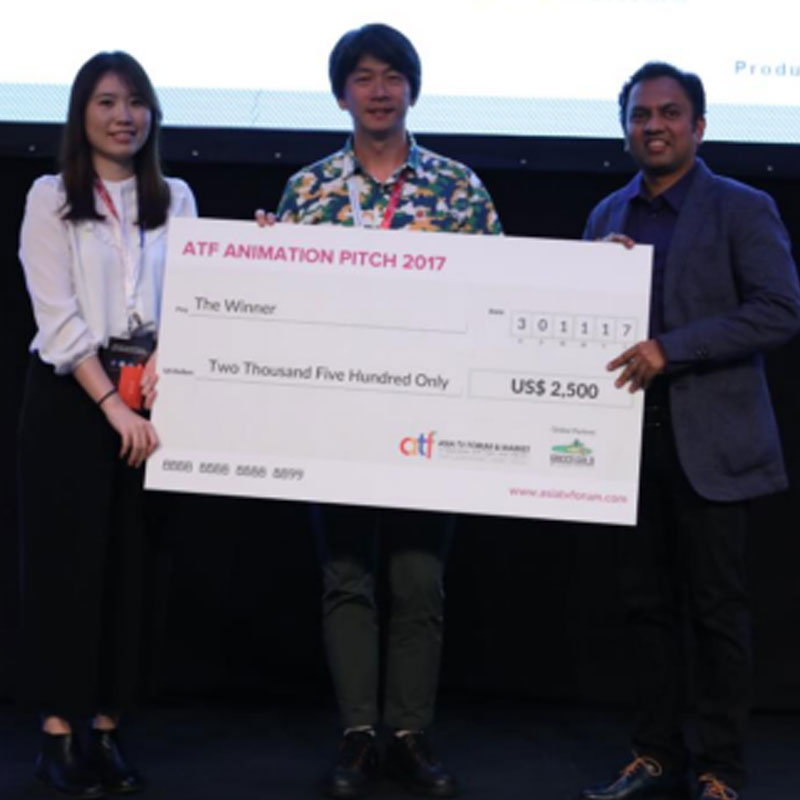
    Reed Exhibitions and global partner Green Gold Animation announced studio2 Animation Lab as the winner of the first-ever ATF Animation Pitch. The animation concept, titled “The Western Journey of Pigsy”, wowed the on-stage jury for its creativity and strong appeal to children. The line-up of judges, which comprises some of the biggest names in kids’ animation and entertainment, also saw strong potential for the concept to be exported and extended to a series.

    Targeted at creators and producers of innovative concepts for new and original kids’ animation, ATF Animation Pitch is aimed at facilitating the exchange of ideas and talent between leading international television, distribution and Asian-based producers. In total, 61 entries were received from all over Asia.

    “I am thrilled and excited to be named the winner of the inaugural ATF Animation Pitch. We had a unique concept and we felt that it allows viewers to experience the journey in the west story in a contemporary way. Moving forward, we will work towards developing the script for the concept,” said studio2 Animation Lab director Chiu Li Wei.

    Chiu Li Wei and Grace Chuang from studio2 Animation Lab received a $19,000 prize from GreenGold Animation. This includes a $2,500 cash award, and a consultancy package worth $16,500 that is tailor-made for them to further develop the winning animation, making it ready to pitch to broadcasters.

    After a closely contested fight between five finalists, leading independent distributor all3media International and ATF announced that Gamaliel Paulus (Gammy) from Indonesia, came out on top, winning $3,500 in cash and a $16,500 (both Singapore dollars) consultancy package tailor-made to develop the format, making it pitch-ready for broadcasters.

    ATF Formats Pitch is the premier Asian pitching competition designed to discover innovative concepts for new and original non-scripted entertainment formats from the pan-Asian region. This platform showcases the best of Asia, and exposes ideas for export and development within and even outside of the region.

    In its second year, the competition received more than 50 entries from 13 countries and only five finalists were selected to pitch their concept during the live on-stage judging session which concluded earlier today. Formats were evaluated based on creativity, originality and capacity to return for multiple series. The winning concept must also have the capability to resonate with audiences globally.

    Portraying all these qualities was the winning format, Ranking. It is a game show where participants have to guess the correct order of a ranking in return for prizes. Besides the excitement value that comes with game shows, it also serves to dish fun facts and information to viewers. The judges loved the simplicity of the idea and felt that it had great potential for further development.

    “As many people are familiar with rankings, I believe my format will appeal to any country. Also, I have not seen it in the form of a game show concept. As a producer myself, I understood that for a format to do well, it has to be simple. I am very thankful for the win, I didn’t expect it at all,” said Gamaliel Paulus (Gammy).

    To further develop the format and make it ready for pitching to broadcasters, Gamaliel Paulus (Gammy) will work closely with all3media International. This follows the success of “Hit It” from XTREME Media, which won at the inaugural ATF Formats Pitch last year, and has received its first local commission for a debut in February 2018.

    Aside from the ATF Animation Pitch and ATF Formats Pitch, ATF and ScreenSingapore is also home to another pitching competition, the Southeast Asian Film Financing Project Market.

  • 70 companies, 1200 traders attend Global Content Bazar

    70 companies, 1200 traders attend Global Content Bazar

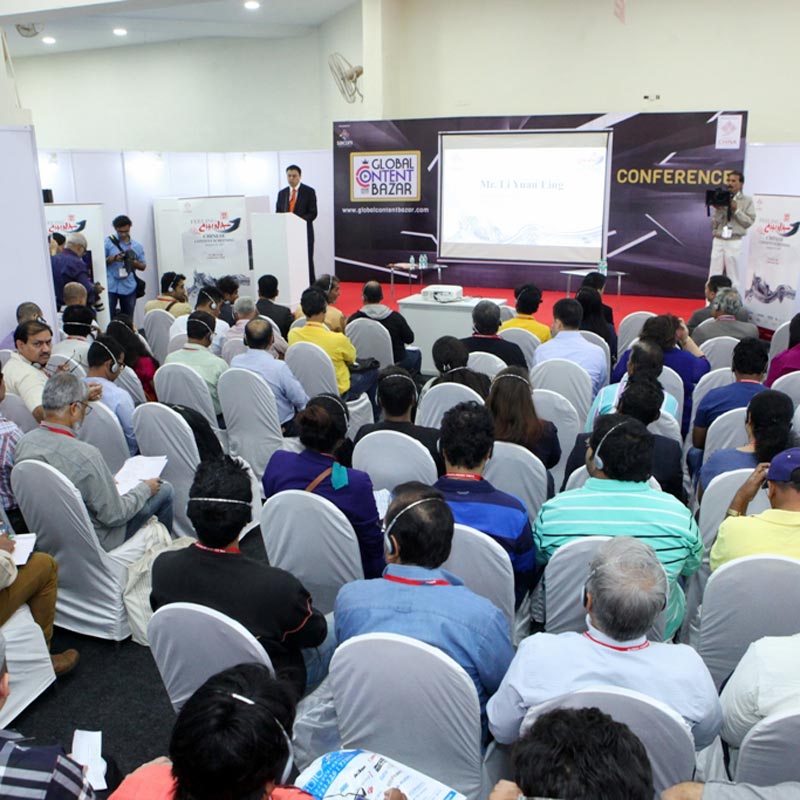
    MUMBAI: Around 70 companies and 1200 trade visitors from Asia, Europe and the Middle-East participated in Global Content Bazar 2018 which concluded here recently.

    High-quality trade and other visitors witnessed echoed a sentiment of highly beneficial exchanges with exhibitors and buyers at the bazaar which delivered on its assurance of showcasing the latest in content. India’s first-ever content market — Global Content Bazar 2017 — concluded in Mumbai recently. The show witnessed many eager visitors who echoed a sentiment of highly beneficial interactions with exhibitors, buyers, sellers and participants.

    As a professional trade show focused on content that powers India’s vast entertainment and infotainment industry, the content bazaar delivered on its promise of showcasing newest happenings in content for film, television, animation, docs & shorts, virtual reality, OTT-IPTV-VOD, 3D, music, radio, interactive gaming, mobile and more.

    The ‘Content Monetising Avenues Conference’ held on the show’s first day proved to be the highlight of the three-day event; with over 20 speakers presenting papers on the latest trends in the content industry and related subjects.

    Leading content providers, buyers and sellers such as Shanghai WingsMedia from China (with 10 prominent Chinese companies), Zee TV, Viacom 18, Sony Pictures Network, Doordarshan, DTV Turkey, ATV Turkey, Fight Globe, NH Studioz, Ultra Media & Entertainment, Creative Eye Ltd., WebTVAsia, Pocket Films, Green Gold Animation, Global One Enterprise, Qube Cinema and Fashion TV among others made their presence felt at the show and in the Indian content industry.

    Apart from India, companies from China, Malaysia, Thailand, Singapore, the Netherlands, the UAE, Turkey, France, Austria and Russia participated in the show this year.

    The Global Content Bazar 2018 is scheduled to be held at the World Trade Centre in mid-January.

  • 70 companies, 1200 traders attend Global Content Bazar

    70 companies, 1200 traders attend Global Content Bazar

    MUMBAI: Around 70 companies and 1200 trade visitors from Asia, Europe and the Middle-East participated in Global Content Bazar 2018 which concluded here recently.

    High-quality trade and other visitors witnessed echoed a sentiment of highly beneficial exchanges with exhibitors and buyers at the bazaar which delivered on its assurance of showcasing the latest in content. India’s first-ever content market — Global Content Bazar 2017 — concluded in Mumbai recently. The show witnessed many eager visitors who echoed a sentiment of highly beneficial interactions with exhibitors, buyers, sellers and participants.

    As a professional trade show focused on content that powers India’s vast entertainment and infotainment industry, the content bazaar delivered on its promise of showcasing newest happenings in content for film, television, animation, docs & shorts, virtual reality, OTT-IPTV-VOD, 3D, music, radio, interactive gaming, mobile and more.

    The ‘Content Monetising Avenues Conference’ held on the show’s first day proved to be the highlight of the three-day event; with over 20 speakers presenting papers on the latest trends in the content industry and related subjects.

    Leading content providers, buyers and sellers such as Shanghai WingsMedia from China (with 10 prominent Chinese companies), Zee TV, Viacom 18, Sony Pictures Network, Doordarshan, DTV Turkey, ATV Turkey, Fight Globe, NH Studioz, Ultra Media & Entertainment, Creative Eye Ltd., WebTVAsia, Pocket Films, Green Gold Animation, Global One Enterprise, Qube Cinema and Fashion TV among others made their presence felt at the show and in the Indian content industry.

    Apart from India, companies from China, Malaysia, Thailand, Singapore, the Netherlands, the UAE, Turkey, France, Austria and Russia participated in the show this year.

    The Global Content Bazar 2018 is scheduled to be held at the World Trade Centre in mid-January.

  • MIPJunior: Can Indian animation make its mark?

    MIPJunior: Can Indian animation make its mark?

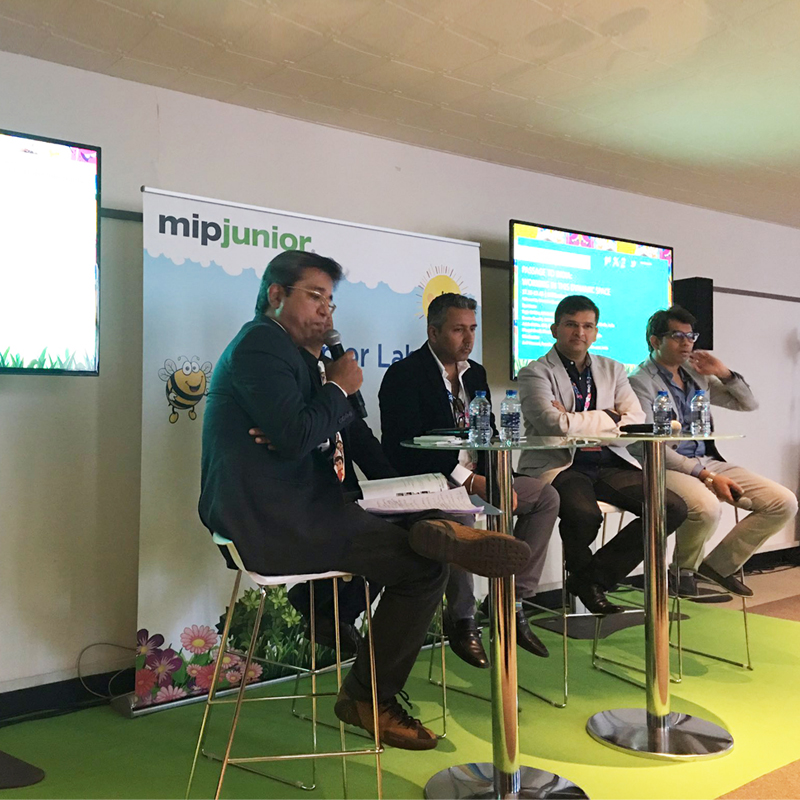
    CANNES: As the MIPJunior Lab got filled with an inquisitive audience, “The Passage to India” session began with the moderator, Indiantelevision.com founder, CEO and editor-in-chief Anil Wanvari, giving facts and figures about the kids broadcasting space in India.

    Wanvari started off by mentioning the humungous size of the 0-14 year population group – at 350 million at last count, which is expected to touch 375 million or so by 2020. Which is why the Indian market is attractive, he pointed out for kids programming and animation. Highlighting statistics from 2015 data, he stated that localization is helping the 20-plus kids channels operating in India up the local-international ratio from 10:90 to 80:20. With that wide a ratio and language dubs of each channel, content from the US dominates the television market with about 44 per cent, Japan 17 per cent, India 16 per cent, the UK and France four per cent, Canada one per cent; and if compared to statistics of 2014, it was 42 per cent, 17 per cent, 13 per cent, seven per cent and four per cent, three per cent, respectively.

    These statistics clearly paint the picture of how locally produced shows are being favoured not just by the audience but also the broadcasters. The top six to eight spots of the kids genre are occupied by locally produced programmes such as Motu-Patlu and Chotta Bheem, among others.

    Wanvari pointed out that kids genre accounts for six minutes per cent of total viewership and most of the kids content is in animation format the production cost of which per 30 minutes is between Rs 1.5 to six million.

    After introducing the panelists – Green Gold Animation founder and CEO, Rajiv Chilaka, Viacom18 Digital Ventures COO Gaurav Gandhi, Cosmos-Maya founder, Anish Mehta, and Graphiti Multimedia director and COO Munjal Shroff, Wanvari threw the question to the panelists asking what makes the prospects of the Indian animation sector so bright this time around; earlier attempts have failed.

    He also queried them about how the Indian animation space has changed over the years, in which areas are the opportunities available for international players, and what content works for broadcasters and digital platform for kids.

    Chilaka mentioned, “Back in 2001, there was only one channel catering to kids segment and now, there are 25-plus channels which showcase content produced locally as well. Over the years, the quality of animation, the technology, the services provided all have improved, and to support that, are the increased budgets.”

    Speaking about the international market, Shroff commented, “Through our show ‘Kulveera’, we did a case study with Cartoon Network UK wherein we produced a pilot episode and gauged the response of the audience and it was interesting to see that kids loved the show.” So, as long as one’s series has a strong storytelling going on, the place from where the content originates hardly matters.

    Mehta’s animation studio Cosmos-Maya has been doing wonders and, at present, has three co-production deals going on. “Our co-production deals are with Italian, French and German companies. We will be launching the French co-produced show ‘Captain Cactus’ which was made in association with Euope’s well-known film maker Olivier Jean-Marie,” expounded Mehta.

    “Over the period of 20 years, our work has evolved from being a service company to IP production, and finally we are at a stage where we can co-produce.”

    With the advent of digital platform, and Voot being probably the biggest kids SVOD service, Gandhi added, “It’s said that, in next three years, more homes will be have the streaming device than television sets. We are an open market, and ready to buy any good content.”

    Mehta also stated that, for co-productions to work, it’s necessary that one needs to understand the demographics. “Personally, after doing research, we follow a mixed model which blends well with both the countries.

    Since ‘Captain Cactus’ is a co-production between India and Europe, the animation style and narrative is set according to the tastes of audience of both the countries.”

    The session was wrapped up with Q&A round wherein many people were interested in learning more about how can they work with not just Indian animation studios but also on how their content can work across the various platforms.
  • MIPJunior: Can Indian animation make its mark?

    MIPJunior: Can Indian animation make its mark?

    CANNES: As the MIPJunior Lab got filled with an inquisitive audience, “The Passage to India” session began with the moderator, Indiantelevision.com founder, CEO and editor-in-chief Anil Wanvari, giving facts and figures about the kids broadcasting space in India.

    Wanvari started off by mentioning the humungous size of the 0-14 year population group – at 350 million at last count, which is expected to touch 375 million or so by 2020. Which is why the Indian market is attractive, he pointed out for kids programming and animation. Highlighting statistics from 2015 data, he stated that localization is helping the 20-plus kids channels operating in India up the local-international ratio from 10:90 to 80:20. With that wide a ratio and language dubs of each channel, content from the US dominates the television market with about 44 per cent, Japan 17 per cent, India 16 per cent, the UK and France four per cent, Canada one per cent; and if compared to statistics of 2014, it was 42 per cent, 17 per cent, 13 per cent, seven per cent and four per cent, three per cent, respectively.

    These statistics clearly paint the picture of how locally produced shows are being favoured not just by the audience but also the broadcasters. The top six to eight spots of the kids genre are occupied by locally produced programmes such as Motu-Patlu and Chotta Bheem, among others.

    Wanvari pointed out that kids genre accounts for six minutes per cent of total viewership and most of the kids content is in animation format the production cost of which per 30 minutes is between Rs 1.5 to six million.

    After introducing the panelists – Green Gold Animation founder and CEO, Rajiv Chilaka, Viacom18 Digital Ventures COO Gaurav Gandhi, Cosmos-Maya founder, Anish Mehta, and Graphiti Multimedia director and COO Munjal Shroff, Wanvari threw the question to the panelists asking what makes the prospects of the Indian animation sector so bright this time around; earlier attempts have failed.

    He also queried them about how the Indian animation space has changed over the years, in which areas are the opportunities available for international players, and what content works for broadcasters and digital platform for kids.

    Chilaka mentioned, “Back in 2001, there was only one channel catering to kids segment and now, there are 25-plus channels which showcase content produced locally as well. Over the years, the quality of animation, the technology, the services provided all have improved, and to support that, are the increased budgets.”

    Speaking about the international market, Shroff commented, “Through our show ‘Kulveera’, we did a case study with Cartoon Network UK wherein we produced a pilot episode and gauged the response of the audience and it was interesting to see that kids loved the show.” So, as long as one’s series has a strong storytelling going on, the place from where the content originates hardly matters.

    Mehta’s animation studio Cosmos-Maya has been doing wonders and, at present, has three co-production deals going on. “Our co-production deals are with Italian, French and German companies. We will be launching the French co-produced show ‘Captain Cactus’ which was made in association with Euope’s well-known film maker Olivier Jean-Marie,” expounded Mehta.

    “Over the period of 20 years, our work has evolved from being a service company to IP production, and finally we are at a stage where we can co-produce.”

    With the advent of digital platform, and Voot being probably the biggest kids SVOD service, Gandhi added, “It’s said that, in next three years, more homes will be have the streaming device than television sets. We are an open market, and ready to buy any good content.”

    Mehta also stated that, for co-productions to work, it’s necessary that one needs to understand the demographics. “Personally, after doing research, we follow a mixed model which blends well with both the countries.

    Since ‘Captain Cactus’ is a co-production between India and Europe, the animation style and narrative is set according to the tastes of audience of both the countries.”

    The session was wrapped up with Q&A round wherein many people were interested in learning more about how can they work with not just Indian animation studios but also on how their content can work across the various platforms.
  • Disney looks to exploit ‘Arjun’ across platforms; launches merchandise, mobile game

    Disney looks to exploit ‘Arjun’ across platforms; launches merchandise, mobile game

    MUMBAI: Eyeing a bigger share of the merchandising and gaming pie, Disney India has now expanded its product offering by launching a mobile game and merchandise for its television series Arjun: Prince of Bali.

    Launched about three weeks back, Disney’s first local animation property Arjun: The Prince of Bali, developed in association with Green Gold Animation has tasted success in its first series and is back again to engage kids through a new range of merchandise and a game inspired by the show.

    While in the first season of the show, one episode a week was aired, the second season will have two new episodes, which will air every Thursday and Friday at 3 pm.

    Speaking about the same, Disney India VP and head content and communication media networks Vijay Subramaniam said, “Disney Channel in India tells uniquely tailored stories through great characters. The first season of Arjun gained immense popularity amongst our young viewers and we saw the potential to give them more opportunities to enjoy the story while continuing to entertain with the second season on the channel. Arjun inspired merchandise and a game will provide kids with a stronger and deeper engagement with their favourite local stories.”

    Green Gold Animation founder and managing director Rajiv Chilaka added, “The audience has always got to see the princess in all Disney movies and series and probably for the first time the Indian audience will witness the Prince of Disney. It is a flamboyant character and we intend to showcase a lot of comedy, action and adventure with this show.”

    The show’s second series continues to narrate the story of Prince Arjun of Bali and will focus on his coming of age journey as he now matures into a valiant prince while continuing to master newer techniques and strategies of warfare. The new series also explores the relationships with his friends and family and brings to light the jovial and lively side to the warrior prince.

    The runner game around the show is set in the kingdom of Bali and is developed by Disney India’s Interactive division, Indiagames. The mobile game has features like weapon upgrades to make characters stronger as the levels progress.

    “With an interesting storyline, beautiful landscapes and popular local characters, the Arjun series makes for an interesting game play. By integrating elements from the show and building on the character traits in the game, we were looking at giving fans an opportunity to interact with Arjun and his friends beyond the show and create an all immersive gaming experience for them,” said Disney India VP and head interactive Sameer Ganapathy.

    The consumer products around the show will be extended across a range of products from toys, back to school merchandise, apparel to stationery. Toys also include figurines, bow and arrow set and more. In addition to this, plans are also afoot to develop school supplies such as school bags, lunch boxes, water bottles, note-books and home decor with bed sheet sets, cushions and mugs.

    With 26 episodes of 22 minutes each, the series will go on for 13 weeks. Post that, Disney Channel will either add more episodes or bring in the show’s next season.

    Speaking about the launch of merchandise, Disney India VP and head consumer products Abhishek Maheshwari said, “Kids today adore local animation and want to own a piece of their favourite character on their everyday products. The popularity of the Arjun series and the appeal of its characters amongst kids have inspired an entire range of interesting consumer products. Each character possesses a unique characteristic which can be leveraged very well across categories.”

    When queried about launching the merchandising at this stage of the local animation series, Ganapathy said, “The success of the first series made us come up with merchandising and a mobile app. Another reason is that we wanted to engage kids in as many ways as possible, so after the show they can get along with the game and engage with us.”

    “The IP holds a lot of potential and that is the reason why we got into merchandising and a mobile game at this stage of our local animation. Disney’s strategy has always been to cater to multiple platforms and that’s what we want to do with Arjun as well,” Maheshwari added.

    Currently, the app has a sizable number of downloads on the Google Play Store. The app will also be made available on the Windows and iOS platform soon.

  • Indian publishing industry needs mechanism for co-existence of printed and e-books

    Indian publishing industry needs mechanism for co-existence of printed and e-books

    NEW DELHI: Renowned author and Rajya Sabha member Pavan K. Varma, who is also the cultural adviser to the Bihar Chief Minister, has urged the publishing industry to provide the choice of printed books and e-books to its readers.


    A mechanism should be formulated where printed books and e-books could co-exist to serve readers across all genres, he suggested at the ‘PubliCon 2014: Publishing across Platforms’ conference organised by the Federation of Indian Chambers of Commerce and Industry.


    Varma said the digital format of books is becoming popular amongst youngsters but still people who belonged to the era of printed books prefer hardbound. The older generation finds it more fulfilling to read a printed book rather than on kindle. However, he added that refusing technology will only get these readers marginalised. Varma advised that one should adopt or reject a change only based on rationality. E-books are proving to be a rational change as they have trouble-free accessibility, easier storage and lesser cost as compared to the traditional form of books.


    He said the number of books digitally processed at present is small and the revenue model still shows the printed books on top, but this situation is bound to change. With development in technology, more authors and readers are now switching to the digital format as it makes the product globally available.


    Department of Land Resources secretary  and author Vandana Kumari Jena said digital publishing is a new facet and the future belongs to it. The profile of both authors and readers has changed drastically over the years, and the young generation has taken to digital publishing quite positively. Numerous bookstores have closed over the past few years, which show the growing impact of digital publishing. However, it will take time to replace the hardbound books completely with digital books on kindle, I-pad and nook in India as the country still has a fair majority who love the look and feel of a printed book. 


    Underlining some of the advantages of e-book, Jena said fonts of digital content can be re-sized according to a person’s comfort level. For instance, if a person is visually impaired then s/he could easily increase the font to make the text readable. No additional lighting is needed to read digital books as the electronic devices have inbuilt illumination.


    She said digital publishing has even opened doors for self-publishers who were looked down upon earlier. However, the emerging e-books also have some challenges such as fear of plagiarism and piracy, which may deter authors to use the medium.   


    FICCI publishing committee chairperson and director of Zubaan Urvashi Butalia said publishing is not limited to printed books, its scope has grown by leaps and bound. The electronic gadgets such as cellphones, laptops, tablets and I-pads have come to the fore as new platforms for information dissemination and books have also found a place.


    She said digital publishing has also brought new models of book distribution and new platforms to read and interact with the book. Digital has enabled the creative industries, publishing services, technological innovations and the internet revolution, to become an integral part of the publishing process. Further, existence of numerous publishing apps clearly indicates that publishing is increasingly moving towards a mobile platform.


    Speaking on the role of publishers, FICCI publishing committee co-chairman and adviser to Reed Elsevier India Rohit Kumar said a publisher is responsible for taking the thoughts of authors to the world and evolving technology and digitisation has emerged as a potent tool in this regard. In the fast changing world of book publishing, the onus is on a publisher now to adopt and adapt to the demands of both the authors and readers.


    Later in his plenary keynote address, Green Gold Animation (Creator of ‘Chhota Bheem’) founder and CEO Rajiv Chilaka said content rules in the publishing industry and one must embrace the technological changes to sustain and survive in the long run. He added that publishers need to keep pace with today’s consumer and plan for tomorrow.


    Chilaka stated that digital publishing has emerged as one of the best options for small publishers who want to enter the market as it involves lower start-up cost. Besides, the content never goes out of stock and is available globally with just a click of a button. Also, digital books have easier access as they can be downloaded or purchased from the confines of one’s home and additional costs such as shipping is not associated with it as in case of printed books.

  • ‘Play with Chhota Bheem’ on Windows smartphones and tablets

    ‘Play with Chhota Bheem’ on Windows smartphones and tablets

    NEW DELHI: The animation character Chhota Bheem is coming on the Windows platform with his gang on the ‘Play with Chhota Bheem’ app.

    With the introduction of the brand new app on Windows 8 and Windows Phone, children can interact with Chhota Bheem via fun games and other interactive content.

    The app has been designed as children love the eminently lovable Chhota Bheem. It will show Chhota Bheem’s mood change with each tap of a finger, dancing and singing, and will help kids hone their learning skills along the way with games like ‘Memory game’, ‘Bulls-Eye challenge’ and a set of jigsaw puzzles. With every level that they complete successfully, kids can unlock Chhota Bheem’s most popular moves – ranging from juggling and eating laddoos to pulling the moon down to earth. 

    Talking about the app, Green Gold Animation VP – business development Govinda Talluri said, “Our association with Microsoft goes a long way and we are committed to work more closely with them in future to bring our hugely popular kids icon Chhota Bheem closer to kids. We are confident that our latest offering for Windows 8 and Windows Phone – ‘Play With Chhota Bheem’ will be loved by all the kids.”

    On the partnership with Green Gold Animation, Microsoft Corporation India director – Evangelism Harish Vaidyanathan said, “We are proud to partner with Green Gold Animation to create this engaging and interactive app for children. This app is available exclusively on Windows 8 and Windows Phone, underlining our commitment to bringing unique app experiences on the Windows platform. We are sure that kids will enjoy the app greatly.”

    This app can be downloaded on the Windows Phone 8. The Kid’s Corner feature on Windows Phone 8 allows you to store apps and other content meant for children separately that can be accessed by swiping left from the lock screen of the phone.