Tag: Green Gold Animation

  • aha forays into kids content, first animated show set for 10 Sept launch

    aha forays into kids content, first animated show set for 10 Sept launch

    Mumbai: Telugu language video streaming service aha has announced a partnership with Green Gold Animation to foray into kids content. The partnership will see aha launch six animated originals in the next 12 months and acquire 100 hours of content from the animation company.

    aha plans to launch its first animated original “Maha Ganesha” on 10 September coinciding with Ganesh Chaturthi. The show will feature in a separate ‘kids’ section under the aha brand and will be followed by more releases on Children’s Day, Christmas, and so forth. This is the first original animated production that will be in the Telugu language, said the platform in a statement.

    The first season of “Maha Ganesha” will have eight episodes. aha kids content will be available to existing subscribers at no additional cost. To attract new viewers, it will stream its first episodes for free so that kids can sample its content.

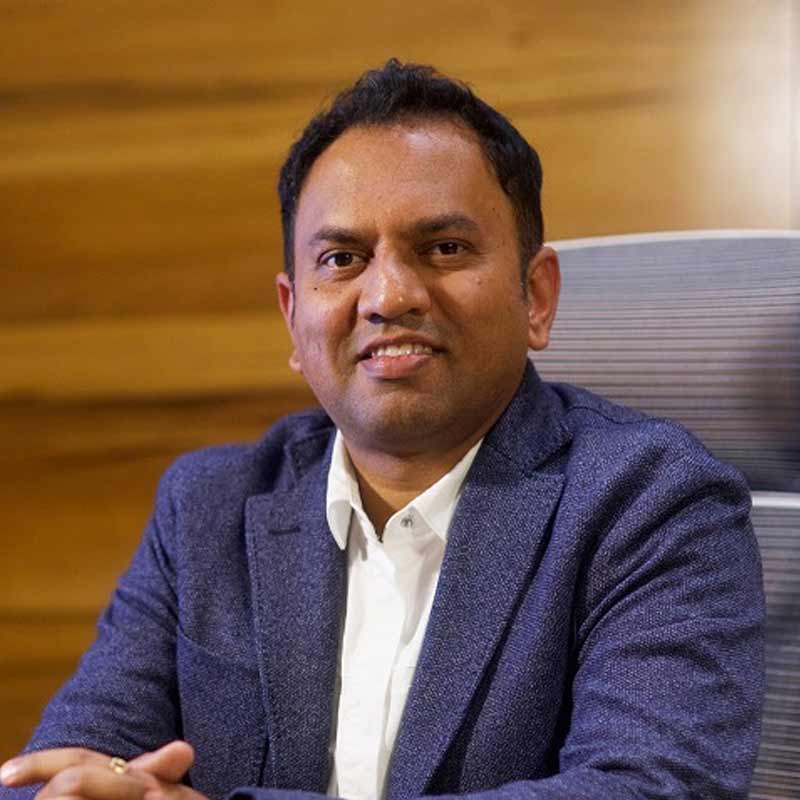
    “This generation of kids have grown up with Marvel and DC superheroes. We want to bring back the stories that our grandmothers used to tell us, produced by one of the best animation companies in the world – Green Gold Animation,” said aha, chief executive officer, Ajit Thakur.

    “We believe kids are an important member of the family and that we should prepare a separate pipeline of content. Our tagline ‘Our Stories Our Values’ came from aha’s positioning which is 100 per cent local,” he added.

    Thakur believes that launching kids content on the platform will increase the stickiness with existing subscribers as well as bring news subscribers to the OTT platform. “If a family believes that our content is good for their kids, they will pay a premium for it,” he said.

    “When we started conceptualising a kids’ original, I thought nothing better than to launch a show on Ganesha because he is the remover of obstacles,” said Green Gold Animation, chief executive officer, Rajiv Chilaka. “Maha Ganesha will feature various stories from the life of Ganesh – the story of his birth, why he cursed the moon, the rivalry between him and his brother. These stories will be told over a span of eight episodes. When you do puja on Ganesh Chaturthi, you will find these stories locally in books. I feel today’s kids’ attention span is different from previous generations, so what if we told them these stories in animation. Hence, we came up with this idea.”

    Speaking about kids content on TV, Chilaka said, “The advertising monetisation of kids content on TV has not matched the viewership. There are very few brands that target kids. But in the SVOD ecosystem that’s a very different thing. We’re competing with TV and other entertainment platforms. The OTT medium allows much more flexibility in viewership.”

    Currently, aha has no plans to dub its animated content into other South languages.

  • Netflix, UNESCO partner to celebrate India’s diverse cultural heritage

    Netflix, UNESCO partner to celebrate India’s diverse cultural heritage

    Mumbai: Netflix and UNESCO (United Nations Educational, Scientific and Cultural Organisation) have come together to celebrate India’s rich cultural heritage through the popular animated series “Mighty Little Bheem”. Produced by Green Gold Animation, the series was premiered on the streaming platform in 2019.

    Over the next year, Netflix and UNESCO will come up with a series of fun short videos themed ‘One Country, Incredible Diversity’ that will shine a light on India’s cultural journey, including monuments, living heritage, performing arts, social practices, rituals and festivals such as Dussehra, Diwali and Holi. 

    The short videos to be released on UNESCO New Delhi’s Facebook, Instagram, YouTube and Twitter pages, will demonstrate how cultural history enriches people’s everyday lives by covering everything from food and traditions to languages and storytelling. 

    The first video was released on 13 August to celebrate the 75th anniversary of India’s Independence (Azadi Ka Amrit Mahotsav), a day that brings the entire country together.

  • Voot Kids partners with Singapore Tourism Board to launch animation series

    Voot Kids partners with Singapore Tourism Board to launch animation series

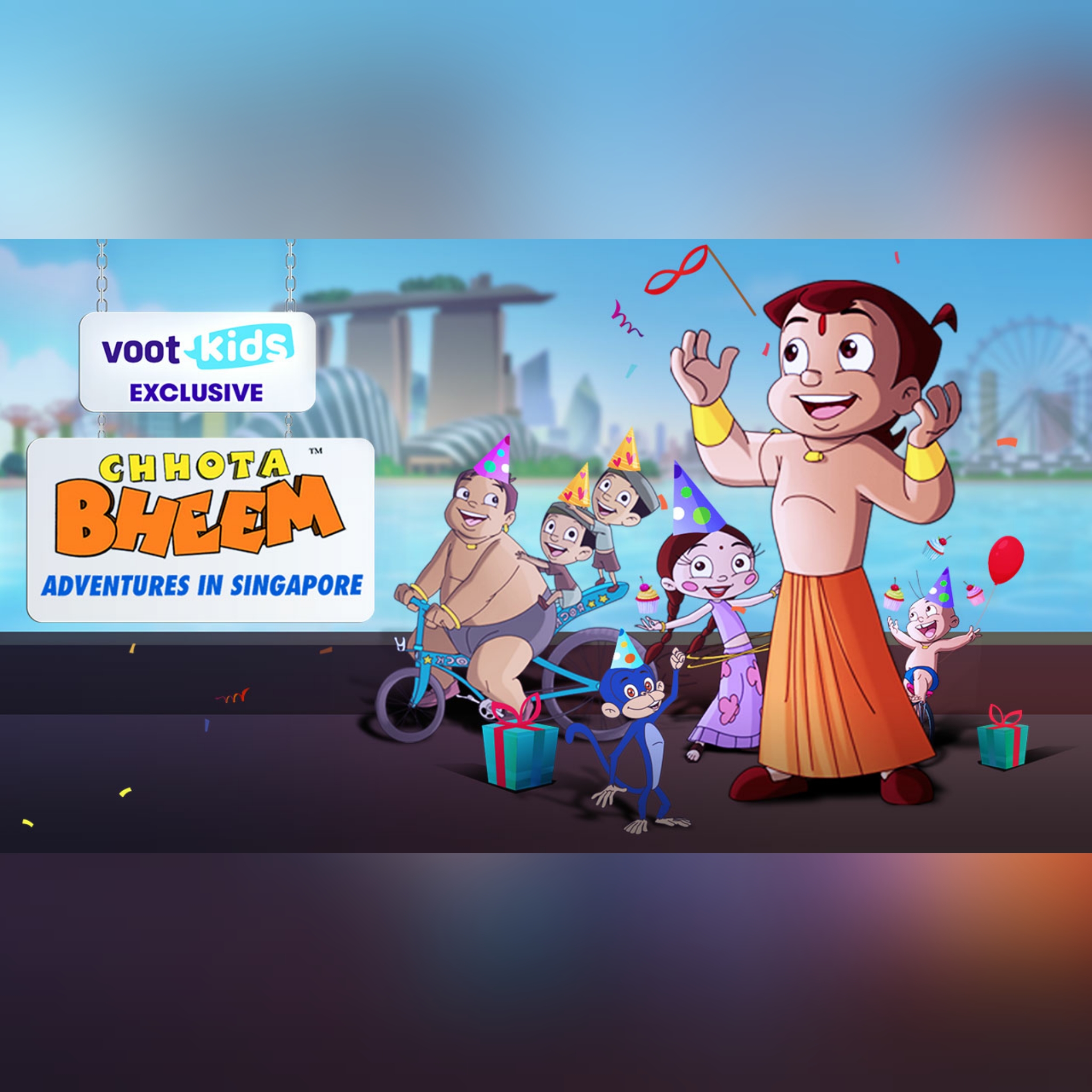
    Mumbai: The Singapore Tourism Board (STB) has joined hands with Voot Kids and Green Gold Animation to take Indian audiences on a virtual adventure in Singapore with the iconic Indian comic character, Chhota Bheem. Titled Chhota Bheem – Adventures in Singapore, the mini-series brings the destination closer to audiences in an innovative format and engages families and children across India in English, Hindi, and Tamil languages, starting 17 July.

    The web series also marks the 11th anniversary of the much-loved personality Bheem. To commemorate this occasion, Chhota Bheem and friends celebrate his birthday in Singapore and embark on fun and exciting activities. Each episode takes the viewer through different experiences in Singapore, from action and adventure to shopping and food. The seven special stories feature the thrills and spills of a memorable trip, set in various locations across Singapore.

    Speaking about the partnership, STB’s regional director, India, Middle East & South Asia, GB Srithar, said, “For us, this project is all about putting happy smiles on the faces of children and families across India, under these stressful times. Chhota Bheem and friends are well-loved characters who bring much cheer, hope, and optimism to Indian audiences. STB is pleased to present the 7 episodes as our “Gift of Smiles” to the Indian audiences. We hope the episodes will entertain families and allow them to experience a slice of Singapore virtually, as they keep safe at home.”

    “As part of a vision to engage our Indian audiences creatively in the new COVID-19 environment, the STB has been harnessing technology to reimagine its content, products, and offerings. We have explored new partnerships and social engagements with many well-known brands. Many of these collaborations involved Indian talents and influencers working with Singaporean artistes, presenting their common passions to the Indian audiences virtually through engaging storytelling and showcasing of the destination. This creative partnership with Voot Kids and Green Gold is our first animation project and we are happy to offer this to the family audiences in India,” he added.

    Speaking on the collaboration, Voot Kids’ content head Ashutosh Parekh, said, “At Voot Kids, our mainstay is to provide meaningful screen time pivoting around fun – learn and entertainment which is age-appropriate and 100 % safe. This is fueled by one of the largest content libraries in the genre that is truly multi-format spanning across top kids’ franchises from all over the world, making it truly a house full of toons. Made locally and loved globally, Chhota Bheem is one of the most-watched characters since the day we launched Voot Kids. This mini-series is packed with specially created “app-i-sodes” to add diversity to our content slate. As market leaders, we thrive on content curation and creation with the consumer at the centre of everything we do. This was the right time to bring delight to our young subscribers and their families  who have enjoyed our app indoors, and now will magically be transported to Singapore with never seen before stories of Bheem, without leaving the safety of their home,  exclusively on Voot Kids.”

    “As a powerhouse platform for kids, we will continue to invest in bringing in more characters and tales that spark the imagination with a compelling story of young minds that are truly digital natives.  We aim to engage our kids and family audience with an immersive and interactive experience and celebrating Bheem and team’s adventures in Singapore is a one of kind initiative in the kids’ digital space,” he added.

    Elaborating on the alliance, Green Gold Animation CEO Rajiv Chilaka said, “My biggest endeavour is to push the envelope with Chhota Bheem as an animated character that has millions of fans world over. New stories and new setting always add to Bheem adventurous streak and we are thrilled to partner with Singapore Tourism board to take it to the next level with Voot Kids as the exclusive home of the mini-series Chhota Bheem and friends – Adventures in Singapore.”

    “STB allowed us to bring out our best animation capabilities and Voot Kids pushed the envelope for creative exploration and the sharp kid-centric insights for us to create stories that will make children chuckle. The best minds in the business worked on this project with a phenomenal vision in these unprecedented times and I am really excited about the final cut. Voot Kids is a pathbreaking platform to emerge as best in the business and rewritten content rules for kids digital platform and we are hopeful that its subscribers will enjoy this fascinating mini-series that stars every kid’s favourite toon Bheem set in every kid’s favourite destination – Singapore,” he added.

    In addition to the webisodes, young fans will also be treated with exciting and entertaining e-books and interactive games featuring their adventures, which will be available for download from the Voot Kids app.

  • Indian animation 2019 – the year of highs

    Indian animation 2019 – the year of highs

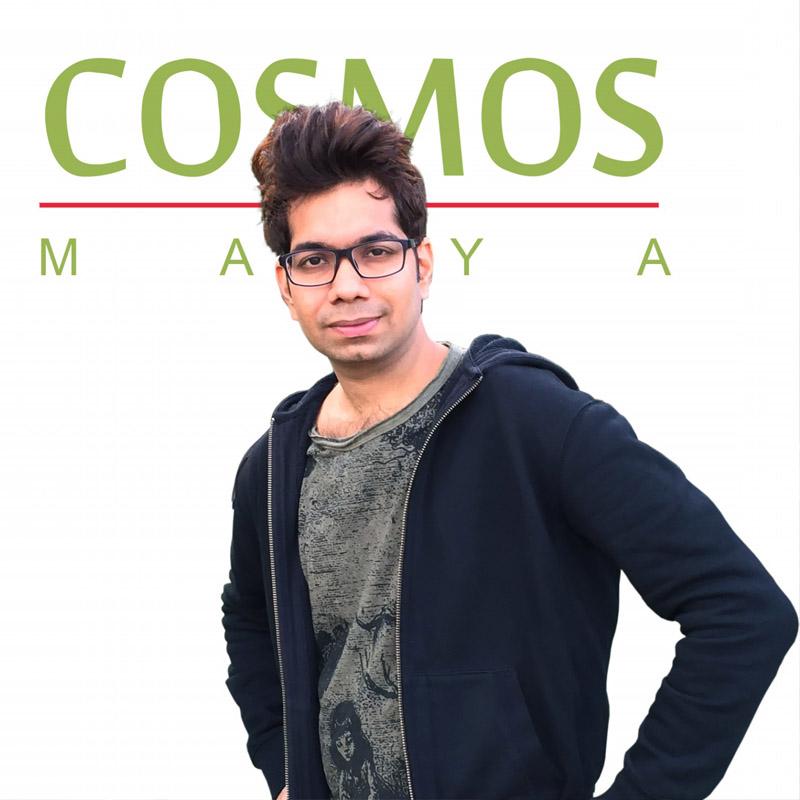
    2019 was a great year for the Indian animation industry. What a wonderful culmination of a decade which saw the complete transformation of the industry. Today we are at the cusp of a creative revolution. There has been a proliferation of media platforms and content consumers are spoilt for choice. The resulting increase in supply has peculiarly resulted in increased demand and consumption, thereby giving rise to more such platforms and more opportunities all round. A recent report by KPMG pegs that the Indian animation and VFX industry, which now stands at $1.23 billion, will more than double in size to $2.6 billion in the next 5 years.

    2019 was a year of highs for the industry. After being declared the most popular Indian television show in the world by Google, Motu Patlu, Cosmos-Maya’s flagship IP, was immortalized in wax at the Madame Tussauds museum. The year also saw the launch of Cosmos-Maya’s Bapu, the first-ever IP in this space based on Mahatma Gandhi, commemorating his 150th birth anniversary. Green Gold Animation’s Mighty Little Bheem became the second most-watched original series globally on Netflix in the Kids’ category. When a homegrown franchise which is with a pay-TV broadcaster like Turner takes the original route with Netflix, you know that winds of change are blowing.

    In addition to the above, there were giant leaps in terms of the evolution of storytelling, where major franchises are being planned. Cosmos-Maya’s Motu Patlu spinoffs, Inspector Chingum and Guddu were launched on Disney and Amazon Prime Video respectively. Both these IPs followed a ‘Digital First’ approach where it was envisaged that these first air on a major OTT to propagate the IP, and then on Pay TV to increase eyeballs manifold. Also, in the normal run of things, where OTTs spend big to get original and exclusive content on board, they are now preferring to air content which is already running on a different platform, thereby leveraging the placement of an IP.

    The current digital scenario is very promising. WowKidz, Cosmos-Maya’s YouTube network, has been a big benefactor of this digital growth. WowKidz today has more than 35 million subscribers and 16 billion views. An average of 75,000 new subscribers are added daily to the mix. The reason is simple. Close to 650 million Indians have access to internet services today. Smartphone penetration has reached the 500 million mark. When we look at the breakup of India’s animation production pie, 53.5 per cent is digital’s share. This is driven by content viewing on mobile phones in a country which has mostly single TV households. TV has 30 per cent share in India’s animation production pie but still has the maximum reach.

    For content creators like Cosmos-Maya, both platforms are equally lucrative. If the brand is big, Digital and Pay TV can end up being similar partners. A situation very unique to India, today TV and OTT are both growing in the country and there is a beautiful co-existence of both. Animation is transcending boundaries in this regard.

    Speaking of transcending boundaries, 2019 also heralded a new trend. Cosmos-Maya’s ‘Selfie With Bajrangi’, one of the highest-rated and most popular shows has made its way into a general entertainment channel through Star Plus, which from an industry perspective is a welcome change because animation has always been an under-indexed category with low ad rates, in spite of its GRP contribution being in line with some of the most popular categories. The year also marked the ‘Bring in Bollywood!’ era. IP’s like Golmaal Jr with Nickelodeon Sonic, Fukrey Boyzzz with Discovery Kids capitalized on the popularity of the Golmaal and Fukrey franchises.

    Another important trend which Sony Yay! started off is the airing of their content in 7 regional languages. Speaking here from a more holistic perspective, though OTT players like Amazon Prime Video, Netflix, Hotstar, Zee5, Alt Balaji among others, are producing more and more regional content to tap on as many users as possible in the country, TV still dominates here. To add more perspective, OTT is yet to penetrate rural India, which has always been a big traditional media market. TV is a god-sent for rural folk who make up around 70 per cent of Indian population.
    On the global front, Indian animation content reached almost all corners of the world. To quote an example, our non-dialogue show Eena Meena Deeka is aired in more than 50 countries today.

    International co-productions are becoming big and we have captured newer frontiers in this regard as an industry. There were times when only a bunch of people who would attend international markets from India to discuss co-production possibilities. Today, dedicated Indian delegations attend these markets. Hence, the scope has increased exponentially. 4 of Cosmos-Maya’s co-produced international IPs have been ‘glocalised’ and will air in Hindi on a major broadcaster. To quote an example, Berry Bees, one of our biggest co-productions, an all-girl IP, with Atlantyca, SRL and Telegael will air as The Dabangg Girls in India, thereby giving it an Indian soul and yet retaining its original charm.

    2019 also saw the $ 2 billion giant in the form of the Indian ed-tech industry being given a push by animation. A major need gap exists between the education and entertainment industries and we identified it. Cosmos-Maya has the animation mandate of the ed-tech unicorn BYJU’s, which has also tied up with Disney. Entertainment to empowerment, through the power of education, is a mass phenomenon.

    While this decade for Indian animation belonged to Entertainment, the next ten years will belong to education.

    (The author is CEO, Cosmos Maya. The views expressed are his own and Indiantelevision.com may not subscribe to them.)

  • KAM Summit brings together advertisers, broadcasters, studios in the animation space for better collaborative ecosphere

    KAM Summit brings together advertisers, broadcasters, studios in the animation space for better collaborative ecosphere

    MUMBAI: India’s first kids’ animation summit, KAM (Kids Animation and More), organised by AnimationXpress.com, saw an insightful array of sessions ranging from fireside chats to exclusive presentations and elaborate panel discussions orchestrated around key themes of the kids’ animation ecosystem followed by the ANN Awards, India’s first and largest premium and full-scale award function to celebrate the excellence in the animation sphere of the M&E space across Indie studios, major Indian animated shows, prestigious brands, students, animation studios, institutes, and aspirants.

    Bringing the industry stalwarts under one roof, the event took place at Mumbai’s The Lalit on 30 August 2019. Kicking off with the customary lamp lighting session, KAM summit set the tone for the summit with a welcome note. The starry day marked the growth trajectory of India’s animation ecosystem, creating memorable moments and engaging industry veterans in the most constructive ways.

    The proceedings of the day began with a fireside chat between Sony Yay! business head Leena Lele Dutta and Indiantelevision.com founder, CEO and editor-in-chief Anil Wanvari who discussed about the challenges faced by Sony Yay being a new entrant in the segment.

    Denying that being a latecomer is a shortcoming for them, Dutta said that she rather sees this as an opportunity. She noted, “The only challenge is that children already have so many characters entrenched in their minds, so we have to do something disruptive enough to disperse them from their minds and make a memorable IP. We see a lot of unconventional brands also coming to our channel.”

    This was followed by a presentation by Discovery Kids’ Vednarayan Sirdeshpande, where he spoke about the upcoming IP Fukrey Boyzzz, displayed an exclusively comic portion of the animation show.

    Next was an insightful panel discussion named “Building on 200 million eyeballs”, that tried to answer the important and difficult question of how advertisers can capture the attention of kids audience.


    The panel moderated by Publicis Worldwide managing director Srija Chatterjee included big names from the brand side – Hamleys India head of marketing Sivaraman Balakrishnan, Baskin Robbins India head of marketing Samyukta Ganesh Iyer, Pidilite Industries category head – consumer products division Kartik Subramanian, KidZania India marketing director Tarandeep Singh Sekhon, Parle Products senior category head marketing Krishnarao S Buddha, and Mattel Toys head – consumer products Permendra Singh.

    The panel called out the need for broadcasters to create more relatable and successful Indian animated characters that they can license to create advertisements that can connect better to the audience. They also discussed how kids today have become smarter and are guiding their parents to buy certain products and hence it becomes necessary to communicate with them in their own language.
    The next item on the agenda was a presentation by Mondelez International licensing head – India & MEA Suparna Madan who gave a perceptive presentation on reaching out to the kids’ audience with an analysis of parenting patterns over the years.

    The day was taken forward by a free-wheeling chat between Wanvari and Sphereorigins Multivision founder Sunjoy Waddhwa, and HopMotion Animation business head Anish Patel.
    The trio turned the cart in the direction of the way the panelists materialised their visions into success stories.


    Speaking about the success of creating Choti Anandi, Waddhwa said, “The show was already a hit on Colors so the fact that it had a built-in audience also helped. It fact it did better on Rishtey in terms of viewership.”

    They also threw light on their partnership and the studio pipeline. HopMotion Animation business head Anish Patel shared, “We specialise in 2D but we also have a 3D facility. It's a harmony-based studio. We also cater to service studios.”

    Following that, BARC India head – product leadership and excellence Elbert D’Silva took on the dais to elaborate how Indian kids consume TV and how advertisers can utilise the opportunity to connect with them.
    D’Silva also spoke on the impact that NTO had on the viewership of kids’ channels, saying, “Kids genre saw a drop post NTO but redesigned with the increasing trend leading to summer vacation.”
    The second half of the day began with a panel discussion on Animation 2020, between Green Gold Animation founder and CEO Rajiv Chilaka, Sony Yay! programming head Ronojoy Chakraborty, DQ Entertainment COO Manoj Mishra, Viacom18 programming head Anu Sikka, BIG Animation COO Tejonidhi Bhandare, and Cosmos Maya AVP revenue and corporate strategy Devdatta Potnis, moderated by FICCI chairman animation and gaming Ashish Kulkarni.

    Discussing the way forward for the animation industry in the coming years, they elaborated more on the opportunities and challenges that the industry currently faces. The panel insisted that there is a big need there to have more successful animation studios in 2020.

    Discussing his visions about the future of the animation ecosystem, Chilaka shared, “I wish to see more successful Indian studios. I realise the pain of running an animation studio. You have to keep on upgrading the hardware and software. You need to understand the pain of the employees. On top of all this, there is GST also now. But I’m happy that Chhota Bheem paved the way for domestic animation. Motu Patlu is a roaring success. We need more passion and more young blood coming with us. We need to reach out to the Indian diaspora. Being number one is something we never dreamt of. We need to reach the benchmark of Rs 100 crore and then Rs 100 million.”

    The next item on agenda was a fireside chat between Lodestar UM CEO Nandini Dias and Wanvari. The duo discussed how kids’ animation sector has evolved over years for the marketers and what opportunities it presents to the advertisers.

    Dias mentioned, “Five years back, we would start with TV as the mainstay, but today often our conversation starts with e-commerce, digital, and factors like methods of discovery. Then comes television.” She further noted that apart from e-commerce, another thing that has boomed in the past few years in the gaming industry.

    The chat was followed by another panel discussion titled “The Boutique Studios: Tomorrow’s Giants”. Discussing the power of studios in today’s creative world were Paperboat Animation Studios creative director Aashish Mall, Dentsu StoryLab EVP Kumar Deb Sinha, Vaibhav More Films founder Vaibhav More, PhilmCGI managing director Anand Bhanushali, and Bioscopewala president Nishith Takia. The session was moderated by industry veteran Krishna Desai.

    The speakers discussed the ways in which the Indian animation scenario can be improved. The panel noted that there is a need to work on design forms and build on them to attract more audiences.

    The proceedings were taken forward by Cosmos Maya AVP revenue and corporate strategy Devdatta Potnis who gave a presentation on Cosmos Maya’s journey and IPs. He also announced the launch of the upcoming IP “The Fukrey Boyzzz” based on a popular Bollywood franchise Fukrey.

     The next panel to take on the dais comprised of Videogyaan chief strategy operations Rangarao TM, Shemaroo SVP – animation, kids digital, and L&M Smita Maroo, Sun NXT senior manager Vidhyalakshmi TA, and Lattu Kids co-founder and CEO Vivek Bhutyani, moderated by Kinsane Entertainment CMO Pranab Kunj. The panelists shared their views on the evolution of kids’ content on digital platform.

    Next, there was a discussion on the topic of “Making odd-screen animated hits” between Dream Theatre founder and CEO Jiggy George and Green Gold Animation chief strategy officer Srinivas Chilakalapudi. The duo discussed licensing and merchandising in a light-hearted yet informative manner.

    Upon being asked about the challenges in licensing of the IPs due to the absence of L&M culture in Dream Theatre, George shared, “There wasn’t really a culture of L&M and India is a very diverse market. You can make a t-shirt for Rs 99 and high-quality ones for Rs 499. However, the biggest challenges remain to be piracy and counterfeiting.”

    Speaking about his success with L&M, Shrinivas Chilakalapudi shared, “We have had success with licensing so you we have done Mighty Raju, Super Bheem, Mighty Little Bheem in Toddler’s Space.”

    George added, “To the animation companies, my wish is that we need authentic characters. it's authentic when you do your own characters. Do what the Japanese do. Check which characters can be seamlessly integrated into the script. When it's seamlessly done, it easier for us. Otherwise we don't like to slap it onto the t-shirt.”

    The final panel of the day discusses the topic of “Creating an Impact for Kids Audience”. Sitting on the panel were Grey India national planning director Arun Raman, Wavemaker managing partner Monaz Todywalla, and Omnicom Media AVP, PHD Media Asmita Pawar Reelkar. The panel was moderated by Sony Yay! VP marketing and OAP Sujoy RoyBardhan.

    Arun Raman noted that segmentation within the kids’ genre creates a big problem for marketers. He insisted that kids’ content should be made more inclusive and relevant to audiences across categories including adults.

    The knowledge-packed day culminated into the gala ANN Awards where top performers in the animation sector within the country were felicitated for their work.

    Speaking about this first-of-its-kind initiative taken by AnimationXpress, Indiantelevision.com founder, CEO, and editor-in-chief congratulated the whole team for their efforts and stated that he is proud to blaze a new trail in the world of animation. He requested the animation community to send more entries for the next year’s awards to induce a better competitive spirit and celebration of creativity in the ecosphere.

  • Pogo to telecast ‘Kalari Kids’ in 3 languages

    Pogo to telecast ‘Kalari Kids’ in 3 languages

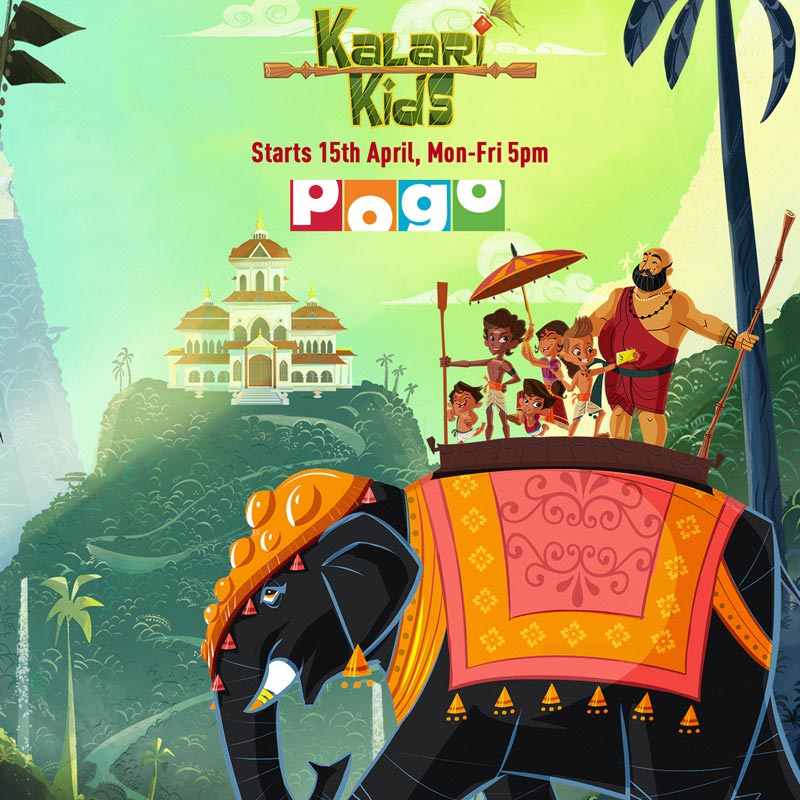
    MUMBAI: Green Gold Animation show, Kalari Kids, is all set to be available on Pogo channel in Tamil, Hindi and English starting from 15 April, every weekday at 5 pm.   

    The show combines the old-world charm and warmth of India with new-age sassiness and fun! Learning the ancient martial art form – Kalaripayattu – the Kalari Kids reside in the enchanted jungle of Kalaripuram full of magical powers.

    Turner India MD Siddharth Jain said, “We constantly aim to offer kid-friendly content to create a deeper connection with our audience, and homegrown and localized shows play a critical role in POGO’s programming strategy. We are certain that Kalari Kids will strengthen our engagement with our little fans.”

    Pogo will also engage with fans with a range of fun and exciting activities, which will immerse them into the magical world of Kalari Kids! The high-impact, 360-degree campaign includes on-ground and digital experiences in multiple cities. This includes an exciting association with Junglee, a family adventure film, featuring action-hero and star Vidyut Jammwal.

  • Green Gold, TV Asahi to co-create new Ninja Hattori episodes

    Green Gold, TV Asahi to co-create new Ninja Hattori episodes

    MUMBAI: The creator of India’s largest animated character is going abroad. Green Gold Animation, the company behind Chhota Bheem, is collaborating with Japanese broadcaster TV Asahi and its animation production arm Shin-ei Animation to produce new episodes of a show that’s also popular in India, Ninja Hattori. Though TV Asahi has all rights to make creative calls, Green Gold can contribute in cultural or custom-oriented inputs to the script.

    Green Gold Animation content sales VP Bharath Laxmipati says, “Japanese flavour is something that we never had. Doraemon is not today’s time; it is from the 70s time. So, as of now, it is very important for the artists to always learn multiple styles and the collaboration with Japanese production house— Shin-ei will help them understand storytelling in very different lines. So that’s one of the reasons, apart from the strategic reasons, to produce Japanese content.” The new episodes of Ninja Hattori will be created in 2D-HD through a digitally mastered process. 

    While some say Japanese content was used as fillers when the price to produce home-grown content was steep. But Laxmipati objected that it is unfair to slot that content as such. He says, “If you see viewership ratings, Japanese content is doing well. Of course, localised content like Chhota Bheem and others are today’s flavours but there are also places where Japanese content are still working well with the audiences.”

    TV Asahi will hold the IP rights for the new series. When asked about retaining the IP rights for a production house’s creation, Laxmipati says that most broadcasting houses want to retain the IPs. “We are taking the initial risk of investing into IPs, so the production houses if they turn into pure production houses without the thought of having an output from the IP outrage broadcast, will die down because they don’t have the incentives to perform better and to further invest in creative energies.”

    He suggested that there has to be a win-win model for both. The broadcasters and the studio producing their IPs should come together where it shouldn’t be 'my way or the highway', it should be a new way, where both are winning this process where some territories will be with the broadcasters, a few of them will be given to the production houses. He added that there has to be a certain limit to hold on and a certain extension of the property that will be given to exploiting like licensing or merchandising, product or promotional and among others. “So there are a lot of things on the table that the studios and the broadcasters can come together on, but this is only possible if the IP is successful,” he concludes.

  • ‘Chhota Bheem’ movie to travel to Indonesia, US, UK, Thailand

    ‘Chhota Bheem’ movie to travel to Indonesia, US, UK, Thailand

    MUMBAI: A decade after entertaining the children of India, animated cartoon character Chhota Bheem will fly abroad. The upcoming venture of the franchise has hit both the big and small screens and is set for a global release. The year 2018 seems bright for the production with KickO and Super Speedo on Sony Yay’s channel.

    The production house is venturing for the first time in the international market with the upcoming 3D movie, Chhota Bheem: Kung-fu Dhamaka. The movie will fly to many countries such as Indonesia, Thailand, the US and the UK. The quality of VFX for the movie will be at par with international ventures.

    Green Gold Animation chief strategy officer Srinivas Chilakalapudi said, “We want Chhota Bheem to be on a global level. As far as marketing strategies for international space are concerned, we are looking for tie-ups with FMCG and leisure brands.”

    According to reports, the production house usually spends not more than a million dollar (between Rs 5-6.7 crore) on its feature films, including the expenses on marketing and promotion. The company, which has its own merchandise, is growing at over 20 per cent in revenues and is cash positive.

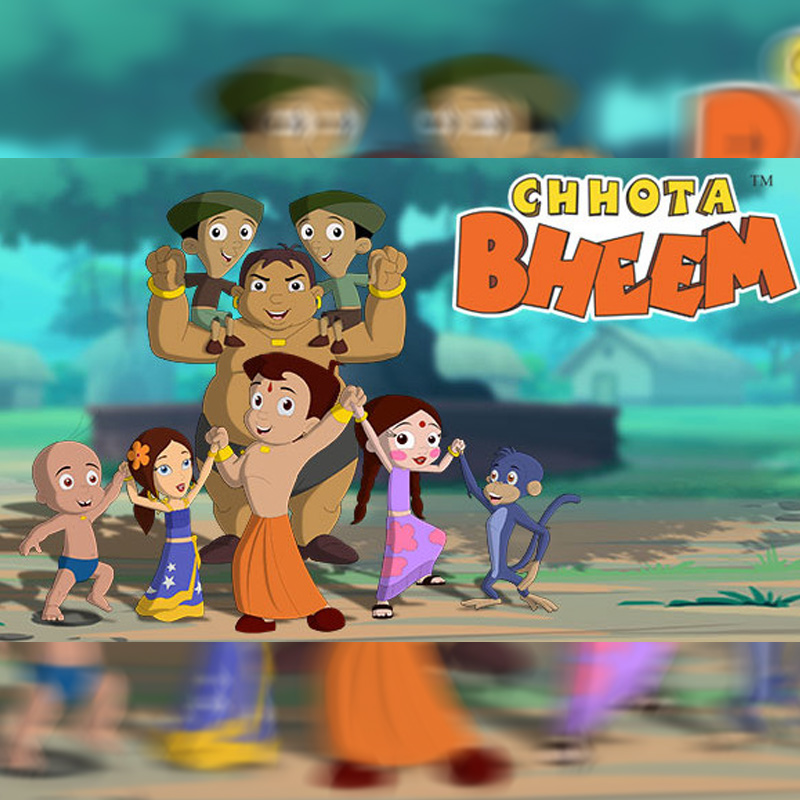
    Green Gold Animation was founded in 2001. The company produced Vikram Betal and Krishna animation shows which convinced Pogo TV to give a chance to the production house. Chhota Bheem made his first appearance in 2008 on Pogo TV. It succeeded and continued to run. The company is financed by Samir Jain, Raj Viswanadha, Arun Shendurnikar and Nidhi Anand.

    The show was aired on Sirasa TV in Sri Lanka with the name ‘Chandi’. Chhota Bheem is also aired in Pakistan on Cartoon Network Pakistan and Pogo in Hindi. The show received high ratings and today Chhota Bheem is watched more than any other cartoon show in Pakistan, Afghanistan and Iran.

    Not only this, the company inked a deal with Netflix to digitally broadcast Mighty Little Bheem – a spinoff of Chhota Bheem and Amazon Prime for the show Kalari Kids – a lost martial art form of Kerala (Kalaripayattu).

    Also Read :

    Kids’ channels undaunted by IPL

    Is it the end of the road for anime in India?

    Sony Yay banks on originals with a slew of fresh content


  • Animation industry anticipating OTT revolution by 2020

    Animation industry anticipating OTT revolution by 2020

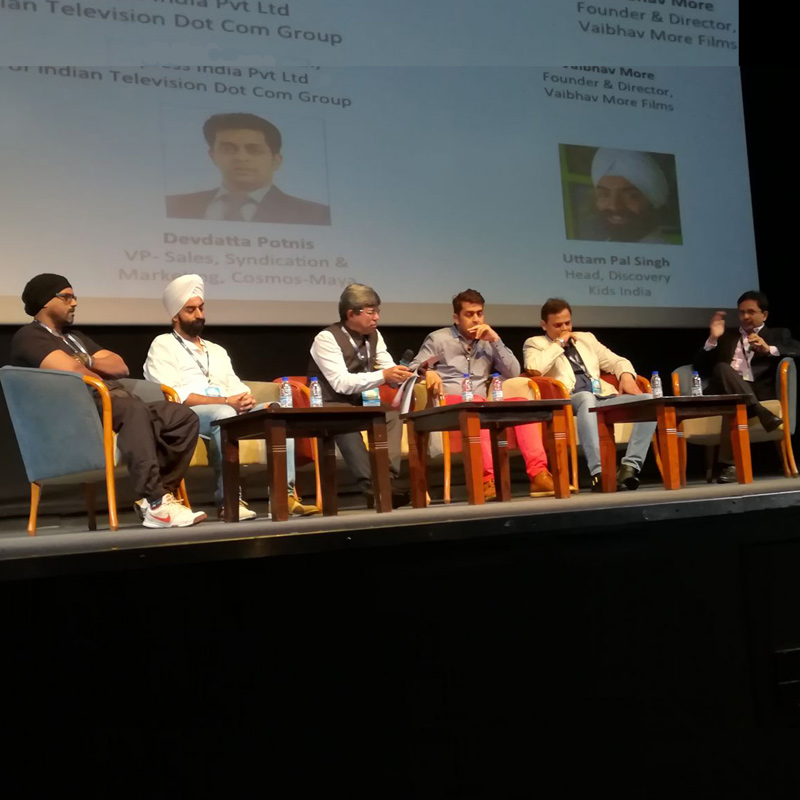
    MUMBAI:  As 2018 kick-started its journey with a bang, the question contemplated by broadcasters and the animation production segment was whether or not the media and entertainment industry was in the favour of animation. Animationxpress.com’s Spark Connect event saw a session on ‘2018, an animated year for the Indian Industry?’ with panellists—Toonz Media Group national head of marketing Kishor Srivastav, Green Gold Animation chief strategy officer Srinivas Chilakalapudi, Cosmos-Maya syndication, marketing and sales VP Devdatta Potnis, Discovery Kids India head of content Uttam Pal Singh and Vaibhav More Films founder and director Vaibhav More. The panel was moderated by Indiantelevision.com and Animationxpress.com founder, CEO and editor-in-chief Anil Wanvari.

    Potnis said that the rise of over-the-top (OTT) platforms had enabled content to reach tier II and III cities via smartphone penetration. Online was a dominant factor in 2017 and was likely to turn the tables in the next two to three years.  Srivastav added that in 2011, the average consumption of a common Indian was 450 hours a year, which shot up to 6050 hours in 2017, aided by online videos in which animation had a big role to play.

    Potnis also pointed out that kids were demanding regional animation content. He added that this was being driven by OTT and the local market. His company is soon to launch a spinoff of Motu Patlu soon. Discovery’s Singh highlighted that new IP creation is definitely on the cards but one needs to figure out the right stories and characters. He admitted that Discovery Kids wasn’t among the top brands and that the channel is going through a reinvention. Though creating an IP is difficult, he said that there isn’t any fatigue setting in.

    Srivastav touched upon the facets that make Korean animation content work in India. “We need to create IPs for young adults and kids. The storytelling needs to be simple,” he said. He predicts that there will be more IP creation happening in India by 2018-2020. Creating one takes at least two to three years and not benefitting it is the lack of finance due to the low trust in the industry. He said that a creator needs at least Rs 4-5 crore to produce a series, as well as government incentives. Working with foreign companies doesn’t entail a tax but local production is stamped with a 15 per cent GST. He spoke of countries that provide up to 40 per cent subsidies with Singapore establishing it at 25 per cent and Malaysia creating a fund for animation producers. Such initiatives are what India lacks.

    The advertising industry has also become judicious in its spending. Clients today are cautious in the areas they spend. They are also aware of the impact of the animation industry and are willing to shell out a higher amount if the quality is good.

    OTT is surely the focus of even animation producers today. Knowing its power and potential and the reach it has to India and the world’s youth, the players are anticipating the boom in the next few years.

    Also Read :

    Kids prefer entertainment over edutainment on TV

    Japanese kids’ content going strong despite home-grown onslaught

  • Chilaka’s roller coaster ride from engineering to animation

    Chilaka’s roller coaster ride from engineering to animation

    MUMBAI: Who would have thought that the person holding a master’s degree in computer science from a prestigious US University would commit to the lesser known field of animation and return to his homeland? And yet today, Rajiv Chilaka stands redeemed for a choice he made nearly 17 years ago.

    India’s most successful animation company was the entrepreneurial venture of this man who runs the show with his elder brother Srinivas. The founder and CEO of Green Gold animation, Chilaka moved over from engineering to studying animation at the Academy of Art University, San Francisco in 2000 after giving three gruelling years to a job as a software engineer.

    The inspiration came to him after watching his first animated film – The Jungle Book. It gave rise to a spree of movie and cartoon watching such as Spiderman, Tom and Jerry, etc. Chilaka knew he wasn’t a great artist so he took engineering as a career. The final switch came when, during one of his slow boring days as a librarian, he read Walt Disney’s book where he spoke of the power of entertaining kids and not considering money as a driving force. He decided that if not art, he could at least tell great stories.

    While studying his post graduate degree in the US, Chilaka applied to learn animation but without a scholarship, he had to cough up a whopping $20,000 as fees each semester. His brother refused to lend him money and advised him to finish his masters, work for a few years and give wings to his animation career. Chilaka was convinced.

    When Chilaka broke the news about setting up Green Gold Animation to his family, he instantly got the maternal support but not surprisingly, his father was adamantly against it. Needing his father’s blessings, Chilaka managed to persuade him with the business plan, which he himself felt was a pathetic one.

    He flew back to India and settled in with his parents in their new house, an option his father gave him understanding the difficulty he might face in finding his own accommodation and paying rent initially. With four to five employees, his journey began.

    If today India still lacks great animators, imagine the situation back in 2000. Chilaka says that they had to train everyone who joined. Everything was work, even if it was as simple as a business card or brochure. He even purchased a digital camera to look tech savvy. What he ensured was good quality work at a feasible budget leading to a happy client and no complaints. 
    The company came close to shutting nearly 25 times in the eight years in between. They had worries – expensive orders or unpaid dues and one by one dejected employees started moving out when he couldn’t pay them on time.
    The real tipping point came years later in 2008 when Chhota Bheem first got airtime on Pogo. Ten days before it went on air, Chilaka’s new office was gutted by a fire and a big potential investor developed cold feet while the lenders demanded their dues. “It was a brand new building which we built so luckily no one moved into it. We were going to move in three days later,” Chilaka says. Everything was damaged – the interior, centralised AC office and it was not just the loss of money but also of time and efforts. “But a lot of vendors supported and understood that we were in trouble. Turner didn’t panic and supported us instead,” he adds.

    Recently, Chilaka added another feather to his cap, with the newly launched service studio-Golden Robot Studio with Samir Jain, Chand, Ritesh and Abhishek. “Right now we have 120 team members and we have planned to add another 70-80 people in the team,” he reveals.

    The challenge now was to orient people to the new culture of being self-sufficient and creating original IPs. “It was also difficult for the employees to join a new startup company, but all the employees are happy working here and of course the brand name of Green Gold helped as everyone wanted to work for us,” says a joyful Chilaka.

    His latest home-grown IP shows include Kalari Kids, a show that rediscovers Kalaripayattu, a lost martial art form of Kerala. With the purpose to educate through entertainment, the animation studio is making an exclusive series for Amazon Prime. Green Gold also sealed a deal with Netflix to digitally broadcast Mighty Little Bheem—a spinoff of its popular character Chhota Bheem.

    The series created by Green Gold Animation are Vikram Betal in 2004, Bongo on DD National (2004–2006), Krishna on Cartoon Network (2006–2007), Krishna & Balram – Cartoon Network (2009), Chhota Bheem – Pogo TV (2008), Chorr Police – Disney XD (India) (2009–2012), Mighty Raju – Pogo TV (2011), Luv Kushh – Disney XD (India) (2012–2014), Discovery Kids (India) (2015-2016), Arjun: The Prince of Bali – Disney Channel India (2014–2016) and Kalari Kids.

    In 2018, Green Gold will premiere two theatrical releases – Chhota Bheem Kung Fu Dhamaka and a tentative title for a mythological movie—Mahiravana. Both films are likely to be launched during the summer. Chilaka refused to speak on the other shows which are still in pilot stage.

    For the torchbearer of Indian animation, we hope his pot of gold never runs out!

    Green Gold, Amazon Prime put Kerala martial art on the map
    Green Gold’s golden Mumbai launch