Tag: Grass Valley

  • LiveU & Grass Valley to offer cloud solutions for remote live productions

    LiveU & Grass Valley to offer cloud solutions for remote live productions

    NEW DELHI: LiveU and Grass Valley have joined forces to offer a pre-integrated cloud-based solution for remote live productions, enabling customers to simplify their processes and automate live and non-live news and sports productions in an efficient, agile and customisable workflow.

    LiveU’s co-founder and COO Avi Cohen, said, “With the ongoing shift to cloud production, we are committed to helping our customers maximise these new efficiencies, delivering our live video solutions as-a-service with pre-integrated workflows. Our collaboration with Grass Valley offers customers a highly efficient, flexible and scalable set of tools for going live from the field, providing greater flexibility to adapt to the needs of each and every story, giving a richer viewing experience. Remote live production can be orchestrated from anywhere via LiveU’s and Grass Valley’s integrated cloud environments, or using a hybrid model of choice, integrating high-quality live video feeds with smart automated production capabilities.”

    The collaboration facilitates live production, and news and asset management, in specific ways, helping to simplify the processes and speed up live broadcasts with compelling content. High-quality live feeds can be sent from any of LiveU’s field units for remote switching and live production using LiveU’s cloud solution with Grass Valley’s GV AMPP (Agile Media Processing Platform), the first cloud-based SaaS platform for broadcast to fully leverage the power of elastic compute. Built for the cloud from the start, GV AMPP is specifically designed to overcome broadcasters’ long-time reliance on costly and inflexible hardware-based media systems and provides a modular approach to everyday media workflows.

    In addition, live feeds from LiveU units can be integrated into the GV STRATUS news and asset management tool to streamline the remote news gathering and production workflow. Utilising LiveU’s live video metadata to automate the process and provide metadata enriched assets within GV STRATUS, users can quickly search, browse, edit and publish content – live or file – using a range of smart search criteria and via the smart rules’ engine.

    Grass Valley CEO and president Tim Shoulders said, “As our customers strive to deliver the captivating content and high production values that consumers demand, the GVTA gives them access to trusted solutions that are tested and configured to ensure interoperability with Grass Valley’s solutions – one of the major hurdles our customers face when deploying multi-vendor systems.”

  • India’s Network18 Standardizes on Grass Valley’s iTX Playout to Leverage Agile, Future-ready Operations

    India’s Network18 Standardizes on Grass Valley’s iTX Playout to Leverage Agile, Future-ready Operations

    MUMBAI: Network18, one of India's largestmedia groups, has deployed Grass Valley'shighly flexible and scalable iTX integrated playout platformto underpin the transition to a standardized playout model across all its facilities. The solution was chosen for itsprovenfuture-proof features, andenables the Mumbai-based company to manage and operate multiple playout channels – across multiple platforms – with greater scalability, flexibility and efficiency.

    Network18 operates a large mix of news and entertainment channelsin addition to multiple digital products of the biggest names in media, such as News18 Network,  CNBC-TV18, CNN News18, Colors, MTV,Moneycontrol, Firstpost and Forbes India. To meet the needs of thefast changing and rapidly growing market, the organization needed an agile solution capable of handling large-scale integrated playout and over 25 formats and resolutions natively, from SD to 4K UHD, managing content natively as SDI baseband as well as IP, without additional transcoding. Grass Valley's iTX solutionis a highlyadvanced, integrated playout platform for broadcast television, deliveringIP/SDI flexibility and scalability for future readiness, along with end-to-end workflow tools for greater process automation and lower OPEX.

    Rajat Nigam, Group Chief Technology officer, Network18 commented: "We at Network18constantly explore and evaluate newer technologies and solutions aligned with our business objective of value leadership. We look towards standardizing the technologies across our group and implement cost-effective solutions and workflows to meet the demand for real-time access to news and entertainment, anywhere, on any device, in the fast emerging digital world. Our system design has always adhered to the fundamental principles of flexibility, reliability and versatility that enables us to easilyadd more channels, deliver services to online and social platforms or support 4K UHDTV content compatible with today’s multi-platform distribution environment. Working with a technical partner that can provide the tools and expertise to meet these demands and deliver the flexibility, scalability and future-proofing we need to evolve our business is critical to getting the system that is right for us. Based on techno-commercial in-depth evaluation, we made the choice for the iTX system from Grass Valley.” 

    Grass Valley's iTX platform delivers anintuitive multipurpose operator interface that provides end-to-end workflow tools, such as file and lines ingest, asset management and preview functions. The Network 18 team gains all the functionality needed, from high-end graphics to subtitling, SCTE, and voice over (VO),in one flexible platform.Network18 also deployed GV IONstorage that ensures reliability across applications fromplayout tonews production.

    Farzin Najmi, vice president, broadcast technology and operations, CNBC-TV18 added: "In a rapidly evolving market, tools that are robust, easy to deploy, intuitive and future-ready are essential to staying ahead of the curve.Working with partners that have the right expertise and technical know-how, both during integration phase and post commissioning support, is also critical, and we look forward to a long-term partnership of Network18 and Grass Valley." 

    Network18 has already gone live with more than 36channels with iTX, with full migration slated for completion by the end of 2020. This is part of a facility consolidation as all locations pan-India will be brought to a central location having standardized technology solution using iTX.

    “Broadcasters increasingly have to address a wide range of digital OTT platforms in addition to traditional linear services,” said Somu Patil, vice president of sales, APAC, Grass Valley.  “Our iTX solution is a workhorse for large-scale integrated playout, encompassing file/live IP/SDI playout, captioning/subtitling, audio processing and graphics branding. The system also enables Network18 to deliver services across multiple platforms without the need for separate encoding. We are proud to have expanded our partnership with Network18 and to help the company meet its business needs today and in the future.”

  • Etere HSM expands interoperability with Grass Valley

    Etere HSM expands interoperability with Grass Valley

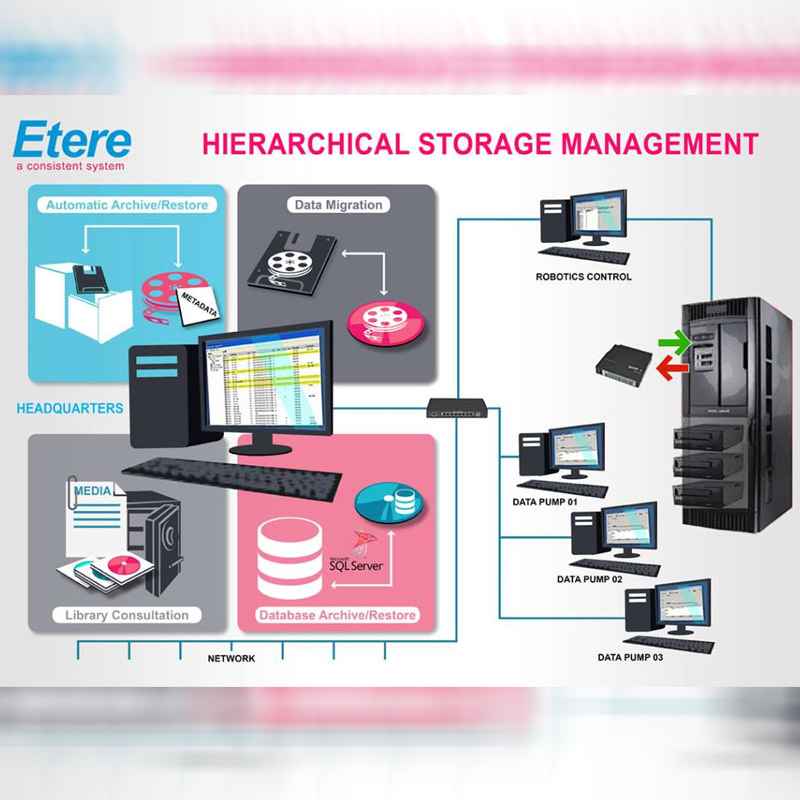
    Etere HSM features an integration with Grass Valley that improves interoperability, streamlines connectivity, enables faster content processing and includes deep archive capabilities.

    Etere introduces a new integration layer between Etere Hierarchical Storage Management (HSM) and Grass Valley software for Newsroom and Video Production environments. The integration brings Etere’s interoperability to the next level. Etere HSM features the capability to read Grass Valley’s archival and restoration job requests through the Application Programming Interface (API). 

    Etere HSM is a software tool that provides an integrated and complete management of all archives with a unified console, enabling a seamless integration of both proprietary and industry file systems, as well as the information of archives located in multiple locations across the world. Etere HSM also provides the advantage of a streamlined setup with deep archive capabilities. Whenever an archive operation is requested, Etere HSM triggers the storage of clips from Grass Valley to a digital library, for e.g. Linear Tape-Open (LTO) tapes and Optical Disc Archive (ODA) optical disks. 

    Designed for a superior user experience, users of Etere HSM are also able to launch other workflows simultaneously, for example, the creation of proxy copies in low resolutions before archiving the content. The integration empowers users to search and preview the materials available in Etere Media Library directly from the Grass Valley system through both the Web and Win32 interfaces. 

    In the event where a file retrieval is requested, Etere triggers a clip’s restoration from the LTO tape/ODA disk into the Grass Valley system and delivers a notification once the job is completed. Etere HSM improves the speed and ease of content connectivity and processing so that you can focus on the content creation. Etere is committed to providing continuous innovations and new capabilities that empower its users with a greater advantage. 

    Etere provides more options to drive the workflows that you need, the way you want it and with the reliability that you can trust. For more information on Etere solutions, drop us an email at info@etere.com

  • Highly-beneficial interactions take place at Broadcast India ’16

    Highly-beneficial interactions take place at Broadcast India ’16

    MUMBAI: The 26th Broadcast India Show concluded over the weekend in Mumbai, and was easily the most exciting Broadcast India Show yet. With thousands of eager, high-quality trade visitors swarming the show floor, a sentiment signalling highly-beneficial exchanges and interactions echoed through the halls of the Bombay Exhibition Centre and was at the tip of our exhibitors’ tongues.

    As the number one professional trade show focused on the technology that powers India’s vast entertainment and infotainment industry, the Broadcast India Show delivered yet again on its promise of showcasing the latest in film, television, pro-audio, 3D, broadcasting, digital cinema, radio, mobile, IPTV, and also VR technology from across the world and within the subcontinent.

    The two-day Conference held on 20–22 October was well attended; with 26 speakers presenting papers on the state-of-the-art development in broadcast technology and related subjects. Leading manufacturers like Blackmagic Design, Panasonic, Sony, AVID, RED Digital, Canon, Datavideo, Ross Video, FOR-A, On Air Asia, Adobe, Grass Valley, AJA, PlayBox, IHSE, Primestream, Canare, Ikegami, Hitachi, Chyron Hego, Monarch, Boston, Netweb, Seagate, ARRI, Canara Lighting, GoPro, Atomos, Carl Zeiss, Cooke Optics, DJI, Vitec Group, Panther, Yamaha, Sennheiser, Digigram and Planetcast Media Services, to name a few, were present with their latest innovations at the show.

    “We saw more active engagement between visitors and exhibitors this year than we have seen in the past,” said Saicom Trade Fairs director Kavita Meer. “And since we collect feedback during show days, we came to realise that over a handful of years, our profile of visitors has changed from those who were content with just buying and selling to an audience that questions and challenges these advances in technology as well. That kind of back-and-forth is vital for the growth of the creative industry, not just in India but all over the world,” Meer said.

    Like always, a standard has been set for an arena that provides end-to-end technology solutions for serious visitors, buyers and decision-makers. The overwhelming response to the 2016 show only opens more doors for participation from the world’s most forward-thinking brands. And Broadcast India is committed to making sure this annual tech pilgrimage grows from strength-to-strength. Higher levels of participation from China and European countries as compared to previous years were seen. In total, 36 countries and over 590 companies participated in the show
    this year, with a visitor footfall of 20,143. Broadcast India Show 2017 will take place on 12-14 October 2017 at the Bombay Exhibition Centre in Mumbai.

  • Highly-beneficial interactions take place at Broadcast India ’16

    Highly-beneficial interactions take place at Broadcast India ’16

    MUMBAI: The 26th Broadcast India Show concluded over the weekend in Mumbai, and was easily the most exciting Broadcast India Show yet. With thousands of eager, high-quality trade visitors swarming the show floor, a sentiment signalling highly-beneficial exchanges and interactions echoed through the halls of the Bombay Exhibition Centre and was at the tip of our exhibitors’ tongues.

    As the number one professional trade show focused on the technology that powers India’s vast entertainment and infotainment industry, the Broadcast India Show delivered yet again on its promise of showcasing the latest in film, television, pro-audio, 3D, broadcasting, digital cinema, radio, mobile, IPTV, and also VR technology from across the world and within the subcontinent.

    The two-day Conference held on 20–22 October was well attended; with 26 speakers presenting papers on the state-of-the-art development in broadcast technology and related subjects. Leading manufacturers like Blackmagic Design, Panasonic, Sony, AVID, RED Digital, Canon, Datavideo, Ross Video, FOR-A, On Air Asia, Adobe, Grass Valley, AJA, PlayBox, IHSE, Primestream, Canare, Ikegami, Hitachi, Chyron Hego, Monarch, Boston, Netweb, Seagate, ARRI, Canara Lighting, GoPro, Atomos, Carl Zeiss, Cooke Optics, DJI, Vitec Group, Panther, Yamaha, Sennheiser, Digigram and Planetcast Media Services, to name a few, were present with their latest innovations at the show.

    “We saw more active engagement between visitors and exhibitors this year than we have seen in the past,” said Saicom Trade Fairs director Kavita Meer. “And since we collect feedback during show days, we came to realise that over a handful of years, our profile of visitors has changed from those who were content with just buying and selling to an audience that questions and challenges these advances in technology as well. That kind of back-and-forth is vital for the growth of the creative industry, not just in India but all over the world,” Meer said.

    Like always, a standard has been set for an arena that provides end-to-end technology solutions for serious visitors, buyers and decision-makers. The overwhelming response to the 2016 show only opens more doors for participation from the world’s most forward-thinking brands. And Broadcast India is committed to making sure this annual tech pilgrimage grows from strength-to-strength. Higher levels of participation from China and European countries as compared to previous years were seen. In total, 36 countries and over 590 companies participated in the show
    this year, with a visitor footfall of 20,143. Broadcast India Show 2017 will take place on 12-14 October 2017 at the Bombay Exhibition Centre in Mumbai.

  • What’s driving the APAC broadcasting equipment market’s growth

    What’s driving the APAC broadcasting equipment market’s growth

    MUMBAI: Here’s another research report, which echoes what everyone has been saying about the growth of OTT services in the Asia Pacific region. But it is from the perspective of the equipment that is used to produce, and transmit and distribute content.

    Persistence Market Research’s latest report predicts that the overall broadcast equipment market in Asia Pacific is expected to grow healthily, along with traditional TV broadcast equipment, even as the IP converged broadcasting equipment segment shows the maximum growth.

    Consumers, especially in APAC, prefer access to audio-visual content over multiple devices such as tablets, smartphones and desktops. OTT players such as YouTube, Netflix, and Amazon Prime offer multimedia content that can be accessed across various platforms. This is a major factor driving growth of the market, says the report.

    Another peculiarity of the region is that various countries have low electricity penetration that is creating significant challenges for broadcasters. Infrastructure challenges such as lack of electricity and mismatch cabling can negatively affect growth of APAC broadcasting equipment market.

    Most key players in the APAC broadcasting equipment market are focused on carrying out promotional activities via industrial exhibitions to advertise their products and form strategic alliances with other broadcasting service providers to expand the reach of their business.

    For the report, Persistence Market Research has classified the sector into traditional TV broadcast, traditional radio broadcast, IP converged broadcasting and asset management systems.  And the APAC region has been broken down as follows: China, Japan, India, ASEAN, Australia and New Zealand and the  rest of APAC.

    The report has concluded that the overall APAC broadcast equipment market was valued at $2.49 billion in APAC in 2015.  It predicts that it will grow at an 8.1 per cent CAGR to touch $5.10 billion by 2024.

    And this is primarily being driven by the convergence of high definition (HD)  technologies such as 4K with IP. As per the report, 4K services are expected to be available on IP networks over the next four to five years via satellite launching and cable platforms.

    Traditional TV broadcast equipment

    The traditional TV broadcast segment accounted for 45.1 per cent share in terms of value of the total APAC broadcasting equipment market in 2015. Consumption of HD content in the region is increasing at a rapid clip, supported by rising sales of HD ready TVs. Valued at US 1.123 billion in 2015, it is expected to grow at a CAGR of 8.1 per cent between 2016 and 20124.

    The traditional TV broadcast equipment market is further segmented into cameras, monitors, routers, switchers, cable, transmitter, receiver and other accessories. The routers sub-segment is projected to expand at the highest CAGR of 9.2 per cent during the forecast period.
    Content creators across the region are shifting towards 4K cameras in order to capture high definition video. This is being supported by sales of 4K UHD televisions that has gained momentum due to rising disposable income in the region.

    IP converged broadcast equipment

    The IP converged broadcasting is projected to be the fastest growing segment in the APAC broadcasting equipment market, exhibiting a CAGR of 10 per cent during the forecast period. IP converged broadcasting is the emerging segment in broadcasting equipment market, where the IP network is used for the content delivery by broadcasters. The convergence of IP with broadcasting has enabled broadcasters to deliver content in real time in a more secure and reliable manner. It was valued at $453.3 million in 2015 and is expected to hit $1.06 billion by 2024.

    The Persistence Market Research report has further sub-segmented this category into media over IP, media contribution over IP and IP in studios and campuses.

    The traditional radio broadcast segment was valued at US$ 544 Mn in 2015 and is anticipated to register a CAGR of 7.5% during the forecast period.

    The key players in the APAC broadcasting equipment market include Media Excel Inc.(US), ChyronHego Corporation (US), TVU Networks Corporation (US), XOR Media Inc.(US), FOR-A Company (Japan), ORACLE Corporation (US), Unlimi-Tech Software Inc. (US), Grass Valley (Canada) and General Dynamics Mediaware (Australia).

  • What’s driving the APAC broadcasting equipment market’s growth

    What’s driving the APAC broadcasting equipment market’s growth

    MUMBAI: Here’s another research report, which echoes what everyone has been saying about the growth of OTT services in the Asia Pacific region. But it is from the perspective of the equipment that is used to produce, and transmit and distribute content.

    Persistence Market Research’s latest report predicts that the overall broadcast equipment market in Asia Pacific is expected to grow healthily, along with traditional TV broadcast equipment, even as the IP converged broadcasting equipment segment shows the maximum growth.

    Consumers, especially in APAC, prefer access to audio-visual content over multiple devices such as tablets, smartphones and desktops. OTT players such as YouTube, Netflix, and Amazon Prime offer multimedia content that can be accessed across various platforms. This is a major factor driving growth of the market, says the report.

    Another peculiarity of the region is that various countries have low electricity penetration that is creating significant challenges for broadcasters. Infrastructure challenges such as lack of electricity and mismatch cabling can negatively affect growth of APAC broadcasting equipment market.

    Most key players in the APAC broadcasting equipment market are focused on carrying out promotional activities via industrial exhibitions to advertise their products and form strategic alliances with other broadcasting service providers to expand the reach of their business.

    For the report, Persistence Market Research has classified the sector into traditional TV broadcast, traditional radio broadcast, IP converged broadcasting and asset management systems.  And the APAC region has been broken down as follows: China, Japan, India, ASEAN, Australia and New Zealand and the  rest of APAC.

    The report has concluded that the overall APAC broadcast equipment market was valued at $2.49 billion in APAC in 2015.  It predicts that it will grow at an 8.1 per cent CAGR to touch $5.10 billion by 2024.

    And this is primarily being driven by the convergence of high definition (HD)  technologies such as 4K with IP. As per the report, 4K services are expected to be available on IP networks over the next four to five years via satellite launching and cable platforms.

    Traditional TV broadcast equipment

    The traditional TV broadcast segment accounted for 45.1 per cent share in terms of value of the total APAC broadcasting equipment market in 2015. Consumption of HD content in the region is increasing at a rapid clip, supported by rising sales of HD ready TVs. Valued at US 1.123 billion in 2015, it is expected to grow at a CAGR of 8.1 per cent between 2016 and 20124.

    The traditional TV broadcast equipment market is further segmented into cameras, monitors, routers, switchers, cable, transmitter, receiver and other accessories. The routers sub-segment is projected to expand at the highest CAGR of 9.2 per cent during the forecast period.
    Content creators across the region are shifting towards 4K cameras in order to capture high definition video. This is being supported by sales of 4K UHD televisions that has gained momentum due to rising disposable income in the region.

    IP converged broadcast equipment

    The IP converged broadcasting is projected to be the fastest growing segment in the APAC broadcasting equipment market, exhibiting a CAGR of 10 per cent during the forecast period. IP converged broadcasting is the emerging segment in broadcasting equipment market, where the IP network is used for the content delivery by broadcasters. The convergence of IP with broadcasting has enabled broadcasters to deliver content in real time in a more secure and reliable manner. It was valued at $453.3 million in 2015 and is expected to hit $1.06 billion by 2024.

    The Persistence Market Research report has further sub-segmented this category into media over IP, media contribution over IP and IP in studios and campuses.

    The traditional radio broadcast segment was valued at US$ 544 Mn in 2015 and is anticipated to register a CAGR of 7.5% during the forecast period.

    The key players in the APAC broadcasting equipment market include Media Excel Inc.(US), ChyronHego Corporation (US), TVU Networks Corporation (US), XOR Media Inc.(US), FOR-A Company (Japan), ORACLE Corporation (US), Unlimi-Tech Software Inc. (US), Grass Valley (Canada) and General Dynamics Mediaware (Australia).

  • Grass Valley honoured with Philo T. Farnsworth Award by Television Academy

    Grass Valley honoured with Philo T. Farnsworth Award by Television Academy

    MUMBAI: Grass Valley USA, LLC was presented with the Philo T. Farnsworth Award by the Television Academy at its 67th Engineering Emmy Awards.


    The company was honored for its five-decade history of providing the tools to create signal infrastructure as the television industry grew; for its years of leadership in video routing, switching and manipulation; and for its industry-changing, pioneering strides in digital-image processing and effects.


    The award was presented on 28 October.


    In receiving the award, Grass Valley senior vice president, marketing Mike Cronk said, “It was an honor to receive on behalf of all Grass Valley employees through the years the Philo T. Farnsworth Award from the Television Academy at its 67th Engineering Emmy Awards ceremony. Grass Valley was founded in 1959 by Dr. Hare in the foothills of the Sierra Nevada Mountains in California and has not stopped innovating ever since. Whether it was contributing to the first color broadcast of the Olympics in 1968, the first live color broadcast from outer space with Apollo 10 in 1970, transforming live production with the 300 production switcher in 1979, or creating the first commercially viable video server in 1995 (Profile), 21 Emmy awards later Grass Valley’s drive and passion for telling stories with pictures has remained constant.”


    “With the proliferation of digital media, UHD, and IP today there are more opportunities than ever to carry that drive and passion for better storytelling into the future. Thanks to all the employees of Grass Valley who have contributed to its success over the years and thanks to all the customers over the years whose confidence in and collaboration with Grass Valley have continued to make the company strong,” he added.

  • 4K technology touted to transform ‘onscreen’ viewing in Asia

    4K technology touted to transform ‘onscreen’ viewing in Asia

    MUMBAI: HD (high definition) viewing will soon be a technology of the past, with the proliferation of 4K coming Asia’s way.  4K, also commonly known as ultra-high definition (UHD), is an evolved standard that greatly surpasses HD, bearing a minimum pixel count of 3840 x 2160 compared to the latter’s standard of 1920 x 1080 pixels. Naturally, 4K brings to viewers sharper, higher clarity images and videos.

    BroadcastAsia2014 – Offering a preview of cutting-edge 4K technology

    Come June at  BroadcastAsia2014, players from Asia’s TV and broadcasting industries will be able to feast their eyes on the most avant-garde 4K technology available globally, presented by some of the world’s foremost companies in the TV viewing playing field. Leading international exhibitors such as  Canon,  EVS, Grass Valley,  Quantel, Orad,  Red Digital Cinema,  Village Island,  Sony and many more will be showcasing their cutting edge 4K/UHD products.

    Orad, a world-leading provider of real-time 3D broadcast graphic, video server, and media asset management solutions, will be highlighting at BroadcastAsia2014, its new tapeless broadcast graphic and video server workflow technology – Blend 4K Channel and Morpho 4K, to help companies streamline productions and maximise productivity and broadcast workflows.

    Click here for full report

  • Over 200 First-Time Exhibitors Join NAB Show

    Over 200 First-Time Exhibitors Join NAB Show

    MUMbai: More than 200 companies will exhibit for the first time at the 2014 NAB Show, home to the world’s largest gathering of vendors driving the future of media and entertainment. These companies will offer a first-look at new products and next-generation technologies through interactive exhibits, live demonstrations and technology-focused pavilions. NAB Show, held April 5-10 (exhibits open April 7-10) in Las Vegas, is the annual conference and expo for professionals who create, manage and distribute entertainment across all platforms.


    The 2014 NAB Show’s 204 first-time exhibitors will join a wide variety of NAB Show exhibiting veterans on the 850,000+ square feet of space that make up the NAB Show exhibit floor. The debuting NAB Show exhibitors include AMD-Advanced Micro Devices, Clearleap, Fujitsu Semiconductor America, Giga Entertainment Media, Siemens Convergence Creators GmbH, This Technology and Ustream. There are also several new exhibitors within Intel’s new Partner Pavilion. A full list of NAB Show first-time exhibitors can be found here.


    “These are transformative times for professionals who employ audio and video technology to communicate, educate and entertain. Nowhere will that be more evident than at NAB Show,” said NAB Executive Vice President of Conventions and Business Operations Chris Brown. “The multitude of first-time exhibitors this year is reflective of NAB Show’s ability to adapt and deliver fresh perspectives on the industry’s most innovative companies and cutting-edge technologies.”


    The 2014 NAB Show exposition will comprise 1,550+ companies, including 550+ international exhibitors and some of the world’s leading brands and companies, including Accenture, Amazon Web Services, AVID, Canon U.S.A., Cisco, Clear Channel Satellite, Deluxe, Dolby Laboratories, Dome Productions, Ericsson, Evertz, FUJIFILM, General Dynamics, Grass Valley, Harmonic, Harris Broadcast, Hitachi, HP Enterprise Services, IBM, JVC, Microsoft Corporation, Panasonic, Piksel, Ross Video Limited, Sony Electronics, Technicolor, Toshiba, Verizon and The Vitec Group.


    Also on the exhibit floor this year, the new Interactive Television Pavilion will present innovations in technology, content/ad applications and services that provide personalized and consumer- controlled video experiences delivered with and through the television, mobile devices, PC and emerging digital video distribution systems. In addition, the expanded SPROCKIT program will feature a pavilion showcasing a unique collection of up to 30 market-ready startup companies positioned to transform the media and entertainment industry.


    NAB Show’s sales division reports that space is currently sold out for several exhibit communities including: Central Hall (Acquisition and Production, Radio and Pro Audio), Lower South Hall (Post Production and Display Systems) and Outdoor (Mobile Media).