Tag: Graham Hales

  • Tata tops the Best Indian Brands 2014 list

    Tata tops the Best Indian Brands 2014 list

    MUMBAI: Omnicom Group’s Interbrand India has released the second edition of its Best Indian Brands 2014 league table, the definitive guide to the top 40 brands in India.

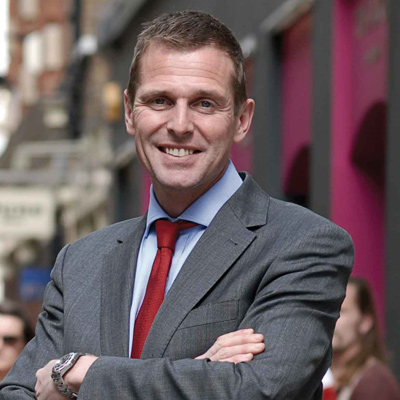
    While unveiling the table, Interbrand global chief marketing officer Graham Hales said that with an impressive growth rate of 14 per cent across the brands within table, it can be seen that investing in brands is a good opportunity for Indian business. “Indian business may have been slow to start the process of creating really strong brands, but the opportunity is now evident and in its own right that should feed the impetus to create stronger brands,” he said.

    Interbrand India managing director Ashish Mishra believes that not just Indian, but very few Asian companies have managed to build valuable international brands. “In my mind, it has to do with a prevalent business belief that brand is a cost, rather than a strategic and long-term investment. Here businesses clearly lead the brand and are not led by it, with the brand mostly relegated to being an expression tool.”

    As a brand consultant in the region, he sees the need to continue to educate senior managers, about brands being an asset that requires long-term management and planning. If Indian companies begin to change their brand mindset, the opportunities are limitless.

    “Indeed opportunities are a positive way of looking at the challenges. And there can’t be a stronger motivation for us than to act as a bridge of sorts in the Indian corporate world – between the two league tables we bring to the market – best Indian brands and best global brands,” adds Mishra.

    Beyond resulting in a numeric value, the brand value perspective brings in an appreciation of where and how brand and business value could be created. These are the discussions Interbrand wants to create in the Indian market to create a rightful leverage for Indian Brands on the domestic as well as the global scale.

    The league table is pasted below:


  • Interbrand appoints global CMO & North American CMO

    Interbrand appoints global CMO & North American CMO

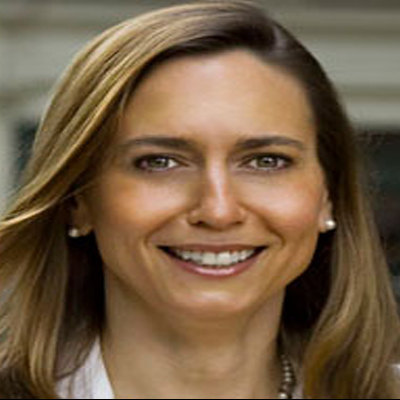
    MUMBAI: Interbrand, a brand consultancy, has named Graham Hales as its global chief marketing officer and Andrea Sullivan will be the new chief marketing officer of Interbrand North America.


    Hales most recently served as chief executive officer of Interbrand London, while Sullivan served as executive director of client services and was responsible for client services and marketing for Interbrand North America. In their new roles, Hales and Sullivan will work closely to integrate marketing and business development initiatives to drive growth across Interbrand’s global network. Hales and Sullivan will work with regional managing directors to engage new clients while deepening relationships with existing clients, ensuring they continue to benefit from the firm’s strategic and creative offerings and services.


    As CEO of Interbrand London for the past four years, Hales led key brand engagements with some of the firm’s most high-profile clients, including the BBC, British Airways and Samsung. Under his leadership, Marketing Magazine named Interbrand’s London office Agency of Year in 2011. Hales brings extensive global experience to his new role as Interbrand’s global chief marketing officer. He has helped to oversee the firm’s offices in Amsterdam and Mumbai and has also driven regional business development activity in the Middle East, Turkey and Scandinavia. Prior to serving as Interbrand London’s CEO, Hales was Interbrand’s global chief communications officer. While in that role, he was instrumental in helping to create original content around the firm’s annual ‘Best Global Brands’ report.


    While serving as executive director of client services, Sullivan led the client services and marketing team and co-founded Interbrand’s global corporate citizenship practice. Additionally, she played a pivotal role in developing and promoting Interbrand’s thought leadership on a global scale, having delivered interactive experiences with partners such as the ANA, Cannes, Deloitte, Guggenheim, Harvard, Lyons, MoMA, NYSE, United Nations, World Business Forum and Yale. Sullivan was a founding member of G23, a landmark consultancy comprising top female leadership from within the Omnicom network. G23 was designed to lead Omnicom clients in activating the global female economy.


    “It is a very exciting time in the history of Interbrand,” said Interbrand’s global chief executive officer Jez Frampton. “The promotion of both Graham and Andrea marks the first time that the firm has had two leaders in place to strategically foster and activate a global vision of marketing, communication, and business development. Graham and Andrea have been proven leaders of the business for many years and I congratulate them both on the next chapter of their careers at Interbrand.”

  • ‘We need to get India more established within the Interbrand network’: Interbrand London CEO Graham Hales

    ‘We need to get India more established within the Interbrand network’: Interbrand London CEO Graham Hales

    Months after Omnicom‘s buyout of DDB Mudra Group, brand consultancy Water Interbrand has been renamed Interbrand India from 1 January.

    Interbrand, known for its annual report on Best Global Brands, will provide to India its list of Most Valuable Indian Brands in this quarter.

    Interbrand London CEO Graham Hales says the world has seen a complete digital revolution taking place across markets. This means that most customers’ first interactions with a brand will now take place digitally.

    He feels this has added democracy to marketplaces. This wasn’t there previously and adds pressure on organisations to deliver on their promise to customers.

    Hales spoke to Indiantelevision.com‘s Ashwin Pinto about the best brands list, the plans for India, the challenges that brands face in a fast changing environment and how a brand like McDonald‘s repositioned to appeal to a broader customer base.

    Excerpts:

    Q. How important is India for Interbrand vis-?-vis the rest of Asia?

    A. As an international business we need to have a presence in India. India offers tremendous potential. While there are some strong Indian brands, they have international marketplaces where they can prosper more deeply.

    Q. How is the integration of Water with Interbrand working out?

    A. It is going smoothly. We hope to welcome them to the Interbrand family next year. Processes are taking place to get them on board more deeply.

    Interbrand has a way of doing things. We have basic toolkits that people need to have greater fluency in to operate comfortably. It means consistency in terms of services that we offer clients.

    Q. What is the gameplan for India?

    A. We need to get India more established within the Interbrand network. Then we have to grow the business given the opportunities in India‘s economic environment. If the pace grows, it will be determined by the commerciality of the business.

    Q. Which are your top three markets?

    A. The US is the biggest. After that it tends to follow the patterns of global commerce. In Asia, we have two offices in China, one in Singapore, Japan, Korea. 


     ‘In the last couple of years, some changes have taken place in the branding space. One of the things is the tightening of the economy. We also have had a complete digital revolution taking place across markets. This means that most customers’ first interactions with a brand will now take place digitally. You have social media attached to that now where people are able to give their opinions about brands. This has added democracy to marketplaces’


    Q. In India people think of a brand as just a name and fancy logo. What are the other elements in creating successful brands?

    A. A brand has many touchpoints where it may spring to life. While a logo might be a point of identifying one organisation from another, there are opportunities in terms of how an organisation uses its people, its behaviours, its products and services. The channels it uses and the way it communicates is also important. All this should be directed by the brand. Metrics allow you to understand a brand from an internal and external perspective.

    Q. Does having local offices make it easier to handle differences in culture and attitudes towards global brands?

    A. We offer international benchmarks of best practices for our management. But we also have local people who understand the culture, placement of the brand within a particular market, and fluency over the consumers in that market. Local talent represents consumers.

    Q. What strategy has Interbrand followed in the past couple of years to grow its presence globally?

    A. We continue to advise and help organisations create and maintain brand value. Our services are linked to how a brand drives value into an organisation. We have 40 offices in 36 countries. We are the only consultancy that has brand valuation sitting at the heart of the business. Everything that we do links back to helping organisations create brand value. We have created processes that help organisations manage their brands.

    Q. What are the challenges Interbrand faces due to economic slowdown?

    A. Markets are moving faster than they have before despite the economic slowdown. Consumer‘s attitudes are moving quickly. So brands also have to move fast. They have to make sure that they are changing at the pace of their markets.

    One of the interesting things of the slowdown is that organisations have focussed on the supply side of their business in terms of keeping costs down as low as possible. But they also should look at managing the demand side of their business where brands have a role to play.

    That is where customer loyalty comes from. That is what gives the security to a big company to make investments in the future. The opportunities lie in the strength of brands giving a competitive edge to organisations. These opportunities are deep and significant.

    Q. Over the past couple of years what changes have happened in the branding space?

    A. One of the things is the tightening of the economy. We also have a complete digital revolution taking place across markets. This means that most customers‘ first interactions with a brand will now take place digitally. You have social media attached to that now where people are able to give their opinions about brands.

    This has added democracy to marketplaces. This wasn‘t there previously and adds pressure on organisations to deliver on their promise to customers.

    Q. Is flexibility in terms of how Interbrand serves clients more important given the difficult economic climate?

    A. You have to be able to have agility to move in the way that the market wants you to move. You have to listen very carefully to your clients to understand how you can best help them. Any effective consultancy has to be agile to the marketplace.

    Q. Could you give me a few examples in the past couple of years of working with clients to create identification, differentiation and value?

    A. We have worked extensively with Hyundai to make them understand how their brand drives its value. You can link that back to what you should be doing more as a business to enable yourself to become a stronger brand to continue to compete across the marketplace.

    Hyundai has become a bigger and a more significant brand globally. A few years ago Hyundai was not present in some markets and did not necessarily drive consumer choice. We help organisations understand where the value of their brand comes from. We help them understand the strategy that they should pursue to get their brand to be stronger and apply more competitor advantage to give the brand a better opportunity to drive consumer choice in the marketplace.

    Q. With offline and online brand experiences constantly intertwining, brands need to stay actively engaged with consumers. How does Interbrand ensure that its clients do this?

    A. One of the fundamental shifts that has changed is that purchase used to feel like a linear device. People had a disposition to shop for a brand in a particular category. They would go to a retail store to experience brands and decide which brand they wanted to buy.

    Now it is a more dynamic and chaotic process. People will consider a purchase and go online. This adds brands in and takes brands out before they arrive at the point of purchase. So the whole process has become more chaotic and more exciting. There are different routes to go to market now.

    We help organisations understand how their brand should come to life within markets. Therefore we decide on the digital strategy that they should have to maximise the role of their brand.

    Q. Do brands like Apple follow a common trajectory to become powerful?

    A. All these things are idiosyncratic. Any brand that has a clear idea of its own personality will understand how it should use opportunities in a market to help navigate decisions. So if a brand just tries to replicate what competitors do, it is not going to end up being distinctive or differentiated. Great brands are business strategy brought to life. They deliver a seamless experience across products and services, physical spaces and places, internal culture and communications.

    Apple in its history has succeeded in innovating. They have thought very deeply about that. They have humanised their technology very effectively and so it does not feel like another technology. It feels like a brand in its own right that happens to be in the technology market. They have a number of things growing right.

    Q. In terms of managing a brand‘s reputation that has been built over the years ,what are the key things to keep in mind?

    A. You to have to be clear about what the brand idea is. You have to show that commitment to the brand idea so that the organisation can respond to it. It can then feel authentic inside the business. You have to protect the brand zealously which is what Samsung did in its patent fight against Apple. You have to move responsibly in the market.

    You have to understand what is different about the organisation. This has to be driven so that it is understood. There are 10 brand strength factors that we monitor to find out about the health of a brand and find opportunities for its continued growth.

    Q. Coca-Cola has been number one in your list for a long time. Technology companies have also grown. What separates them from the rest of the pack?

    A. Coca-Cola has a 126 year history. That provides an opportunity for them. There are 3500 products within the Coca-Cola portfolio. Around 1.8 billion Coca-Cola products are consumed on a daily basis. Can it keep pace with challenges is the question.

    Google has moved beyond its core product offering into more diverse offerings. These will give greater revenues in the future. The financial performance of a brand will depend on its ability to create brand value.

    Q. Yahoo! no longer has the presence that it once did. Where do you see it going from here?

    A. Yahoo has been on the decline for the past 10 years. Although the web portal pioneer is the fourth-largest site on the internet and has an audience of millions, it has been making news not for its achievements, but for its missteps.

    Yahoo struggles to compete in search, email, and data sharing. Acquisitions such as Flickr have been underutilised. Without fully developing social elements, Flickr ceded ground to Facebook and Instagram. On top of that, Yahoo‘s revenues have been waning for years and its content, while a dominant force in online news, needs to evolve.

    Potential buyers have been circling the troubled company for the past two years and, so far, no one has been able to revive the ailing brand. Enter Marissa Mayer – a former Google executive, now Yahoo‘s CEO. A bold hire by anyone‘s estimation, there is now more hope than ever for a turnaround at Yahoo.

    Q. So you see Yahoo! possibly being able to become more competitive?

    A. Yes! The company has potential to make a comeback: it has strong brand recognition, a vast audience, and despite challenges, revenues are up. Yahoo must realise that the content it‘s now developing will come to define it as a brand and that, in a world overflowing with information, differentiation has never been more important.

    Q. Nokia has struggled and has fallen in the list. Is that because they failed to see changes in market dynamics?

    A. Nokia has struggled to innovate at a pace and parity with the likes of Apple and Samsung. It has fallen behind from where it was in ascendancy some years ago. It has struggled to keep pace with the market and keep its technology working in tune with consumers demands.

    Q. What is your take on Disney?

    A. Disney is still a much loved brand and has great opportunities in the future. It is just a question of whether it can keep pace and maintain relevance in the market that it is serving. It needs to create great movies that work for kids and contemporary audiences. It shouldn‘t only rely on the warmth of yesteryear.

    Q. Is it a question of a company just living on legacy?

    A. Legacy is good for a brand. It is a question of how they are using that legacy to project themselves into the future. To thrive in the long term, Disney must rediscover its core as a global entertainment powerhouse — and reclaim its standing as one of the world‘s great innovators. Few companies have a heritage so rich, meaningful and worthwhile to millions of people of all ages and backgrounds around the world. That is not something to be squandered; it is something to build upon.

    Q. Finance brands like Barclays were hit by the Libor scandal. What do they need to do to regain lost ground?

    A. These brands have struggled since the 2008 downturn. They should be significant to us. With an aging population globally, we need to get better financial planning into our lives. But they need to create products and services that we feel a proximity towards. They have a lot of work to do to bring trust back into them.

    Q. Auto has been going through a tough time. How is this segment faring?

    A. Automotive brands are becoming more attuned to the emotional connection consumers have with their cars. This has caused many automakers to develop more effective, technologically savvy ways to reach target markets and help prospective buyers better relate to car brands.

    Audi‘s digital showroom, Audi City, is revolutionizing the future of retailing by combining digital product presentations and personal contact with dealers. Similarly, Ford is working hard to improve MyTouch, its in-car communications and entertainment system. Brands like BMW and Hyundai are investing in global brand campaigns and are becoming more digitally connected and tailored to narrower target groups. For the most part, the entire industry appears to be focussed on engaging customers and prospects in a more relevant and personalised manner throughout the entire purchase cycle.

    Q. Luxury brands have proven resilient despite the slowdown. What is the reason for this?

    A. Despite the current economic landscape, all of the luxury brands in this year‘s report increased their brand value. As the meaning of luxury shifts, this year‘s top luxury brands reflect a changing global consciousness – with success dependent not only upon a portfolio of superior products and superb quality of service, but also a strong cohesive brand, a formidable digital presence, and reputation that is timeless, elevated, and refined. The 2012 Best Global Brand report includes seven luxury brands: Louis Vuitton, Gucci, Hermes, Cartier, Tiffany and Co., Burberry and Prada.

    Q. Where do you see Sony moving as a brand?

    A. Sony remains a leader when it comes to innovation and creativity, but even with a strong portfolio of sub-brands such as Bravia, Vaio, Cybershot, Playstation and Xperia, Sony continues to see challenges.

    The silo structure of the brand inhibits its ability to build brand value across platforms and products. Disruptions following last year‘s disasters in Japan, financial distress globally, and a loss of leadership in key categories have put pressure on the brand. Determined to revitalise the business, Sony has unveiled an array of new products: three new Xperia smartphones, a new splash-proof Tablet, a hybrid laptop VAIO PC, a new NEX camera with built in Wi-Fi and enhanced NFC enabled headphones and audio devices.

    Additionally, Sony unveiled its first 4K TV, an 84″ showstopper promising a totally immersive experience. Building on the impact of this “product offensive,” Sony‘s “Make.Believe” message is reigniting the brand and inspiring people to rediscover this once-dominant leader. With a unified brand message, plans to increase its marketing spend by 30 per cent, and a ‘laser-focused‘ new CEO, Sony looks like it‘s serious about a comeback.

    Q. How do you see Facebook evolving?

    A. The forthcoming year poses some major hurdles for Facebook. The migration of users to its mobile platform is surging by 67 per cent year-on-year, a good sign that Facebook remains relevant. The migration to mobile has resulted in one-third of Facebook users spending less time on the traditional site than they were just six months ago. Facebook must determine how to make mobile profitable very soon and without alienating users. But if there‘s a service that can combine relevant content with an ad model, Facebook seems more than up for the challenge.

    Q. How has McDonald‘s benefitted from more focus on brand management?

    A. McDonald‘s, the leading global foodservice retailer, stands out because of its exceptional brand management, significant global presence, leadership in sustainable practices and admirable approach to consumer engagement. McDonald‘s has more than 33,500 restaurants in 119 countries and the Golden Arches continue to expand, most notably in Asia.

    The company deftly manages its franchise model, delivering a remarkably consistent customer experience while still allowing for locally relevant menu and service variations (such as home delivery in India and China). The company is also working to respond to critics by increasing the number of healthy menu options and effectively communicating its sustainability efforts to both customers and employees, building energy saving and waste reduction into staff incentives.

    Demonstrating its commitment to brand development, McDonald‘s is repositioning itself to appeal to a broader audience, particularly by redesigning its outlets and making them more modern, comfortable, and upscale. The McCafé experience is another example of McDonald‘s flexibility and its efforts to appeal to a broader group of customers.

    On the digital front, McDonald‘s “Make Your Own Burger” campaign in Germany and the Netherlands used crowdsourcing to generate new recipes and promotions. The campaign created significant digital buzz and positioned the brand as a digital innovator, helping to further build the brand‘s strength.

  • Water Interbrand to become Interbrand India from 1 January

    MUMBAI: Months after Omnicom‘s buyout of DDB Mudra Group, brand consultancy Water Interbrand will be renamed Interbrand India from 1 January 2013.

    Interbrand India will come out with Most Valuable Indian Brands list in the first quarter of next year. This will be in line with what Interbrand does for naming the best global brands list.

    Interbrand London CEO Graham Hales was in India to make this significant announcement. After ringing the bell at the Bombay Stock Exchange, he said that Interbrand India would use the same methodology and analytics that the Best Global Brands report uses.

    Talking about the Best Global Brands 2012 report, Hales noted that Samsung broke into the top 10 and had used the Olympics effectively as a marketing tool. Toyota was back in the top 10, while Amazon’s value rose by 46 per cent. Coca-Cola has been at the top of the Global Brand list for a long time.

    Hales singled out Apple’s products which have huge anticipation and loyalty. “The iphone 5 launch saw people camping outside stores for three days so that they could be the first users. On the flip side, companies like Nokia and Blackberry are struggling and need to get innovation out there. Yahoo! does not have the presence that it did earlier. Facebook is a new entrant but the coming year will be more interesting to see what it comes out with and where its share price is at,” he added.

    Hales noted that it is important that a company’s employees feel engaged and believe in the brand. Otherwise the repercussions could be negative which is what happened with Goldman Sachs when a former employee vented out his frustration and wrote a letter.

    Godrej has used Interbrand when it decided to make the brand central to its business strategy. Godrej head Strategic Marketing Group (SMG) Shireesh Josh said that the aim was to articulate what the brand stood for. The focus rested on four pillars which were progression in terms of making better products, empathy in terms of understanding consumers, expression in terms of letting consumers express themselves and experience in terms of not just being a physical product. One of the things done was creating a design architecture which involved a younger looking logo. Godrej’s employees were also engaged in terms of which were the leader product categories within the group and which categories had a smaller role to play.

    An important part of what Godrej does in engaging consumers through activities like ‘Live Out Your Dreams’ which is for students. “The result is that share performance has been ahead of share investment. Buyers of one category of our products are increasingly buying other categories. The journey of brand Godrej though is not over. It has started.”

    Water Interbrand is headed by chief strategist and head Asish Mishra. “The team in India has been working extensively with the Interbrand professionals to learn its processes and about brand creation and brand management. The toolkits used by Interbrand are strategic. Apart from this, we will be doing seminars for the corporate to educate them about brand building,” said Mishra.

    After Omnicom‘s buyout of the Indian advertising agency through its network agency DDB, the entity was renamed The DDB Mudra Group and an extensive restructuring took place. As part of this exercise, the strategic branding and design consultancy Water became the representative of Omnicom‘s brand consultancy Interbrand in India.

    In its first three months of operations, Water Interbrand expanded its client base and the scope of its operations. It added new projects like PepsiCo GNG brands Quaker and Tropicana, Asian Paints PPG‘s corporate branding and environment design, XLRI rebranding, MoneyGram brand expression, and EMMBI‘s brand strategy, identity and engagement assignment.

    Mishra said that the aim is to have three clientele tiers. They are MNCs that Interbrand already works with on a global basis like Samsung. The second is Indian companies. The third are entrepreneurs. “The challenge is that most Indian companies only think of brands as a name and a logo. We have to change that mindset and dispel that notion. Our aim will be to create an organisational role for brands. Our aim is to see that a company’s brand strategy overlaps with their business strategy. This means that the brand impacts various departments like HR, R&D. There should be engagement of brands with organisations. This is how brands create value for organisations.”

    “Our aim is to create brand centric organisations that create immediate business value. For this to happen companies will have to change investments and internal budget allocations.”

    He conceded that during a slowdown companies focus on the short term and forget about brand building for the long term. “The focus tends to be on cutting costs and better pricing. The challenge is that this should not affect drivers that have built a brand. Otherwise consumers could see a brand negatively,” he added.