Tag: govt

  • Govt issues advisory on coverage of Mumbai terror attack anniversary

    Govt issues advisory on coverage of Mumbai terror attack anniversary

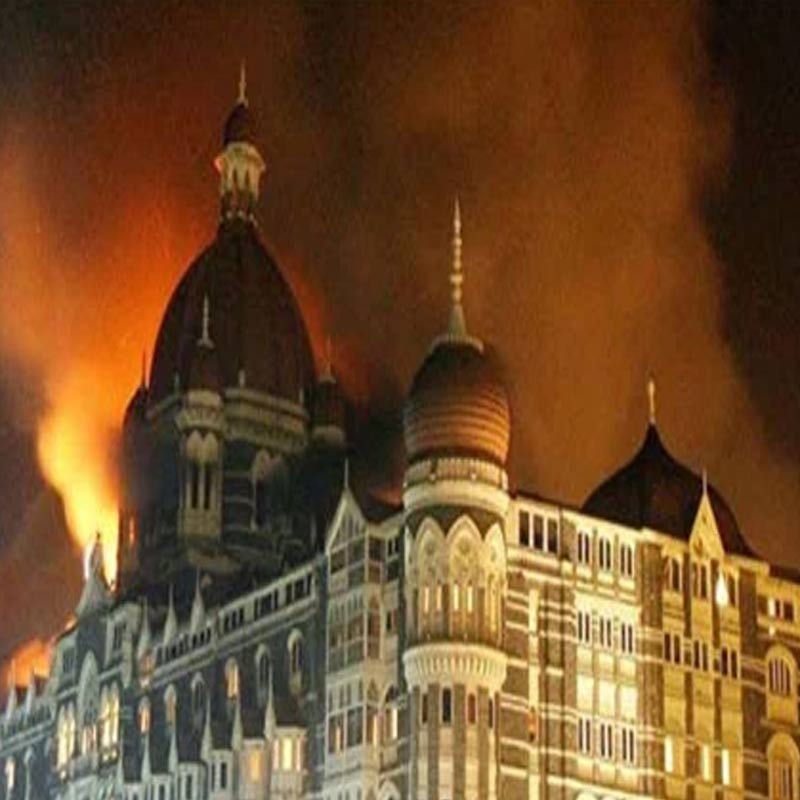
    MUMBAI: Ahead of the first anniversary of the Mumbai terror attack, the Information and Broadcasting Ministry has issued an advisory to all television channels urging them to do “balance” and “responsible” reporting while showing programmes on the incident.

    The Ministry has said that as the investigation and trial of the terror attacks in Mumbai are in progress, there is need for balanced coverage.

    On the occasion of the first anniversary of the terror attacks in Mumbai on 26 November 2009, the Ministry expects channels to show special programmes, news items, talk shows and interviews to highlight the incidents of last year.

    “Replays of disturbing visuals showing scenes of blood and gore or images of dead or seriously wounded or the emotional distress of victims/hostages and their families may bring back dreaded memories of the tragic incident and may indirectly fulfill the basic design of the terrorists to spread fear and insecurity in the minds of people,” the advisory said.

    The media has been advised to keep in mind the contents of the communication while telecasting programmes in connection with the anniversary of Mumbai terror attacks.

    The government had issued directives on 27 November and 3 December last year to media, regarding the coverage of the terrorist attack, in which TV channels were asked to exercise caution while covering the incidents to avoid any adverse impact on the rescue operations.

    The advisory noted that while the media has “always been in the forefront of the crusade against terrorism by building strong public opinion and consensus against the senseless acts of terrorists”, it is necessary to continue to display “a high degree of maturity and sensitivity” while covering events of terror and terror related issues.

    “Perhaps the occasion could be used to reiterate India’s commitment to fight terror and our continuing resolve to effectively counter any acts of terror against the country,” the Ministry communiqué added.

  • Content Code: Govt to meet broadcasters next week

    Content Code: Govt to meet broadcasters next week

    NEW DELHI: The much delayed Content Code may get a push with the. government slated to hold a meeting with private broadcasters on this next week.

    “I am holding a meeting next week and then we will decide,” information and broadcasting minister Priyaranjan Dasmunsi said on the sidelines of a book release function.

    Dasmunsi said the government needed to study the proposal by the News Broadcasters Association (NBA) about formation of the ‘News Broadcasting Standards (Disputes Redressal) Authority’ to enforce NBA’s code of ethics and broadcasting standards with effect from 2 October. He refused to make any comment on the proposal aimed at self-regulation.

    Answering a question, Dasmunsi said the recommendations of Trai on self-regulation by television channels of TV viewership ratings were being studied by the government. However, he said ‘no’ when a mediaperson sought to know whether regulation of content would be given to Trai.

    The minister was speaking to the media on the sidelines of a function at which he released two books on revolutionaries and freedom fighters – Khudiram Bose: Revolutionary Extraordinaire (English) written by Dr. Hitendra Patel And Ajeya Krantikari: Rajguru (Hindi) by Anil Verma – which have been published by the Publications Division of the ministry.

    Answering another question after the function, Dasmunsi also turned down any proposal to permit private FM channels to broadcast news bulletins, despite a recommendation to that effect by Trai and Ficci.

    Meanwhile, he said in reply to a question that he would talk to Jammu and Kashmir Governor N N Vohra about the reported attack by Jammu police on two photojournalists of Amar Ujala and JK Channel last night while they were covering the police brutality on Amarnath Sangarsh Samiti activists who were sitting on a dharna along with the body of Kuldeep Dogra who committed suicide yesterday. He said the ministry would make its own inquiry into the incident.

    Apart from the minister, others present included I & B Secretary Sushma Singh, Debasis Roy (grand nephew of Khudiram Bose) and Satyasheel Rajguru (nephew of Rajguru).

    Publications Division Director Veena Jain said that the recently-launched website of Employment News published by the Division was getting around 300,000 hits everyday. In addition, the popular children’s journal ‘Bal Bharati’ had the largest circulation among children’s journal category and the monthly magazine ‘Yojana’ is the only journal to be published in India in 13 languages.

  • Govt not considering permitting news on private FM channels

    Govt not considering permitting news on private FM channels

    NEW DELHI: The Government is not considering any proposal to permit news broadcasts on private FM Radio channels.

    This was stated by Information and Broadcasting secretary Sushma Singh, when answering a question on the sidelines of the Second Indian News Television Summit organised by indiantelevision.com.

    Singh noted that the government had studied the reports of the Telecom Regulatory Authority of India as well as the Ficci in this connection.

    Answering another question, she said the government was considering the report on television audience meters received recently from Trai.

    She said the government was under pressure from the judiciary to finalise and enforce a Content Code for television broadcasters, but regretted that the one finalised by a group of stakeholders from all sectors set up by her ministry had not been accepted by the news channels.

    She said all stakeholders would be consulted before any Content Code is finalised. Draft codes had been prepared by the News Broadcasters Association and the Indian Broadcasting Foundation, but these were now being considered with legal experts and stakeholders.

    She said the government was bound by certain orders of the courts and had to submit reports on this at regular intervals. 

  • Govt under pressure to finalise Content Code: Sushma

    Govt under pressure to finalise Content Code: Sushma

    NEW DELHI: Information and Broadcasting Ministry Secretary Sushma Singh said today that while the government did not want to interfere with the freedom of the media, the latter should show a sense of responsibility and observe journalistic ethics.

    Speaking at the inaugural session of the Second Indian News Television Summit organized by indiantelevision.com, she said channels should introspect as to whether what they were showing in the name of news was really news.

    She noted sensationalism in the content of news channels often resulted in creating alarm and this was the reason for the government having issued as many as 241 show-cause notices to news and other channels over the past few years.

    She said the Ministry was under pressure from various sources including courts to act faster on creating a suitable Content Code. The Ministry had, therefore, been working with the News Broadcasters Association and the Indian Broadcasting Foundation to finalise a Code as early as possible. She gave examples of the Andhra Pradesh and Delhi High Courts which had been demanding speedier action from the government in this regard. She said the inability of the Ministry in promulgating a Code was being looked at seriously.

    She said that the government had presently given uplinking permission to as many as 191 news channels and had only recently given 33 new licences for news and current affairs channels. This showed the liberal attitude the government had towards encouraging plurality of thought and divergence of opinion. This was one of the reasons for more regional channels coming up in the recent past.

    But the government had a duty to look at the content of the news channels that was being passed off as news. The news channels must also realize that the viewers included children and sensitive audiences.

    Furthermore, maintenance of public order and national interest must take precedence over the content of news.

    She said that technological breakthroughs were creating rapid advances and this made it more imperative that national objectives should be kept in mind. The attitude of the news channels whenever the government approached them should be one of discussion and not confrontation.

    Singh also released on the occasion The NT Magazine, brought out by indiantelevision.com.

    In his keynote address, India TV head Rajat Sharma made a passionate case to say that most channels worked in a very responsible manner and often helped in exposing the ills in society.

    Sharma regretted that news channels were under attack when even the print media was doing the same kind of reporting.

    He said that people had faith in the news channels and this was the reason why many first came to them even before approaching the police or courts of law. He said it could not be denied that news channels had empowered the people, but this responsible behaviour of the channels had gone unnoticed.

    Television channels were now receiving threats from the underworld or terrorist groups for correct reporting, and this was now a major threat facing the news media.

    Admitting there had been some lapses like the recent case of a false sting, he said the entire community of news broadcasters had criticized such things.

    Self-introspection was being done on the Content Code and he said the News Broadcasters Association along with the Ministry was now involving judges to help in drafting the Code.

    He said that it could not be denied that news channels had shown a lot of restraint in cases of violence or wherever social responsibility was required to be shown. Furthermore, he maintained that even as news channels showed astrology or other news in an interesting manner to win eyeballs, 50 per cent was hard news.

    He also said that news channels had become the true ambassadors of the country by beaming overseas, and also functioned as a bridge between the government and the people.

    Giving an alternative viewpoint, ICICI Bank Executive Director V Vaidyanathan said presentation of news should be treated as a corporate responsibility just as some corporate houses put aside some part of their revenues for social good.

    He also said news channels had to be relevant to hold the attention of the viewers, pointing out that most viewers now kept flipping channels instead of sticking to one channel.

    He said most news channels seemed to be suffering from the prisoner’s dilemma: if they did not sensationalise the news, someone else would. But this did not always mean negative news.

    He urged the media to take up its social responsibility more seriously and said it could do things like exposing the parallel economy which was harming the country. At least ten per cent of the news time should be devoted to consumer education, which could be turned into a viable business. ‘So be viable and socially responsible’, he said.

    arlier welcoming the delegates, indiantelevision.com founder and Editor-in-Chief Anil Wanvari said people were now spending an average of two hours and 38 minutes per day in front of their TV sets and so it was necessary for the channels to look towards finding the right balance, which is the theme of the Summit.

  • Govt. lifts ban on Live India channel for fake sting operations

    NEW DELHI: The month-long ban on the Live India Channel imposed on 20 September for telecast of a fake sting which led to a law and order problem and arrest of a Delhi school teacher, has been lifted with effect from 13 October.

    This follows the acceptance by the government of the plea by the channel that there was no deliberate mala fide intention and the reporter had misled them and unfortunately the sting operation telecast on 30 August took a different shape.

    The government has, therefore, decided to revoke the prohibition imposed on transmission/re-transmission of the Live India (Janmat) TV Channel on all platforms with effect from midnight tonight.

    The sting operation that involved teacher Uma Khurana was found to be ‘defamatory, deliberate, false and contained suggestive innuendos and half truths; incited violence and contained content against maintenance of law and order.’ It ‘criticized, maligned and slandered an individual in person and it denigrated children.’

    Broadcast Initiatives Limited, distributor and uplinking applicant for Live India (earlier named Janmat) TV, in their appeal of 21 September and 4 October submitted that that they had exercised all due diligence and care according to the prevailing industry practice and there was no deliberate attempt by the channel to defame anybody by telecasting the sting operation. But it subsequently emerged that the reporter had misled them. 

    The channel requested the Information and Broadcasting ministry to reconsider the prohibition of transmission of the channel for one month as it had put a question mark on its commercial viability. 

    The ministry said the channel had ‘assured that they are committed to effectively using journalism in the best interests of the nation and society by following the highest standards of journalism and that they would be observing and minutely complying with all the relevant provisions of the Cable Television Networks (Regulation) Act 1995 and the requisite license conditions’. 

    The ban has been imposed in terms of the Sub-Section (2) of Section 20 of the Act which is clear that ‘no person shall transmit or re-transmit through a cable service any programme unless such programme is in conformity with the prescribed programme code’.

    Section 20 (2) of the Act says the government may regulate or prohibit the transmission or re-transmission of any channel or programme ‘Where the Central Government thinks it necessary or expedient so to do in the interest of the (i) sovereignty or integrity of India; or (ii) security of India; or (iii) friendly relations of India with any foreign State; or (iv) public order, decency or morality.’

    The channel’s reporters Prakash Singh and Rashmi Singh are already in police custody. It is also learnt that some women’s organizations have filed a complaint asking the ministry to cancel the broadcasting licence of the channel. 

    Interestingly, the incident has come out at a time when there is growing confrontation between the ministry and news broadcasters on the need or relevance of an imposed Content Code. 

    The school teacher Uma Khurana has been granted bail in the fake sting which showed her using her own students for prostitution. Businessman Virendra Arora who wanted to recover some money reportedly owed to him by Uma is reported to have hatched the conspiracy using Prakash.

    Janmat was a predominantly “views channel” earlier till it re-launched itself in the form of Live India, a 24×7 news channel, on 3 August.

  • Govt. earns Rs 11.45 billion from FM channels: year-end review report

    Govt. earns Rs 11.45 billion from FM channels: year-end review report

    NEW DELHI: The government has earned revenue of Rs 11.45 billion from the successful bidding of 280 FM (frequency modulation) channels during the year through ‘One Time Entry Fee’ (OTEF) and migration fee, according to a year-end review of the information and broadcasting ministry. In all, 337 channels across 91 cities in the country were put on bidding.

    Allotment of frequencies has already been made for all eligible 245 channels. A total of 44 private FM radio channels have already become operational while others are in the various stages of getting set up. With the completion of this phase, a total of 266 FM radio stations will be functional all over the country.

    The ministry claims that the step is expected to revolutionise the field of radio infotainment, offer employment opportunities to the youths in smaller towns/cities all over the country, provide a boost to local programming and promote culture and heritage.

    The review claims that the ministry initiated several policy measures and operational steps to smoothen the flow of information to the media as well as to the public at large during the year.While private radio stations throughout the country are set to usher in a revolution in the radio infotainment, policy on setting up of community radio has been liberalised to facilitate communities and non-profit organisations in this field. Public information campaigns were launched all over the country to empower the rural masses with information and the where withal of availing benefits under various schemes undertaken by the government.

    According to the new Audio Visual Advertisement Policy, ministries/departments are no longer obliged to advertise on Prasar Bharati channels if they want to advertise on private channels. While making media plans, sufficient weightage is to be given to regional channels. Broad distribution of advertisements in monetary terms will now be 70 per cent for national channels and 30 per cent for regional channels.

  • No sole sport rights to Doordarshan: Govt

    No sole sport rights to Doordarshan: Govt

    NEW DELHI: The Indian government today clarified that it was not working towards a mechanism to give pubcaster Doordarshan the sole rights to sporting events in the country.

    The government, however, has issued an order on 5 April 2006 that mandates live feeds of a number of specified sporting events of national importance held in India or abroad to be shared with Prasar Bharati by private broadcasters.

    In case of cricket events, these shall include all matches featuring India and the finals and semi finals of international events, information and broadcasting minister Priya Ranjan Dasmunsi informed Lok Sabha (Lower House of Parliament) today.

    He also said that the government has no proposal to set up a regulatory authority to monitor and regulate earnings through telecasting of sporting events.

    However, the government is contemplating establishment of an autonomous authority to regulate the broadcasting sector.

    The minister, however, did not give any time frame to bring about legislation to regulate the broadcasting sector. Earlier, Dasmunsi had said that his ministry was working towards introducing a Broadcasting Bill in Parliament in the monsoon session, which started on24 July.

    Severe criticism of a draft Bill, doing the rounds of various ministries for feedback on it, has prompted the I&B ministry for the moment from not listing it on the agenda of Parliament’s present session that will close on 30 August.

  • Govt directs cable ops to furnish TV channel details

    Govt directs cable ops to furnish TV channel details

    NEW DELHI: With an eye on future media regulations, the government has asked MSOs and cable operators to furnish the details of TV channels they re-transmit on their networks, including local cable-delivered video channels.

    In a letter to MSOs and to Cable Operators’ Federation of India, dated 26 June 2006, the information and broadcasting ministry has said that the government is developing a centralised data bank of all TV channels, including video channels, for monitoring purpose and, hence details would be needed for the same.

    This step has been taken, explained a ministry official, to effectively monitor even local video channels run by cable operators where news, along with entertainment, form part of the programming line up.

    The detail sought by the government is over and above the registration process of TV channels initiated under the downlinking guidelines where all satellite channels would have to obtain landing rights from designated authorities.

    On last count, 65-odd TV channels had applied for landing rights in a country that boasted of over 300 channels being accessible to subscribers of cable TV and DTH.

    Some cable operators, however, feel that the latest initiative would increase paperwork and is an attempt by the government to crack down on local video channels, which also air music videos some of that have run into problems with the authorities when aired on music channels.

    The government official played down the directive to MSOs and cable ops, saying it was a “routine matter.”

    In a draft broadcast bill, the government has proposed that all cable operators would have to register themselves with the government and/or the regulatory body to run cable networks and adhere to certain other criteria.

    Presently, a person just needs to register with the local post office to start a cable network after paying a nominal amount of money wherein things like quality of service and after sales service to subscribers are not given much importance.

  • Govt official tipped as interim CEO of Prasar Bharati

    Govt official tipped as interim CEO of Prasar Bharati

    NEW DELHI: With the government yet to decide on a chief executive for pubcaster Prasar Bharati, an information and broadcasting ministry official is slated to take over the reins from the outgoing chief in the interim.

    Additional secretary in the I&B ministry P Singh, a government representative on the board of Prasar Bharati, would be the interim chief of an organization that manages Doordarshan and All India Radio.

    KS Sarma retires from the post of CEO on 30 June after an over four-year tenure, being the longest serving chief executive.Though it is unlikely that Singh would be a permanent appointee, the lack of urgency on the part of the I&B ministry to find a replacement for Sarma could see the government official at the helm of affairs for a longer duration than generally expected.

    Some of the names doing the rounds in the corridors of power as likely candidates to succeed Sarma include former I&B ministry official Vijay Singh and a human resources development ministry official who’s said to be close to I&B minister Priya Ranjan Dasmunsi.Another candidate, SY Querishi, whose name was being bandied round as a likely CEO of Prasar Bharati, was named by the government on Thursday to go to the Election Commission.

    Querishi had served as the director general of Doordarshan during Sushma Swaraj’s tenure as I&B minister in the Bharatiya Janata Party-led coalition government in the early 2000s.

    Considering that the post of CEO of Prasar Bharati — still regarded as an extension of the government propaganda division despite autonomy granted to it some years back — would prove to be both sensitive and crucial for New Delhi with elections scheduled in some states next year, it’s unlikely that Dasmunsi and company will decide in a hurry on a successor to Sarma.

    As the CEO, Sarma has had his ups and downs, but managed to retain his post despite changes in the ministry and the government.