Tag: govt

  • Govt comes up tops in trust among all institutions; 69% Indians trust govt with personal data: World Economic Forum-Ipsos Global Citizen & Data Privacy Survey

    Govt comes up tops in trust among all institutions; 69% Indians trust govt with personal data: World Economic Forum-Ipsos Global Citizen & Data Privacy Survey

    MUMBAI: Indians trust the Govt most with their personal data, among all institutions. 69 per cent of Indians polled claim they trust the Union govt with their personal data and are confident that it will be put to the right use and not misused. 

    How about the other institutions?

    Majority of Indians trust Health Providers (67%), Financial Services Companies (67%), Shipping & Delivery Services (61%), Local and Regional authorities (61%), Telecommunication Companies (56%), Retailers Selling Goods & Services (55%), Search & Social Media Sites (53%); Media Companies and Foreign governments are relatively lower in trust at 46% and 48%, respectively, among Indians.

    “Government’s several initiatives hold personal information about a citizen. The common man trusting the government most with Data Privacy and personal information underscores people’s trust that Government will protect it from all kinds of misuse and abuse. It is a big responsibility for the Government and everybody expects it to live up to that.” says Parijat Chakraborty, Head of Ipsos Public Affairs.    

    Interestingly, 47% Indians claim to be aware of the broad contours of the personal data being held by companies and for what purposes it is being used. 

    On the other hand, 45% Indians claim to be aware of the identity of national and local authorities, that have access to their personal data.  

    The survey christened Global Citizens & Data Privacy Survey unveiled at the annual meeting in Davos by World Economic Forum (WEF) in partnership with Ipsos was conducted in October and November 2018 among 18,813 adults from 26 countries using the Ipsos Global Advisor online platform. Full waves of the global tracking study will be conducted and reported twice a year. 

    Personal data and data privacy – how do Indians view it?

    56% Indians strongly believe that they should be allowed to refuse companies from using their personal data – advocating complete refusal from providing personal information; 55% Indians want companies to reward or incentivize them for accessing their personal information;  58% Indians see merit in companies accessing personal data as they believe that the feedback is used constructively for improving products, services and information; 62% Indians feel that they have access to relevant products, services and information;  55% Indians feel they save time this way as companies have their personal information in their repository;50% Indians feel they will save money in terms of benefits; and 36% Indians feel they have no qualms about data privacy – it is in safe environs.     

    Personal Information – Dos and Don’ts

    68% Indians want companies not to misuse their personal information by sharing or selling to other parties; 63% Indians are comfortable sharing information with companies they have dealt with in the past; 60% Indians want to share personal information only with companies with a squeaky clean image, that have never been involved in any breach, leak or fraudulent usage of data; for59% Indians, compensation for their personal information in terms of discounts or rewards, is key; and55% Indians want companies to be transparent to them about what they plan to do with the personal information gathered from them. 

    “The findings suggest that organizations can address fears from consumers by being transparent about what they do with their personal data, by offering guarantees of confidentiality, having a clean security record, or offering financial compensation. Years of intrusive and unsolicited communication from brands and the absolute dysfunctional DND ecosystem have contributed to this mistrust. It is high time the good brands take a note of it and walk-the-talk in respecting privacy rights.” Chakraborty added. 

    Want access to personal information? Indians want it their way!

    55% Indians say they will provide personal information only to those companies that have products and services that cater to them – it should be complementing; 48% Indians want to be forewarned of the risks involved in providing personal information; 34% will be comfortable sharing personal information only if their information is put to good use and benefits them in customization; 32% want access to personal information to reflect in staff attentiveness and service; 27% expect access to personal information to reflect in more efficient navigation and functioning of website and app; 7% were undecided.     

    Methodology

    These are the findings of an Ipsos Global Advisor survey on attitudes toward data privacy in partnership with the World Economic Forum.  In total, 18,813 interviews were conducted October 26 – November 9, 2018 among adults aged 18-64 in the US and Canada, and adults aged 16-64 in all other countries.

    The survey was conducted in 26 countries around the world via the Ipsos Online Panel system. The countries reporting herein are Argentina, Australia, Belgium, Brazil, Canada, Chile, China, France, Germany, Great Britain, Hungary, India, Italy, Japan, Malaysia, Mexico, Peru, Poland, Saudi Arabia, South Africa, South Korea, Russia, Spain, Sweden, Turkey and the United States of America. Note that some of the questions were not asked in all 26 countries.

    Between 500 and 1000+ individuals participated on a country by country basis via the Ipsos Online Panel. The sample size is 1000+ in Australia, Brazil, Canada, France, Germany, Great Britain, Italy, Japan, Spain and the United Stated of America. In all other countries the sample size is 500+. The precision of Ipsos online polls is calculated using a credibility interval with a poll of 1,000 accurate to +/- 3.5 percentage points and of 500 accurate to +/- 5.0 percentage points. For more information on Ipsos’ use of credibility intervals, please visit the Ipsos website.

    In countries where internet penetration is approximately 60% or higher the data output generally reflects the overall population. Of the 26 countries surveyed online, 16 yield results that are balanced to reflect the general population: Argentina, Australia, Belgium, Canada, France, Germany, Hungary, Italy, Japan, Poland, South Korea, Spain, Sweden, Great Britain and the United States. The 9 remaining countries surveyed – Brazil, Chile, China, India, Malaysia, Mexico, Peru, Russia, Saudi Arabia, South Africa and Turkey – have lower levels of internet connectivity and reflect online populations that tend to be more urban and have higher education/income than the general population.

    Where results do not sum to 100, this may be due to computer rounding, multiple responses or the exclusion of don't knows or not stated responses.
    Data are weighted to match the profile of the population.

  • Govt to make social media accountable

    Govt to make social media accountable

    MUMBAI: In a bid to ensure that social media is free from harmful content the government is looking at shifting the accountability from users to platforms such as WhatsApp, Facebook and Telegram.

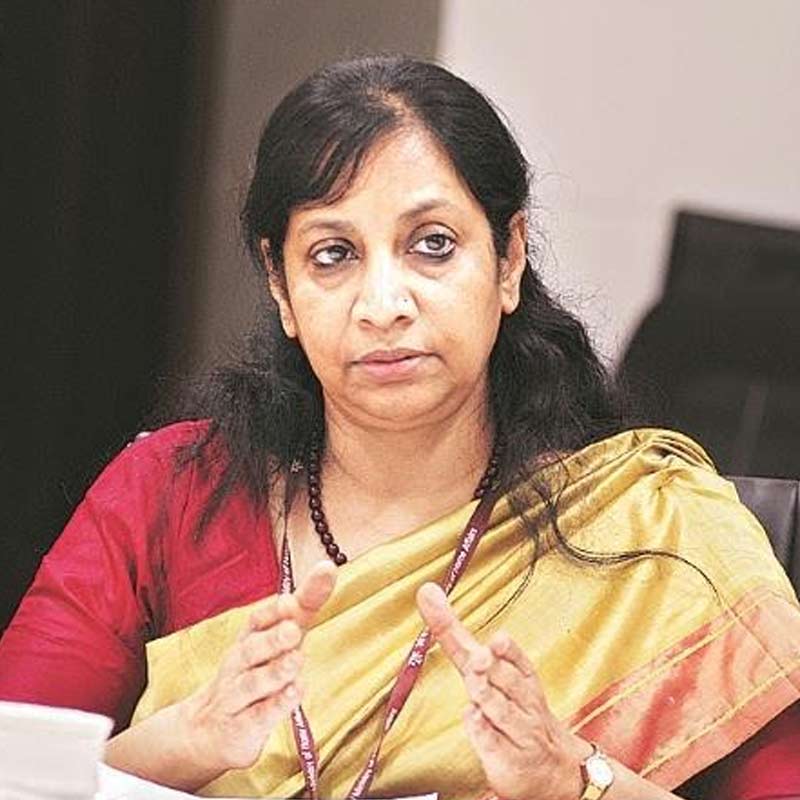
    According to the reports, Telecom secretary Aruna Sundararajan said, “The committee which I’m part of is primarily looking into a few key aspects, including shift of accountability from a user to a social platform, as users are sometimes unaware and innocently retweet or forward content, so much higher standards of accountability for platforms are needed.”

    Every major platform that has a significant presence in India must be accountable to Indian authorities. “There must be a full-fledged management team present in the country accountable to Indian laws,” she said. “It should not be, as such, one compliance officer is here only.”

    The government is preparing to repeat its demand that WhatsApp put in place a technical solution to trace the origins of incendiary messages spread on its platform, something the Facebook-owned platform has resisted, maintaining that it goes against its privacy policy.

    The centre has been dissatisfied with the steps taken by WhatsApp to restrain fake news. The Ministry of Electronics and IT (MeitY) is drafting a letter—its third since July to the platform—asking it to design a technology-led solution to the viral messages that in the past have led to lynching and riots.

    In a report, experts said that any decision that makes a company such as Whatsapp responsible for the content on its platform, will force the messaging app to devise ways to ensure it is not misused instead of merely passing on the blame to the user, who will be difficult to trace given the encryption.

    Sundararajan said, “There are algorithms and artificial intelligence (AI), which these platforms already use, that can also be deployed to curb such content. While regulation of social media apps rests with MeitY, the Department of Telecommunications (DoT) ensures security of the content being transmitted through the network.”

    She added that DoT can make lawful interceptions in the interests of public safety but does not propose to block social apps. It’s up to the companies to have adequate precautionary measures.

    The government had earlier raised its concerns after which WhatsApp limited forwards to five users or groups, when it used to be 250, while identifying forwarded messages, and a publicity campaign against fake news.

    The government has also told WhatsApp that it won’t be allowed to set up a payment service until it establishes an office and recruits a team in India.

    Sundararajan said the government wants Facebook, WhatsApp, Instagram and others to treat Indian consumers on par with those overseas while it looks to bring in higher standards of accountability. “Is the Indian citizen any less than an American citizen? No. Whatever safeguards and best practices you (companies) are providing globally, nothing less than should be available for India. This is the principle we are trying to establish,” Sundararajan said. “Like companies should treat India as most-favoured nation in trade and Indian consumers should also be treated likewise.”

  • Govt launches interactive IPR website

    Govt launches interactive IPR website

    NEW DELHI: A website has been launched by the government to effectively implement the National Intellectual Property Rights (IPR) Policy.

    The official website for the Cell for IPR Promotion and Management (CIPAM) of the Department of Industrial Policy and Promotion (DIPP) was launched by Minister for Commerce and Industry Suresh Prabhu here today. Secretary DIPP Ramesh Abhishek was also present.

    The website is interactive providing regular updates on all upcoming events including awareness and sensitization programs being conducted, as also information on all Intellectual Property Rights. It would make available resource material on IPRs specially curated for various levels: schools, universities, industry and enforcement agencies.

    One can read the latest news and updates, specially curated feed on all latest happenings in the world of IP, insightful and educational blogs by CIPAM and IP experts.

    The website provides regular updates on the latest IP trends – statistics on applications filed, examined, grants and disposal for various IPRs. It would provide information on the various initiatives being taken by the Government to strengthen the IPR regime in the country.

    The website can be reached on www.cipam.gov.in or follow CIPAM on Twitter at @CIPAM_India for updates.

  • Arasu digital STB costs Rs 200, govt alerts subs

    Arasu digital STB costs Rs 200, govt alerts subs

    MUMBAI: Government authorities in Tamil Nadu are announcing the basic rate of installing a new STB following complaints by subscribers of the state-owned Arasu Cable TV Corporation that cable operators are charging them around four times the cost. Tirupur operators are reportedly threatening to disconnect the cable services if subscribers do not pay up.

    Tirupur district collector KS Palanisamy stated in a press release that the government had fixed Rs 200 as charges for installing set-top boxes (STBs), which the cable operators were entitled to receive. “If this is violated, those affected should register complaints at toll free number 1800 425 2911,” the Times of India reported.

    A number of subscribers are complaining that cable operators were charging them as much as Rs 700 for installing the free STBs issued by Arasu Cable (TACTV).

    Authorities had declared that the boxes will be installed from 1 September when DAS (digital broadcasting system) was launched. Cable operators however are reportedly threatening the subscribers that if they did not pay by the first week of October, they would disconnect the service.

    A political activist alleged that the cable operators had been providing around half of cable connections without maintaining records. Some cable operators reportedly asked subscribers to buy STBs sold by a private company run by the cable federation, and not the ones issued by Arasu Cable. Such STBs cost around Rs 1,500-Rs 1,700 through which, operators have claimed, more channels could be accessed as compared to Arasu Cable.

  • Govt urges TV and radio channels to publicise ‘Swachhta’ campaign

    Govt urges TV and radio channels to publicise ‘Swachhta’ campaign

    NEW DELHI: Private television and FM channels and radio stations have been requested to give adequate attention to the ‘Swachhta ki Seva’ campaign launched by the prime minister Narendra Modi in his ‘Mann ki Baat’ broadcast on 27 August 2017.

    “Keeping in view the public interest and importance of the matter,” the ministry of information and broadcasting has requested the media to “build the idea of the campaign in their programming so as to bring the message home to the maximum viewers.”

    In his broadcast on All-India Radio, Modi had called upon the nation to undertake the SHS campaign from 15 September 2017, culminating on Gandhi Jayanti, that is, on 2 October 2017.

    The aim of the campaign, he said, was to intensify the focus on cleanliness and create an environment of cleanliness across the country in the spirit of a ‘Jan Andolan’ (public movement).

    The ministry, in its request, said: “(The) media has a strong social and cultural impact on (the) society because of its inherent ability to reach out (to) a large number of people in the shortest possible time. (The) media, therefore, can play an important role in building public opinion and awareness in favour of the campaign.”

    The request was sent to seven different organisations of TV, FM and community radio channels. These are: News Broadcasters Association (NBA), the Indian Broadcasting Foundation (lBF), Association of Regional Television Broadcasters of India, Association of Radio Operators for India (AROI), Community Radio Association (CRA), Federation of Community Radio Stations (FCRS), and Community Radio Forum of India.

  • Govt warned 55 violators of programme & ad codes in 3 yrs, says Rathore

    NEW DELHI: The government issued 55 advisories or warnings since 2014 to various channels for violation of the Programme or Advertising Codes, the Parliament has been told.

    These include four advisories to all channels of which two were issued this year, one relating to telecast of Republic Day events with accompaniment of sign language.

    There were nineteen cases in 2014, 17 in 2015, 16 last year and three this year, the minister of state for information and broadcasting Rajyavardhan Rathore said.

    In most cases, channels have been issued warnings or advisories and in some cases to run apology scrolls.

    Permission to uplink and downlink private satellite TV channel is granted in accordance with the extant Policy Guidelines of Uplinking and downlinking of TV channels in India. Such permission holder companies, are required to abide by all the rules and regulations mentioned in the Policy Guidelines.

    Whenever any information/complaints about alleged irregularities in the functioning of any TV channel or their allied companies comes to the notice of this ministry, action is taken on case to case basis, under the provisions of the Policy Guidelines.

    In addition, all permitted broadcasters are required to ensure that all programmes and advertisements telecast on private satellite TV channels and transmitted/retransmitted through the Cable TV Network are required to adhere to the Programme and Advertisements Codes prescribed under the Cable Television Networks (Regulations) Act, 1995 and Cable Television Networks Rules, 1994 framed thereunder.

    ALSO READ :

    No plan for one-stop broadcast authority at present, says Rathore

    Prasar Bharati finds transmitter tenders plaint unsubstantiated

    Govt rules out TV channel categorisation (updated)


  • Govt wants all ministry ads in Hindi too

    MUMBAI: Advertisements released by ministries/ departments/ offices and enterprises in English/ regional Languages shall be released compulsorily in Hindi.

    Replying to a question in the Parliament, the minister of information and broadcasting Smriti Zubin Irani said it was the view of the government of India, ministry of home affairs, department of official languages OM No. 20012/1/2017- dated 30.6.2017 which conveys the order of the president of India about the advertisements.

    She was replying to B. Vinod Kumar as to whether the government has asked all ministries and departments to have a Hindi version of every advertisement that they release.

    An earlier separate report stated that a video contest for consumer awareness of the ‘Jaago Grahak Jaago’ multimedia campaign has been announced by the department of consumer affairs to create awareness amongst consumers about their rights and redressal mechanisms available to them as well as their duties. The participants are required to upload video clips of not more than two minutes duration on the theme “Consumer Awareness.” The language of the video clip would be either Hindi or English.

    Also, another unrelated report stated that the rate of ten-second advertisements on All India Radio for the prime minister Narendra Modi’s ‘Mann ki Baat’ was Rs 2,00,000, the Parliament has been told. This rate is for advertisement booking of AIR consisting of 200 primary channels/local radio stations, 41 Vividh Bharati stations and 30 FM Rainbow and gold channels.

  • Four FDI media proposals await govt. nod

    NEW DELHI: A total of 99 proposals including four relating to the information and broadcasting sector for foreign direct investment are pending before various ministries, the Parliament has been informed.

    This follows the decision to entrust the work of granting government approval for FDI investment in eleven notified sectors/activities requiring government approval to the concerned  ministries/departments.

    Commerce and industries minister Nirmala Sitharaman said the decisions would be taken under the extant FDI Policy and Foreign Exchange Management Act (FEMA),

    The government, through the erstwhile Foreign Investment Promotion Board (FIPB), had already been considering and taking decisions on FDI proposals in the sectors on approval route.

    Consequently, the Standard Operating Procedure (SOP) for processing FDI proposals was issued on 29 June, 2017.

    According to the SOP, once the proposal is complete in all respects, which should not be later than six weeks/eight weeks (in cases where comments of the home ministry have been sought from security clearance point of view) from the receipt of the proposal, the competent authority will, within the next two weeks, process the proposal for decision and convey the same to the applicant.

    In respect of proposals where the competent authority proposes to reject the proposals or in cases where conditions for approval are stipulated in addition to the conditions laid down in the FDI policy or sectoral laws/regulations, concurrence of Department of Industrial Policy and Promotion will compulsorily be sought within 8-10 weeks weeks (in cases where comments of the home ministry have been sought from security clearance point of view) from the receipt of the proposal.

    The 99 FDI proposals pending in various ministries/departments are:

    Name of Ministry/Department

    No. of Proposals

    Department of Economic Affairs

    13

    Department of Pharmaceuticals

    14

    Department of Industrial Policy & Promotion

    48

    Department of Telecommunications

      8

    Department of Defence Production

      4

    Ministry of  Home Affairs

      5

    Ministry of Information and Broadcasting

      4

    Department of Space

      2

    Department of Financial Services

      1

    Total

    99

    ALSO READ:

    FDI proposals in print, broadcasting to be cleared by MIB; satellites by DoS

    You Broadband-Vodafone proposal accepted, Atria & Netmagic FDI cleared

    Mobile data traffic grew by 76%, tele-market to cross Rs 6.6 trn by ’20

  • Govt invites entries for short film competition on ‘disability’

    NEW DELHI: Entries have been invited by the government for a ‘Short Film Competition on Divyangjan Sashaktikaran-2017’ on issues relating to disability;

    The competitive festival is being organized by the Department of Empowerment of Persons with Disabilities (Divyangjan) (DEPwD) of the Social Justice & Empowerment Ministry in association with the Directorate of Film Festivals (DFF).

    The competition is being organised in order to create awareness on Accessible India Campaign and to promote various schemes of DEPwD among common masses. The Department invites entries from common citizens. The participants may submit their entries shot with any electronic devices in HD format only.    

    The last date of submission of application is 8 August 2017. The  applications are invited in three categories viz ‘Short Documentaries’ of  up to  30 minutes duration, ‘Short Films’ of upto 5 minutes duration and ‘TV Spots’ (Television Commercials) of up to 50 seconds.

    The award function will be held tentatively on 21 September 2017 at Siri Fort Auditorium, New Delhi.

    The ‘Short Documentaries’ and ‘TV Spots’ should be based on Accessible India Campaign theme while ‘Short Films’  could be made on various schemes of DEPwD such as  Fellowship and Scholarship; Beneficiaries of Cochlear Implant, Distribution of Assistive Devices and Tri-cycle under Assistance to Disabled Persons for Purchase / Fitting of Aids and Appliances (ADIP Scheme); loan beneficiaries of National Handicapped Finance And Development Corporation (NHFDC); beneficiaries of Accessible Buildings under Scheme for Implementation of Persons with Disabilities Act (SIPDA); beneficiaries of NGOs taking grant –in-aid under Deendayal Disabled Rehabilitation Scheme (DDRS) and various skill development initiatives of the DEPwD for Persons with Disabilities.

    The ‘Short Film Competition on Divyangjan Sashaktikaran-2017’ will carry  First and Second Prize of Rs 5,00,000  and Rs 3,00,000 respectively in ‘Short Documentary’ and ‘TV Spots’  categories while ‘Short Film’ category  will carry only one prize of Rs 4,00,000 for each scheme.

    Also Read:

    MIB scheme evaluation: Revised tenders invited from 20

    DD invites short films on Govt schemes, ‘DAVP producers’ preferred

  • Govt submits amended NSP in SC, Sun TV Red FM case adjourned

    MUMBAI: The apex court of India has adjourned Rajya Sabha MP Subramanian Swamy’s plea on national security that challenged Sun TV being allowed to participate in FM Radio auction.

    SC has asked  the central government to give Swamy the amended National Security Policy (NSP) in a week. Swamy had sought cancellation of Phase-3 licence granted to Sun TV’s Red FM India. A bench comprising chief justice of India JS Khehar and Justice DY Chandrachud directed the government counsel to provide Swamy the new NSP.

    Swamy had stated in the plea that ministry of information and broadcasting (MIB) had, despite the opposition of home ministry, favoured Sun TV by allowing it to participate in FM Radio auction citing CBI and Enforcement Directorate cases against the main Sun TV promoter Kalanithi Maran in Aircel-Maxis case, Indian Legal Alive reported.

    Swamy has filed a petition seeking consistent and uniform policy on national security. It contented that national security should be bereft from arbitrariness. At the same time, he said it should not be contradictory in nature.

    On 7 July, additional solicitor-general Rana Mukherjee filed in the apex court in a sealed cover a revised policy on national security. Swamy submitted a letter written by union minister Arun Jaitley and former attorney-general of India to the government.

    The court read those letters and asked the government to provide Swamy a copy of the revised policy. The court will resume the hearing the case after a week.

    Questioning the maintainability of Swamy’s petition, the government counsel also said the NSP was framed in June 2015, and amended in December 2015, Live Law reported.

    According to the Constitution, Swamy argued, only the home ministry had the power to take a decision on national security and the MIB should not interfere. He alleged that the MIB’s decisions were arbitrary and the licence to any TV or radio should be cancelled on grounds of national security.

    Also Read :

    Delhi HC rules in favour of Sun TV chief Maran

    Saregama & Kumkum Bhagya prop Zee TV to third place across genres

    Amagi to provide ad solutions to Sun TV Network