Tag: Govind Nihalani

  • “Cinema has evolved with technology as a more democratic medium”: Govind Nihalani

    “Cinema has evolved with technology as a more democratic medium”: Govind Nihalani

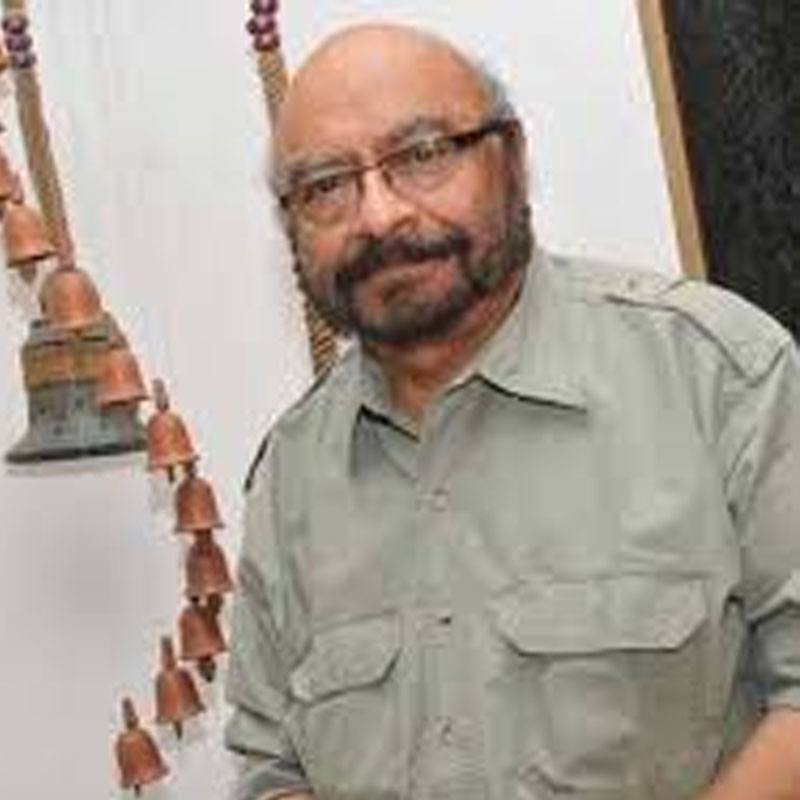
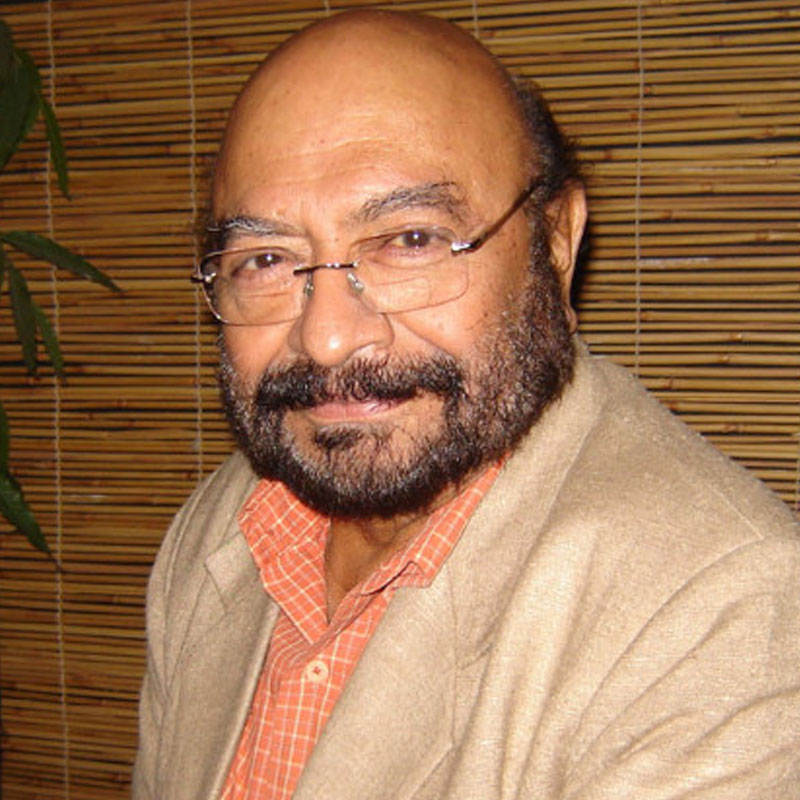
    KOLKATA: Indian film director, cinematographer, screenwriter and producer Govind Nihalani, who has proved the power of his cinema through his television series ‘Tamas’, vehemently believes that cinema has evolved with technology as a more democratic medium.


    “Cinema is a very powerful medium. It acts as a dialogue between the filmmaker and his viewers. It can convince you to pick up a gun and kill someone,” Nihalani said, on the sidelines of the ongoing 20th Kolkata International Film Festival.


    ‘Tamas’ is not a daily soap. It deals with the issue of national importance. The emphasis is on the characters and evoking of the period when the partition took place, makes it different from other soaps. “I think it will have a small relevance even today. These programmes are not even being made today,” he said.


    “In these times of hope and convictions, cinema will never die because it has tremendous possibility of creating magic, poetry and change,” he further added.


    On the context of shifting from his usual “serious” content to an animated movie, he mentioned that one should always keep expanding one’s horizon. With reference to digital technology taking over celluloid and the advantages it provides he said, “Technology is all that you want and it will get better with time.” He appreciated Japanese animation as an ingenious art form, but added that it will be sometime before India embraces such content in animation.


    Nihalani has been the recipient of six national film awards (India). His first directorial venture was Aakrosh starring Om Puri, Naseeruddin Shah, the late Smita Patil and the late Amrish Puri. The film is scripted by Marathi playwright Vijay Tendulkar. The film shared the Golden Peacock for best film at the International Film Festival of India held in New Delhi in 1981. He then directed Ardh Satya, based on a story by S. D. Panwalkar. The film has received critical reception for depicting the police-politician-criminal nexus. In 1997, he adapted Bengali novelist, Mahasweta Devi’s acclaimed novel by the same name to Hazaar Chaurasi Ki Maa.


    While interacting with movie lovers, Nihalani flashed upon his memories of a chat session with Sandeeep Ray (son of famous film-maker Satyajit Ray) on Mahasweta Devi’s novel.


    “On a moment like this, I delve into my past when I first met Mr. Ray, two decades later I dared to call him Manik da,” he said.


    Nihalani put forth his initial days with the master and expressed his gratitude when Ray narrated Pikoo’s Diary to him from the very first shot to the last. “It’s very important for a filmmaker to remain relevant to his times and be connected to his reality, his harsh reality,” he concluded by echoing Ray’s words.

  • Govind Nihalani to make Ardh Satya 2

    Govind Nihalani to make Ardh Satya 2

    MUMBAI: Nearly 30 years after he made Ardh Satya, veteran filmmaker Govind Nihalani is all set to make a sequel of the cop drama.

    “We are working on the sequel of Ardh Satya. Producer Manmohan Shetty has been really keen to make a sequel. We were toying with this idea since a long time. Finally we have decided to go ahead with it,” Nihalani said in a statement.

    The movie followed the story of a policeman, played by Om Puri, struggling with the evils around him and with his own frailties.

    It is said that the story will move ahead as the original story ended with cop (Om Puri) behind the bars. “So we explore what happens when he comes out of jail as an old man after serving his sentence for killing the goon Rama Shetty,” Nihalani added.

    Ardh Satya, considered to be one of the best cop films made in India, had won many awards and it went on to become a landmark project in the history of cinema. The film had Om Puri, Amrish Puri, Smita Patil, Naseeruddin Shah and Sadashiv Amrapurkar.

    “We thought of it to call ‘Ardh Satya 2‘. We are still working on the script and hopefully by the end of this year or early next year we will go on floors,” the 71-year-old said.

    At a time when cop dramas like “Dabangg”, “Singham” are doing well at the box office, this seems to be the right time for the sequel.

    Ask the filmmaker about the same and he says, “We are not cashing in on anything. The idea of a sequel was thought of long back. It‘s just that things have finalised now. The sequel will be very much different from the kind of cop dramas that we have seen recently.”

    “‘Ardh Satya 2‘ will be a contemporary cop film not a remake of any South movie. Ours is a fresh story,” Nihalani said.

    The makers have not yet finalised the star cast for the sequel, but they hope to retain veteran actor Om Puri.

    “We would love to have Om Puri in the film. His character in the sequel will be of an older man. Apart from this, we have not thought of the main star cast yet,” Nihalani said.

  • Govind Nihalani turns to animation films

    Govind Nihalani turns to animation films

    MUMBAI: Known for his serious films like Aakrosh, Vijeyta and Ardh Satya, filmmaker, director and cinematographer Govind Nihalani is returning to films after a eight-year hiatus with an animation feature film titled Kamlu-Happy Happy.

    The 84-minute film has a simple message about the impossible dreams and friendship with adventure and four songs. “It is definitely a departure from my type of films. It‘s not a serious film. I love animations and have long been working on this film,” commented the filmmaker.

    The film depicts loads of positive values about dreams coming true, bonding with friends and loved ones. It is all about dreaming of the impossible. The protagonist of the film is a baby camel in Rajasthan who wants to fly. The film is for both adults and children and is full of adventures.

    Set in Rajasthan, the film follows the style of mainstream American animation though the storytelling is of another kind. Even the characters have been styled in a different manner; with their bodies shaped in V shape. The story is set against the Spartan backdrop of Rajasthan while the interiors have been designed using actual havelis complete with murals on the wall and even signs of decay on the walls.

    About the making of the film Nihalani said, “Being newcomers, we had to plan ahead and everything was pre-decided. Not only that, we had readied the background score well in advance and the scenes and character movements were planned in sync with it.”

  • NFDC digitises classic films

    NFDC digitises classic films

    MUMBAI: The National Film Development Corporation (NFDC) has picked a few classic films like Kundan Shah’s Jaane Bhi Do Yaaro (1983) and Ketan Mehta’s Mirch Masala (1987) among many others for digital restoration that will involve betterment of the video quality of the films and the sound as well as.


    Other films that have also been taken up for digitisation include Govind Nihalani’s Party (1984), Shyam Benegal’s Suraj Ka Satvan Ghoda (1992) and Sudhir Mishra’s Dharavi (1991).


    Apart from the Hindi movies mentioned above, the corporation will also release re-mastered films of other regional languages. “Our endeavour has always been to be able to restore and protect cinema of all languages. With this title, we will be reaching out to newer (and younger) audiences with cinema that could have been lost in today’s day-and-age. We will release such packages regularly. The first lot, of course, will come out in February,” said NFDC senior official Rajesh Das in a statement.


    Six such titles will be made available to audiences this month on home video.

  • Ram Mohan to get lifetime achievement at Jaipur Animation Film Fest

    Ram Mohan to get lifetime achievement at Jaipur Animation Film Fest

    NEW DELHI: Ram Mohan, known as the “father of Indian animation”, will be the first recipient of the “Life time Achievement Award” of Jaipur International Animation Film Festival.


    Mohan, who has produced around 100 animation films such as “Homo Saps”, “Chaos” and famous television series “Meena”, will be present to collect the award. He was the assistant director of the first animation feature film from India “Ramayana: The Legend of Prince Rama”.


    Veteran thespian Kamini Kaushal who has also served as Chairperson of the Children’s Film Society, India, will inaugurate first Picasso Jaipur International Animation Film Festival – JIAFF 2011 – featuring 58 films from all over the world.


    Being presented by Picasso Animation College in Jaipur, the festival will have 24 foreign films, 13 Indian films and seven films from Rajasthan.


    The festival is being held on 12 and 13 October in Jaipur.


    Films have been received from India, Russia, Canada, the United Kingdom, Australia, Portugal, Spain, and Switzerland among others.


    Renowned filmmaker Govind Nihalani, producer Nishit Takia, Animation Society of India Secretary Ranjit Singh, animation filmmaker Vaibhav Kumaresh and filmmaker GL Bharadwaj will be present at the inaugural ceremony.


    Six Indian films (including two from Rajasthan) and four foreign films are selected to be screened after the inauguration ceremony at the Emerald EP (Entertainment Paradise).


    The main festival will be organised at the Film Bhawan Auditorium and Nihalani and Takia will make presentations on their upcoming films “Kamlu” and “Dehli Safari” respectively.


    A seminar on animation film production and its technique, 2D, 3D, stop motion & VFX is also being organised on the first day of the festival. This seminar will be addressed by Kumaresh and Ranjit Singh.


    Jaipur Beats Musical Night will be organised at JDA Garden Theatre from 6.30 PM. The artistes of Jaipur Beats will present various performances at the musical night. There will be live performances of the songs from the Rajasthani film “Bhobhar”.


    Filmmaker Kireet Khurana and Film Federation of India Secretary General Supran Sen will also attend the festival.


    Some of the films being screened at JIAFF include 10 films from the Animation Society of India, one film each of Kamini Kaushal (Registaan Ka Jahaaz) and Ram Mohan (The White Elephant), noted filmmaker Govind Nihlani’s film “Kamlu” which is based on Rajasthan and Nishit Takia’s film “Dehli Safari”.


    Of the 34 films from Rajasthan, those selected are: “Darna Jaruri Hai”, “Out of Order”, “The Unexpected”, “Masha”, “L.O.C”, “An.i.mator: What To Do After 10+2” and “Trees The Reason for Life”.


    In the first edition of JIAFF, 10 awards will be presented: Best Animation, Best Animated Film, Best 2D, Best 3D, Best VFX, Best Sound Track, Best Modeling & Texture, Best Lighting & Compositing, Best Student Film & Best Critic Film.


    The inaugural ceremony is scheduled on 12 October in the morning at Emerald Cinema Hall (Entertainment Paradise). The film screenings, workshop and seminars will be held at Film Bhawan Auditorium, JLN Road, Jaipur.

  • Frames debates the merits of the studio versus the independent filmmaker

    Frames debates the merits of the studio versus the independent filmmaker

    MUMBAI: The relationship between studios and independent filmmakers was a subject discussed at an afternoon session of Frames, the convention for the business of entertainment. The speakers were Sahara One CEO Shantonu Aditya, filmmakers Mahesh Bhatt,Govind Nihalani and Bobby Bedi and Adlabs Films chairman Manmohan Shetty.

    Nihalani pointed out that studios and independent filmmakers have their strengths and both parties should look to work with each other. “Artistically released commercially successful films can be made.

    Corporates should realize that creativity is equity. The independents should realize that money is as important as creativity. Studios should know that sometimes small risks pay off big time. That is because audiences like to be surprised.

    “A studio basically operates on calculated budgets and big stars to secure an ROI. Scripts are chosen if a star is attached. This ensures a long run. An independent filmmaker, on the other hand, feels that an idea and a directors treatment of that idea is what creates value. Lavish sets, big stars add value. However, they do not create value. There is a way to bridge the two and both should realize that they need each other.”

    This point was echoed by Shetty who noted that in the West independent filmmakers go the studio route to release their films. In India, there are studios like Yash Raj Films. However, important directors like Karan Johar still call the shots and studios chase them for the rights to distribute their films. “Reliance buying Adlabs means that more films will be made. Fortunately we have not suffered any losses till now.”

    Bhatt spoke on the benefits and challenges of being an independent filmmaker. “Movies that do not have personal supervision of an idea are doomed to fail. One does not only make movies. You need passion and religious fervour. There is talk of delivery systems but you need to invest in ideas. Otherwise these systems will be parched of good content. It is important for a filmmaker to keep himself lean and thin. A studio executive unfortunately only understands a Shah Rukh Khan. He does not understand the value of an idea. I would argue that studios are victims of hype. An independent filmmaker, though, has to pay off any debts incurred. He cannot hide behind abstractions.”

    Bedi said that indepdents are better incubators of ideas. “In the West studios do not incubate ideas as it is too expensive. An independent filmmaker approaches a studio with an idea. The studio then works that idea to a maturity level where one is able to confidently approach exhibitors.”

    Aditya says that Sahara One has had success as it concentrates on its strengths of marketing and distribution. “We have made 14 films as projects. There have been start dates and finish dates. We have also spent quite a bit on marketing. We have worked in different genres. We picked up Page Three when nobody wanted to touch that film. At the same time, it is difficult to know which idea will work. We get 70 ideas a week. Of course, each presenter of the idea is confident in it. Once an idea is given the go ahead, we do not interfere with the creative process other than keeping a check on how the work is progressing. The writer is given freedom.”

  • Frames debates the merits of the studio versus the independent filmmaker

    MUMBAI: The relationship between studios and independent filmmakers was a subject discussed at an afternoon session of Frames, the convention for the business of entertainment. The speakers were Sahara One CEO Shantonu Aditya, filmmakers Mahesh Bhatt,Govind Nihalani and Bobby Bedi and Adlabs Films chairman Manmohan Shetty.

    Nihalani pointed out that studios and independent filmmakers have their strengths and both parties should look to work with each other. “Artistically released commercially successful films can be made.
    Corporates should realize that creativity is equity. The independents should realize that money is as important as creativity. Studios should know that sometimes small risks pay off big time. That is because audiences like to be surprised.

    “A studio basically operates on calculated budgets and big stars to secure an ROI. Scripts are chosen if a star is attached. This ensures a long run. An independent filmmaker, on the other hand, feels that an idea and a directors treatment of that idea is what creates value. Lavish sets, big stars add value. However, they do not create value. There is a way to bridge the two and both should realize that they need each other.”

    This point was echoed by Shetty who noted that in the West independent filmmakers go the studio route to release their films. In India, there are studios like Yash Raj Films. However, important directors like Karan Johar still call the shots and studios chase them for the rights to distribute their films. “Reliance buying Adlabs means that more films will be made. Fortunately we have not suffered any losses till now.”

    Bhatt spoke on the benefits and challenges of being an independent filmmaker. “Movies that do not have personal supervision of an idea are doomed to fail. One does not only make movies. You need passion and religious fervour. There is talk of delivery systems but you need to invest in ideas. Otherwise these systems will be parched of good content. It is important for a filmmaker to keep himself lean and thin. A studio executive unfortunately only understands a Shah Rukh Khan. He does not understand the value of an idea. I would argue that studios are victims of hype. An independent filmmaker, though, has to pay off any debts incurred. He cannot hide behind abstractions.”

    Bedi said that indepdents are better incubators of ideas. “In the West studios do not incubate ideas as it is too expensive. An independent filmmaker approaches a studio with an idea. The studio then works that idea to a maturity level where one is able to confidently approach exhibitors.”

    Aditya says that Sahara One has had success as it concentrates on its strengths of marketing and distribution. “We have made 14 films as projects. There have been start dates and finish dates. We have also spent quite a bit on marketing. We have worked in different genres. We picked up Page Three when nobody wanted to touch that film. At the same time, it is difficult to know which idea will work. We get 70 ideas a week. Of course, each presenter of the idea is confident in it. Once an idea is given the go ahead, we do not interfere with the creative process other than keeping a check on how the work is progressing. The writer is given freedom.”