Tag: Government

  • Govt asks broadcasters to sensitise audience about North-East Indians

    Govt asks broadcasters to sensitise audience about North-East Indians

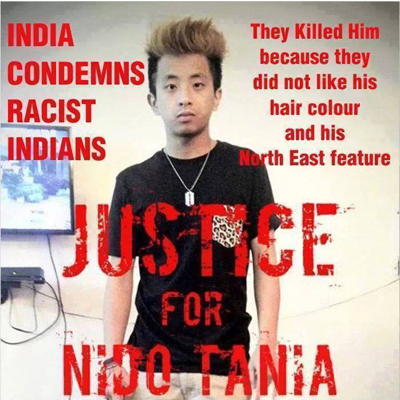
    MUMBAI: The sad demise of 19-year-old Nido Tania in Delhi has created a furore all over. The gory incident has just not got the protestors on the streets to seek justice for the slain student, but has even put the government on a hyperactive active mode. Considering the rising instances of bias against the North Eastern community, the Home Ministry has sent a letter to various broadcasting bodies in the country asking them to sensitise the TV audiences about the culture of the North East.


    Since the seven states of North East India don’t get much prominence on the channels, the Ministry has requested them to come up with programmes centered on NE citizens and culture. The Ministry is of the opinion that the migrated population from the region ‘might be getting treated differently due to their different culture’ that include their typical physical features, culture, food habits and dressing sense. It has also advised the news channels to send journalists to the NE region to cover its issues and also increase interaction with those who have migrated to different cities.


    A broadcaster, however, says that from a business point of view, it is too expensive to cover the region. He points out that since the TV ratings agency TAM does not cover the entire region, except few parts of Assam, it becomes difficult to keep a tab on TVTs. Secondly, the area doesn’t have many advertisers, except for few tea brands.


    For now, the letters have been sent out to the various broadcasting bodies such as the News Broadcasters Association and the Indian Broadcasting Federation. They will have to think about whether or not they would want to take up the suggestion by the Ministry.


    Nido Tania, son of an Arunachal Pradesh Congressman in Delhi, was killed during an argument with a shopkeeper over his hair colour.

  • No stay order for Kantar for now: Delhi HC

    No stay order for Kantar for now: Delhi HC

    NEW DELHI: It was just a week ago that one of the shareholders of TAM – Kantar Market Research decided to move the High Court against the TV ratings guidelines. Now, as the case was taken up in the Delhi High Court today, the issue has become a little clearer.
     

    According to the HC, Kantar won’t get a stay order on the petition for now just because the deadline to make the TV ratings guidelines is effective from 15 February. However, Judge Manmohan said that Kantar’s case will be heard again on 11 February and a final decision will be taken then.
     

    Counsel for Kantar, Harish Salve argued that the stay order was necessary as the guidelines were not framed under any statute of law. Additional Solicitor General Rajeev Mehra, appearing on behalf of the Union of India, said that the guidelines had been recommended by the Telecom Regulatory Authority of India (TRAI) which was a statutory body. The judge also remarked the same. Both Mehra and the counsel for TRAI accepted the notice and agreed to file their affidavits within time.


    The other big development in the case was the inclusion of the News Broadcasters Association (NBA) also coming as an intervener and joining the case as the third respondent apart from the Union of India and the TRAI. NBA counsel, A J Bhambhani pointed out that TAM only covered about 8000 homes in India, which doesn’t cover all the TV homes and thus isn’t a complete survey.
     

    Interestingly, the judge curious to know why instead of TAM approaching the court, a stakeholder Kantar has taken the step. To this, Salve said that the move was taken as Kantar is a major shareholder in TAM and the guideline related to cross holding affects Kantar and not TAM.


    Responding to a question posed by the judge, Salve said that TAM had nothing to gain by pushing up the TRPs. Its clients were advertisers and broadcasters and not the common viewer. Any rigs in ratings would be strongly protested against, he said. Salve also brought to the fore that regulations or guidelines need to be placed before the Parliament for approval.
     

    The case will now be heard once again on 11 February with Kantar fighting it out against the government, TRAI and the NBA.


  • Pitroda Committee: Prasar Bharati should be free of govt hold

    Pitroda Committee: Prasar Bharati should be free of govt hold

    NEW DELHI:  A high-level committee under veteran technocrat Sam Pitroda set up to review the working of Prasar Bharati has stressed the need for constituting a Parliamentary Committee, as originally envisaged in the Prasar Bharati Act 1990 to ensure that the pubcaster discharges its duties in accordance with the provisions of the Act and Government defined duties.


    In the report submitted today to the Information and Broadcasting (I&B) Minister Manish Tewari, it has recommended reorganisation of the pubcaster Board to make it a professionally managed body and make it more effective in guiding the organisation.


    Noting that Prasar Bharati’s vision must be to become a genuine ‘public broadcaster’ as against a ‘government broadcaster’, Pitroda told a press meet after submission of the report that he would be meeting both Tewari and I&B Secretary Bimal Julka next week to finalise those steps in the report which can be put into effect immediately.


    The report said there is need to bring in complete transfer of ownership and management of assets and Human Resource to Prasar Bharati ‘to make the organisation administratively and financially autonomous of Government’.


    A Regulatory Body has to be set up to ensure public accountability of Prasar Bharati with respect to all content broadcast on its television and radio networks. The Regulatory Body should be a sub-committee of the Prasar Bharati Board.


    Interestingly, the Committee has suggested setting up of Prasar Bharati Connect (PBC) as the third arm of the public service broadcaster, independent of Doordarshan and All India Radio, to expand the social media. PBC should be mandated to manage the various Social Media initiatives of all the wings of Prasar Bharati. It also wants a Social Media Strategy of Prasar Bharati.


    The Committee was set up on 28 January last year and had decided to put in place eleven working groups on different issues and has come out with a report on eight main areas: governance and organisation, funding, human resource, content, technology, archiving, social media and global outreach.


    It has said that in addition to the public broadcasting function, there is a distinct requirement for the State to broadcast messages and accomplishments of public interest which can be met by using existing Public and Private broadcaster infrastructure.


    The Committee suggests amending the 1990 Act where necessary so as to impart genuine and effective autonomy to the organisation.


    Apart from Pitroda, who is Advisor to the Prime Minister of India on Public Information Infrastructure & Innovation and Chairman of the National Innovation Council, the other members of the committee included additional secretary and nominated Prasar Bharati Board member J S Mathur, National Innovation Council member Shekhar Kapur, former I&B Secretary Asha Swarup, Vikram Kaushik who is a business strategist and brand advisor and part-time member on the Prasar Bharati Board; Prof M P Gupta from the Indian Institute of Technology in Delhi, Dr B K Gairola who is Mission Director (e-Governance), and Prasar Bharati CEO Jawhar Sircar who was the Convenor.


    Pitroda said that about 110 persons gave time to the working groups on various issues. There are 26 main recommendations in the two–volume report.


    Referring to Funding, the report says there is need to undertake a professional study to develop a funding mechanism for Prasar Bharati that addresses the need for autonomy with financial accountability. Such a funding model should include government funding, internal resource mobilisation and private investment. There is need to monetise all available archival and other assets of Prasar Bharati as soon as possible to enhance funding, and augment funding of social messaging through cross-subsidising such content through entertainment-led programming and by co-opting industry through their CSR budgets.


    However, Pitroda said in reply to a question that the time of licensing TV or radio sets as was being done around five decades earlier could not be revived as it was an old concept.


    Referring to Human Resource, he said the pubcaster should be enabled with the power to frame rules and regulations for its employees without seeking prior approval of the Government.


    When it was pointed out that a similar announcement has been made several times since 1997 when the Act was operationalised, Sircar said the pubcaster cannot frame its own rules.


    There was need to undertake a comprehensive manpower audit and HR planning exercise to map workforce requirements for the future in line with Prasar Bharati’s mandate.


    It was necessary to supplement manpower audit with a re-deployment plan that addresses training, re-skilling and promotion of existing manpower through an institutionalised modern appraisal system.


    The committee said there was need to create an effective recruitment system to attract the best talent and allow the hiring of skilled professionals, and encourage and initiate steps for absorption of Government employees as fulltime employees of Prasar Bharati, after an appropriate screening process. The ones who remain in Government may be considered for absorption in other departments within the government as is done in other cases.


    Referring to content, he stressed the need to scale up allocation of funds for content generation to 50 per cent of the total expenditure within a period of 5 to 7 years. The Committee wants a review of all existing channels and content of DD and AIR, based on their relevance, output and viability and phase out those where there is sub-optimal utilisation of resources.


    There should be encouragement of outsourcing of content creation to external producers to attract high quality and diverse programming and creation of distinct brand identities for different TV and Radio channels, and define the content strategy for each.


    Referring to technology, the Committee wants expansion of the satellite and digital cable TV operations to meet the obligation of public service broadcasting. There is need to digitalise the present AM radio system to a new digital radio transmission after due evaluation subject to cost and availability of DRM receivers. In the transition period, FM may be expanded according to demand.


    It stressed the need to selectively digitalise terrestrial TV operations based on commercial viability.


    Any further expansion of and investment in digital terrestrial telecast should be suitably evaluated after field reviews and assessment of developments in the telecom sector, it said.


    Interestingly, the Committee wanted involvement of the private sector to expand the broadcasting market with a view to effectively utilise the infrastructure being built by Prasar Bharati to enable faster growth in the receiver ecosystem.


    On archives, it recommended state-of-the-art digital archives for consolidating and preserving DD and AIR’s content: both existing as well as that being currently generated. There is expansion of scope to make it the National Audio-Visual Archives so as to consolidate and support all other government initiatives.


    The Committee wants the creation of dedicated, multi-platform channels for dissemination of Prasar Bharati’s archival products: for both open access and monetisation.


    Referring to global outreach, it wanted the creation of a world-class broadcasting service benchmarked with the best in the world using next-generation opportunities, technologies, business models and strategies.


    When pointed out that DD India was already working as an international channel, Pitroda said the platform should be designed for new media first and then extended to conventional TV.


    There was need to outline an effective content strategy for Prasar Bharati’s global platforms (TV and Radio) focused on projecting the national view rather than the narrow official viewpoint.


    In a covering note to the Minister, the Committee said: “Today, we have a unique window of opportunity to transform our broadcasting service (both All India Radio and Doordarshan) into a cutting-edge platform capable of delivering its commitment to public service in the best possible manner, while keeping pace with the competitive needs of the 21st Century.  However, as our report suggests, this transformation will require a bold, clear vision, a focus on generational change, and new models and approaches in every aspect of the public service broadcaster’s activities.
  • TAM shareholder Kantar takes Indian govt to court on TV ratings guidelines

    TAM shareholder Kantar takes Indian govt to court on TV ratings guidelines

    MUMBAI: So Indian TV ratings agency TAM Media will not go down without a fight. At least if one goes by the action of one of its shareholders  Kantar Market Research Services. The latter approached the Delhi High Court on 20 January, filing a writ petition against the Union of India. The writ petition states that the government’s TV ratings agency registration regulations have put the existence of its venture TAM in jeopardy, and that too after it has been operating in India for more than 15 years.

    Diya Kapur, who appeared on behalf of Kantar – during the hearing today – appealed that TAM has been in the business for a very long time and the new guidelines on cross holding restrictions will mean that it will have to go out of business.

    Kantar Market Reserach Services Pvt Ltd, a shareholder of television rating agency TAM Media, was today directed by the Delhi High Court to file in a week an affidavit detailing its shareholding in any advertising/ broadcasting companies either directly or indirectly.


    A bench of justice Manmohan directed Kantar and its director Thomas Puliyel, who have challenged the guidelines for television rating agencies, to also mention “the Indian companies in which the petitoner (Kantar) holds shareholding.”

    High Court judge Justice Manmohan then asked Kantar to furnish documents relating to the shareholding pattern in TAM. “This would be in the form of an affidavit detailing its shareholding in any broadcasting firm/advertising agency, either directly or indirectly.The affidavit would also mention any other Indian company in which the petitioner holds any shareholding. It would also state that none of the aforesaid companies in which Kantar have shareholding in excess of 10 per cent has done business for any entity which was involved in any ratings exercise done by TAM. If that is not so, then the details of such instances shall be given,” the single member bench said.

    The court gave Kantar Media a week to come back with the documents and adjourned the hearing for 29 January.

    But already industry sources are questioning why did Kantar Market Research Services decide to approach the courts alone? Why did TAM Media not do so? And why did only one of the two shareholders seek legal redressal? Why wasn’t AC Nielsen also a party to the case against the Union of India?  These are questions to which indiantelevision.com has no answers to right now. But keep watching this space for further developments.

    Agencies and advertisers will be too. Various stakeholders – who need ratings to know how their money is being spent – have been urging TAM Media to take legal recourse as they are quite averse to a situation of a TV ratings dark period. But with now one of its stakeholders taking steps to try and remedy the situation, they have some hope.

    The ministry of information and broadcasting is quite clear that the course has been set and there is no going back. Speaking to indiantelevison.com MIB officials have been quite clear that they don’t want to be seen favouring anybody – especially TAM. “Industry and TAM have been given a long time to do course corrections on the ratings,” said a MIB official. “More than half a decade. Why did they not do so? Why complain now? In fact, we did not want a ratings blackout; based on industry feedback earlier – they had said BARC ratings would start rolling by March 2014 – we went easy on the TV ratings regulations and got government approval in mid-January 2014. TAM had 30 days to shape up; if it did not do so, then there would be a minimal rating blackout period, with BARC rolling out its ratings.”

    In fact, even as the Telecom Regulatory Authority of India (TRAI) had recommended a tranistion period of six months for TAM Media, the MIB had in its recommendations said zero days, but that was finally extended to 30 days by the Cabinet.

    The MIB has stated that it will take on any legal challenges, which are posed against the regulations.  Industry executives can expect some skirmishes ahead – at least in the courts.


  • EMFA seeks hike in govt. ad rates

    EMFA seeks hike in govt. ad rates

    MUMBAI: It’s rare that a private body appreciates the government whole-heartedly. But recently The Electronic Media Forum Assam (EMFA) appreciated the State government’s decision to hike government-sponsored advertisement rates for newspapers by 60 per cent over the existing rate. The forum announced it in a statement.


    However, the Forum has also urged the Assam government to enhance government- sponsored advertisement contributions to the State-based satellite news channels.


    Earlier, the representatives from the State government and newspaper owners’ association in presence of State information & public relations minister Basanta Das met to get an assurance from the government to hike the advertisement rates with effect from January 1, 2014.


    The news channels in Assam are registered as ‘free to air’ and are more dependant on advertisements for their survival. And thus, the forum has been asking the government to consider improved rate of advertisements for news channels too.


    In the release, EMFA mentioned: News channel managements should use the enhanced fund for the benefit of their employees with structured salaries, other allowances, PF and ESI benefits.

  • Over Rs 330 crore spent on ads in first ten months of this year

    Over Rs 330 crore spent on ads in first ten months of this year

    NEW DELHI: The Government spent around Rs 332.24 crore on advertising in the period between 1 January and 31 October this year.

    A sum of approximately Rs 288.67 crore was spent in the first ten months of this year on issuing display print media advertisements which usually carry the photographs of present and past political leaders/ministers/other dignitaries.

    In addition, approximately Rs 41.11 crore was spent on electronic media advertisements and about Rs 11.46 crore on outdoor publicity respectively on advertisements which carried the photographs of political leaders; Information and Broadcasting Minister Manish Tewari informed the Parliament.

    The Directorate of Advertising and Visual Publicity (DAVP) is the nodal agency of the Government of India for advertising by various Ministries and Organisations of Government of India including Public Sector Undertakings and Autonomous Bodies.

  • Maharashtra cable ops plan statewide entertainment tax protest

    Maharashtra cable ops plan statewide entertainment tax protest

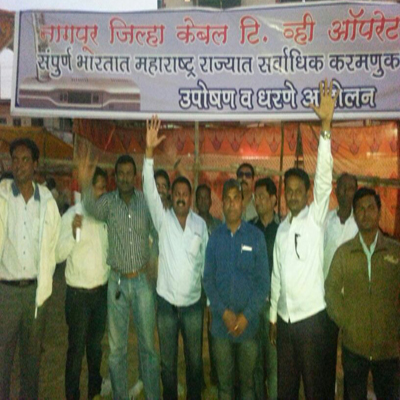
    MUMBAI: Maharashtra is in for a major rally and cable TV blackout come 16 December if the state’s operators have their way. The reason for the strike: it is their way of protesting against the Rs 45 per subscriber entertainment tax that the state levies on them.

    The rumblings of the current agitation began in the city of Nagpur. On 9 December around 600 cable operators across 11 districts of the Vidarbha region got together at Patwardhan ground, Sitabuldi raising their ire against the “harsh government tax”.  Simultaneously, the cable ops switched off their signals to their subscribers in the region.

    “Approximately, 12-15 lakh STBs were switched off between 9 am to 7 pm. Our intention was not to deprive consumers of their entertainment, but to inform them about the tax regime,” says Nagpur District Cable TV Operators’ Association president Subhash Bante. “We had earlier asked the government to inform consumers about entertainment tax, which wasn’t done, so we have taken the baton in our hand.” 

    Even this did not get a revert from the Maharashtra government; hence they intensified their agitation with at least two cable TV operators going  on a  hunger strike from 10 December onwards. “We want to meet Maharashtra revenue minister Balasaheb Thorat and express our view point,” informs Bante.

    And even if this does not get them an audience, Bante says the protest will spread throughout the state with the rally that is being planned for next week. The exact date has not been fixed “but associations from across the state will participate in the rally. We are in talks with the Maharashtra Cable Operators’ Federation and others for the same. Also, there will be state level switch off on the day,” he reveals. 

    5000 cable operators are expected to participate in it along with 50 consumer associations. Supporting the cable operators are consumer associations like Maratha Seva Sang, Sambhaji Brigade and Mulnivasi Mukti Manch among others.

    So what are the LCOs demanding? For starters, the LCOs feel that the quantum of entertainment tax is too high, as compared to other states. “Then we want a centralised system for entertainment tax. Consumers should be made aware that they need to pay Rs 45 per TV as entertainment tax. Many are not aware that they have to pay it, and those who have become aware are unwilling to make the payments,” elaborates Bante. “Finally, the backlog of entertainment tax for the past 10 months should be waived off.” 

    Bante reveals that most cable TV operators have expressed that taxes on cable TV should be a central government prerogative which should be imposed uniformly nationally, and not be left to the states. He explains: “The central government can form a committee which includes cable operators from all over India. They can decide on an entertainment tax amount which is uniform for all states and that it collects just like it does with income tax. It can later re-distribute the amount to the states.”

    However, what is troubling the cable ops the most is the backlog of entertainment tax. “No revenue was generated from April-June 2013, since we were seeding STBs.”

    Also, according to the circular issued on 7 March by the state government, the multi-system operators (MSOs) were asked to pay the entertainment tax. This was seen by the LCOs as a move to deny them the ownership of their consumers. However, since it was the LCOs who had been paying the entertainment tax since the start, the move was resisted by the LCOs who then under the leadership of MCOF and Nashik District Cable Operators Federation moved to the Bombay High Court, seeking a stay on the circular. In the interim, the Maharashtra government in November again issued a circular asking the LCOs to pay entertainment tax directly to the district collector.  

    Nagpur’s cable TV ops have been striking since 10 December

    It was during this period that the LCOs did not collect any entertainment tax from the consumer. “Now, this has led to an outstanding amount running into crores over the past 10 months,” says Bante. His estimate is that the backlog for Nagpur alone is at Rs 22 crore. “If Nagpur city alone has such a huge outstanding, one can only imagine the amount of backlog for eight districts which includes: Nagpur, Thane, Pune, Pimpri-Chinchwad, Nasik, Kalyan-Dombivali, Mumbai city and Solapur,” he says.

    Though the voices of the striking LCOs have not yet been heard, Bante is hopeful. “We are currently waking up the consumer. I am sure, the state government will surely lend its ear to us,” he opines.   

    “The winter session is on right now. Though the operators are on strike, no one seems to be bothered about them. I will be presenting their issues to the assembly session next week regarding the same,” Cable Operators Distributors Association president Anil Parab told indiantelevision.com when we contacted. Parab, a Sena activist, has in the past made unsuccessful attempts to get Maharashtra’s revenue minister to lower the amount levied as entertainment tax. 

    The key question, however is will the Nagpur cable ops, along with consumer organisations, and the MCOF be successful? Watch this space!  

  • TV channels drop all else to air Mandela

    TV channels drop all else to air Mandela

    MUMBAI: The lion of South Africa roars no more. Nelson Mandela, who emerged from prison after 27 long years to lead South Africa out of decades of apartheid as his country’s first black president, passed away last night at his home in Johannesburg surrounded by his family members.


    Mandela or Madiba, as he was fondly called, proved to be as much a symbol of South Africa’s struggle against racial oppression as one of integrity and resilience when after being freed from prison in 1990 he negotiated a peaceful end to apartheid and urged forgiveness for the white government that had imprisoned him.


    It doesn’t come as a surprise that the man who was a phenomenon during his lifetime, is set to make history, even in death. Ever since the news of his demise, social media is aflutter with #RIPNelsonMandela trending on Twitter, Facebook full of Mandela posts and Google News showing close to 1,000 results on him. All publications, big or small, are digging out articles on him for their readers’ information and interest. Not to be left behind, TV channels while news channels have gone berserk showing features around the leader, even the infotainment channels are competing with each other to come with even more special segments on the revolutionary-turned-prisoner-turned-president.


    So, if National Geographic Channel is showcasing Mandela: His Life and Legacy on Saturday, December 7 at 11 pm and December 8 at 1 pm; Discovery is airing The Making Of Mandela again on 7 December at 9 pm and 8 December at 8 pm. Similarly, History TV18 is narrating the story of South Africa’s political transformation under Mandela’s leadership with Miracle Rising: South Africa airing tonight (9 pm) while TLC has a special line-up for audiences.


    With Mandela having motivated Indians as much as he did the South Africans, television channels started digging for features as soon as they came to know about his passing away.


    So what about the programmes that had been lined-up previously? “It’s not easy, but I think in a highly competitive environment where viewer interest can be ephemeral it becomes almost mandatory,” says A+E Networks TV18 VP and head marketing Sangeetha Aiyer, adding that they had to drop Hidden Cities at 9 pm and one of the channel’s biggest shows – Pawn Stars at 10 pm from the regular line-up to accommodate the program on Mandela.


    Drawing a parallel to how the channel aired a biography on Steve Jobs two years ago after his sudden demise and how it dropped the regular line up to air a show called The Killing Fields of Sri Lanka when the international community was bearing down on Sri Lanka for war crimes committed by its army, she says: “The effect was quite humbling as the show created a stir in Tamil Nadu and was even discussed in Parliament.”


    Coming back to Mandela, NGC has dropped its popular series Taboo. National Geographic and FOX International Channels VP, marketing Debarpita Banerjee, says that shows based on big events and people always bring more viewers. “Our rich and diverse library has always offered contextually relevant shows like Trapped in Kedarnath, Inside the Mahakumbh, 26/11 specials, 9/11 specials, that have fared extremely well. In fact, shows like Trapped in Kedarnath, 9/11 special went on to become one of the top three shows of the infotainment genre. Most of these special features have largely been based on events that have turned into the country’s news headlines. We realise that there are people curious to know more about events that have impacted their lives,” she says.


    Business-wise, it isn’t a good deal for channels to change the line-up at such short notice as they rarely find sponsors. Add to that the tough market that makes it even more difficult. With sponsorships taking a few weeks, finding an advertiser for a show that is to be aired in a few hours is difficult for any channel and thus, none of the channels got funders.


    However, since the curiosity around the topic is huge, the promotions become big. “For our regular viewers, we promote the shows heavily on the channel along with all our social media platforms. Pertinent shows like these are also promoted heavily on our news network where we can reach out to relevant audiences,” says Aiyer.


    “Getting sponsors is but naturally difficult on such short notice, however, our prime focus for such features is to ensure that we have the most relevant and well researched content put together by our programming team and then, try and promote it well so that our viewers are aware of such a show. We reach out to our captive audience of over 4 million fans on Facebook along with running promos, graphic-overs on the channel itself,” concludes Banerjee.

  • Cable TV digitisation: Parliamentary standing committee meets TV trade in Mumbai

    Cable TV digitisation: Parliamentary standing committee meets TV trade in Mumbai

    MUMBAI: There’s been a lot of press and media coverage about the process of cable TV digitisation over the past year or so. Most of it stated has been a mixed bag with opinions about its progress swinging from disastrous to a fabulous rollout. Hence, the political class decided to find out on their own what digitisation has meant for the industry.


    The parliamentary standing committee on information technology – headed by Rao Bhirendra Singh – has been making a whistle stop tour of different regions where digitisation has been implemented. 22 October 2013 saw it landing in Mumbai. Prior to this, it has had stopovers in Rajkot and Ahmedabad as well.


    The various constituents of the TV ecosystem were summoned to update the committee on the pace of digitisation and their individual specific concerns. “Phase I and II have been completed,” says a government representative. “The committee wanted to be apprised of the learnings from the first two phases by the various players and their preparedness for the next round of digitisation which is slated to be completed by December 2014.”


    Each of the players had meetings in camera with the committee and presented their positions. First, the last mile cable operators (LCOs) or last mile operators (LMOs). The Maharashtra Cable Operators Association (MCOF) and Cable Operators and Distributors Association (CODA) represented the LMOs and spoke about the issues faced by them.


    Among the concerns they raised were the fact that they had put in physical labour repeatedly during the process of delivering and installing set top boxes. They stated that it is the LCO which bears the brunt of the cable TV viewer’s ire when channels are switched off by the MSOs. But they were optimisitic about their role in phase III and phase IV.


    “Our representatives said that we want to be active players in these phases and we are happy to know that the government seems to be intent on having a clear way forward,” says a cable TV operator.


    The main bugbear raised by the national and local MSOs – Hathway, DEN, Siti Cable and InCable, apart from others – was the issue of entertainment tax. (Maharashtra and Uttar Pradesh have the highest rates.) Their demand: that the LMOs should be made responsible for collecting and paying this levy. Earlier, in the analogue regime, it was the MSOs who had to carry the burden and it is crippling them.


    Says an executive from a leading MSO: “Once the billing system is in place in a digitised India, LCOs can collect the tax and pay it and give the remainder amount to MSOs.”


    However, an LMO says a better option would be “splitting of bills between MSO and LMO and LMO to subscriber to avoid double taxation for the TV subscriber.”


    Broadcasters and aggregators – represented by the  NBA (News Broadcasters Association), a representative from Sony Entertainment Television, Indiacast, MediaPro and TheOneAlliance. The aggregators strangely stayed mum, while broadcasters harped on the usual complaints of carriage fees, lack of subscription revenues and the heavy dependence on advertising. The conversation also drifted to talks about content on television and how channels need to be careful about their content. “This is a major issue as there is no clarity about how the viewer and broadcaster are going to get value out of digitisation. If there is no elbow room for channelising of money for broadcasters then how are they going to focus on better content,” says a broadcasting industry representative.


    More such meetings are being planned according to industry sources. “Finally, we will prepare a report and submit it to the parliament for review,” says a source close to the committee.


    Hopefully, their reports and inputs will make things easier for all concerned as India’s cable TV ecosystem gears up for its most challenging phase – that of rolling out almost 80 million boxes in small towns and rural India.
    (Inputs from Meghna Sharma and Seema Singh)

  • Prasar Bharati’s Sircar says no new NE channel planned

    Prasar Bharati’s Sircar says no new NE channel planned

    MUMBAI: It was on 12 November that the media was abuzz with the news that Indian terrestrial pubcaster Doordarshan (DD) is all set to give birth to another baby to add to its 21 channel brood. Reports stated that the channel called Prabha would target the North Eastern states of Sikkim and Arunachal Pradesh to show showcase their art and culture. It seemed as though it was a done thing.


    However, when indiantelevision.com contacted Prasar Bharati CEO Jawhar Sircar, he highlighted that currently there was only a conversation going on whether such a step should be taken; nothing had really fructified.


    “This idea was discussed in Arunachal Pradesh during my recent visits but it is for the government – not Prasar Bharati – to decide whether to go ahead with it or not,” says Sircar.


    As of now, the government owned network has two all India channels (DD National and DD News), 11 regional language satellite channels, four state networks, one international channel, DD Sports as well as DD Rajya Sabha and DD Lok Sabha. One of these is a satellite TV channel for North East called DD North East that telecasts programmes in Assamese, English and other regional dialects with a programming mix of serials, informative and social shows, infotainment, news, current affairs, art and culture.


    With a channel already addressing the needs of TV viewers in this region, does creating a second one make sense? “If additional funds are available from the government then maybe Prasar Bharati could take a shot,” quips Sircar. He was recently on a tour to Arunachal Pradesh, Assam and Nagaland to understand the issues facing DD in the region and to increase its reach. It was during this tour that some discussions and proposals were made, which were then reported by a wire service.